In concert – Elizaveta Ivanova, BBC Symphony Orchestra / Vinay Parmeswaran @ Maida Vale: Carlos Simon, Ibert Flute Concerto & Prokofiev Seventh Symphony

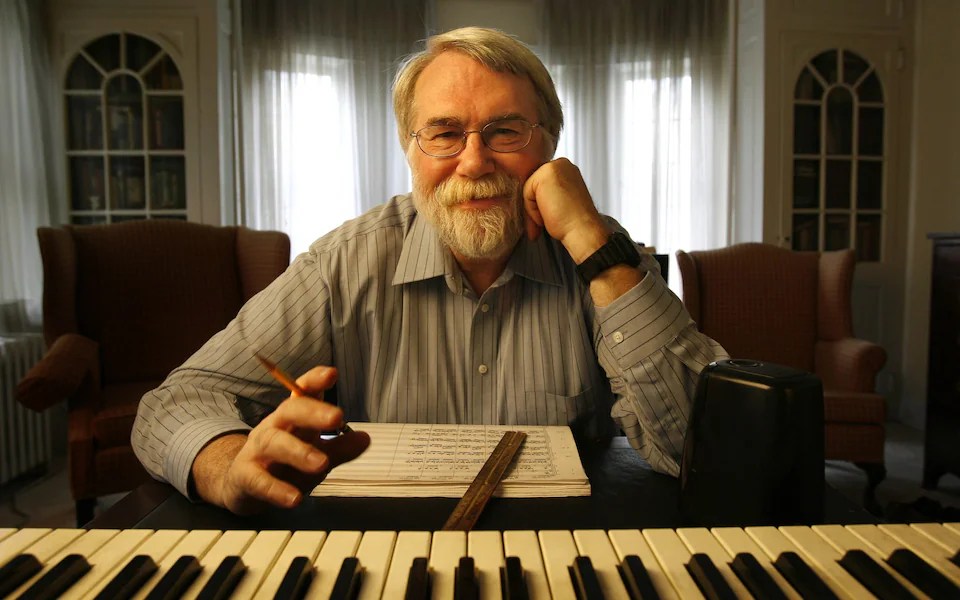
Elizaveta Ivanova (flute, below), BBC Symphony Orchestra / Vinay Parameswaran (above)

Carlos Simon Fate Now Conquers (2020)
Ibert Flute Concerto (1932-33)
Prokofiev Symphony no.7 in C# minor Op.131 (1952)

Studio 1, BBC Maida Vale Studios, London
Tuesday 4 February 2025 (2:30pm)

by Ben Hogwood Photo of Vinay Parameswaran (c) Roger Mastroianni, courtesy of The Cleveland Orchestra

For this concert linking seventh symphonies, the BBC Symphony Orchestra made their first public appearance with conductor Vinay Parmeswaran.

They began with music from Vienna via America, Carlos Simon effectively remixing the second movement of Beethoven’s Symphony no.7 and applying some fresh paint of his own. The piece was inspired by an entry Beethoven made into his journal in 1815, and takes its lead from “the beautifully fluid harmonic structure” of the symphony’s second movement, Simon composing “musical gestures that are representative of the unpredictable ways of fate”. Though Beethoven’s structure could still be glimpsed, it was viewed through music incorporating the language of Sibelius, Copland and John Adams to create a relatively familiar but ultimately thrilling orchestral vista. Simon’s development of the material was enjoyable to witness, though the sudden end felt underpowered in context. Nonetheless, here is a composer to investigate further.
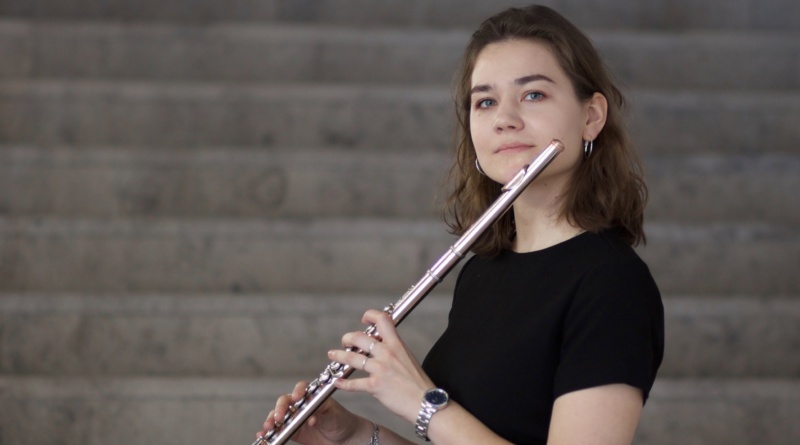
Ibert’s Flute Concerto is one of the instrument’s calling cards from the 20th century, though is heard in concert rather less than it could be. Here it was performed by Elizaveta Ivanova, a flautist recently recruited to the BBC New Generation Artists programme and making her first appearance with the BBC Symphony Orchestra. She brought to the piece a welcome freshness, rising to the challenge of Ibert’s virtuoso solo part while including stylish phrasing and thoughtful dialogue with the orchestra. The graceful second movement Andante is the emotional centre of the concerto, and recalls the equivalent movement in Ravel’s Piano Concerto in G major in its beauty and softer-hearted sentiments. This was in vivid contrast to the outer movements, whose syncopations took the music closer to New York rather than Paris, Ibert’s cosmopolitan style enjoyed by the reduced BBC SO forces as much as by the athletic soloist. A fine performance, and a welcome revival for a composer whose colourful orchestral music and abundant melodies are a tonic.

Melodies, bittersweet or otherwise, are at the core of Prokofiev’s late Symphony no.7, written the year before his death. In a short interview section Parmeswaran implied the work was ‘softer’ than its predecessors, but there were no shrinking violets to be found as the second movement reached a juddering conclusion. Here Prokofiev’s attempts to write a competition winner, simultaneously pleasing Stalin, were affected by his own personal angst, for he was living in poverty at the time.

The weighty bass of the first movement and graceful cello theme of the third movement, marked Andante espressivo, were indicators of the emotional range of the symphony, but the biggest tune, heard from the full orchestra, was the second theme of the first movement, a soaring and winsome melody that returns to crown the final movement. Under Parmeswaran’s affectionate direction it was beautifully judged, though he was careful to ensure the final word in the symphony carried equal impact, the strange ticking of the percussion indicating the creeping passage of time. The symphony ended as it should, its smiling countenance compromised by a frown.

Listen

This concert was recorded for future broadcast on BBC Radio 3. A link will appear here when that becomes available.

Published post no.2,433 – Wednesday 5 February 2025
Arcana @ 10… Musical moments: Dinah Washington & Max Richter – This Bitter Earth / On the Nature of Daylight

Credit: Carolyn Cole/Los Angeles Times via Getty

As part of Arcana’s 10th birthday celebrations, we invited our readers to contribute with some of their ‘watershed’ musical moments from the last 10 years.

Gary Carey writes:

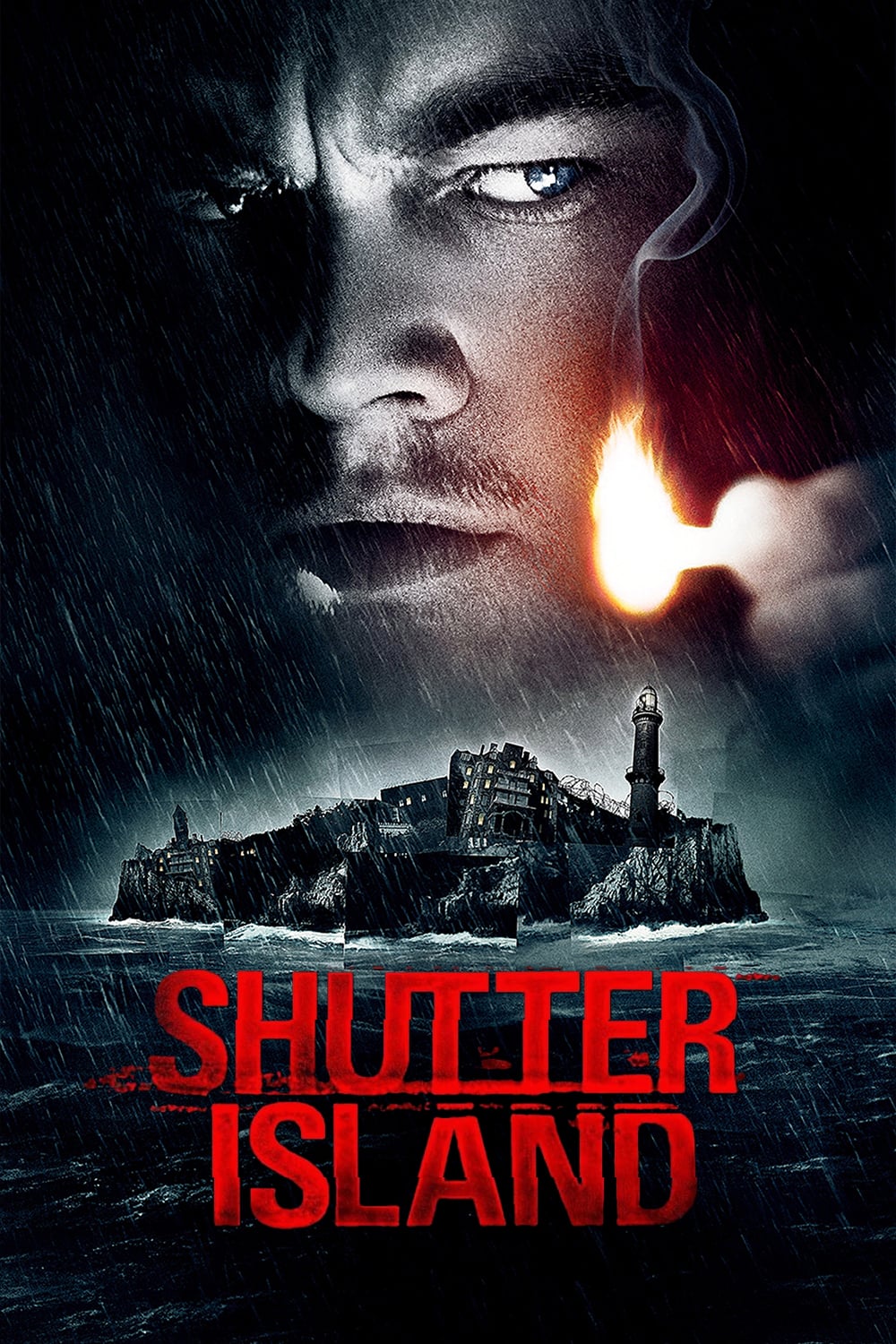
I heard this around the time of the early stages of the Covid pandemic, when I watched the film, Shutter Island, which I would also strongly recommend, though only when you’re in a good place mentally.

The reason I like this piece so much is that it really seems to offer emotional energy, in both Max Richter’s melancholic orchestral composition and the almost desperate, cry-for-help, of Dinah Washington’s vocal accompaniment.

I believe both pieces were originally produced as completely separate works, which were then combined together for the film soundtrack’s finale.

However, this does not seem evident in the finished piece itself, which is a further testament to the production and mixing expertise involved, ultimately producing a compelling new piece of music, collaborating from generically disparate and musically separate sources.

Ben Hogwood adds:

As a postscript to Gary’s memorable moment, I would like a piece of music used earlier in Shutter Island that had a dramatic effect on me – the use of Penderecki‘s Symphony no.3 to highly dramatic effect:

Published post no.2,432 – Tuesday 4 February 2025

In concert – The London Jazz Orchestra: Celebrating Kenny Wheeler @ The Vortex

The London Jazz Orchestra (full line-up below) / Scott Stroman

The Vortex, London, 2 February 2025

by John Earls. Photo credits (c) John Earls, picture of Kenny Wheeler (c) Scott Stroman

Kenny Wheeler (1930-2014) was a UK-based, Canadian born composer and trumpet and flugelhorn player who left a unique and significant mark on jazz and particularly UK and European jazz. He composed and played in a number of formats and was a master of writing for the big band and jazz orchestra.

Wheeler was a founder member of the London Jazz Orchestra (now in its 34th year), one of the best and most exciting big bands around. So it was more than fitting that the LJO paid tribute to what would have been his 95th birthday with this performance of his Long Suite 2005, written for his 75th birthday tour.

Wheeler’s tunes and arrangements are wonderfully and distinctively melodic and this concert was fine testimony to that quality. Yet they often also have a melancholy element to them which can be strangely uplifting. He is supposed to have said Sad music makes me feel happy” and this is an attribute he delivers frequently and brilliantly.

I also recall jazz bassist Dave Holland at a Kenny Wheeler tribute concert in 2015 citing another classic Wheeler quote: “I don’t say much. And when I do I don’t say much”. I guess he said it all in the music.

To my knowledge this suite has still to be recorded and released, which is a real shame. It is a continuous piece of some 40 minutes that meanders beautifully without losing thread and combines some glorious ensemble unity with solo virtuosity.

Kenny Wheeler (c) Scott Stroman

For this performance Miguel Gorodi sat in the ‘Kenny Wheeler chair’, playing the flugelhorn admirably. Brigitte Beraha, sitting next to him, provided gorgeous vocal accompaniment. Stand out solos included trombone, saxophones and double bass. There was crisp and articulate drumming throughout from the LJO debutante drummer.

Special mention should go to trumpeter Henry Lowther, an LJO stalwart and longstanding collaborator of Wheeler’s (I have previously noted how both Lowther and Wheeler played trumpet on Nick Drake’s Hazey Jane II), who is not just a solid LJO force but something of a Wheeler encyclopaedia.

A shout out too to saxophonist Pete Hurt who does so much in transcribing the work of Wheeler (and others) and keeping it alive, a fact acknowledged by LJO Musical Director, Scott Stroman, whose own enthusiasm whilst conducting this performance saw him nearly jump through the ceiling.

The first set of this concert demonstrated that the LJO still has significant composing talent in its ranks with exciting new music by pianist Alcyona Mick and bassist Calum Gourlay. It was great to see and hear a concert that contained such a thread of continuity in what the LJO does.

The music of Kenny Wheeler deserves to always be heard. I’m sure that as long as the London Jazz Orchestra is around it will be.

The London Jazz Orchestra line-up for this concert, directed by Scott Stroman, was:

Miguel Gorodi (solo part in Long Suite 2005), Luke Lane, Ed Hogben, Henry Lowther, Andre Cannier (trumpets); Martin Gladdish, Richard Pywell, Richard Foote (trombones), Yusuf Narcin (bass trombone); Matt Sulzmann (alto and soprano sax), Alyson Cawley (alto sax and clarinet), Tori Freestone (tenor sax and flute), Pete Hurt (tenor sax), Mick Foster (baritone sax and bass clarinet)

with Brigitte Beraha (vocals), Joe Garland-Johnston (guitar), Alcyona Mick (piano), Calum Gourlay (bass), Luke Tomlinson (drums)

John Earls is Director of Research at Unite the Union. He posts on Bluesky and tweets / updates his ‘X’ content at @john_earls

The London Jazz Orchestra play at The Vortex on most first Sundays of the month.

Song for Someone: The Musical Life of Kenny Wheeler by Brian Shaw and Nick Smart is published by Equinox on 14 February 2025.

Some Days Are Better: The Lost Scores by Kenny Wheeler Legacy, featuring the Royal Academy of Music Jazz Orchestra and Frost Jazz Orchestra, was released by Greenleaf Music on 31 January 2025.

Published post no.2,431 – Tuesday 4 February 2025

Arcana @ 10… Musical moments: Christopher Rouse’s Organ Concerto

Credit: Carolyn Cole/Los Angeles Times via Getty

As part of Arcana’s 10th birthday celebrations, we invited our readers to contribute with some of their ‘watershed’ musical moments from the last 10 years.

David Gutman writes:

This is a peculiar time for music and politics but perhaps it’s been that way for longer than we think.

Christopher Rouse, my favourite ‘living composer’, has been dead since 2019 and is rarely played in the UK but we’re continuing to discover ‘new’ works by him online and on disc. Rouse began as an academic evangelist for rock music as it was understood in the 1970s but took his ‘classical’ calling seriously enough to take an unfashionable stand: “I’m not going to talk about rock ‘n’ roll any more. It doesn’t need my help. It’s not that I no longer like that music, but I feel the wagons have been circled, and I’m going to stick with my high-falutin’, élitist, dead white European male brethren and, if necessary, go down fighting.”

His Organ Concerto of 2014 appeared only last year in a Naxos collection of American Organ Concertos played by Paul Jacobs. The Rouse is the highlight, his usual wildly eclectic mix, only around 20-minutes in length and traditional in form but pugnacious in content, whether tonal or atonal. There is also drumming. Its central Lento, which hostile critics have already misheard as ‘sentimental’, is another of the composer’s heartfelt meditations on the nature and acceptance of grief. This matters as we age (this listener is 67 ½) while the finale’s return to consonance and affirmation despite noises off is not just for show. It moved me very much. Rouse wrote the piece ‘the old-fashioned way’ with pencil and paper, on a table.

You can listen to the whole piece on Tidal below – the Rouse is tracks 5 – 7:

Published post no.2,430 – Monday 3 February 2025

Arcana @ 10… Musical moments: Stanford Magnificat & Nunc Dimittis in G

Charles Villiers Stanford by William Orpen Image Credit: Trinity College, University of Cambridge

As part of Arcana’s 10th birthday celebrations, we invited our readers to contribute with some of their ‘watershed’ musical moments from the last 10 years.

Celia Lister writes:

“My musical discovery from the last decade is Charles Villiers Stanford’s Magnificat and Nunc Dimittis in G.

As an oboist specialising in solo and baroque ensemble performance, I was until recently hugely ignorant of vast swathes of church music. That all changed when my children became old enough to be church choristers, a hobby which my husband (an ex-lay clerk) was keen for them to pursue. As a result, over the last few years, I have been exposed to a huge quantity of music which was new to me, ranging from the early Spanish polyphony of Tomás Luís de Victoria to the anthems of Howard Goodall. A firm favourite genre in our house is liturgical Victoriana – Stanford, Wesley, Parry, Wood and Elgar to name but a few. Choral evensong is a highlight of the calendar, and a one of the most wonderful new pieces was Stanford’s ‘Mag & Nunc’ in G.

My daughters are lucky to have inherited my husband’s dulcet tones rather than my mezzo squawking, and my eldest recently had the pleasure of singing the not inconsiderable soprano solo in this wonderful work, with her siblings and parents on sop 2, alto and tenor respectively. Hearing her voice soaring to the rafters was undeniably special, as a parent and as someone who loves music, and was the culmination of hours of church practises, services and RSCM study sessions. It makes the seemingly endless taxi service I perform to shuttle my daughters to and from innumerable rehearsals worth it.

So in a way, it’s not that Stanford in G is a single piece which I can’t do without; it’s that for me it represents the pinnacle of a genre of music which I’d hitherto largely ignored. Liturgical music – not only, but largely Victorian – now affords me great pleasure for both musical and personal reasons. Now all I need to do is wait a few more years until they are trained up for the Passions…

Published post no.2,429 – Sunday 2 February 2025