In concert – Laura van der Heijden & Jâms Coleman @ Wigmore Hall – Pohádka: Tales from Prague to Budapest

Laura van der Heijden (cello), Jâms Coleman (piano)

Janáček Pohádka (1910, rev. 1912-23)
Dvořák Gypsy Songs Op. 55: Songs my mother taught me (1880)
Kaprálová Navždy from Navždy Op. 12 (1936-7)
Mihály Movement for cello and piano (1962)
Kodály 3 Songs to Poems by Bela Balazs Op. posth.: Why are you saying that you do not love me (1907-9); Énekszó Op. 1: Slender is a silk thread (1907-9)
Sonatina for cello and piano (1909)
Janáček Violin Sonata (1914-15, rev.1916-22)

Wigmore Hall, London, 9 March 2022

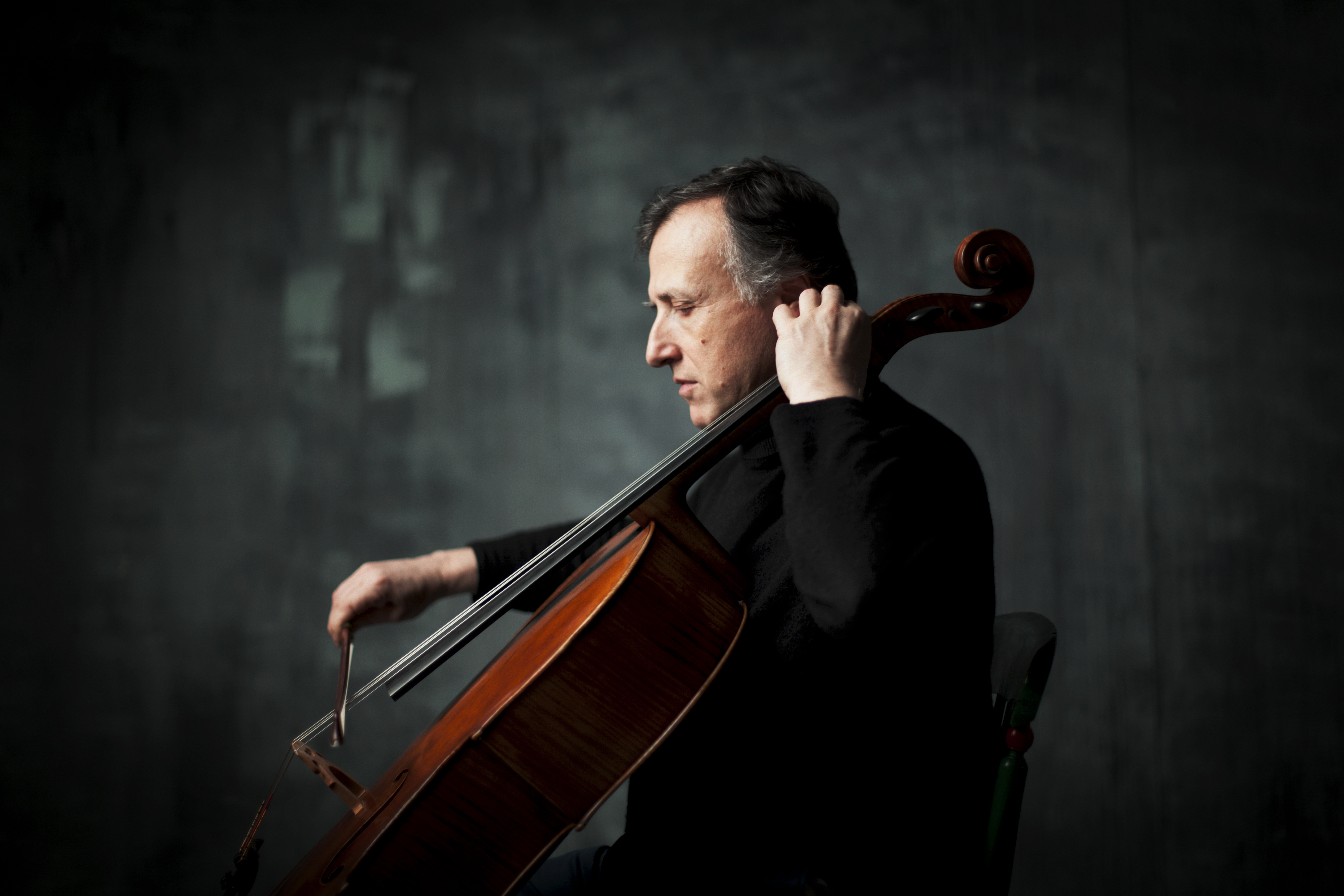
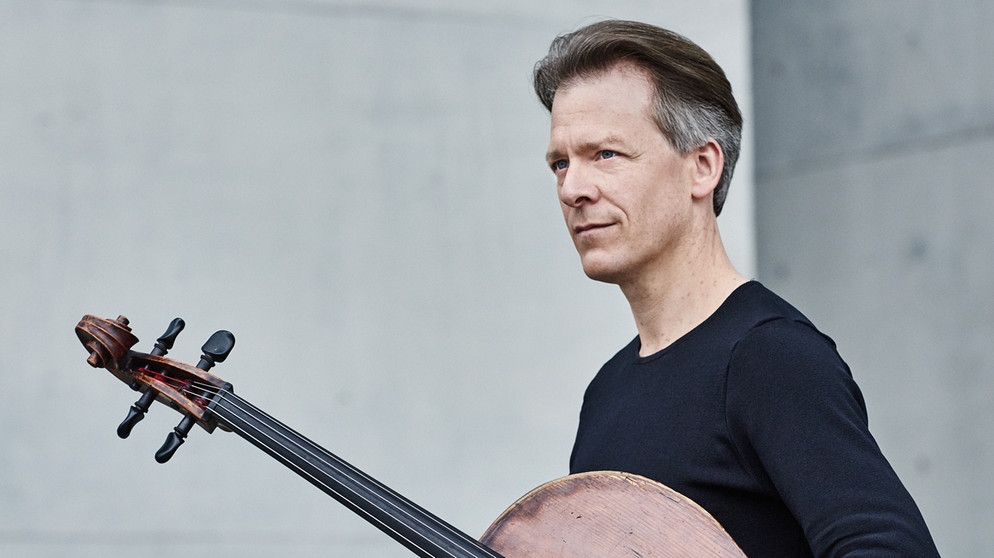
reviewed by Ben Hogwood Pictures (c) Olivia Da Costa (Laura van der Heijden), Sim Canetty-Clarke (Jâms Coleman)

It bears repeating that times are tough for new artists in music. Competition is fierce, while opportunities for live performance and recording have been severely hampered over the last two years of lockdown and pandemic restrictions. How refreshing, then, to talk about two new artists, a long term agreement with Chandos and a chamber music album notable for its originality and depth of expression.

The new artists, cellist Laura van der Heijden and her musical partner, pianist Jâms Coleman, have been performing together since 2017. Their debut album, for which this concert was an official launch, looks at music from Central and Eastern Europe with its roots in folk, either written directly for cello and piano or falling naturally into a vocal range.

The album shares its title, Pohádka, with a three-part fairy tale for cello and piano by Janáček, based on a Russian tale. This began the concert, a picture book performance bringing the story to life with sharp characterisation and flair. Janacek used a good deal of his music to explore macabre storylines and this was no exception, though the lighter, more lyrical moments were good fun. van der Heijden’s tone was sonorous and projected easily to the back of the hall, while Coleman’s stylish playing was capped with limpid work in the second section.

We then heard arrangements of two songs from Dvořák and Vítězslava Kaprálová as an idea complement, the former transcribing beautifully from voice to cello, with tasteful ornamentation from the cello. It was good to hear more of Kaprálová, a talented Czech composer who tragically died from tuberculosis when she was just 25. Her music immediately cast a spell, Coleman’s mysterious chords matched by a remote but moving line from the cello in its higher register.

Different qualities were required for the music of Hungarian composer and conductor András Mihály. His Movement for cello and piano was a dramatic rollercoaster, and rather volatile at times – reflecting perhaps the differing styles at play in modern music when it was written in 1962. While there were undoubtedly elements of Bartók and even Webern in the music’s contours, which veered into atonality at times, there was a fierce expression suggesting Mihály’s music should be explored further. Both players responded with a terrific performance, mastering the technical demands.

Zoltán Kodály was also an influence on Mihály, and his music suits the cello hand in glove, whether in large-scale sonatas or shorter, folk-informed songs. We heard two songs here, the cello a doleful voice for Why are you saying that you do not love me, while Slender is a silk thread found Coleman beautifully spinning out the silvery tale. However the single-movement Sonatina for cello and piano, at just under 10 minutes, made a lasting impression with its passion, profound lyricism and subtle melancholy. The performers’ love for this piece was clear, and the high voltage account found them finishing each other’s musical sentences.

The same could be said for Janáček’s Violin Sonata, a pungent piece whose proximity to World War One is evident in the rapid fire of its phrases. The composer’s unusual musical language was once again wholly compelling, with broad lyrical statements countered by strange, abrupt full stops to his melodies. The parallels with the current situation in Ukraine were impossible to ignore, especially with the emotion both players brought to the second movement Ballada, its sweeping melodies reaching skyward. Ultimately the acidic third and fourth movements cast a cloud over the mood, the players vividly depicting the distant sound of gunfire alongside more thoughtful introspection. van der Heijden was commendably modest about her own arrangement of the Sonata, for cello and piano, an extremely successful version losing none of the intensity or fractious treble phrases. Both players were superb, their virtuosity and togetherness notable throughout.

This was an extremely rewarding concert, energetic and romantic in turn but also thought-provoking through its wartime undercurrents. Laura van der Heijden and Jâms Coleman deserve great credit for their refreshing take on a chamber music album, which bodes well for their ongoing relationship with one of Britain’s best classical independents. Theirs is a partnership to watch closely.

Watch and listen

In concert – Raphael Wallfisch, CBSO / Gergely Madaras: New Worlds – Sibelius, Jonathan Dove & Dvořák

gergely-madaras

Sibelius Finlandia Op.26 (1899)
Dove In Exile (2020) [CBSO Centenary Commission: UK Premiere]
Dvořák Symphony no.9 in E minor Op.95 ‘From the New World’ (1893)

Sir Simon Keenlyside (baritone), Raphael Wallfisch (cello, below), City of Birmingham Symphony Orchestra / Gergely Madaras

Symphony Hall, Birmingham
Thursday 9 December 2021

Written by Richard Whitehouse

Tonight’s concert from the City of Birmingham Symphony Orchestra amounted to a themed programme with late 19th century evergreens by Sibelius and Dvořák framing another of this orchestra’s Centenary Commissions in the first UK performance of a major work from Jonathan Dove.

In his introductory remarks, Dove spoke of In Exile as a hybrid of cantata, operatic scena and concerto; a fusion that has surprisingly few antecedents – one being Concerto on Old English Rounds by William Schuman, with viola and chorus as ‘soloists’. Here the roles were taken by baritone and cello during a half-hour piece whose texts, adapted by Dove’s regular librettist Alasdair Middleton, examine the state of exile from a perspective less about those emotions experienced in the adoptive country than of sensations evoked by what has been left behind.

Drawing on Medieval sources, Dante and Shakespeare then, from the early 20th-century, the Lebanese poet Kahlil Gibran and Irish scholar Douglas Hyde, to the Iranian-American Kaveh Bassiri, In Exile unfolds as a formally continuous and emotionally cumulative sequence whose traversal from the general to the specific is complemented by its undulating texture, enhanced with resourceful writing for strings and tuned percussion, which graphically evokes a journey of the mind as well as body. Simon Keenlyside gave a powerful rendering of the vocal part in all its burnished rhetoric, while Raphael Wallfisch (to whose mother, the cellist Anita Lasker-Wallfisch, this piece is dedicated) was no less searching as his ‘alter ego’ whose role takes in several exacting cadenza-like passages. Certainly, a work that should bear repeated hearings.

Making his debut with the CBSO, Gergely Madaras conducted with a sure sense of where this piece was headed, having opened the concert with a gripping account of Finlandia. Sibelius’s apostrophizing of his homeland can descend into bathos – Madaras ensuring otherwise in this tensile reading whose sombre brass, supplicatory woodwind and strings, then dashing central episode led into a lilting take on what became Finland’s unofficial national anthem, before the peroration urged the music on to a conclusion whose grandeur was shot-through with defiance.

There was equally much to admire in Dvořák’s New World after the interval, even though this was essentially a performance of two halves. Madaras’s listless way with the first movement’s introduction set the tone for a rather terse and short-winded account (made the more so by its lack of exposition repeat) of the Allegro, while Rachael Pankhurst’s eloquent rendering of the Largo’s soulful melody was hardly enhanced by peremptory changes in tempo, notably in the tense middle section. Not so the Scherzo, its coursing outer sections ideally complemented by the whimsical trio at its centre, then the final Allegro brought an impulsive response that kept its histrionics on a firm rein yet without losing sight of an intently growing momentum whose outcome was a powerfully wrought apotheosis – its radiant closing chord judged to perfection.

So, a well-conceived and finely executed concert featuring a conductor who will hopefully be returning in due course. The CBSO has three Choral Christmas concerts coming up later this month, then can be heard on January 9th in a Viennese New Year programme to see in 2022.

For more information on ‘A Choral Christmas’ click here. For more information on the January – July 2022 CBSO season, you can visit the orchestra’s website. Meanwhile click on the links for information on Jonathan Dove, Gergely Madaras, Sir Simon Keenlyside and Raphael Wallfisch.

Playlist – World Mental Health Day: Music To Grow To

Today – Sunday 10 October – is World Mental Health Day.

Rather than post the latest concert review on Arcana, I decided to take some time out to come up with a simple playlist of music I have found helpful to listen to in busy or fraught times.

I have called it Music To Grow To, as it begins with one player (Ravel‘s Menuet antique for piano) and grows to music for two people (Messiaen‘s timeless Louange à l’Éternité de Jesus from his Quatuor pour le fin du temps), then three (Mozart‘s sublime Divertimento for string trio).

Philip Glass‘s restful Company is next, for string quartet, then we switch to wind instruments for the 12-player Serenade by Dvořák, a lovely piece.

Finally a long, contemplative piece that should be experienced live whenever you get the chance! John Luther AdamsBecome Ocean performs the function of being incredibly immersive, ambient music and it uses the whole orchestra from small beginnings to slow, steady growth.

Give the playlist a try on Spotify below:

In concert – Jonathan Martindale, CBSO / Michael Seal: Summer Classics

michael-seal

Jonathan Martindale (violin, below), City of Birmingham Symphony Orchestra / Michael Seal (above)

Dvořák Carnival Op.92 (1891)
Vaughan Williams
The Lark Ascending (1914/20)
Elgar
Chanson de matin Op.15/2 (1889)
Grieg
Peer Gynt Suite no.1 Op.46 (1875/88) – no.1, Morning; no.4, In the Hall of the Mountain King
Mendelssohn
A Midsummer Night’s Dream Op.21 (1826)
Vivaldi
The Four Seasons Op.8 (1718/20) – no.2 in G minor RV315 ‘Summer’
Price
Symphony no.1 in E minor (1931-2) – Juba Dance
Tchaikovsky
The Nutcracker Op.71 (1892) – Waltz of the Flowers

Symphony Hall, Birmingham
Friday 2 July 2021 (2pm)

Written by Richard Whitehouse Photo of Jonathan Martindale courtesy of Upstream Photography

The penultimate event in the City of Birmingham Symphony Orchestra’s current season, this afternoon’s Summer Classics featured a wide-ranging selection of pieces that between them spanned over two centuries, and whose ‘feel good’ factor at no time precluded stylish or committed playing.

With longstanding associate director Michael Seal at the helm, the orchestra made the most of Dvořák’s effervescent Carnival overture; the alluring pathos of its central interlude accorded due emphasis, and with some eloquent woodwind solos. Its popularity during recent years has made Vaughan Williams’s The Lark Ascending a regular inclusion in such programmes, and Jonathan Martindale (below, who also led the concert) gave a thoughtful while never flaccid reading – most perceptive in the middle section with its folk-like whimsy and fanciful evocations of birdsong. The CBSO responded with limpid dexterity, the whole performance a reminder that this work is best tackled as a concertante piece and by a player (recalling such as Hugh Bean, Iona Brown and, more recently, Richard Tognetti) who knows the orchestra from the inside.

Next came an ingratiating take on Elgar evergreen Chanson de matin, then excerpts from the First Suite of Grieg’s incidental music to Peer Gynt – a rapturous Morning and stealthy In the Hall of the Mountain King skirting headlong terror at the close. Mendelssohn’s overture to A Midsummer Night’s Dream made for an unlikely but effective centrepiece – the highlight being those fugitive imaginings towards its centre, along with the disarming eloquence of its final bars where the teenage composer conjures a fulfilment he was only rarely to recapture.

The Summer concerto from Vivaldi’s The Four Seasons again saw Martindale as soloist in an account that lacked little of that rhythmic vitality his contemporaries (notably Bach) seized on with alacrity; nor was there any absence of poise in its atmospheric second movement. One who has come in from the cold partly through the recovery of her manuscripts, Chicago-based Florence Price broke with convention by introducing the Juba Dance into her symphonies in lieu of a scherzo; the CBSO responding in full measure to its rhythmic verve. A winning harp solo from Katherine Thomas launched Waltz of the Flowers from Tchaikovsky’s ballet The Nutcracker and ended the main programme in fine style – Seal and the CBSO acknowledging the applause with the final ‘galop’ from Rossini’s William Tell overture as a dashing encore.

Throughout the concert, film expert Andrew Collins interspersed proceedings with his remarks and recollections (not least on that seminal 1970s supergroup The Wombles). The music itself was accompanied by varying shades and colours of lighting, but these rarely seemed intrusive – not least compared to the garish ‘Moulin Rouge’ effects routinely encountered nowadays at the Proms. Certainly, anyone in the process of getting the know just what classical music was all about, and those merely in search of a pleasurable afternoon’s listening, were well served.

Next Wednesday brings the last in this current series of concerts, the CBSO being conducted by Joshua Weilerstein (who is replacing an ‘unable to travel’ Edward Gardner) in an enticing programme of Judith Weir, Prokofiev (with the violinist Alina Ibragimova) and Beethoven.

You can find information on the final concert in the CBSO’s season at their website. For more information on composer Florence Price, click here

In concert – Alban Gerhardt, CBSO / Kazuki Yamada: Straight from the Heart

kazuki-yamada

Alban Gerhardt (cello, below), City of Birmingham Symphony Orchestra / Kazuki Yamada (above)

Anderson Litanies (2018-19) [CBSO Centenary Commission: UK premiere]
Dvořák Symphony no.7 in D minor Op.70 (1884-5)

Symphony Hall, Birmingham
Wednesday 30 June 2021 (6.30pm)

Written by Richard Whitehouse Photo of Alban Gerhardt courtesy of Kaupo Kikkias

Losing the greater part of the City of Birmingham Symphony Orchestra’s schedule across the past two seasons has meant postponing many of its ‘Centenary Commissions’, but of those which have been rescheduled, none was more keenly anticipated than that of Julian Anderson’s Litanies.

Anderson produced four works during his tenure as the CBSO’s Composer-in-Residence over 2001-5, this new piece renewing its formal and expressive archetypes by fresh and intriguing means. The first of three continuous sections presents cello and orchestra – its modest forces including double wind, harp and piano, their pitches modified by a quarter-tone – as sparring partners in propulsive, toccata-like music. This gradually mutates into a central slow section, whose fraught lyricism intensifies (with unexpected if effective assistance from the orchestra) towards a chorale in memory of Oliver Knussen. From here an increasingly animated cadenza leads to a capricious, dance-like final section that culminates in a splenetic orchestral outburst; the soloist then resuming for a soulful postlude which brings about a calmly equivocal close.

Alban Gerhardt (below) made the most of some finely gauged technical challenges, as he overcame passing vagaries of sound-balance (and what appeared to be a leg injury) to give a confident realization of a piece already heard in Paris, Örebro and Lausanne. The CBSO was no less assured under Kazuki Yamada; if balance between strings and wind occasionally lost focus (second violins placed further to the rear of the platform than would normally be the case), this did little to offset the attractions of a notable addition to the contemporary repertoire.

During a break for platform rearrangement, the CBSO’s Principal Guest Conductor spoke of his gratitude that audiences were again able to attend live concerts. Something of this evident pleasure came through the ensuing performance of Dvořák’s Seventh Symphony – not least an opening Allegro that, despite a few tentative string entries, undoubtedly had the measure of its stoic defiance and underlying seriousness of purpose. Best was a coda whose dramatic initial stages subsided effortlessly and inevitably into sombre rumination towards the close.

The highlight, however, was a slow movement whose Poco adagio marking was studiously observed – Yamada infusing the emotional ebb and flow of a movement whose formal follow -through can seem fitful with unfailing poise, the CBSO wind eloquent in their contribution. Nor was anything amiss in the Scherzo, its ‘furiant’ rhythm audible not just in the trenchant outer sections but also the trio where its simmering presence ensured no let-up in tension on route to a subtly modified reprise then explosive coda. The final Allegro capped the reading accordingly – Yamada never rushing its stealthy alternation between starkness and lyricism, while ably negotiating several testing changes in tempo as the composer ratchets up tension going into an apotheosis whose inherent fatalism was enhanced by the resplendent playing.

A gripping performance, then, as was met with a suitably enthusiastic response. The CBSO is back this Friday with altogether lighter fare for a programme of Summer Classics (including The Lark Ascending), which is conducted by Michael Seal and presented by Andrew Collins.

You can find information on the CBSO’s Summer Classics concert at their website. For more information on composer Julian Anderson, click here – and for more on cellist Alban Gerhardt, visit his website here