
BBC Proms 2016 – BBC Symphony Orchestra / Sakari Oramo: Beethoven’s Fifth, Dutilleux & HK Gruber

gruber-busking

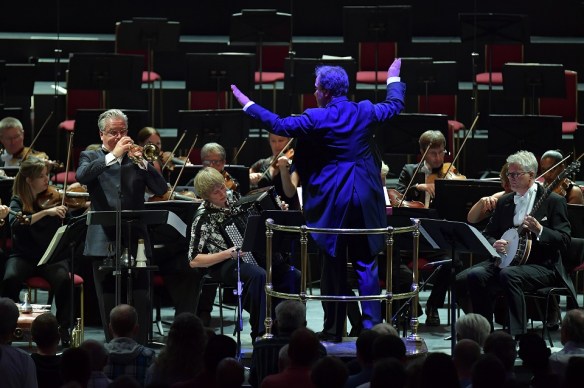
Soloists Håkan Hardenberger (trumpet), Claudia Buder (accordion) and Mats Bergström (banjo) pictured during the performance of HK Gruber‘s Busking, with the BBC Symphony Orchestra conducted by Sakari Oramo (c) Chris Christodoulou

Prom 34; Royal Albert Hall, 10 August 2016

You can listen to the Prom on the BBC iPlayer

Sakari Oramo continues to inspire. His tenure with the BBC Symphony Orchestra to date has been characterised by imaginative programming and excellent performances, and putting an obvious spring in the orchestra’s musical steps.

Last year they delivered a Prom capped by Beethoven’s Seventh Symphony, an account that fizzed with enthusiasm and vigour, and these same qualities were on show for the Fifth Symphony here. Oramo’s speeds were on the aggressive side, the slow movement arguably losing a bit of expressive heart because of it, but the faster movements unquestionably thrilling in their verve and forward drive.

Because of this approach, music that could have been over familiar received a new, sparkling coat of paint, and excellent woodwind contributions, particularly from new oboist Henry Clay, elevated the standard of playing. Guest leader Malin Broman set the tone with great vigour.

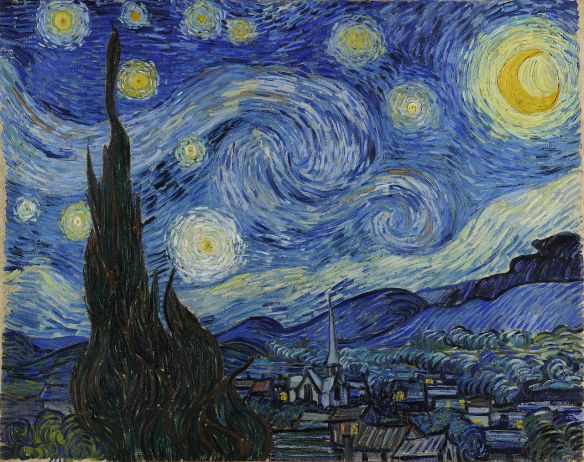
The first half gave us two contemporary pieces of very different impact. Timbres, espaces, movement became a three-movement orchestral piece when Henri Dutilleux revised it in 1990, and in this performance we could revel in its beautifully shaded colours, its sudden, strident unisons, and its captivating rhythms – all reflecting the painting on which it is based, Van Gogh’s Starry Night.
1280px-Van_Gogh_-_Starry_Night_-_Google_Art_Project

These were expertly delivered by the BBC Symphony percussion, while in the second movement the glorious spectacle of twelve cellos highlighted the genius in the composer’s part writing as well as the deep lyricism of his melodies. This was the third Dutilleux performance of the week, capping a very strong trio begun with The Shadows of Time and the Cello Concerto Tout un monde lointain…

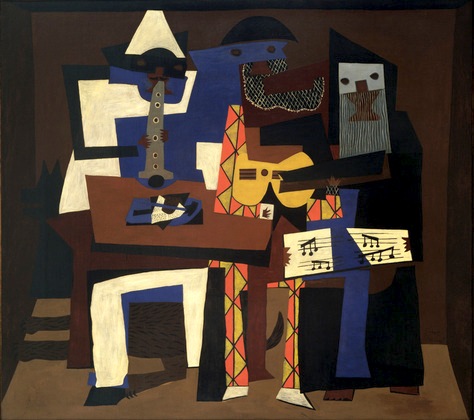
Less obviously successful was the substantial piece by HK Gruber, Busking – a work from 2007 receiving its UK premiere. Again the composer’s inspiration was a painting, in this case Picasso’s Three Musicians:
Picasso_three_musicians_moma_2006

Despite an excellent performance, in which trumpeter Håkan Hardenberger turned various shades of red and purple, all the while staying fully in command of his instruments, this was a piece that unfortunately ran out of steam quite early on.

A very promising beginning, with swaying syncopation brought on by the trumpeter with just his mouthpiece, ultimately lost its rhythmic impetus. Unfortunately the balance between the three soloists also became skewed heavily in favour of the trumpet, at the expense of brilliantly played detail from accordion (Claudia Buder) and banjo (Mats Bergström).

A doleful slow movement briefly evoked a melancholy cabaret, and did so very effectively, but here again the tones of the trumpet dominated, despite Hardenberger’s use of the mellow flugelhorn. This was not the fault of the players – and could also reflect Arcana’s position in the arena – but it was a shame to miss out on the touches of humour elsewhere. By the third movement, where some energy returned, the piece had by that time run out of substance.

That should not count against the overall success of this Prom, however, as the excellent performances of the BBC Symphony Orchestra reaped their just rewards.

Ben Hogwood

You can hear other Dutilleux performances at the BBC Proms by following the links below:

The Shadows of Time with the Philharmonia Orchestra conducted by Esa-Pekka Salonen

Tout un monde lointain… with Johannes Moser (cello) and the BBC Philharmonic Orchestra conducted by Juanjo Mena

BBC Proms 2016 – Håkan Hardenberger and HK Gruber perform Kurt Weill & Kurt Schwertsik at Cadogan Hall

Håkan Hardenberger (trumpet), HK Gruber (chansonnier, above), Helen Crayford (piano), Mats Bergström (banjo & guitar), Claudia Buder (accordion), Academy of St Martin in the Fields

Broström Sputnik (2015)

Lundgren arr. Pöntinen The Seagull (2007)

Weill Speak Low (arr. Pöntinen) (1943); Songs from The Threepenny Opera (1928); Der Song von Mandelay (1929); Song of the Rhineland (1944)

Schwertsik Adieu Satie – Gymopédie; Clownerie acrobatique (2002, arr. 2010)

HK Gruber 3 MOB Pieces (1968, rev.1977)

Brahms arr. Broström Hungarian Dance no.6 (1869 / 2016)

Cadogan Hall, Monday 8 August 2016

Listen to this concert on the BBC iPlayer

After A Satie Cabaret the BBC Proms chamber music series at Cadogan Hall continued in mischievous mood, this time bringing Kurt Weill and his associates centre stage. In doing so they managed to include another tribute to Satie, courtesy of Kurt Schwertsik, a member of the unofficial Third Viennese School with composers Friedrich Cerha and HK Gruber.

The three were responsible for the creation of MOB-art, in Gruber’s words ‘a celebration of enjoyment and invention’. The approach, enjoying tonal music but pushing boundaries and frequently encroaching on jazz and musical genres, was explored here by Gruber with good friends and long-time musical collaborators, trumpeter Håkan Hardenberger and Swedish composer Tobias Bröstrom.

As well as being a composer of some repute Gruber is an excellent conductor and vocalist into the bargain, and with Hardenberger he brought Weill’s music fair off the page, not to mention the words of his collaborators, Brecht and Ira Gershwin.

The concert began with Broström and a celebration of space travel, Sputnik. This completed one bumpy orbit of the Cadogan Hall, a lively and enjoyably syncopated curtain raiser. After this Jan Lundgren’s The Seagull was a mournful companion, beautifully observed by the muted trumpet.

hardenberger

Håkan Hardenberger (trumpet)

Neither principal performer could stay quiet for long however, and we swiftly moved to the music of Weill. This was in the form of an attractive selection that showed not just the importance of the trumpet in the composer’s work, but also his chemistry with the acerbic wit and poignant observations in the text of Bertolt Brecht. These were given out by Hardenberger himself, revealing unexpected gifts for vocalising in Song of the Insufficiency of Human Behaviour, but also HK Gruber, surely without parallel in this music. There was a glint in his eye as he characterised the selections from The Threepenny Opera, One Touch of Venus, Happy End and Where Do We Go From Here?

They were superbly accompanied by accordionist Claudia Buder and Mats Bergström on guitar and banjo, both stylish players, while pianist Helen Crayford enjoyed the colourful harmonies and spiky rhythms. The string players of the Academy of St Martin in the Fields supplied extra body and impetus, clearly enjoying themselves.

After the Weill came two movements from Schwertsik’s suite Adieu Satie. The first of these was a lovely piece of expanded pastiche in the form of a Gymnopédie, led by Buder and supplemented by the strings, before the irreverent Clownerie acrobatique took enjoyable liberties with syncopations and melodic figures.

This led us to Gruber’s flagship work, the 3 MOB Pieces, where chamber ensemble and drum kit team up neatly with humour and touching asides. Composer Broström was now required to play drums, and did so with aplomb.

Finally all the performers were united for Broström’s mischievous but rather brilliant arrangement of Brahms’s Hungarian Dance no.6, which called on Hardenberger to play at dizzying speed – and found him unexpectedly overshooting his final note. If anything this added to the enjoyment, for it was an occasion where spirit and humour were to the fore, with the distinctive colours of accordion, banjo and piano adding to the already ebullient strings.

The BBC Proms have delivered several imaginative chamber concerts this year, and this one was an excellent introduction to the music and world of HK Gruber ahead of a performance of Busking in Prom 34, where Buder, Bergström, Hardenberger and Gruber will once again join forces.

Ben Hogwood

Ask the Audience at the BBC Proms – Dean Francis on Bartok and Dvořák

Ask The Audience Arcana at the Proms
dean-francisThis is the first in a new series where Arcana invites a friend to a Prom who does not normally listen to classical music. In an interview after the concert each will share their musical upbringing and their thoughts on the concert – whether good or bad! Here, Dean Francis (above) gives his thoughts on Prom 25.
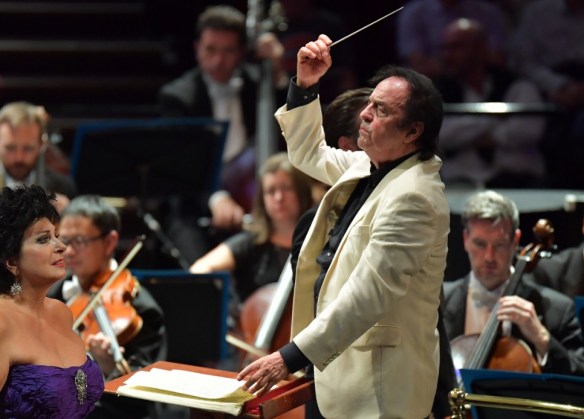
Alban Gerhardt (cello); Ildikó Komlósi (mezzo-soprano), John Relyea (bass), Royal Philharmonic Orchestra / Charles Dutoit

Dvořák Cello Concerto in B minor (1895)
Bartók Duke Bluebeard’s Castle (1911)

You can listen on the BBC iPlayer here

Arcana: Dean, what was your musical upbringing?

It was really wide and varied. I grew up with my great grandparents, and they came over from Jamaica in the 1960s. I was heavily influenced by that, and was listening to blue beat and ska. In Jamaica the musical influences are really wide, so they’ll listen to a lot of country like Kenny Rogers or church-influenced stuff, Jamaican gospel and American gospel. I used to hear tapes with church services and things.

My grandparents listened to more reggae – Bob Marley, John Holt, Gregory Isaacs – but my mum was born here and went to school in West London, and she listened to stuff like Boy George and punk, Prince, The Cure, literally everything! My auntie was only a couple of years older than me and she would be listening to Bros and Mariah Carey!

My own personal influences were hip hop early on. I think my first concert was either Cypress Hill or The Beastie Boys, and the first record I bought was a Barrington Levy record, so I was all over the place really! Nowadays I think kids have a watered down view of music, it’s made specially for them. We used to listen to what our parents listened to, in my house at least – not the latest kiddie sound. There was no jumping about to stuff like Miley Cyrus, the stuff I’d listen to would be at family parties, dancing with adults.

Could you name three musical acts you love, and why you love them?

Ice Cube. His music was descriptive of what was going on at the time in America, and it’s almost the polar opposite of the lyrical content of mainstream hip hop now. I guess his life is quite inspiring, starting in NWA and going on film. I grew up with the Predator and Lethal Injection albums at the time.

Going back to reggae I would say someone like Buju Banton, I listened to him a lot, and met him, before he went to prison. Another reason for liking him is his music is good, but if you listen to him talk about what was going on in the world, the politics of the time – living in the West you get a very different view of the politics because of the media.

Even in Jamaica, although it’s The West, you realise that people have got a lot more common sense than you might expect in relation to places perceived as ‘more learned’. They are closer to nature, doing more practical jobs and living off the land, so they have a different view of the world. You don’t get people getting bullshitted, people are smart and on the ball – and so he was telling me stuff about life and wisdom, and he was inspiring in his mindset and how driven and aware he was of whats going on politically.

More recently I would say Loco Dice, because I’ve had some good moments out with him DJing with good friends. His music has energy that brings people together, and that transmits itself in the music he plays. So that’s my three – but you could ask another time and I’d give you a different answer!

I think I tend to like music that has an energy and makes a connection with people. I get bogged down by dirge! I would always listen to something like the Arctic Monkeys over Katie Melua, say!

What has been your experience of classical music so far?

The school I went to had a lot of classical music. It was quite funny and we had a teacher who drank whisky at the primary school I went to! He would play the piano, and I think he used to like Holst. It was quite good, even though we didn’t appreciate it at the time. I think everybody at some point should be exposed to the music of the world, it helps, you know?

With real electronic music and some of the music they play now, it can dumb you down because you’re not exposed to real instruments.

Really I’ve taken it upon myself to go to things, I’m not really averse to any kind of music. If people have invested their time and craft, it will be worth seeing. It’s like sport, you know, you watch it at the Olympics because you know it’s the best of its kind. There is so much classical music in films you don’t realise it’s happening as well!

How did you rate your first Proms experience?

I thought it would be more stuffy, but because it’s classical I would say you get an older demographic. That’s good in one way but it would be good for younger people to think it’s accessible. I think it’s a perception thing, and a shame really – it’s just music at the end of the day! There shouldn’t be that perceived snootiness. It was a really good experience though.

What did you like about it?

I like the emotion of the music. Some of the descriptive parts of moods and nature, like water and fire in the Bartók, that’s really good if a good composer can capture those moments.

What might you improve about the experience?

Not much really, but more how they can engage younger people so that it doesn’t become too stuffy.

What did you think of the Dvořák?

I liked that, especially the first movement. The second movement, it felt less interesting to my ear, but it was all really good. It reminded me a bit of a 1930s or 1940s Western, I can’t remember what. It wasn’t quite as good as the second piece!

What did you think of that, the Bartók?

I really liked the bits of impending doom, but it was also contrasted with light moments. When you’ve got a night where you’re reading the words it makes it very obvious what the composer is trying to do. It’s a like a piece of art with the audio describing the tour.

Would you go again?

Yeah, definitely. It would be a great place to take a date!

Verdict: SUCCESS

You can read Arcana’s review of the whole Prom here – and you can listen to it on the BBC iPlayer

BBC Proms 2016 – Bluebeard’s Castle & Dvořák Cello Concerto with Alban Gerhardt

gerhardt

Alban Gerhardt pictured during his performance of the Dvořák Cello Concerto, with the Royal Philharmonic Orchestra conducted by Charles Dutoit (c) Chris Christodoulou

Prom 25; Royal Albert Hall, 3 August 2016

You can listen to the Prom on the BBC iPlayer

The course of this Prom ran true to the plot of the psychological drama that unfolded in the second half. Bluebeard’s Castle was a darkly lit tour de force, but before that we had the small matter of Dvořák’s Cello Concerto to attend to.

The best-loved of all cello concertos, this is a piece where the cello really sings, but has to come from within the orchestral sound to do so. Alban Gerhardt was the ideal vehicle, with probing insights and a wonderful, song-like delivery that brought out the best of Dvořák’s bittersweet lyricism. His duet with the Royal Philharmonic Orchestra woodwind and brass, subtly but expertly managed by the seemingly ageless Charles Dutoit (now 80!) was sublime.

bluebeardThings took a much darker tone after the interval as Bartók’s first stage work exerted a chilling grip on the Royal Albert Hall. There was little to no coughing here, all eyes focused on the sonorous John Ralyea (Duke Bluebeard) and his latest ill-fated lover Judit (Ildikó Komlósi). Their exploration of the seven doors of Bluebeard’s Castle were vividly brought to life by Dutoit, using all his expertise with French orchestral music to bring out the parallels in the Hungarian Bartók’s own writing, but also finding the darkness beneath that really drives the work.

Komlósi was superb, every sleight of her eyes telling a thousand words, while harps, strings, horns, woodwind and brass all told the silvery tale in turn. Ralyea, meanwhile, brought his incredibly sonorous tones to the spoken introduction, setting the scene perfectly. Unsettling through the drama was – perhaps unwittingly anticipating The Shining, and the use of Bartók’s music in one of its crucial scenes – this was a performance holding the audience captive from the first dark note to the last.

Ben Hogwood

BBC Proms – Nielsen Fifth Symphony; Schumann Violin Concerto & Jörg Widmann’s Armonica – BBC Philharmonic / Storgårds

prom-23-1

John Storgårds conducts the BBC Philharmonic at the BBC Proms on Monday 1 August. (c) Chris Christodolou

Prom 23; Royal Albert Hall, Monday 1 August 2016

Widmann Armonica (2006) [UK premiere] [Christa Schönfeldinger (glass harmonica), Teodoro Anzellotti, (accordion)]

Schumann Violin Concerto in D minor (1853) (Thomas Zehetmair, violin)

Sibelius The Tempest – Prelude (1925)

Nielsen Symphony No.5 (1922)

Listen on the BBC iPlayer here

Tonight’s Prom brought a first visit this season from the BBC Philharmonic, conducted by its principal guest conductor John Storgårds in a wide-ranging programme which began in ethereal near-silence and ended in a blaze of affirmation rarely equalled this past century.

The relative silence was to be found in Armonica, among the most distinctive pieces by Jörg Widmann in that it features a solo role for glass harmonica – partnered here by the more abrasive sound of accordion in music which emerges into then evanesces out of focus; heard against a backdrop where indebtedness to Ligeti’s earlier orchestral works does not preclude a wealth of imaginative textures, particularly in the opening minutes. Christa Schönfeldinger and Teodoro Anzellotti interacted seamlessly, not least in those overly gestural closing pages.

prom-23-2

Christa Schönfeldinger performs Widmann’s Armonica with and Teodoro Anzellotti, John Storgårds and the BBC Philharmonic at the BBC Proms. (c) Chris Christodolou

Perhaps it was such ethereal sounds that the ailing Schumann heard over the troubled weeks prior to his final breakdown. If so, little of this otherworldliness found its way into the Violin Concerto which was his last major work. Its having been kept under wraps for eight decades, then miraculously relocated near the outset of the Nazi era, has passed into legend. Musically the piece can verge on the routine, not least a first movement whose progress is more than a little dogged due to insufficiently contrasted ideas, then a finale whose underlying polonaise rhythm abets the repetitiveness. Best is a slow movement that revisits Schumann’s ‘romanza’ idiom a last time; its enervated aura exquisitely judged by Thomas Zehetmair and Storgårds – musicians who have (uniquely?) encountered this unsettling work both as soloist and conductor.

The emotional temperature rose appreciably in the second half – first with the Prelude from the extensive incidental music Sibelius wrote for a Copenhagen production of The Tempest. Guardedly admired at first, it has latterly been hailed as a precursor of tonal innovations half a century on. While his account was not lacking for physical immediacy, Storgårds chose to emphasize those modal contours that spread across woodwind and brass as the piece moves beyond its climax towards as tenuous a resolution as any during the first half of last century.

How to wrest resolution from apparent chaos was the goal for Nielsen in his Fifth Symphony, a work that has rightly moved towards the centre of the repertoire over the past two decades. Consistency was the watchword of Storgårds’s interpretation – finding an unarguable ‘tempo giusto’ for the initial half of the first movement, its unfolding across shifting tonal planes as finely articulated as the intensifying ambivalence that suddenly clears going into the Adagio rejoinder. The climax had suitably majestic import, and it was hardly Paul Patrick’s fault if his side-drum ‘cadenza’ was outshone by John Bradbury’s plangent clarinet solo in the coda. The second movement’s propulsive opening Allegro was well judged and if Storgårds risked momentum in the curious bitonal transition, the ensuing Presto had the right headlong energy.

Nor was there any lack of focus in the fugal Andante which gradually works its way to where the earlier resolve can be regained, albeit now with a formal and expressive closure as makes possible a thrilling peroration that was superbly gauged at the end of this impressive reading.

Richard Whitehouse