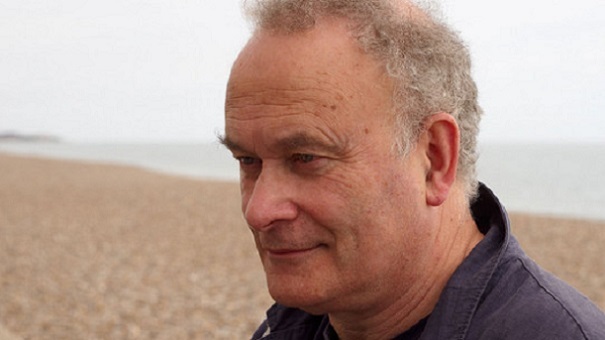
Wigmore Mondays – Alexei Ogrintchouk and friends play music for oboe and string trio

Picalexei-ogrintchouk

Picture used courtesy of the BBC

Alexei Ogrintchouk (oboe), Boris Brovtsyn (violin), Maxim Rysanov (viola) and Kristina Blaumane (cello) – Wigmore Hall, London, live on BBC Radio 3, 12 October 2015

Listening link (open in a new window):

http://www.bbc.co.uk/programmes/b06hjxlv

on the iPlayer until 18 November

Spotify

In case you cannot hear the broadcast, here is a Spotify playlist of the music in this concert, from available versions on Spotify. Alexei Ogrintchouk has recorded the Mozart, while available versions of the Haydn, Britten and Schubert pieces are also included.

What’s the music?

Attributed to Haydn: Divertissement in B flat, HII:B4 (not known) (10 minutes)

Britten: Phantasy Quartet, Op 2 (1932) (13 minutes)

Schubert: String Trio in B flat, D471 (1816) (8 minutes)

Mozart: Oboe Quartet in F, K370 (1781) (14 minutes)

What about the music?

Often in chamber music the strings get a lot of the glory, so it is good to report on a concert where the oboe is invited to take centre stage. The instrument is on occasion associated with sad music (Midsomer Murders use it a lot!) and it is perfect for autumnal listening, but it should be remembered that the oboe is also responsible for a lot of happy music too, as Mozart’s Oboe Quartet testifies.

This piece is a beauty, seemingly free of any constraints in its outer fast movements, while the inner slow movement is short yet poignant, set in the minor key. Mozart wrote it for the virtuoso Friedrich Ramm, and composed the oboe line to sit above that of the violin, thus using the higher register of the instrument a lot.

Britten uses a wider range of colour in his Phantasy, written as a competition piece when he was at the Royal College of Music. Thanks partly to the advocacy of the legendary oboist Leon Goossens, but also to his musical craft, the piece won its competition in Paris. Set over nearly 15 minutes, it has a dramatic profile, beginning as a march that seems to process in from nothing – started by the cello – until the sweep of lyrical oboe and punchy strings together is striking.

The first piece in the concert is a two movement Divertissement attributed to Haydn but, it is not wholly certain who actually wrote it. To my slightly untrained ears it sounds like it could be earlier than Haydn, but regardless of who the composer is the music is polite and attractive, the four instruments set in close dialogue.

Schubert’s single movement for String Trio is in the same key – B flat major – and has a similar profile, though does make the most of a striking descending motif throughout. Originally Schubert wanted this to be the first movement of a bigger piece, but after sketching some bars of the slow movement he stopped writing.

Performance verdict

Over the last few years Alexei Ogrintchouk has developed from a very promising musician to an oboist right at the top of his game – and that was evident throughout a highly enjoyable concert.

The peak was undoubtedly reached in the Mozart, where he met the virtuosic demands of the piece head on but without losing the airy, lyrical approach that makes the Oboe Quartet such a charmer. The performance of the Britten dug in much more firmly, the strings encouraged to project outwards, and this they did with impressive power when the march took hold. Britten’s genius in working with small forms was evident even at this point, and not a note was wasted in the performance.

Both the Haydn and Schubert performances charmed, the Schubert nicely placed so that the strings had a brief moment in the sun – which they enjoyed, with lightness and dexterity, clearly listening to each other.

What should I listen out for?

Attrib.Haydn

2:01 – this light hearted piece begins with an oboe-led melody, while the cello supplies a chugging pulse. The music is polite and attractive. At 5:13 a central section begins, based on the melody from the start.

7:50 – a slightly slower second movement, a courtly dance – in the form of a rondo, which essentially means the same theme recurs at regular intervals. The violin and viola assume greater importance in this movement. The theme itself makes a final appearance at 11:02.

Britten

14:25 – the beginning is almost imperceptible, a little phrase from the cello which is gradually joined by the other two stringed instruments. When the oboe joins at 15:07 the tone is songful, though the spiky accompaniment continues, leaving some tension until a firm statement of the main tune at 16:12. Then a different section takes over, with heavier string writing.

20:25 – the writing now has a softer, hazy hue, as the strings enjoy a slower and more obviously lyrical section. At 22:30 a higher melody from the oboe floats above the texture.

24:52 – the main march idea makes a reappearance, striding forward purposefully – until the music fades, as though it were walking over the horizon and out of earshot.

You can read more about the Britten Phantasy on a blog entry I made two years ago here

Schubert

29:52 – the Schubert String Trio, set in one movement, begins with an attractive melody led by the violin. There is a distinctive downward sweep that is heard from 30:40, and which becomes an important part of the piece. The three instruments stay closely aligned throughout. After developing his main tune, Schubert restates it at 35:22.

Mozart

40:04 – the oboe is already high in its register when the distinctive tune of the first movement is heard, top of an extremely light texture. The strings are busy in their accompaniment. Mozart then proceeds to manipulate his memorable tune through different methods of presentation, until a slight lull at 43:53 – and the return of the main tune at 44:57.

46:44 – A slight shadow falls over the music for the second movement Adagio, where the strings are softer and the oboe a little mournful if still beautiful in its first melody. At around 48:57 the oboe is left exposed in a kind of cadenza, leading up to the thoughtful end.

49:57 – once again the brightness in this music is evident as a light hearted theme sways between oboe and strings. The oboe enjoys the recurrences of its tune, with Mozart subtly varying the accompaniment each time before finishing on the high ‘F’ of the oboe at 54:00.

Further listening

If you enjoyed the sound of the oboe, then a logical next step is a couple of orchestral pieces, added to the bottom of the playlist, that use the instrument to its fullest capabilities:

First of all is Ravel’s subtle but gorgeous Le tombeau de Couperin, the oboe taking up the first theme in the Prélude and also enjoying prominence in the slow Menuet.

Then we have Vaughan Williams’ beautiful, autumnal Oboe Concerto, heard here in a new recording from the oboist Nicholas Daniel. The wistful quality perhaps gives away the fact this piece was written in the Second World War. Daniel’s disc is reviewed on Arcana here

Proms premiere – Colin Matthews: String Quartet no.5

colin-matthews

String Quartet no.5 by Colin Matthews

Apollon Musagète Quartet (Paweł Zalejski & Bartosz Zachłod (violins), Piotr Szumieł (viola) & Piotr Skweres (cello)) (Proms Chamber Music 3)

Duration: 12 minutes

BBC iPlayer link

http://www.bbc.co.uk/events/ecq5v2#b06402nt (Matthews begins talking at 13:19, then the piece at 15:34 and ends at 27:36)

What’s the story behind the piece?

In conversation with Petroc Trelawny before the performance, Matthews reveals that his string quartet rate of composition has been approximately one every ten years, but that the gap is now narrowing.

This work was written for the 75th anniversary of the Tanglewood Festival and is conceived in a single movement. “I wanted to do something very different from the others”, he says, and the silences are a starting point. “The work begins very hesitantly”, he explains, and works up to only one big climax.

Did you know?

Colin Matthews worked as Britten’s assistant in the last few years of his life, and was essentially his right hand man for proof reading and even composition. You can read an interview about his exploits here

Initial verdict

It is possible to detect the hand of a mature composer at work here. So many new pieces rely on shock tactics and volume to make themselves heard, but Colin Matthews shuns all of that with an economic approach that actually brings forward greater emotion.

The faltering start from the quartet, together, becomes a distinctive motif that runs through the piece, and although the music does indeed build and get to a more secure footing, it never fully shakes off the uneasy start from the muted quartet. It is at times reminiscent of a Bartók quartet slow movement, or even Britten, in the intensity of its expression, though it never fully sounds like those composers. The Fifth Quartet says a lot in a relatively short duration, convincing in spite of its emotional doubt, as it retreats into the shadows at the end.

Second hearing

tbc!

Where can I hear more?

Colin has a BBC page devoted to him here

Jean-Guihen Queyras – Bach and Britten at the Wigmore Hall

Jean-Guihen Queyras plays works for solo cello by J.S. Bach and Benjamin Britten at the Wigmore Hall
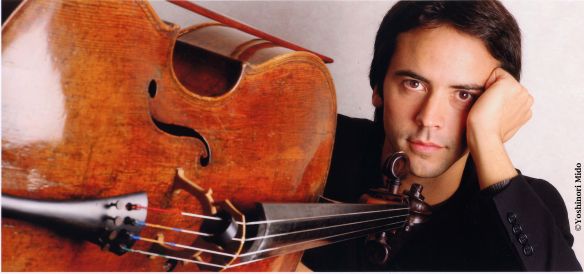
jean-guihen-queyras

Jean-Guihen Queyras (cello) – Wigmore Hall, London, live on BBC Radio 3, 6 July 2015

Listening link (opens in a new window):

http://www.bbc.co.uk/programmes/b060zmjg

on the iPlayer until 5 August

Spotify

In case you cannot hear the broadcast, here is a Spotify playlist of the music in this concert, in recordings made by Queyras for Harmonia Mundi:

What’s the music?

Britten: Solo Cello Suite no.1 (1964) (20 minutes)

J.S. Bach: Solo Cello Suite no.6 (c1724) (30 minutes)

What about the music?

The idea of a cello playing on its own was only fully cultivated in the twentieth century – when Pablo Casals recorded the six Bach suites in the 1930s and they became part of the repertoire once again. Until then, unbelievably, they had lain dormant – but now they stand as arguably the most-played body of works for cello in existence. They are wonderfully flexible pieces, because the easiest parts of the suites can be played by budding amateurs. Generally, the higher the number of the suite, the more technically demanding they are.

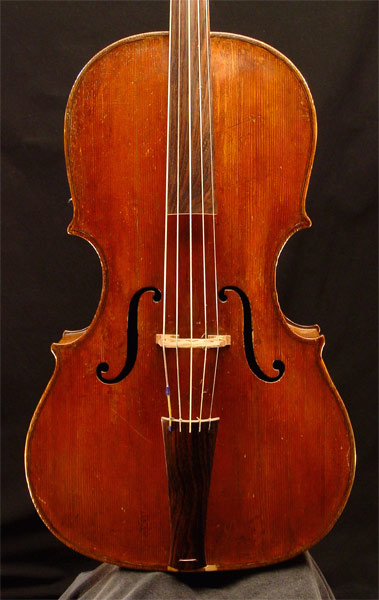
Hence the Sixth and last suite in the set is extremely virtuosic. It is thought to have been written for a five-string instrument known as the violoncello piccolo, like the one in the picture below:
violoncello-piccolo

The Sixth is the longest of the suites, and often features multiple stopping – i.e. more than one note played at once. Because the fifth string of the violoncello piccolo would have been a higher one (an ‘E’ above the highest cello string of ‘A’) the suite is unusual for its treble-rich sound.

Britten stole into the world of the solo cello by way of his dear friend Mstislav Rostropovich, who threw down the gauntlet to him to write a number of compositions for the instrument. In taking on writing for the solo cello he was one of the first since Bach to take it on in a solo capacity – Zoltán Kodály and Max Reger being the others.

Britten made an explicit homage to Bach’s works in the use of different dance forms, and like the elder composer he often wrote out multiple stopping, using the confines of the instrument to somehow write independent parts for it. These can be heard especially as the second movement Fuga takes shape.

Britten was to write another two suites for solo cello, for it was clearly an instrument that pricked his compositional interest.

Performance verdict

If ever proof were needed that Bach can make you happy, Jean-Guihen Queyras supplied it handsomely in this wonderful hour of music. Each of the six movements making up the Sixth Cello Suite danced persuasively, although in the slower Allemande and Sarabande dances Queyras achieved a wonderful, all-encompassing peace. Technically he was superb – this is far from easy music to play in public – with rock solid intonation and an easy way that endeared him to his audience.

The Britten made a good contrast, for this is a very serious piece, with inner strife that Queyras built perceptibly as the final flurry of notes grew closer. Here he was careful to bring out Britten’s part writing for the instrument, so that on occasion it felt as though there were many more instruments than just one in the room. The cello’s probing tone still brought each melody to the front, while the technical effects Britten uses to enhance the impact of the piece were brilliantly executed.

What should I listen out for?

Britten

1:41 – the Canto primo, where the cello proclaims the theme majestically. Immediately you can hear Britten’s use of multiple stopping, which is where the cello plays chords from several strings at once. This moves into…

3:39 – the Fuga begins. It seems very unlikely that a fugue could work on a cello but it somehow does – when at 3:52 the next entry of the tune comes in, meaning several parts can exist simultaneously. The ear is led this way and that, as though two or even three cellos are playing. From hear the mood darkens to…

7:42 – the Lamento, which starts with a broad intonation, like a solo singer. Britten wrote so many of his instrumental pieces as though they are vocal.

10:07 – the Canto Secondo. In response to the Lamento the cello gives a subdued account of the Canto theme, appearing lost in thought.

11:07 – Serenata. Marked Allegretto pizzicato (quite fast but with the strings plucked) this is a more playful homage to the second movement of Debussy’s Cello Sonata, which Britten and Rostropovich recorded together in 1961.

13:33 – a movement marked as Marcia – where Britten achieves ghostly sounds firstly through the use of harmonics, where the left hand rests very lightly on the string, and then through the wood of the bow banging on the string (14:14). The mood is now agitated.

16:40 – from the murky depths of the cello we hear the solemn Canto terzo, another variant of the tune from the start. The music becomes gradually more forceful, moving into…

18:29 – the Bordone begins – an unusually titled movement that features a drone on the note ‘D’ – mostly from the open string. Around it a cluster of notes can be heard, while the left hand plucks the string absently. Again it sounds like there are two or three instruments playing, such is the density of Britten’s music.

21:39 – the final section, marked Moto perpetuo – and now the cello sounds like a group of excited insects, the melody fluttering around restlessly. At 23:02 the main tune returns but sounds breathless in this company, as it does until the end – which is deliberately distorted and angry.

J.S. Bach

27:08 – the expansive Prelude, rooted in D major by frequent sounding of the open ‘D’ string, before gradually opening out. Bach’s main tune returns at a lower pitch (‘G’) at 29:33 – but then the music climbs to a peak at 30:28.

32:16 – the slow Allemande dance begins. This is the longest single movement in all of Bach’s music for solo cello, and it resembles a religious contemplation. Time really does seem to stand still as the cello’s music unwinds with a great inevitability. When he repeats the first section (from 33:57) Queyras plays much quieter.

40:34 – the triple-time Courante dance, a lively affair that finds the cello jumping around its range.

44:31 – the slow, serene Sarabande – which inhabits a similar world to the earlier Allemande. It requires clarity on the part of the cellist, who is playing high chords for much of the sequence, but when played well it is very beautiful, as here.

49:46 – a lightness of touch runs through the two Gavottes. The first of these uses a lot of multiple stopping, while the second (beginning at 51:25) is more purposeful and works its way into a bit of a frenzy over a drone. The first Gavotte is repeated at 52:34.

53:25 – the last of the dances, a Gigue – again in triple time. This has a rustic feel and keeps the wide open sound Bach has used throughout the suite, which reaches a thoroughly uplifting finish at 57:33.

Further listening

If the sound of the cello on its own appeals, the rest of the Bach and Britten suites are wholeheartedly recommended. In the Britten, one of many fine recordings comes from Norwegian cellist Truls Mørk, made for Virgin Classics. It can be heard on Spotify here:

In the Bach works interpretations are many and varied, so it is advisable to try a number of different sources. One of the earlier classic recordings that is always rewarding comes from the French cellist Pierre Fournier, made for Deutsche Grammophon’s side label Archiv Produktion in 1960. Here it is on Spotify:

For more concerts click here

Vaughan Williams and Sir James MacMillan – Oboe Concertos

macmillan-vw-daniel

Nicholas Daniel teams up with the Britten Sinfonia and Harmonia Mundi to present the recorded premiere of the Oboe Concerto by the recently knighted Sir James MacMillan. He couples this with a much shorter piece by the composer, One, and another British oboe concerto, the well-loved Vaughan Williams. Completing a varied cross-section of styles is Britten’s Suite on English Folk Tunes (A Time There Was), his final completed orchestral work.

What’s the music like?

MacMillan has written a bold Oboe Concerto, a substantial work lasting nearly 25 minutes that makes great technical demands on its soloist. It is a rewrite of an earlier piece for oboe and orchestra, In Angustiis, which responded to the horrors of 9/11. While the piece is essentially optimistic in tone, these thoughts can be felt in the second movement, essentially a lament, where the strings sigh painfully, and in a moment of deep thought that occurs towards the end of the first movement – in complete contrast to the jaunty, angular main material.

Vaughan Williams’ concerto is a lovely piece, its dreamy first theme coloured with strings to evoke a picture of hazy sunshine. Completed in 1944, it is a largely positive work in the face of the Second World War, especially in the third movement, where a dance plays out between oboe and strings.

Britten’s suite, as with so many of his orchestral works, is a model of economy, saying in fifteen minutes what many lesser composers would do in 25. It is extremely resourceful in its use of ten folk tunes, but it is also tinged with pain, the composer aware that he is in his last days – and this is felt in Daniel’s cor anglais solo in the tune Lord Melbourne.

One, the second MacMillan piece here also shows his love for his home country, based on a single, arching tune based on the traditional song of Scotland and Ireland.

Does it all work?

Nicholas Daniel is one of our finest oboists, and although even he admits to difficulties in learning the part for the MacMillan his playing is absolutely superb. The energy of that work contrasts with the soulful Vaughan Williams, an affectionate performance where the slightly reduced forces of the Britten Sinfonia (in comparison to a full scale orchestra) mean more detail can be heard and enjoyed. Turning his hand to a conducting role, Daniel teases out Britten’s subtle affection for folk tunes through the relative darkness of illness.

Is it recommended?

Yes – and how satisfying to listen to such a substantial contemporary piece for oboe, which could hardly have a better advocate than it does here.

With contrasting styles of music this disc is an unrestricted pleasure, and is recommended for all fans of classical music from these shores.

Listen on Spotify

This disc can be heard here: