Here is an Arcana playlist for Burns Night! Made up of Scottish classical music and settings of the poet, it is a mixture of vocal and instrumental music that will hopefully give an idea of the breadth of responses to Robert Burns and his poetry – not to mention his own songwriting. Make sure you serve with haggis, neaps and tatties, and a warming whisky…
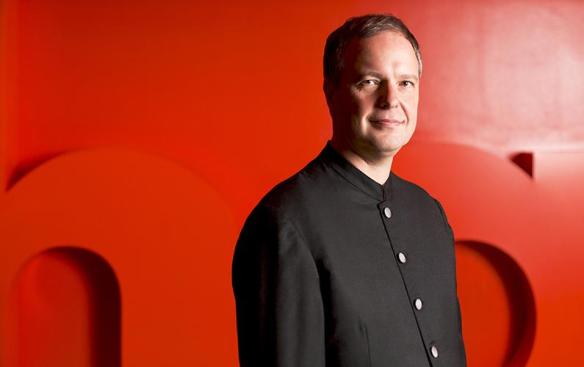
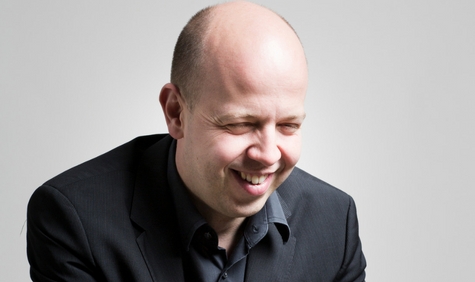
Lucy Crowe (soprano, above), Joseph Middleton (piano, below)
Purcell, realised Britten Lord, what is man? (A Divine Hymn) (1693) (1:17-6:36 on the broadcast link below); O solitude, my sweetest choice (1684-5) (6:40-12:00) Weldon, realised Britten Alleluia (before 1702) (12:04-14:00) Michael Head Over the rim of the moon (1918) (The ships of Arcady 15:20-18:15, Beloved 18:25, A blackbird singing 19:48-22:08, Nocturne 22:12-25:21) Ireland The trellis (1920) (26:37-29:25); My true love hath my heart (1920) (29:33-31:10); When I am dead, my dearest (1924) (31:14-33:00); If there were dreams to sell (1918) (33:02-34:46); Earth’s call (34:54-39:38) (1918) Walton 3 Façade Settings (1931-2) (Daphne (40:47-43:30; Through gilded trellises (43:36-47:16); Old Sir Faulk (47:17-49:08)
Wigmore Hall, London; Monday 24 September 2018
You can listen to the BBC Radio 3 broadcast by clicking here
Written by Ben Hogwood
On this evidence Lucy Crowe and Joseph Middleton are two of the finest exponents of English song around. This finely planned recital showed off the versatility in Crowe’s voice, as well as its clarity and pure emotion. Middleton also distinguished himself with some exceptional scene-setting and characterisation of his descriptive piano parts.
The solemn glory of Britten’s Purcell realisations provided an imposing start, although Crowe allowed the expansive setting of A Divine Hymn (from 1:17 on the broadcast) plenty of room to express its excitable joy, with a sparkling finish to boot. O solitude (6:40) was a more thoughtful interpretation and beautifully sung, while the twists and turns of John Weldon’s Alleluia (12:04) were skillfully negotiated. Britten’s expanded piano parts, his own informed response to Purcell’s melodies, were in safe hands thanks to Middleton. There followed a rarity in the form of Michael Head’s short cycle Over the rim of the moon, from his late teenage years. The ships of Arcady (15:20) featured tolling bells in Middleton’s right hand, while a rapturous Beloved (18:25) gave up its soul. A blackbird singing (19:48) embraced the open air, with a sparkling first note from Crowe, while the cool Nocturne (22:12) sent a light shiver down the spine.
Crowe really came into her own in a sequence of five John Ireland songs. Ireland can be elusive in some interpretations, but not here. As soon as Middleton’s descriptive piano set the scene for The trellis (26:37) Crowe was in her element, using a poignant pause to illustrate ‘the whisper’d words between and silent kisses’. The breathless adoration of My true love hath my heart (29:33) was countered by the finality of When I am dead, my dearest (31:14), which brought a tear to the eye. If there were dreams to sell (33:02) offered a more upbeat outlook, before Earth’s call (34:54) took us right to the water, depicting the plover, cuckoo and stormy ploughland with exquisite detail, all blown by Middleton’s blustery breeze.
After these heights, the Walton Façade settings worked well, Crowe handling the tricky wordplay of Edith Sitwell impressively. Her sideways looks during Daphne (40:47) were brilliantly done, as were Middleton’s persuasive piano rhythms underpinning Through gilded trellises (43:36), where Crowe hit her top B flat with ease. Old Sir Faulk (47:17), with its bizarre lyrics, gave a nonsensical end.
The two encores were unforgettable. Crowe began with an unaccompanied version of She moved through the fair (50:23-53:18), which tugged urgently at the heartstrings, and ultimately brought a tear to the eye. So too did one of Britten’s finest folksong settings, The Salley Gardens (54:20-56:47), a pure and beautiful note on which to end.
Further listening
Lucy Crowe has not recorded any of the repertoire in this concert, but the playlist below gives leading interpretations of the songs she sang.
For further exploration of the songs of John Ireland, this album gives his complete output:
Proms at the Cadogan Hall: Dame Sarah Connolly (mezzo-soprano, above), Joseph Middleton (piano, below)
Stanford A Soft Day Op.140/3 (from A Sheaf of Songs from Leinster) (1913) (from 7:15 on the broadcast) Parry Weep you no more, sad fountains (from English Lyrics Set 4) (1896) (9:58) Vaughan Williams Love-Sight (from The House of Life) (1903) (12:18) Gurney Thou didst delight my eyes (1921) (16:53) Somervell A Shropshire Lad – ‘Into my heart an air that kills’ (1904) (20:19) Bridge Come to me in my dreams (1906) (22:45) Howells Goddess of Night (1920) Bridge Journey’s End (1925) (28:19) Britten A Sweet Lullaby (36:34); Somnus (40:31) (both 1947, world premieres) Holst Journey’s End (1929) (42:50) Britten A Charm of Lullabies Op.41 (1947) (45:09, 47:22, 49:08, 51:06, 52:48) Lisa Illean Sleeplessness … Sails (2018, world premiere) (57:31) Mark-Anthony Turnage Farewell (2016, world premiere)
Cadogan Hall, Monday 6 August 2018
You can listen this Prom by clicking here The times given on this page refer to the starting times on the broadcast itself
Reviewed by Ben Hogwood. Photo of Sarah Connolly (c) Jan Capinski
11 composers and four world premieres in an hour. Not a recipe for sleep and respite, you might think, but Dame Sarah Connolly and Joseph Middleton constructed between them an enchanting tour of English song, ending up at some far-flung outposts.
For anyone new to the form this would have been the ideal introduction, especially as Dame Sarah was singing with wonderful clarity and diction. I hardly needed to glance at the texts, for her words and expressions, added to those of Middleton’s carefully and beautifully crafted piano parts, did the job perfectly. The structure of the recital was very satisfying too, with natural pauses at the end of a short group of songs for applause and the intake of breath – and, as the subject matter was sleep and dreams, it ensured nobody had fallen foul of the listening criteria in the hot conditions!
The two began in Ireland, presenting the beatific calm of Winifred Letts’ A Soft Day, as set by Stanford, with the ‘wind from the south’ that some of us in the hot Cadogan Hall would have been longing for! So too for the subject of Parry’s Weep you no more, sad fountains, with its flowing piano lines. This pair from the fathers of English song led to one of the ‘sons’ – Vaughan Williams, and a deeply felt Love-Sight from his song-cycle The House of Life – and Ivor Gurney, his moving Thou didst delight my eyes.
We moved on to Arthur Somervell, the brief but tenderly devastating Into my heart an air that kills (from A Shropshire Lad) and then Come to me in my dreams, an expressive, earlier example of Frank Bridge’s chromatic credentials. Bridge appeared later with the lovelorn Journey’s End, following Herbert Howells’ magical Goddess Of Night – where Connolly allowed the text plenty of room.
Britten’s interpretations of sleep and dreams range from the calm to the nightmarish, aspects that surfaced throughout his song-cycle A Charm of Lullabies, which was given with two extra songs intended for the cycle but left unused. Recently ‘repaired’ by Colin Matthews, A Sweet Lullaby and Somnus were receiving their world premieres and were interesting finds if not quite reaching the level of intensity in the cycle itself.
Britten starts his night with A Cradle Song, before Connolly’s Scots accent (she was born relatively close by in County Durham!) brought an extremely authentic voice to The Highland Balou. The fifth number, The Nurse’s Song, is structured like the Dirge from Britten’s earlier Serenade for tenor, horn and strings. It focused everyone in the hall on the vivid storytelling of Connolly’s voice, from which she moved through humour, intense scolding (scary, too!) and soft slumber. The music ranged wildly, Britten’s wandering piano writing recalling Shostakovich in A Cradle Song, while the clustered chords of the refrain in Sephestia’s Lullaby spoke vividly in a language Janáček would understand. Connolly’s characterisations were brilliant, the audience impatient to clap between numbers initially but held in rapt concentration at the end.
In between the Britten discoveries, Gustav Holst contributed a sparse but telling interpretation of Journey’s End, which Connolly again sang with deep expression, while Australian composer Lisa Illean gave us another world premiere, a farewell of her own in Sleeplessness … Sails. This was a very slow-moving piece where Connolly held admirable control, despite the music’s seeming reluctance to move on. Arguably more effective was Turnage’s Farewell, a profound statement which ended with the composer bounding on the platform, delighted at the interpretation. It would be lovely to hear more from him in song – and from this pair, too, who delivered a wonderful hour’s escapism to the land of nod!
You can hear Dame Sarah Connolly and Joseph Middleton’s new recital disc Come To Me In My Dreams, which features much of the music heard in this concert, on the Spotify link below:
Vilde Frang (violin), BBC Symphony Orchestra / Sakari Oramo (above)
Clyne This Midnight Hour (2015) [London premiere]
Britten Violin Concerto, Op.15 (1939)
Beethoven Symphony No.6 in F, Op.68, ‘Pastoral’ (1808)
Barbican Hall, London; Wednesday 21 March 2018
Written by Richard Whitehouse
You can listen to the broadcast of this concert here, available until 20 April 2018
Most concerts by the BBC Symphony still feature either a world or national premiere, and tonight’s concert began with a first London outing for Anna Clyne’s This Midnight Hour. Drawing inspiration from poems by Juan Ramon Jiménez and Charles Baudelaire, this 12-minute piece duly alternates between energetic and more ruminative music in a ‘stretto’ of accumulating impetus. A pity the climactic stage loses focus in an amalgam of waltz-like flaccidness and folk-inflected jejunity – suggesting this as not one of Clyne’s better pieces.
Britten’s Violin Concerto has certainly come in from the cold over recent years. Vilde Frang was a little tentative in the initial Moderato, with its interplay of wistful lyricism and driving impetus, but the central scherzo was finely judged through to a seismic climax then dextrous cadenza leading into the finale. The earliest among Britten’s passacaglias, it makes plain his feelings over the demise of the Spanish republican movement, and Frang (below) had the measure of its sombre inwardness and high-flown rhetoric prior to a recessional of haunting eloquence.
As so often, Sakari Oramo was an astute and attentive accompanist – thereafter putting the BBCSO through its paces in a fluent and often searching account of the Pastoral Symphony. In this, as in Beethoven’s music overall, Oramo was his own man – omitting the exposition repeat in what was an incisive but never headlong reading of the first movement, followed by an Andante whose rhapsodic unfolding was accorded focus by the flexible underlying tempo and fastidious shading of string textures as has long been a hallmark of Oramo’s conducting.
The last three movements proceed continuously and if the scherzo was a little too streamlined for its verve and humour fully to register, the ‘Thunderstorm’ made for a powerful interlude before (and climactic upbeat to) the finale. As disarming melodically as it is difficult in terms of pacing, this unfolded with a sure sense of its developing variation; allied to a lilting motion which evokes a cosmic dance offered as thanks for peace in time of crisis. Maybe the closing cadence was just a touch over-emphatic, but the sense of a journey fulfilled was undeniable.
You can watch Vilde Frang talk about the Britten Violin Concerto in a BBC video hereFor more information on the BBC Symphony Orchestra, head to the orchestra’s homepage – and for more on their chief conductor Sakari Oramo, click here
Meanwhile you can listen to Vilde Frang’s disc of the Britten and Korngold Violin Concertos, recorded for Warner Classics, on Spotify:
It may not yet feel like it (in the UK at least!) but Spring is just around the corner. With a timely intervention, Huw Watkins (above) has not long had the first performance of a piece with that very title, given by the orchestra of which he is Composer-in-Association, the BBC National Orchestra of Wales. When Arcana catches up with him, however, his thoughts are with a boyhood favourite, the BrittenPiano Concerto – centrepiece of a concert he has curated for the orchestra.
Immediately Watkins is enthusiastic about the Britten performance, and the orchestra’s prowess. “I have to say the orchestral parts are sounding brilliant, and touch wood it’s gone pretty well. It’s a really fun piece to play, and I don’t think the orchestra have ever played this piece before. They are so quick to learn though, and the rehearsal we have just done was done in two hours rather than three!”
The Britten brings its own particular challenges. “I do play concertos but I’m a composer and chamber musician really, so I’m not on the regular circuit. It is always a bit nerve wracking playing with an orchestra again, but this is a work that I am familiar with and have known since university. I did it with the orchestra there, so got to know it very well. It’s a lovely, youthful piece, and the conductor Martyn Brabbins, who I’ve been working with, has done it a lot and knows it very well. He was really excited about this performance, and it was lovely to work with him. I play a lot of chamber music so you have to listen in a different way with the orchestra, leading rather than following.”
Watkins recalls for Arcana his first ever encounters with classical music. “It’s difficult to remember exactly, because music was always around. Paul was already playing the cello and piano, my dad was an amateur viola player, and mum was teaching in school. Before my teenage years I loved playing the piano but I had become a bit bored with it. Then I listened to Stravinsky’s Petrushka and it blew me away when I first heard it – and so did the Britten that I’m about to play! It’s so immediately likeable and fun.”
He then recalls the first meeting he had with the BBC National Orchestra of Wales. “I remember that I’d written a piece in 2000, a Sinfonietta-type piece that they did with Grant Llewellyn. I’ve withdrawn it from publication now but it was a great learning piece. As a composer it’s hard to get access to an orchestra regularly so that was a really big thing. Shortly after I wrote my Piano Concerto, which I played myself with tonight’s conductor Martyn Brabbins. We go back a long way!”
How would he describe Spring in the form of a program note? “I didn’t really want to do what was just an aural picture, but the opening felt like that moment just before spring starts. A lot of pieces of music do that but it had a pregnant feel to it. Giving a title to a piece of music is really hard, because if you think of something poetic you become chained to it, but it’s nice to have something to think about in the audience. With this piece I think there is a sense of something blooming and broadening out. That was in my mind, and the idea of looking forward to spring.”
What are his own personal reflections on the season? “When spring comes you notice it getting lighter, and getting energy back. It would be nice to be able to have a break but the trouble with composing is that the deadlines come through thick and fast. I do need to plan a bit of a break, you can’t just keep churning it out. I do want to find time to listen to other pieces, it can be distracting to hear other people’s work when you’re writing so I generally choose not to. I’m lucky with the demand there is at the moment, the BBC NoW is a source of three commissions and writing for the orchestra is very enjoyable, if time consuming!”
Watkins divides his time between composition and the piano, and over recent years has shown himself to be an extremely quick learner. This has enabled him to record several discs of lesser-known British repertoire for cello and piano for Chandos. In partnership with cellist brother Paul Watkins, this was an experience he clearly enjoyed. “A lot of that repertoire was new to us, and I think the John FouldsCello Sonata in particular is an absolute masterpiece. The York BowenCello Sonata was good too. We were lucky to do those discs. I find I’ve always been a quick sight reader but I can’t always rely on that as I get older! I want to spend more time on new pieces, but I want to concentrate on doing pieces more than once, to really get to know them.”
The challenge with such a busy schedule on both fronts is achieving balance between work as a performer and a composer. “My piano playing feeds into my creativity and my compositional life”, he says. “I think you lose a perspective if you’re not involved in live performance as a musician, and with how audiences respond.”
Some opportunities are just too good to pass though, including last year’s commission for a carol for the Service of Nine Lessons and Carols at King’s College, Cambridge. “It was an incredibly inspiring thing to be asked to do. I wanted to write something simple, to write something pure and plain. The atmosphere in that service on Christmas Eve is amazing, and that’s probably my only chance to go to the service as well!”
You can discover more about Huw’s contribution to the service here
Later in the year Watkins the pianist will step forward as soloist in the Piano Concerto by Philip Cashian, an eagerly awaited world premiere at the Aldeburgh Festival. “Yes, that’s something we were preparing to do this time last year with the BBC Symphony Orchestra,” Watkins recalls. “We had three days rehearsing it with Oliver Knussen and he sadly became ill on the morning of the concert, and it had to be rescheduled. It’s a really good piece, energetic and athletic. Philip is great at writing fast and rhythmically lithe music.”
Knussen is a conductor Watkins has worked with before, and who has had a considerable influence on his life as a performer and composer to date. “I find him completely inspiring”, he gushes. “I’ve been lucky to do a couple of concertos with him, the Tansy Davies and Helen Grime (Huw’s wife). He’s brilliant to hang out with too, he knows and knew so many people. I hope he writes it all down! It would be great to read a book by him eventually, especially as he’s also hilarious and very good company. He wrote a piece for the violinists Tamsin Waley-Cohen and I recently. It was the first new piece he had written since 2010, so that was really special. I think this has started him back to regular writing, and it is a truly gorgeous piece. It was a real honour. We were getting e-mails with a page a day of this amazing, handwritten score.”
Watkins counts Knussen as a lasting inspiration. “He really is one of the towering figures of the last 50 years in the music of this country, a composer with such a brilliant ear. With him it’s really important that you play the right notes, because he has thought out the harmony so thoroughly. It is so beautiful to listen to. He is definitely very high up my list, and I’ve been very lucky to work with a lot of contemporary composers. Gerald Barry is another I have really enjoyed working with, and I played in his opera The Importance of Being Earnest. I admire it greatly, although it is hugely difficult to play!”
There is plenty for Watkins to explore on the instrumental front, and for now he has plenty to get his teeth into with this relatively ‘traditional’ approach. “I don’t think instruments are ‘tired out’ yet, there is still so much you can get out of it. There was a Thomas Adès piece Seven Days, a kind of video ballet, and I thought that was absolutely brilliant. I wouldn’t rule it out in my own writing but there is still so much to do!”
His own music has a tonal base, with melodic points of reference, but continues to look forward int is approach, drawing a little on the past in form and function but introducing new melodic and harmonic thoughts. “That’s a nice way of putting it”, he says approvingly. “I don’t want to go back to something safe and cosy, I want to write fresh things. I’ve immersed myself in some out there music but I am now writing the music I really want to write. I get some writers who say it’s conventional but I don’t care to be honest! I think someone like Britten still did things with tonality that still make it new and fresh. If everything is self-consciously new it can be fake! It’s no good denying the tonal audacity and the hierarchy of the intervals with Britten – and shows that there are still things you can do. That’s not to say the other developments are not valid, but I wouldn’t dismiss it.”
We move on to discuss the BBC National Orchestra of Wales, now 90 years old. Watkins is hugely appreciative of their achievements and function. “I think the part I know is since the 1980s, when they became a fully fledged Symphony Orchestra. I can only speak from my own experience in the St David’s Hall, which was new then. It has become an incredibly good orchestra, but they also make an effort to go around Wales which I think is extremely important. Places like Abergavenny and Bangor would not always have a symphony orchestra near them, so it’s very important. They don’t have to worry quite so much about full houses so they can do stuff that’s off the beaten track, and it’ll also be on the radio.”
“That’s a very healthy thing. It’s good for composers to think a little bit commercially when writing, but also good that people like the BBC NoW commission these pieces. At the end of February I’m doing a workshop with young composers, and Martyn Brabbins is doing conductor masterclasses. That’s a real services because it’s hard for people to learn their craft. The orchestra does get better and better, we were so impressed with the Britten and I know that tomorrow it will be better still. Cardiff’s lucky to have the Welsh National Opera too, it improves the life of a city. I feel very lucky to be Composer in Association here, it’s been a very nice experience for me.”
Watkins will perform Philip Cashian’s Piano Concerto at the Aldeburgh Festival, part of a concert with the BBC Symphony Orchestra and Oliver Knussen that will include Copland’s Appalachian Spring and Music For A Great City. For more details you can go to the Snape Maltings website


 There followed a rarity in the form of Michael Head’s short cycle Over the rim of the moon, from his late teenage years. The ships of Arcady (15:20) featured tolling bells in Middleton’s right hand, while a rapturous Beloved (18:25) gave up its soul. A blackbird singing (19:48) embraced the open air, with a sparkling first note from Crowe, while the cool Nocturne (22:12) sent a light shiver down the spine.
 Proms at the Cadogan Hall: Dame Sarah Connolly (mezzo-soprano, above), Joseph Middleton (piano, below)