
 Prom 44 Justina Gringytė (mezzo-soprano), CBSO Youth Chorus, CBSO Chorus, City of Birmingham Symphony Orchestra / Ludovic Morlot (above)
Debussy Prélude à l’après-midi d’un faune (1894)
Lili Boulanger Psalm 130 ‘Du fond de l’abîme’ (1914-17)
Debussy Nocturnes (1897-99)
Ravel Boléro (1928)
Royal Albert Hall, Wednesday 15 August 2018
Reviewed by Ben Hogwood Photo of CBSO (c) Upstream Photography
You can listen to this Prom on the BBC Proms website here
One of the BBC Proms’ most valuable undertakings this season is the music of Lili Boulanger (1893-1918). Her biggest choral work, a setting of Psalm 130 (Du fond de l’abîme) was the centrepiece of this enchanting concert from the City of Birmingham Symphony Orchestra and Ludovic Morlot.
For once the Royal Albert Hall acoustic was ideally suited to the instrumentation of a piece, especially with the amount of detail lit up by this particular interpretation. Beginning with organ and lower strings that seemed to be positioned somewhere underground near the loading bay, the piece grew assuredly in stature and emotion, finding the nub of its text. The assembled throng of the CBSO Chorus sang as one, shaping Boulanger’s phrases beautifully while enjoying the harmonic twists and turns that give this piece – completed a year before its composer’s death – a distinctively modern turn.
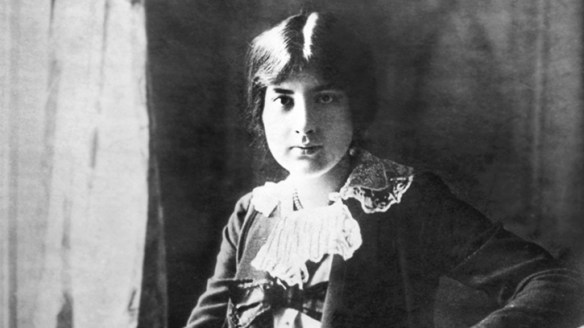
Boulanger (above) was a friend of Debussy but had a tragically short-lived existence, dying from complications of illness at the age of 24. In that brief time she had already served notice as a composer of considerable invention, deep emotion and the ability to extend colour, harmony and melody in particular. All these things were on show in Psalm 130, the performance notable for its exquisite brush strokes.
The only problem was a difficulty in following the text itself from the arena. Although the right notes were undoubtedly there from the chorus, and mezzo-soprano Justina Gringytė was full of tone in her solo passages, the words themselves were difficult to grasp above the texture. Some of the blame for this could go to the Royal Albert Hall acoustic itself – and it certainly wasn’t at the expense of a quite wonderful piece that should occupy a much firmer place in the repertoire.
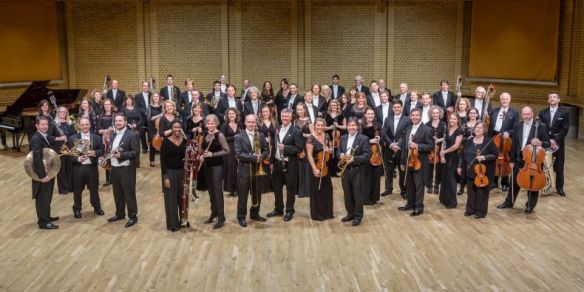
For the rest of the programme Morlot and his charges gave us popular Debussy and Ravel, beginning in the heat haze of Prélude à l’apres-midi d’un faune and ending with the minimalist Boléro. These pieces were fascinating to contrast, from Marie-Christine Zupancic’s languorous flute solo that led off the Debussy – beautifully played – to the insistent, temple-knocking side drum of Adrian Spillett in the ubiquitous Boléro. Morlot paced both to perfection, giving us a chance in the Ravel to indulge in Matthew Knight’s trombone solo but also bringing out the Spanish rhythms and colour that make the piece a riot. He brought percussion section leader Spillett to the stage for a well-deserved curtain call at the end.
Before Boléro we were treated to the exquisite Nocturnes of Debussy – which would have been even more exquisite were it not for a barrage of coughing around the hall. Still, that did not completely harm a sensuously shaded account of Nuages (Clouds), the first Nocturne, whose softly oscillating chords left their understated mark, before the second and much quicker Fêtes (Festivals) ran lightly on its feet. The central procession episode of this pictorial movement was brilliantly paced by Morlot, with a hallucinogenic effect achieved through to muted trumpets, distant horns and wide open string textures.
While these two movements were special the concluding Sirènes (Sirens) was bewitching, fusing women’s voices and orchestra in an innovative combination that predates Holst’s The Planets by some 20 years. The CBSO Youth Choir were superb here, singing as one and hitting the high notes without fear – and without compromising the colour Debussy so clearly strives for. Morlot portrayed the vast, wide open scope of the sea – but also seemed to be looking beyond, casting his gaze far into space. This worked extremely well in the Royal Albert Hall, though perhaps quelling the coughers at the end was an even greater achievement!
This was an inspirational Prom, giving us familiar classics and the relatively unknown, boosting the profile of Lili Boulanger while reasserting the claims of Debussy and Ravel to be masters of their field. French classical music at its finest.
 Debussy Pelléas et Mélisande

 The mid-afternoon ‘Tombeau de Debussy’ juxtaposed pieces from the supplement published by La Revue musicale in 1920 with commissions under BCMG’s Sound Investment Scheme. Jungeun Park’s Tombeau de Claude Debussy found violinist Alexandra Wood, cellist Ulrich Heinen and pianist Richard Uttley (above) evoking the composer’s death in darkly ironic terms, then the oblique tonality of Dukas’s La plainte, au loin, du faune … seemed as much a memorial to the creative impasse as to its passing. Highly sensitive here, Uttley was no less probing in the moody ‘Sostenuto rubato’ that Bartók incorporated into his Eight Improvisations; soprano Ruby Hughes joining him for the whimsical profundity of Satie’s setting of Lamartine in En souvenir. Sinta Wallur’s Tagore Fireflies sets three brief verses by the Indian poet in music whose ornamented vocal was complemented by the piano’s gamelan-like patterning. Wood and Heinen found requisite plangency in the first movement of Ravel’s Duo; then cellist and soprano took on engaging theatricality for Frédéric Pattar’s setting of Maeterlinck in (… de qui parlez-vous?). Uttley captured the bluesy elegance of Goossens’s Pièce, before Julian Anderson’s Tombeau united the musicians in a setting of Mallarmé’s tribute to Edgar Allen Poe whose chiselled vocal writing and guitar-like sonorities made for a provocative ending.
 Sunday afternoon brought Birmingham Contemporary Music Group in a programme devoted to Debussy’s Legacy. Boulez’s Dérive 1 (1984) set the scene with its wave-like eddying of pithy motifs, then the music of Tristan Murail (above) took centre-stage with pieces from across three decades of his career. Treize Couleurs du soleil couchant (1978) is a reminder of how radical yet understated (à la Debussy) his music must have sounded in a French scene dominated by Boulezian serialism, harmonic overtones a constant around which the ensemble inhales then exhales its glistening timbres. How Murail got there was duly underlined by Couleur de mer (1969): almost his first acknowledged work, its five sections pit serial constructions against a more intuitive take on harmony and texture in music whose eruptive central span is almost as startling as its cadential sense of closure. Between these, Feuilles à travers les cloches (1998) is an evocative and eventful miniature anticipating the stark post-impressionism of Murail’s more recent music. Fastidious playing from BCMG, and perceptive direction by Julien Leroy.
 Arcana.fm