Live review – Anna Vinnitskaya & CBSO / Mirga Gražinytė-Tyla perform Shostakovich

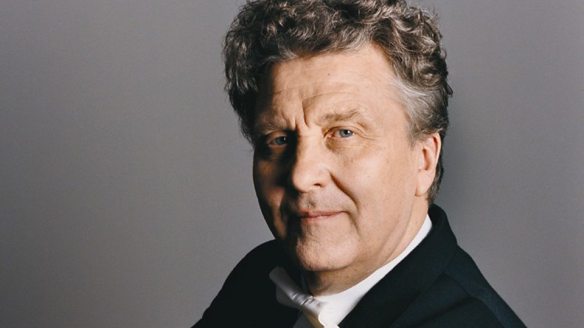
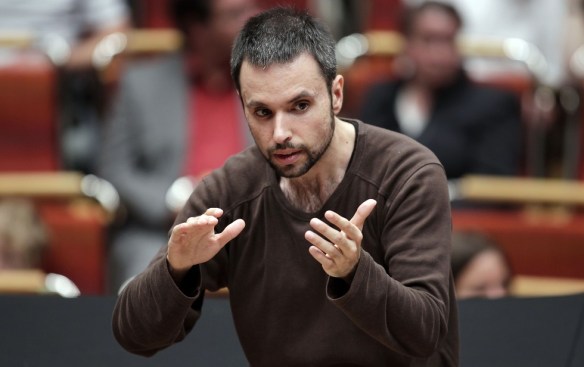
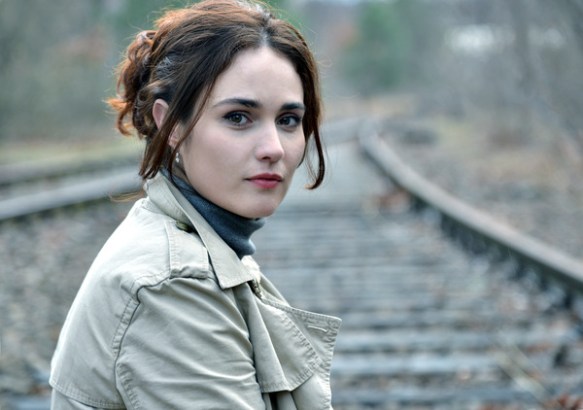
Anna Vinnitskaya (piano, above), Jonathan Holland (trumpet), City of Birmingham Symphony Orchestra / Mirga Gražinytė-Tyla (below)

Symphony Hall, Birmingham
Saturday 16 March 2019

Shostakovich
The Limpid Stream: Suite Op.39a (1935)
Piano Concerto no.1 in C minor Op.35 (1933)
Symphony no.5 in D minor Op.47 (1937)

Written by Richard Whitehouse

Photo of Anna Vinnitskaya (c) Gela Megrelidze

With Birmingham Opera Company’s staging of Lady Macbeth of Mtsensk having finished its run, an all-Shostakovich concert by the City of Birmingham Symphony was not just apposite but underlined the rapport between the orchestra and its music director Mirga Gražinytė-Tyla.

The programme centred on Shostakovich’s music before and after an infamous Pravda article irrevocably altered the composer’s evolution. Attacks on The Limpid Stream were admittedly gratuitous; this last of his ballets finds Shostakovich at his most accessible – as witnessed by the suite devised several years later. Starting with a suave Waltz (which found fame as title-music for Stanley Kubrick’s Eyes Wide Shut), this continues with a vigorous Russian Dance then breezy Galop. The highlight is an Adagio whose soulful cello melody was eloquently rendered by Eduardo Vassallo. A deft pizzicato Polka was a rather inconclusive ending: the uproarious final dance (which follows-on almost continuously) would have made for a more decisive conclusion. No matter, this was still an engaging sequence and captivatingly played.

Shostakovich conceived his First Piano Concerto for his own pianism. Influences derive more from stage and screen than any earlier concertos, but its formal ingenuity is undeniable. Anna Vinnitskaya gauged ideally the first movement’s volatile tempo changes, while the Lento had poignancy and no mean vehemence at its climax; the ensuing intermezzo an upbeat to a finale whose high-jinx were teasingly held in check. Jonathan Holland was engaging in the obligato trumpet part, and the CBSO strings retained their articulation even in the hectic closing pages.
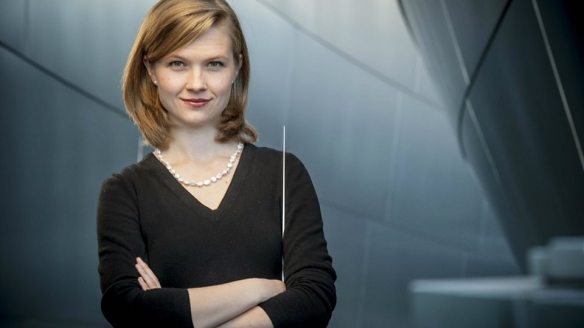
Whether or not an explicit response to that condemnatory Pravda article of January 1936, the Fifth Symphony is crucially important for moving the emphasis within Shostakovich’s output away from the theatrical. Nothing reinforces this more than the opening Moderato, with its individual take on sonata design that Gražinytė-Tyla handled with real assurance – keeping the exposition in motion with a fleeter than usual second subject, before eliding seamlessly into a purposeful development then an anguished reprise and desolate coda. The Scherzo had ironic wit without heaviness, whereas the slow movement impressed through its inevitability of progress towards a central episode of rapt inwardness; after which, the searing climax did not pre-empt the coda with its musing interplay of harp and celesta against suspended strings.

The finale offers the greatest challenges but Gražinytė-Tyla had its measure too, her fast yet never inflexible tempo for the surging initial stages segueing into the central episode with its heartfelt recall of earlier ideas then ethereal searching towards a crowning peroration. Neither wantonly triumphal nor turgidly defeatist, this was a thoughtful yet decisive conclusion to the overall emotional trajectory; maybe those searching trumpet dissonances could have sounded even more baleful, though a sense of coming through against the odds was never in doubt.

This was an impressive account of a symphony which has been much harder to interpret once its ultimate ‘message’ became a matter for debate. Gražinytė-Tyla provided no easy answers; instead, her presenting the work as a cohesive and integral whole was its own justification.

For further information on the City of Birmingham Symphony Orchestra’s 2018-19 season click here

Further listening

Unfortunately the concert was not recorded for broadcast, but you can hear a playlist of the pieces heard on Spotify below, including Anna Vinnitskaya‘s recording of the Shostakovich with Kremerata Baltica:

Live review – City of Birmingham Symphony Orchestra / Mirga Gražinytė-Tyla: Grieg Peer Gynt; Sibelius, Rautavaara & Salonen

Klara Ek (soprano), CBSO Youth Chorus, CBSO Chorus, City of Birmingham Symphony Orchestra / Mirga Gražinytė-Tyla

Symphony Hall, Birmingham
Thursday 14 February 2019

Salonen Dona nobis pacem (2010)
Rautavaara Cantus Arcticus (1972)
Sibelius Rakastava Op.14 (1893/8)
Sibelius En Saga Op.9 (1892/1902)
Grieg Peer Gynt – incidental music (selection), Op.23 (1875)

Written by Richard Whitehouse

You can listen to the concert as broadcast on BBC Radio 3 by clicking on this link

It may not have been a typical Valentine’s Day concert, but this evening’s programme from the City of Birmingham Symphony Orchestra certainly had an abundance of rapture and wonder.

Not least in its welcome revival of Cantus Arcticus, the ‘Concerto for Birds and Orchestra’ with which Einojuhani Rautavaara had confirmed a decisive turning away from the twelve-note procedures of the previous decade. Its utilizing his recordings of birdsong from the Finnish marshland may be nearer conceptually to Respighi’s Pini di Roma than Messiaen’s Oiseaux éxotiques, but the interplay with orchestra is deftly and poetically carried through – from the stark backdrop of The Bog, through the searching poise of Melancholy then to the gradual build-up of Swans Migrating, its hymnic apotheosis duly becoming a Rautavaara hallmark.

Mirga Gražinytė-Tyla secured a warm and euphonious response from the CBSO, which was no less attuned to the emergent drama of Sibelius’s En Saga. After an atmospheric opening, the ensuing episodes unfolded a little sectionally for momentum to be gauged consistently, though the magical passage with solo strings before the climactic section was spellbindingly delivered – then, after a suitably fraught culmination, the closing pages affectingly mingled poignancy and resignation; qualities evident not least in the clarinet playing of Oliver Janes.

Prefacing each of these works were short but pertinent a-cappella choral pieces. The upward striving of Esa-Pekka Salonen’s Dona nobis pacem gave the CBSO Youth Chorus its chance to shine, while a rare hearing for Sibelius’s The Lover brought the CBSO Chorus to the fore for a melting account of three settings from the Kanteletar – their tales of yearning, encounter then farewell between lover and beloved eloquently rendered with no trace of false sentiment. Maybe Gražinytė-Tyla will tackle the almost as seldom heard version for strings before long?

After the interval, Grieg’s incidental music for Ibsen’s Peer Gynt. What to include became far less straightforward after publication of the complete score, but tonight’s selection centred on the familiar two suites and three additional items. Gražinytė-Tyla secured a lively response in the Overture, then brought out the pathos of ‘Ingrid’s Lament’ and encroaching menace of In the Hall of the Mountain King. The influence upon Sibelius of The Death of Åse was no less evident than that of Morning on Debussy, while the Arabian Dance had nonchalance to spare and Anitra’s Dance an alluring poise. Peer Gynt’s Homecoming sounded suitably windswept, and inclusion of the soulful Whitsun Hymn gave the CBSO Chorus its moment in the spotlight. Klara Ek was soloist in Solveig’s Song and Solveig’s Cradle Song, both of which she sang simply and affectingly, avoiding the operatic overkill often encountered. A pity the grotesquely comical Dance of the Mountain King’s Daughter was not included, but what remained was a more than plausible overview – skilfully and evocatively rendered.

It more than set the seal on this well planned and rewarding concert, some of whose relative unfamiliarity was outweighed by its undoubted appeal. The Peer Gynt selection can be heard again on Saturday on BBC Radio 3, alongside the UK premiere of tone poem The Sea by Mikalojus Čiurlionis.

Further listening

Here is a Spotify playlist of music from the concert, including the whole incidental music to Peer Gynt (with the exception of the Salonen, which has not yet been recorded):

Further information on this concert can be found here

Live review – CBSO Weinberg Weekend: Symphony no.21 & Shostakovich: Symphony no.15

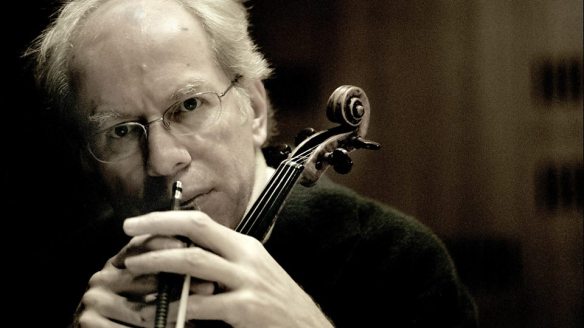
Freddie Jemison (treble), Maria Makeeva (soprano), Gidon Kremer (violin, above), Kremerata Baltica, City of Birmingham Symphony Orchestra / Mirga Grazinyte-Tyla

Symphony Hall, Birmingham
Saturday 24 November 2018, 11am

Weinberg Symphony no.21 op.152
Shostakovich Symphony no.15 in A major op.141

Written by Richard Whitehouse

The Weinberg Weekend being held in Birmingham reached its culmination tonight with this uncompromising yet rewarding symphonic double-bill. Those unfamiliar with the composer’s music may have been disconcerted by what they heard. Whereas the early Violin Concertino (heard at the previous concert) feels not so far removed from comparable works by Malcolm Arnold, the Symphony no.21 breathes an air of stark fatalism. Written at a time which witnessed the collapse of the Soviet Union and dedicated to the memory of those who died in the Warsaw Ghetto (the ‘Kaddish’ subtitle is found in his catalogue but not the actual score), it ranks among Weinberg’s deepest statements. At almost an hour it is also among his longest symphonies, so making its predominant sparseness and concentration the more remarkable.

The single movement falls into several continuous sections – an initial Largo’ introducing the plangent hymn that pervades the work then the chorale whose presence Weinberg traced back to his First Symphony, their alternation making way for the opening theme of Chopin’s First Ballade intoned somnolently on piano. An Allegro draws a theme from Weinberg’s Fourth Quartet into its reckless orbit, while a further Largo similarly utilizes one from his Double-Bass Sonata – the latter’s sepulchral tones sounding more bizarre given the ensuing klezmer-like passage with clarinet, which persists through a tensile Presto then plaintive Andantino that brings the principal climax. A final Lento unfolds with increasing introspection – violin, piano and harmonium adding their spectral sonorities until the music fades out of earshot.

The work went unheard in Weinberg’s lifetime, with its undoubted technical and emotional challenges having made revivals rare. Yet its formal cohesion and expressive consistency are undoubted – in the conveying of which, Mirga Grazinyte-Tyla took especial credit for rendering the epic structure as an inevitable yet cumulative entity whose febrile outbursts were held in check by that encroaching vastness which extends right across the whole. She was abetted by an assured response from the City of Birmingham Symphony, bolstered by members of Kremerata Baltica (Gidon Kremer taking the violin solos), and if dividing the vocalise between eloquent Maria Makeeva and plaintive Freddie Jemison slightly disrupted continuity in the closing stages, it hardly distracted from the stature of this reading overall.

Shostakovich‘s Symphony no.15 made a pertinent coupling, with Grazinyte-Tyla having its measure right from her purposeful take on the opening Allegretto. The Adagio’s ominous tread was finely sustained, its numerous solo passages having ample room to unfold prior to an anguished climax then desolate coda, while the brief scherzo fairly crackled with barbed irony. Nor was there any lack of focus in the finale, emerging from its miasma of allusions through to a spectral passacaglia whose seismic culmination never pre-empted the subdued recollection of earlier ideas or, above all, the transfigured conclusion with its evocation of ‘voices overheard’ over simmering percussion. It set the seal on an impressive performance and a memorable concert: one which certainly warrants the proposed commercial release.

Sunday morning saw a lecture in the Recital Hall at the recently-opened Royal Birmingham Conservatoire. As presented by Prof David Fanning (Manchester University) and Dr Michelle Assay (Huddersfield University), Exploring Weinberg offered a selective though consistently informative overview of the composer’s life and career: from his formative years in Warsaw, via his arrival in Moscow following periods in Minsk then Tashkent against the background of war; the dark years of the anti-formalism campaign then his incarceration during the final months of Stalin’s increasingly paranoid rule, then to the decades of growing acclaim from colleagues and public alike during the 1960s and ’70s, before a period of increasing neglect as a new generation of Soviet composers came to the fore and the Soviet Union neared its end.

The lecture was illustrated with numerous visual and musical examples, but it was archival recording of Weinberg playing and singing extracts from his opera The Passenger to the Moscow Union of Composers – in a futile attempt to secure its performance – that riveted attention. Hearing a composer’s actual voice is seldom less than revealing and so it proved here, setting the seal on an event which was certainly worth attending despite the absence of a selection of chamber works from Conservatoire students that was to have followed.

Summing up, the Weinberg Weekend fairly succeeded in terms of introducing Birmingham audiences to music by a composer whose importance continues to increase and as a prelude to what looks set to be a deluge of UK performances over the course of his centenary year.

Further information on the Weinberg Weekend can be found here

Live review – Benjamin Grosvenor, CBSO / Vassily Sinaisky – Mozart, Sibelius & Wagner

Benjamin Grosvenor (above, piano), City of Birmingham Symphony Orchestra / Vassily Sinaisky (below)

Symphony Hall, Birmingham
Thursday 25 October 2018 (matinee concert)

Wagner Der fliegende Holländer – Overture (1841)
Mozart Piano Concerto no.21 in C major K467 (1785)
Sibelius Symphony no.1 in E minor Op.39 (1899)

Written by Richard Whitehouse

It has often been remarked that concerts adhering to the once ‘standard’ format of overture, concerto and symphony are hardly frequent nowadays, so making this afternoon’s concert from the City of Birmingham Symphony Orchestra and Vassily Sinaisky the more welcome.

Wagner has always made for an effective curtain-raiser, not least his overture to The Flying Dutchman. Earliest of his acknowledged operas, its eventful 10 minutes fairly encapsulate the salient incidents and principal themes – not least in this performance, Sinaisky confirming his operatic credentials (in which capacity he has been regrettably little heard in the UK) with an assured reading; most perceptive in its approach to Senta’s eloquent ballad near the beginning and in its Tristanesque return during the closing bars such as Wagner transformed in revision.

A scaled-down CBSO was equally responsive in Mozart‘s K467, happily no longer indelibly associated with one of the dreariest 1960s films. Often at his most perceptive in 19th-century music, Benjamin Grosvenor is no slouch in Mozart and his performance – as was that at this year’s Proms with the BBCSO and Sakari Oramo – was full of felicitous phrasing, even if the formal focus of the imposing first movement was likely of Sinaisky’s choosing. The Andante was affecting without affectation, Grosvenor embedding the solo part closely into that of the orchestra, then the final rondo conjured up effervescence at a not unduly headlong tempo. All credit to Grosvenor in choosing cadenzas by Robert Casadesus (whose Mozart recordings are required listening) and for a limpid reading of Rachmaninov‘s Lilacs as his encore.

Although his ambivalent relationship with the Austro-German symphonic tradition has often been noted, Sibelius’s Russian heritage is often downplayed – yet his first two symphonies would be inconceivable without Tchaikovsky’s input. The First of these has been compared with the Pathétique in its epic and ultimately tragic nature, but the influence of the Russian’s Fifth Symphony feels even more overt in its sombre clarinet-led introduction and an Allegro with its ingenious take on the sonata format. Sinaisky duly has the measure of its brooding power and surging energy, then opted for a flowing account of the Andante that brought out its pathos and quixotic changes of mood without it seeming turgid or episodic. The Scherzo, too, had the requisite dynamism and, in its trio, an appealing whimsy that was deftly drawn.

The highlight, though, was the finale – most often the movement which fails to ignite by dint of its discursive structure. Yet ‘Quasi una Fantasia’ need not imply rhapsodic and Sinaisky treated it accordingly, characterizing its dramatic then fervent themes with due appreciation of their formal integration towards an impassioned climax whose fateful outcome was never in doubt. It helped that orchestral playing was of unwavering commitment, with the CBSO giving of its collective best in a piece which it has played frequently over the past 86 years.

It set the seal on a concert which was a reminder one that even a mainstream programme can surprise and engage when the constituents are thoughtfully planned and performances never less than responsive. The enthusiastic reception of a sizable house was its own confirmation.

For more information on future CBSO concerts head to their website

Live review – Yulianna Avdeeva, CBSO / Constantinos Carydis – Skalkottas, Tchaikovsky & Beethoven

Yulianna Avdeeva (below, piano), City of Birmingham Symphony Orchestra / Constantinos Carydis (above)

Photo credits: Thomas Brill (Constantinos Carydis), C Schneider (Yulianna Avdeeva) 

Symphony Hall, Birmingham. Thursday October, 2018

Skalkottas Four Images (1948)
Tchaikovsky Piano Concerto no.1 in B flat minor Op.23 (1875)
Koukos In Memoriam Y. A. Papaioannou (1989)
Beethoven Symphony no.7 in A major Op.92 (1812)

Written by Richard Whitehouse

Conductors are not obliged to programme their compatriots, though Constantinos Carydis certainly rang the changes by including music by Nikos Skalkottas (1904-49) – who, along with Xenakis, is undoubtedly the leading Greek classical composer from the 20th century.

Nor is the City of Birmingham Symphony unacquainted with his work, having given the first complete performance of his First Symphonic Suite in 1972. That piece typifies the intricate, serially-derived music of his earlier maturity, whereas the Four Images comes from his last years when tonal music predominated. Derived from a longer ballet score for piano, these characterful miniatures amply evoke folk scenes (without using actual folk themes) in a way recalling Bartók’s Dance Suite or, more directly, the dances from Ginastera‘s ballet Estancia.

Carydis accordingly had their measure – whether the forceful rhythms and acerbic harmonies of The Harvest, or wistful pathos of The Sowing with its resplendent, bell-capped climax. After this, The Vintage provides a scherzo of no mean propulsion and Carydis was right to lead directly into The Grape Stomping for a finale of scintillating vigour and impetus. Such were the qualities that the CBSO brought to this music, in what was a captivating account of a piece which could easily become as familiar as those aforementioned given such advocacy.

Tchaikovsky’s First Piano Concerto has never wanted for exponents, so credit to Yulianna Avdeeva for her engaging perspective on music to which the ‘war-horse’ epithet is too often applicable. The indelible opening melody was majestic without being portentous, with the imposing first movement convincingly held together so that the accrued momentum carried through to a searching take on its lengthy cadenza. There was no lack of deftness during the Andantino, replete with woodwind playing of real elegance, while the finale had energy to spare on its way to a surging peroration. This is an impressive interpretation in the making.

As well as his illustrious forebears, Carydis was intent on promoting the music of his Greek contemporaries. Well regarded for his operas, Periklis Koukos (b.1960) is little known in the UK, but the tribute to his teacher In Memoriam Y. A. Papaioannou suggests a composer of no mean eloquence – this threnody for strings not a little redolent of Nino Rota in its restrained sentiment, and a solo violin part that leader Anna-Liisa Bezrodny rendered with ideal poise.

Carydis then headed directly into Beethoven’s Seventh Symphony, here given a reading that was always invigorating and often electrifying. Dynamic contrasts occasionally verged on the contrived, and the repeat of the scherzo’s hymnal trio was almost parodic in its stateliness, but these were outweighed by the power and incisiveness elsewhere. Carydis drove the CBSO hard in the finale, but the players admirably rose to the challenge – antiphonal violins to the fore as the coda reached its visceral culmination. Whatever its inconsistencies, this was a performance to reaffirm the greatness of this music, as an enthusiastic reception testified.

A persuasive programme of the evergreen and unfamiliar. Should Carydis include Skalkottas’ ballet The Maiden and Death in a future engagement with the CBSO, then so much the better.

Tonight’s concert will be repeated at Symphony Hall on Sunday 7th October at 3pm. For more information on future CBSO concerts head to their website