In concert – Jonathan Kelly, CBSO / Kazuki Yamada: Richard Strauss – Tod und Verklärung, Oboe Concerto, Also sprach Zarathustra

Jonathan Kelly (oboe), City of Birmingham Symphony Orchestra / Kazuki Yamada

Richard Strauss
Tod und Verklärung Op.24 (1888-9)
Oboe Concerto in D major AV144 (1945)
Also sprach Zarathustra, Op.30 (1896)

Symphony Hall, Birmingham
Wednesday 10 December 2025

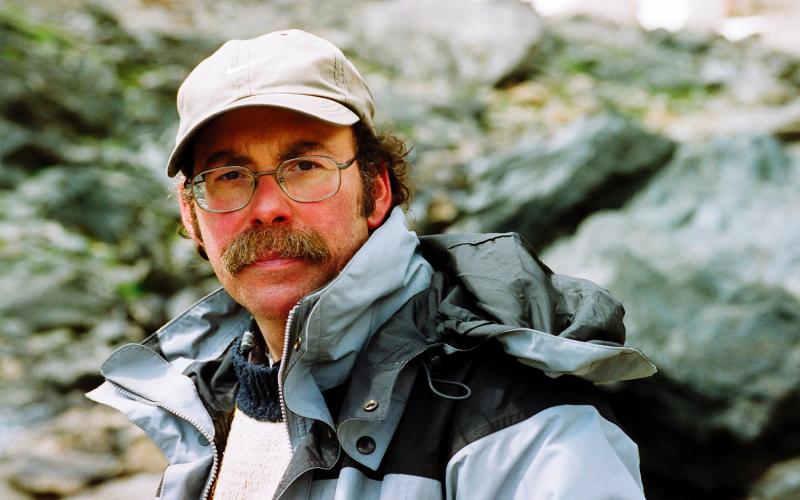
Reviewed by Richard Whitehouse Picture of Jonathan Kelly (c) Stefan Hoederath

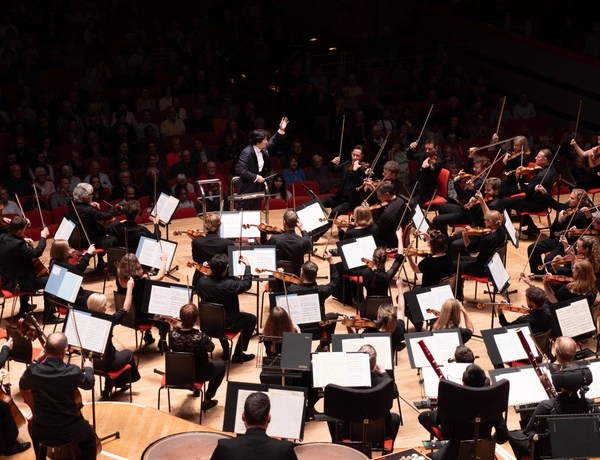
Richard Strauss is among a relatively select number of composers, the range and breadth of whose output makes it suitable for a whole programme – as was evident from this evening’s concert by the City of Birmingham Symphony Orchestra and music director Kazuki Yamada.

Never one to miss such an opportunity, Strauss had evidently conceived his tone poem Death and Transfiguration in the wake of illness only to extend its remit accordingly. Yamada duly had its measure: whether in the not so stark fatalism of its opening pages, the tussle with his approaching demise audibly relished by the protagonist then emergence of that transfiguring state which, after the brief and rather jarring interjection of earlier angst (no more convincing here than almost any other performance) sees this work through to a fervent culmination then on to its beatific close. Not consistently more than the sum of its best parts, and with internal detail sometimes obscured in the onslaught of its vehement tuttis, this was still an involving account – lessened not a jot by its underlining Strauss’s enjoyment of his emotional strivings.

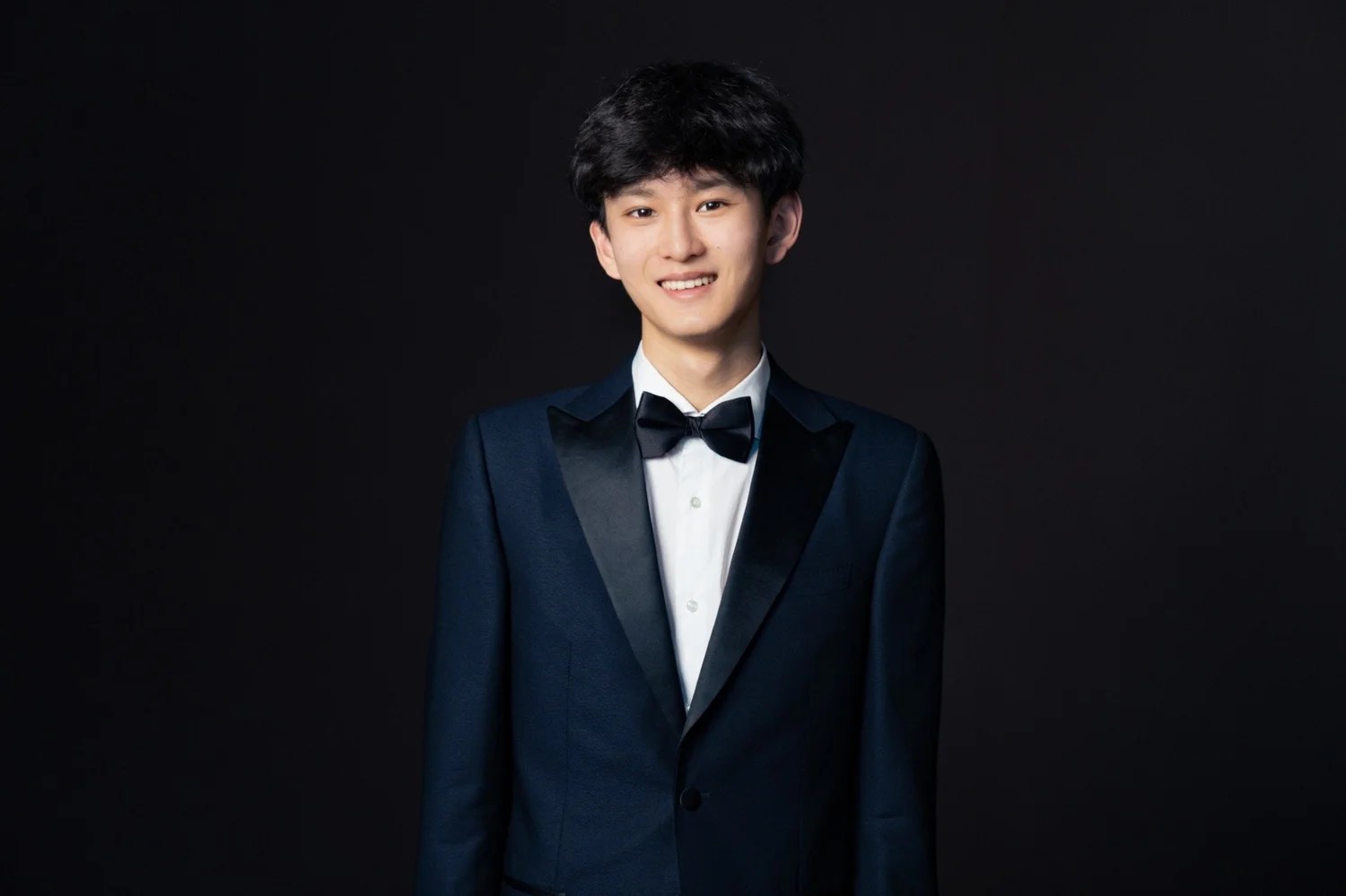
Onward 46 years to the Oboe Concerto the ageing composer wrote at the promptings of US army corporal and professional oboist John de Lancie. Much the finest of those concertante pieces from Strauss’s ‘Indian summer’, its three movements merge into the finely balanced continuity that Jonathan Kelly (above) – making a welcome return to the orchestra of which he was solo oboist during 1993-2003 – relished throughout. The elegance of its initial Allegro here abetted by a degree of nonchalance, as was the poise of its Andante with deftest pathos, his reading came into its own in a Vivace whose cadenza passages were as eloquent as the coda that Strauss duly extended to make this movement an unerring fusion of scherzo and finale. Kelly understandably offered no encore, but he returned to join the CBSO after the interval.

That second half consisted of Thus spake Zarathustra – if not the most ambitious of Strauss’ tone poems in size then surely in scope, whether or not the depths of Nietzsche’s existential musings are really plumbed. The indelible ‘Sunrise’ treading a fine line between profundity and portentousness, Yamada charted its idiosyncratic journey toward spiritual enlightenment with a sure sense of where this music was headed – no matter that the outcome felt as much   a glorification of orchestral power and opulence as of anything more intrinsically humane.

Highlights during its course included the sustained emotional force in ‘Of Joys and Passions’, the textural unanimity of the strings across their fugal writing in ‘Of Science and Learning’, and suavity then mounting animation of ‘The Dance Song’ with leader Eugene Tzikindelean in his element – before ‘Song of the Night Wanderer’ brought proceedings down from their orgiastic heights into that sombre repose whose tonal inconclusiveness may be an indicator  of Strauss’s own perspective; the certainly of those opening bars left pointedly unresolved.

Its pizzicato chords on lower strings made a telling farewell for Eduardo Vassallo, principal cellist throughout much of the past 36 seasons. His broad sympathies including Argentinian tango, and a characterful Don Quixote to boot, leaves players and listeners alike in his debt.

Published post no.2,747 – Saturday 13 December 2025

For more on the CBSO’s season for 2025/26, head to the CBSO website – and for more on the artists in this programme, click on the names to visit the websites of conductor Kazuki Yamada, oboist Jonathan Kelly and principal cellist Eduardo Vassallo
In concert – Ryan Wang, CBSO / Pierre Bleuse: Ravel, Liszt & Bartók

Ryan Wang (piano), City of Birmingham Symphony Orchestra / Pierre Bleuse

Ravel Ma mère l’Oye – ballet (1910-11); Rapsodie Espagole ((1907-08)
Liszt Piano Concerto no.1 in E flat major S124 (1849, rev. 1855)
Bartók The Miraculous Mandarin BB82 – suite (1918-24)

Symphony Hall, Birmingham
Thursday 4 December 2025

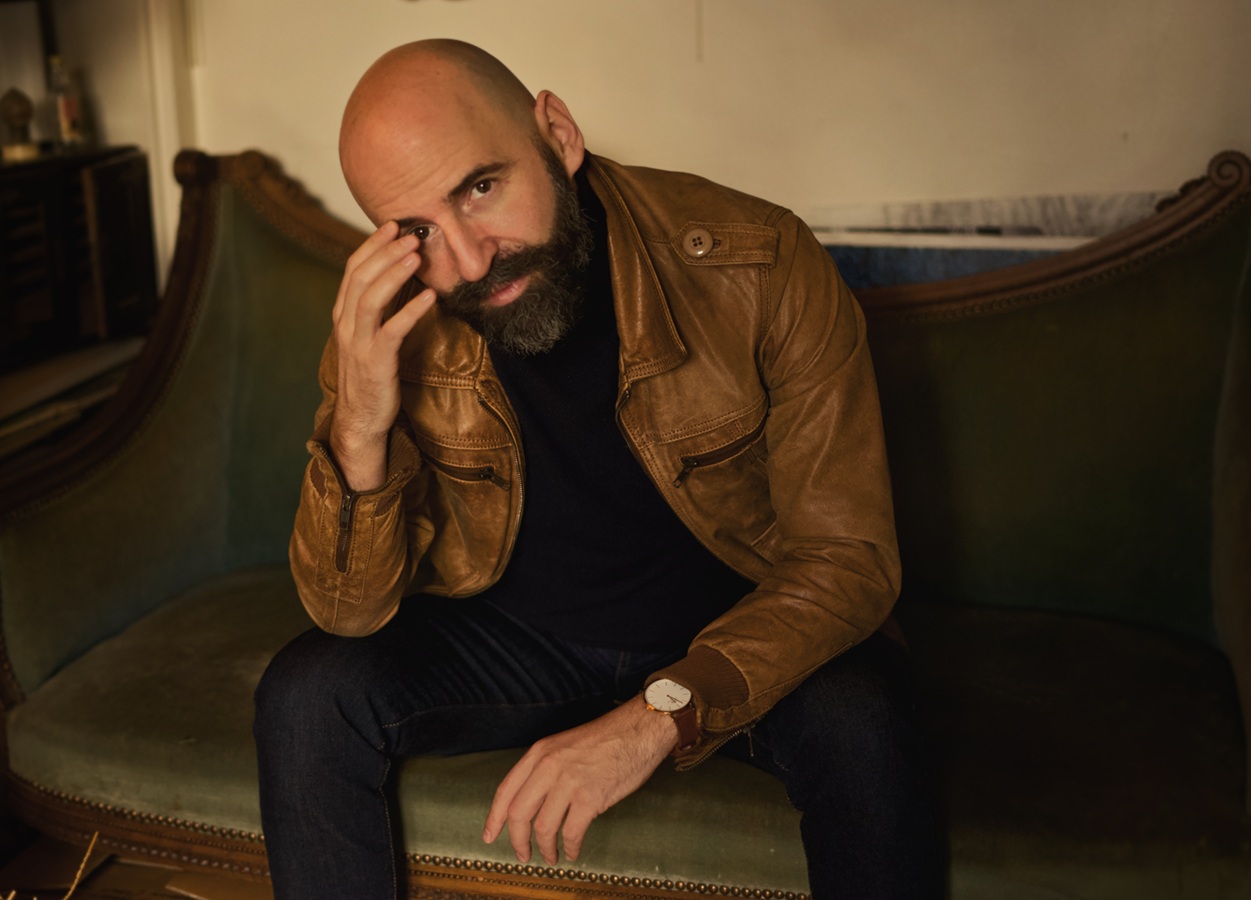
Reviewed by Richard Whitehouse Photo of Pierre Bleuse (c) Marine Pierrot Detry

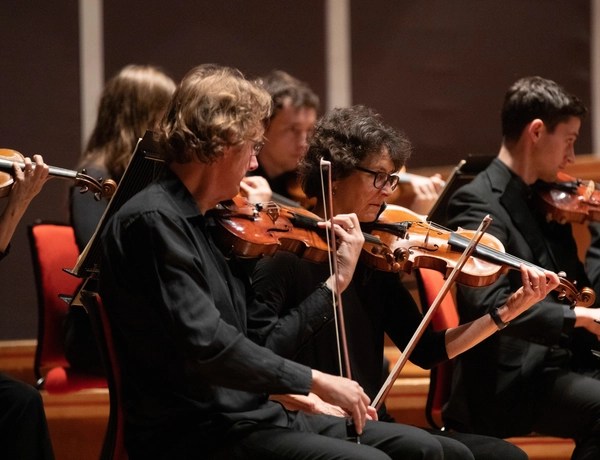
His marking the centenaries of Berio and Boulez at this year’s Proms confirmed Pierre Bleuse (music director of the Ensemble Intercontemporain) as a conducting force to be reckoned with, duly reaffirmed by this afternoon’s concert with the City of Birmingham Symphony Orchestra.

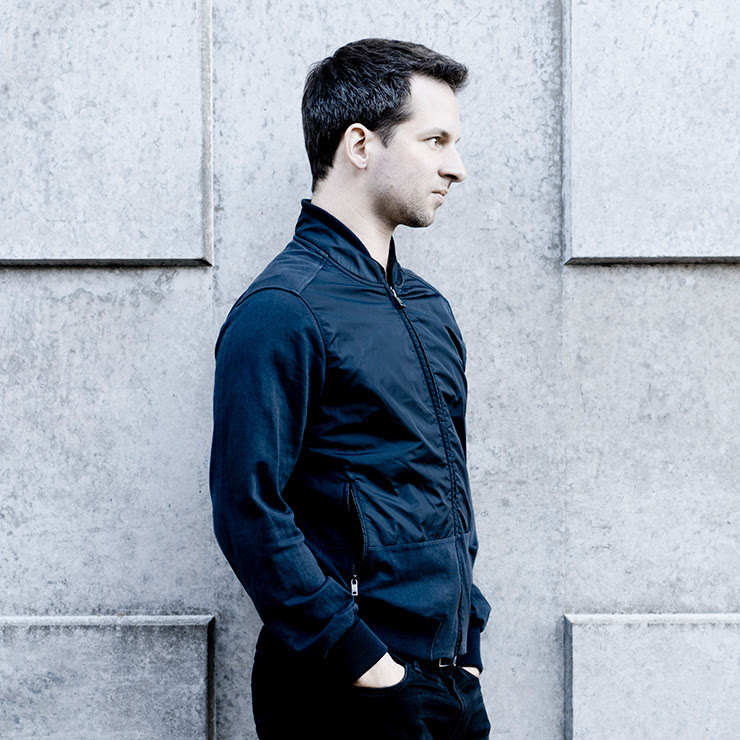
The CBSO has an association with the ballet incarnation of Ravel’s Mother Goose stretching to Simon Rattle and beyond to Louis Frémaux. After an evocative Prelude then a winningly nonchalant Spinning-Wheel Dance, Bleuse (above) brought out the plaintiveness in Pavane of the Sleeping Beauty’ then the subtly nuanced humour in Conversation of Beauty and the Beast; pointing up the piquancy of Tom Thumb then the whimsicality of Laideronnette, Empress of the Pagodas. Interpretively as well as musically, the best was saved until last – the deftest of transitions leading into a Fairy Garden of artless eloquence. Throughout this memorable performance, woodwind playing was consistently beguiling – not least during that approach to an apotheosis such as benefitted from Bleuse’s refusal to overstate its emotional rhetoric.

Nothing wrong with an all-Ravel first half, even if Rapsodie Espagnole may not have been the ideal continuation. Yet that sultry aura exuded by Prélude à la nuit felt almost tangible, as was the ominous unease of Malagueña and the rarefied elegance of Habanera, before the mounting excitement of Feria carried all before it. Bleuse successfully brought out the nostalgic resonances at the centre of this finale, and even if the closing bars lacked a degree of visceral excitement, the sense of a cohesive or cumulative whole could hardly be denied.

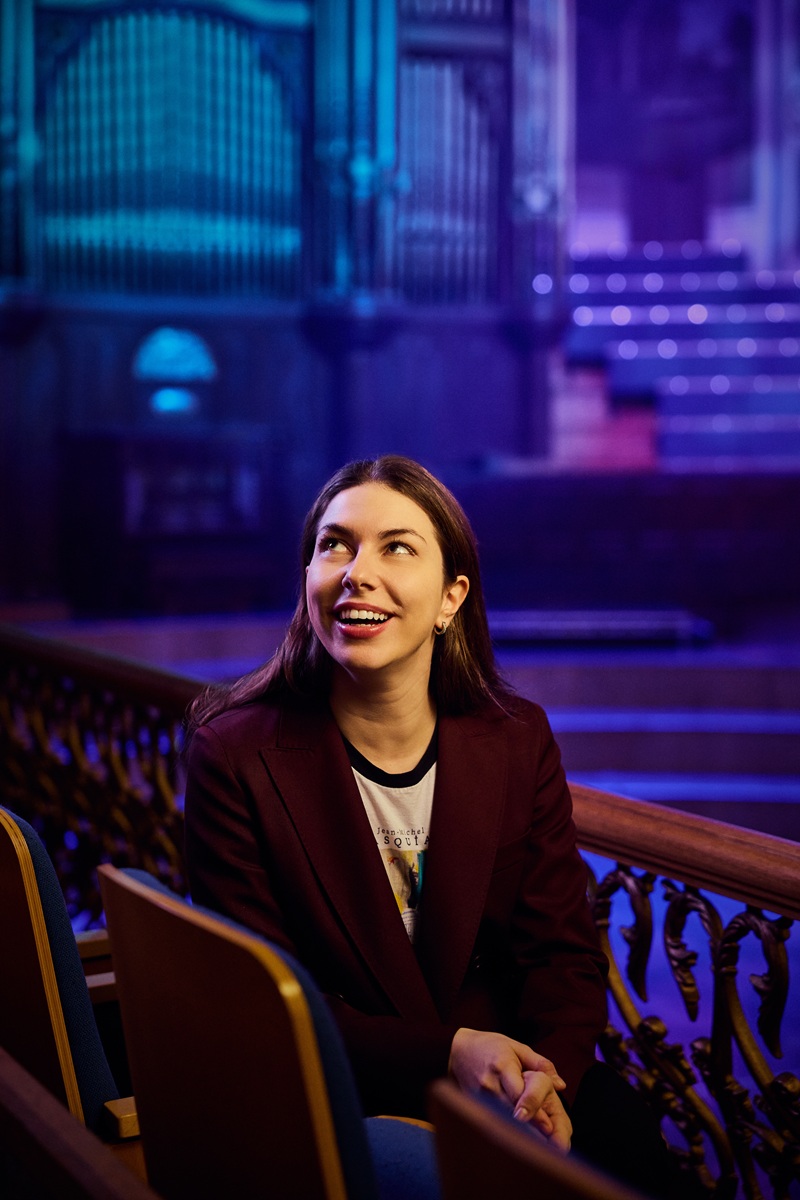
After the interval, a welcome hearing (less frequent these days than might be imagined) for Liszt’s First Piano Concerto. Executed with the right panache and an absence of histrionics, its formal succinctness and cyclical ingenuity are its own justification; not least as rendered with such attention to detail or expressive impetus by Ryan Wang (above). The winner of last year’s BBC Young Musician competition, he evidently has technique to spare while being equally capable of a delicacy and understatement ideally suited to the pensive ‘slow movement’ or the teasingly playful ‘scherzo’. The opening section was enhanced by a poetic contribution from clarinettist Oliver Janes, while the ‘finale’ headed to an exhilarating peroration. Wang duly acknowledged the applause with his leonine rendering of Chopin’s ‘Heroic’ Polonaise.

The programme ended with the suite from Bartók’s pantomime The Miraculous Mandarin. This is music which all too easily descends into overkill, but Bleuse kept a firm grip on its progress from the frenetic opening evocation of urban traffic, via its mounting anticipation with the arrival of the three ‘clients’, through to a bewitchingly shaped encounter between the mandarin and the woman. Nor was there any absence of virtuosity in a climactic chase-sequence, even while the emphasis on its rallentando markings proved a little too intrusive.

Most surprising, however, was a relatively prolonged silence after its explosive ending. Was the audience nonplussed by its once-infamous scenario, or was it unaware of this supposedly familiar music? Whatever, the performance assuredly seal the seal on an impressive concert.

For more information on the 2025-26 season head to the City of Birmingham Symphony Orchestra website. Click on the names to read more about soloist Ryan Wang and conductor Pierre Bleuse

Published post no.2,740 – Sunday 7 December 2025

News – Anna Handler to become Ulster Orchestra’s new Chief Conductor

published by Ben Hogwood from the original press release. Photo above (c) Christopher Heaney

The Ulster Orchestra is delighted to announce that Anna Handler will be its new Chief Conductor from September 2026.

Joining an impressive and venerable list of conductors who have worked with the Orchestra including Vernon Handley, Bryden Thomson, Yan Pascal Tortelier and, more recently, Rafael Payare and Daniele Rustioni, the German-Colombian conductor Anna Handler is at a stage in her own career that makes a partnership with the Ulster Orchestra a dynamic prospect – just last week making her Boston Symphony Orchestra subscription series debut at short notice, with violinist Joshua Bell. Handler, a former Gustavo Dudamel Fellow and current Assistant Conductor at the Boston Symphony Orchestra, also began her tenure as Kapellmeister of Deutsche Oper Berlin in September 2025. 

During her tenure, Anna looks forward to working in partnership with the Orchestra to grow the artistic identity of the organisation in breadth and depth, taking the level of performance to new heights on the international stage. Her leadership, which is founded on respect for shared musical roots, staying curious and opening the Orchestra’s sound to the future, is inspirational and the Ulster Orchestra is excited for this new phase of its development.

Reflecting on the appointment, Anna Handler says;

“Over the next three years, we’ll ask what it means to be an orchestra that belongs to now: alive, questioning, connected. Every phrase a conversation, every silence a choice. We’ll play as if it were the first or the last time – because real music doesn’t perform; it becomes. I feel deeply honoured to lead this journey – together, with the Ulster Orchestra musicians and the wider team. I feel grateful for their trust to have been chosen as their new chief conductor – a responsibility I carry with joy and curiosity.”

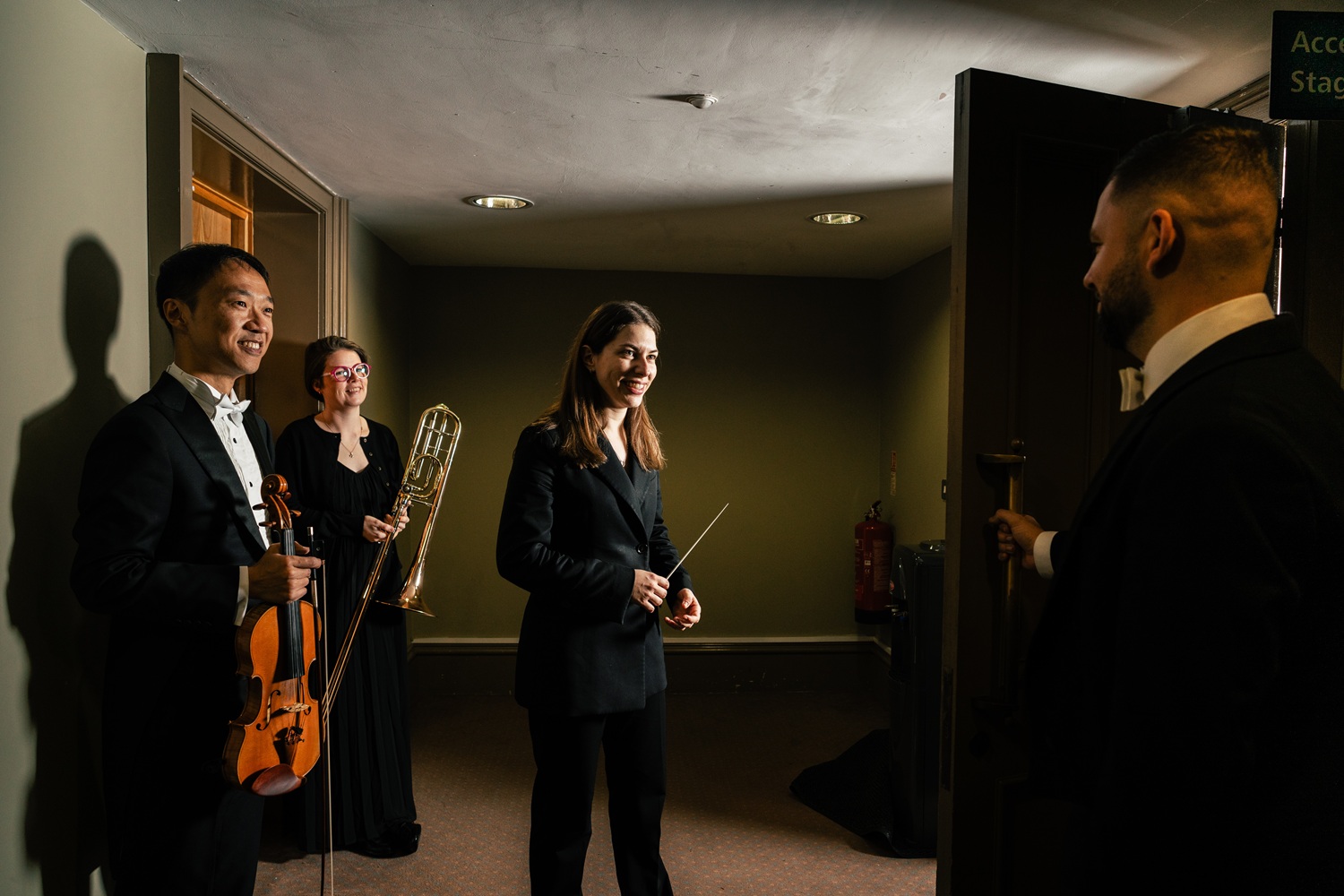
Anna Handler with Ulster Orchestra players (l to r) Gongbo Jiang, Wizz Bannan and Rich Cartlidge, backstage at the Ulster Hall (c) Thomas Jackson

Auveen Sands, Ulster Orchestra Chief Executive and Patrick McCarthy, Artistic Director, commented;

“Of Anna’s many remarkable qualities, her ability to genuinely connect with musicians and audiences is what makes this such an exciting appointment. That ability was immediately evident in a recent concert in Derry~Londonderry’s Guildhall, bringing a new energy and collaborative spirit to the Ulster Orchestra’s superb music making. We’ve already agreed on some exciting and deeply meaningful programmes for next year, and can’t wait to share them with audiences in Northern Ireland, and beyond.”

Ciaran Scullion, Head of Music at the Arts Council of Northern Ireland, added: 

“Anna Handler’s creativity, knowledge and extensive experience will bring a further rich dimension to the Ulster Orchestra’s work, identity and output over the next 3 years.  The Arts Council established the Ulster Orchestra in 1966 and has been its principal public funder ever since. We are delighted to see Anna join as Chief Conductor at a time when the Orchestra’s artistic profile and reach continue to rise.”

Anna Handler’s first concert as Chief Conductor of the Ulster Orchestra will be the opening concert of the Orchestra’s 60th anniversary Season, in the Ulster Hall on Friday 25 September 2026. 

Published post no.2,731 – Thursday 27 November 2025

News – Bertrand Chamayou residence @ Wigmore Hall, including Ravel’s complete piano music on Sunday 7 December

published by Ben Hogwood from the original press release

This December, Wigmore Hall focus in on a pianist famed for winning the prestigious Victoires de la Musique Classique award on five separate occasions, most recently in 2022. Described by the Guardian as ‘a remarkable musician, no question’, Chamayou caps off his short residency with an unmissable evening of the complete Ravel pianos works. Before that, the pianist joins forces with the thrilling Belcea Quartet and accompanies soprano Barbara Hannigan for her Wigmore Hall debut.

The programme with the Belcea Quartet on Thursday 4 December is of extra interest, for in addition to Chamayou’s appearance in the rarely-heard Piano Quintet in E major of Erich Korngold, the quartet will mark the 80th anniversary of the world première of Britten’s Second String Quartet at Wigmore Hall.

Chamayou’s programme with soprano Barbara Hannigan is typically adventurous, the pair reaffirming their Messiaen credentials with a performance of the Chants de terre et de ciel, before Chamayou looks at late Scriabin in the form of the Poème-nocturne Op. 61 and Vers la flamme Op. 72, before the two take on John Zorn’s song cycle Jumalattaret, written for Hannigan herself.

Chamayou’s third appearance will see him perform the complete works for solo piano by Maurice Ravel, whose birth in 1875 is being marked with 150th anniversary celebrations this year. The concert begins at 7pm, with the programme as follows:

1875-1937
Prélude
Miroirs
Menuet in C sharp minor
Sonatine
A la manière de Borodine
Gaspard de la nuit

Interval

A la manière de Chabrier
Valses nobles et sentimentales
Menuet sur le nom d’Haydn
Sérénade grotesque
Jeux d’eau
Menuet antique
Pavane pour une infante défunte
Le tombeau de Couperin

For more information on all the Wigmore Hall concerts, click on the links highlighted above.

Published post no.2,730 – Wednesday 26 November 2025

News – Broadcast: On the occasion of the 70th birthday of Jorge E. López, Sunday 30 November

published by Ben Hogwood and Richard Whitehouse

On the occasion of the 70th birthday of Jorge E. López

The singular tonal language of an Austrian composer of Cuban origin

Sunday 30th November 2025 @ 19:45 [NB: 18:45 UK time] on Austrian Radio Station Ö1

Jorge E. López, one of the most distinctive and original composers currently living in Austria, celebrates his seventieth birthday next Sunday. He has never identified with the conventions of New Music: ‘‘Instead, I was convinced from the beginning that it was more about making the ancient present’’. He does not look for the new but ‘‘rather the repressed’’, as emphasized in an extended interview with the radio journalist and regular Ö1 broadcaster Peter Kislinger.

López was born on 30 November 1955 in Havana. In 1960 he came to the United States with his family, where he lived in New York and Chicago. In 1970 he began to compose – inspired by such figures as Mahler, Berg, Ives, Messiaen, Stockhausen and Xenakis – then studied at California Institute of the Arts during 1971-76. In 1987, after notable orchestral performances in Donaueschingen, the focus of his life shifted to Europe and the German-speaking world.

He draws inspiration for his often timeless works from an intense experience of nature, most especially in Lapland, Iceland and the American North-West. His works defy current trends in contemporary music and demonstrate an affinity for the music at the turn of the 20th century as well as proximity to the aesthetics of Surrealism. In recent years, he has resided alternately between Mölltal in Upper Carinthia and Vienna. This latest edition of the Supernova series (produced by Rainer Elstner) features several large-scale orchestral works by the composer.

The programme can be accessed from the UK by clicking on the link below:

On the occasion of the 70th birthday of Jorge E. López | SUN | 30 11 2025 | 19:45 – oe1.ORF.at

Published post no.2,728 – Monday 24 November 2025