by Ben Hogwood Image of Respighi courtesy of Wikipedia
Today marks the anniversary of the death of composer Ottorino Respighi, 90 years ago in 1936, at the age of just 56.
Respighi’s most famous works are the orchestral pieces making up the ‘Roman trilogy’ – in order of composition the Fountains of Rome, Pines of Rome and Roman Festivals. A previous post on the composer highlighted recordings of those three; however I wanted this time to pay tribute to Respighi’s flair as an orchestrator. Here are his arrangements of five of Rachmaninoff‘s Etude-Tableaux for piano, showing off the orchestra with colour and flair:
by Ben Hogwood Image of Sibelius courtesy of Wikipedia, and Finnish photographer Daniel Nyblin
Having just returned from Tallinn, Estonia, I feel particularly close the music of Finnish composer Jean Sibelius. On this day in 1895 one of his early orchestral works, The Wood Nymph, was premiered – and you can listen below:
Summer Music in City Churches is a festival in the City of London. Founded in 2018, it presents beautiful music to engage, divert and inspire, in ancient and architecturally stunning churches in the Square Mile. Standing cheek by jowl with City offices, these churches are glorious settings in which to listen and reflect: oases of history, beauty and peace amidst the 24-7 hurly-burly of City life.
For its 2026 edition, the festival takes flight over its home in the City to travel Around the World. You can experience it in the Square Mile’s beautiful historic churches for nine days full of music inspired by landscapes and traditions of town and country, at home and abroad.
A quick tour: For an opening concert conjuring warm nights in southern Europe, the Royal Philharmonic Orchestra are joined by talented young guitarist Jack Hancher as soloist in Rodrigo‘s much-loved Concierto de Aranjuez, with Rossini and Ravel in Spanish mood, plus Mendelssohn in sunny Italy.
In a limited offer, Daniel Hyde conducts the City of London Choir for festival Choral Evensong, with music representing great British cathedrals. Early Bird savings can be found as two outstanding actors join the festival for the first time this year: Alistair McGowan will narrate a French programme with pianist Mark Bebbington (including Poulenc‘s touching Babar the Elephant), while Juliet Stevenson will play itinerant virtuosa Clara Schumann in Lucy Parham‘s brilliant composer-portrait.
By popular demand after last year’s runaway success, the award-winning duo Eleanor Grant and Gus McQuade return by with their unique and delightful take on songs of travel. Meanwhile there is a chance to experience beguiling French and English song from superstar soprano Rachel Nicholls and pianist Michael Dussek, or to be mesmerised by Viv McLean playing tributes by Grieg, Chopin and Beethoven to their homelands.
Iain Farrington is back with his brilliant Art Deco trio for witty jazz takes on familiar shanties, spirituals and melodies from around the world. Ian’s fabulous arrangements of orchestral classics are played by members of the RPO in a fun family concert with youth choir Hackney Choral and City of London Choir – including John Rutter‘s London Town.
Joining these flagship concerts will be charming chamber music from around the world performed by the ever-delightful Brother Tree Sound, Tier3 Trio, the Cassatt Trio and Sonas Quartet; more stunning arrangements from the brilliant brass of the Royal Philharmonic Orchestra; and an uplifting finale of song with the City of London Choir – from traditional folk melodies to George Shearing‘s jazz settings to Elgar in Bavaria.
If you’re spoilt for choice, a festival season ticket is just £120 – and you can read more about the festival at the Summer Music in City Churches website. See you there!
by Ben Hogwood Image of Sibelius courtesy of Wikipedia, and Finnish photographer Daniel Nyblin
On this day in 1896, the world premiere of Jean Sibelius’ Lemminkäinen Suite took place in Helsinki. The suite, in four distinct movements, has become a popular concert piece and is an early indication of the composer’s ability to tell dramatic tales through the orchestra. In this case the story follows Lemminkäinen in the Kalevala, the Finnish epic of folklore and poetry. The four movements are Lemminkäinen and the Maidens of the Island, The Swan of Tuonela (sometimes placed third and the most popular of the four), Lemminkäinen in Tuonela and Lemminkäinen’s Return
You can listen to a performance below from the Toronto Symphony Orchestra, conducted by Jukka-Pekka Saraste:
Nelsen Goerner (piano) City of Birmingham Symphony Orchestra / Kazuki Yamada
Hindemith Symphonic Metamorphosis of Themes by Carl Maria von Weber (1943) Rachmaninoff Rhapsody on a Theme of Paganini Op.43 (1934) Bartók Concerto for Orchestra BB123 (1943)
Symphony Hall, Birmingham Thursday 9 April 2026
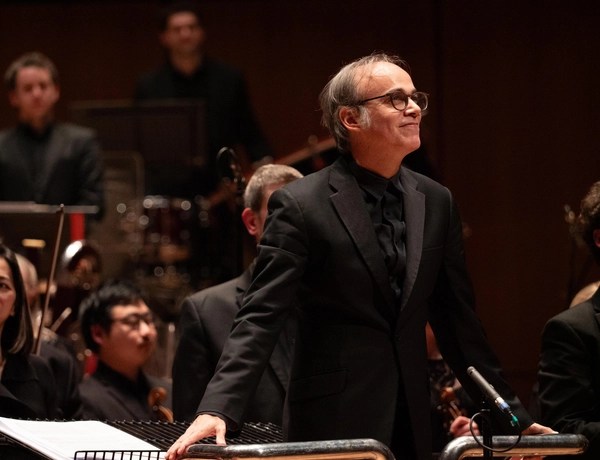
Reviewed by Richard Whitehouse Pictures (c) Andrew Fox (above) and Marco Borggreve (below)
There was a pleasing overall balance to this evening’s concert from the City of Birmingham Symphony Orchestra and its music director Kazuki Yamada: the three works, written within a decade of each other, drawing extensively on earlier composers or, indeed, traditional music.
If not as familiar as it once was (and not least in Birmingham), Symphonic Metamorphosis of Themes by Carl Maria von Weber is always worth revival – not least for finding Hindemith at his most approachable and uninhibited. It was this latter aspect which came over most vividly here – Yamada securing a forceful though never blowzy response in the opening Allegro, then making the most of its ‘Turandot’ Scherzo’s freewheeling play on Weber’s already recalcitrant overture to which the CBSO responded in like fashion. Easily to underestimate, the Andantino emerged as music of no mean pathos as well as a foil to the final March’s breezy treatment of incisive then jocular melodies, with a close of real panache. Did a smile on the face of certain older punters indicate the latter tune’s audible resemblance to a once popular wartime song?
Rhapsody on a Theme of Paganini has become increasingly familiar in recent decades, as has Rachmaninoff’s music as a whole, and tonight’s performance amply underlined why. He may not have partnered the CBSO for several years, but Nelson Goerner secured a rapport from the outset – the initial 15 variations pivoting between impetuosity and inwardness with dextrous assurance, then those three which constitute a ‘slow movement’ rendered with a soulfulness and, in the evergreen Variation XVIII, a deftness such as banished any hint of sentimentality. The closing six variations duly unfolded as a ‘finale’ capricious and scintillating, Goerner at one with the orchestra in rounding off this work with a deathless payoff. Impeccably played if emotionally aloof, Brahms’ Intermezzo in A major (Op. 118/2) was the less than apposite encore.
The CBSO has an association with Bartók’s Concerto for Orchestra itself going back decades with the present account notable, above all, for its sheer virtuosity of playing. Interpretatively things was not quite this consistent – the expressive contrasts in its Introduzione just a little inflexibly drawn so that the movement felt no more than the sum of its admittedly impressive parts, with the succession of duets in Presentando le coppie a little too detached from each other for this to become the genial though equally vulnerable scherzando it ideally should be.
Conversely, the Elegia had an ideal balance between wrenching anguish and that unworldly ‘night music’ from which it emerges and into which it ultimately withdraws, while the quirky interplay of styles and parodies – whether Léhar or Shostakovich seems beside the point – in the Intermezzo interrotto never sounded at all contrived. Neither did the Finale disappoint as it navigated between pulsating energy and brazen high jinx, on route to a coda of hushed anticipation capped by a peroration which set the seal on this work in an exhilarating QED.
Overall, a fine showing for the CBSO and Yamada in the wake of their latest European tour. The orchestra returns next week in an enterprising programme of Respighi and Puccini, the latter represented by syntheses from two of his operas devised by the conductor Carlo Rizzi.
To read more about the CBSO’s 2025/26 season, visit the CBSO website. Click on the names for more on their principal conductor Kazuki Yamada and pianist Nelson Goerner