On Record – Imogen Holst: Discovering Imogen (NMC)

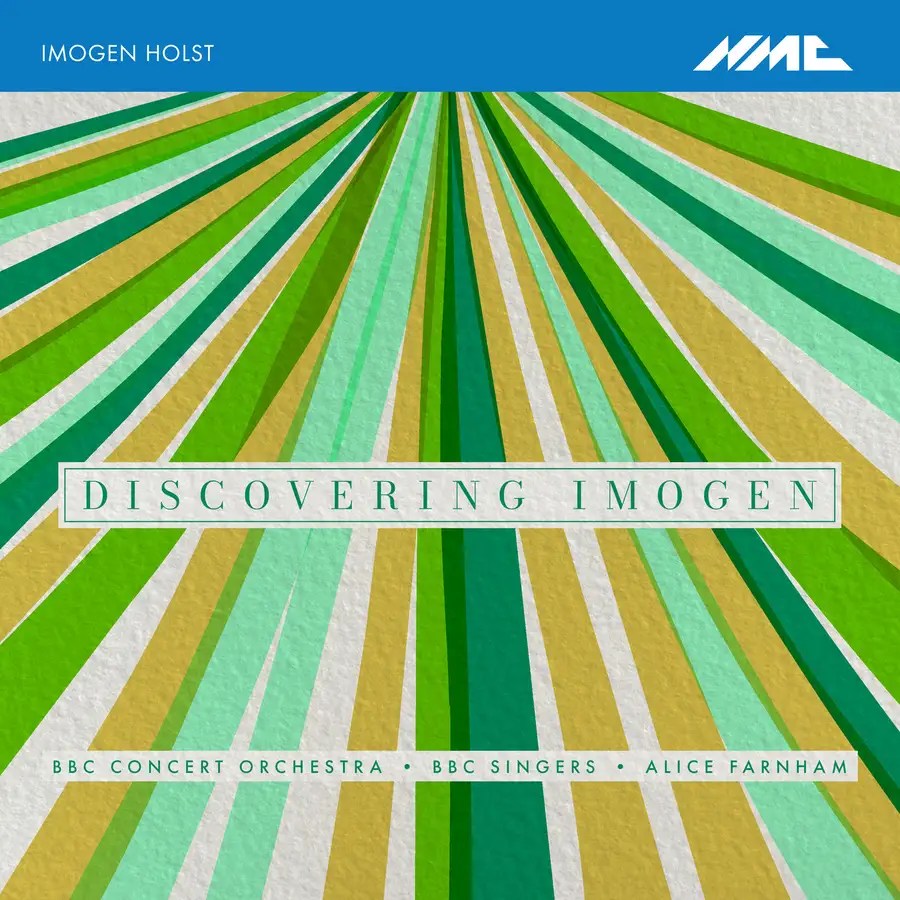
BBC Singers (What Man Is He?, Festival Anthem), BBC Concert Orchestra / Alice Farnham

Imogen Holst
Persephone (1929)
Variations on ‘Lorth to Depart’ (1962)
What Man is He? (c1940)
Allegro Assai (1927)
On Westhall Hill (1935)
Suite for String Orchestra (1943)
Festival Anthem (1946)

NMC Recordings NMCD280 [75’01”] English texts included
Producer Colin Matthews Engineers Marvin Ware, Robert Winter, Callum Lawrence
Recorded 27-29 January 2024 at Maida Vale Studio One, London

Reviewed by Richard Whitehouse

What’s the story?

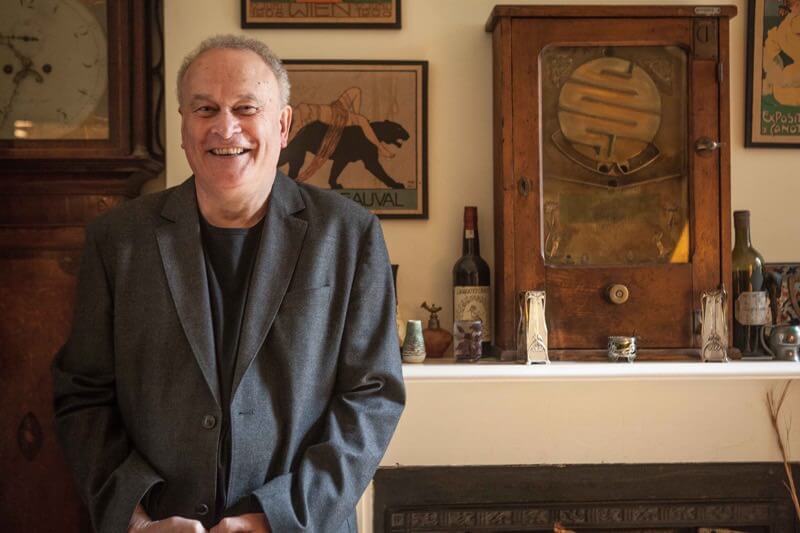
As its executive producer Colin Matthews notes in his introduction, NMC would likely not exist had it not been for Imogen Holst (1907-84) setting up the Holst Foundation prior to her death – so making this release of her larger-scale works the more appropriate, and welcome.

What’s the music like?

The present anthology affords what seems a plausible overview of its composer’s output. The earliest piece here is Allegro Assai, evidently planned as the opening movement of a suite for strings that progressed no further, but which proves characterful and assured on its own terms. Such potential feels well on the way to being realized in Persephone, an overture (albeit more akin to a tone poem) given in rehearsal by Malcolm Sargent, with the influence of Ravel (and indirectly of Vaughan Williams) balanced by the dextrous handling of motifs across a formal evolution such as relates the myth in immediate and individual terms. That this went unheard until the present recording was likely as much a loss to the musical public as to Holst herself.

Underlining its composer’s skill in writing for amateurs, On Westhall Hill is an atmospheric piece the more appealing through its brevity and modesty of scoring. Deriving its text from the Book of Wisdom, What Man Is He? traverses a range of emotions from the sombre, via the introspective, to the affirmative in a setting as searching as it is fervent. Most impressive, however, is the Suite for String Orchestra composed for a ‘portrait’ concert at Wigmore Hall. The four movements unfold from a diaphanous Prelude, via a fluid and astringent Fugue then an Intermezzo whose ruminative warmth hints at qualities rather more fatalistic, to a Jig which convincingly rounds off the whole work with its mounting energy and resolve.

Written in the wake of the Second World War, Festival Anthem went unheard at this time but could be thought a ‘song of thanksgiving’. Adapted from Psalm 104 (‘Praise the Lord, O my soul’), it seamlessly integrates soloistic with choral passages prior to a calmly fulfilled close. The latest work here, Variations on ‘Loth to Depart’ takes a 17th-century tune as harmonized by Giles Farnaby as basis for five variations – the initial four respectively trenchant, eloquent, wistful and incisive; prior to a relatively extended chaconne as distils a pathos the more acute for its understatement. A string quartet is combined resourcefully with double string orchestra in music which can at least hold its own in the context of a distinctive genre in British music.

Does it all work?

It does indeed. It is all too easy to think of Imogen Holst as one who never fully realized her potential in the face of life-long teaching and administrative commitments, but the range of what is heard amply indicates her creative legacy to be one worth exploring in depth. The recordings, moreover, could hardly be bettered in terms of their overall conviction – Alice Farnham securing a laudable response form the BBC Concert Orchestra and, in the choral pieces, BBC Singers. Hopefully other ensembles, professional or amateur, will follow suit.

Is it recommended?

It is indeed. Sound is unexceptionally fine, with informative notes from Christopher Tinker. Alongside the NMC release of her chamber music for strings (D236), and that on Harmonia Mundi of choral music (HMU907576), this is a fine demonstration of Imogen Holst’s legacy.

Listen & Buy

You can listen to samples and explore purchase options on the NMC Recordings website. For more information on the artists, click on the names to visit the websites of the BBC Singers, BBC Concert Orchestra and conductor Alice Farnham, while a dedicated resource can be found for Imogen Holst herself

Published post no.2,374 – Tuesday 26 November 2024

BBC Proms 2023 – Dame Sarah Connolly, BBC Philharmonic Orchestra / John Storgårds – Weber, Pejačević, Alma Mahler-Werfel & Rachmaninoff

Prom 33 – Dame Sarah Connolly (mezzo-soprano), BBC Philharmonic Orchestra / John Storgårds

Weber Oberon – Overture (1825-6)
Pejačević Zwei Schmetterlingslieder Op.52 (1920); Verwandlung Op.37b (1915); Liebeslied Op.39 (1915). [Proms premieres]
Mahler-Werfel orch. Colin & David Matthews Die stille Stadt (pub. 1915); Licht in der Nacht (pub. 1915); Bei dir ist es traut (pub. 1910)
Rachmaninoff Symphony no.1 in D minor Op.13 (1895)

Royal Albert Hall, London
Wednesday 9 August 2023

by Richard Whitehouse photos by Chris Christodoulou / BBC

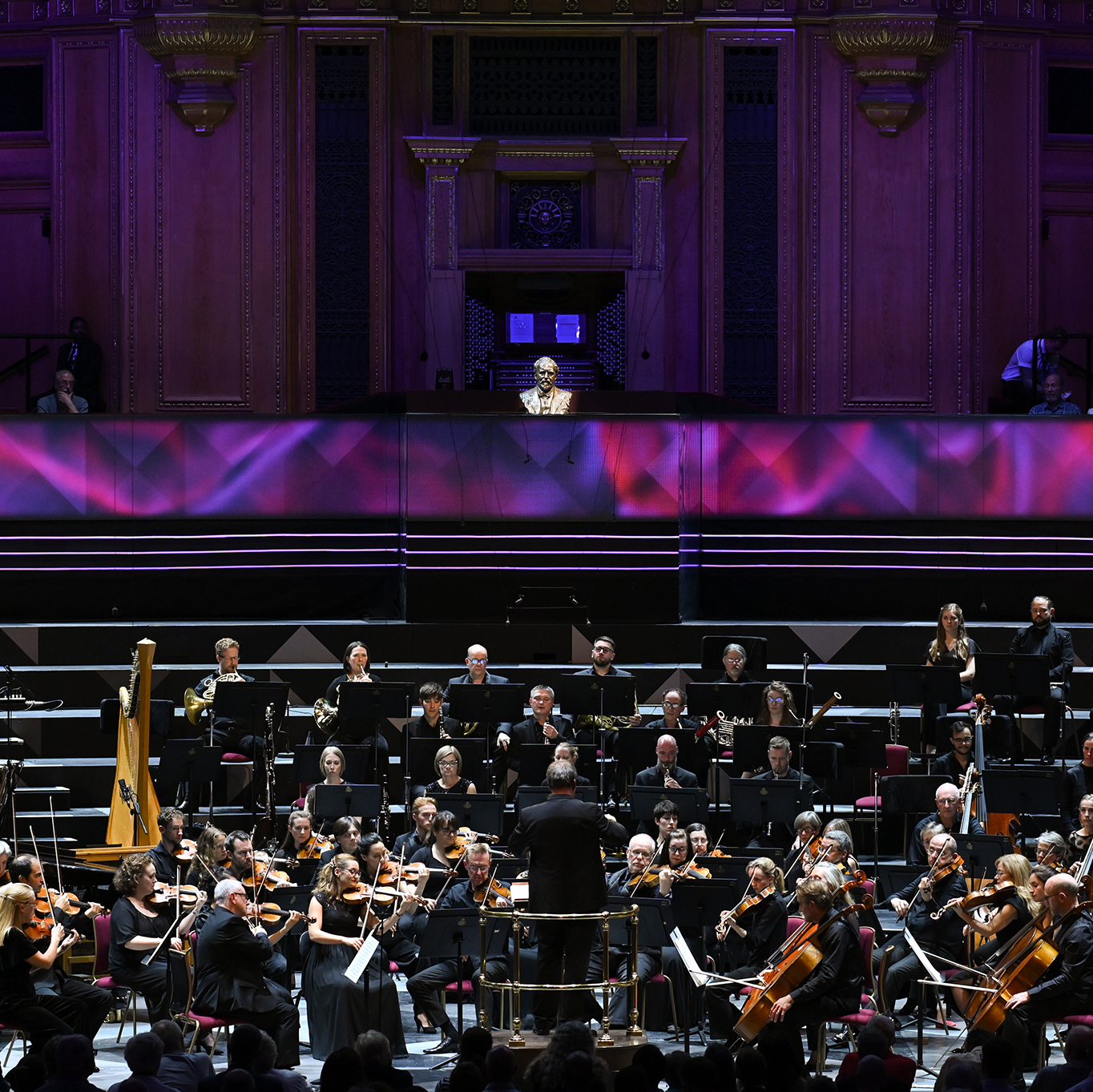
This evening’s Prom brought a welcome appearance by the BBC Philharmonic with its chief conductor John Storgårds, in what was a typically enterprising programme that continued this season’s emphasis on the music of Dora Pejačević in the centenary (last March) of her death.

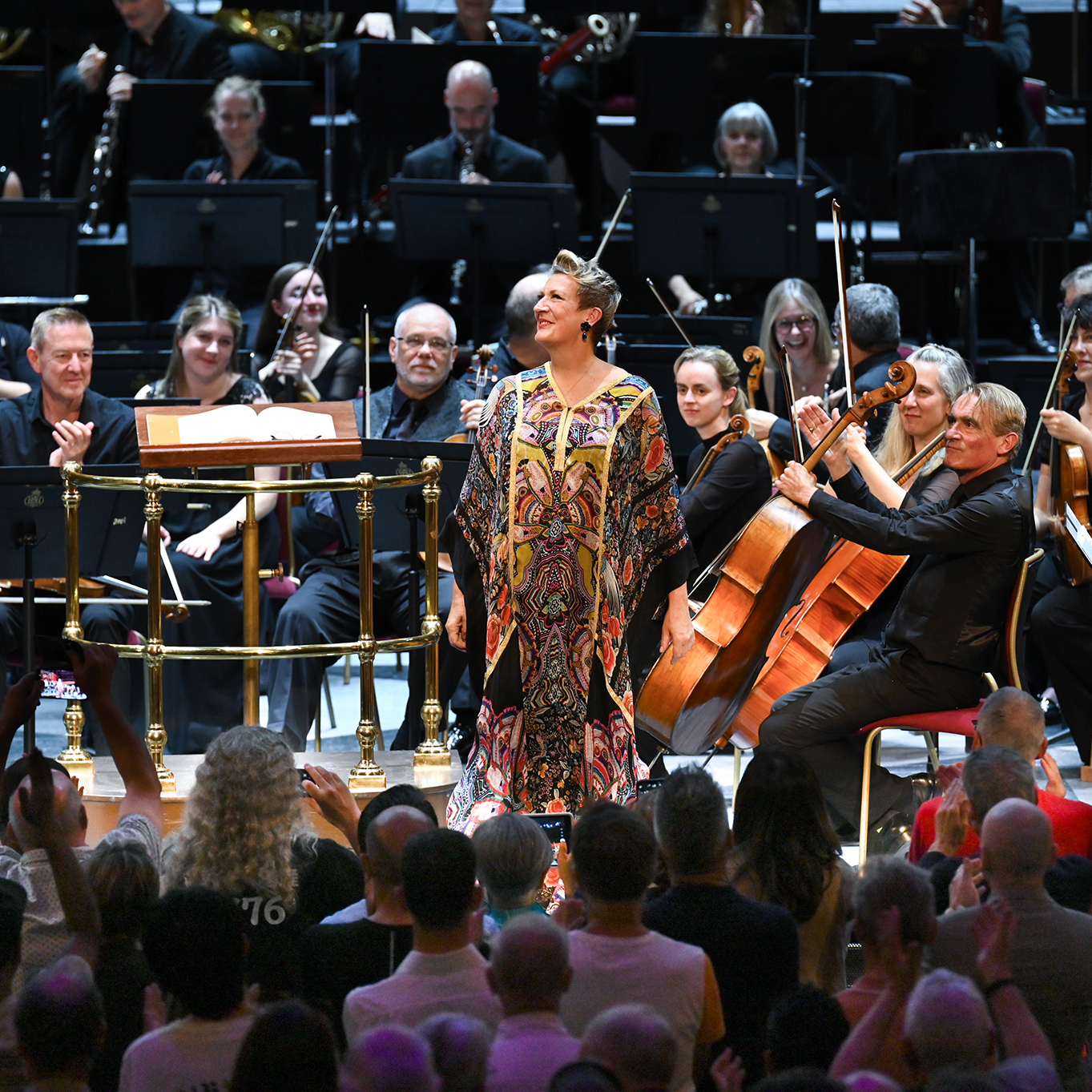
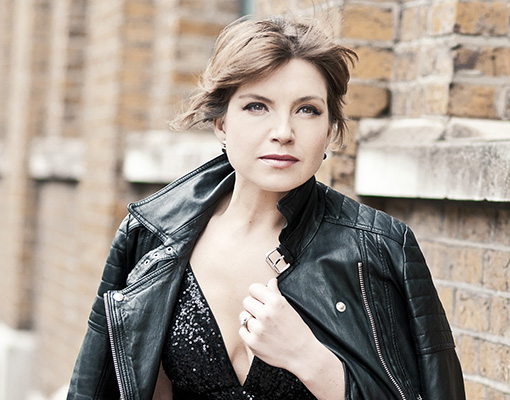
Among Pejačević’s sizable output of songs are four with orchestra, making a viable sequence in its own right. Dame Sarah Connolly (above) brought out the searching whimsicality from Karl Henckell’s Butterfly Songs, whether the fanciful imaginings of ‘Golden stars, little bluebells’ or the more concrete thoughts of ‘Flutter, o butterfly’ with delicate contributions by flute and glockenspiel. The setting of Kael Kraus’s Transformation taps deeper emotion, not least with those ecstatic violin solos between stanzas (eloquently rendered by Yuri Torchinsky), whereas that of Rainer Maria Rilke’s Love Song is notable less for the gently undulating phrases of its vocal writing than for the soaring ecstasy of its central interlude which only double one’s regret that neither composer nor poet lived long enough to collaborate on an opera project as had been mooted.

Making up this sequence were three songs by Alma Mahler-Werfel, taken from sets published in 1910 and 1915. Neither those contrived sentiments of Richard Dehemel’s The Silent Town or self-conscious emoting of Otto Julius Birbaum’s Light in the Night summons an especially personal response; only the winsome poise of Rilke’s I feel warm and close with you implies any individuality. The orchestrations by Colin and David Matthews are sensitive and apposite, but the latter might reasonably have expected more from the Proms in his 80th birthday-year.

Opening this concert was a beautifully judged reading of the overture to Weber’s final opera Oberon – less often heard now that overtures are no longer the automatic curtain-raisers they once were but which, in its deft interplay of evocative and energetic, still casts a potent spell.

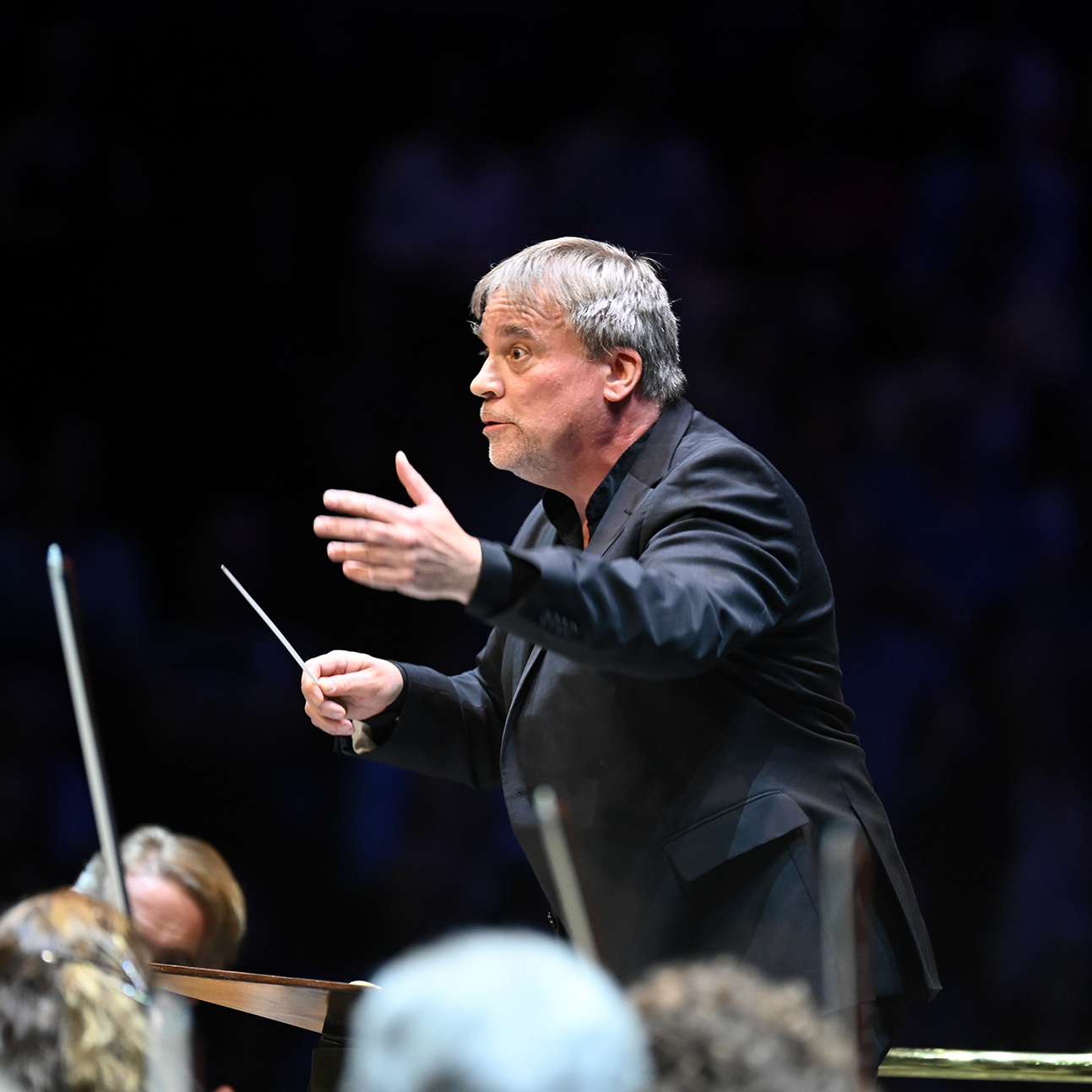
By contrast, Rachmaninoff’s First Symphony has come much more into its own now that the composer’s orchestral output has moved to the centre of the repertoire. Unheard for 48 years after its disastrous premiere in 1897, it remains a testament to the young composer’s ambition – not least in an opening Allegro whose implacable ‘motto’ sets the course for this movement overall. Storgårds had its measure, not least in the mounting fervency of its development, then delivered a probing account of a scherzo the more ingenious for its pervasive understatement.

Although it will never supplant that of its successor in audience affection, the slow movement is a minor miracle of thematic subtlety and emotional restraint as came through via felicitous playing by the BBC Philharmonic woodwind. Launching the finale in suitably visceral fashion, Storgårds (rightly) made the most of its contrasts between the celebratory and the speculative – any remaining ambivalence not so much resolved as forced into submission through a coda which renders the fatalism of Tchaikovsky’s Pathétique from a distinctly personal vantage.

So, an unlikely programme which worked well as a concert – the more so given it proceeded without an interval. Those in the audience surreptitiously eating or drinking between pieces might have preferred otherwise, but for both music and performances it was nothing but gain.

For more on the 2023 BBC Proms, visit the festival’s website at the BBC. Meanwhile click on the names for more information on artists Dame Sarah Connolly, John Storgårds and the BBC Philharmonic Orchestra – and for information on the composers Dora Pejačević and Alma Mahler-Werfel

In concert – Nash Ensemble @ Wigmore Hall: Side by Side & Nash Inventions

Side by Side

Royal Academy of Music Students [Christopher Vettraino (oboe), Silvia Bettoli, Johan Stone (horns), Magdalena Riedl (violin), Gordon Cervoni (viola)], Members of the Nash Ensemble – Adrian Brendel (cello), Alasdair Beatson (piano)

Colin Matthews Time Stands Still (2004)
Balency-Bearn Entre-Deux (2022)
Alberga No-Man’s-Land Lullaby (1996)
Keting before we were ocean (2021)
Colin Matthews Dual (2021)
Abrahamsen Congratulations Greeting (2022)

Nash Inventions

Claire Booth (soprano), Mark Padmore (tenor), Nash Ensemble [(Philippa Davies (flute), Gareth Hulse (oboe), Richard Hosford, Marie Lloyd (clarinets), Richard Watkins (horn), Sally Pryce (harp), Benjamin Nabarro, Michael Gurevich (violins), Lars Anders Tomter, Jennifer Stumm (violas), Adrian Brendel (cello), Graham Mitchell (double bass), Alasdair Beatson (piano)] / Martyn Brabbins

Casken Misted Land (2017)
Colin Matthews Seascapes (2021)
Anderson Van Gough Blue (2015); Three Songs (2018-22) [World Premiere of THUS]
Benjamin Viola, Viola (1997)
Turnage A Constant Obsession (2007)

Wigmore Hall, London
Tuesday 28 March 2023 (5pm and 7.30pm)

Reviewed by Richard Whitehouse

It has become such a fixture on the London calendar that Nash Inventions, given annually by the Nash Ensemble at Wigmore Hall, could easily be taken for granted. As tonight’s concert proved, however, the range and quality of those works performed is anything but predictable.

His long-time drawing inspiration from the landscape of the North-East might suggest Misted Land as a ready-made title for John Casken. Yet this quintet for clarinet and strings focusses on emotion as much, if not more than evocation by unfolding from the intangible impressions of its initial movement, via impulsive contrasts of its intermezzo, to a finale whose visceral progress is curtailed by a timely return to the initial equivocation. Richard Hosford made the most of his alternately insinuating and forceful writing in a piece that well deserved revival.

Although settings by Michael Tippett early on confirmed the musicality of his verse, Sidney Keyes (1922-43) has been relatively little set – making this selection by Colin Matthews in Seascapes the more welcome. From the unforced rhetoric of The Island City, it takes in the fleeting sensations of From : North Sea and the tense rumination of Night Estuary; a brief Interlude leading to the heartfelt expression of Seascape – one of Keyes’s greatest poems, in which Claire Booth’s commanding eloquence (above) more than vindicated the cycle as a whole.

Last in an informal trilogy centred on the colour, Van Gough Blue sees Julian Anderson pay tribute to this artist in a sequence traversing dawn to night. A speculative emergence of sound and texture in l’Aube, soleil naissant precedes the heady rhythmic and melodic interplay of Les Vignobles then mounting animation of Les Alpilles. Nothing, though, prepares for the inward rapture of Eygalières or the dance toward destruction of la nuit, peindre les étoiles: pieces wholly characteristic of this composer and as finely realized as anything he has written.

Further music by Anderson followed the interval – three in an ongoing series for soprano and ensemble identical to, but very different in usage from, that of Schoenberg’s Pierrot Lunaire. The viscerally sensual overload of Mallarmé’s Le Tombeau d’Edgar Poe (here made a tribute to Debussy in the centenary of his death) contrasted with the disarming sincerity of le 3 Mai – an email by composer Ahmed Essyad written during the pandemic, then lines by Longfellow in THUS – Claire Booth here enacting what is less a setting than a musical riposte to its text.

Writing what had become a tribute to Takemitsu 18 months after his death, George Benjamin turned what might have reflected the viola’s innate introspection into an intensive exploration by two of these instruments of how they might discover rhythmic then melodic and harmonic accord. Music diverse in content and logical in its unfolding, its technical challenges remain considerable – making this performance by Jennifer Stumm (having replaced Timothy Ridout at short notice) and Lars Anders Tomter the more engaging through its audible conviction.

It might come a fair way back in his sizable output, but the song-cycle A Constant Obsession remains among Mark-Anthony Turnage’s finest vocal works. This reflection on ‘love’ – what it might be, what it becomes and what it could have been – is articulated across five settings of Keats, Hardy, Edward Thomas, Graves and Tennyson; its course predicted in a ‘Prologue’ and encapsulated in the bleakly humorous final poem. Mark Padmore (above) conveyed its measure now as 14 years before, as did Martyn Brabbins (below) with his attentive and unobtrusive direction.

The early evening slot brought together players from the Nash and Royal Academy of Music. Entre-Deux saw Andrea Balency-Béarn opening out the timbral and harmonic space between pitches with discreet elegance, and No-Man’s-Land Lullaby found Eleanor Alberga working toward a totemic melody with combative fervency. Sun Keting contributed music laced with nostalgia but also indignation in before we were ocean while, in Congratulations Greeting, Hans Abrahamsen commemorated the RAM’s bicentenary in lively and resourceful terms.

Colin Matthews provided a more quixotic take on that event in the subtle contrasted sections of Dual, with his music also opening and concluding this selection. Time Stands Still marked Simon Rattle’s 50th birthday in (surprisingly?) inward and even inscrutable terms, while 23 Frames marked the 30th anniversary of the Nash through that number of miniatures whose character felt as distinctive as their order was random. The outcome found this composer as his most entertaining, with no complaints if several ‘frames’ exceeded their 30-second remit.

A lengthy evening, then, and an impressive showcase for the Nash in term of marking those achievements past or present. Now is hardly the time for any complacency regarding events such as this, which remains a template for what is possible in matters of artistic excellence.

Click here for the Nash Ensemble website, and here for the Royal Academy of Music

Talking Heads: Colin Matthews

colin-matthews

Interview by Ben Hogwood

The Aldeburgh Festival may not be with us in name this year, but its spirit burns brightly in the form of Summer at Snape, a series of safely distanced concerts to be given over every weekend in June.

As with the festival, these concerts feature imaginative programming, with contemporary music to the fore. Composer Colin Matthews has an illustrious history at Snape and Aldeburgh stretching back to his time as assistant to Benjamin Britten late in the composer’s life. He will be close at hand, with two new works receiving their premiere live performances. Firstly, the Nash Ensemble will feature in the first performance with an audience of Seascapes, setting poetry by Sidney Keyes. Conducted by Martyn Brabbins, the verses will be sung by soprano and dedicatee Claire Booth.

The next day will give audiences a chance to enjoy a new arrangement for string orchestra of the Double Concerto by Britten himself, a work completed at the age of 18 when the composer was still a student. Matthews arranged the original for full orchestra but has now reduced his forces, and the Royal Academy of Music Strings under John Wilson will reveal the new version with soloists Thomas Zehetmair (violin) and Ruth Killius (viola).

Matthews is a generous interviewee, taking time to consider questions from Arcana around both works and the return of live music – not to mention the problem of finding inspiration as a composer during the pandemic. First, however, we started by asking him about the poetry of Sidney Keyes, whose verse forms the bedrock of Seascapes.

“As far as I remember I first came across Sidney Keyes through Tippett’s The Heart’s Assurance”, Matthews recalls, “and I wrote a song cycle to Keyes’ words as long ago as 1968, long since withdrawn. Re-reading Keyes’ complete poems a few years back made me want to make a (hopefully better!) attempt to set him, and one of the poems (Night Estuary) was one I set more than 50 years ago – although I can’t recall it at all. The complexity of his thought doesn’t make for easy setting, but the words have a lyricism and power which calls for music.”

https://youtu.be/eA2ScSerjT8?t=2910

The work was first performed at London’s Wigmore Hall on 30 April, part of a Nash Ensemble program including works by Sir Harrison Birtwistle, Mark-Anthony Turnage, Julian Anderson and Simon Holt (which you can watch above).

What was it like seeing the work finally performed live? “Rather remarkable – only my third experience of live music in about 14 months, and an unusual experience to hear a work for the first time more than a year after it was completed.”

Claire Booth is the ideal singer for this work, and Matthews wrote the vocal line especially with her in mind. “Absolutely. I’ve known Claire since she took part in the Aldeburgh Composition Course in (I think) 2000, and this is the third piece that I’ve written for her. I chose a small ensemble whose colours are relatively subdued: a lot of the music is introspective in mood and is designed very much for the soloist to float over it.”

Moving on to the Britten, we consider the Double Concerto for violin, viola and orchestra, written at the age of 18 – and which Matthews has now reduced to the accompaniment of strings only. Does he detect is a lineage back to Mozart’s Sinfonia Concertante, a work for the same instrumental combination? “Obviously he (Britten) knew the Sinfonia Concertante, and he mentions a performance (with Lionel Tertis) in his 1931 diary, a few months before he started on the Concerto. It was one of the last pieces I heard him conduct. But there’s no influence from Mozart other than the soloists: instead, it follows very much the three-movement form of his Sinfonietta Op.1 which he had just completed, but on a larger scale.”

How much work was required between the 1997 version, made from the fully catalogued work (above), and the version we will hear at Snape? “A great deal! Making the 1997 version was comparatively simple, as Britten had made very detailed indications of instrumentation in his short score. Reducing it to strings alone – which was Thomas Zehetmair’s idea – meant a lot of rethinking and reworking. For instance, there is an important timpani part in the finale which took a lot of work to transfer satisfactorily to the double basses.”

We move on to talk about Britten’s writing for strings, and Matthews pinpoints several passages in his writing that have left a lasting admiration. “This work of course predates the most important of his string pieces, the 1936 Variations on a theme of Frank Bridge, whose string writing is a model of flair and virtuosity. The string writing for the original version of the Concerto is rarely as adventurous, so I was to some extent constrained by what was already there, as well of course as having to adapt music that was written for wind and brass. In many respects it had been easier to emulate Britten’s string writing in my orchestration of the Temporal Variations, originally for oboe and piano, and so starting from scratch.

We move on to discuss the last year, and how it has been for Matthews as a composer. Has he had plenty of material for new works or has it been hard to find inspiration at times? “At first there was a sense of freedom in not writing to commission or deadline”, he says, “and I wrote a fairly large-scale orchestral piece in the summer of last year. Subsequently I’ve been finding it a bit difficult to focus on projects other than small or solo pieces, and this is one of several arrangements I’ve made for the smaller forces that are necessary in these difficult times, which has been a good way to keep up momentum.”

The last question requires the simplest of answers to confirm just how valuable Summer at Snape promises to be. What does it mean to Colin to be part of live music making at Snape once again? “Very special.”

Summer at Snape runs from Friday 4 June until Saturday 11 July. For full details on all the live events, visit the Snape Maltings website. For more on Colin Matthews, you can visit the composer’s website here
.

City of Birmingham Symphony Orchestra – Debussy Festival: Second Weekend

Symphony Hall, Birmingham; Saturday 24 & Sunday 25 March 2018

Written by Richard Whitehouse

This second weekend of the Debussy Festival featured a similar mix of orchestral, song and instrumental events, held at various venues in Birmingham in addition to Symphony Hall and extending over the broad spectrum of Debussy’s music to include several less familiar items.

Saturday evening focussed on ‘Sacred Debussy’, and opened with his prelude La Cathédrale engloutie (1910) in an orchestration by Colin Matthews faithful to its spirit. The CBSO then vacated the platform for Messiaen’s motet O sacrum convivium (1937), fervently sung by the CBSO Chorus under Simon Halsey and preceded by Bach’s Dorian Toccata and Fugue. Its methodical progress was ideally complemented by Dieu parmi nous, concluding Messiaen’s large-scale cycle La Nativité du Seigneur (1935) with a panache to which Thomas Trotter was no less responsive. Debussy’s Danse sacrée et danse profane (1904) ended the first half with an allure and poise that Suzy Wilkinson-Kawalec conveyed in full measure; CBSO assistant conductor Jonathan Bloxham securing an elegant and fastidious response from the strings.

After the interval, a rare chance to hear virtually the whole of Debussy’s incidental music for Gabriele D’Annunzio’s play La Martyre de Saint Sébastien (1911). Not, then, the 20-minute ‘symphonic fragments’ arranged by André Caplet (who also undertook much of the original orchestration) or the hour-long complete score with narration, but a 35-minute hybrid where the music for the five acts was amalgamated into a four-movement ‘choral symphony’. With its hieratic modality and austere if never merely archaic polyphony, this is arguably the most emotionally affecting of Debussy’s later works and was superbly sung by the CBSO Chorus. Sopranos Ilse Eerens and Katja Stuber were effortless in their solo parts and Mirga Graźinytė-Tyla (below) drawing an eloquent response from the CBSO. Undoubtedly a highlight of this festival.

On to Sunday and an early afternoon concert of ‘Exotic Debussy’, opening with another three Preludes (1913) – the ironic wit of Minstrels, Mussorgskian heft of La puerta del vino and the bracing humour of General Lavine – Eccentric – once again heard in orchestrations by Colin Matthews responsive more to the images being evoked than the music as conceived for piano. Bloxham led the CBSO in a spirited account of the ‘Pas de six’ from Britten’s The Prince of the Pagodas (1956), then Graźinytė-Tyla presided over two sections from Ravel’s Ma Mère l’Oye (1910) – the piquant Orientalism of Laideronette and the encroaching rapture of Le jardin féerique, both enticingly rendered yet an unsatisfying close to a rather piecemeal first half. A shame the Ravel ballet was not heard in full, as this has long been a CBSO speciality.

There was nothing piecemeal about the second half, with Graźinytė-Tyla taking charge of the CBSO Youth Orchestra for a complete rendering of Debussy’s Images. His largest orchestral work when heard complete, this is difficult to bring off as a totality though this account came close. The ominous understatement of Gigues was well conveyed despite an occasional lack of subtlety, then the central triptych that is Ibéria gave this capable and enthusiastic outfit its head in the traversal from sultry street-life, through nocturnal rumination, to festal celebration – the overall sequence being projected with verve and immediacy. Yet the closing Rondes de printemps was even more successful, its oblique evocation of rural revelry given cumulative impetus such as made for a more than usually conclusive end to this wide-ranging sequence.

The mid-afternoon ‘Tombeau de Debussy’ juxtaposed pieces from the supplement published by La Revue musicale in 1920 with commissions under BCMG’s Sound Investment Scheme. Jungeun Park’s Tombeau de Claude Debussy found violinist Alexandra Wood, cellist Ulrich Heinen and pianist Richard Uttley (above) evoking the composer’s death in darkly ironic terms, then the oblique tonality of Dukas’s La plainte, au loin, du faune … seemed as much a memorial to the creative impasse as to its passing. Highly sensitive here, Uttley was no less probing in the moody ‘Sostenuto rubato’ that Bartók incorporated into his Eight Improvisations; soprano Ruby Hughes joining him for the whimsical profundity of Satie’s setting of Lamartine in En souvenir. Sinta Wallur’s Tagore Fireflies sets three brief verses by the Indian poet in music whose ornamented vocal was complemented by the piano’s gamelan-like patterning. Wood and Heinen found requisite plangency in the first movement of Ravel’s Duo; then cellist and soprano took on engaging theatricality for Frédéric Pattar’s setting of Maeterlinck in (… de qui parlez-vous?). Uttley captured the bluesy elegance of Goossens’s Pièce, before Julian Anderson’s Tombeau united the musicians in a setting of Mallarmé’s tribute to Edgar Allen Poe whose chiselled vocal writing and guitar-like sonorities made for a provocative ending.

The early-evening programme of ‘Natural Debussy’ commenced with the arresting cameo of flautist Marie-Christine Zupancic playing Debussy’s plaintive Syrinx (1913) at the rear of the auditorium; overhead lights gradually raised on the platform from where Bloxham directed the CBSO in an engaging account of Printemps (1887). Whatever its formal inelegance and stylistic derivativeness, this two-movement piece has an insouciance and extroversion which Debussy only occasionally re-captured – enhanced by the knowing sophistication of Caplet’s orchestration a quarter-century later. Graźinytė-Tyla returned for George Benjamin’s Ringed by the Flat Horizon (1980), its evocation of desert storms rendered with a graphic immediacy and sure sense of purpose to make one regret that an unfortunate accident onstage meant the performance had to be curtailed before the close. The orchestra reassembled after a break for La Mer (1905) – emotional contrasts stressed a little too readily in ‘Jeux de vagues’, but with the outer movements bracingly projected to round off this final concert in impressive fashion.

Even on the basis of these Symphony Hall concerts, this Debussy Festival did its composer proud by conveying the sheer variety of his output and also its relevance to Western music during the century since his death. Omissions were few – of which the most significant, his full-length opera Pelléas et Mélisande, will be redressed with a concert performance on the 23rd June. For now, Graźinytė-Tyla deserves full credit for having initiated this ambitious festival: its orchestral events leaving no doubt as to the rapport between her and the CBSO.

For more information on the CBSO Debussy Festival, you can visit the event’s website