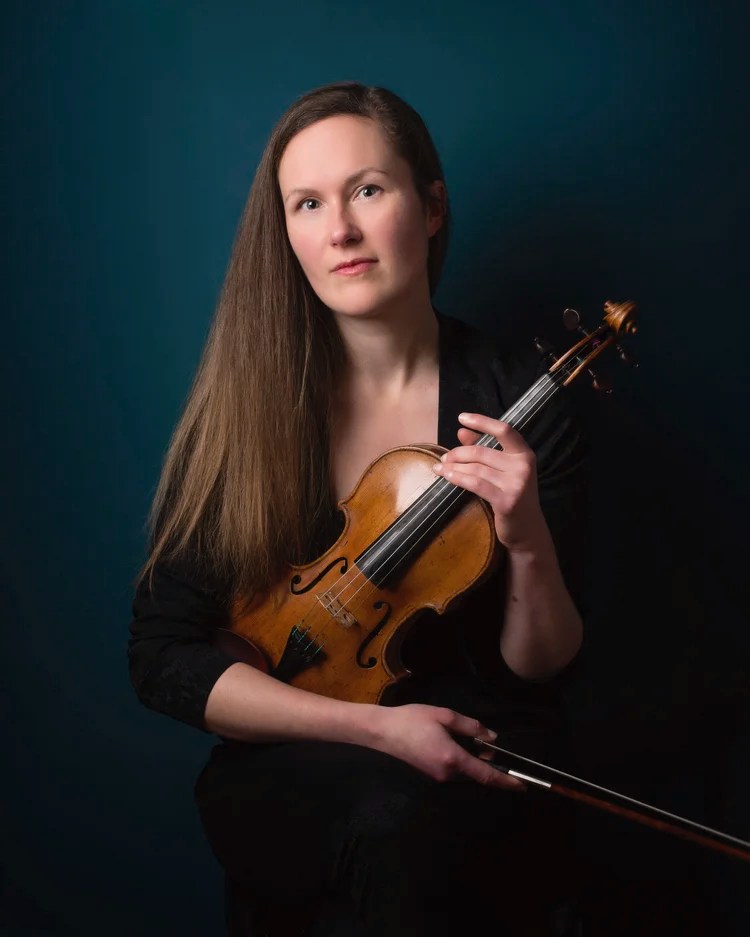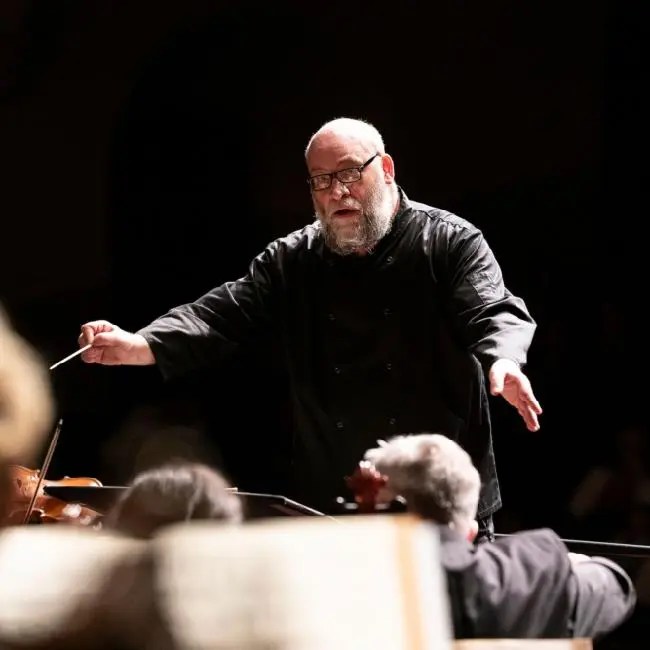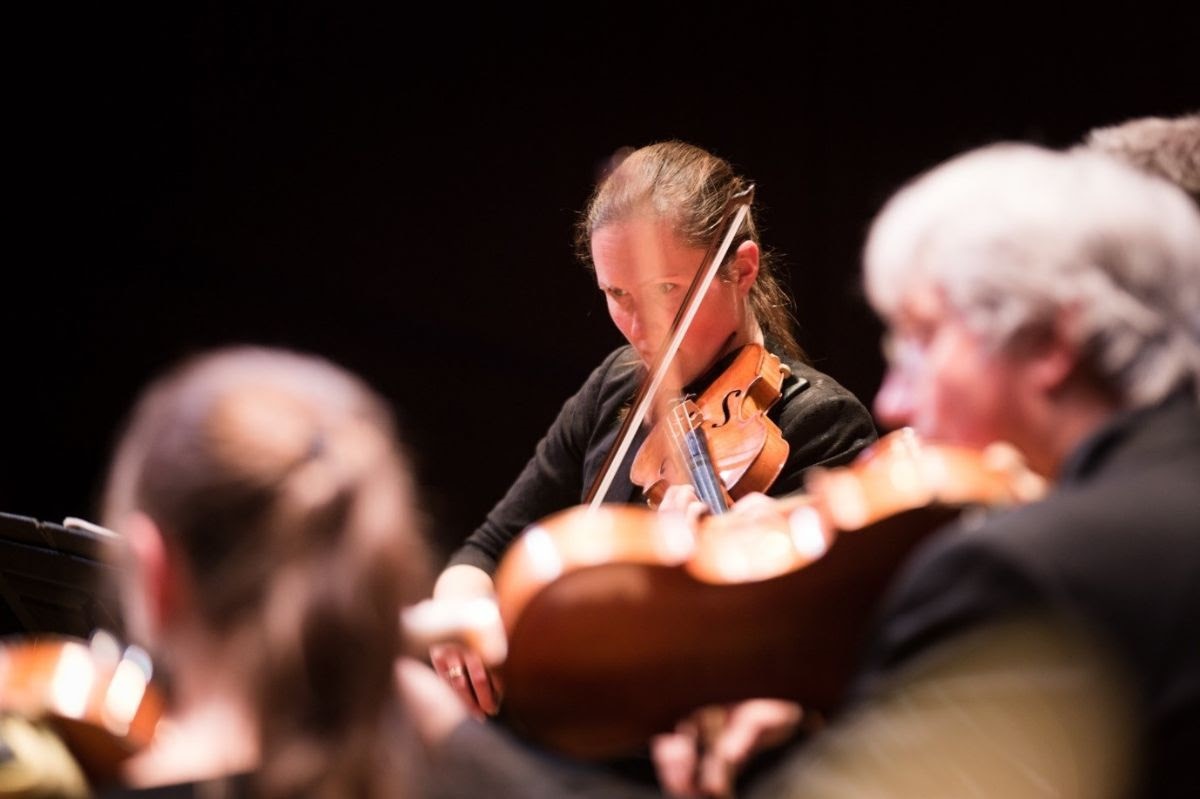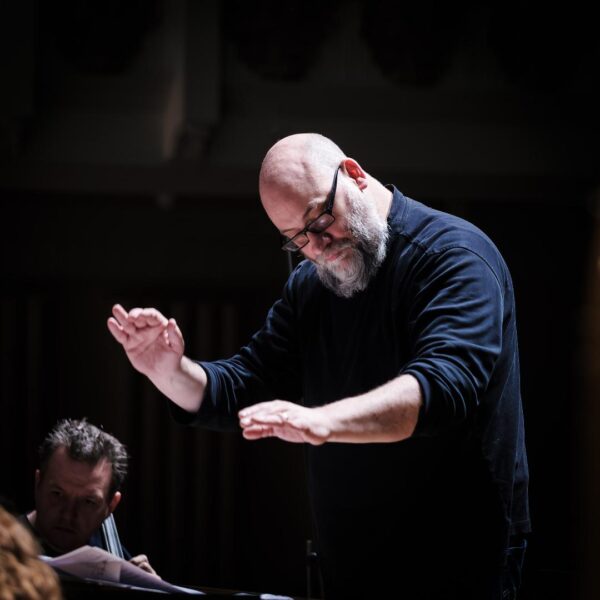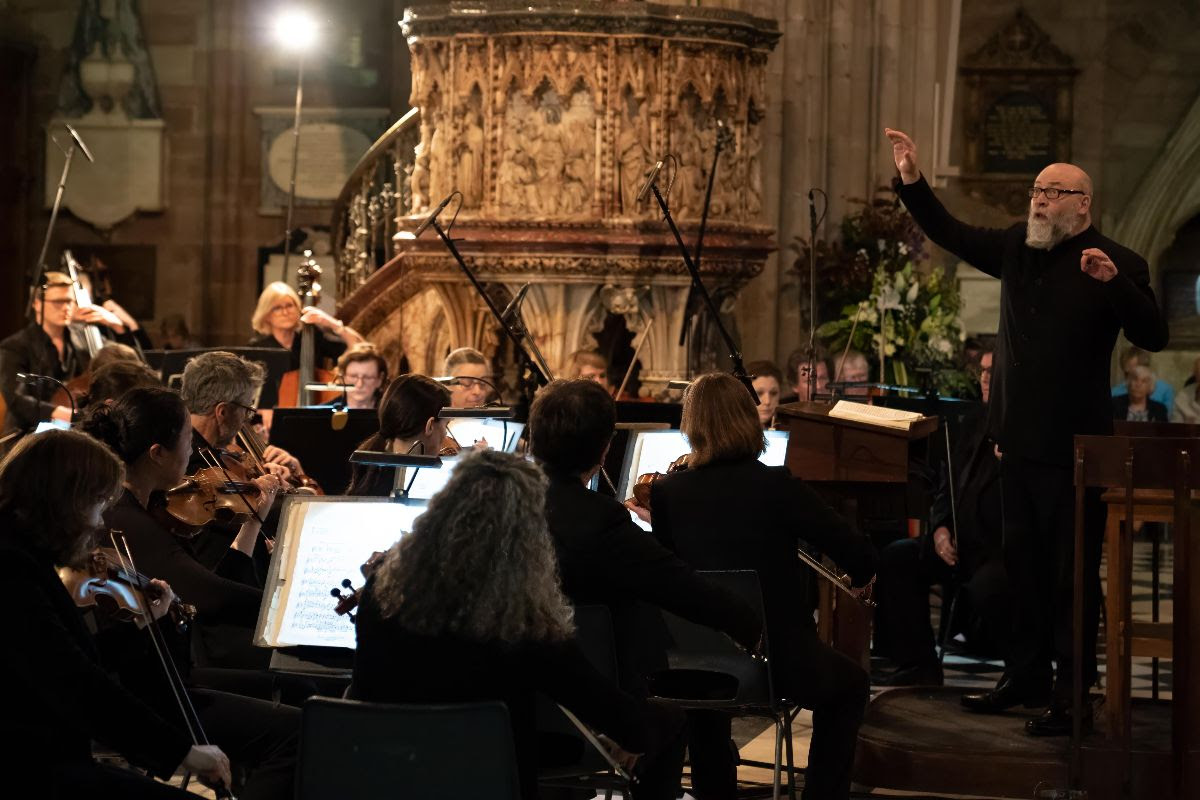
reposted by Ben Hogwood Photo Zoe Beyers leading the English Symphony Orchestra (c) Michael Whitefoot
The renowned English Symphony Orchestra (ESO), under their principal conductor Kenneth Woods, is to make a highly anticipated return to Malvern Theatres, Worcestershire on Wednesday 12 November at 7:30pm with a programme celebrating the adventurous spirit and playful energy of the 1920s, as part of their Autumn-Winter Residency.
LIVELY SPIRIT OF THE ROARING TWENTIES
The evening will feature works by composers who captured the era’s lively spirit, including Erwin Schulhoff’s Suite for Chamber Orchestra, Darius Milhaud’s The Ox on the Roof’ and Kurt Weill’s raucous cabaret songs, to be performed by the ESO’s first affiliate artist, soprano April Fredrick. The programme opens with the music of Joseph Haydn and a performance of his Symphony No. 60 entitled The Absent-Minded Gentleman, delighting in the composer’s celebrated wit and humour.
Kenneth Woods, Artistic Director and Principal Conductor of the ESO, introduces the programme: “Erwin Schulhoff’s suave Suite for Chamber Orchestra takes listeners on a guided tour of 20s dance crazes, from the shimmy to the tango. Milhaud’s zany ballet score The Ox on the Roof was inspired by the comedy of Charlie Chaplin and the dance music of Brazil, while Kurt Weill’s songs reflect life in and around the cabaret scene in all its humour and sensuality. The programme opens with Haydn’s Symphony No.60, The Absent-Minded Gentleman, quite possibly the funniest and most surreal symphony ever composed.”
ENGLISH SYMPHONY ORCHESTRA – MALVERN RESIDENCY
Wednesday 12 November 2025, 7.30pm Malvern Theatres Grange Road, Malvern, Worcs. WR14 3HB English Symphony Orchestra: The Joker’s Wild – Mischief in Music Haydn Symphony No. 60 (‘Il Distratto’) in C Weill Cabaret Songs Schulhoff Suite for Chamber Orchestra Milhaud The Ox on the Roof
April Fredrick (soprano), English Symphony Orchestra / Kenneth Woods
interview by Richard Whitehouse Picture (c) Julie Andrews
You do not move forward by standing still. That is evidently the maxim of the English Symphony Orchestra, whose first release on its new in-house label has just been issued. Apropos of this and other matters, Arcana spoke recently to Kenneth Woods, the principal conductor and artistic director of the ESO, about his plans for this audacious undertaking.
It made sense to begin with the motivation behind the establishing of ESO Records. ‘‘It’s something I’ve wanted to do for a long time. Being able to release whatever we want, and whenever we want, to is hugely empowering for us as an orchestra. It gives us a chance to align our concert work with our online presence and recording programme more strategically’’.
As to whether these releases will be mainly studio or live recordings, ‘‘It’ll be a combination of both. I think that over the course of the next couple of years, listeners will start to discern a number of threads within the ESO Records portfolio. Our first release is an Elgar Festival disc with Elgar’s First Symphony and his concert overture In the South. This is a great way for us to spread the word about the festival internationally and also to share the exceptional quality of Elgar Festival events. And, with the festival doing so many new or lesser-known works, we can share that music with a world-wide audience.
‘‘As a result of the COVID pandemic, we’ve an enormous amount of material ‘in the can’ that we recorded for ESO Digital (our online video portal). ESO Records gives us a chance to share that body of work, also to highlight and complement our future concerts. For instance, we’ll be releasing our one-per-part version of Mahler’s Ninth Symphony to coincide with a run of performances in December. And there are studio projects such as the Sibelius cycle which have continued as we tie-in the recording of its future instalments to public concerts’’.
Woods is keen to point out that ESO Digital release will complement the orchestra’s ongoing schedule of releases for other labels. ‘‘Since we released the first disc of my tenure in 2015, we’ve worked with Nimbus, Lyrita, Signum, Avie, Toccata and Somm among others. While I hope that many of those partnerships will continue, the economic climate for labels is very difficult. They’ve a lot of fixed costs and declining revenue streams which means that, for a group like us, finding release slots and agreeing repertoire or projects has become more complicated. Something like the Sibelius cycle which, while it is very important to us as an orchestra, is not the kind of repertoire many labels do anymore.
‘‘One can also be hampered through labels having other versions of the same repertoire in the pipeline or in their back catalogue. That said, I’d contend the world does need recordings of pieces which emerge out of shared sympathy and enthusiasm for the music among players, conductor and production team. There’s always more to be said about the greatest music, and if we feel we’ve something meaningful to contribute, then we’re going to say it’’.
Given the varying economic and logistical factors, ESO Records might not always be issued both as CDs and Downloads. ‘‘This will vary according to the release. It makes to put the Elgar Festival Live stuff makes out on CD because they make a great souvenir for attendees. But with most projects today, physical sales are so small it isn’t worth the cost or complexity of maintaining an inventory and shipping it all over the world. Moreover, the argument used to be that CDs sounded better, but the quality now at 24-bit and 96-kHz sampling contains between three and ten times as much detail and information. We want our listeners to hear our work in the best possible quality, and these days that means streaming or hi-res downloads’’.
With this in mind, listeners can look forward to no mean diversity in terms of future issues. ‘‘I mentioned we were looking to create coherent and ongoing threads among our releases. Elgar Festival Live has several more releases ready and we’ll be recording our performances at this year’s and all future festivals. The orchestra’s long-term commitment to contemporary music will be a big part of our future work, and I expect this to feature many of the amazing composers that listeners have come to associate with ESO such as Philip Sawyers, Adrian Williams, Emily Doolittle, David Matthews and Steve Elcock. We’re also keen to draw on the ESO’s extensive archive of performances by composers such as Ireland, McCabe, Maw, Simpson and Arnold, along with performances conducted by the likes of Michael Tippett and Yehudi Menuhin, with a wider public.”
‘‘The Sibelius and Mahler projects are indicative of our desire to put our stamp on so-called standard repertoire or, as I prefer to call it, the greatest music ever written. One of the best things about streaming is that not every release needs to be a 70-minute album. Archival recordings might well come out as singles or EPs to align with composer anniversaries or birthdays, historic occasions and upcoming concerts – so there’ll be releases of Beethoven, Mozart, Brahms, Strauss, Bartók and Shostakovich. I’m also very proud of our track record of championing historically suppressed music, so listeners can expect further issues of Gál, Schulhoff, Kapralova, Krenek and Weinberg.”
‘‘Finally, ESO Records will give us greater freedom to develop collaborative projects with artistic partners including composers, soloists and directors. We’ve just recorded a fantastic disc of organ concertos by Poulenc, Hindemith and Daniel Pinkham with organist Iain Quinn for release next year, and I’m hopeful there’ll be many opportunities in the future to work collaboratively so as to bring worthwhile music to the public’s attention’’.
Much to look forward to, then, from a label whose artists have never shied away in pushing the envelope when it comes to imaginative programming and innovative presentation. Qualities, indeed, that will no doubt prove synonymous with whatever releases emerge from the ever-enterprising English Symphony Orchestra.
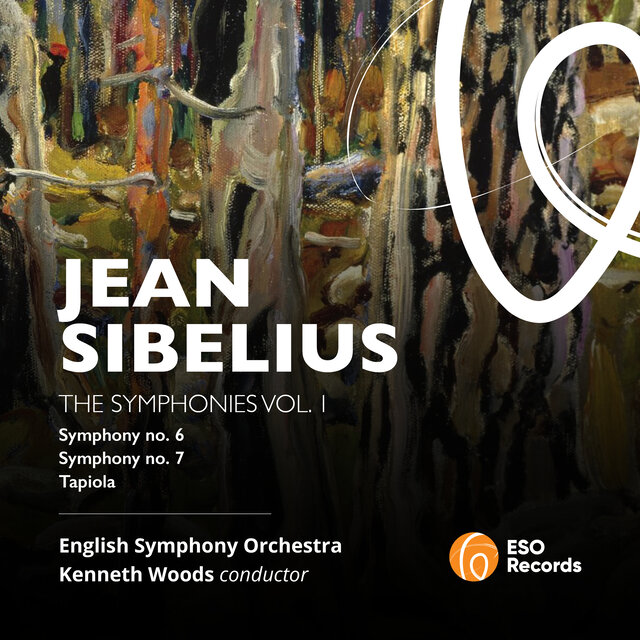
Jean Sibelius Symphony no.6 in D minor Op. 104 (1918-23) Symphony no.7 in C major Op. 105 (1923-4) Tapiola, Op, 112 (1926)
English Symphony Orchestra / Kenneth Woods
ESO Records ESO2502 [67’16”] Producers Phil Rowlands, Michael Young Engineer Tim Burton
Recorded 1-2 March 2022 (Symphony no.6 & Tapiola); 2 May 2023 (Symphony no.7) at Wyastone Concert Hall, Monmouth
Reviewed by Richard Whitehouse
What’s the story?
Good to find the English Symphony Orchestra issuing the follow-up release on its own label (after Elgar’s First Symphony and In the South), launching an ambitious project to record all seven symphonies and Tapiola by Sibelius prior to the 70th anniversary of his death in 2027.
What are the performances like?
Only if the Sixth Symphony is considered neo-classical does it feel elusive, rather than a deft reformulation of Classical precepts as here. Hence the first movement unfolds as a seamless evolution whose emotional contrasts are incidental – Kenneth Woods ensuring its purposeful course complements the circling repetitions of the following intermezzo, with its speculative variations on those almost casual opening gestures. Ideally paced, the scherzo projects a more incisive tone which the finale then pursues in a refracted sonata design that gains intensity up to its climactic mid-point. Tension drops momentarily here, quickly restored for a disarming reprise of its opening and coda whose evanescence is well conveyed; a reminder that Sibelius Six is as much about the eschewal of beginnings and endings in its seeking a new coherence.
A decisive factor in the Seventh Symphony is how its overall trajectory is sensed – the ending implicit within the beginning, as Sibelius fuses form and content with an inevitability always evident here. After an expectant if not unduly tense introduction, Woods builds the first main section with unforced eloquence to a first statement of the trombone chorale that provides the formal backbone. His transition into the ‘scherzo’ is less abrupt than many, picking up energy as the chorale’s re-emergence generates requisite momentum to sustain a relatively extended ‘intermezzo’. If his approach to the chorale’s last appearance is a little restrained, the latter’s intensity carries over into a searing string threnody that subsides into pensive uncertainty; the music gathering itself for a magisterial crescendo which does not so much end as cease to be.
Tapiola was Sibelius’s last completed major work, and one whose prefatory quatrain implies an elemental aspect rendered here through the almost total absence of transition in this music of incessant evolution. A quality to the fore in a perceptive reading where Woods secures just the right balance between formal unity and expressive diversity across its underlying course. Occasionally there seems a marginal lack of that ‘otherness’ such as endows this music with its uniquely disquieting aura, but steadily accumulating momentum is rarely in doubt on the approach to the seething climax, or a string threnody whose anguish bestows only the most tenuous of benedictions. A reminder, also, that not the least reason Sibelius may have failed to realize an ‘Eighth Symphony’ was because he had already done so with the present work.
Does it all work?
Pretty much throughout. Whether or not the cycle unfolds consistently in reverse order (with a coupling of the Fourth and Fifth Symphonies having already been announced), this opening instalment is the more pertinent for focussing on Sibelius’s last years of sustained creativity.
Is it recommended?
Indeed. The ESO is heard to advantage in the spacious ambience of Wyastone Hall, and there are detailed booklet notes by Guy Rickards. Make no mistake, these are deeply thoughtful and superbly realized performances which launch the ESO’s Sibelius cycle in impressive fashion.
Elgar Symphony no.1 in A flat major Op.55 (1907-08) In the South (Alassio) Op.50 (1903-04)
English Symphony Orchestra / Kenneth Woods
ESO Records ESO2501 (80’10″] Producer and Engineer Tim Burton
Live performances at Worcester Cathedral on 4 June 2022 (In The South) and 3 June 2023 (Symphony)
Reviewed by Richard Whitehouse
What’s the story?
There could hardly been a more fitting release to launch the English Symphony Orchestra’s own label than these performances drawn from past editions of the Elgar Festival, with both of them a reminder of the ESO’s formidable prowess over the range of symphonic writing.
What are the performances like?
The First Symphony may not have the usual number of strings to complement its triple wind, but due to the resonance of Worcester Cathedral this is not evident as regards internal balance. Not least in an opening movement whose motto-theme is never indulgent, setting the tone for an Allegro where expressive variety goes hand in hand with formal focus. Especially fine is a hushed transition into the reprise, then a coda that distils the equivocal mood as this subsides into ruminative calm. Woods is mindful to invest scherzo and trio with consistency of pulse, so if the former feels reined in on return, the latter has an ideal poise and wistfulness. Nor is the transition other than indicative of the Adagio’s profundity, Woods negotiating its soulful main theme and wistful episodes with unerring rightness through to the ineffable closing bars.
If the finale has any marginal falling-off of inspiration, it is not apparent here. Sombre if shot through with expectancy, its introduction launches an Allegro whose alternating incisiveness and suavity holds good over an impulsive development, then a transformation of the codetta whose pathos intensifies for an apotheosis where the motto-theme carries all before it. Not that the closing pages are bombastic or grandiloquent in import – rather, they set the seal on a work whose affirmation is made the greater for its having been so purposefully attained.
As for In the South, the main issue is in setting a tempo flexible enough to accommodate this concert overture’s extended sonata design without it becoming episodic. Here a surging main theme, its speculative transition and suave second theme emerge seamlessly – the underlying tension carried into a development whose impulsiveness is maintained across the intervening first episode. Amply evoking the grandeur of ‘empires past’, this is astutely handled such that its implacability eschews bathos. If the second ‘canto populare’ episode is just a little reticent, its expressive raptness – and Carl Hill’s eloquent playing of its indelible viola melody – more than compensates. Nor is there any loss of continuity during the reprise, Woods’s building of momentum near the start of the coda ensuring an irresistible yet never overbearing peroration.
Does it all work?
Almost always. ESO concerts at the Elgar Festival have yielded numerous performances of note, with In the South among the finest yet in vindicating a work that can all too easily fall victim to its seeming indulgencies. Nor is that of the First Symphony far behind in revealing the formal intricacy and expressive variety of music as personal as is any of this composer’s major works. Anyone who may have harboured doubts about either piece is likely to be won over, confirming an empathy as augers well for the Second Symphony at this year’s festival.
Is it recommended?
Absolutely. These readings are far more than mementos of their concerts, this being ‘Volume 1’ suggests that further performances from the Elgar Festival will be made available. Note too the first instalment of a Sibelius cycle is downloadable as the second release on ESO Records.
Arlen arr. Bekmambetov / ed. Woods The Song of Songs (1953) Arlen ed. Woods The Poet in Exile (1988, rev. 1994)
Anna Huntley (mezzo-soprano), Gwilym Bowen (tenor), Thomas Mole (baritone), BBC Women’s Chorus of Wales, English Symphony Orchestra / Kenneth Woods
Signum Classics SIGCD879 [52’21’’] Producer / Engineer Phil Rowlands, Engineer Andrew Smilie
Recorded 17-20 February 2022 at BBC Hoddinott Hall, Cardiff
Reviewed by Richard Whitehouse
What’s the story?
Kenneth Woods and the English Symphony Orchestra continue their exploration of music by composers murdered or forced into exile during the Third Reich with this release of Walter Arlen, whose recent death at 103 enabled him to experience a renewed interest in his music.
What’s the music like?
Although he remains best known through his trenchant music criticism for the Los Angeles Times, the Vienna-born Walter Arlen (Aptowitzer) also made a distinguished contribution to music administration and left a not inconsiderable output. Several albums featuring his songs and piano music can be heard on the Gramola label, while this latest ESO release provides a welcome introduction to two of his works that involve larger forces – the one drawing on an ancient Jewish source and the other upon poems by a seminal author from the post-war era.
Whether or not The Song of Songs is the harbinger of monogamy in the Judeo-Christian moral code, it contains some of the eloquent expression found in either Biblical testament. In just 30 minutes, Arlen’s ‘dramatic poem’ takes in the main narrative, its lively initial chorus featuring intricate polyphony for female voices and incisive orchestral textures. As the piece unfolds, its emotional emphasis is placed on the solo contributions – whether those of Solomon sung with burnished warmth by Thomas Mole, those of the Shepherdess with poise and insouciance by Anna Huntley, or those of the Shepherd given with virility and tenderness by Gwilym Bowen. Nor is the BBC Women’s Chorus of Wales wanting in intonational accuracy. If the resolution does not bring expected closure, this direct and unaffected setting certainly warrants revival.
The real discovery is The Poet in Exile, a song-cycle to texts by Polish-born American author Czesław Miłosz. These profound poems are not easily rendered in musical terms, and it is to Arlen’s credit that he goes a considerable way to achieving this. As the composer states, they ‘‘dealt with situations echoing my own remembrance of things past’’ – as holds good from the trenchant rhetoric of ‘Incantation’, via the sombre rumination of ‘Island’ then wistful elegance of ‘In Music’ or controlled fervour of ‘For J.L.’ (with its striking harpsichord obligato), to the confiding intimacy of ‘Recovery’. Some may have heard these songs with Christian Immler and Danny Driver (GRAM98946) but this orchestration by Woods, after the arrangement by Eskender Bekmambatov, offers a wider-ranging context for assured singing by Thomas Mole.
Does it all work?
Pretty much, and not least because the ESO is heard to advantage in the spacious acoustic of Hoddinott Hall while directed by Woods with unerring sense of where to place the emotional emphasis – especially important in conveying the meaning of the songs. A pity, however, that neither texts nor translations could be included here – not least as that by Leroy Waterman of The Song of Songs is appreciably different from those which have been previously set, while the Miłoz poems are worth savouring on their own terms and need to be approached as such.
Is it recommended?
It is. If not a major voice, Arlen’s music is always approachable and often thought-provoking. Initiates and newcomers alike will enjoy getting to know these works and hearing them given so persuasively – a worthy present, indeed, for this composer as he neared his 102nd birthday.