In concert – Benjamin Grosvenor, CBSO / Riccardo Minasi: Schubert, Chopin & Mozart

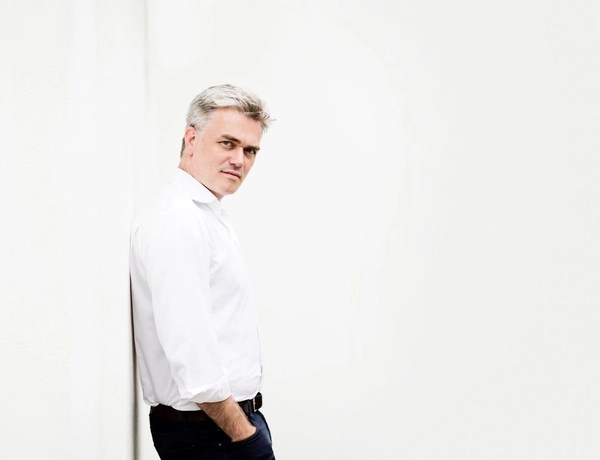
Benjamin Grosvenor (piano), City of Birmingham Symphony Orchestra / Riccardo Minasi

Schubert Overture in C major ‘In the Italian style’ D591 (1817)
Chopin Piano Concerto no.2 in F minor Op.21 (1830)
Mozart Symphony no.41 in C major K551 ‘Jupiter’ (1788)

Symphony Hall, Birmingham
Thursday 1 June 2023 (2.15pm)

Reviewed by Richard Whitehouse

It is not often these days to have a whole concert of music from the late Classical and early Romantic eras, but that was just what the City of Birmingham Symphony Orchestra provided this afternoon under the disciplined as well as immensely assured direction of Riccardo Minasi.

There was no mistaking the inherent classicism of Chopin’s Second (sic) Piano Concerto – not least the simmering impetus in its opening Maestoso where, after a forthright tutti, Benjamin Grosvenor rendered those main melodies with requisite poise, and the emotional eddying of its development in direct contrast to the terseness of its coda. Most memorable was a Larghetto of melting eloquence but also, in its central episode, a volatility only gradually dispelled. Here, and in the final Allegro, the almost concertante role allotted to bassoon was characterfully taken by Nikolaj Henriques – as were those brass fanfares and col legno writing for strings (was this really Chopin’s idea?) which see the latter movement on its way to a spirited close. A limpid take on Chopin’s Nocturne in C sharp minor from the same year made for an appropriate encore.

Mozart symphonies rarely conclude a programme nowadays, yet the last four are ideal for this purpose and none more than the Forty-First – by some distance the weightiest and the most physical such work prior to Beethoven’s Eroica. This was the highlight of Minasi’s recording of the final triptych (Harmonia Mundi), with the opening Allegro likewise a statement of intent in its rhythmic tensility and general bravura, though its more ambivalent asides were never downplayed. Less distinctive melodically than its two predecessors, the Andante is memorable for its expressive understatement and a subtlety – with wind and strings enfolded into a textural continuity – that accentuates its pathos. Nor was there any lack of suavity in the Menuetto, its outer sections finding ideal contrast with a trio whose pert expectancy was delectably pointed.

The final Allegro crowns this work in every respect and, here again, Minasi did not disappoint. Not that there any sense of merely ‘going through the motions’ with his inclusion of first- and second-half repeats, each of which brought added intensity to what had gone before as well as enabling the wealth of contrapuntal detail to come through as it too rarely does. For its part the CBSO more than rose to the challenge, not least in a coda whose methodical combining of this movement’s themes makes possible an apotheosis such as felt truly visceral in its affirmation.

Schubert evidently had other preoccupations when essaying his two overtures ‘in the Italian style’, both of which have fallen out of the repertoire this past half-century but which make for attractive and appealing curtain-raisers. Especially that in C major with its teasingly portentous introduction, jocular and lilting main themes, then coda which sees it through to an effervescent close. The CBSO players (woodwind in particular) audibly enjoyed making its acquaintance, and it would be a real pity were such pieces relegated to the lower reaches of today’s playlists.

Hopefully a performance such as that by Minasi will make this just a little less likely. One looks forward to his future collaboration with this orchestra, which returns next Wednesday with its chief conductor Kazuki Yamada in a programme featuring Holst, Beethoven and Rachmaninoff.

You can read all about the 2022/23 season and book tickets at the CBSO website. Click on the artist names for more information on Riccardo Minasi and Benjamin Grosvenor

In concert – Strings of the CBSO / Eugene Tzikindelean: Four Seasons

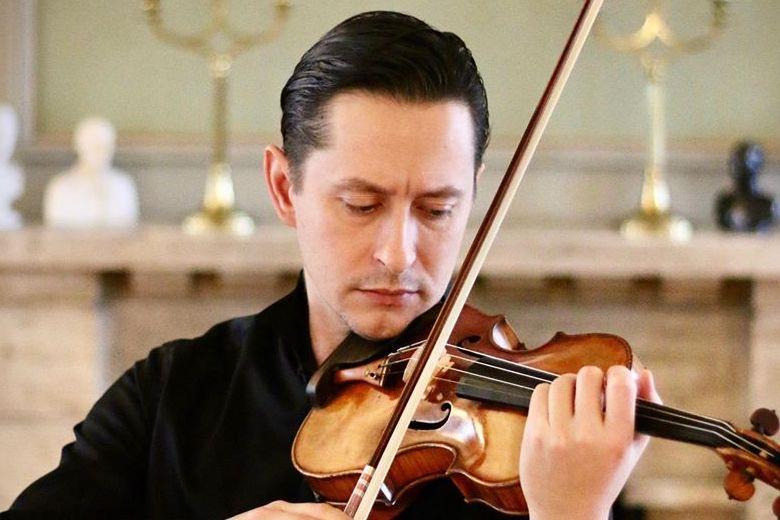
Strings of the City of Birmingham Symphony Orchestra / Eugene Tzikindelean (above)

Schubert arr. Mahler String Quartet no.14 in D minor D810 ‘Der Tod und das Mädchen’ (1824, arr. 1896)
Vivaldi Le quattro Stagioni Op.8 nos. 1-4 (1718-20)
Piazzolla arr. Desyatnikov Cuatro Estaciones Porteñas (1965-9, arr. 1996-8)

Town Hall, Birmingham
Saturday 22 April 2023

Reviewed by Richard Whitehouse

Acoustically transformed following its refurbishment some 15 years ago, a commendably full Town Hall proved to be the ideal venue for this judiciously balanced programme featuring the strings of the City of Birmingham Symphony Orchestra with its leader Eugene Tzikindelean.

Mahler never fully completed his arrangement of Schubert’s Death and the Maiden quartet, but this has enjoyed not a few hearings since its realization by David Matthews with Donald Mitchell four decades ago. Tzikindelean presided over a brisk, incisive opening Allegro (its exposition-repeat not unreasonably omitted), and if the 30-strong ensemble had not quite the tonal depth or dynamic range that Mahler likely envisaged, there was no lack of immediacy – at least until momentum faltered slightly in the later stages of the reprise then into the coda.

No such uncertainty affected the Andante (the only movement elaborated by Mahler), whose variations on Schubert’s earlier song exuded a cumulative intensity up to the theme’s soulful reappearance toward the close. Nor did the Scherzo lack for truculence over its brief yet vital course, assuaged by the trio’s wistful elegance, while the final Presto unfolded as a tarantella as agile as it was malevolent. Tzikindelean kept his players on a tight if never inflexible rein through to a coda that brought this (for the most part) powerful reading to its decisive close.

Tzikindelean having vacated the leader’s chair for centre-stage, the second half consisted of Vivaldi’s The Four Seasons interspersed with Astor Piazzolla’s take on the seasons from the perspective of Buenos Aires. Brought together a quarter-century ago (at the behest of Gidon Kremer for his group Kremerata Baltica) by Leonid Desyatnikov, with numerous references to the Baroque master, the outcome is a provocative amalgam between ‘ancient’ and ‘modern’ which the CBSO strings rendered with alacrity. Among the highlights from the Vivaldi might be mentioned the plaintive eloquence of the Largo from Spring, the coursing impetus of the Presto from Summer, alternation of the robust and poetic in the initial Allegro of Autumn, or that discreetly alluring interplay of legato and pizzicato writing in the Largo from Winter.

Heard in the sequence ‘Summer-Autumn-Winter-Spring’, the tangos by Piazzolla offer any number of anticipations whether melodic or textural. A significant feature of Desyatnikov’s arrangement is the prominence accorded to the leaders from each section which were seized upon gratefully – not least by cellist Eduardo Vassallo, whose Piazzolla recordings with his ensemble El Ultimo Tango are a masterclass in performance from the chamber perspective. While each of the present pieces is more than the sum of its parts, surely the most arresting instance is that towards the close of ‘Spring’ when the harpsichord (ably taken by Masumi Yamamoto) emerges with an allusion to Vivaldi’s opening theme – a coup de théâtre that is seldom less than spellbinding, and duly worked its magic as part of tonight’s performance.

An impressive showing, then, for the CBSO strings and Tzikindelean – who will hopefully be making further appearances both as soloist and director in the coming season. Certainly, the repertoire for string orchestra is one whose exploration should prove well worthwhile.

You can read all about the 2022/23 season and book tickets at the CBSO website. You can read more about Eugene Tzikindelean here, and more about El Ultimo Tango here

Playlist – Sarah Beth Briggs

It gives us great pleasure to welcome pianist Sarah Beth Briggs as a guest curator for the Arcana playlist.

Sarah releases her new album Variations on Friday 24 March, a collection of works in the form by Mozart, Beethoven, Mendelssohn and Brahms. It complements a discography for AVIE that already boasts The Austrian Connection and discs of works for piano solo by Schumann and Brahms, and piano trios by Gál and Shostakovich as part of the Briggs Piano Trio.

We asked her for a blend of her current listening and one piece inspired by the Variations album – and I think you’ll agree she has come up with something rather special in the form of Edmund Rubbra’s rare but strikingly original orchestration of BrahmsVariations on a theme of Handel. Here it is in the only available current recording, conducted by Neeme Järvi:

As to her current listening, Sarah gives us a trio of very fine chamber works from the 19th century, Beethoven and Schubert to be precise, and the music of Hans Gál, finally emerging into the public consciousness – his very fine Cello Concerto:

We end with peerless jazz, the Oscar Peterson Trio and their wonderful Night Train

Our grateful thanks to Sarah – do have a listen on the Spotify link below:

In concert – CBSO / Edward Gardner: Simply Schubert – Symphonies 1 & 4

ed-gardner

Schubert

Fierrabras D796 – Overture (1823); Symphony no.1 in D major D82 (1813); Symphony no.4 in C minor D417 ‘Tragic’ (1816)

City of Birmingham Symphony Orchestra / Edward Gardner

Town Hall, Birmingham
Thursday 14 July 2022

Written by Richard Whitehouse

One of many projects left in abeyance by the pandemic, the City of Birmingham Symphony Orchestra’s Schubert cycle with its former principal guest conductor Edward Gardner duly continued this evening with a programme of that composer’s First and Fourth Symphonies.

Schubert may have been barely 16 when he essayed his First Symphony, but its confident if quirky assimilation of traits as derived from Haydn and Beethoven is more than a statement of intent – not least with an opening Allegro whose imposing introduction returns after the development to broaden the movement’s emotional scope. Gardner realized this unerringly, while drawing an incisive response from the CBSO in the first theme and winsome elegance in its successor as subsequently headed into a coda of bracing if not overly insistent finality.

For all its Mozartian gracefulness, the Andante yields an emotional ambivalence most notable in the plangent exchanges of woodwind and string towards its centre. These were enticingly conveyed, as was that contrast between rhythmic trenchancy in the Menuetto’s outer sections with its trio’s more affable demeanour. Precision of ensemble meant the final Allegro never risked seeming repetitious, Gardner steering it with assurance and not a little flexibility to a coda that emerged as never less than entertaining in its forceful reiterations of the home key.

Three years on, the Fourth Symphony confirms a greater formal and expressive breadth – not least in the first movement’s introductory Adagio whose underlying portentousness makes its contrast with an impulsive and often anxious Allegro more acute. Gardner and the CBSO had its measure, as they did the ensuing Andante in which Schubert’s woodwind writing is heard at its most felicitous. Any contrived distinction between the hymnic main theme and its more volatile alternate episodes was hardly in evidence as this movement drew to its easeful close.

For all its brevity, the Menuetto (a scherzo in all but name) can be rhythmically treacherous in its syncopation, but there was no lack of focus here or in the trio’s folk-like lyricism. Nor did the moto perpetuo underpinning the final Allegro run out of steam – Gardner sustaining   a cumulative momentum across the exposition’s repeat then into an intensive development which brought an opening-out of mood through to those decisive closing chords. Its ‘tragic’ connotations may be tangential, but the teenager’s seriousness of purpose cannot be denied.

Opening the programme was a relatively rare revival of the overture to Fierrabras, the last of Schubert’s ill-fated attempts at grand opera – even though time and subsequent stagings have largely vindicated his efforts. Gardner drew palpable expectation from its introduction, and if what ensues seemed a little stolid rhythmically, the dramatic flair of the composer’s orchestral writing was not in doubt. A pity the even less often heard Overture in E minor (1819) did not open the second half, as its abstract drama would have prefaced the Fourth Symphony ideally.

In any case, this was a welcome addendum to the CBSO’s current season and not least for an opportunity to hear the orchestra playing at its former venue of Town Hall. Hopefully another such concert, featuring Schubert’s Great Symphony, can be scheduled sometime next year.

For more information on the CBSO and their 2022-23 season, visit the dedicated page on their website. Meanwhile click here for more on conductor Edward Gardner.

Playlist: Herbert Blomstedt at 95

by Ben Hogwood

To mark the 95th birthday of the great Swedish conductor Herbert Blomstedt on Monday just gone, Arcana has put together a playlist including a snapshot of some of his greatest and most enduring recordings.

They include the Fifth Symphony of Nielsen, part of a landmark cycle of the composer’s symphonies with the San Francisco Symphony Orchestra for Decca. Blomstedt’s recordings with that orchestra in the 1990s were notable for their sonic prowess but left some critics cold; however on revisiting his Sibelius cycle, for instance, they stand up very well. The Third Symphony is included here, as is the first Peer Gynt Suite of Grieg.

Also in the 1990s came a trio of fascinating discs lending weight to the cause of Paul Hindemith. A disc of the Mathis der Maler Symphony, the Symphonic Metamorphoses and Trauermusik was to be expected, perhaps, but the follow-ups were even more valuable – a disc of the music for Nobilissima Visione, the Konzertmusik for Brass and Strings and Der Schwanendreher, and a pairing of the Symphonia Serena and symphony from the opera Die Harmonie der Welt, included here.

Blomstedt has more recently recorded a well-received Brahms cycle with the Leipzig Gewandhaus, though prior to that recorded a fine disc of the composer’s choral works in San Francisco. With the Gewandhaus, however, he has completed his most recent release, that of Schubert’s Unfinished and Great symphonies. The former is included here. Enjoy this selection of wonderful recordings!