In concert – Colorado MahlerFest Orchestra / Kenneth Woods – MahlerFest XXXIV: Sawyers & Mahler Fifth Symphonies

MahlerFest01_square-01

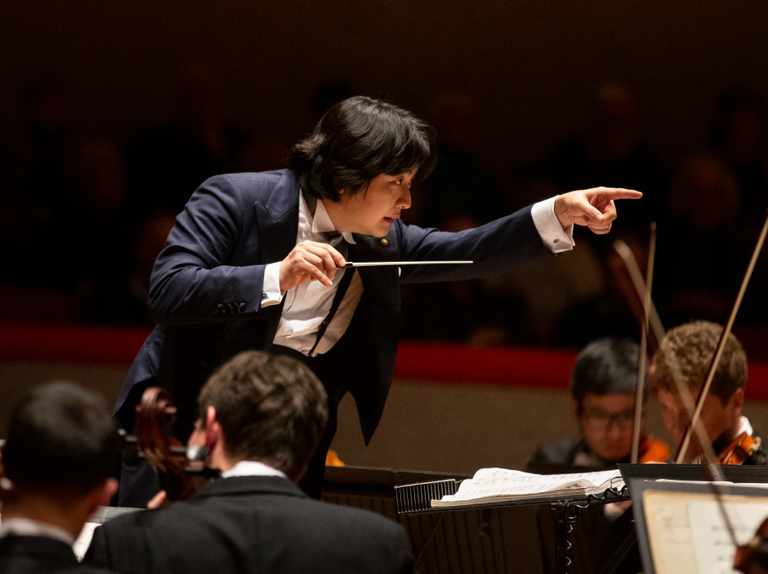
Colorado MahlerFest Orchestra / Kenneth Woods

Sawyers Symphony No. 5 (2020) [World Premiere]
Mahler
Symphony no.5 in C sharp minor (1901-2)

Macky Auditorium, Boulder
Saturday 28th August 2021

Written by Richard Whitehouse

A programme of two five-movement Fifths might not have been what Kenneth Woods had envisaged at this stage of his symphonic traversal in the Colorado MahlerFest but, after an inevitably curtailed season last year, the need to jump-start the festival this time round was evident, and the present double-bill did so impressively. Mahler’s cycle is often viewed as the ‘end of the line’ for the genre of the symphony, yet its ongoing evolution is not hard to discern, and it is to Woods’s credit that he is making this aspect a crucial part of his tenure.

Woods has championed the music of Philip Sawyers for more than a decade, with this Fifth Symphony continuing along a stylistic path comparable to those two before it. Its immediate predecessor ended with an expansive Adagio as was his most impressive such movement so far, and the present work continues from such inward (never self-conscious) seriousness in a Moderato (each of the movements being designated with Shostakovich-like inscrutability) that overrides clear-cut sonata procedures for a gradual unfolding whose thoughtful opening theme takes on greater emotional intensity as it builds to an ominous climax then closes in a mood of some ambivalence. Here, as throughout, the writing for a standard orchestra (with fifth horn and harp though no percussion other than timpani) is never less than resourceful.

From here an Allegro picks-up the pace incrementally to capering and, in its middle stages, wistful effect; before the central Lento pursues a sustained course (not a little unlike that of Rubbra’s slow movements) over two cumulative paragraphs – the second of which climaxes with the most anguished music in the whole work, prior to the brief yet affecting coda from strings. More overtly a scherzo, the ensuing Presto also evinces greater expressive contrast between its impulsive outer sections and a chorale-like ‘trio’ of affecting poise. From here, the final Allegro is the most orthodox movement in its energetic and reflective main themes – taking in an intensive development and subtly modified reprise prior to an apotheosis that ensures a decisive yet, as might be expected from this composer, never bathetic conclusion.

On this first hearing, Sawyers’s new symphony proved a cohesive and absorbing piece – less arresting in content, perhaps, than either of its predecessors but with an unfailing formal logic and expressive eloquence that are not to be gainsaid. Interesting, too, this Fifth should mark something of a rapprochement with ‘classical’ tonality; whereas Mahler’s Fifth, which came after the interval, sets in motion that often fractious discourse which duly informs almost all this composer’s symphonic works from his final decade of creativity – indeed, of existence.

Pacing is crucial in Mahler’s symphonies, with this being no exception. From the outset of a trenchant trumpet solo, the Funeral March was almost ideally judged – its development not too histrionic, and coda whose eruptive force subsided into numbed uncertainty. Proceeding (rightly) without pause, its successor – as if a fantasia to the prelude just heard – steered with unobtrusive authority to its climactic if ill-fated chorale, and if the final return of the opening music lacked vehemence, the pulsating expectancy of the closing bars was tangibly rendered.

That the central Scherzo has long divided opinion is not in doubt (Otto Klemperer avoided the work because of it while Hermann Scherchen reduced it by two-thirds), and though Woods’s conception had its merits – a rustically evocative trio plus the transitions on either side – the unforced equability of its outer portions underlined just how closely this music verges on the platitudinous; its ländler-informed coyness and contrapuntal contrivance over-exploiting the potential of its content. At least the coda wrapped up this movement with real decisiveness.

The remaining movements were finely realized, Woods taking the Adagietto at a flowing yet flexible pace that enabled its rapture to emerge without risk of indulgence (here, as throughout, the strings’ articulation of grace notes served a structural as well as expressive purpose). The deftest of transitions duly prepared for a finale whose elaborate interplay of rondo and sonata elements was replete with a cumulative impetus as carried through to a fervent peroration, the chorale blazing forth during a close where affirmation and nonchalance were irresistibly fused.

It should be added that the playing of the Colorado MahlerFest Orchestra was of a consistently high standard – testifying to the excellence of the individual musicians as, also, their collective responsiveness to Woods’s technical acumen and interpretative insight. Its latter-day status as mainstream repertoire may have obscured its innovative qualities (and drawn attention away from its unevenness), but to hear this work so authoritatively realized and within the context of a major new symphonic statement says much for the continued importance of MahlerFest.

Further information on the Colorado MahlerFest can be found on their YouTube channel. For more on the festival, visit their website – and click on the names to visit the websites of Kenneth Woods and Philip Sawyers respectively.

Live review – English Symphony Orchestra / Kenneth Woods: Mahler Symphony no.9

mahler-9-woods

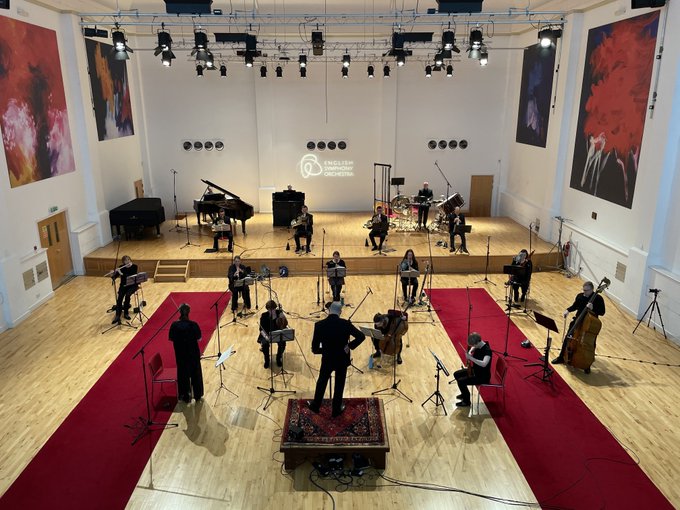
Members of the English Symphony Orchestra / Kenneth Woods

Mahler arr. Simon Symphony no.9 in D major (1908-10, arr. 2011)

Wyastone Concert Hall, Monmouth
Recorded March 23-25 2021 for online broadcast, premieres 7 July 2021

Written by Richard Whitehouse

The chamber reductions of orchestral works, as pioneered by the Society for Private Musical Performances founded by Schoenberg after the First World War, has gained renewed impetus these past 15 months given the unfeasibility of full-scale performances. Few can have been as ambitious as Mahler’s Ninth Symphony – arranged by pianist and conductor Klaus Simon for an ensemble of single strings and woodwind (with doublings), two horns, trumpet, percussion (one player), piano and harmonium; its textural and motivic content thereby remaining intact.

This is evident in the opening Andante, arguably Mahler’s most perfectly realized symphonic movement, whose formal trajectory of interlocking arcs is made explicit so that its long-term expressive intensification and release become no less tangible. To this end, the roles of piano and harmonium are much more than the mere filling-out of texture – respectively articulating and reinforcing the harmonic profile through to a coda which more than usually clinches the overall tonal journey with a serenity the more poignant for its remaining, as yet, unfulfilled.

The ensuing Ländler was no less lucid in terms of its unfolding, Kenneth Woods resisting any temptation to play up the emotional contrasts across a movement whose deceptive blitheness of spirit is only gradually undermined (and a quality this music shares, doubtless unbeknown to the younger composer, with Ravel’s La valse). Equally significant is the way that Simon’s arrangement discreetly emphasizes disparities of timbre and texture, on the way to a closing section where the music only too audibly fragments into a bemused parody of how it began.

More questionable is the Rondo-Burleske – Woods’s underlying tempo for the outer sections, while enabling the music’s contrapuntal intricacy to emerge unimpeded, feeling too dogged to convey its frequently assaultive manner to the degree that the composer surely intended. This is less of an issue in a trio section whose aching regret was potently conveyed, with the stealthy regaining of tension no less in evidence. Animated and accurate, this final section again lacked that seething energy which propels the movement towards its anguished close.

No such questions affect the final Adagio – only equivocally conclusive now that the Tenth Symphony has all but been accepted into the Mahler canon, yet remaining a test of all-round cohesion such as this account rendered with unwavering conviction. Having thus gauged the balance between its alternate paragraphs, Woods assuredly controlled the winding down of tension towards a coda of inward rapture despite its sparseness of gesture – while affording the speculative dialogue between solo strings the necessary temporal and emotional space.

It hardly needs to be said that the playing of this 15-strong ensemble drawn from the English Symphony Orchestra was consistently attuned to the spirit of this music – as, too, is Simon’s methodical and apposite arrangement. Whether such reductions can continue to be relevant in the (presumed) aftermath of the pandemic, it would be a pity were these not to enjoy revival in their own right: revival, moreover, out of aesthetic rather than just didactic considerations, as this impressively conceived and executed rendition demonstrated to often moving effect.

You can watch the concert on the English Symphony Orchestra website here

Further information on Klaus Simon is here, while for further information on the Music from Wyastone series, you can click here. ‘Fiddles, Forests and Fowl Fables’ is now available from the English Symphony Orchestra Website.

In concert – Karen Cargill, CBSO / Mirga Gražinytė-Tyla: Mirga conducts Weinberg

Mirga

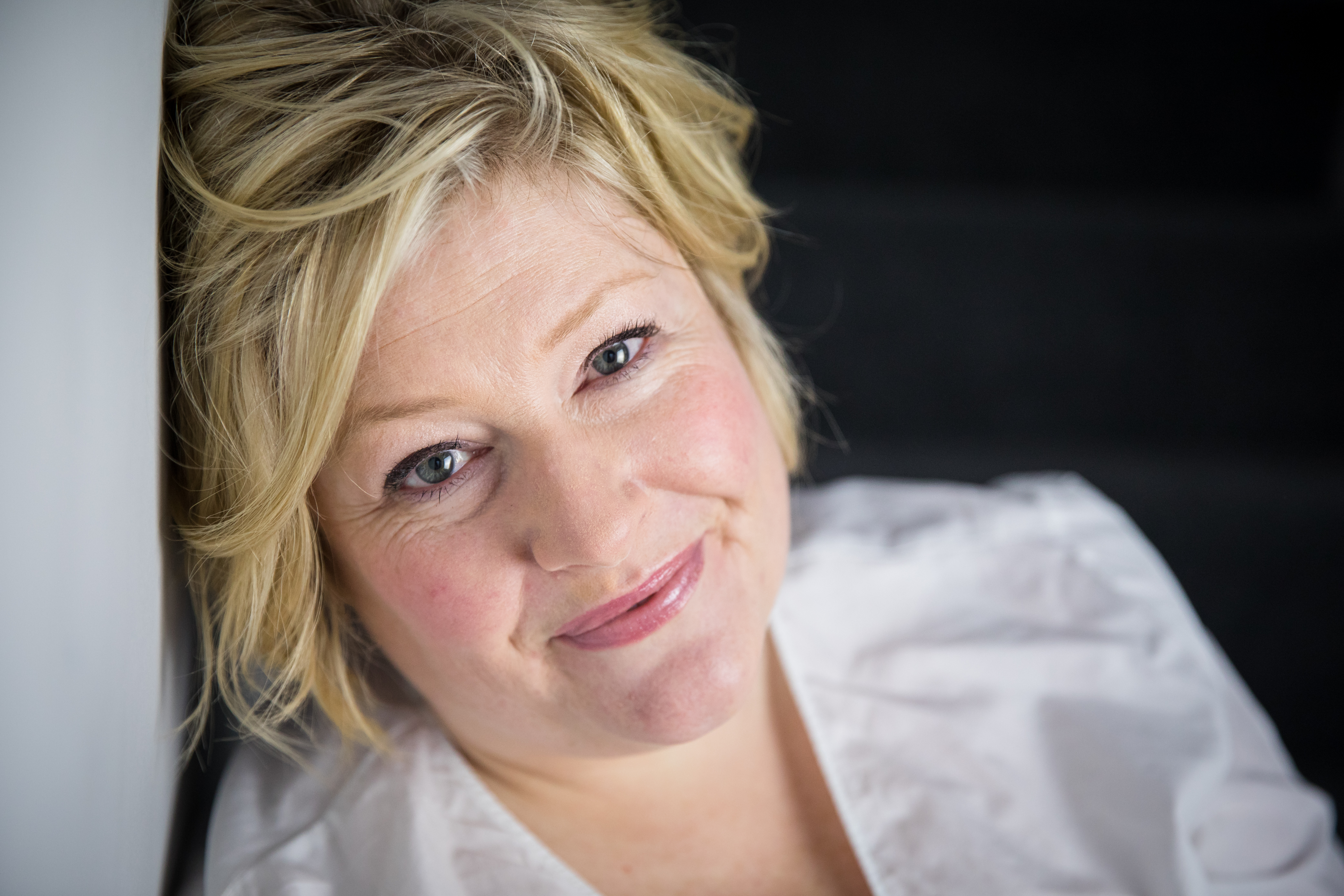
Karen Cargill (mezzo-soprano, below), City of Birmingham Symphony Orchestra / Mirga Gražinytė-Tyla (above)

Weinberg Rhapsody on Moldavian Themes Op.47/1 (1949)
Mahler Rückert-Lieder (1901-02)
Weinberg Symphony no.3 in B minor Op.45 (1949-50, rev. 1960)

Symphony Hall, Birmingham
Wednesday 23 June 2021 (6.30pm)

Written by Richard Whitehouse Photo of Karen Cargill courtesy of Nadine Boyd Photography

The music of Mieczysław Weinberg has been a prominent feature in the City of Birmingham Symphony Orchestra’s programmes with its music director Mirga Gražinytė-Tyla, and the Rhapsody on Moldavian Themes duly started this latest of the orchestra’s concerts in impressive fashion.

Written when Soviet composers were under intense pressure to create music of a populist – or rather, nationalistic – nature, its recourse to melodies emanating from the region of Bessarabia (from where the composer’s parents hailed) draws directly on a lineage from Liszt to Bartók and Kodály. Weinberg’s handling of these, in its subtle take on a slow-fast trajectory, is never less than assured. MGT undoubtedly had its measure, whether in the ruminative opening with its plangent woodwind or the boisterous later stages when brass comes irresistibly to the fore.

Itself a revival (having been played at Symphony Hall in 2019 then at that year’s Proms), the Third Symphony is a more considered response to the anti-formalist campaign spearheaded by Andrei Zhdanov with the intention of making Soviet music more accountable to its public. Hence the inclusion of Belorussian and Polish folksong, though Weinberg is mindful to offset these with a formal rigour as, in the initial Allegro, ensures an emotionally restless unfolding to a coda shot-through with foreboding – one of several passages likely made more explicit in the subsequent revision. Here, as in the wistful second theme (akin to what Malcolm Arnold was writing around this time) then a climactic transition heading into the reprise, the CBSO’s playing underlined its ongoing affinity with this music which held good through to the close.

Hardly less idiomatic was the scherzo’s interplay of capricious with a more sardonic humour, then the Adagio’s sustained yet cumulative progress towards a climax of stark tragedy – only slightly pacified in the inward closing phase. If the animated finale strives to secure an overly affirmative ending, it was a measure of this account that any such optimism was held in check until the peremptory last bars. Weinberg could scarcely have hoped to hear a more perceptive performance: good to hear both this and the Rhapsody were being recorded for future release.

Between these pieces, Karen Cargill joined the CBSO for Mahler’s Rückert-Lieder (evidently the first time the orchestra has given them since baritone Olaf Bär with Simon Rattle in 1992). She drew a keen irony from Blicke mir nicht in die Lieder, then rendered Ich atmet’ einen linden Duft with appealing deftness. With its fugitive writing for woodwind and brass, and a fervent climax capped by garish arabesques from piano, Um Mitternacht is a difficult song to bring off but was notably effective, and the only disappointment was a rather inert take on Liebst du um Schönheit – Max Puttmann’s sub-Léhar orchestration at least partly to blame. Nor was Ich bin der Welt abhanden gekommen ideally transcendent, yet the eloquence of Cargill’s response left no doubt concerning its status as arguably the greatest orchestral Lied.

A judiciously planned concert, then, in which the rapport between orchestra and conductor came through these past 15 months unscathed. The CBSO returns next Wednesday with its principal guest conductor Kazuki Yamada in a programme of Julian Anderson and Dvorák.

You can find information on the CBSO’s next concert at their website

Live review – April Fredrick, Zoë Beyers, English Symphony Orchestra / Kenneth Woods: Inspired by Mahler

April Fredrick (soprano, above), Zoë Beyers (violin), English Symphony Orchestra / Kenneth Woods

Mahler (arr. Stein) Das irdische Leben (1892/1900)
Weinberg Concertino for Violin and Strings, Op. 42 (1948)
Schulhoff Suite for Chamber Orchestra, Op. 37 (1921)
Ullmann (arr. Woods) Chamber Symphony op 46a (1943/1999)

Wyastone Concert Hall, Monmouth
Recorded in 2020 for online broadcast, Wednesday 27 January 2021

Written by Richard Whitehouse

The Holocaust Memorial Day is a timely opportunity to hear music anticipatory of, inspired by or stemming from events that have defaced human history on all too many occasions, and which provided the basis for this latest online concert from the English Symphony Orchestra.

The underlying tone for this programme was set by Mahler, with one of his settings of texts from the folk collection Des knaben Wunderhorn. In pivoting between the child’s supplication and his mother’s entreaties, over the fateful strains of a ceaseless ‘treadmill’ accompaniment, The Earthly Life is one of the composer’s most evocative songs – not least its portrayal of the child’s existence running out as though this were grains of sand. April Fredrick accordingly invested the vocal part with just the right combination of ominous dread and lingering pathos.

ESO leader Zoë Beyers then took centre-stage for Weinberg‘s Violin Concertino, the product of late-1940s Soviet culture when accessibility was not just desired but prescribed. Modest in expressive scope next to those chamber works that preceded it, this work is highly appealing – not least in the deftness and subtlety with which the composer unfolds his ideas across an ingratiating Allegretto, ruminative Adagio (whose cadenza-like introduction brings the most arresting music in the whole work), then a final Allegro whose thematic interplay is nothing if not resourceful. Beyers rendered it with unfailing eloquence, making it clear just why this attractive piece – which had to wait almost half a century for a first public hearing – should now have established itself among the most often performed of Weinberg’s orchestral works.

In telling contrast, Erwin Schulhoff’s Suite for Chamber Orchestra was a pert reminder of the composer’s usage of jazz as part of a lifelong and tragically curtailed stylistic odyssey. While the faster numbers recall the wit of Poulenc’s earlier chamber music and irony of Stravinsky’s suites for theatre orchestra, the Valse Boston (its soulful violin solos hauntingly rendered by David Juritz) and Tango admit of a searching introspection to the fore in those works from Schulhoff’s last years. Qualities which are pointedly side-lined by the uproarious final Jazz.

The final work provided the culmination in every respect. Written during internment at the transit camp of Terezin (aka Theresienstadt), the Third String Quartet is Viktor Ullmann’s likely instrumental masterpiece – in terms both of its formal unity and expressive diversity – and whose transcription onto the larger canvas has been persuasively achieved by Kenneth Woods. Chamber Symphony makes a not inappropriate title, this single span drawing the contrasted movements into a seamless and finely-balanced whole – the initial theme acting as a soulful refrain between the angular scherzo with its waltz-like undertow then, after the terse development, a fugal Largo whose accrued intensity carries over into the final Rondo with its striving towards a fervent restatement of the ultimately transfigured ‘motto’ theme’.

An imposing work, given a committed reading by this orchestra under its arranger in what was an appropriate tribute for the day. The ESO’s online series is scheduled to continue on the 26th of February, with a portrait concert of the American composer Steven R. Gerber.

You can watch the concert on the English Symphony Orchestra website from 7.30pm on Wednesday 27 January 2021 here

For more information on the English Symphony Orchestra you can visit their website here

Mahler’s Eighth and coming out of COVID-19

The Coronavirus pandemic has hit the arts hard, and only recently have we seen tentative shoots of recovery where live music is concerned. The great choral epics are still some way off, it would seem – which leads John Earls to ponder when he might complete his personal Mahler symphony cycle…

Mahler’s Eighth is the only one of his symphonies I haven’t seen performed live. It’s not because I haven’t wanted to. The sheer scale of the piece (it includes eight soloists, two choirs, children’s chorus and full orchestra including concert organ) means it is the least performed of his symphonies. It is also regarded by some as too grand, incoherent, and even kitsch, in comparison to the others – Part 1 is a setting of the Latin Hymn Veni Creator Spiritus and Part 2 a setting of the final part of Goethe’s Faust.

The last two times it was performed in my home city of London personal commitments (a friend’s wedding and my son’s birthday) prevented me from attending and completing my personal ‘live Mahler cycle’ (although with due respect to my son he said he wouldn’t mind too much if I went).

The Eighth has been on my mind again recently. Firstly, Stephen Johnson has just published a book on the symphony, The Eighth: Mahler and the World in 1910. I’ve not read it yet, but very much look forward to doing so (I loved his essay on Shostakovich). But Johnson’s book is about the time of the symphony’s premiere. My thoughts have been about the symphony in the present and the future. More specifically, in the context of the coronavirus pandemic and coming out of COVID-19.

It’s been well documented how seriously live music, and the arts generally, have been hit by the pandemic. The recent government announcement of support is welcome, but much work still needs to be done and many organisations continue to face an existential crisis.

With lock down and social distancing I realised (perhaps rather selfishly) that I wouldn’t be seeing the Eighth, nicknamed the Symphony of a Thousand (although not a term Mahler himself used), any time soon. But then I started thinking about the piece itself and what it gives to us in this extraordinary time and as we start to come out of COVID-19. To be honest, the Eighth isn’t even my favourite Mahler symphony. However, its themes of enlightenment, redemption, and the power of love, whilst being somewhat perennial, may have a particular resonance at this moment.

Much of the classical music I have been listening to since lock down has tended to be subdued, dare I say austere. This has particularly been the case in respect of recently streamed concerts such as the wonderful June series put on by the Wigmore Hall in association with BBC Radio 3, beautifully bookended by Stephen Hough’s playing of solo piano pieces by Bach and Schumann, and Mark Padmore and Mitsuko Uchida’s performance of Schubert’s Winterreise.

So, at first, there was something quite disconcerting and then ultimately uplifting about the sheer force of listening to the Eighth again, not least when orchestra and choirs combine to such powerful effect right from the off, including the organ. There are some wonderfully delicate moments in its hour and a half too.

Which version to listen to? Two recordings often cited are those by Georg Solti and the Chicago Symphony Orchestra (Decca, 1971) and Klaus Tennstedt and the London Philharmonic Orchestra’s performance at the Royal Festival Hall in 1991 (EMI, 2011). Both are excellent (although Tennstedt probably just shades it for me). I also have a soft spot for Sir Simon Rattle’s 2004 live performance with the City of Birmingham Symphony Orchestra (EMI, 2005).

It is notable that two of these are live recordings and, of course, much of what is said about Mahler’s Eighth is about it being seen or heard live. Which brings me back to my point about performance. There is something about the combination of the mass assembled forces performing together and being joined by an audience in an even bigger collective. Stephen Johnson (again) put it well in a recent episode of Radio 3’s Music Matters with Tom Service: “A great deal about the ecstasy of this piece is about unity and many, many voices being combined together”. True that. And not just in the context of COVID-19.

I’m still disappointed that I probably won’t get to see a performance of Mahler’s Eighth (at least as we traditionally know it) any time soon. However, I do know that when I do eventually see it, in whatever form, it will have a very particular significance and will, no doubt, be incredibly moving. And not just because I will have completed the cycle.

John Earls is Director of Research at Unite the Union and tweets at @john_earls

You can watch Sir Simon Rattle conducting the National Youth Orchestra of Great Britain, massed choirs and soloists (including Christine Brewer, Soile Isokoski and David Wilson-Johnson) in a 2002 performance of Mahler’s Symphony no.8 as part of this year’s BBC Proms TV coverage. The broadcast will take place on BBC Four on Sunday 9 August.

Photo credit: Thomas Søndergård conducts massed Proms forces and the BBC National Orchestra of Wales in Mahler’s Eighth Symphony at the BBC Proms in 2018. (Chris Christodoulou / BBC)