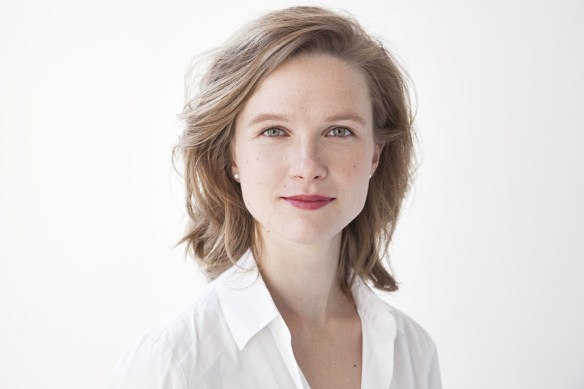
Talking Heads: Paavo Järvi

Interviewed by Ben Hogwood

If anyone typifies the flexibility of the modern conductor today, that person is Paavo Järvi. Like his father Neeme and younger brother Kristjan, he has an eye-watering workload and schedule, but such is his deep love for his art that it is not a factor in his musical life.

When our conversation starts, Järvi has just finished rehearsing in Estonia – in his home city of Tallinn. This time his role is that of a visiting conductor, in charge of the NHK Symphony Orchestra. The Japanese group, now 95 years old, appointed him as their chief conductor in 2016 and recently extended the arrangement until 2022. Their recent recording releases present a partnership that can only be described as going from strength to strength.

On the night of our conversation they have a concert in Tallinn itself, followed by a visit to the Royal Festival Hall in London three days later. Their program is an enticing one, beginning with Takemitsu’s orchestral piece How slow the wind. Järvi confesses to being a slow starter with his music. “I have been an admirer of his music for a long time, but recently in the last couple of years we have recorded his works with the orchestra. It has just been released in Japan, and it includes all of his orchestral music. In the last couple of years it was a big project that we took on, especially with him being so big in Japan. He died before I ever had a chance to meet him unfortunately, but as you know he is a major figure in Japanese musical life. His is the only real name from the Western world that we would know as being from Japanese music. I grew up knowing the name but not the music. It’s been a new experience for me but something I am very proud of, a new musical experience.”

One of the NHK Symphony Orchestra’s recent releases with Järvi is a searing account of Mahler’s Symphony no.6, which they gave to great acclaim in London in 2017. Wishful thinking it may be, but I suggest that some of Takemitsu’s writing draws from Mahler’s ability to write chamber-like music in the depths of the Sixth. “I think it is more likely that the influences are Messiaen”, says Järvi, his sonorous voice deeper than ever. “It was Messiaen who taught him, and the line goes back to Debussy before that, but there are echoes of certain other worlds in Takemitsu’s music for sure. Mahler could have been one of them.”

Sol Gabetta joins the orchestra for Schumann’s Cello Concerto, a work which has seen its fortunes on the stage revitalised in more recent years, before Järvi leads the orchestra in Rachmaninov’s Symphony no.2 in E minor. This is a work he recorded with the Cincinnati Symphony Orchestra back in 2006, but as he admits his view of the piece has changed since then. “It has changed, and I have changed in that time too”, he admits. “I have fewer inhibitions since I made that recording, and I am not as cautious about the piece as I used to be. It is one of the most Russian works of Rachmaninov’s output, but it cannot be taken too literally. The orchestra have played the Second quite a lot, and it is extremely familiar music within Japan. There is certain music that they play really well, and the Second Symphony is certainly one of those pieces.”

Nor have they required much persuasion or coaching to make the move to Mahler in their recorded output. “The orchestra is extremely well versed in German Romantic music, and they have had a lot of conductors who have encouraged them to play it. Herbert von Karajan and Karl Böhm used to conduct regularly in Japan, and so did Eugen Jochum. Most of the Western conductors came with their own orchestras. A lot of Western conductors were connected with the NHK Symphony Orchestra – Wolfgang Sawallisch, Herbert Blomstedt and Horst Stein just to name a few – so they know the repertoire extremely well.

Alongside the Mahler release is a programme of Bartók orchestral works, comprising the Divertimento for string orchestra, the Dance Suite and the Music for Strings, Percussion and Celesta. Jarvi prides himself on the output, and the overall orchestral sound, which has an extraordinary clarity. “That’s something we have been trying to get”, he admits, “the directness of sound, so that it is transparent and clear. We had to work on that a bit for the Bartók, but as you can hear the orchestra is very versatile.”

The London leg of the NHK’s mini tour will take place on Estonia’s Independence Day, which Järvi describes as ‘a very nice coincidence’. This helpfully leads me on to a new recording he has made with the Estonian Festival Orchestra of the music of fellow countryman Erkki-Sven Tüür. The main work here is his Symphony no.9, dedicated to Järvi himself, with orchestral pieces Sow the Wind… and Incantation of Tempest.

He describes the new Ninth. “It’s a big piece, and very interesting. It describes the Estonian history from its beginnings right up to today, so it is a very long narrative – but it is very atmospheric too. He (Tüür) is a master of creating great layers of sound. I think it’s an epic piece, and because I have a lot of years performing his music it is very special for me as a culmination with the Estonian Festival Orchestra. It makes it even more special because it is very close to home.”

Järvi’s familiarity with the music of Tüür goes right back to the 1990s, and a disc of new music by him and fellow Estonian contemporaries. “It’s a great place for new music”, says Järvi of his home country. We have a lot of good new music, and established composers like Arvo Pärt and others.” In spite of his worldwide travelling, he keeps up with developments. “ It’s not difficult to keep in touch with the possibilities for Estonia”, he says, “as they are all there with the internet. I am always looking at what’s happening in musical life in Estonia, and even when I am far away my heart is here all the time.”

This year will see the tenth season of the Pärnu festival, founded by Paavo Järvi in 2011 together with his father, Neeme. How does he look to bring new audiences to classical music? “This is what we are always thinking about”, he says with feeling. “I don’t have a magic formula, other than one has to do it really well and be engaged. If the programme is interesting then that is the first important thing. The other thing is to enjoy the music. Very often with orchestras it can look like business as usual, and they play as if they are working.”

That was emphatically not the case with the Estonian Festival Orchestra when they made their BBC Proms debut last August, and who were noticeably all smiles. “I think that’s the way it should be”, says Järvi. “It is very hard for me to imagine playing music and looking like you’re not enjoying it, it’s not logical to me. Orchestras that come together occasionally, like the festival orchestra does, have an advantage, but it has to happen with every orchestra. It’s such a very logical thing, and if you enjoy it makes sense to do something which is very contagious. Energy comes through being contagious!”

The NHK Symphony Orchestra and Paavo Järvi perform Takemitsu, Schumann and Rachmaninov at the Royal Festival Hall on Monday 24 February.

You can listen to the orchestra’s new recordings of Mahler and Bartók on Sony Music on Spotify above, and follow the link to find samples and buying options on the Presto website – the Mahler here and the
Bartók here.

Järvi’s disc of Tüür’s Symphony no.9 will be available on the Alpha label in March – for more details click here

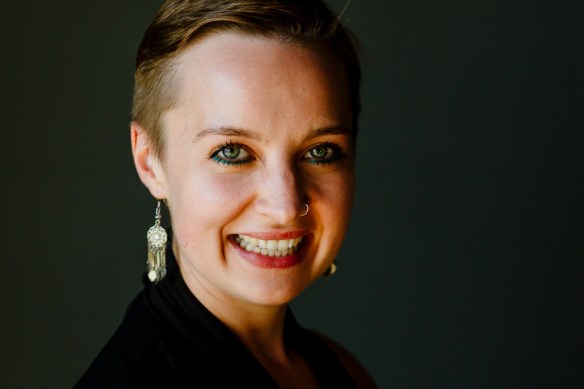
Britten Sinfonia at Lunch – Katie Bray sings Freya Waley-Cohen’s Spell Book @ Wigmore Hall

Katie Bray (mezzo-soprano), Britten Sinfonia Soloists [Jacqueline Shave, Miranda Dale (violins), Clare Finnimore (viola), Caroline Dearnley (cello), Joy Farrall (clarinet), John Lenehan (piano)]

Leclair Trio Sonata in D major Op.2/8 (1728)
Mahler arr. Waley-Cohen Rückert-Lieder (1901-2, arr. 2019)
Lutosławski Bukoliki (1952 arr. 1962)
Waley-Cohen Spell Book (2019)

Wigmore Hall, London
Wednesday 22 January 2020

Photo credits Patrick Allen (Freya Waley-Cohen); Tim Dunk (Katie Bray)

Review by Ben Hogwood

The previews for this concert were intriguing. As well as a performance of a new arrangement of Mahler’s Ruckert-Lieder, we were to be treated to Spell Book, the world premiere tour of a new dramatic work by Freya Waley-Cohen.

Inspired by the composer’s encounter with Rebecca Tamás’ collection of poems WITCH, the song cycle was written for and performed by mezzo-soprano Katie Bray, singing with an ensemble of string quartet, clarinet and piano. In terms of forces used this gave the work a similar profile to Schoenberg’s famous melodrama Pierrot Lunaire. The music fulfilled Waley-Cohen’s wish that it would place us under a spell, as the book had clearly done for the composer. She brought it to life with music of luminosity and captivating drama.

She was helped considerably by Bray (above), who held the attention effortlessly with a commanding performance. The first and most substantial song, spell for Lilith, found her word emphasis in the observation that Lilith is ‘such a bad girl’ setting the expressive tone. The music swept up to impressive heights, Bray’s voice stopping the listener in their tracks while simultaneously nailing the acoustic of the hall.

Waley-Cohen’s response to the text was often vivid, the instruments either offering weighty support to the words or dropping away under their feet. The observation that ‘Lilith, you have a great body’ received appropriately slinky contours, while the contrast of suspension and movement towards the end led to a delirious postlude from John Lenehan’s piano.

The following two songs were more compact but retained Lilith’s intensity. spell for sex had a soft, alluring vocalise that was also remote, while the spell for logic was much more active, pockets of instrumental music bumping into the vocal line but never overwhelming it. The open-ended challenge to the audience was effective, as was the relatively sudden finish, concluding a mysterious and strangely euphoric piece. The spell had indeed been cast.

Spell Book was complemented by Waley-Cohen’s arrangement of Mahler’s Rückert Lieder. In this regard she was bravely nailing her colours to the mast alongside the intimidating figure of Schoenberg, whose arrangement of the composer’s Lieder eines fahrenden gesellen (Songs of a Wayfarer) for chamber ensemble around 100 years ago is still occasionally performed. The ensemble here, replicating that for Spell Book, was cut from similar cloth.

This performance was a qualified success, part of the fault for that lying with the listener and a long-held familiarity with the piano and orchestral versions of Rückert-Lieder. There were however some imaginative qualities here, particularly the technique of doubling instruments at a distance of two octaves. John Lenehan‘s high piano right hand therefore acquired a ghostly shadow in the form of Caroline Dearnley‘s low cello, and this technique was used to create an enchanting, wispy half-light.

It also suited Bray’s range and performance, and while her interpretation felt like it may still be in progress – again the problem of over-familiarity rearing its head – she grew into the songs as they unfolded. The famous Um mitternacht was an inevitable highlight, while the clarinet lines in Blicke mir nicht in die Lieder! (Do not look into my songs!) were beautifully rendered by Joy Farrall. The final song, the rapt Ich bin der Welt abhanden gekommen (I am lost to the world) was beautifully controlled if not quite reaching peak intensity.

Prior to the song cycles we heard the Trio Sonata in D major from Jean-Marie Leclair. It made a nice change to hear this music on modern instruments, the program illustrating how the Trio Sonata was in fact a predecessor of the Piano Trio. Jackie Shave, Caroline Dearnley and John Lenehan clearly enjoyed their time with this piece, and Leclair’s elevation of the cello to much more than mere accompaniment found the two string players engaged in rewarding dialogue.

In between the song collections Dearnley teamed up with viola player Clare Finnimore for Lutoslawski’s six Bukoliki, delectable folk-inspired miniatures originally conceived for piano but subsequently arranged by the composer. Lasting little more than a minute, each one was beautifully formed and strongly expressive, the string players enjoying the melodic ornaments and the rustic sweeps of the bow. The addition of subtle discords created a haunting quality to some of this music, pointing the way to Lutoslawski’s sonic innovations to come.

The Britten Sinfonia’s At Lunch series continues to impress with its imaginative programming and opportunities for contemporary composers. Both aims were realised here in a richly rewarding concert.

Further reading and listening

To discover more about Freya Waley-Cohen, you can visit her website here or listen to her music on Soundcloud here. Meanwhile the Spotify link below offers a chance to hear her Permutations, as played by her sister, violinist Tamsin.


Arcana at the Proms – Prom 18: Edward Gardner conducts the BBC Symphony Orchestra in Mahler and Britten

Prom 18: Stuart Skelton (tenor, above), Claudia Mahnke (mezzo-soprano), Leif Ove Andsnes (piano), BBC Symphony Orchestra / Edward Gardner (above)

Britten Piano Concerto Op.13 (1938)
Mahler Das Lied von der Erde (1908-1909)

Royal Albert Hall, Thursday 1 August 2019

Reviewed by Ben Hogwood
Photo credits Chris Christodoulou

You can watch this Prom on the BBC iPlayer here

Mahler’s Das Lied von der Erde (The Song of the Earth) received its Proms premiere in the year 1914, long before the huge upturn his music experienced in the 1960s. It is an example of Sir Henry Wood’s instinct for new music that it reached the Proms so soon, though the programme labelling of the piece as a ‘Henry Wood novelty’ does the work a massive disservice. A certain Benjamin Britten was on to it too, describing in 1937 the impact of its final set of poems, Der Abschied, and how it ‘passes over me like a tidal wave’.

Mahler was one of Britten’s foremost influences, specifically the Fourth Symphony, which you can hear at the Proms later in the season on Sunday 11 August. There is not much Britten this year, but what there was in this concert was brilliantly performed. The Piano Concerto has a youthful spring in its step, treating the instrument equally as a creator of percussion and melody, following in the traditions of Prokofiev and Shostakovich as it does so.

This performance showed it off in full. Leif Ove Andsnes (above), who has lived with the work for 25 years and performed it on his Proms debut in 1992, had its measure. Technically he was superb, leading from the front with an account of targeted bravura, never showing off for the sake of it and always keeping a melodic shape to even the most percussive of chord sequences. Edward Gardner and the BBC Symphony Orchestra offered solid support, if very occasionally falling behind the piano rhythmically – though that could also have been the Royal Albert Hall acoustic playing tricks. The strings were beautifully shaded in the quieter moments of the Impromptu, whose emotional depths hinted at a darker presence behind the technical feats – perhaps the presence of the Second World War, only a few years away.

Andsnes delivered an unexpected encore in the first movement of Mompou’s Suburbis, stylistically close to Ravel and Falla but still evoking its own individual nocturnal scene.

The Mahler followed the interval, lasting just over an hour – but given the quality of the performance the time passed in a flash. To date Edward Gardner’s encounters with Mahler have been relatively minimal, but the natural gravitas he gave to the orchestral writing in Das Lied von der Erde, not to mention the room made for the chamber-like instrumental solos, showed his instincts are ideally suited to the composer. The BBC Symphony Orchestra wind – fully deserving of their curtain call at the end – were on top form, as were the strings, their quiet thoughts during the final song in particular staying rooted in the memory.

Fine as the orchestral playing was, the two singers rightly shared the limelight. Stuart Skelton’s tenor was a thing of wonder, called into high register action at a daringly early stage in proceedings but delivering wholeheartedly from the off. His characterisation of the two drinking songs was spot on, the gestures and body language wholly at one with the words, giving him the creative licence to exaggerate a note or two. Here he had support from BBC Symphony Orchestra leader Igor Yuzefovich, and a suitably inebriated violin solo during Der Trunkene im Frühling (The Drunkard in Spring). Meanwhile in Von der Jugend (Of Youth) some nimble negotiation by Skelton of Mahler’s score gave the song an invigorating freshness. That he was able to project these natural and very human elements of phrasing without ever sounding contrived spoke volumes for the degree to which he has clearly inhabited this piece, as evidenced in his contribution to the Proms Twitter feed a few hours before.


Mezzo-soprano Claudia Mahnke (above) was equally assured in her delivery, the voice and its phrasing again completely comfortable with Mahler’s demands in Der Einsame im Herbst (The Lonely Soul in Autumn) and Von der Schönheit (Of Beauty) before, in the celebrated Der Abschied (The Farewell), time stood still and the music became a thing of wonder. These otherworldly contemplations felt as though they extended from the Arena floor of the Royal Albert Hall right up to the stars, far beyond the dome, and Mahnke’s rapt expression spoke of how she too was experiencing the same transporting effect. Gardner’s operatic instincts stood him in good stead, particularly in the recitative-like sections, where orchestral players held notes like baroque continuo staples, but the overall effect was in aid of the contemplation of life itself.

The rude interjection of a mobile phone did nothing to break the spell, for these two singers, and the 80 or so instrumental singers behind them, had created something very special together.

Live review – Lucy Crowe, Karen Cargill, CBSO / Mirga Gražinytė-Tyla: Mahler Symphony no.2

Lucy Crowe (soprano), Karen Cargill (mezzo-soprano), CBSO Chorus,
City of Birmingham Symphony OrchestraMirga Gražinytė-Tyla (above)

Symphony Hall, Birmingham
Thursday 13 June 2019

Mahler
Symphony No. 2 in C minor, ‘Resurrection’ (1888-95)

Written by Richard Whitehouse

Almost 46 years since this orchestra first played it, then 39 years since Sir Simon Rattle made it his mission-statement, Mahler’s Resurrection is one of those pieces which constitutes a ‘rite of passage’ for conductors at the helm of the City of Birmingham Symphony. Tonight it was the turn of Mirga Gražinytė-Tyla – who, coming towards the end of her third season as music director of this orchestra, presided over a reading which assuredly had the measure of a work that, over recent decades, has too often felt in danger of becoming a classy lifestyle accessory.

If there was anything at all lacking (aside from a handful of imprecisions as would only have surprised those drawn to this music for its showpiece potential), it was of the piece evolving as a cumulative and inevitable unity. As often, the first movement brought most reservations – Gražinytė-Tyla’s handling of its long-term momentum being slightly less convincing than her characterization of its individual components; though at its best, as in her easing into the ruminative second subject or her sustaining of tension going from the eruptive climax of the development into the reprise, this was highly impressive. Mahler seldom approached sonata design other than obliquely, and the deadpan fatalism conjured from its final pages suggests this conductor already has the measure of its expressive range if not yet its formal cohesion.

Coming after a judicious pause, there was little to fault in the Andante – its lilting main theme as felicitous as the counter melody with which it finds common cause, and with the animated secondary theme sounding suitably crepuscular. More unexpected was the scherzo, exuding a suave and even phlegmatic air as Gražinytė-Tyla hears it – though few could have objected to the aching nostalgia of its trio, even if tempo elisions during its final stages were just a touch awkward. Karen Cargill (left) then brought out the tenderness and intimacy of the Urlicht setting.

It was in the epic expanse of the finale, however, that this performance readily came into its own. Launched with explosive intent, its starkly contrasted constituents were drawn together so that the sense of a steadily evolving whole was never in doubt. Such as the baleful chorale passage and the ‘last judgement’ frenzy which duly parodies it were judiciously realized, as was the contribution of offstage brass and percussion in opening-out its emotional remit on the way to the (partial) setting of Friedrich Klopstock’s Resurrection Ode which forms the culmination.

Tellingly, Gražinytė-Tyla had the chorus remain seated for most of its length – building gradually but intently towards its blazing affirmation of the beyond. Lucy Crowe (left) was a little overwrought in her initial entries, while joining ecstatically with Cargill in their subsequent duet, yet it was the CBSO Chorus (who must have sung this music more often than almost any other such group) that ensured a truly blazing culmination; after which, the brief orchestral postlude unfolded swiftly and headily toward those majestic closing chords.

Eschewing bathos, and shorn of any tendency to grandstanding, this was a powerful end to what is an impressive interpretation in the making, besides confirming the rapport between orchestra and conductor that is audibly on the incline as the CBSO approaches its centenary.

Further listening

You can listen to the City of Birmingham Symphony Orchestra‘s recording of the Resurrection Symphony with Sir Simon Rattle on Spotify below:

Live review – CBSO & Ilan Volkov: Mahler Symphony no.9, Krása & Klein

City of Birmingham Symphony Orchestra / Ilan Volkov (above)

Symphony Hall, Birmingham
Thursday 25 April 2019

Krása Overture for small orchestra (1944)
Klein arr. Saudek Partita for strings (1944)
Mahler Symphony no.9 (1909)

Written by Richard Whitehouse

Photo of Ilan Volkov (c) Astrid Ackermann

Pursuing one of the more eventful conducting careers of his generation, Ilan Volkov returned to Birmingham for this pertinent juxtaposition of music by composers who numbered among countless Nazi atrocities next to what is arguably Mahler’s greatest symphonic achievement.

Mahler has long been central Volkov’s programming (performances of the Sixth and Seventh Symphonies when principal conductor of the BBC Scottish Symphony Orchestra resonate in the memory), and this evening’s account of the Symphony no.9 exuded conviction borne of long familiarity.

Even now, it is uncommon to hear a reading of the expansive first movement which unfolded with such unforced inevitability; those extremes of anguish and introspection finding seamless accord within the composer’s most elaborate formal design. Nor was there any lack of contrast with what follows – the ‘fantasia’ on ländler rhythms whose symmetrical elegance is constantly undercut by that glancing irony at its most acute during the final pages, when the texture appears to disintegrate out of weariness then from any more rational intent.

Excellent as was the City of Birmingham Symphony’s playing thus far, it raised its game for the third movement – the Rondo-Burleske whose contrapuntal intricacy can become turgid at too stolid a tempo and lose definition at too rapid a pace. Not that this fazed Volkov, who duly steered a secure course across what is tonally and emotionally Mahler’s most fractious statement – the soulful strains of its trio section allowing for precious little repose before the initial music returns in an explosive denouement. After this, the closing Adagio emerged as long-breathed yet never flaccid as it accumulated gravitas through to a fervent climax, then subsided into a coda shorn of false emoting or affectation – the CBSO strings all the while maintaining focus as Mahler’s silence-riven gestures seemingly attained the desired closure.

The brief though worthwhile first half had featured a brace of works by Czech composer who both flourished in the Nazi transit camp at Terezin before being murdered at Auschwitz. Not that there is any sense of encroaching dread in the Overture by Hans Krása – its purposeful elision of traits drawn from Stravinsky and Hindemith abetted by scoring as economical as it is characterful. Volkov secured an incisive rendering, only easing up for the final bars whose sense of suddenly opening-out onto new and unforeseen vistas was palpably conveyed here.

Even more engaging was the Partita by Gideon Klein. An arrangement – by Vojtěch Saudek (1951-2003) – of the String Trio that proved to be Klein’s last completed work, it features at its centre a sequence of variations on a Moravian folksong in which elements derived from Janáček take on a distinctive and undeniably personal guise at the hands of one who would have surely found a defining role in post-war Czech music. If the vigorous outer movements seem less individual, they are none the less effective within the context of this piece overall.

In both these works, Volkov secured a spirited response from the CBSO strings (perhaps a little too dogged in the Klein). Hopefully he will return to this orchestra during the 2019/20 season, and hopefully include further pieces by the ‘Terezin generation’ in his programmes.

For further information on the City of Birmingham Symphony Orchestra’s 2018-19 season click here

Further listening

This concert will be broadcast as part of ‘Radio 3 in Concert’ on Friday 3rd May. To access that concert click on this link

Ilan Volkov is yet to record a Mahler symphony, but for a leading version of the Symphony no.9 from the Berliner Philharmoniker and Herbert von Karajan you can listen on Spotify below: