BBC Proms 2016 – Pekka Suusisto, Thomas Dausgaard and the BBC Scottish Symphony Orchestra

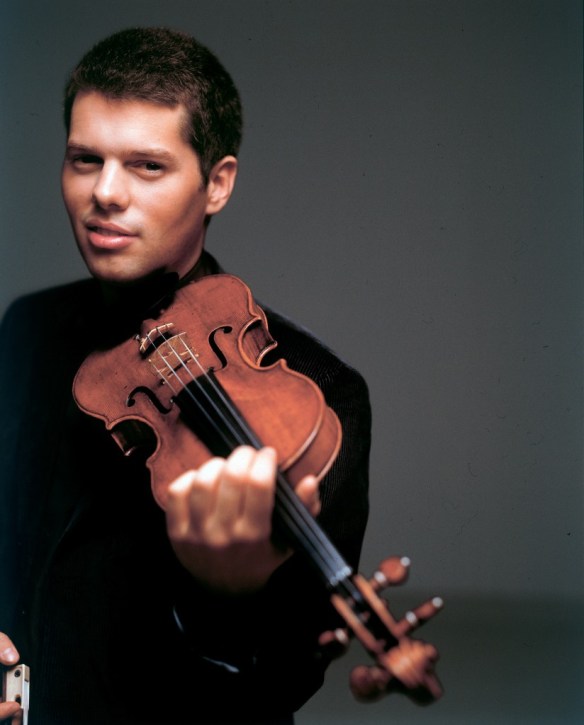
Pekka Kuusisto High Res 6 - credit Maija Tammi

Pekka Kuusisto (c) Maija Tammi

Prom 27; Royal Albert Hall, 5 August 2016

You can watch this Prom from its BBC broadcast – the Grime and Tchaikovsky here and the Stravinsky here

For sheer musical enjoyment this Prom took some beating.

Right from the start it was clear the players of the BBC Scottish Symphony Orchestra were at the Royal Albert Hall to enjoy their Friday night, and in Pekka Kuusisto they had a more than willing accomplice.

It was Kuusisto’s first appearance at the festival, and as he arrived onstage he gazed in wonder at the full hall, taking in its scope and bidding a cheery ‘hello’ to the front ranks of the Prommers. At that moment you sensed his performance, even before he played a note, had gone up a gear.

Sure enough, his performance of Tchaikovksy’s Violin Concerto was dazzling, but he was careful not to let technical feats overshadow the core of the music’s emotion. As the longer first movement unfolded so did the ardent, lyrical phrases, until we reached the solo cadenza, where just a flick of the eyes and arms were enough to get the audience laughing. Kuusisto plays a lot of his music as though for the first time, the childlike innocence (not to mention his boyish face!) a combination of pure enjoyment. The audience, wrapped up in the occasion, applauded as though he had finished, fully aware there were two more movements to come.

These were the doleful Canzonetta, reminding us of the serious circumstances in which the piece was composed (Tchaikovsky’s disastrous and shortlived marriage, made in spite of his convictions around his homosexual orientation) and a finale that brushed all that aside, its main tune from the violin scampering all over the orchestra as they tried to keep up.

Both violinist and orchestra rightly received a rapturous ovation, but Kuusisto was not done, returning for a traditional Finnish song. Following Sol Gabetta’s lead from the First Night he did the singing, while BBC SSO leader Laura Samuel gamely added a rustic accompaniment. Even the audience were involved, singing one of the phrases as Kuusisto brought the house down.

Even after that the enjoyment was yet to peak, for Thomas Dausgaard – who had shaped Tchaikovksy’s phrases rather beautifully – led them in a vibrant account of Stravinsky’s Petrushka. The composer’s second ballet is perhaps his most tuneful, full of Russian folk song references as it tells the tale of the ultimately doomed puppet. The colours of this performance were given by the BBC SSO at their very best, with superb contributions from Mark O’Keeffe and Eric Dunlea (trumpets), a beautiful, child-like solo from flautist Charlotte Ashton, and wonderful contributions from solo woodwind, brass and percussion alike – not to mention the brilliant efforts of pianist Lynda Cochrane and Julia Lynch on celesta.

Dausgaard was enjoying himself, and although on occasion the music was a little fast it was never less than energetic, the players relishing the shades of colour in The Shrovetide Fair, and the irresistible hooks and dance rhythms Stravinsky threads through the music.

Dausgaard is due to take over full time as chief conductor of the orchestra in the autumn, and on this evidence the two look set for a fruitful musical relationship.

eardleyCatterline in Winter (c) The estate of Joan Eardley.

Beginning the concert was the first part of Helen Grime’s Two Eardley Pictures, a new piece commissioned by the BBC and with its second part today. This one, Catterline in Winter, portrayed the fishing village of the North of Scotland, capturing it in steely, metallic colours – reflecting the dark grey sky and the icy blasts of a seemingly ever present wind. It is always difficult to appraise a new piece on first hearing, but this was an impressive and brightly lit score that is well worth hearing for a second time – preferably in the company of the second, Snow.

Ben Hogwood

In concert – Ryan Wigglesworth and the BBC Symphony Chorus and Orchestra at the Barbican

ryan-wigglesworth

Picture (c) Benjamin Ealovega

Barnabás Kelemen (violin), BBC Symphony Orchestra / Ryan Wigglesworth (above)

Barbican Hall, London / Wednesday 2 March

This typically well-planned BBC Symphony Orchestra concert had a surprise or two in store. Bookending the quartet of works on display were two pieces by Stravinsky – the Agon ballet from 1957 and the Symphony of Psalms.

They provided a good illustration of how Stravinsky changed styles as a composer, and how in spite of that he retained a fascination with older polyphonic styles. Some of the sound worlds in Agon, a set of twelve tableaux for twelve dancers, frequently alighted on melodic figures or chords that felt ‘old’, holding dissonances and deliberately leaving chords unresolved.

Agon is viewed as the work where Stravinsky starts to take his leave from a more obviously tonal approach to composition. In this performance it was lean yet colourful, with excellent solos from leader Stephanie Gonley, mandolin player Nigel Woodhouse, harpist Sioned Williams and Christian Geldsetzer and Richard Alsop, the two BBC SO lead double bass players, who nailed their otherworldly harmonics on each appearance.

The Symphony of Psalms was more obviously outgoing but saved its greatest emotional impact for the quieter music, the closing pages of ‘Omnis spiritus laudet Dominum’ (‘Let everything that hath breath praise the Lord’) from the BBC Symphony Chorus given out with softly oscillating orchestral figures.

Stravinsky uses the lower end of the orchestra in this piece, with no violins or violas, adding extra percussive punch from two pianos – all aspects that Wigglesworth brought forward in a taut performance. Great credit should however go to chorus master Hilary Campbell, who was unfortunately not mentioned in the concert programme. She is clearly popular with the singers, and helped secure that extra degree of accuracy and emotional involvement. One of Stravinsky’s most cinematic scores, it was in this performance a powerful statement of affirmation.

Wigglesworth positioned his own Violin Concerto modestly after the interval – I say modestly as in its five years of existence the piece has already ramped up an impressive number of performances. On this evidence its status is well-deserved, for it is a tightly structured unit of no little tension, the soloist searching for his ultimate melody while the reduced, ‘classical’ orchestra try and find their ultimate tonality.

barnabas-kelemen

Soloist Barnabás Kelemen (above) was a macho presence, with a little too much testosterone at times when the violin was surging forward, but he balanced that with some incredibly sensitive playing at the quietest moments of the piece, where the audience strained on his every note. Both melody and tonality were resolved in moments that confirmed Wigglesworth as a composer of impressive style and instinct.

The one dud in the program was Britten’s Four Sea Interludes and Passacaglia from the opera Peter Grimes, seen through the visual projections of Tal Rosner. This was a commission from four American orchestras in Britten’s centenary year 2013, with each interlude was set to the images of the city from which the commission came. For its UK premiere Rosner added a portrait of London to go with the other orchestral excerpt from the opera, the Passacaglia. This was centrally placed, keeping the order in which the scenes appear in the opera.

Although well played by the orchestra, the idea sadly fell flat on several levels. Although Britten spent time in America – and indeed began Peter Grimes there – the work’s roots are so entrenched in Suffolk that to suggest anything other than the Aldeburgh coastline through the music feels completely wrong. Rosner’s constructions were skilled, and had a few fine moments where close-up images of the Golden Gate Bridge rotated in technicolour.

Sunday Morning, with its bright building blocks of orchestral colour, was revealed to be a minimalist precursor of the music of John Adams through the clever constructions of its visuals. However despite Britten’s more universal appeal as a composer these days, Peter Grimes surely belongs wholeheartedly in Suffolk – and any suggestion to the contrary, however well intended, feels wrong.


The Nash Ensemble play Julian Anderson at the Wigmore Hall

julian-anderson

Contemporary Music Series: Julian Anderson, Composer in Residence – Wigmore Hall, Saturday 7 November

Stravinsky: Three Pieces
Ravel: Chansons madécasses
Anderson: The Colour of Pomegranates; Seadrift; Ring Dance [UK premiere]
Woolrich: Pluck from the Air [London premiere]
Anderson: Van Gough Blue [World premiere]

Claire Booth (soprano), Nash Ensemble [Philippa Davies (flute/piccolo), Richard Hosford, Marie Lloyd (clarinets), Laura Samuel, David Adams (violins), Laurence Power (viola); Adrian Brendel (cello), Peter Buckoke (double bass), Sally Pryce (harp)]
Alexandre Bloch, conductor

Review by Richard Whitehouse

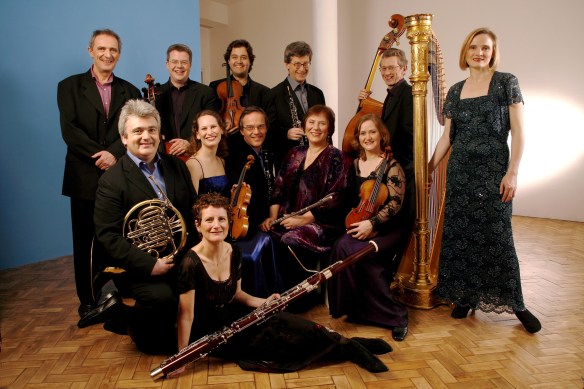
nash-ensemble
The Nash Ensemble. © Hanya Chlala/ArenaPAL

Julian Anderson’s residency at Wigmore Hall has brought a variety of artists and ensembles in performances of music – notably from the early twentieth century – so often difficult to schedule in recitals. One such opened tonight’s programme: Stravinsky’s Three Pieces for string quartet (1914) – a work no less radical than the ballets preceding it, given with the rhythmic trenchancy, gestural precision and harmonic plangency as characterize each piece.

Quite a contrast with Ravel’s Chansons madécasses (1926), a song-cycle whose singular scoring – soprano with flute, cello and piano – makes it awkward to find the right context. Not that this inhibited Claire Booth, whose unforced eloquence in the sensual ‘Nahandove’ and languorous ‘Il est doux de se coucher’ was balanced by the accusatory wrath of ‘Aoua’.

Anderson was represented in this first half by two pieces from two decades ago. The Colour of Pomegranates (1994) is less the encapsulation of Sergey Paradjanov’s film so much as a recollection of its magical aura, Philippa Davies unfolding the alto flute part with admirable dexterity as partnered by Ian Brown. Seadrift (1993) is a continuous sequence of songs such as renders Walt Whitman’s fabled text from a decidedly fresh perspective – soprano joined by flute (doubling piccolo) clarinet and piano in music that, without downplaying the purely emotional or even sentimental qualities of this poetry, enfolds it within a sonic canvas that underlines the aspects of union and separation at its core. Another fine showing from Booth, with members of the Nash taking its harmonic and rhythmic intricacies decisively in hand.

After the interval, Laura Samuel and David Adams gave the first UK hearing – and the first anywhere in 27 years – of Ring Dance (1987), Anderson’s piece which combines his then fascination for microtonal tuning with harmonic and timbral facets of Norway’s Hardanger fiddle tradition. The result pivots between relative consonance and dissonance in a way that intrigues rather than provokes (though first-night listeners in Stockholm evidently thought otherwise!) and, as with Anderson’s recently revived First String Quartet, a reminder of how early preoccupations have continued along more oblique lines. John Woolrich’s Pluck from the Air (2013) sprang few surprises in comparison, this tensile quintet for piano and strings outlining a longer-term engagement which might have been pursued in a second movement.

All the members of the Nash Ensemble then took the stage for the first hearing of Van Gough Blue (2015), Anderson’s homage to the artist whose preoccupations with colour and shade are embodied over its 20 minutes. Thus ‘l’Aube, soleil naissant’ evokes a tangible awakening, its inwardness duly offset by the pungent rhythmic and melodic interplay of ‘Les Vignobles’ and the ‘coming into focus’ of ‘Les Alpilles’ with its lively apex. The suspenseful harmonic stasis of ‘Eygalières’ then makes way for the culmination of ‘la nuit, peindre les étoiles’: a musical translation of the morning (4:40am on 25th May 1889) when Van Gough sketched his Starry Night painting, heard in terms of a ‘cosmic dance’ as carries all before it to the disintegrative final lament. Alexandre Bloch presided over this assured reading of a significant new work.

Wigmore Mondays – Sabine Meyer, Daniel Hope and Sebastian Knauer

meyer-hope-knauer

Sabine Meyer (clarinet), Daniel Hope (violin), Sebastian Knauer (piano) – Wigmore Hall, London, live on BBC Radio 3, 2 November 2015

Listening link (open in a new window):

http://www.bbc.co.uk/programmes/b06mc8lk

on the iPlayer until 2 December

Spotify

In case you cannot hear the broadcast, here is a Spotify playlist of the music in this concert, from available versions on Spotify:

What’s the music?

Stravinsky: Suite from ‘The Soldier’s Tale’ (1918-1919) (15 minutes)

Milhaud: Scaramouche (clarinet and piano) (1937) (9 minutes)

Satie: Gnossiennes nos. 1 & 4 (piano solo) (1890, 1891) (8 minutes)

Bartók: Contrasts (17 minutes)

What about the music?

There is not much repertoire for the combination of clarinet, violin and piano, but what there is available more than makes up for the dearth of material.

Stravinsky wrote The Soldier’s Tale for three speakers and a carefully chosen small group of instruments. The story tells of a soldier who trades his fiddle to the devil in return for prosperity – and in this condensed suite, arranged for clarinet, violin and piano, Stravinsky works some of the key numbers together in a combination that brings forward the raw elements of the story. All three instruments work together in punchy rhythms, or apart in virtuosic writing.

Milhaud’s Scaramouche is one of his most popular pieces, a short work that has proved flexible in arrangements for two pianos, saxophone and orchestra, or clarinet and orchestra. The clarinet and piano arrangement is the fourth version of the work he made – with a riotous first movement and a finale that brings forward his fascination with Brazilian dance forms.

Erik Satie wrote a lot of piano music, its appeal lying in a combination of suitability for amateurs and a direct emotional expression. The Gnossiennes are inspired by encounters with Romanian folk musicians, and are reactions to the music rather than an attempt to recapture it.

Bartók wrote his Contrasts for the unusual trio combination in response to a commission from the jazz clarinettist Benny Goodman and Bartók’s friend Joseph Szigeti. Originally called Rhapsodies, Bartók changed the title of the piece because of its very different moods and musical figures. After the curiously named Recruiting Dance there is a second movement that typically goes through a wide range of moods and speeds, before a helter-skelter beginning to the last movement finds the violinist using a detuned instrument.

Performance verdict

A quite outstanding concert from three soloists right at the top of their game who clearly work well in an ensemble capacity. It was a clever move to start with the Stravinsky – the dry humour, hummable tunes and tap-inducing marches worked very well in the Wigmore Hall acoustic, and with Daniel Hope effortlessly evoking the scratchy fiddle of the Soldier in this particular Tale, it was a performance that charmed and dazzled with its easy virtuosity.

Scaramouche fared much the same way, though Sabine Meyer’s playing in the first of the three movements was so exceptional – and fast – that it earned applause on its own. This lovable piece could brighten up any day, though even in this quickstep performance there was time for a little reflection in the second movement. The third showed off Milhaud’s aptitude for writing in Brazilian dance forms, and swung with a persuasive manner.

Two of Satie’s Gnossiennes provided a short cooling off period, simplicity themselves but also strangely moving with their modal folk writing.

Finally there were more fireworks, this time in the form of Bartók’s Contrasts, brilliantly played and with a keen sense of ensemble that implied these players meet up to play a lot more than they actually do! Meyer’s cadenza in the first movement took the breath clean away, but Hope and Knauer were not exactly slouches either! Hope gave a superb cadenza himself in the last movement, while Knauer was the glue for the performance, powerful in the fast music but finding the gamelan-like sonorities of the second movement with disarming ease.

The encore – Shostakovich’s Polka arranged for the original for two violins and piano – was invested with the same humour and enjoyment that kept the audience spellbound throughout the previous hour.

What should I listen out for?

Stravinsky

1:21 The Soldier’s March – Immediately the dry wit of Stravinsky’s music makes itself known, with little to no sustain in the violin or piano parts.

2:56 The Soldier’s Violin – the violin writing is deliberately scratchy, while the piano plays a typical Stravinsky ‘ostinato’, a repeated four note motif in the left hand that sounds awkward yet somehow completely right!

5:32 The Little Concert – some bold unison writing for the three instruments here, with bright colours as they show off in concert. However it’s not long before the piano ostinato comes back in the left hand – much quicker this time. The players work energetically throughout here.

8:20 Tango-Waltz-Ragtime – an exaggerated yet very persuasive tango from the violin, with what sounds like ‘wrong’ notes in the piano. Then the violin leads us through a waltz, exaggerating its gestures all the time in an attempt to rouse a sick princess.

14:46 The Devil’s Dance – in this whirlwind dance the soldier’s aim is to get the devil to play so fast he falls asleep. This is ideal for Stravinsky, who presents a brilliant sequence of syncopated rhythms and ensemble playing. When the end comes at 16:01 the devil falls down exhausted.

Milhaud

18:49 – Taken at an incredibly fast pace, this illustrates everything appealing about Milhaud’s music – the melodic invention, the humour and the snappy rhythms. The second theme, given out in octaves on the piano (19:45) sounds rather like Stravinsky, before the main idea makes a reappearance at 21:00. Huge fun!

21:50 – a doleful slower movement that brings out the mellow qualities of the clarinet’s lower range in its opening phrases.

25:44 – if you count each beat quickly at the start of this dance you’ll get the 3-3-2 that is characteristic of this particular Brazilian-infused dance. Once again the music is in high spirits, particularly the clanging piano octaves for the second idea (starting at 26:25). The shrill end is brilliantly done by Meyer.

Satie

29:46 – Gnossienne no.1 – time slows down almost immediately with this piece, which has a forlorn expression but also carries its listener off to another world. This is partly due to the folk melodies it uses, but also the variation of dynamics between loud and extremely quiet.

33:51 – Gnossienne no.4 – again the simplicity of this piece is a notable feature, with a stepwise movement to the melody and arpeggios in the left hand that point all the way forward to the music of Philip Glass and Ludovico Einaudi. The plaintive quality of the music remains.

Bartók

39:18 – the first movement has the curious title of a Recruiting Dance (dfgd) It starts with the violin plucking (pizzicato) before the clarinet and piano join. The music seems to turn in a circular fashion initially. The music continues to feel agitated, with extended trills from around 41:10 sowing the seeds of unease. Then from around 43:40 we have an extended solo (cadenza) for the clarinet.

44:42 – a soft but very uneasy slow movement begins with the clarinet and violin in slow unison, to which the piano responds with a soft, rumbling sound. Throughout this movement it evokes the sound of the gamelan, while the other two instruments make slow intonations above. This mood changes to a more fractious outlook around 47:07, where each of the instruments deals with extended trills, creating a vision of flying night music.

49:17 – the last of three movements begins with Daniel Hope on a cheap, detuned violin (apparently one he bought from E-bay!) Soon he casts this aside for the normal instrument and a typically frenetic Bartók fast movement plays out its arguments. At 51:40 the mood lightens with a slower but piercing violin solo, before the harmonies get more remote. Then the faster music starts to show itself, with shrill calls from the clarinet before the violin gets its moment at 54:05. The music then moves to a thoroughly convincing conclusion at 56:16.

Encore

58:00 – the well-chosen encore is a quick but funny Shostakovich Polka, subtly arranged from the original which is for two violins and piano.

Further listening

For some more repertoire featuring the clarinet, violin and piano, this album from Supraphon features not just the works heard here from Stravinsky and Bartok, but also works for the combination by Khachaturian and Milhaud.

One of Milhaud’s best-loved pieces is La Création du monde, and this can be heard as part of an album from Martha Argerich and friends:



Francesco Tristano – Mixing it up

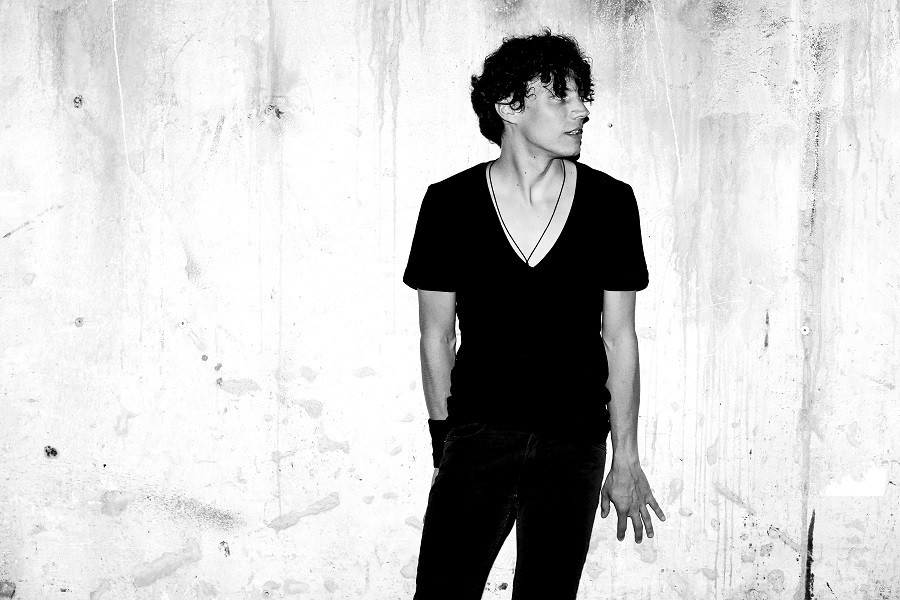
francesco-tristano
Picture by Marie Staggat

Francesco Tristano has a number of musical specialities. You may know him as a pianist, partner with Alice Sara Ott in recent concerts revealing the percussive power of Stravinsky’s The Rite of Spring. Or you may know him as a pianist who has shown his worth in improvisation, playing alongside Carl Craig – and showing his love of techno in a pioneering arrangement for piano of Rhythim is Rhythim’s Strings of Life.

If you know him for this, you are likely to be aware that Tristano also DJs regularly – and has added his voice to the already illustrious crowd who have mixed an instalment of the Get Physical label’s Body Language series. Tristano’s own brand of body language consists largely of his own work, either through originals, remixes or collaborations, but it is clear from this interview he is far from self-centred. Though of course we had to ask him a few things about himself…

How long have you been DJing, and how did you start?

I got in touch with the DJ world when I was living in New York City in the late nineties. By the end of my NYC stay, in the year 2003, I was DJing in a bar/lounge downtown. But I knew my thing was to play live. So I didn’t really DJ publicly except for one party at the Rex club in Paris and I recorded a DJ set for BBC Radio 1. Body Language isn’t really a DJ mix either – it’s more like a produced session with many live elements such as live synths playing.

I gather you had a shortlist for Body Language of several hundred tracks. How do you go about choosing a selection for commercial release from that list?

It was important for me to find a common thread of melody and harmony throughout the mix. It was mostly about listening to which collection of tracks would make sense harmonically together.

You included the Joe Zawinul track The Harvest, which really stands out early on in the compilation. What made you want to choose it?

Zawinul is arguably my greatest inspiration, and from a very early age. I guess I just had to have one of his tracks on the album. The Harvest is taken from his 1985 solo album Dialects – that’s just after the break-up of Weather Report.

Would you say some of the pieces here – Amnesie with Luciano, for instance – are more about rhythm and atmosphere than out-and-out melody?

We actually made the track for a film, Barbet Schroeder’s Amnesie which, you guessed it, takes place on the island of Ibiza. In accordance with the script I was working with cello samples, and also a vague harmonic relationship to the film’s main theme (which is also played by the cello). The rhythmic programming is Lucien’s, and provided a great drive for the minimalistic cello figures.

Does the mix tap in to your own clubbing experiences?

Sure. I like techno which is not limited to kick drum and high hats. Bring in some vintage synths please.

Why do you think the piano is so important both in club music and in your own music making?

The piano has been my companion since I’m five years old. I can always count on it. It doesn’t even need power. . . As for the piano in club music, I am not entirely sure. Chicago house made ample use of piano samples, but it wasn’t really using live pianos. Maybe piano is present in electronic music symbolically because it is the ancestor of the synthesiser…

Would you say constructing a DJ mix is similar to constructing a larger-scale piece of classical music, in terms of key relationships and development?

Sure. Beat-matching is not enough.

Can you remember your first encounters with classical music?

There was a piano at my house. My mother listened to Bach, Wagner, but also Pink Floyd and Vangelis all day long. It was only a question of time until I touched the keyboard.

How does your work with Alice Sara Ott, playing Bach and Stravinsky, complement the work you do as a DJ?

Since I don’t work as a DJ (live sets only) it’s pretty much the same. Music is like cuisine: you have ingredients, and you can create very different dishes with the same set of ingredients.

Do you think dance / electronic music and classical music have a lot more in common than we realise?

I wish we would loosen up these denominations. Who decides if a given piece is classical? Detroit techno classics are called classics for a reason. Mozart never thought of writing a ‘classical’ sonata. It was the contemporary (‘techno’) music of his time.

What does classical music mean to you?

The same as techno ¬ i.e. nothing. Music is one long, universal continuum of which we are all part.

What are you listening to at the moment, and what piece of classical music would you recommend Arcana readers go out and find?

I am listening to Bach’s St. John Passion and I can only recommend it. But I would also recommend Starlight by Model 500. . .

Francesco Tristano’s contribution to Get Physical’s Body Language series is out now. The series includes mixes by DJ Hell, Modeselektor and Dixon. Meanwhile Scandale, his piano duet album with Alice Sara Ott, includes Stravinsky’s The Rite of Spring and Ravel’s La Valse. For more information click here – it is available now on Deutsche Grammophon