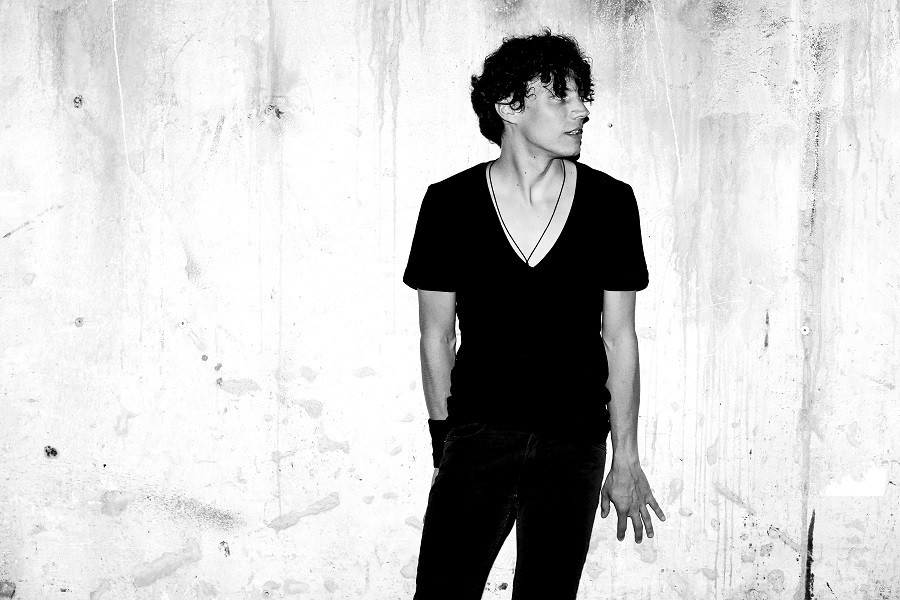
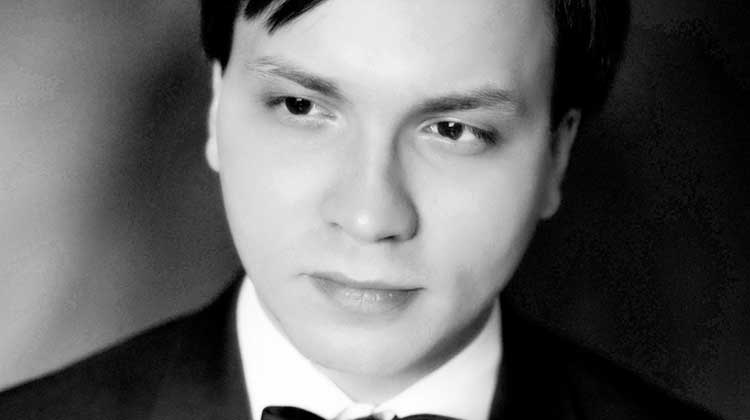
Sabine Meyer (clarinet), Daniel Hope (violin), Sebastian Knauer (piano) – Wigmore Hall, London, live on BBC Radio 3, 2 November 2015
Listening link (open in a new window):
http://www.bbc.co.uk/programmes/b06mc8lk
on the iPlayer until 2 December
Spotify
In case you cannot hear the broadcast, here is a Spotify playlist of the music in this concert, from available versions on Spotify:
What’s the music?
Stravinsky: Suite from ‘The Soldier’s Tale’ (1918-1919) (15 minutes)
Milhaud: Scaramouche (clarinet and piano) (1937) (9 minutes)
Satie: Gnossiennes nos. 1 & 4 (piano solo) (1890, 1891) (8 minutes)
Bartók: Contrasts (17 minutes)
What about the music?
There is not much repertoire for the combination of clarinet, violin and piano, but what there is available more than makes up for the dearth of material.
Stravinsky wrote The Soldier’s Tale for three speakers and a carefully chosen small group of instruments. The story tells of a soldier who trades his fiddle to the devil in return for prosperity – and in this condensed suite, arranged for clarinet, violin and piano, Stravinsky works some of the key numbers together in a combination that brings forward the raw elements of the story. All three instruments work together in punchy rhythms, or apart in virtuosic writing.
Milhaud’s Scaramouche is one of his most popular pieces, a short work that has proved flexible in arrangements for two pianos, saxophone and orchestra, or clarinet and orchestra. The clarinet and piano arrangement is the fourth version of the work he made – with a riotous first movement and a finale that brings forward his fascination with Brazilian dance forms.
Erik Satie wrote a lot of piano music, its appeal lying in a combination of suitability for amateurs and a direct emotional expression. The Gnossiennes are inspired by encounters with Romanian folk musicians, and are reactions to the music rather than an attempt to recapture it.
Bartók wrote his Contrasts for the unusual trio combination in response to a commission from the jazz clarinettist Benny Goodman and Bartók’s friend Joseph Szigeti. Originally called Rhapsodies, Bartók changed the title of the piece because of its very different moods and musical figures. After the curiously named Recruiting Dance there is a second movement that typically goes through a wide range of moods and speeds, before a helter-skelter beginning to the last movement finds the violinist using a detuned instrument.
Performance verdict
A quite outstanding concert from three soloists right at the top of their game who clearly work well in an ensemble capacity. It was a clever move to start with the Stravinsky – the dry humour, hummable tunes and tap-inducing marches worked very well in the Wigmore Hall acoustic, and with Daniel Hope effortlessly evoking the scratchy fiddle of the Soldier in this particular Tale, it was a performance that charmed and dazzled with its easy virtuosity.
Scaramouche fared much the same way, though Sabine Meyer’s playing in the first of the three movements was so exceptional – and fast – that it earned applause on its own. This lovable piece could brighten up any day, though even in this quickstep performance there was time for a little reflection in the second movement. The third showed off Milhaud’s aptitude for writing in Brazilian dance forms, and swung with a persuasive manner.
Two of Satie’s Gnossiennes provided a short cooling off period, simplicity themselves but also strangely moving with their modal folk writing.
Finally there were more fireworks, this time in the form of Bartók’s Contrasts, brilliantly played and with a keen sense of ensemble that implied these players meet up to play a lot more than they actually do! Meyer’s cadenza in the first movement took the breath clean away, but Hope and Knauer were not exactly slouches either! Hope gave a superb cadenza himself in the last movement, while Knauer was the glue for the performance, powerful in the fast music but finding the gamelan-like sonorities of the second movement with disarming ease.
The encore – Shostakovich’s Polka arranged for the original for two violins and piano – was invested with the same humour and enjoyment that kept the audience spellbound throughout the previous hour.
What should I listen out for?
Stravinsky
1:21 The Soldier’s March – Immediately the dry wit of Stravinsky’s music makes itself known, with little to no sustain in the violin or piano parts.
2:56 The Soldier’s Violin – the violin writing is deliberately scratchy, while the piano plays a typical Stravinsky ‘ostinato’, a repeated four note motif in the left hand that sounds awkward yet somehow completely right!
5:32 The Little Concert – some bold unison writing for the three instruments here, with bright colours as they show off in concert. However it’s not long before the piano ostinato comes back in the left hand – much quicker this time. The players work energetically throughout here.
8:20 Tango-Waltz-Ragtime – an exaggerated yet very persuasive tango from the violin, with what sounds like ‘wrong’ notes in the piano. Then the violin leads us through a waltz, exaggerating its gestures all the time in an attempt to rouse a sick princess.
14:46 The Devil’s Dance – in this whirlwind dance the soldier’s aim is to get the devil to play so fast he falls asleep. This is ideal for Stravinsky, who presents a brilliant sequence of syncopated rhythms and ensemble playing. When the end comes at 16:01 the devil falls down exhausted.
Milhaud
18:49 – Taken at an incredibly fast pace, this illustrates everything appealing about Milhaud’s music – the melodic invention, the humour and the snappy rhythms. The second theme, given out in octaves on the piano (19:45) sounds rather like Stravinsky, before the main idea makes a reappearance at 21:00. Huge fun!
21:50 – a doleful slower movement that brings out the mellow qualities of the clarinet’s lower range in its opening phrases.
25:44 – if you count each beat quickly at the start of this dance you’ll get the 3-3-2 that is characteristic of this particular Brazilian-infused dance. Once again the music is in high spirits, particularly the clanging piano octaves for the second idea (starting at 26:25). The shrill end is brilliantly done by Meyer.
Satie
29:46 – Gnossienne no.1 – time slows down almost immediately with this piece, which has a forlorn expression but also carries its listener off to another world. This is partly due to the folk melodies it uses, but also the variation of dynamics between loud and extremely quiet.
33:51 – Gnossienne no.4 – again the simplicity of this piece is a notable feature, with a stepwise movement to the melody and arpeggios in the left hand that point all the way forward to the music of Philip Glass and Ludovico Einaudi. The plaintive quality of the music remains.
Bartók
39:18 – the first movement has the curious title of a Recruiting Dance (dfgd) It starts with the violin plucking (pizzicato) before the clarinet and piano join. The music seems to turn in a circular fashion initially. The music continues to feel agitated, with extended trills from around 41:10 sowing the seeds of unease. Then from around 43:40 we have an extended solo (cadenza) for the clarinet.
44:42 – a soft but very uneasy slow movement begins with the clarinet and violin in slow unison, to which the piano responds with a soft, rumbling sound. Throughout this movement it evokes the sound of the gamelan, while the other two instruments make slow intonations above. This mood changes to a more fractious outlook around 47:07, where each of the instruments deals with extended trills, creating a vision of flying night music.
49:17 – the last of three movements begins with Daniel Hope on a cheap, detuned violin (apparently one he bought from E-bay!) Soon he casts this aside for the normal instrument and a typically frenetic Bartók fast movement plays out its arguments. At 51:40 the mood lightens with a slower but piercing violin solo, before the harmonies get more remote. Then the faster music starts to show itself, with shrill calls from the clarinet before the violin gets its moment at 54:05. The music then moves to a thoroughly convincing conclusion at 56:16.
Encore
58:00 – the well-chosen encore is a quick but funny Shostakovich Polka, subtly arranged from the original which is for two violins and piano.
Further listening
For some more repertoire featuring the clarinet, violin and piano, this album from Supraphon features not just the works heard here from Stravinsky and Bartok, but also works for the combination by Khachaturian and Milhaud.
One of Milhaud’s best-loved pieces is La Création du monde, and this can be heard as part of an album from Martha Argerich and friends: