Interview: Loscil – granular processes, emotive results

loscil

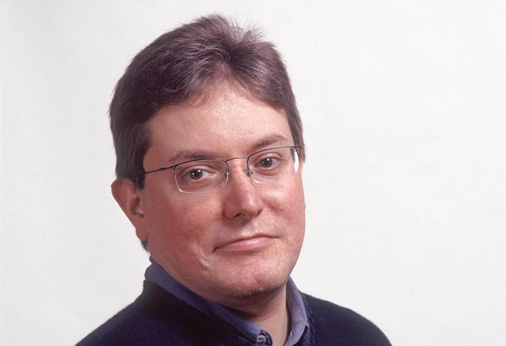
Scott Morgan (above) is the Vancouver-based producer behind the music of Loscil. Under this moniker his music is often found filed under ‘ambient’, but in reality it has more of a foreground impact through its deep and meaningful content. He talks with Arcana about his experiences of classical music, how it can be found in the fringes and structures of his work, while discussing his methods of composition and personal investment in the music.

Can you remember your first encounters with classical music?

That’s a tough question! I don’t know if I can remember listening to what I understand as classical music, as I wasn’t really from a musical family at all. I’m quite sure my first exposure would have been to some sort of film or movie. I did eventually go to university for music, and it’s funny because even though I took music at high school – saxophone and playing in a rock band – I don’t remember a relationship with classical music until later.

I was studying from modernism and moving on, and of course a lot of that is rooted in classical music. Certain composers like Schoenberg and Stravinsky had their more retro periods; they were doing their experimental stuff and went back to more kind of tonal, traditional classical stuff.

I always look back and kind of regret that my parents never put me in piano. My first exposure to music was through my uncle who gave me an acoustic guitar which I self taught, and then I took saxophone in high school. I eventually gave up on that, but that was the road that led to me being more of a composer and an experimenter with studio stuff, in that I loved to play around with electronics and to muck with things and make sounds. I would pick up an instrument and learn how to play it but never that well, enough to make sounds with it.

In your encounters with classical music, who are the composers you have grown to admire?

I was really drawn to people like Ligeti and Penderecki, people like these 1960s composers who were doing stuff with texture and using the orchestra as a sound palette rather than writing melodies and harmonies and traditional stuff.

Xenakis too, and I really loved all that Webern twelve tone stuff. I was really drawn to this idea that you could play with texture, because texture and timbre – the colour of the sound – had always been present, and good orchestrators know how to manipulate that stuff, but it was never at the forefront, it was always rhythm and melody and harmony that were given all the attention.

When did you realise you had a real aptitude for working with texture in particular?

I wasn’t conscious of it in my teens when I was doing rock band stuff, but when I was first going to school the splinter for me was working with computers and electronics. I had a professor I worked with who was really in to this technique called granular synthesis, and actually Xenakis explored a lot of this stuff too. There are some overlaps with acoustic writing and practice, but granular synthesis is where you take a sound and you cut it up into a bunch of tiny grains or components, and it gives you this control over the sound in terms of multiplying it in density or growing it in time. You have this sculptural control over sound.

The first time I heard it and the first time most people hear this kind of process is so ghostly, and you hear all these voices that come out of the sound. The texture of it is so rich and inviting that it creates this instant kind of sound world, stretching and multiplying the sound. I was really taken by this process, and I think finding the connections from there into what people were doing acoustically was really interesting.

That’s why Ligeti is often a good acoustic counterpart in terms of building up these clouds and textures of sound. That was the genesis for me, and then I went on to muck with other computer, digital signal processing models to build up textures and sounds. That ended up being the root of the Loscil project, which has been about building these textures and working with sound in that sculptural way.

There’s something truly different from what you heard before, that eureka moment of doors opening, where you realise that you can think of it this way now. In my early school days I was having more moments like that with worlds opening up, and different ways of thinking about sound and music.

Your music has a vast sense of space in it. Is that something you are keen to have, or is it a by-product of how you write?

I think it’s a bit of both. When you’re working with electronics, everything is so instant in real time that you can almost be as much of an audience member or listener as you are a composer. I find there is this very zen-like state that I get in to making stuff where I can sit and listen to loops for long periods of time, and really enjoy that space, and in fact feel kind of guilty that I have to really impose myself on it as an editor and as a composer, to present it to people. I’ve done a couple of releases, one of them a digital release a few years ago called Stases.

It was this exploration of these long, drone-like textured arcing shapes that had a longer trajectory to them. They didn’t have really identifiable elements to them – rhythm, melodic components, and yet they have been some of my more popular recordings. People like to put them on and have them as this kind of aural wallpaper, while they’re writing or working on visual arts. I find people put these on as a mental stimulus. I get into these patterns when I’m working that is an altered state, half listening and have creating, and the tools let you do that. I guess a lot of instrumentalists get into a similar state, where you’re zoning out on scales or something.

I find your music very effective during travelling to work on the train.

Train travel is an interesting one. There is something inherent about the rhythm of the train and the movement outside the window and I assume a lot of commuters want to get out of the reality that they’re in when commuting!

What I perhaps wasn’t quite so prepared for at first was the depth of emotion or concentration in your music.

Sometimes there are things you can’t quite explain when you’re creating stuff, and where it comes from it’s hard to put your finger on. I know I am generally a happy person, but things come out when I’m making stuff! There is a way of using the creative process and the creation of music to express that which you can’t express in other ways, and that’s what ends up coming out a lot of the time.

With your new album Monument Builders, was it a coincidence to be releasing it on Remembrance Day, or was that planned?

It’s funny. I didn’t choose that, but I asked the label if it was intentional, and I got a three word reply that was something to the effect of ‘yes of course!’ I believe it was somebody’s intention, but not really mine.

Was it inspired by a particular event or set of events? I know you mentioned a link with the Philip Glass score to Koyaanisqatsi.

I rewatched Koyaanisqatsi, and the version I was watching was quite messed up. It was a VHS tape and the pitch was a little off, and the tracking on the machine, and I thought it was interesting. I saw it first in a Vancouver theatre, which has ironically been destroyed and replaced with condos, which is the Vancouver thing right now.

We’re such a young city, and that is my attraction to it. I used it for the cover of Monument Builders, a 1970s kind of brutalist thing. It is one of only a couple of buildings of that style in Vancouver now, everything else is like flashy glass towers. I found that related to Koyaanisqatsi as something that was very epic and meant to spark you and wake you up emotionally as to what is going on in the world – over consumption, over population.

Over time, as technology progresses, maybe what was once epic is no longer quite as epic, and especially when it was projected on an old format. It’s like you are looking into the past, warning you of the future. A lot of time has gone by now, over 30 years since that movie came out, and there is something interesting to me about that and relating it to architecture.

You look at our city, and my mum thinks that building is so ugly, but there is something beautiful about it too, and there will probably be one of the last things standing. It was a swarm of ideas about that kind of stuff. Some of it is admittedly a little dark but there is a core beauty about it too.

There is a certain brightness to your music too, for instance in the previous album Sea Island where there are bright, deep blues implied.

When I look back at most of my catalogue, I realise so much of it is unintentional when you’re inside it, but when you see it splayed out in front of you a lot of my work accidentally plays with the spectrum between the natural world and the industrial world. There are times when I have moved to one side over the other, but ultimately I think I’m after some sort of balance of what it is to be human, and what it is to be human inside of this natural world we live in. We are a part of it but we’re also outside of it – or we think of ourselves as out of it.

When you are writing with electronic sounds and samples do you feel like you are in charge of an orchestra, in a classical sense?

A little bit. I definitely take some of my musical education in terms of writing for instruments and apply that. You’re often working in tonal ranges or pitch ranges, the bass, the mids and the highs, and you’re always wanting to balance those things, and I definitely think I compartmentalise those things in a similar way. I don’t think of moving a melody among different instruments and things, but there is a slight touch that is definitely taken from acoustic writing.

Some of the Loscil tracks could in theory be played by an orchestra.

Yeah, I’ve actually tried to imagine that at times myself. It is a really interesting question, wondering how I could create this sound not using electronics and only using an orchestra. It would be a really fun challenge but I just need more money!

I think I have always really been a kind of acoustic composer at heart, who just ended up using electronics. I think that’s part of the reason I’m folding in acoustic instruments a lot of the time. On Monument Builders I wrote a lot for the French horn, I thought that would be interesting.

The final track on Monument Builders, Weeds – does that use cut-up vocal sounds?

Yeah, that’s my friend Ashley Pitre. She sang on a couple of tracks on Sea Island, and I had the samples still kicking around. I ended up using some processing on them, and it has some of the granular technique I was talking about, to chop up the voice a little bit.
When I play live I tend to leave that one towards the end, because you can’t do much after it! It has more of a dynamic range that is not as common in my work – most of it gets to a point where it sits at one particular level and will then gradually decay. That track really goes from nothing to everything over the course of seven or eight minutes, and when I do it live the volume gets quite a bit louder at the end.

Do you think your sense of structure has a lot in common with modern classical composers?

Yeah, maybe I’ve not experimented with structure as much as I could have done over the years. I did do a release, an interesting project with an Irish record company called Wist Rec, who asked me to score a novel and they were using these Penguin mini-classics, and asking composers to write music for this book. I was given Malcolm Lowry’s story Lunar Caustic, which is a short story about a pianist in New York who loses his mind and gets put in an asylum.

He mentions the Grieg music to Peer Gynt in his story, and listening to this in the asylum. I ended up writing and working with a friend of mine on the piano parts, and we ended up referencing elements of the Grieg piece. We played a lot more with the structure, and because the book is so structured it allowed us to think in a different kind of shape.

Normally I approach a piece of music as an isolated thing, and this was like four movements, so that was one of the few times I’ve stretched the structure away from what is common for me, which is making a bunch of pieces that might speak to one another but ultimately get compiled and turn out on an album. Because of vinyl’s popularity again you think about sides and the length of an album, and it’s interesting to be freed from that and be a little more flexible.

The original version with the book, I’m not sure if you can buy it anymore, but the version on Bandcamp is a reconstructed version with my friend Kelly Wyse, a pianist from Seattle.

What does classical music mean to you?

It’s a treasure trove. For me I would say any kind of music history. I am actually drawn more to early music, and the study of that alongside politics and history, and what’s going on in the world. I think you can draw so much looking back at classical music like that.

I also have an incredible respect and admiration for classical players. Any time I get an opportunity to work with performers who have dedicated their lives to an instrument, and are masters of that instrument, I have so much respect for it – probably because I am just not that person! I have not mastered an instrument. But the discipline that goes along with that, and the ability to read music off the page and understand an instrument so well that you can express through it, is fascinating to me.

Is that what makes electronic music so great, that it enables people to formulate more of what’s in their heads musically?

I think so, but I think there is another element with electronic music that you get the ability to not only do that but you get a feedback system, and get drawn in to areas of experimentation that you just would not discover. I think that’s a lot harder to realise than with a traditional approach of sitting at a piano and orchestrating. You don’t get that immediate feedback of what it does when you bend it and shape it. That’s relinquishing to the machine, but it is part of the process as well.

If you could recommend a couple of classical pieces for Arcana readers, that have maybe held a special place for you, what might they be?

Because we spoke about Ligeti I would definitely recommend Atmosphères. I’m obviously on the modern end of things here, but the opening of Koyaanisqatsi is high on my list these days. My composition teacher hated the minimalists, so it was held from us in a certain way, but I discovered those on my own later. He was really into Schoenberg and Stravinsky.

I love Gregorian chant, too, and Thomas Tallis. There is something about that modal music, and because it is religious music it is performed in these massive churches and cathedrals with their massive reverb.
Reverb now is such a massive part of electronic music, so the idea of a fully natural reverb is fascinating and interesting, and also when you think of what we are drawn to electronically does have its roots in religious music. I’m not a religious person but it makes you wonder if something fundamentally spiritual is being handed down in that sense.

Loscil’s album Monument Builders is out now on Kranky. For more information on Loscil and Scott Morgan, head to his artist website

Wigmore Mondays – Marie-Elisabeth Hecker & Martin Helmchen

hecker-helmchen

Marie-Elisabeth Hecker (cello) & Martin Helmchen (piano)

J.S. Bach Viola da gamba Sonata no.3 in G minor, BWV1029 (late 1730s-early 1740s) (14 minutes)

Stravinsky Suite Italienne (arr. Piatigorsky) (1932/33) (20 minutes)

Brahms Cello Sonata no.1 in E minor Op.38 (1862-5) (23 minutes)

Listen to the BBC Radio 3 broadcast here, until 23 November

Arcana’s commentary

Pairing Bach with Brahms was a smart move for this concert.

When Bach was writing for the viola da gamba – essentially an early form of cello with no spike and sometimes five strings! – he was one of the first to recognise its potential as a treble instrument as well as a bass.

To that end the three sonatas he published for viola da gamba and ‘continuo’ – which in this case would normally mean a harpsichord. The pieces transcribe well for modern cello and piano though, as can be heard from 1:35 on the broadcast. It took a little while for Marie-Elisabeth Hecker to settle her tone and intonation in this performance, but once evened out the performance is notable for its clarity and expression at the higher end of the cello. This becomes especially obvious in the Adagio slow movement (from 7:00), which takes the form of an aria. The last movement (12:22) is like a fugue, with its question and answer phrases.

Stravinsky’s Suite Italienne comes from a period in his compositional life where he was looking back to the music of classical and baroque times, taking that music as inspiration, and remoulding it into something that sounded much more modern. For his ballet Pulcinella he took the music of Pergolesi (1710-1736) – or a contemporary, as was recently suggested – and gave it new musical clothes, with spiced-up harmonies and colourful orchestration. Several movements from Pulcinella were reworked for violin and piano to become the Suite Italienne, after which point the cellist Gregor Piatigorsky realised with a few more tweaks he could expand the repertoire of his own instrument.

This was done with Stravinsky’s approval, and the results – as you can hear from this concert – are invigorating and humourous. The nip and tuck between cello and piano is brilliantly caught in the Tarantella (29:49) but in truth all the movements carry the same levels of excitement – running through a sprightly Introduzione (17:33), Hecker’s graceful Serenata (20:00), a surprisingly vigorous Aria (23:45), a sombre and slow Minuetto that grows in stature (32:30) before leading into the vivacious Finale (34:48)

The Brahms (beginning at 39:25) is a piece that also looks back for its inspiration – to Bach, who inspires the finale (55:29) and perhaps to classical composers for the second movement minuet (50:00)

Marie-Elisabeth Hecker and Martin Helmchen give a superb and very fluent performance of this work, getting the balance between cello and the active piano part just right. The similarities between Brahms and Bach are clearest in the two composers’ use of counterpoint – that is a number of different melodies being played simultaneously or in complement to each other.

The flow of melodies in the first movement is unbroken and rather beautiful, especially when the piano briefly switches to a major key (42:13) Elsewhere the mood is darkly passionate and powerfully played.

The Minuet has an attractive poise, enjoying the relative mystery of its central section (from 51:43) while the finale has a steely sound to its theme from the piano (55:29) and the cello’s response (55:37) – all set out as a fugue, developing considerable momentum through to the end, which is straight faced but roundly optimistic at the same time.

This was a brilliantly played account of the Brahms, ideally balanced and communicating the composer’s rich abundance of melodies.

Further listening

The Spotify playlist below – Looking back to move forward – examines more of Brahms and Stravinsky’s use of techniques of the past to shape their own music of the future. You can also hear Marie-Elisabeth Hecker and Martin Helmchen in their new disc of the Brahms Cello Sonatas.

by Ben Hogwood

BBC Proms 2016 – Pekka Suusisto, Thomas Dausgaard and the BBC Scottish Symphony Orchestra

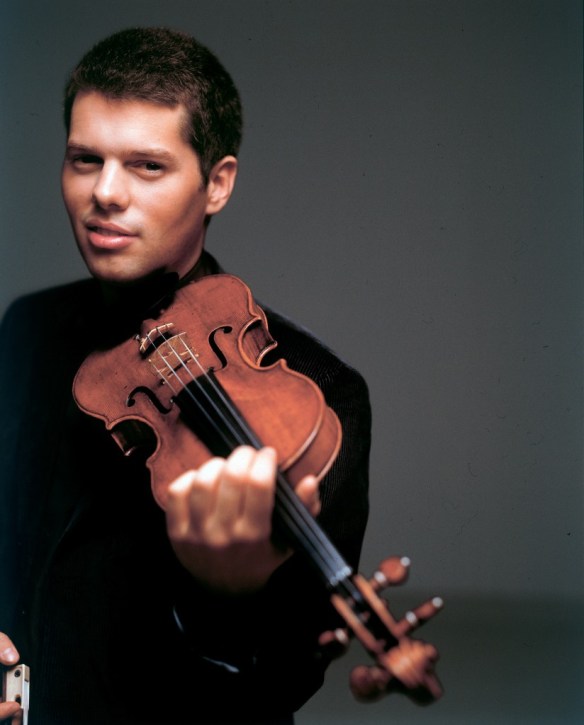
Pekka Kuusisto High Res 6 - credit Maija Tammi

Pekka Kuusisto (c) Maija Tammi

Prom 27; Royal Albert Hall, 5 August 2016

You can watch this Prom from its BBC broadcast – the Grime and Tchaikovsky here and the Stravinsky here

For sheer musical enjoyment this Prom took some beating.

Right from the start it was clear the players of the BBC Scottish Symphony Orchestra were at the Royal Albert Hall to enjoy their Friday night, and in Pekka Kuusisto they had a more than willing accomplice.

It was Kuusisto’s first appearance at the festival, and as he arrived onstage he gazed in wonder at the full hall, taking in its scope and bidding a cheery ‘hello’ to the front ranks of the Prommers. At that moment you sensed his performance, even before he played a note, had gone up a gear.

Sure enough, his performance of Tchaikovksy’s Violin Concerto was dazzling, but he was careful not to let technical feats overshadow the core of the music’s emotion. As the longer first movement unfolded so did the ardent, lyrical phrases, until we reached the solo cadenza, where just a flick of the eyes and arms were enough to get the audience laughing. Kuusisto plays a lot of his music as though for the first time, the childlike innocence (not to mention his boyish face!) a combination of pure enjoyment. The audience, wrapped up in the occasion, applauded as though he had finished, fully aware there were two more movements to come.

These were the doleful Canzonetta, reminding us of the serious circumstances in which the piece was composed (Tchaikovsky’s disastrous and shortlived marriage, made in spite of his convictions around his homosexual orientation) and a finale that brushed all that aside, its main tune from the violin scampering all over the orchestra as they tried to keep up.

Both violinist and orchestra rightly received a rapturous ovation, but Kuusisto was not done, returning for a traditional Finnish song. Following Sol Gabetta’s lead from the First Night he did the singing, while BBC SSO leader Laura Samuel gamely added a rustic accompaniment. Even the audience were involved, singing one of the phrases as Kuusisto brought the house down.

Even after that the enjoyment was yet to peak, for Thomas Dausgaard – who had shaped Tchaikovksy’s phrases rather beautifully – led them in a vibrant account of Stravinsky’s Petrushka. The composer’s second ballet is perhaps his most tuneful, full of Russian folk song references as it tells the tale of the ultimately doomed puppet. The colours of this performance were given by the BBC SSO at their very best, with superb contributions from Mark O’Keeffe and Eric Dunlea (trumpets), a beautiful, child-like solo from flautist Charlotte Ashton, and wonderful contributions from solo woodwind, brass and percussion alike – not to mention the brilliant efforts of pianist Lynda Cochrane and Julia Lynch on celesta.

Dausgaard was enjoying himself, and although on occasion the music was a little fast it was never less than energetic, the players relishing the shades of colour in The Shrovetide Fair, and the irresistible hooks and dance rhythms Stravinsky threads through the music.

Dausgaard is due to take over full time as chief conductor of the orchestra in the autumn, and on this evidence the two look set for a fruitful musical relationship.

eardleyCatterline in Winter (c) The estate of Joan Eardley.
Beginning the concert was the first part of Helen Grime’s Two Eardley Pictures, a new piece commissioned by the BBC and with its second part today. This one, Catterline in Winter, portrayed the fishing village of the North of Scotland, capturing it in steely, metallic colours – reflecting the dark grey sky and the icy blasts of a seemingly ever present wind. It is always difficult to appraise a new piece on first hearing, but this was an impressive and brightly lit score that is well worth hearing for a second time – preferably in the company of the second, Snow.

Ben Hogwood

In concert – Ryan Wigglesworth and the BBC Symphony Chorus and Orchestra at the Barbican

ryan-wigglesworth

Picture (c) Benjamin Ealovega

Barnabás Kelemen (violin), BBC Symphony Orchestra / Ryan Wigglesworth (above)

Barbican Hall, London / Wednesday 2 March

This typically well-planned BBC Symphony Orchestra concert had a surprise or two in store. Bookending the quartet of works on display were two pieces by Stravinsky – the Agon ballet from 1957 and the Symphony of Psalms.

They provided a good illustration of how Stravinsky changed styles as a composer, and how in spite of that he retained a fascination with older polyphonic styles. Some of the sound worlds in Agon, a set of twelve tableaux for twelve dancers, frequently alighted on melodic figures or chords that felt ‘old’, holding dissonances and deliberately leaving chords unresolved.

Agon is viewed as the work where Stravinsky starts to take his leave from a more obviously tonal approach to composition. In this performance it was lean yet colourful, with excellent solos from leader Stephanie Gonley, mandolin player Nigel Woodhouse, harpist Sioned Williams and Christian Geldsetzer and Richard Alsop, the two BBC SO lead double bass players, who nailed their otherworldly harmonics on each appearance.

The Symphony of Psalms was more obviously outgoing but saved its greatest emotional impact for the quieter music, the closing pages of ‘Omnis spiritus laudet Dominum’ (‘Let everything that hath breath praise the Lord’) from the BBC Symphony Chorus given out with softly oscillating orchestral figures.

Stravinsky uses the lower end of the orchestra in this piece, with no violins or violas, adding extra percussive punch from two pianos – all aspects that Wigglesworth brought forward in a taut performance. Great credit should however go to chorus master Hilary Campbell, who was unfortunately not mentioned in the concert programme. She is clearly popular with the singers, and helped secure that extra degree of accuracy and emotional involvement. One of Stravinsky’s most cinematic scores, it was in this performance a powerful statement of affirmation.

Wigglesworth positioned his own Violin Concerto modestly after the interval – I say modestly as in its five years of existence the piece has already ramped up an impressive number of performances. On this evidence its status is well-deserved, for it is a tightly structured unit of no little tension, the soloist searching for his ultimate melody while the reduced, ‘classical’ orchestra try and find their ultimate tonality.

barnabas-kelemen

Soloist Barnabás Kelemen (above) was a macho presence, with a little too much testosterone at times when the violin was surging forward, but he balanced that with some incredibly sensitive playing at the quietest moments of the piece, where the audience strained on his every note. Both melody and tonality were resolved in moments that confirmed Wigglesworth as a composer of impressive style and instinct.

The one dud in the program was Britten’s Four Sea Interludes and Passacaglia from the opera Peter Grimes, seen through the visual projections of Tal Rosner. This was a commission from four American orchestras in Britten’s centenary year 2013, with each interlude was set to the images of the city from which the commission came. For its UK premiere Rosner added a portrait of London to go with the other orchestral excerpt from the opera, the Passacaglia. This was centrally placed, keeping the order in which the scenes appear in the opera.

Although well played by the orchestra, the idea sadly fell flat on several levels. Although Britten spent time in America – and indeed began Peter Grimes there – the work’s roots are so entrenched in Suffolk that to suggest anything other than the Aldeburgh coastline through the music feels completely wrong. Rosner’s constructions were skilled, and had a few fine moments where close-up images of the Golden Gate Bridge rotated in technicolour.

Sunday Morning, with its bright building blocks of orchestral colour, was revealed to be a minimalist precursor of the music of John Adams through the clever constructions of its visuals. However despite Britten’s more universal appeal as a composer these days, Peter Grimes surely belongs wholeheartedly in Suffolk – and any suggestion to the contrary, however well intended, feels wrong.


The Nash Ensemble play Julian Anderson at the Wigmore Hall

julian-anderson

Contemporary Music Series: Julian Anderson, Composer in Residence – Wigmore Hall, Saturday 7 November

Stravinsky: Three Pieces
Ravel: Chansons madécasses
Anderson: The Colour of Pomegranates; Seadrift; Ring Dance [UK premiere]
Woolrich: Pluck from the Air [London premiere]
Anderson: Van Gough Blue [World premiere]

Claire Booth (soprano), Nash Ensemble [Philippa Davies (flute/piccolo), Richard Hosford, Marie Lloyd (clarinets), Laura Samuel, David Adams (violins), Laurence Power (viola); Adrian Brendel (cello), Peter Buckoke (double bass), Sally Pryce (harp)]
Alexandre Bloch, conductor

Review by Richard Whitehouse

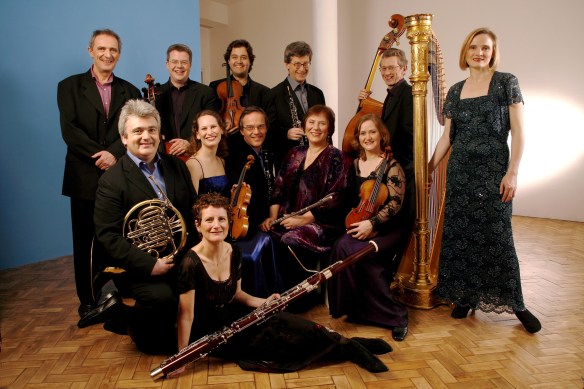
nash-ensemble
The Nash Ensemble. © Hanya Chlala/ArenaPAL

Julian Anderson’s residency at Wigmore Hall has brought a variety of artists and ensembles in performances of music – notably from the early twentieth century – so often difficult to schedule in recitals. One such opened tonight’s programme: Stravinsky’s Three Pieces for string quartet (1914) – a work no less radical than the ballets preceding it, given with the rhythmic trenchancy, gestural precision and harmonic plangency as characterize each piece.

Quite a contrast with Ravel’s Chansons madécasses (1926), a song-cycle whose singular scoring – soprano with flute, cello and piano – makes it awkward to find the right context. Not that this inhibited Claire Booth, whose unforced eloquence in the sensual ‘Nahandove’ and languorous ‘Il est doux de se coucher’ was balanced by the accusatory wrath of ‘Aoua’.

Anderson was represented in this first half by two pieces from two decades ago. The Colour of Pomegranates (1994) is less the encapsulation of Sergey Paradjanov’s film so much as a recollection of its magical aura, Philippa Davies unfolding the alto flute part with admirable dexterity as partnered by Ian Brown. Seadrift (1993) is a continuous sequence of songs such as renders Walt Whitman’s fabled text from a decidedly fresh perspective – soprano joined by flute (doubling piccolo) clarinet and piano in music that, without downplaying the purely emotional or even sentimental qualities of this poetry, enfolds it within a sonic canvas that underlines the aspects of union and separation at its core. Another fine showing from Booth, with members of the Nash taking its harmonic and rhythmic intricacies decisively in hand.

After the interval, Laura Samuel and David Adams gave the first UK hearing – and the first anywhere in 27 years – of Ring Dance (1987), Anderson’s piece which combines his then fascination for microtonal tuning with harmonic and timbral facets of Norway’s Hardanger fiddle tradition. The result pivots between relative consonance and dissonance in a way that intrigues rather than provokes (though first-night listeners in Stockholm evidently thought otherwise!) and, as with Anderson’s recently revived First String Quartet, a reminder of how early preoccupations have continued along more oblique lines. John Woolrich’s Pluck from the Air (2013) sprang few surprises in comparison, this tensile quintet for piano and strings outlining a longer-term engagement which might have been pursued in a second movement.

All the members of the Nash Ensemble then took the stage for the first hearing of Van Gough Blue (2015), Anderson’s homage to the artist whose preoccupations with colour and shade are embodied over its 20 minutes. Thus ‘l’Aube, soleil naissant’ evokes a tangible awakening, its inwardness duly offset by the pungent rhythmic and melodic interplay of ‘Les Vignobles’ and the ‘coming into focus’ of ‘Les Alpilles’ with its lively apex. The suspenseful harmonic stasis of ‘Eygalières’ then makes way for the culmination of ‘la nuit, peindre les étoiles’: a musical translation of the morning (4:40am on 25th May 1889) when Van Gough sketched his Starry Night painting, heard in terms of a ‘cosmic dance’ as carries all before it to the disintegrative final lament. Alexandre Bloch presided over this assured reading of a significant new work.