Wigmore Mondays – Beatrice Rana: Bach Goldberg Variations

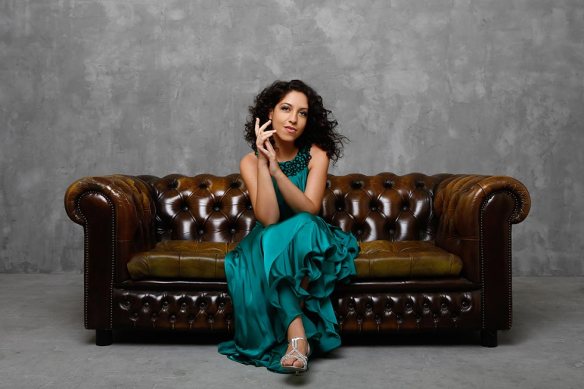
beatrice-rana

Beatrice Rana (photo Marie Staggat)

J.S. Bach Goldberg Variations, BWV988

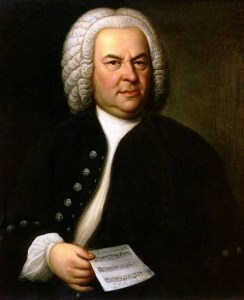
johann_sebastian_bach
J.S. Bach (1658-1750)

Listen to the BBC broadcast here

Written by Ben Hogwood

The famous Canadian pianist Glenn Gould made his first, famed recording of J.S. Bach’s Goldberg Variations at the age of 23. Beatrice Rana has just completed hers at the very same age, as BBC Radio 3 presenter Sara Mohr-Pietsch informed us just before this Wigmore Hall lunchtime concert began. Of course the interpretations would be wildly different, but there was plenty here to suggest Rana is going to be a wonderful pianist for many years to come.

She decided to use Bach’s marked repeats, a move that stretched the piece to 75 minutes and caused the BBC to extend their traditional hour – a move in favour of their Radio 3 New Generation Artists that suggests they too know exactly what she’s about.

Rana took her time with the opening Aria, setting the scene perfectly (from 1:49 on the broadcast link above). Bach’s timeless writing made the greatest possible impact because of this, in music of great, profound meaning, and whenever textures filled up later on there was always the knowledge this sublime music would return to wrap things up at the end.

Not that Rana gave us anything other than clarity, definition and musicality. Only once was her rhythmic profile noticeably challenged, as she took a while to get a definitive pulse for the seventh variation, a gigue, but elsewhere she was white hot, fingers skating over the keyboard in the toccata variations. In the slow variations she gave the music plenty of time to breathe, investing deep emotion into the minor-key sarabande (from 32:57) and similarly pained variation 25 (from 55:07) She also used helpful silences to signpost the music and give both her and the audience chance to take a breath and digest the music a bit, wondering at this great music.

On this evidence, her forthcoming disc of the Goldberg Variations for Warner Classics should be snapped up, and future concerts followed closely. She certainly did Bach full justice here.

Further listening

You can watch Beatrice in the opening bars of the Goldberg Variations, recorded last year:

…or you can take in Gould’s 1955 recording of the Goldbergs below:

Meanwhile if it’s more Bach that you fancy, this Glenn Gould album gives you access to the amazing world of the Italian Concerto, the Chromatic Fantasy and Fugue in D minor and the Partitas for keyboard:

Wigmore Mondays – Marie-Elisabeth Hecker & Martin Helmchen

hecker-helmchen

Marie-Elisabeth Hecker (cello) & Martin Helmchen (piano)

J.S. Bach Viola da gamba Sonata no.3 in G minor, BWV1029 (late 1730s-early 1740s) (14 minutes)

Stravinsky Suite Italienne (arr. Piatigorsky) (1932/33) (20 minutes)

Brahms Cello Sonata no.1 in E minor Op.38 (1862-5) (23 minutes)

Listen to the BBC Radio 3 broadcast here, until 23 November

Arcana’s commentary

Pairing Bach with Brahms was a smart move for this concert.

When Bach was writing for the viola da gamba – essentially an early form of cello with no spike and sometimes five strings! – he was one of the first to recognise its potential as a treble instrument as well as a bass.

To that end the three sonatas he published for viola da gamba and ‘continuo’ – which in this case would normally mean a harpsichord. The pieces transcribe well for modern cello and piano though, as can be heard from 1:35 on the broadcast. It took a little while for Marie-Elisabeth Hecker to settle her tone and intonation in this performance, but once evened out the performance is notable for its clarity and expression at the higher end of the cello. This becomes especially obvious in the Adagio slow movement (from 7:00), which takes the form of an aria. The last movement (12:22) is like a fugue, with its question and answer phrases.

Stravinsky’s Suite Italienne comes from a period in his compositional life where he was looking back to the music of classical and baroque times, taking that music as inspiration, and remoulding it into something that sounded much more modern. For his ballet Pulcinella he took the music of Pergolesi (1710-1736) – or a contemporary, as was recently suggested – and gave it new musical clothes, with spiced-up harmonies and colourful orchestration. Several movements from Pulcinella were reworked for violin and piano to become the Suite Italienne, after which point the cellist Gregor Piatigorsky realised with a few more tweaks he could expand the repertoire of his own instrument.

This was done with Stravinsky’s approval, and the results – as you can hear from this concert – are invigorating and humourous. The nip and tuck between cello and piano is brilliantly caught in the Tarantella (29:49) but in truth all the movements carry the same levels of excitement – running through a sprightly Introduzione (17:33), Hecker’s graceful Serenata (20:00), a surprisingly vigorous Aria (23:45), a sombre and slow Minuetto that grows in stature (32:30) before leading into the vivacious Finale (34:48)

The Brahms (beginning at 39:25) is a piece that also looks back for its inspiration – to Bach, who inspires the finale (55:29) and perhaps to classical composers for the second movement minuet (50:00)

Marie-Elisabeth Hecker and Martin Helmchen give a superb and very fluent performance of this work, getting the balance between cello and the active piano part just right. The similarities between Brahms and Bach are clearest in the two composers’ use of counterpoint – that is a number of different melodies being played simultaneously or in complement to each other.

The flow of melodies in the first movement is unbroken and rather beautiful, especially when the piano briefly switches to a major key (42:13) Elsewhere the mood is darkly passionate and powerfully played.

The Minuet has an attractive poise, enjoying the relative mystery of its central section (from 51:43) while the finale has a steely sound to its theme from the piano (55:29) and the cello’s response (55:37) – all set out as a fugue, developing considerable momentum through to the end, which is straight faced but roundly optimistic at the same time.

This was a brilliantly played account of the Brahms, ideally balanced and communicating the composer’s rich abundance of melodies.

Further listening

The Spotify playlist below – Looking back to move forward – examines more of Brahms and Stravinsky’s use of techniques of the past to shape their own music of the future. You can also hear Marie-Elisabeth Hecker and Martin Helmchen in their new disc of the Brahms Cello Sonatas.

by Ben Hogwood

Vanessa Wagner – Expanding the piano

vanessa-wagner

We’ve already spoken to Murcof about his collaboration with pianist Vanessa Wagner – and now it’s time for her side of the story. She describes how she found classical music and how her meeting with Murcof opened up all sorts of electronic possibilities. Here they are on their work together:

Vanessa, can you remember your first encounter with classical music?

My parents were not listening to a lot of classical music. They were rather into jazz and the French chanson. Then one day, the piano of my great-grandmother came home, and I started to play. My childhood idol was a wonderful Romanian pianist named Clara Haskil, far away from the glamour girls are usually dreaming of! She is still an artist that I love.

Who are the composers you have grown to particularly admire?

I grew up with the music of Bach, Schubert, Schumann, Mozart, Rachmaninov, Brahms and Janáček, who are still my favourites, Schubert especially. His melancholy, and the time stretched in his music touches me enormously. Die Schöne Müllerin and Winterreise are pieces that never leave me.

What was it that appealed to you about working with Murcof?

I was the one to initiate this encounter. I have listened to his music for a long time. I met him at the workshop of the Infiné label, and we made an improvised test. Then I had the chance to have a residency in a room of the Arsenal of Metz. They gave me carte blanche to develop new projects, I invited Murcof to play with me, and Statea was born.

How did you make sure you got a good balance between the piano and the electronics?

I always asked Murcof to pay attention to the acoustic piano sound. The piano is the starting point of this project, and it was important that the electronic effects do not swallow its sound even if it is sometimes distorted. Similarly, it also seemed very important to stay true to the scores of composers that I interpret. That’s why the album is called Statea, which means balance in ancient Italian.

Had you listened to much electronic music prior to working with him?

I have listened to electronic music for 20 years. At that time, in my classical circles, it was frowned upon. I had never heard of the big techno anthems, and I went right back to ambient/IDM artists – the likes of Autechre, Aphex Twin, Model 500, Maurizio, UR etc.

Do you think there are other albums or pieces of music that bring classical and electronic together well?

Max Richter´s Four Seasons of Vivaldi works pretty well. Brian Eno also has a beautiful piece called Fullness of Wind, taking its lead from Pachelbel.

Do you think classical and electronic music have a lot more in common than one would expect?

I think meetings of the two styles are quite possible, if one avoids falling into the mainstream that we call crossover classical. The approach focuses on the sound result. We must respect the original script. Adding a beat onto a piece of Mozart or Beethoven cannot be a creative artistic process in itself.

Moreover, music known as ‘contemporary classical’ and art music has a lot in common with experimental electronic. Bridges are possible and desirable between these universes.

Has working with electronic music helped your appreciation of classical?

This does not specifically help me in my classical interpretation. What I greatly appreciate is to exercise out of my classical world, to transform the sound of my instrument, and to experience concerts differently, giving a new fresh perspective to my daily occupation of being a pianist.

For me, it is an interior window that opened itself, and I strongly hope that this is new cornerstone in the musical world which will contribute to the opening of minds and ears!

If you could recommend one piece of classical music to Arcana readers that you’ve been listening to recently, what would it be and why?

I would recommend listening to the Goldberg Variations of Bach (Glenn Gould, for example), the Death and the Maiden String Quartet by Schubert, or Tabula Rasa by Arvo Pärt, especially the second movement Silentium.

Statea, by Murcof and Vanessa Wagner, is out now on Infiné. The pair will appear at the Barbican on Monday 31 October as part of a bill including pianist Lubomyr Melnyk. Tickets can be purchased from the Barbican website. Vanessa will also be giving her thoughts on classical music to Arcana shortly!

Wigmore Mondays – Lars Vogt plays the Bach Goldberg Variations

lars-vogt

Lars Vogt (piano)

Wigmore Hall, London, 6 June 2016

written by Ben Hogwood

Audio (open in a new window)

http://www.bbc.co.uk/programmes/b07dkdt8

Available until 4 July

What’s the music?

J.S. Bach Goldberg Variations, BWV 988 (1742) (55 minutes)

Spotify

In case you cannot hear the broadcast, Lars Vogt has recorded the Goldberg Variations which can be heard here:

About the music

The Goldberg Variations have an intriguing genesis. The generally accepted account is that they were written by Bach for performance by Johann Gottlieb Goldberg, who needed something to play to pass the time when his master, Count Keyserlingk – the Russian ambassador to the court of Dresden – was unable to sleep.

Bach wrote the variations for him and published them in 1742, though their lack of a dedication coupled with a few other factors have led some to doubt their authenticity as a work for Goldberg.

That is a minor aside, though, for the Goldberg Variations are one of the pinnacles in keyboard music. Lasting almost an hour, they are a huge set of variations on an Aria, which is a three-minute, self-contained unit in itself. Throughout the duration Bach reaches profound emotional depths, especially in the minor key variations, while in the more exuberant fast music he explores complex but extremely positive music. They are a tour de force for any keyboard player, and are perhaps the work by which the legendary Canadian pianist Glenn Gould is best remembered.

Performance verdict

Lars Vogt clearly has a great deal of admiration and affection for this music, for this was a spellbinding performance of one of the great cornerstones of the keyboard repertoire. The Goldbergs make great demands on the versatility of an artist, exposing any limitations in their technique – but where Vogt was concerned, there did not appear to be any.

It was helpful that he paused after some of the bigger variations, allowing Bach’s revelations in the minor key in particular to sink in. Others he linked very closely together, so that there was a natural ebb and flow between the fast music and the slow.

This was an incredibly assured performance, after which Vogt simply raised the music itself to the audience – a gesture that spoke volumes for the stature in which the work continues to be held.

What should I listen out for?

1:23 – the Aria, which is a slow Sarabande. It is heavily ornamented – by which it is meant the right hand of the piano decorates its melodies. Yet there is a sense of time standing still as Bach announces the main theme for his variations.

5:02 – Vogt moves straight into the lively Variation 1, where Bach builds up a fluid momentum.

5:54 – the bright Variation 2, a little quieter and beautifully poised with discussion of the melodies between both hands (or ‘counterpoint’ as it is commonly known!)

6:41 – Variation 3, a Canon – where one part shadows the other throughout. Again Bach gives this a totally natural appearance, in a lilting triple time.

8:32 – the more rigid Variation 4.

9:34 – the quickfire Variation 5, with a rapid figuration of semiquavers as the music hurtles forwards.

10:17 – Variation 6, the second Canon in the variations and one that explores some advanced harmonic movements.

11:28 – a detached profile to the melody of Variation 7, with a detached and staccato nature that gives it a French flavour.

12:14 – the busy eighth variation brings the two hands close together on the keyboard, and streams forward, leading straight into…

13:08 – the ninth variation, a slower, poised affair, and the third of Bach’s Canons.

14:43 – Variation 10, a ‘fughetta’ – by which you can hear each part entering individually with Bach’s new theme. The counterpoint builds in a compact statement.

15:28 – Variation 11 is quicker, and tricky to execute.

16:24 – Variation 12, and Bach’s fourth canon, is a stately and expansive affair.

19:24 – Variation 13 is a Sarabande, the first to fully evoke the spirit of the Aria and to behave in a similar, decorated way.

21:38 – the reverie is burst by Variation 14, a brisk affair that has some striking, jumpy rhythms in the right hand. Legendary pianist Glenn Gould compared this variation to Scarlatti.

22:38 – Variation 15, the fifth canon. It has some adventurous chord progressions, moving mysteriously through the minor key as it becomes progressively more anguished. Gould says this would not be out of place in Bach’s St Matthew Passion, as a genuine piece of mourning. A period of silence at the end only heightens the impact.

26:18 – the flavour of a French Ouverture runs through Variation 16, which has a ceremonial air, with some florid statements from both hands. It opens out into a faster section.

28:57 – a virtuosic Variation 17

29:56 – the dance returns for Variation 18, which is another canon, the parts dancing in a calculated but surprisingly breezy near-unison.

31:19 – Variation 19, and Bach still as prodigiously inventive as he was at the beginning. This is a relatively gentle, triple time dance.

31:58 – Variation 20 quickens the pace again, with quick interaction between the hands.

32:58 – for the seventh canon, Variation 21, Bach moves back to the minor key and a solemn exchange of melodies.

35:23 – back to the major key for 22, where Bach often fills out the texture to four parts.

36:05 – a bright Variation 23, where the hands are higher up the keyboard, exchanging some florid ideas.

36:59 – another canon, the eighth, for Variation 24, a triple time dance with an attractive lilt.

39:47 – the third and last minor key variation, 25, is a darker turn after the positivity of the previous one. It is also a lot slower, with time seemingly coming to a halt towards the end of Bach’s discourse. Because of its emotional impact it has been described as ‘the black pearl’ of the set.

43:23 – after the depths of the minor key, Variation 26 sounds like a frivolous thought, with a burbling idea exchanged between the two hands.

44:27 – Variation 27, a little stern in its set canon but with a strong air of positivity.

46:29 – Variation 28 is higher up the keyboard, with repeated figures that Bach moves around a harmonic sequence. There is a lot of hand crossing for the pianist here.

48:13 – in Variation 29 the tempo is still quick and the hands stay close together, though the right one does run off alone at times.

50:16 – Variation 30, the last one, is given the title of Quodlibet, a kind of improvised work. Here Bach really lets his invention go, using the melodies of a couple of folksongs as he strays far from the original.

52:01 – a note for note repeat for the Aria from the start, closing the entire Goldberg Variations.

Further listening

Rather than another set of variations, the recommended further listening is for a set of shorter Bach pieces played on the piano. These can be heard in a stylish album from Alexandre Tharaud, who has incidentally also recorded the Goldberg Variations. Here he focuses on some of Bach’s works with an Italian flavour, including the Italian Concerto among others:

Wigmore Mondays – Pekka Kuusisto & Nicolas Altstaedt: Music for violin and cello

kuusisto-altstaedt

Pekka Kuusisto (violin), Nicolas Altstaedt (cello)

Wigmore Hall, London, 23 May 2016

written by Ben Hogwood

Audio (open in a new window)

http://www.bbc.co.uk/programmes/b07c3r1b

Available until 23 June

What’s the music?

J.S.Bach – Two part inventions (c1720-23) interspersed with Widmann – Duos for violin and cello (2008) (24 minutes)

Ravel – Sonata for violin and cello (1920-22) (23 minutes)

Spotify

In case you cannot hear the broadcast, recordings of the music played can be found on the Spotify playlist below where available. Not all of the Widmann pieces have been recorded yet, but where possible good alternative versions have been used:

About the music

As the Wigmore Hall programme writer Gerald Larner notes, the combination of violin and cello is a surprisingly scarce one in classical music. There are hardly any recognised works for the pairing, the two most notable being duos by Ravel and Kodály, but just recently the German composer and clarinettist Jörg Widmann (b1973) has shown real creativity in his 24 duos.

They make an ideal contrast with the Bach Inventions, which transcribe seamlessly from keyboard to violin and cello, the violin taking the right hand part and the cello the left. In doing so they bring out the counterpoint behind the music. Widmann’s pieces are more about instrumental colour, but they have melody too – and he enjoys sending up particular dance forms and such, especially when he includes a James Bond theme in the final piece!

Even a composer as accomplished as Ravel did not find the combination of violin and cello an easy one. He began the Sonata in 1920 as a tribute to Debussy, but did not finish it for another year and a half, distracted by a house move and fuelled by the need to give his music a new austerity. Despite the use of only two lines the composer’s flair for harmonic movement still comes through, though the piece does still sound impressively modern.

Performance verdict

A wholly enjoyable concert, thanks to the chemistry between two performers who clearly enjoy their craft. Pekka Kuusisto has always been a charismatic violinist but Nicolas Altstaedt more than matched him here, and because they were in close proximity on the Wigmore Hall stage it was easy to see them as one instrument rather than two.

The interpolation of Bach and Widmann was a clever one, because the music of the former was notable for clean lines and impeccably worked out counterpoint, while the latter concentrated on colours, feelings and dance forms. Moving between the two extremes was a constant source of musical stimulation, and was brilliantly performed – especially in the final Widmann piece, a real tour de force.

The Ravel was superb, helped by the ability of these performers to project while playing incredibly quietly. Because of this the slow movement was the most searching of the four emotionally, potentially a tribute to the departed Debussy. The faster movements were thrilling, showing Ravel’s close relationship with differing dance forms but also the many and varied ways in which he extracts instrumental colour.

The encore, Sibelius’ first published piece, was inspired in its simplicity.

What should I listen out for?

Bach / Widmann

1:38 Bach Invention no.1 in C – there is a beautiful simplicity about Bach’s writing as the violin takes what would have been the right hand of the keyboard, and the cello the left. The counterpoint (i.e. the intertwining of melodies between the instruments) is immaculate.

3:19 Widmann Duo no. XIV Capriccio­ – Widmann’s coloristic effects include snapped pizzicato (plucking) and sudden, jarring phrases, as though the instruments are having a bit of a bout.

5:06 Bach Invention no.4 in D minor­ – after the outbursts of the Widmann it is almost a surprise to return to the clean tonality of the Bach, but it works well – and again the cello part finds itself in exact imitation of the violin

6:10 Widmann Duo no. XVI Petit ballet mécanique (Pas de deux) – a short and shady duo this, with short phrases and implied moods that never fully establish themselves.

7:10 Bach Invention no.6 in E – again Bach’s simplicity is all that matters here. The key of E major makes for a nice, open sound as the strings play with little vibrato.

11:17 Widmann Duo no. XXII Lamento – here Widmann is casting his mind back to the Baroque period, and the strings play close together with no vibrato – a stark sound

13:48 Bach Invention no.8 in F – a much quicker invention that works well in its string arrangement, the rapid movement of Bach’s figures passed between the instruments

14:41 Widmann Duo no. XXI Valse bavaroise – an exaggerated form of pastiche from Widmann here, with scratchy discords and long notes flying between the instruments, not to mention some pretty outrageous glissando passages from the cello!

16:46 Bach Invention no.14 in B flat – a quieter, more reverential piece.

18:38 Widmann Duo no. XIII Vier Strophen vom Heimweh – another slow Widmann piece, using a lot of double stopping so that it sounds more like a string quartet. Again the sound is cold, due to the use of mutes and the almost complete lack of vibrato.

20:48 Bach Invention no.15 in B minor – a solemn mood hangs over this invention, which again is played with very little vibrato – though the players do allow themselves a few liberties with variations of speed and volume.

22:31 Widmann Duo no. XXIV Toccatina all’inglese – a tour de force of virtuosity, this is the first of the Widmann pieces to be an obvious display vehicle for the two players, who rush up and down the fingerboard. There is an extended passage of plucking that briefly gives the music a Far Eastern feel, and there is a tune – where can you spot On her Majesty’s Secret Service?

Ravel

29:00 The first movement has shadowy beginnings, emerging as though from the mists – with the violin and cello very close together as they exchange musical thoughts. The clean timbres are a result of the players using harmonics – where the string is very lightly touched with the fingers on the left hand rather than pressed.

35:05 A faster movement that begins with both instruments plucking, and finds Ravel exploring a great many colours and combinations from this seemingly limited instrumental pairing. The sparse texture is a challenge for him, and sometimes he enhances it with scratched phrases and an almost complete lack of sustain, as in the passage from 36:10 onwards, with the cello’s furious chords.

39:08 The slow movement, a bleak utterance – and it is tempting to think it might owe its inspiration to the recently finished First World War. It takes a long time for the mood to rise above anything other than grim contemplation, but when it does there is a passionate piece of writing in the centre of the movement. Ravel, though is ultimately a positive composer, and this can be heard in the last phrases, which effectively shift the music from darkness to light.

46:04 The last movement reasserts a positive frame of mind with a vigorous jig, the two instruments playing with plenty of energy and rhythmic punch. The tune is catchy too! Ravel is the master of using instrumental effects for colour rather than for their own sake, and that is very much the case here, with harmonics, pizzicato, double stopping and different bowing techniques giving him a wide variety of shades. It is partly what makes this duo such compelling listening.

Encore

54:40 The fascinating encore is Water Droplets, the first published piece by the eight year old Jean Sibelius. It is incredibly simple – played entirely in pizzicato – but is all the more effective for that, as it paints such a vivid picture in its minute-long duration!

Further listening

Having mentioned the Kodály Duo for violin and cello it makes sense to include that as the extra listening here – on the same album as a substantial work for the combination by Erwin Schulhoff:

Meanwhile the video clip below gives an introduction to Jörg Widmann’s music for string quartet: