
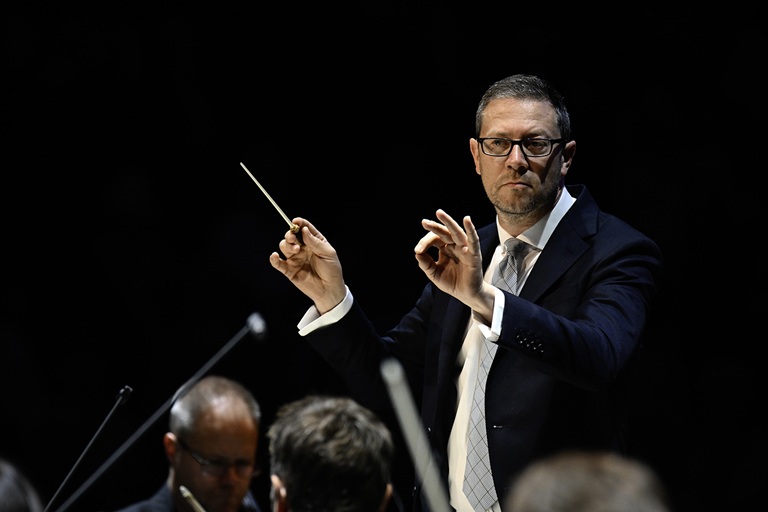
Julie Roset (soprano), Sinfonia of London Strings / John Wilson
Berkeley Serenade for Strings Op.12 (1938-9)
Bridge Lament H117 (1915)
Britten Les illuminations Op.18 (1939)
Imogen Holst Suite for String Orchestra (1943)
Britten Variations on a Theme of Frank Bridge Op.10 (1937)
Royal Albert Hall, London
Sunday 6 September 2026, 11am
Reviewed by Richard Whitehouse Photos (c) BBC / Chris Christodoulou
Just weeks after the heady excess of Respighi’s ‘Roman Triptych’, John Wilson and Sinfonia of London were back at the Proms with a typically resourceful programme of British works for and with string orchestra. One which opened with the fourth appearance at these concerts for Lennox Berkeley’s Serenade for Strings, its modest dimensions belying an intensifying trajectory from the high-spirited Vivace, through a suave Andantino then impetuous Allegro, to a Lento whose inward plangency is a sure reflection of events in the latter months of 1939.
Following on naturally, Frank Bridge’s Lament – remembering a nine-year-old girl drowned with the sinking of RMS Lusitania in May 1915 – found a more apposite context than its two previous Proms appearances; not least as Wilson drew such fastidious poise from his players.
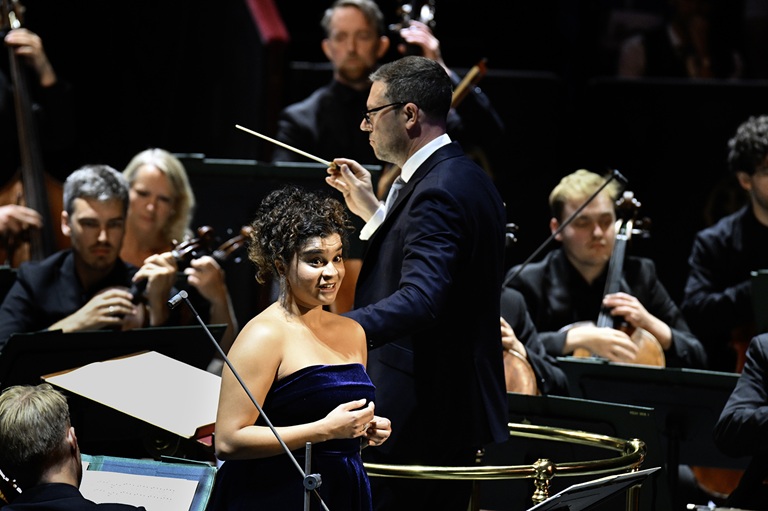
Although hardly ineffective given with tenor, Britten’s Les illuminations conveys its essence more fully as conceived with soprano and Julie Roset’s rendering (above) of Arthur Rimbaud’s often disquieting texts was nothing if not idiomatic. From the insistent activity of Villes, via the suspenseful Phrase and elegant Antique to the portentous Royauté and playful Marine – this was a reading to savour. As enticing were the yearning sensuality of Being Beauteous then capricious contrasts of Parade; this latter’s climactic setting of lines first encountered in Fanfare then Interlude as if completing a circle, from where Départ brings the whole sequence to a resigned though fulfilled conclusion. Roset’s insights were ably underpinned by the strings, even if a slightly more visceral response would at times have been welcome.
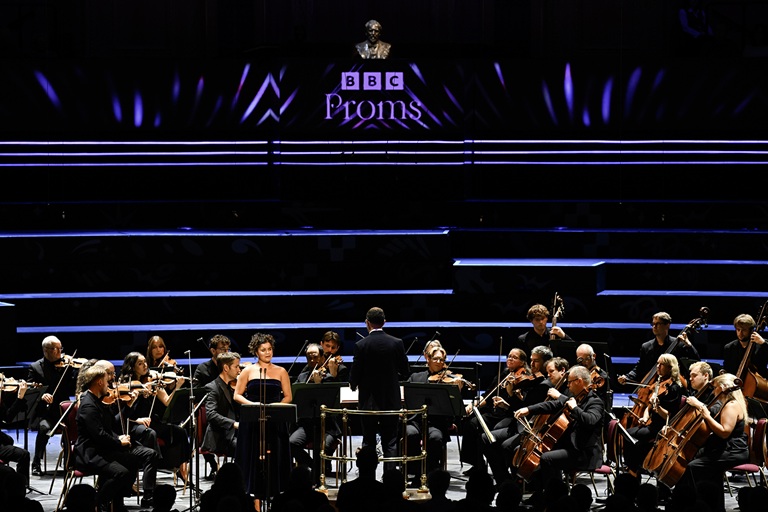
Her output can suggest an ambition waylaid if not frustrated at every turn, but Imogen Holst left numerous works of intrinsic as opposed to practical worth. Not least her Suite for Strings, its inquiring spirit evident in a restless Prelude then taciturn Fugue with a tellingly queasy final cadence. Despite its title, the Intermezzo that follows makes for a slow movement of unforced eloquence; one whose barely concealed depths inform the final Jig such that the latter’s impetus is not without a growing ambivalence only just dispelled towards its close.
Commemorating Britten at these concerts in the 50th anniversary of his death means, almost by definition, focussing on those works for orchestra largely absent from his post-war output. Among which, Variations on a Theme of Frank Bridge remains among the most impressive – not least in a performance as finely conceived and executed as this. As if mindful of an early comment that ‘‘neither [Britten’s] seriousness nor his levity is intense enough’’, Wilson duly pushed expressive contrasts across its 10 variations to their limits. Characterful as were those earlier vignettes, it was in the sequence of glowering Funeral March, ominous Chant then closing Fugue and Finale that his approach came into its own – not least in the way that the latter’s animation came to a standstill before its belated if impulsive surge to a decisive close.
A pity that Wilson did not consider including an encore (one or other of Bridge’s Two Old English Songs would have been ideal for this context) but the all-round excellence of what was heard, at what might be thought a ‘Proms matinee’, was assuredly its own justification.
You can listen to this Prom on BBC Sounds until the end of September 2026.
Published post no.3,009 – Sunday 6 September 2026

