In concert – Marie-Christine Zupancic, Sebastian Heindl, CBSO / Kazuki Yamada: Saint-Saëns, Respighi, Takemitsu & Berlioz

Marie-Christine Zupancic (flute), Sebastian Heindl (organ), City of Birmingham Symphony Orchestra / Kazuki Yamada

Berlioz Le Corsaire Op.21 (1844)
Takemitsu I Hear the Water Dreaming (1987)
Respighi I Fontane di Roma P106 (1916)
Saint-Saëns Symphony no.3 in C minor Op.78 ‘Organ’ (1886)

Symphony Hall, Birmingham
Wednesday 4 June 2025

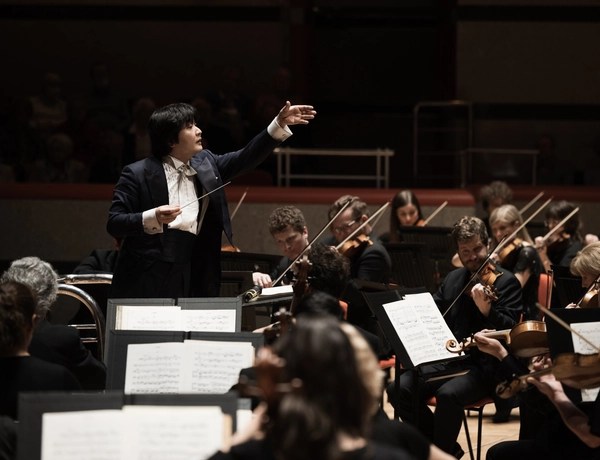
Reviewed by Richard Whitehouse Picture of Kazuki Yamada (c) Benjamin Ealovega

The dashing upsurge at the start of The Corsair launched this evening’s concert by the City of Birmingham Symphony Orchestra under its music director Kazuki Yamada in fine style. Nor was the pathos in this last of Berlioz’s concert overtures downplayed, and if the main portion lacked the pizzazz of illustrious predecessors, Yamada’s handling of the apotheosis proved an object-lesson in controlled spontaneity – setting the seal on a fine account of a piece that long -standing attendees will recall as a favourite of one-time principal conductor Louis Frémaux.

The music of Tōru Takemitsu was often heard in the era of Simon Rattle, but not I Hear the Water Dreaming. Taking its cue (along with other works of this period) from the ‘Dreamtime’ tradition of Aboriginal art, here a painting from the Papunya region of Western Australia, this short though eventful piece typifies its composer’s final creative phase – the formerly radical tendencies from previous years not so much disowned as finding an accommodation with the impressionist leanings of his earliest maturity. A sonic canvas, moreover, against which solo flute pursues its capricious course, with only a hint of something more confrontational either side of the cadenza-like passage towards its close. Certainly, this was music to which Marie-Christine Zupancic (taking time out as the CBSO’s first flute) sounded unerringly attuned.

CBSO regulars will recall Yamada presenting the whole of Respighi’s ‘Roman Triptych’ at a memorable concert four years ago. Tonight, Fountains of Rome rounded off the first half in a performance at its best in the effervescence of Triton at Morning or the dazzling majesty of Trevi at Midday, fading as if suspended in the Symphony Hall ambience. If Valle Giulia at Dawn felt a little passive in its allure, the enfolding serenity of Villa Medici at Sunset was fully sustained – the delicacy and suppleness of its entwining melodic lines accorded full rein.

The CBSO has been identified with Saint-Saëns’s Organ Symphony since Frémaux’s lauded recording of half-a-century ago, and it remains a work in which this orchestra excels. Yamada was (rightly) intent on stressing its symphonic cohesion, drawing ominous expectancy from the first part’s introduction and building no mean momentum in its ensuing Allegro. Sebastian Heindl’s hushed entry duly set the tone for a raptly eloquent slow movement, measured while never sluggish as it headed toward its heartfelt climax then on to a coda of bittersweet repose.

There was no lack of incisiveness or humour in the scherzo which opens the second part – its scintillating passagework for piano duet artfully integrated into the orchestral texture, with an ideally paced link into the finale with its indelible main melody and methodical build-up to a majestic peroration. Those thunderous initial chords aside, Heindl made less of an impact than might have been expected, but his always resourceful choice of registrations underlined the extent to which both he and Yamada continually had the ‘bigger picture’ uppermost in mind.

Overall, then, a concert which manifestly played to this orchestra’s collective strengths. The CBSO is back next week with its former music director Mirga Gražinytė-Tyla for what will be only a second UK performance, 63 years after the first, for Weinberg’s Fifth Symphony.

For details on the 2024-25 season A Season of Joy, head to the City of Birmingham Symphony Orchestra website. Click on the names to read more about soloists Marie-Christine Zupancic and Sebastian Heindl, and conductor Kazuki Yamada

Published post no.2,496 – Sunday 6 April 2025
In concert – CBSO / Mirga Gražinytė-Tyla: From Mirga With Love

Marie-Christine Zupancic (flute), Oliver Janes (clarinet), Eugene Tzikindelean (violin), Adam Römer (viola), Onutė Gražinytė (piano), City of Birmingham Symphony Orchestra / Mirga Gražinytė-Tyla

Traditional (arr. Raminta Šerkšnytė) Anksti rytą kėliau
Čiurlionis (ed. Charalampos Efthymiou) Miške (1901) [UK premiere]
Weinberg Clarinet Concerto Op.104 (1970)
Loboda Requiem for Ukraine (2014)
Weinberg 12 Miniatures for Flute (1945, orch. 1983) [UK premiere]
Kakhidze Bruderschaft (1996) [UK premiere]

Symphony Hall, Birmingham
Wednesday 6 December 2023

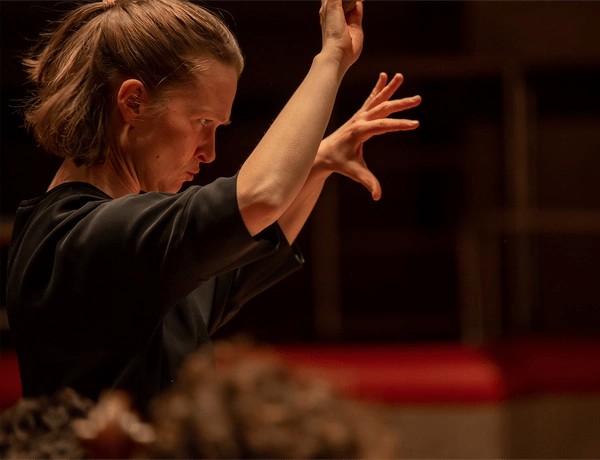
Reviewed by Richard Whitehouse. Picture of Mirga (c) Beki Smith

The sound of a Lithuanian folksong I got up early in the morning, plaintively sung by Mirga Gražinytė-Tyla and accompanied by her sister Onutė, introduced tonight’s concert where the conductor made a welcome reappearance with the City of Birmingham Symphony Orchestra.

MGT gave a memorable performance (not for all the right reasons) of Mikalojus Čiurlionis’s symphonic poem The Sea during her tenure as music director, and the CBSO sounded equally assured with his earlier such piece In the Forest that opened the programme. Here once again the composer’s over-ambition is evident from a rather episodic construction and the textural overload (odd in music this opulently scored to have had no timpani, as might have brought greater definition to emotional highpoints), though had Čiurlionis heard this in performance the outcome might have been otherwise. What remains is a sequence of enticing paragraphs, framed by ones whose formal and expressive aims seemed impressively as one in pointing towards just what might have been possible were it not for his demise at the age of only 35.

The music of Mieczysław Weinberg has been a preoccupation of MGT for over a decade, and it was good to hear this continue through two pieces in which CBSO principals played to their strengths. Oliver Janes sounded enthused by the Clarinet Concerto, its initial Allegro pivoting between incisiveness and inwardness typical of the composer’s maturity. The Andante brought a plangent interplay of soloist and strings, with the sardonic humour of the ensuing Allegretto building toward a cadenza whose entreaties were curtailed by the peremptory closing gestures.

Commissioned after Russia’s occupation of the Crimea, Igor Loboda’s Requiem for Ukraine has only become timelier this decade since – its heady series of variations within a chaconne-like form offering no mean technical challenges that Eugene Tzikindelean met with panache.

As did Marie-Christine Zupancic the more restrained subtleties of Weinberg’s 12 Miniatures for Flute. Composed with piano accompaniment and arranged for strings almost four decades later, these deft and often characterful vignettes follow a methodical tonal progression, while the opting to render them as three groups of four implied a latent fast-slow-fast format akin to that of a concerto. At no time was there any sense of Weinberg being less idiomatic or more impersonal in pieces which are as meticulously realized as any of his larger compositions.

After this, the paucity of content in Vakhtang Kakhidze’s Bruderschaft (Brotherhood) was only too evident. A ‘sinfonia concertante’ for viola, piano and strings, its easeful opening section had a certain charm of which Adam Römer’s playing was nothing if not persuasive, but the livelier music that followed was lounge-jazz at its most cliched and neither the violist’s input nor an almost choreographed response from Onutė Gražinytė raised it above the commonplace. Both these sections were elaborated to little intrinsic purpose, other than to prolong what was already a lengthy concert such that numerous attendees could be seen departing in those final minutes.

A pity in what was otherwise a rewarding programme as reaffirmed MGT’s continued rapport with her former orchestra. Hopefully there will be more such collaborations in future seasons.

You can read all about the 2023/24 season and book tickets at the CBSO website. Click on the artist names for more information on Mirga Gražinytė-Tyla, Marie-Christine Zupancic, Oliver Janes, Eugene Tzikindelean, Adam Römer and finally Onutė Gražinytė

Published post no.2,033 – Friday 8 December 2023

In concert – CBSO Centre Stage: Trios for flute, viola and harp (Marie-Christine Zupancic, David BaMaung & Katherine Thomas)

Instrument-detail-Neil-Pugh

Bax Elegiac Trio GP178 (1916)
Weinberg
Trio Op.127 (1979)
Debussy
Sonata for flute, viola and harp L137 (1915)

Members of the City of Birmingham Symphony Orchestra [Marie-Christine Zupancic (flute), David BaMaung (viola), Katherine Thomas (harp)]

CBSO Centre, Birmingham
Thursday 18 November 2021

Written by Richard Whitehouse

Although little more than a century old, the enticing combination of flute, viola and harp has since given rise to a host of stylistically varied pieces – three of which were featured in this Centre Stage lunchtime recital by members of the City of Birmingham Symphony Orchestra.

If not the most elaborate of his numerous works for mixed ensemble, Arnold Bax’s Elegiac Trio is surely among his most affecting as a (deliberately?) understated ‘in memoriam’ for those friends who had died as a result of the ill-fated Easter Uprising in Ireland. While the underlying mood rarely moves too far from that implied by the title, the close-knit motivic writing and subtly shifting emotions which are filtered through the textural ‘weave’ prove    as subtle as they are elusive – not least in a performance as focussed or as assured as this.

His extensive chamber output might be dominated by his 17 string quartets, but Mieczysław Weinberg wrote numerous pieces for sundry combinations – of which the present Trio could be considered typical of his spare and elusive later idiom. As in other works from this period, descriptions are replaced by metronome markings, endowing the music with an inscrutability as leaves the musicians to convey more tangible expression – whether in an initial movement that uncovers its formal trajectory as it brings these instruments into play, a central movement whose fragmentary textures never quite evolve into cohesive exchanges, then a finale whose vigorous rhythmic motion is tersely curtailed almost out of spite. An insightful account of an absorbing piece, especially when not given in its alternative version with piano replacing harp.

A recital such as this almost had to close with the Sonata by Debussy that will likely remain the template for this ensemble. Here, the opening Pastorale seemed a little too restive fully to convey this music’s ethereal emotion, but the Interlude found an ideal balance between incisiveness and elegance whose minuet-like gait belies its almost intuitive unfolding, while the Finale drew all three instruments into an inexorable motion through to the decisive close – the composer asserting his credentials as ‘musicien français’ with pointed understatement.

An appealing and not a little thought-provoking recital for which Marie-Christine Zupancic, David BaMaung and Katherine Thomas placed those present in their debt. The Centre Stage series continues on December 3rd, with a programme from the CBSO Percussion Ensemble.

Further information on future CBSO Stage concerts can be found here