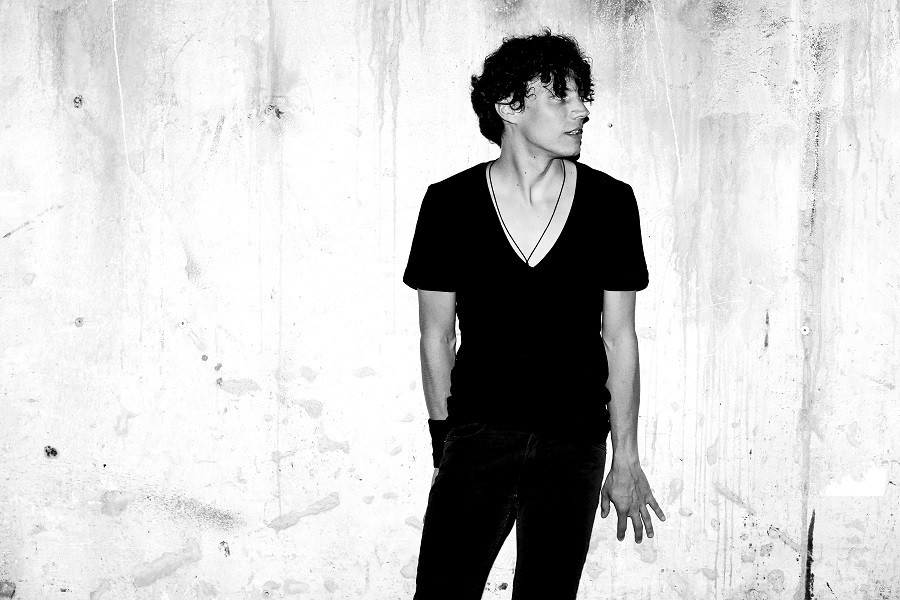
Wigmore Mondays – Kathryn Stott

kathryn-stott
Photo (c) Nikolaj Lund

Kathryn Stott (piano) performs piano music by Fauré, Franck, Ravel and Graham Fitkin

Wigmore Hall, London, live on BBC Radio 3, 14 September 2015

Listening link (open in a new window):

http://www.bbc.co.uk/programmes/b06c9nwj

on the iPlayer until 20 October

Spotify

In case you cannot hear the broadcast, here is a Spotify playlist of the music in this concert – most of which Kathryn Stott has recorded.

https://open.spotify.com/user/arcana.fm/playlist/14B8Ld3EVlXF6jlyZUeA9y

What’s the music?

Fauré: Nocturne no.4 (1884) (8 minutes)

Franck: Prélude, Chorale et Fugue (1884) (20 minutes)

Ravel: Sonatine (1905) (12 minutes)

Fitkin: Relent (1998) (10 minutes)

What about the music?

Fauré wrote a good deal of extremely attractive piano music, ranging from dreamy Barcarolles and Impromptus to the Nocturnes, which tend to be more moody. Kathryn Stott’s choice for this concert, the fourth of thirteen such works Fauré completed, is one of the lighter coloured examples.

César Franck, treated as French although he was born in Liège, which is now Belgium, wrote a lot of organ music – but is not often regarded as a composer of piano music. This is a shame, because in the Prélude, chorale et Fugue he shows off a distinctive style and an adventurous harmonic approach, while also acknowledging a debt to J.S. Bach in the form and construction of the piece. This reaches its apex in the central chorale, a kind of hymn tune that is first heard in a solemn intonation but which then rings out in glorious technicolour.

Ravel completes the triptych of French piano works, his Sonatine a model of economy and precision – but also an intimate piece of three movements that is quite beautifully written for the piano. The word Sonatine refers to the short length of the piece rather than anything else that might be modest – for this is one of Ravel’s finest piano works.

Kathryn Stott ends her recital with Graham Fitkin’s Relent, completed in 1998 and written for Stott herself. On the composer’s website, Fitkin writes of how “This piece is about time. It is about my perception of time, its various manifestations and ultimate inevitability. I think about the way I use my time, how much I need and just how long it feels like. I think about continuous time, circular time and our society’s preoccupation with marking the passage of time. And then I think about the relentless addition of time and how for me some day it will just stop.”

Performance verdict

Initially this concert was to be given by Tine Thing Helseth, with Kathryn Stott in support at the piano, but the Norwegian trumpeter sadly had to withdraw through illness.

In her place Stott constructed a fine recital, moving naturally from the nocturnal thoughts of Fauré through a passionate performance of the Franck, beautifully played and extremely well voiced so that the themes could be clearly heard.

Stott is a modest performer – by which I mean she has a gracious air when performing – and that suited her performance of the Ravel and Fauré especially. However when she needs the power it is easily found, and the performance of Fitkin’s Relent brought out the kinetic energy of the piece perfectly.

What should I listen out for?

Fauré

1:22 – a relatively gentle beginning to the piece, which is deceptively simple in its execution, harking back a little to Chopin. The theme comes back at 2’29, this time in ‘octaves’ – that is, the tune is doubled by another finger in the right hand playing an octave higher on the keyboard.

The mood then darkens as we head into the minor key. As Stott herself was quoted in Fiona Talkington’s introduction on Radio 3, Fauré’s “harmonic language is fascinating, and I’m never bored by it”. Greater turbulence can be felt in the music – but an inner radiance returns with the theme at 6:41. The piece finishes in serene mood at 8’53”.

Franck

10:51 – the Prélude suggests a relatively relaxed approach and is almost improvisatory at first, before we hear the main theme in octaves. Despite being based on an older form this to me is a forward looking piece, using some spicy harmony and strong romantic leanings.

16:18 – the Chorale section begins (chorale essentially another word for hymn), and we first here the Chorale itself in subdued form at 17:21. At 18:37 we hear it in another key, the mood of contemplation starting to give way to more passionate thoughts – and when we hear it once more at 20:20, the effect is like a peal of bells.

21:30 – the fugue section begins, though the fugue itself doesn’t start until 22:56, initially retreating into quiet thoughts but then gathering momentum. Once again it softens though, the choral theme peeping through the rippling piano textures at 27:58. At 30:06 the final peal of bells rings out, ending with an emphatic double ‘B’ from the left hand.

Ravel

32:24 – this piece is notable for its clean lines and immaculate structure but also for the intimate atmosphere that Ravel immediately conjures within seconds of this first movement beginning. It has a slightly melancholic feel but is essentially positive. Some of the quieter music is beautiful and dreamy, especially at the end.

37:05 – Ravel leads more or less straight into the second movement, a Minuet (a dance in triple time). This has a persuasive lilt, as well as the same feel of intimacy carried over from the first movement.

40:07 – the third movement, a much more forthright piece of music marked Animé (Animated).The textures of the piano here suggest rippling water. The piece moves to a convincing finish at 43:54, Ravel’s structure nigh-on perfect.

Fitkin

44:57 – immediately Fitkin’s use of the piano suggests mechanical movements. The writing is incredibly bold, from the big, beefy sound of the lower register of the piano – often dealt out in octaves – to the syncopated lines from the right hand. These suggest a strong jazz influence, but possibly even the sound of a gamelan.

As the piece progresses so its mechanical nature continues, with a terrific amount of energy generated in its ten minute duration.

Encore

55:57 – ChopinPrelude for piano in E minor (3 minutes) – an encore of suitable stillness to follow the Fitkin, Chopin’s E minor prelude is one of his most popular, and one of his most sorrowful too.

Further listening

There are plenty of options available for further listening after this varied concert. Those enjoying the Ravel would be urged to seek out more of the composer’s piano music, in particular Gaspard de la nuit. The Franck may have its roots in the past a bit more but has some pretty exotic harmonies – and anyone enjoying it might want to head for Debussy’s suite Pour Le Piano, another look back to the past with an especially beautiful Sarabande at its heart.

Meanwhile for lovers of the Fauré the composer’s piano music has a particular late night beauty, as this selection of Barcarolles and Impromptus suggests. All are tagged onto the end of the original playlist here:

https://open.spotify.com/user/arcana.fm/playlist/14B8Ld3EVlXF6jlyZUeA9y


Proms premieres – Birds with new plumage

tui-bird
The Tui Bird from New Zealand. Photo (c) Sid Mosdell

Messiaen, orch Christopher Dingle – Un oiseau des arbres de Vie (1987-1991, orch 2015)

Ravel, arr. Colin Matthews – Oiseaux tristes from Miroirs (1905, orch 2015)

BBC Philharmonic Orchestra / Nicholas Collon (Prom 29)

Duration: 4 minutes each

BBC iPlayer link

http://www.bbc.co.uk/events/ef3zc8#b0640p40

The Messiaen can be heard from 1:55; the Ravel from 35:02

What’s the story behind the pieces?

Messiaen’s Un oiseau des arbres de Vie (A bird from the tree of life) is music that is ‘incredibly technically difficult to conduct’, in the words of Nicholas Collon, given the job of overseeing its first performance in this guise, arranged by scholar Christopher Dingle.

The relatively short piece originally intended to be part of his massive, multi-movement orchestral piece Éclairs sur l’Au-Delà…, but was removed before the first performance. It is mostly scored for percussion but changes tempo and time signature more or less every bar. In the piece Messiaen profiles the New Zealand tui bird through a written-out melody of its song.

Meanwhile Ravel’s Oiseaux tristes (Sorrowful birds) is the latest French piano piece to be orchestrated by Colin Matthews. The composer has tried his hand at a number of Debussy Préludes, imagining how Ravel might have undertaken the task, but here he looks at one of the six parts of Miroirs, the suite written by the composer for piano. Ravel himself orchestrated two of the other movements, Une barque sur l’océan (A boat on the ocean) and Alborada del gracioso (Morning song of the jester).

The piece is intended to portray the sorrowful birds in the depths of a very hot summer forest. They are lost.

Did you know?

Ravel’s orchestration of Musorgsky’s Pictures at an Exhibition is one of many versions of the Russian composer’s suite for piano – but is the most performed.

Initial verdict

The Messiaen is bright and strongly rhythmic, but not in a conventional sense. It is very treble based, and is punctuated by crisp chords that have an unusual colour, with the wood block and tuned percussion heavily in evidence.

Colin Matthews’ orchestration is evocatively coloured, ideal for a humid evening at the Royal Albert Hall. The mood is oppressive, the brass lending weight to the lower end of the sound. It is clear from this that Matthews has listened closely to Ravel’s own methods of orchestration, because his way with the colours available is surely near to what the composer might have imagined.

Second hearing

tbc!

Where can I hear more?

Colin Matthews’ orchestrations of Debussy Préludes can be heard in a release made by the Hallé record label, found on Spotify here

Francesco Tristano – Mixing it up

francesco-tristano
Picture by Marie Staggat

Francesco Tristano has a number of musical specialities. You may know him as a pianist, partner with Alice Sara Ott in recent concerts revealing the percussive power of Stravinsky’s The Rite of Spring. Or you may know him as a pianist who has shown his worth in improvisation, playing alongside Carl Craig – and showing his love of techno in a pioneering arrangement for piano of Rhythim is Rhythim’s Strings of Life.

If you know him for this, you are likely to be aware that Tristano also DJs regularly – and has added his voice to the already illustrious crowd who have mixed an instalment of the Get Physical label’s Body Language series. Tristano’s own brand of body language consists largely of his own work, either through originals, remixes or collaborations, but it is clear from this interview he is far from self-centred. Though of course we had to ask him a few things about himself…

How long have you been DJing, and how did you start?

I got in touch with the DJ world when I was living in New York City in the late nineties. By the end of my NYC stay, in the year 2003, I was DJing in a bar/lounge downtown. But I knew my thing was to play live. So I didn’t really DJ publicly except for one party at the Rex club in Paris and I recorded a DJ set for BBC Radio 1. Body Language isn’t really a DJ mix either – it’s more like a produced session with many live elements such as live synths playing.

I gather you had a shortlist for Body Language of several hundred tracks. How do you go about choosing a selection for commercial release from that list?

It was important for me to find a common thread of melody and harmony throughout the mix. It was mostly about listening to which collection of tracks would make sense harmonically together.

You included the Joe Zawinul track The Harvest, which really stands out early on in the compilation. What made you want to choose it?

Zawinul is arguably my greatest inspiration, and from a very early age. I guess I just had to have one of his tracks on the album. The Harvest is taken from his 1985 solo album Dialects – that’s just after the break-up of Weather Report.

Would you say some of the pieces here – Amnesie with Luciano, for instance – are more about rhythm and atmosphere than out-and-out melody?

We actually made the track for a film, Barbet Schroeder’s Amnesie which, you guessed it, takes place on the island of Ibiza. In accordance with the script I was working with cello samples, and also a vague harmonic relationship to the film’s main theme (which is also played by the cello). The rhythmic programming is Lucien’s, and provided a great drive for the minimalistic cello figures.

Does the mix tap in to your own clubbing experiences?

Sure. I like techno which is not limited to kick drum and high hats. Bring in some vintage synths please.

Why do you think the piano is so important both in club music and in your own music making?

The piano has been my companion since I’m five years old. I can always count on it. It doesn’t even need power. . . As for the piano in club music, I am not entirely sure. Chicago house made ample use of piano samples, but it wasn’t really using live pianos. Maybe piano is present in electronic music symbolically because it is the ancestor of the synthesiser…

Would you say constructing a DJ mix is similar to constructing a larger-scale piece of classical music, in terms of key relationships and development?

Sure. Beat-matching is not enough.

Can you remember your first encounters with classical music?

There was a piano at my house. My mother listened to Bach, Wagner, but also Pink Floyd and Vangelis all day long. It was only a question of time until I touched the keyboard.

How does your work with Alice Sara Ott, playing Bach and Stravinsky, complement the work you do as a DJ?

Since I don’t work as a DJ (live sets only) it’s pretty much the same. Music is like cuisine: you have ingredients, and you can create very different dishes with the same set of ingredients.

Do you think dance / electronic music and classical music have a lot more in common than we realise?

I wish we would loosen up these denominations. Who decides if a given piece is classical? Detroit techno classics are called classics for a reason. Mozart never thought of writing a ‘classical’ sonata. It was the contemporary (‘techno’) music of his time.

What does classical music mean to you?

The same as techno ¬ i.e. nothing. Music is one long, universal continuum of which we are all part.

What are you listening to at the moment, and what piece of classical music would you recommend Arcana readers go out and find?

I am listening to Bach’s St. John Passion and I can only recommend it. But I would also recommend Starlight by Model 500. . .

Francesco Tristano’s contribution to Get Physical’s Body Language series is out now. The series includes mixes by DJ Hell, Modeselektor and Dixon. Meanwhile Scandale, his piano duet album with Alice Sara Ott, includes Stravinsky’s The Rite of Spring and Ravel’s La Valse. For more information click here – it is available now on Deutsche Grammophon

Musorgsky – Pictures at an Exhibition, Songs and Dances of Death / Gergiev

Featured recording: Musorgsky – Pictures at an Exhibition, Night on Bare Mountain, Songs and Dances of Death (Ferruccio Furlanetto (baritone), Mariinsky Orchestra / Valery Gergiev (Mariinsky)

musorgsky-gergiev

A new all-Musorgsky disc by Valery Gergiev and his Russian charges, returning to the composer whose operas Gergiev has recorded with great success.

What’s the music like?

On paper this release is a brilliant way to start a Musorgsky collection, because it contains his two best loved works. Pictures at an Exhibition, appearing in its celebrated orchestration by Ravel, is a wonderful set of character pieces that fully captures an artistic exhibition and the viewer’s response to it. Night on Bare Mountain is equally vivid in its portrayal of a witches’ sabbath, and the right performance can strike genuine fear into the heart. Finally the Songs and Dances of Death for baritone and orchestra (not as depressing as they sound through opportunities taken for gallows humour!) appear in the orchestral version made by Shostakovich.

Does it all work?

It should do – because this is surely a home banker for Valery Gergiev, conducting both the music of his homeland and a composer in whose music he specialises. Yet something is awry, for two of the three live performances feel routine at best.

Pictures lacks spark and feels very polite, taking its time to reveal plenty of things in the score but rarely getting out of second gear, as though the exhibition has only a few days left to run. There is no edge to Gnomus, which should ideally be unhinged, and no sense of culmination in The Great Gate of Kiev, the work’s crowning glory. The Old Castle, while suitably mournful and featuring a lovely saxophone solo, drags its feet, while Bydlo, the old cart whose machinery lumbers down the track, has a disarmingly smooth passage here.

There are a few exceptions. The characterisation of Samuel Goldenberg and Schmuÿle is brilliant, thanks to a sharp trumpet portraying the latter character, while the clucking of The Ballet of Unhatched Chicks in their Shells is winsome. But overall this version lacks real excitement.

Sadly Night on Bare Mountain is little better, and sounds like a version going through the motions, with an incredibly limp final chord. There are moments where the electric charge is more pronounced, especially when the dance music comes in around 1’45”, but otherwise this is disappointing fayre with little sense of terror.

All this is redeemed by Ferruccio Furlanetto, the commanding singer chosen for Songs and Dances of Death. There is an incredibly strong resonance to his voice, effortlessly taking charge of the Lullaby, while hurling his all into the end of the Serenade and the fatal triumphalism of The Field Marshal. Gopak, the third song, starts with threadbare bass sounding appropriately ghoulish, the sentiments of the poem laid as bare as the orchestration. Gergiev is inspired here, completing a version that stands tall alongside any competition.

Is it recommended?

Overall, no – unless you are desperate for a recording of the Songs and Dances of Death. For Pictures, alternative versions include those conducted by Claudio Abbado and Carlo Maria Giulini, with Abbado again the choice for Night on Bare Mountain.

Listen on Spotify

You can judge for yourself by hearing the album on Spotify here

The Inextinguishable Fire

The Inextinguishable Fire – The BBC Symphony Orchestra and Sakari Oramo reach the Fourth Symphony in their Nielsen cycle, adding Sibelius, Ravel and Zemlinsky for good measure

sakari-oramo
Anne Sofie von Otter (mezzo-soprano), BBC Symphony Orchestra / Sakari Oramo (pictured) – Barbican Hall, 19 February 2015

Listening link (opens in a new window):

http://www.bbc.co.uk/programmes/b052lpjh

on the iPlayer until 19 March

Spotify

Those unable to get the BBC concert can follow the same pieces here in appropriate recordings:

What’s the music?

Sibelius – The Oceanides (1914) (9 minutes)

Zemlinsky – 6 Maeterlinck Lieder, Op.13 (1913, orchestrated 1921) (19 minutes)

Ravel – Le Tombeau de Couperin (1914-17, orchestrated 1919) (18 minutes)

Nielsen – Symphony no.4, ‘Inextinguishable’ (1914-16) (34 minutes)

What about the music?

nielsenThe composer Carl Nielsen

This is a carefully picked program of intriguing opposites, part of the BBC Symphony Orchestra’s celebration of 150 years since the birth of Danish composer Carl Nielsen. All four pieces date from the same decade, and inevitably the First World War is an immovable presence, but these are four very different works that look to harness strength in adversity.

Sibelius, in his tone poem The Oceanides, looks abroad for its stimulus. He was on his only trip to America when he wrote the work at Yale University, taking an Ancient Greek legend as his inspiration. The ‘Oceanides’ are daughters of the water that circles the earth – water in all of its forms – and in this piece Sibelius describes the water as ‘a single breaker growing in force’. The version played here is the Yale version, rather than the later (and longer) revision.

Zemlinsky wrote his Six Maeterlinck Lieder while digesting the news that Alma Schindler, a long time obsession, had decided to marry the composer Gustav Mahler. This news upset and angered him, for he was preoccupied with Alma for many years – yet in these elusive and often unresolved songs he found the ideal vehicle for his response. As Anne-Sofie von Otter said in an interview broadcast on BBC Radio 3, the cycle of six songs is ‘not easy to get the balance right’ between voice and orchestra.

The work is ‘elusive and enigmatic. The stories aren’t straightforward!’

Le Tombeau de Couperin worked for Ravel on a couple of levels; firstly it helped him to observe the passing of several close friends in the First World War, while secondly it gave him chance to pay homage to the great composers of the French Baroque (from the 1700s) such as Couperin, held up as a national treasure and regarded as superior to the German equivalents, especially in time of war! It is an elegant piece, revelling in its role as a pastiche composition – using dance forms of the Baroque – but never resorting to imitation. Instead Ravel uses some cheeky and quite spicy harmonies to keep the hint of a smile on the face of the music.

Finally we have the Inextinguishable symphony, Nielsen’s Fourth and best known example in the form. This is a hugely affirmative piece of music, ‘that which is life’. David Fanning describes it as a ‘midlife crisis’ piece, as Nielsen’s life was undergoing a number of changes. It runs without a break, from searing melodies to small evocations of a village band – truly embracing the many forms and sizes of life itself.

Performance verdict

A fascinating and stimulating concert. Sakari Oramo has already gained a reputation for his prowess in Scandinavian music, and he brought Sibelius’ brief tone poem to life with a succession of watery colours. This was in direct contrast to the Nielsen, which was taut and thrilling, the strings producing some piercing lines while the real glory went to the drums, rolling like thunder in the background.

The Ravel, meanwhile, was notable for its glassy clarity, each melodic line clear to the ear and lovingly turned by the conductor. Oboist Richard Simpson was superb throughout, each of his leading tunes beautifully phrased and voiced. In some ways it was the Zemlinsky, the least known piece of the four, that made the greatest impact. Anne Sofie von Otter, ideally dressed in a long burgundy gown, got right to the heart of these poems – as much as you can with verse such as Maeterlinck’s, at any rate!

What should I listen out for?

Sibelius

3:47 – a murky start with very quiet strings and murmuring timpani. The two harps are prominent at this stage. As the music grows louder you can almost feel the water with every swirl of the harps!

6:09 – a trademark figure for woodwinds which falls back to the murky depths of the soft strings.

8:11 – the big wave grows and swells, powered by timpani, strings and woodwind

9:54 – the music settles on a home note and immediately takes on a happier air

12:09 – the big spray of a ‘breaker’ – and a typically concise finish to the piece, courtesy of a single clarinet – whose note resolves right at the end.

Zemlinsky

16:39 – Die drei Schwestern (The Three Sisters). The music moves with deliberate tread, as though walking carefully. The music moves through a succession of harmonies without stopping, and the singer too is tense – until a brief but meaningful climax which cuts off suddenly.

20:34 – Die Mädchen mit den verbundenen Augen (The Maidens with Bound Eyes). Silvery strings introduce the singer, who initially shadows the cor anglais. Zemlinsky uses the orchestra very deftly, with lots of light and shade, though eventually this song becomes darker and sorrowful.

23:41 Lied der Jungfrau (The Song of the Virgin) The otherworldly sound of the harmonium can be heard at the start of this song in conjunction with a solo violin. Zemlinsky reduces the string section to eight players and there is some truly odd but rather enchanting music here!

26:21 – Als ihr Geliebter schied (When her lover went away) Richly coloured but once again strangely elusive. This is one of the songs Zemlinsky wrote as Alma Mahler, the long-time object of his affections, had a ‘dalliance’ with another man, a year after her husband’s death

28:25 – Und kehrt er einst heim (And should he return one day)­ – the golden ring of the song glints in Zemlinsky’s orchestration for harp and celesta.

31:23 – Sie kam zum Schloss gegangen (She came towards the castle) – this song to me sounded more like Mahler than any of the other five. The oboe and cello paint a ghostly picture to begin with, and as the mysterious story unfolds there is a curious fascination on the part of the listener.

Ravel

1:03:11 – Prélude – a graceful and slightly furtive solo, beautifully played here by Richard Simpson. The strings offer a silvery melody as a complement

1:06:43 – Forlane – a French dance form that Ravel wanted to make like the tango. In the event he is quite restrained here, but the use of ‘wrong’ notes in the melody makes the dance more exotic. At 1:11:37 the clarinet introduces another section, then at 1:12:12 the melodies become awkward and twisted.

1:13:09 – Menuet – the emotional centre of the work, with a polite if slightly sad melody from the oboe, then a minor key section (1:15:08) where the shadows cast over the work get longer. Again this is beautifully phrased by the BBC woodwind, with harmonics on the strings in the background.

1:18:28 – Rigaudon – here is music of greater hope, a quick and high spirited dance that skips along.

Nielsen

1:25:24 – with a massive heave the symphony gets underway, unleashing a seemingly unstoppable force through the whole orchestra.

1:26:56 – the clarinets duet in what becomes the great theme of the symphony, heard softly at first but then in an affirmation from the whole orchestra at 1:29:31

1:35:15 – the affirmative second theme returns to close off the first movement in joyous spirits, at which point we lead to…

1:36:37 – a small village wind band pipe up with a thoughtful melody. The sound is small compared to the first movement and not rhythmically consistent.

1:40:01 – the village band returns, but the music still feels a little distracted

1:41:29 – the third movement, a tense exchange that begins with piercing high notes on the violins.

1:50:41 – strings hurry around at the start of the fourth movement, exerting a sheer primal force

1:52:35 – rolling timpani, one set of drums each side of the orchestra, dominate the sound

1:56:48 – rolling timpani return, driving forward to a thoroughly affirmative finish where the big theme from the first movement comes back in its crowning glory

Want to hear more?

The Spotify playlist link above also contains some extra items for each composer. These are the short but tuneful Karelia Suite of Sibelius, then the two other movements from Le Tombeau de Couperin that Ravel did not orchestrate, a Fugue and a Toccata. There is Zemlinsky’s highly regarded three movement Sinfonietta, a major work, and to finish the suite written by Nielsen for Aladdin.

For more concerts click here