In concert – Quatuor Danel: Shostakovich & Weinberg #11 @ Wigmore Hall

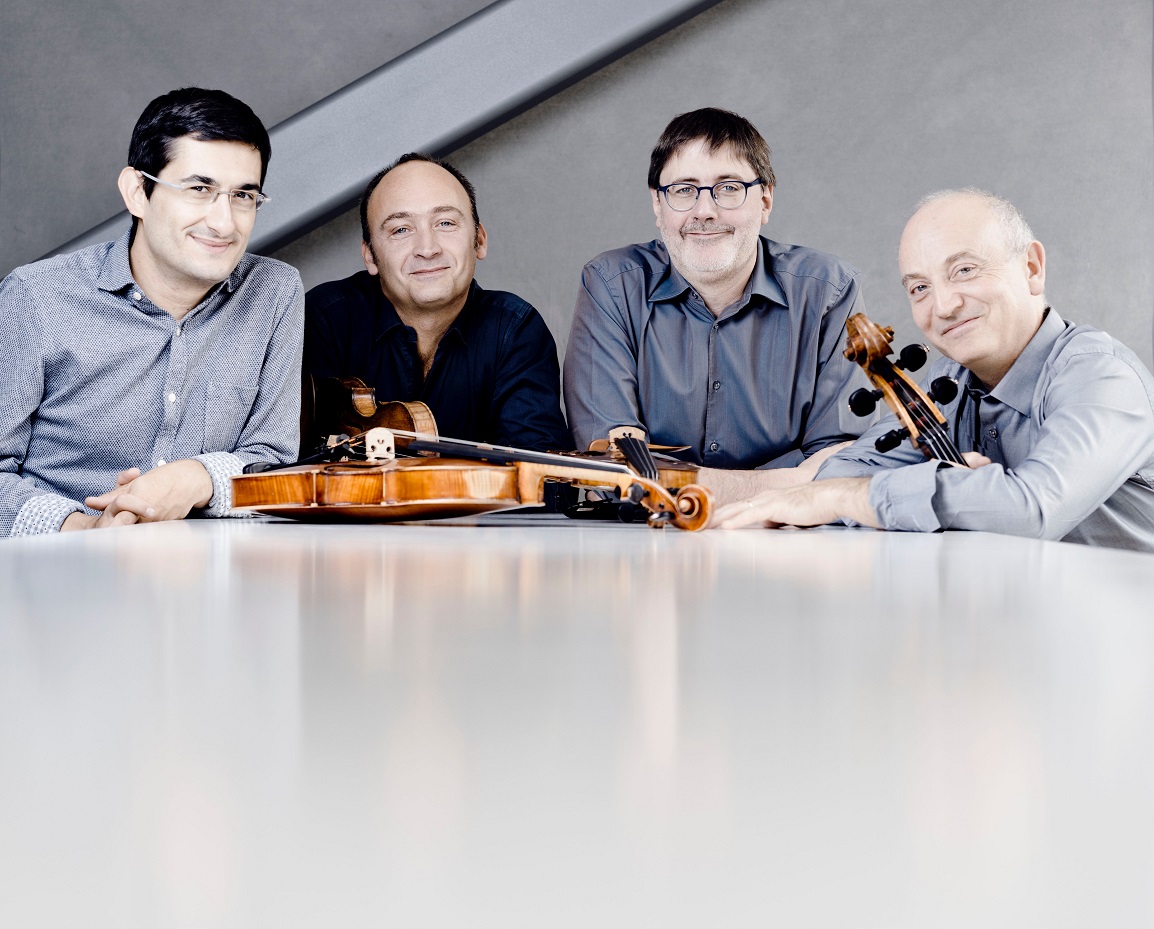
Quatuor Danel [Marc Danel & Gilles Millet (violins), Vlad Bogdanas (viola), Yovan Markovitch (cello)]

Weinberg String Quartet no.16 in A flat minor Op.130 (1981)
Weinberg String Quartet no.17 Op.146 (1986(
Shostakovich String Quartet no.15 in E flat minor Op.144

Wigmore Hall, London
Friday 27 June 2025

by Ben Hogwood Photo (c) Marco Borggreve

After giving fresh insight and context to the 32 string quartets and two piano quintets of Shostakovich and Weinberg, Quatuor Danel finally brought their Wigmore Hall cycle of both composers to a close. The journey began just before the COVID pandemic but was necessarily aborted. However on the series resumption in 2023 Wigmore Hall artistic and executive director John Gilhooly generously suggested the quartet begin the concerts afresh, a gesture acknowledged by Quatuor Danel first violinist Marc Danel before the group’s encore.

Danel admitted it had been difficult deciding which work should close the combined cycle, yet this concert proved the group had made the right decision, closing with some of Shostakovich’s final musical thoughts. Before that we heard the two very contrasting last quartets by Weinberg. His String Quartet no.16 was completed in 1981, the year in which his sister would have reached her sixtieth birthday had she not been murdered, along with the composer’s parents, in the Holocaust. Bearing her dedication, the quartet is a work of conflicting emotions, with an underlying tension trumped by a strong and lasting resolve.

Stylistically, Weinberg’s writing reflects his reacquaintance with the music of Bartók. This was evident from the heavy-set bow strokes of the first movement, where Danel led with power and precision. Weinberg allows time for calmer thoughts, but there was a guarded watchfulness that the Quatuor Danel conveyed most vividly here. The contrast between Scherzo and Trio in the second movement was striking, the emphatic gestures of the former upturned by the ghostly outlines of the otherworldly trio, which hinted at an alarm going off in the distance. The climax of the Lento felt like the culmination of a unified protest from all four instruments, its dissonant cries living long in the memory, before the waltz of the finale. Cold to the touch, the four instruments were muted but not silenced, and a period of moving stillness in the music held the attention before the waltz returned for the thoughtful closing bars.

With the String Quartet no.17, completed five years later, the mood changed completely. With a more explicit tonal language, this piece started in high spirits, Weinberg relishing the opportunity to revisit and quote from his earlier works, doing so in the spirit of pure musical enjoyment. A rustic first theme was brilliantly played here, as was the richly voiced chorale proving such an effective counterpart. This single movement work falls into four distinct sections, and eloquent solos from Danel and cellist Yovan Markovitch were memorable, before the feathery textures that began the finale, after which the chorale theme returning in an even brighter light. The positive disposition of the quartet gave it a youthful appearance beyond the references to early works, the composer enjoying childhood recollections through the viewpoint of relative seniority. The Danel ensured we were aligned in that viewpoint, too.

Shostakovich’s String Quartet no.15, however, is indisputably the work of a man in the twilight of his life. Written in six slow movements, it is one of the most distinctive utterances in the repertoire both of Shostakovich and the string quartet, and no performance should leave its audience unmoved. In the course of 40 minutes, Shostakovich leaves us with music that in terms of speed never really gets out of first gear, but whose intensity is unrelenting from its very first bars.

The Danel found that intensity with unerring accuracy, right from the first drawn-out melodies. Musically we seemed to have travelled back several centuries, the work unfolding with almost painful slowness, Shostakovich’s frailty made clear through music. And yet there is a spiritual quality looking ahead to the music of Arvo Pärt and Silvestrov, a kind of minimalism conveyed in searching, long-phrased melodies.

The Quatuor Danel were sparing in their use of vibrato, which made for an even more effective expressive tool when used, while their intonation was commendably flawless in such a difficult key for strings. In the second movement, ironically titled Serenade, the music felt inverted, its distinctive outcries made through crescendos reaching for the very soul. Marc Danel gave a searing solo at the beginning of the central Intermezzo, after which he sat, head bowed, listening to his three colleagues, while the viola solo from Vlad Bogdanas for the Funeral March was similarly charged. The Epilogue returned to the remarkable stillness present for much of this work, after which there was an equally moving silence.

It would be difficult to suggest an encore for music with such finality, but the quartet found an answer – in the shape of the first movement of Shostakovich’s String Quartet no.1. This might be thought an odd choice, but, as Danel explained, its music was a timely reminder for the world in which we live that the sun would come back. Hearing Shostakovich’s first and last statements for quartet in such proximity, it was hard not to agree with him – and so – with huge credit to the players for some memorable performances – this wonderful cycle concluded in the best possible way.

You can hear the music from the concert below, in recordings made by Quatuor Danel -including their most recent cycle of the Shostakovich quartets on Accentus:

For more information, click on the names for more on composer Mieczysław Weinberg and Quatuor Danel themselves.

Published post no.2,580 – Sunday 29 June 2025

In concert – Sheku Kanneh-Mason, CBSO / Kazuki Yamada: Elgar Cello Concerto & Tchaikovsky Symphony no.5

Sheku Kanneh-Mason (cello), City of Birmingham Symphony Orchestra / Kazuki Yamada

Elgar Cello Concerto in E minor Op.85 (1919)
Tchaikovsky Symphony no.5 in E minor Op.64 (1888)

Symphony Hall, Birmingham
Thursday 19 June 2025 2:15pm

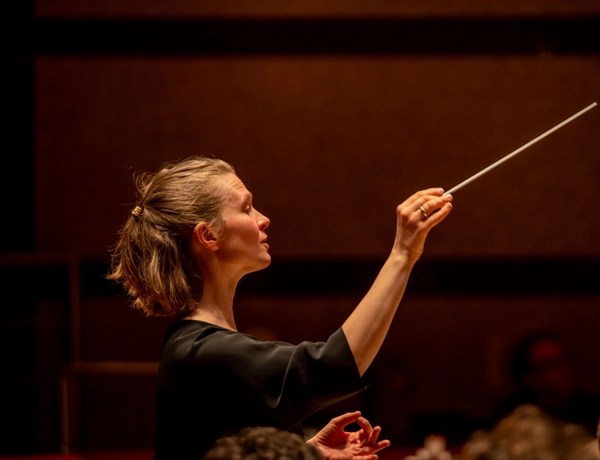
Reviewed by Richard Whitehouse Picture of Sheku Kanneh-Mason (c) Andrew Fox

The City of Birmingham Symphony Orchestra’s ‘Season of Joy’ ended (at least at its home base) this afternoon with this concert in E minor, featuring major works by two composers whose wresting triumph from out of adversity was by no means always their strongest suit.

It is all too prevalent these days to talk of Elgar’s Cello Concerto as being the ‘end of an era’ statement, so credit to Sheku Kanneh-Mason for leavening any overt fatalism with a lyrical intensity which paid dividends in the musing restiveness of the first movement – its indelible opening gesture rendered with an understated defiance that set the course for what followed. Nor was the Scherzo’s glancing irony at all undersold, its tensile energy seamlessly absorbing the mock nobility of its secondary theme on the way to a conclusion of throwaway deftness.

Others may have summoned greater fervency from the Adagio, yet Kanneh-Mason’s unforced poise in this ‘song without words’ was its own justification and an ideal entrée into the more complex finale. Especially impressive was his methodical while never calculated building of tension towards a climax of tangible emotional intensity, capped with the terse stoicism of its coda. Kazuki Yamada and the CBSO were unfailingly responsive in support. Kanneh-Mason returned with the 18th (Sarabande) of Mieczysław Weinberg’s 24 Preludes (1969) as a sombre encore.

If to imply that by being his most ‘classical’ such piece, Tchaikovsky’s Fifth Symphony may also be his most predictable, Yamada evidently had other ideas. Certainly, there was nothing passive about the first movement’s scene-setting Andante, Oliver Janes palpably ominous in its ruminative clarinet theme. A smattering of over-emphases in phrasing just occasionally impeded the Allegro’s rhythmic flow but was outweighed by the gripping spontaneity of the whole. Even finer was the Andante cantabile, as undulating lower strings launched french horn player Elspeth Dutch’s eloquent take on its ineffable main melody. The eventual climax was curtailed by a brutal intrusion of the ‘fate’ motto, before the music subsided into its calmly regretful close. Whether or not Tchaikovsky’s greatest slow movement, Yamada’s reading made it seem so.

Interesting this conductor made an attacca to the ensuing Valse, which proved effective even if one between the first two movements would have been even more so. Whatever its laissez-faire elegance, this cannily structured movement is more than a mere interlude – not least for the way the motto steals in at its close. Yamada ensured it connected directly into the Finale’s slow introduction, its fervency reined-in so as not to pre-empt the energy of the main Allegro as it surged toward one of the most theatrical ‘grand pauses’ in music. Taking this confidently in its stride, the CBSO was equally in control of an apotheosis whose grandiloquence never risked overkill. The charge of insincerity that its composer found hard to refute might never have gone away, yet heard as an inevitable outcome, this was pretty convincing all the same.

It found the CBSO in formidable shape as it embarks on a two-week tour of Japan under its music director. A handful of UK concerts (including an annual appearance at the Proms) then precedes next season which begins with more Elgar in the guise of The Dream of Gerontius.

For details on the 2025-26 season, Orchestral music that’s right up your street!, head to the City of Birmingham Symphony Orchestra website. Click on the names to read more about soloist Sheku Kanneh-Mason and conductor Kazuki Yamada

Published post no.2,571 – Saturday 21 June 2025

In concert – Stephen Waarts, CBSO / Mirga Gražinytė-Tyla: Brahms Violin Concerto & Weinberg Symphony no.5

Stephen Waarts (violin), City of Birmingham Symphony Orchestra / Mirga Gražinytė-Tyla

Brahms Violin Concerto in D major Op.77 (1878)
Weinberg Symphony no.5 in F minor Op.76 (1962)

Symphony Hall, Birmingham
Wednesday 11 June 2025

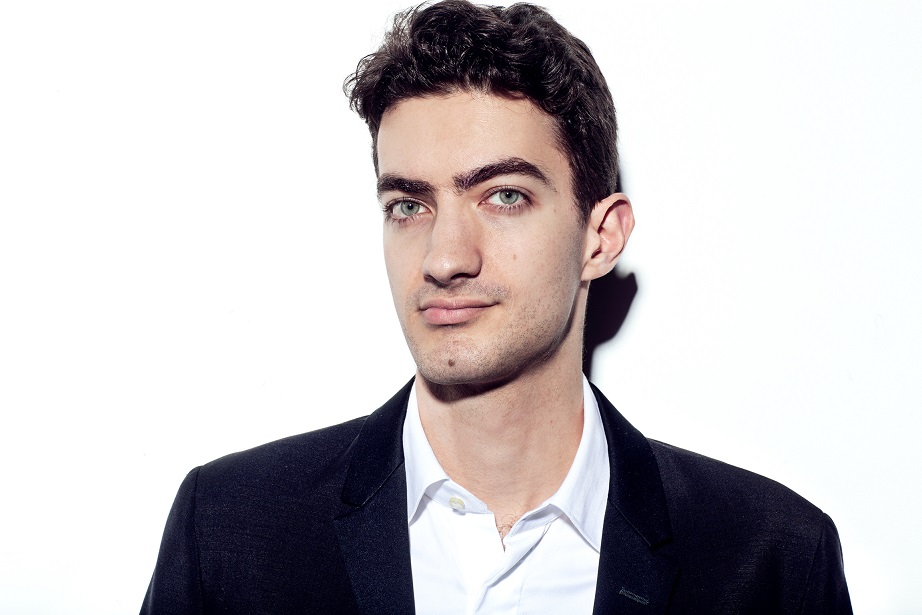
Reviewed by Richard Whitehouse Picture of Stephen Waarts (c) Maarten Kools

Seriously disrupted as it was by the pandemic and attendant lockdowns, the period of Mirga Gražinytė-Tyla as music director of the City of the Birmingham Symphony Orchestra (2016-22) was a successful one, especially in terms of bringing unfamiliar music to the orchestra’s repertoire.

Not least that by Mieczysław Weinberg, his Fifth Symphony tonight receiving only its second UK hearing, almost 63 years after Kiril Kondrashin and the Moscow Philharmonic had given it at the Royal Festival Hall while on tour. Weinberg was unable to attend and the performance attracted minimal comment, but the Fifth is arguably the greatest among his purely orchestral symphonies – a work whose size and scope had merely been hinted at by its predecessors. Six decades on and those qualities confirming its significance then still ensure its relevance today.

The influence of Shostakovich’s Fourth Symphony, written over a quarter century earlier but premiered just months before, has often been noted but whereas this piece is inclusive to the point of overkill, Weinberg’s Fifth has a formal rigour and expressive focus as could only be that of full maturity. Not least in the moderately-paced opening Allegro, its content deriving from the pithy motifs on lower strings and trumpet heard against oscillating chords on upper strings at the outset, and which builds to a febrile culmination before retreating into agitated uncertainty. MGT has its measure as surely as that of the ensuing Adagio, its threnodic string writing palpably sustained prior to a heartfelt climax; either side of which, woodwind comes into its own in a slow movement comparable to that of Shostakovich’s own Fifth Symphony.

Playing without a pause, the latter two movements consolidate the overall design accordingly. Thus, the scherzo-like Allegro alternates furtive anticipation and barbed anger with a dextrous virtuosity that found the CBSO at its collective best – subsiding into a finale whose Andantino marking rather belies the purposefulness with which it elaborates on earlier ideas as it builds towards a searingly emotional apex. Once again, however, the music winds down into a coda whose rhythmic pulsing underpins resigned solo gestures at the close of this eventful journey.

Whether or not Brahms’s Violin Concerto was an ideal coupling, it certainly received a most impressive reading by Stephen Waarts (above). Winner of the 2014 Yehudi Menuhin International and 2015 Queen Elizabeth competitions, this was his debut with the CBSO but there was no lack of rapport – not least an imposing first movement whose technical challenges were assuredly negotiated and with a rendering of the Joachim cadenza that integrated it seamlessly into the overall design. Waarts’ interplay with woodwind in the Adagio was never less than felicitous, then the finale pivoted deftly between panache and insouciance on its way to a decisive close. MGT was as perceptive an accompanist as always, with an encore of the opening ‘L’Aurore’ movement from Eugène Ysaÿe’s Fifth Solo Sonata an appropriate entrée into the second half.

Ultimately, though, this concert was about MGT’s continued advocacy of Weinberg as of her association with the CBSO. Good news that the Fifth Symphony has been recorded for future release by Deutsche Grammophon, so enabling this fine performance to be savoured at length.

For details on the 2025-26 season, Orchestral music that’s right up your street!, head to the City of Birmingham Symphony Orchestra website. Click on the names to read more about soloist Stephen Waarts and conductor Mirga Gražinytė-Tyla, or composer Mieczysław Weinberg

Published post no.2,564 – Saturday 14 June 2025

In concert – Quatuor Danel: Shostakovich & Weinberg #10 @ Wigmore Hall

Quatuor Danel [Marc Danel & Gilles Millet (violins), Vlad Bogdanas (viola), Yovan Markovitch (cello)]

Weinberg String Quartet no.14 in B flat minor Op.122 (1978)
Weinberg String Quartet no.15 in G flat major Op.124 (1979-80)
Shostakovich String Quartet no.14 in F sharp major Op.142 (1972-3)

Wigmore Hall, London
Tuesday 6 May 2025

by Richard Whitehouse Photo (c) Marco Borggreve

Quatuor Danel’s interrelated cycle of string quartets by Shostakovich and Weinberg reached its penultimate stage this evening, and a programme with two of the latter composer’s most oblique such pieces heard alongside what is the most accessible of the former’s late quartets.

Second in a quartet of quartets written in the years after Shostakovich’s death, Weinberg’s Fourteenth Quartet continues straight from the sombre equivocation of its predecessor. Its five continuous movements never progress systematically as lurch forwards from an edgily austere first movement, by way of a moodily impassive successor, then on to a scherzo and intermezzo that are not so much elusive as gnomic in character; prior to a finale where any attempt at overall synthesis gradually subsides to leave only the wanly resigned conclusion. An ending, moreover, whose fatalism feels the more dismaying as it withdraws into virtual silence, as if Weinberg’s self-communing may well be a defence or even escape. As with its successor, his replacing tempo headings with metronome markings only abets obfuscation.

The Fifteenth Quartet might appear relatively less stark in outcome yet is certainly the most radical of all these works in formal design. Its nine mainly brief movements are interpretable in various ways – but a speculative sonata design is implied by the aggressive ‘development’ of the central three movements as framed by respectively angular and thrusting ‘transitions’; surrounded in turn by a two-stage ‘exposition’ of almost secretive inwardness which is itself balanced by a ‘reprise’ whose incrementally more direct expression facilitates that eventual, albeit tenuous sense of closure. Other approaches are entirely plausible, though there was an undeniable culmination imparted to those middle movements as the Danel steered its secure course through this fascinating if always disconcerting instance of Weinberg’s later maturity.

After such obliquities, the seeming directness of Shostakovich’s Fourteenth Quartet was the more affecting, though nothing should be taken at face value at this stage of its composer’s creativity. Allusions to earlier works (his own and others) abound and while the presence of serial elements is reduced next to its predecessors, sparsity of texture ensures a distanced or remote feeling even when this music is at its most active. As is true for most of the opening Allegretto, its lilting poise increasingly fitful as it nears a regretful if still inquisitive close.

By contrast, the central Adagio finds this composer at his most inward and confessional; its content allotted for much of its course to first violin and cello, so affording an austerity into which the eloquence of the ‘Angel Serenade’ by Gaetano Braga is a reminder Shostakovich was at time considering an operatic treatment of Chekhov’s story The Black Monk. The final Allegretto initially brings a more impetuous discourse, but this elides seamlessly into a coda whose pale radiance essentializes the work’s home key in a leave-taking of acute poignancy.

As always, the Danel gave its collective both here and in those miniatures which served as a welcome encore: two pieces from Prokofiev’s Visions fugitives, arranged for string quartet by Sergey Samsonov with a sensitivity for those piano originals as was nothing if not idiomatic.

You can hear the music from the concert below, in recordings made by Quatuor Danel -including their most recent cycle of the Shostakovich quartets on Accentus:

For more information on the final concert in the series, visit the Wigmore Hall website. You can click on the names for more on composer Mieczysław Weinberg and Quatuor Danel themselves.

Published post no.2,528 – Friday 9 May 2025

In concert – English Symphony Orchestra / Kenneth Woods @ Kings Place: Elgar, Truscott, Fribbins, Weinberg & Shostakovich

Laura Jellicoe (flute), Rosemary Cow (bassoon), Rosalind Ventris (viola), English Symphony Orchestra / Kenneth Woods

Elgar Romance in D minor Op.62 (1910)
Truscott Elegy in E flat major (1944) [London premiere]
Fribbins Folk Songs (2022) [London premiere]
Weinberg Flute Concerto no.1 in D minor Op.75 (1961)
Shostakovich arr. Barshai Chamber Symphony in A flat major Op.118a (1964, arr. 1971)

Kings Place, London
Sunday 23 March 2025

Reviewed by Richard Whitehouse

What has become the English Symphony Orchestra’s annual appearance in London Chamber Music Society’s season saw an appealing programme of (relatively) familiar and (relatively) unfamiliar British and Soviet-era music as wide ranging as it had been carefully assembled.

It cannot often have begun a concert, but the Romance that Elgar wrote for bassoonist Edwin James made an attractive entrée – its pathos and eloquence fully conveyed by ESO principal Rosamary Cow, always heard to advantage against the strings’ warmly ruminative backdrop.

Harold Truscott finished only three works for orchestra, his Elegy for strings the undoubted masterpiece – eliding intuitively between the already burgeoning British lineage with that of Central Europe (Dvořák’s crepuscular Nocturne, heard at last year’s ESO concert, affords an interesting precedent). Despite its major-key grounding, this is music of intense while often anguished emotion – Truscott bearing his soul to a degree he was rarely, if ever, to do again. As in Worcester four seasons ago, Kenneth Woods searched out its every expressive nuance.

Concertante pieces have featured prominently in Peter Fribbins’s output, with Folk Songs the most recent example. Those traditional tunes range widely geographically and expressively – the Prelude drawing on Welsh melody Bugail Yr Hafod (When I was a Shepherd) in soulful restraint, the Fugue on Serbian tune Ajde Jano (C’mon Jana) in animated dexterity, then the Fantasia on Hungarian song Azt gondoltam eső esik (I thought it rains) in elegant profundity. Superbly played by Rosalind Ventris, it makes a welcome addition to a still-limited repertoire.

Hardly less valuable in its own context is the First Flute Concerto by Mieczysław Weinberg. Written for Alexander Korneyev, its modest proportions fairly belie its substance – whether the energetic interplay of its opening Allegro, the deftly understated threnody of its Adagio, or the whimsical humour of an Allegro anticipating numerous Weinberg finales. It was also the ideal showcase for ESO principal Laura Jellicoe to demonstrate her solo prowess, with ESO strings responding ably to what must be among its composer’s most performed pieces.

Dedicated to Weinberg and written over just 11 days, Shostakovich’s Tenth String Quartet is something of a standalone in the composer’s cycle – coming between four innately personal quartets and four dedicated to each member of the Beethoven Quartet. Yet it is music no less focussed in intent and Rudolf Barshai’s arrangement for string orchestra defines its character more markedly – not least the winsome ambivalence of its initial Andante or visceral force of its ‘furioso’ scherzo, the ESO players tackling those fearsome rhythmic unisons head on. The cellos came into their own with the emotionally restrained variations of the Adagio before, its link seamlessly effected, the final Allegretto built methodically if inexorably to a heightened restatement of the passacaglia’s theme before tentatively retracing its steps to a wistful close.

An impressive demonstration overall of the ESO’s prowess and, moreover, the ideal way to close 17 seasons of LCMS recitals at Kings Place. September finds this series relocating to the newly refurbished St John’s Church at Waterloo, ready for a new chapter in its existence.

Visit the English Symphony Orchestra website to read more about the orchestra, and click on the artist names to read more about flautist Laura Jellicoe, bassoonist Rosemary Cow, viola player Rosalind Ventris and conductor Kenneth Woods. Click also to read more on composers Peter Fribbins and Harold Truscott

Published post no.2,483 – Monday 24 March 2025