On Record – Sarah Leonard, Xue Wei, BBCSO & BBCSSO / Martyn Brabbins – Naresh Sohal: Lila & Violin Concerto (Heritage Records)

Naresh Sohal
Lila (1996)
Violin Concerto (1986)

Sarah Leonard (soprano), BBC Symphony Orchestra / Martyn Brabbins (Lila)
Xue Wei (violin), BBC Scottish Symphony Orchestra / Martyn Brabbins (Violin Concerto)

Heritage HTGCD133 78’40”
Remastering Paul Arden-Taylor

Live performances at BBC Broadcasting House, Glasgow on 24th October 1992 (Violin Concerto); Royal Festival Hall, London on 13th October 1996 (Lila)

Reviewed by Richard Whitehouse

What’s the story?

Heritage follows up its earlier release of Naresh Sohal with this coupling of major orchestral works, both of them heard in their premiere performances.

What’s the music like?

By the 1990s, Sohal was a well-respected if not regularly played figure. Both these works demonstrate his compositional versatility while being wholly characteristic of his maturity. They were also written before and after his move from Edinburgh to London; having spent more than a decade in the Scottish capital, during which period he embarked on numerous multi-media pieces, he subsequently found himself drawn anew to the Punjabi and Bengali writers whose work frequently informed his compositions over the ensuing quarter-century.

Written a decade apart, these works could hardly be more different in their nominal concerns. At just under half an hour, the Violin Concerto may appear to be firmly within the lineage of such pieces from the Classical and early Romantic eras yet its three movements are hardly, if at all, beholden to precedent. That each is faster as to its underlying pulse than the one before, what one might loosely call an ‘Andante-Allegretto-Allegro’ progression, is less notable than the transformation of ideas and texture from one to the other; resulting in an overall sequence as convinces in its formal discipline and beguiles in its expressive immediacy. Its inhabiting a neo-Romantic world (with significant precursors by David Blake and H. K. Gruber) does not detract from the individuality and sheer attractiveness of Sohal’s contribution to this medium.

By contrast Lila, it title a Sanskrit term for the play of Nature, is the representation in music of the seven stages of development, in yogic philosophy, from the earthbound to the cosmic. That each of these can be linked to a specific colour, sound and elemental force might imply a multi-media presentation, and one as integrated music with dance and lighting was initially planned, but the work succeeds admirably on its own terms as it traverses seven continuous while increasingly shorter sections with its transformation of salient motifs never less than audible. There is no ultimate climax, yet the passing from ‘Consciousness’ to ‘Yoga’ could   be heard as a culmination; after which – this final section is graced with a soaring vocalise, here the late Sarah Leonard in what was a no doubt unintentional but appropriate memorial.

Does it all work?

Yes, once one has grasped the basis of Sohal’s compositional thinking via the essence of what   he was seeking to convey. It helps that both these performances are fully attuned to his idiom – Xue Wei evincing no indecision or uncertainty in the Violin Concerto, and Martyn Brabbins (who replaced an indisposed Andrew Davis for the first rendition of Lila) securing committed playing from the BBC Symphony and the BBC Scottish Symphony orchestras. Any future performances could hardly hope for more persuasive guides when approaching these pieces.

Is it recommended?

Very much so. Paul Arden-Taylor has once again done a fine job in remastering the original broadcasts while Suddhaseel Sen’s annotations, with a biographical note by Janet Swinney, provide all the relevant background. Further releases from this source will hopefully follow.

Listen / Buy

You can explore purchase options at the Heritage Records website

For more on the artists featured, click on the names to read more about Sarah Leonard, Xue Wei, the BBC Symphony Orchestra, BBC Scottish Symphony Orchestra and conductor Martyn Brabbins, and composer Naresh Sohal

Published post no.2,630 – Monday 18 August 2025

On Record – Naresh Sohal: Complete Piano Music (Konstantinos Destounis) (Toccata Classics)

Naresh Sohal
A Mirage (1974)
Chakra (1979)
Prayer (2006)
Tsunami (2007)
Piano Trio (1988)

Konstantinos Destounis (piano); Cristina Anghelescu (violin), Adrian Mantu (cello), Mark Troop (piano) (Piano Trio)

Toccata Classics TOCC0689 [56’30”]
Producers and Engineers Konstantinos Destounis and Bobby Blazoudakis, Peter Waygood (Piano Trio)

Recorded 18 January 2022 at Dmitris Mitropoulos Hall, Athens; 1-3 June 2001 at Gateway Studio, Kingston-upon-Thames

Reviewed by Richard Whitehouse

What’s the story?

Toccata Classics issues the first of a likely series devoted to chamber and instrumental music by Naresh Sohal, featuring all those acknowledged pieces for solo piano along with his Piano Trio, on a release that also continues the posthumous rehabilitation of this significant figure.

What’s the music like?

Although he composed sparingly for the medium, the piano pieces Sohal did write afford an overview of how his music evolved across three decades. Primarily this involved an active as well as frequently confrontational exploration of more radical tendencies in post-war music, resulting in a distinctive while personal synthesis which the composer duly refined and made more pliable with what came after. Those later pieces are not necessarily simpler technically or expressively, yet they convey their essential concerns with greater clarity and immediacy.

At the time of A Mirage, Sohal was still preoccupied with aspects of a European avant-garde he encountered on arrival in the UK some 12 years earlier. Hence the influence of Xenakis in its tendency toward registral extremes and stratified figuration which coalesce more through gestural force than motivic logic. This is already changing in Chakra, which likewise unfolds as an arch but now with a tangible sense of resolution at its apex – though little prepares one for the sudden upsurge at its close after a definite subsiding of tension across the latter stages.

Moving on almost 30 years and Prayer demonstrates a more methodical amalgam of formal means towards expressive ends, though there is nothing at all reactionary about the outcome – whether in the unforced eloquence of its initial Adagio or the fluid interplay of its ensuing Allegretto as it pursues an increasingly intricate and eventful course. A piece titled Tsunami might lead one to expect a headlong discourse, but Sohal’s study is far more controlled and understated by evoking this natural phenomenon in all its awesome and destructive majesty.

Although it comes nearer chronologically to the former group of pieces, the Piano Trio might well be the latest work here as regards overall elaboration. Thus, its three continuous if well-defined sections outline an active process of thesis, antithesis then synthesis which is audible at every stage, though here the evolution is one of a constantly increasing velocity towards a violent or even tragic denouement. Immersed in Indian philosophy as he was, Sohal was only too aware of those darker and negatory forces which are to be found at all levels of existence.

Does it all work?

Yes, in that Sohal’s is a powerful and flexible musical idiom that predicates communication of emotion over theoretical consistency. A quality always to the fore in these accounts of the piano pieces – Konstantinos Destounis searching out their imaginative reserves without ever falling short of their frequently considerable technical demands. Neither is there any lack of insight or commitment in that of the Piano Trio which, in terms of compactness and overall immediacy, is an ideal way into this composer’s language at its most characteristic or potent.

Is it recommended?

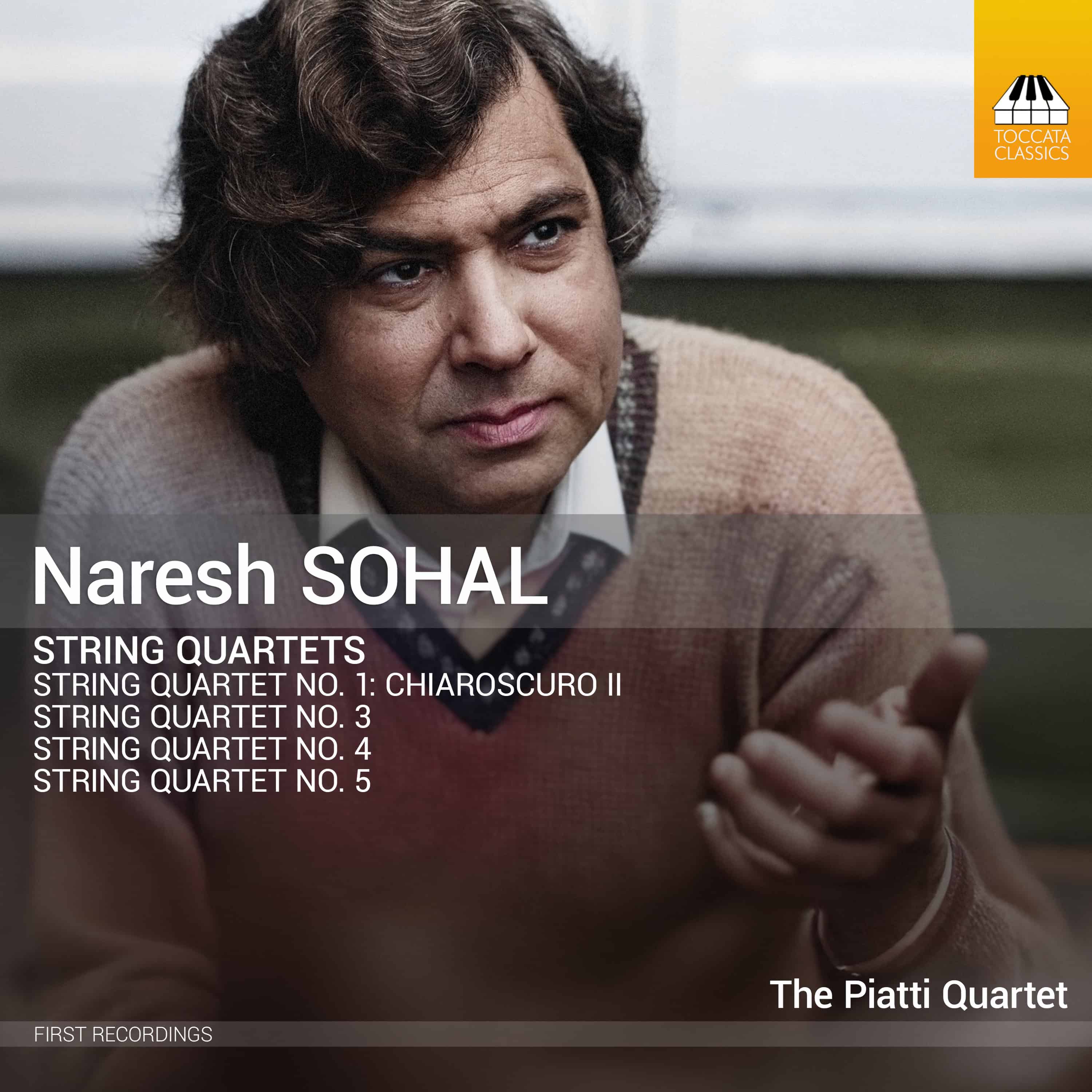
Indeed. The sound accorded Destounis is almost ideal in its clarity and definition, though the Piano Trio is rendered at a slightly oblique perspective. Informative notes on life and music, and good news that a follow-up release of Sohal’s string quartets should soon be available..

Listen & Buy

For purchase options, you can visit the Toccata Classics website. Click on the names to read more about pianist Konstantinos Destounis and composer Naresh Sohal.

Published post no.2,500 – Thursday 10 April 2025

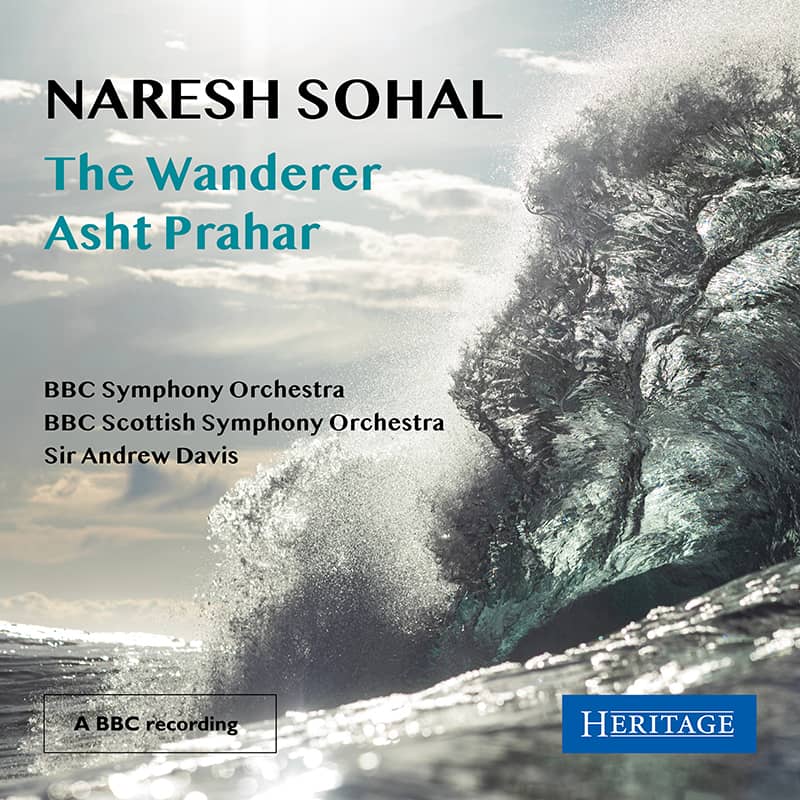
On Record – BBC SSO & BBC SO / Sir Andrew Davis – Naresh Sohal: The Wanderer & Asht Prahar (Heritage)

Naresh Sohal
Asht Pradar (1965)
The Wanderer (1982)

Jane Manning (soprano), BBC Scottish Symphony Orchestra (Asht Pradar), David Wilson-Johnson (baritone), BBC Symphony Chorus and Orchestra (The Wanderer) / Sir Andrew Davis

Heritage HTGCD135 [77’36”] English text included
Remastering Engineer Paul Arden-Taylor

Broadcast performance from BBC Studios, Glasgow on 6 January 1973 (Asht Pradar); live performance from Royal Albert Hall, London on 23 August 1982 (The Wanderer)

Reviewed by Richard Whitehouse

What’s the story?

Heritage issues what will evidently be an ongoing series of archival releases devoted to the music of Naresh Sohal, taken from BBC sources and featuring performers who championed his work over a career whose achievement is not reflected in the availability of recordings.

What’s the music like?

Although he came belatedly to the UK, Sohal (1939-2018) rapidly made up for any lost time when arriving in London in 1962 (further biographical detail can be found in the booklet note for this release and on the composer’s website). Within three years, he had produced his first major (and latterly his first acknowledged) work. Asht Prahar then had to wait until 1970 for its premiere (at the Royal Festival Hall conducted by Norman Del Mar), but it attracted much favourable attention and led to another hearing three years on – the performance featured here.

Taking its cue from the Indian sub-division of the day into eight temporal units (four each for day and night), Asht Prahar unfolds its eight sections as an unbroken continuity. The sizable forces are, for the most part, used sparingly yet resourcefully; as too the deployment of such devices as quarter-tones, along with influences of Ravel and Stravinsky, in music that makes a virtue of its pivoting between East and West. Cyclical if not necessarily cumulative, its final and longest ‘prahar’ brings wordless soprano and orchestra into tangible and haunting accord.

By the time that The Wanderer received its premiere, Sohal had a number of major works to his credit and rationalized his musical idiom accordingly. Setting an anonymous Anglo-Saxon poem in which the male protagonist speaks movingly and often despairingly of his isolation – both physical and spiritual – after the death of his lord, the work divides into two large parts that expand on the narrative’s emotional import. Such ‘‘existential bleakness’’ is intensified by omission of the poem’s last lines with their invoking a specifically Christian consolation. Despite its more than 50-minute duration, there is nothing discursive or unfocussed about The Wanderer’s content. Much of its text is understandably allotted to the baritone, whose austere character is complemented by darkly rhetorical choral passages while offset by an orchestral component with much soloistic writing (notably for flute) in a texture the more involving for its restraint and its strategic use of colour to define specific incidents or emotional responses. Nor is this an opera-manqué, the work succeeding admirably on its inherently abstract terms.

Does it all work?

It does, allowing for the fact that Sohal is not seeking any overt fusion between Occident and Orient, but rather attempting to forge a personal idiom influenced by both while beholden to neither. Both these performances bear out his convictions, Jane Manning adding her ethereal presence to Asht Prahar and David Wilson-Johnson bringing evident compassion to his more substantial role in The Wanderer. Both works benefit from the insightful presence of the late Sir Andrew Davis, whom one regrets never had an opportunity to record them commercially.

Is it recommended?

It is. The sound of these broadcasts has come up decently in remastering, lacking only the last degree of clarity or definition, and Suddhaseel Sen contributes informative annotations. Those looking for a way into Sohal’s distinctive and alluring sound-world need no further incentive.

Listen & Buy

For purchase options, you can visit the Heritage Records website

Published post no.2,451 – Thursday 20 February 2025