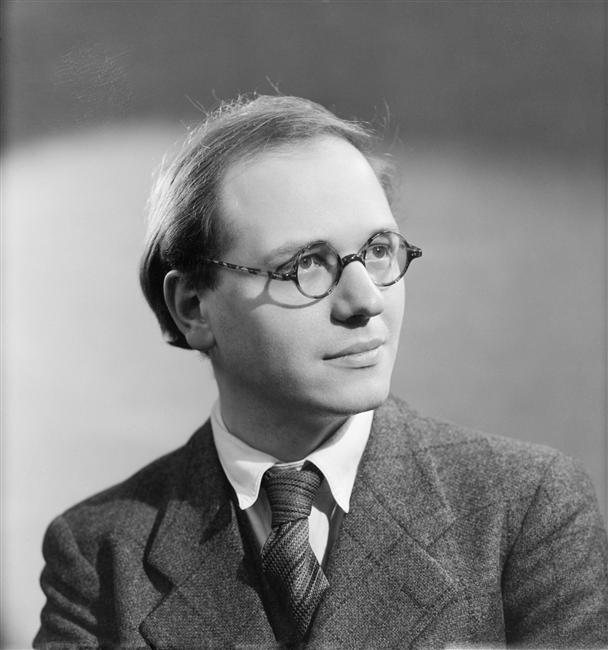
by Ben Hogwood. Image by Studio Harcourt – RMN, used courtesy of Wikipedia
On this day in 1908, the composer Olivier Messiaen was born…which gives Arcana the perfect excuse to post a performance of his remarkable seasonal composition for organ, La Nativité du Seigneur (The Nativity of the Lord or The Birth of the Saviour), completed in 1935.
To quote from my live encounter with the piece in 2019, “Nothing is ever done by halves with this particular French composer, and his response came in the form of a massive, nine-movement organ suite lasting just over an hour. For Messiaen, contemplation is achieved through massive added-note chords, complex rhythms and large structures. Each section in this 1935 work responds to images from the birth of Jesus, and it is one of the composer’s first works to use birdsong melodies and rhythms from India and Ancient Greece.”
You can enjoy the work in concert below, given by Richard McVeigh from York Minster – with the accompaniment of a score showing the organist’s markings:
Published post no.2,744 – Wednesday 10 December 2025
published by Ben Hogwood from the original press release
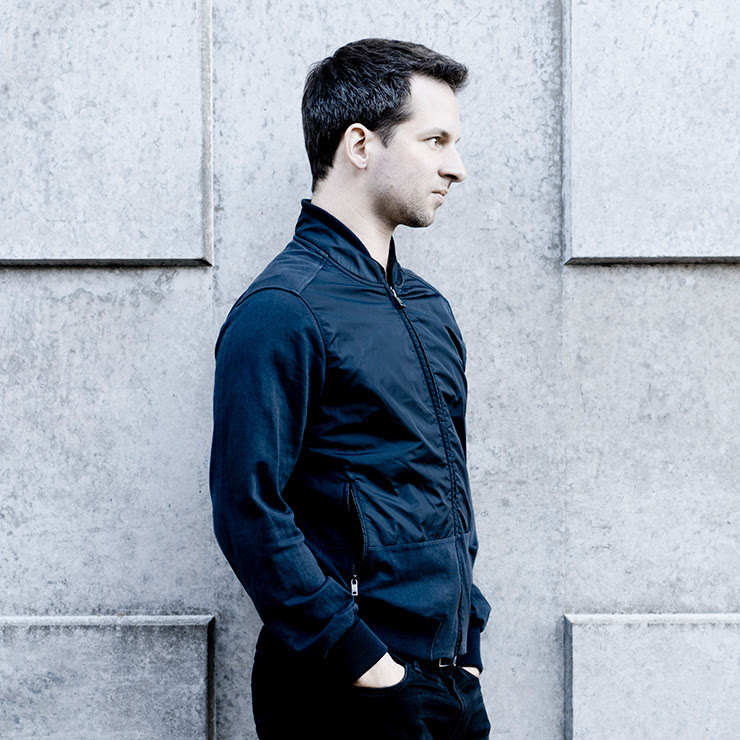
This December, Wigmore Hall focus in on a pianist famed for winning the prestigious Victoires de la Musique Classique award on five separate occasions, most recently in 2022. Described by the Guardian as ‘a remarkable musician, no question’, Chamayou caps off his short residency with an unmissable evening of the complete Ravel pianos works. Before that, the pianist joins forces with the thrilling Belcea Quartet and accompanies soprano Barbara Hannigan for her Wigmore Hall debut.
The programme with the Belcea Quartet on Thursday 4 December is of extra interest, for in addition to Chamayou’s appearance in the rarely-heard Piano Quintet in E major of Erich Korngold, the quartet will mark the 80th anniversary of the world première of Britten’s Second String Quartet at Wigmore Hall.
Chamayou’s programme with soprano Barbara Hannigan is typically adventurous, the pair reaffirming their Messiaen credentials with a performance of the Chants de terre et de ciel, before Chamayou looks at late Scriabin in the form of the Poème-nocturne Op. 61 and Vers la flamme Op. 72, before the two take on John Zorn’s song cycle Jumalattaret, written for Hannigan herself.
Chamayou’s third appearance will see him perform the complete works for solo piano by Maurice Ravel, whose birth in 1875 is being marked with 150th anniversary celebrations this year. The concert begins at 7pm, with the programme as follows:
1875-1937 Prélude Miroirs Menuet in C sharp minor Sonatine A la manière de Borodine Gaspard de la nuit
Interval
A la manière de Chabrier Valses nobles et sentimentales Menuet sur le nom d’Haydn Sérénade grotesque Jeux d’eau Menuet antique Pavane pour une infante défunte Le tombeau de Couperin
For more information on all the Wigmore Hall concerts, click on the links highlighted above.
Published post no.2,730 – Wednesday 26 November 2025
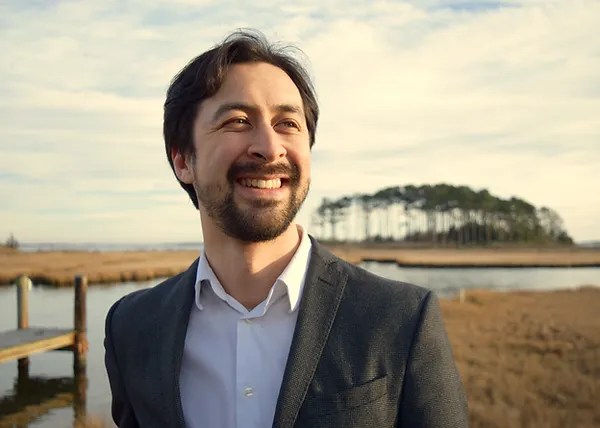
Mark van de Wiel (clarinet, above), Zsolt-Tihamér Visontay (violin), Karen Stephenson (cello), Tom Poster (piano)
Messiaen Quatuor pour le fin du temps (Quartet for the End of Time) (1941)
Royal Festival Hall, London Thursday 7 March 2024 (6pm)
Reviewed by Ben Hogwood Pictures (c) Guy Wigmore (Mark van de Wiel, Zsolt-Tihamér Visontay), Marina Vidor (Karen Stephenson), Elena Urioste (Tom Poster)
The Philharmonia Orchestra’s long-running Music of Today series continued with an opportunity to experience Olivier Messiaen’s 1941 masterpiece. Given its first performance in a German prisoner-of-war camp (in what is now Zgorzelec, Poland), the Quatuor pour la fin du temps – Quartet for the End of Time – was very much a product of circumstances.
The composer, in one of his rare forays into chamber music, had just three instruments available to him, plus himself at the piano. He thrived on the restrictions, using the New Testament book of Revelation as his stimulus to create an eight-movement piece that if anything has grown in stature and relevance with every passing year.
Tonight’s venue may have been a great deal more spacious than the cramped conditions of the premiere, but the quartet here lacked nothing in close-up intimacy, the sizeable audience leaning forward in their seats to engage with the music. Initially it was the piano of Tom Poster (below) that provided a strong foundation, his spacious chords catching the chill of the dawn air in Liturgie de cristal as the other three instruments circled with attractive birdsong, the music awakening softly.
The Vocalise, pour l’Ange qui annonce la fin du temps (Vocalise, for the Angel who announces the end of time) provided a firm reality check, though here too its dramatic lines were clear and spacious rather than combative, the players continuing to find an inner serenity through Messiaen’s writing. Violinist Zsolt-Tihamér Visontay and cellist Karen Stephenson thrived on these long melodic phrases, derived from plainchant.
The emotive centre of this performance was undoubtedly the solo for clarinet, Abîme des oiseaux (Abyss of birds), an incredibly moving soliloquy played with exceptional technique by Mark van de Wiel. Some of the notes started with barely audible attack while others were at the outer limits of his volume in a performance of incredible poise and control. Standing while the other musicians sat, he also let the silences between notes speak as loudly as the phrases themselves, so that even the persistent coughing of the audience was rendered into silence.
The delicate Intermède broughout out the dance elements of Messiaen’s writing, before Stephenson (above) and Poster gave a thoughtful, meditative Louange à l’Éternité de Jésus (Praise to the eternity of Jesus), beautifully played and appropriately reverent. This ensured a vivid contrast with the following Danse de la fureur, pour les sept trompettes (Dance of fury, for the seven trumpets), where the four instruments played their angular melodies with commendable precision.
Fouillis d’arcs-en-ciel, pour l’Ange qui annonce la fin du temps (Tangle of rainbows, for the Angel who announces the end of time) found Visontay (below) to the fore in the audio balance, van de Wiel slightly backward in the mix, before Visontay and Poster led us to the end itself with a radiant Louange à l’Immortalité de Jésus (Praise to the immortality of Jesus). This remarkable piece of music continues to carry a strong impact, and as the two instruments strained at the edge of audibility, Visontay reaching the highest pitch, the sense of arrival was all-consuming.
They put the seal on a memorable performance, one of the more emotive ‘rush hour’ concerts you could wish to hear, and one whose impact was felt far beyond that evening’s orchestral concert.
You can listen to a recording of Quatuor pour le fin du temps below, with Mark van de Wiel and Zsolt-Tihamér Visontay joined by cellist Mats Lidström and pianist Min-Jung Kym on the Psalmus label:
Meanwhile you can find more information on further concerts at the Philharmonia website
Today – Sunday 10 October – is World Mental Health Day.
Rather than post the latest concert review on Arcana, I decided to take some time out to come up with a simple playlist of music I have found helpful to listen to in busy or fraught times.
I have called it Music To Grow To, as it begins with one player (Ravel‘s Menuet antique for piano) and grows to music for two people (Messiaen‘s timeless Louange à l’Éternité de Jesus from his Quatuor pour le fin du temps), then three (Mozart‘s sublime Divertimento for string trio).
Philip Glass‘s restful Company is next, for string quartet, then we switch to wind instruments for the 12-player Serenade by Dvořák, a lovely piece.
Finally a long, contemplative piece that should be experienced live whenever you get the chance! John Luther Adams‘ Become Ocean performs the function of being incredibly immersive, ambient music and it uses the whole orchestra from small beginnings to slow, steady growth.
St John’s Smith Square, Thursday 19 December 2019 (lunchtime)
Messiaen La Nativité du Seigneur (The Nativity of the Lord or The Birth of the Saviour)
Review by Ben Hogwood
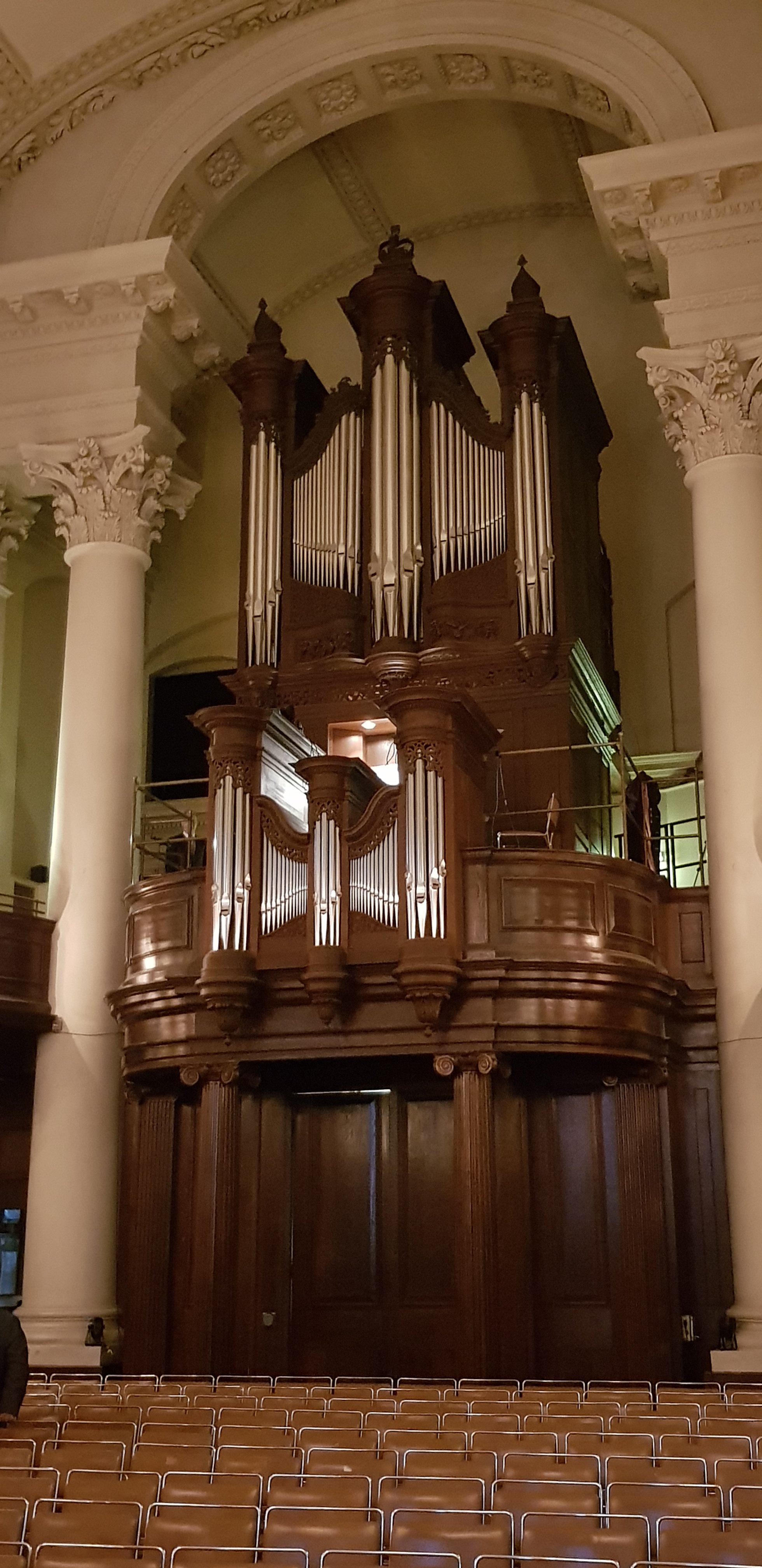
Photo credits Chris Christodoulou (David Titterington), Ben Hogwood (SJSS organ)
Organ recitals can be curiously awkward affairs. The performer will often sit with their back to the audience, playing from a spot in the venue that is nigh on impossible to access. Taking a bow from their stage is fraught with difficulty – in this case a wrong move could lead to an unexpected descent! – and any heroic page turning deeds are done by an unseen accomplice in the dark, on a wing and a prayer (speaking with the cold sweat of experience!)
That said, this was an organ recital of the highest order from David Titterington. The scene was set in St John’s Smith Square, where just around the corner TV crews were covering the state opening of parliament with a security lockdown in place. Here the mood was different but similarly tense, the dank December gloom ensuring the audience were almost in darkness, save for the minimal light of a chandelier.
Yet these circumstances served to draw strong parallels with the very first Nativity. Political unrest, dark times – and in them the arrival of light, acknowledged in Messiaen’s rapturous response to the Biblical tale. Nothing is ever done by halves with this particular French composer, and his response came in the form of a massive, nine-movement organ suite lasting just over an hour. For Messiaen, contemplation is achieved through massive added-note chords, complex rhythms and large structures. Each section in this 1935 work responds to images from the birth of Jesus, and it is one of the composer’s first works to use birdsong melodies and rhythms from India and Ancient Greece.
Taking up the challenge, Titterington – himself the St John’s organ curator – delivered what could only be described as an heroic performance. So much of this music is about creating an atmosphere, and although the elements had combined helpfully it was his choices of registration and phrasing that took us to the next level, securing both a spectacular and reverent performance.
We began with the mottled chords of La vierge et l’enfant (The Virgin and Child) before clipped upper register notes introduced Les bergers (The Shepherds), their tumbling single lines brilliantly executed. Desseins éternels (Eternal designs) had appropriately rich, blanket chords which aided of contemplation and meditation, the subdued lighting helping the cause.
Meanwhile the massive Le verbe (The Word) was a tour de force, with impressive flourishes in the right hand, the structure easily grasped before the probing lines and eventual harmonic stability of Les enfants de Dieu (The Children of God), which ended in mysterious quiet. Titterington then gave superb definition to the complicated treble parts of Les anges (The Angels), with bell-like peals ringing around the church.
The sounds for Jésus accepte la souffrance (Jesus accepts suffering) were brilliantly secured, with a deep growl from the lower reaches of the organ depicting the trials at hand, which were ultimately overcome in brighter sound at the end.
We then contemplated the slowly circling figures of Les mages (The Magi), with a lovely pipe timbre chosen for the second part of the piece, before Dieu parmi nous (God Among Us) brought the house down, a glorious finale that reached a blazing conclusion.
When experienced in this way close to Christmas La Nativité comes alive, its colourful musical prose and richer than rich harmonies preparing us for the feasting in store – but also contemplating the quiet wonder of the festival, the still, peaceful voices that even now strive to remain as a crucial part of the Christian calendar.
Further listening
You can hear Messiaen’s cycle on Spotify below, in a recent recording for the King’s College Cambridge label by Richard Gowers:




 Arcana.fm