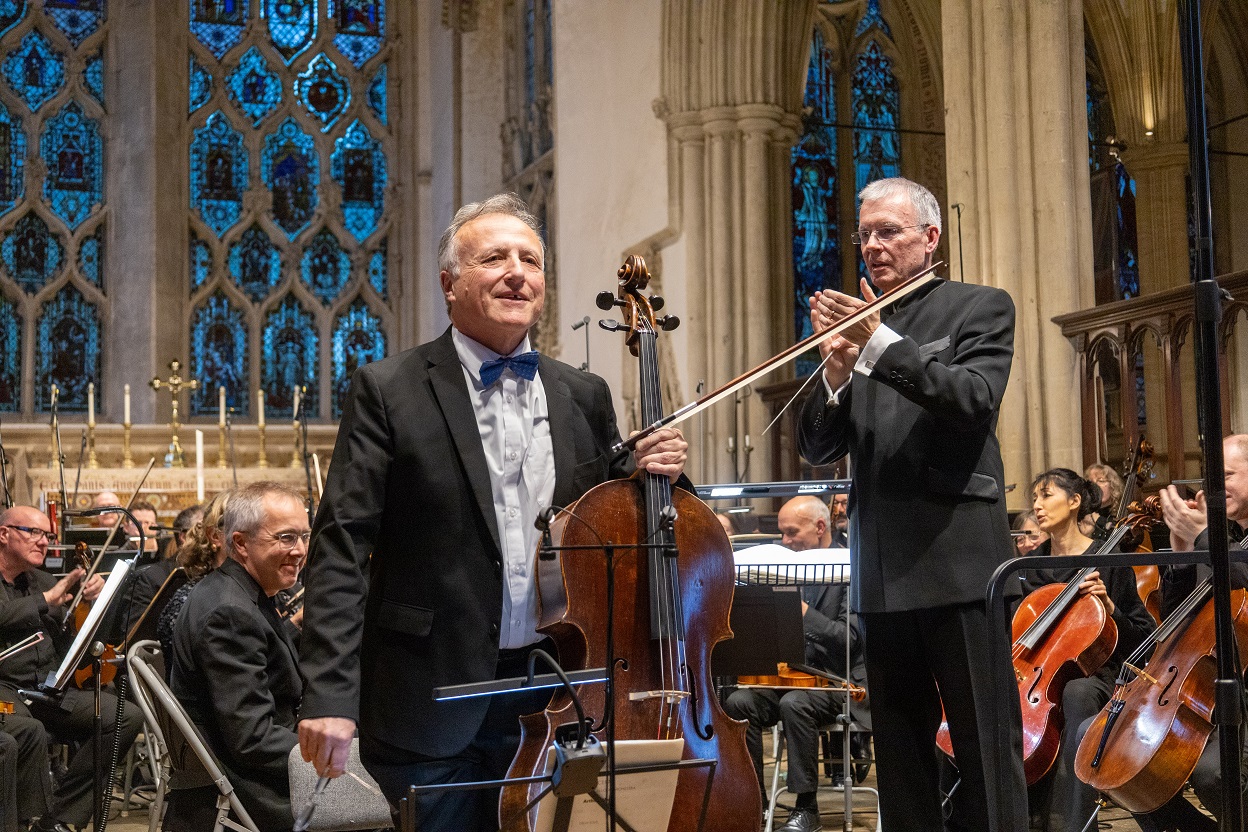
In concert – Raphael Wallfisch, BBC Concert Orchestra / Martin Yates: English Music Festival opening concert – A Night of Bliss

Raphael Wallfisch (cello), BBC Concert Orchestra / Martin Yates

Alwyn The Innumerable Dance – An English Overture (1933)
Delius ed. Beecham A Village Romeo and Juliet – The Walk to the Paradise Garden (1907)
Bliss Cello Concerto F107 (1969-70)
Vaughan Williams Heroic Elegy and Triumphal Epilogue (1901 rev. 1902)
Bate Symphony no.2, Op.20 (1937-39) [World Premiere]

Dorchester Abbey, Dorchester-on- Thames
Friday 24 May 2025

Reviewed by Richard Whitehouse Photos (c) John Francis

The Walk to the Paradise Garden’s filling the expanse of Dorchester Abbey can only mean the English Music festival was again underway, Martin Yates drawing a response from the BBC Concert Orchestra that exquisitely conveyed the acute pathos of Delius’s operatic interlude.

This opening concert had begun with another reclamation from William Alwyn’s early output. Offshoot of his early fascination with William Blake, The Innumerable Dance is more a tone poem than overture – ‘English’ or otherwise. Its initial phase crescendos in a potent evocation of sunrise, and if the livelier music that follows sounds comparatively anodyne, its finesse of instrumentation (with harp and celesta much in evidence) and its formal deftness made for a welcome revival. How about including Alwyn’s Second or Fifth Symphonies at a future EMF?
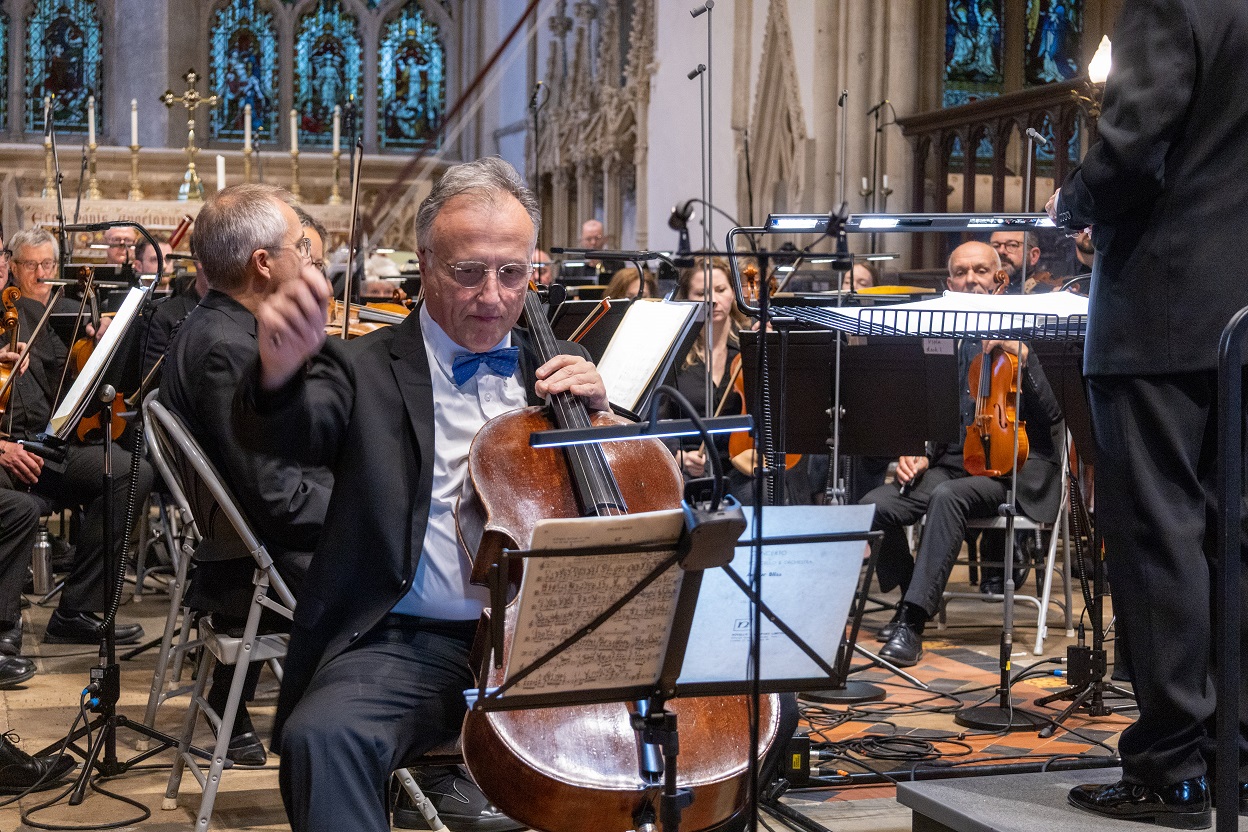
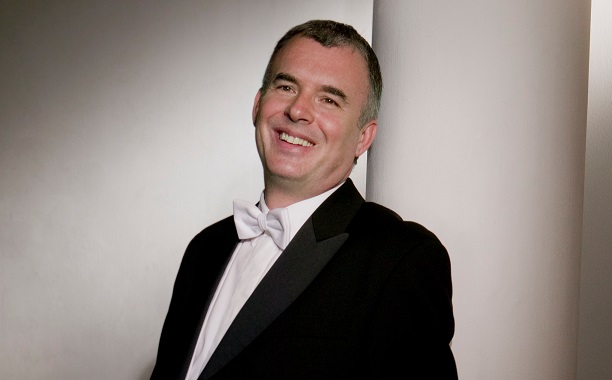
Arthur Bliss has enjoyed a veritable upsurge of performances in this 50th anniversary of his death, with his Cello Concerto among the finest works from that creative Indian Summer of his last decade. Compared with those for piano and violin before it, it eschews Romantic-era trappings in favour of Classical lucidity and proportion; its initial Allegro as much impulsive as decisive in its unfolding, with a semi-accompanied cadenza for its development in which Raphael Wallfisch (above) dovetailed effortlessly with orchestra. Subdued and poignant, the central Larghetto doubtless draws on the distant past in its heartfelt rumination, and while the final Allegro seems to dispel such memories, its progress is shot through with an ambivalence as makes the closing exchanges less than conclusive. Not least in this persuasive performance.

After the interval, another worthwhile revival in Heroic Elegy and Triumphal Epilogue with which Vaughan Williams, then in his late twenties, sought eminence among his peers. Only the first part, its fatalistic tread underpinning an eloquent theme on horns, was played at the time – the composer likely unsure if those episodic build-ups and rhetorical overkill of what follows were justified. Thanks to Yates’s assured direction, this music sustained itself up to a fervent apotheosis presaging the first movement from Sinfonia Antarctica half a century on.
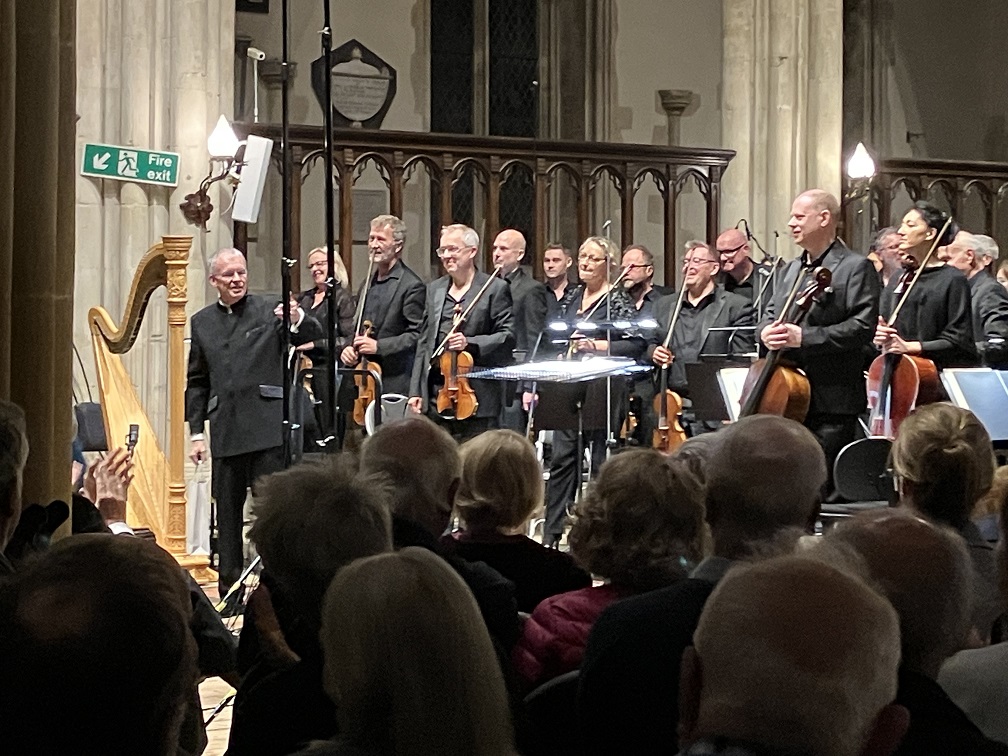
Yates has always sought to include a world premiere in his EMF concerts and tonight saw that of Stanley Bate’s Second Symphony. A composer who rather snatched defeat from the jaws of victory, he doubtless had high hopes for a piece written in Paris and London but not accepted (if indeed it was ever put forward) for performance. Shostakovich’s Fifth has been suggested as precursor but a more likely precedent is VW’s Fourth, not least with the fractious progress of an Allegro whose starkly contrasted themes build towards a combative development then resigned coda. Sombre and fatalistic with a powerfully wrought culmination, the Andante is its highlight and the ensuing Scherzo puts the rhythmic syncopation of that in Walton’s First to very different if hardly less effective ends (which have been even more so placed second).

If it fails to clinch the whole, the finale’s alternately baleful expression and propulsive motion secures a rousing peroration then a coda which, if its serenity is borne out of exhaustion rather than affirmation, fittingly ends a work whose motto might well be that of ‘travelling in hope’.

Published post no.2,544 – Sunday 25 May 2025
In concert – The London Chorus and New London Orchestra / Adrian Brown: VE Day 80th Anniversary Concert @ Holy Trinity Church, Sloane Square

Petroc Trelawny (orator), The London Chorus, New London Orchestra / Adrian Brown

Vaughan Williams Six Choral Songs (1940)
Martinů Memorial to Lidice (1943)
Walton Spitfire Prelude and Fugue (1942)
Bliss Morning Heroes (1929-30)
Holst/Rice I Vow to Thee My Country (1921)

Holy Trinity Church, Sloane Square, London
Thursday 9 May 2025

Reviewed by Richard Whitehouse

The London Chorus and New London Orchestra have put on notable concerts in recent years, few more ambitious than this programme to mark not merely the 80th anniversary of Victory in Europe Day but also the 50th anniversary of Sir Arthur Bliss’s death in appropriate manner.

The first half comprised an unlikely but effective sequence of pieces written at the start of or during the Second World War. Rarely revived as such, Vaughan Williams’s Six Choral Songs to be Sung in Time of War works well as a whole: settings of Shelley that touch on aspects of courage, liberty, healing, victory, then pity, peace and war – before A Song to the New Age characterizes its utopian leanings in subdued and even ambivalent terms which seem typical of its composer. Suffice to add that the London Chorus had the full measure of its aspiration.

Two succinct if otherwise entirely different pieces brought out the best from the New London Orchestra. Rarely so overt in emotion, Martinů was well-nigh explicit when commemorating Nazi atrocities in music of plangent harmonies and chorale-like fervency both evocative and affecting. Derived from his score to the film The First of the Few, Walton had come up with a showpiece whose ceremonial prelude is vividly countered by its incisive fugue – making way for a brief if poignant interlude before matters are brought to a head in the rousing peroration.

Although intimately bound up with the First World War, Morning Heroes is wholly apposite for the present context. Conceived as the exorcism of his wartime experiences, Bliss’s choral symphony elides deftly between a distant past and its present; the first of its five movements featuring an orchestral introduction to set out the underlying mood and salient motifs, before Hector’s Farewell to Adromache had Petroc Trelawny eloquently evoking that scene on the ramparts of Troy without excess rhetoric. Adrian Brown’s understated direction meaningfully pointed up the expressive contrast between this and The City Arming – the setting of Walt Whitman whose interaction of chorus and orchestra was powerfully sustained right through   to the simmering unease at its close, with the onset of hostilities in the American Civil War.

The two parts of the central movement saw each section of the London Chorus come into its own: the women in Vigil, a confiding take on lines by Li-Tai-Po (Li Bai) such as relates the emotions of those left behind; and the men in The Bivouac’s Flame, plangently evoking life at the front with further lines from Whitman’s Drum Taps. Choral forces reunite in Achilles Goes Forth to Battle, a setting from later in The Iliad which brings about the work’s climax via The Heroes – a rollcall commemorating those of Antiquity. After this, the starkness of Wilfred Owen’s Spring Offensive is the greater for its sparse accompaniment – Trelawny’s oration a model of understatement as this segued into the setting of Robert Nichols’s Dawn on the Somme with those ‘morning heroes’ themselves evoked affirmatively if fatalistically.

A concert which ended in fine style with Holst’s stirring anthem had begun in subdued fashion with Dawn on the Somme – Ronald Corp’s elegy, given hours after his death was announced. Someone who had always given his all to this chorus and orchestra, he will be greatly missed.

Ronald Corp OBE (1951-2025)

Published post no.2,530 – Sunday 11 May 2025

English Music Festival – Opening concert on 23 May 2025, with world premiere of Stanley Bate’s Symphony no.2

From the official press release:

There have been many significant first performances at the English Music Festival’s opening concert over the years and this year sees the BBC Concert Orchestra give the much-anticipated World Première of the Symphony no.2 by Stanley Bate (1911-1959); another outstanding student from the Royal College of Music, whose teachers included Ralph Vaughan Williams, R.O. Morris, Gordon Jacob, and Arthur Benjamin.
 
Stanley Bate’s prolific but vastly neglected output is overdue for re-evaluation and his works although being gradually recorded have yet to find a place in the concert hall. Symphony no.2 op.20 was completed in the spring of 1939, but the work appears to have been withdrawn by the composer without ever having achieved a performance.
 
Bate’s wife and fellow-composer, Peggy Glanville-Hicks, claimed her husband wrote a dozen or more symphonies and thirty or so piano sonatas. Often writing ‘en voyage’, Bate’s idiom can be dramatic and turbulent contrasting with interludes of exuberance, beauty and lyricism.

Anyone who knows Martin Yates’ recordings for Dutton will be familiar with the composer’s work. “Stanley Bate’s Symphony no.2 is, I think, going to be a revelation”, says Martin Yates. “He clearly was influenced by other composers working at the time, but he really did achieve something remarkable and individual with some of his works including this symphony. From the opening it explodes with tension. It is going to be incredible to hear it for the first time as it bursts into the world!”
 
Dedicated “To Mstislav Rostropovich with admiration and gratitude”, Arthur Bliss’ Cello Concerto is scored for small orchestra with the addition of harp and celesta. Heroic in character with ‘Quixotic’ flourishes and a soulful slow movement; according to Bliss, “There are no problems for the listener – only for the soloist!”
 
“The Arthur Bliss Cello Concerto is the most wonderfully crafted work, and I can’t understand its neglect”, says Martin Yates. “I know there is a lot of music that one could say that about, but Bliss really was a consummate musician and this concerto, written very late in his life, has a real lightness, yet depth that is utterly captivating and profound. It has a devastatingly difficult solo part with beautifully balanced orchestrations for a Mozart sized orchestras with the addition of a Celeste.”
 
The two works are performed alongside Ralph Vaughan Williams’ ‘trombone piece’, his Heroic Elegy and Triumphal Epilogue; a student work dating from 1901, which drew praise from his teacher Stanford who, according to the composer’s wife Adeline, chose the title for the piece. It remained unheard until a revival by the recording label, Dutton. Works by Delius and Alwyn complete the programme.

FURTHER INFORMATION AND HOW TO BOOK
 
Tickets are on sale from the website and by means of a postal booking form. Tickets for individual concerts will also be available at the door, subject to availability. Full Festival and Day Passes are also available. Programme and booking information is available on the EMF website

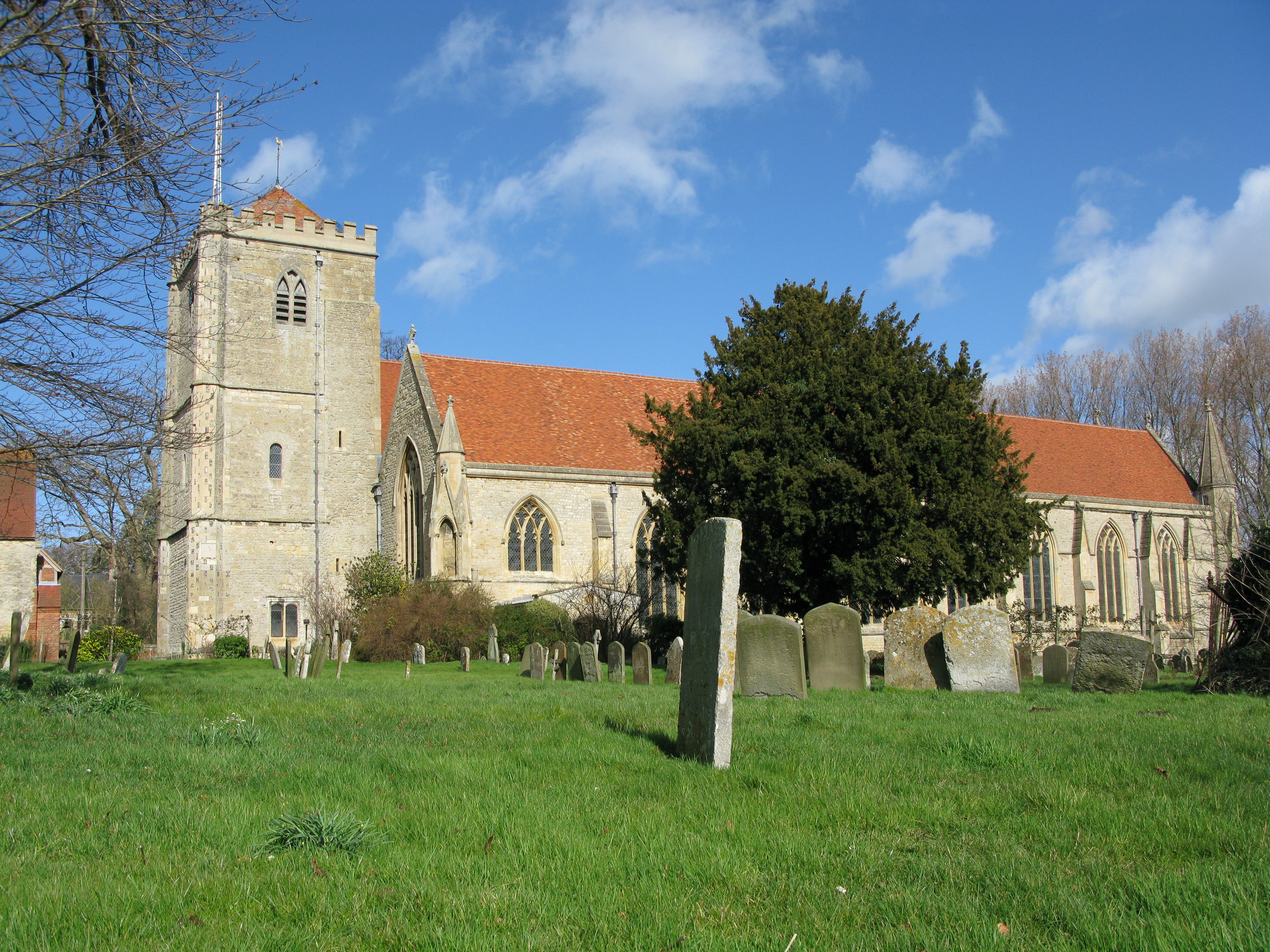
Dorchester Abbey (above) is the venue for the duration of the long weekend with talks taking place in the Village Hall as well as a Festival Lunch (pre-booking required). A dedicated mini-bus shuttle operates to/from Didcot Parkway rail station – bookings should be made via the website on publication of the timetable.

FRIDAY 23 MAY 2025
19:30 Dorchester Abbey, Oxfordshire
ENGLISH MUSIC FESTIVAL OPENING CONCERT
William Alwyn: The Innumerable Dance: An English Overture
Frederick Delius: The Walk to the Paradise Garden
Sir Arthur Bliss: Cello Concerto
Ralph Vaughan Williams: Heroic Elegy and Triumphal Epilogue
Stanley Bate: Symphony no.2 (World Premiere)
BBC Concert Orchestra
Martin Yates (conductor)
Raphael Wallfisch (cello)

Published post no.2,524 – Tuesday 6 May 2025

In concert – Peter Donohoe, RPO / Brabbins: Elgar ‘Enigma’ Variations; Bliss Piano Concerto; Vaughan Williams @ Cadogan Hall

Peter Donohoe (piano, above), Royal Philharmonic Orchestra / Martyn Brabbins (below)

Vaughan Williams Five Variants of Dives and Lazarus (1939)
Bliss Piano Concerto in B flat major Op.58 (1938-9)
Elgar Variations on an Original Theme Op.36 ‘Enigma’ (1898-9)

Cadogan Hall, London
Wednesday 16 April 2025

Reviewed by Richard Whitehouse Pictures (c) Andy Paradise

June 1939 saw one of the more memorable occasions for British music with several premieres at the World’s Fair of New York, this multi-day festival with its theme of ‘Building the World of Tomorrow’ thrown into ironic relief given the outbreak of war in Europe three months later.

The first half of tonight’s concert by the Royal Philharmonic Orchestra duly replicated that on June 10th, beginning with Five Variants of Dives and Lazarus which Vaughan Williams wrote for the event. One of the few non-symphonic orchestral works from his later years, its scoring for divided strings and harp gives a warmly evocative context to this succession of paraphrases whose steadily unforced evolution is rounded off by one of its composer’s most radiant codas. Various solo passages provided the RPO’s section-leaders with their moment in the spotlight.

That concert 85 years ago continued with the Piano Concerto that Arthur Bliss had written for Solomon which enjoyed frequent revival over the next quarter-century. This 50th anniversary of its composer’s death provided an ideal opportunity to reassess a work conceived within the late-Romantic lineage, notably an opening movement whose thunderous initial gestures set in motion this large-scale sonata design whose overt rhetoric is tempered by an expressive poise and more ambivalent asides which make it anything but the epigone of an already bygone era.

Among a few present-day pianists to have this piece in his repertoire, Peter Donohoe tackled its many technical challenges head-on; the RPO and Martyn Brabbins (who had never before conducted it) overcoming some occasional moments of mis-coordination so as to present it to best advantage. He brought a lighter touch and no little emotional poise to bear on the central Adagietto, its inwardness carried over into a finale whose probing introduction was a perfect foil to the bravura that followed. Whatever qualms Bliss may have had regarding the ‘world situation’, there was little sense of doubt as the music surged to its emphatic and affirmative close – thereby setting the seal on this memorable performance and a work which, whatever it lacks in distinctive invention, vindicates Bliss’s overall ambition to an impressive degree.

A pity that logistics (and economics!) made revival of Bax’s Seventh Symphony, which had originally featured in those New York concerts, impracticable but hearing Brabbins direct so perceptive an account of Elgar’s Enigma Variations was no hardship. Perhaps because of the immediacy of the Cadogan Hall acoustic, it was also one in which the relatively brief livelier variations came into their own – hence the unbridled impetus of the fourth (W.M.B), seventh (Troyte) or 11th (G.R.S) variations, though there was no lack of eloquence in the first (C.A.E) and fifth (R.P.A) variations, or suffused fervour in the ninth (Nimrod). The 10th (Dorabella) variation was made into an intermezzo halting if whimsical, and the 13th became a romanza such as opened out this work’s expressive remit onto an altogether more metaphysical plane.

Those having heard Brabbins conduct this work in the Royal Albert Hall quite likely missed that organ-reinforced opulence afforded the 14th (E.D.U) variation yet, as this finale built to its triumphal conclusion, the unfailing conviction of this performance could hardly be denied.

For details on their 2024-25 season, head to the Royal Philharmonic Orchestra website. Click on the artist names to read more about pianist Peter Donohoe and conductor Martyn Brabbins, and also to discover more on The Arthur Bliss Society

Published post no.2,509 – Monday 21 April 2025

In concert – Best of British @ Royal Birmingham Conservatoire

Recital Hall, Royal Birmingham Conservatoire, Birmingham
Monday 17 & Tuesday 18 February 2025

Reviewed by Richard Whitehouse

Royal Birmingham Conservatoire has put on some notable extended events over recent years, the latest being Best of British – a two-day retrospective of piano music from UK composers past and present, all performed by current, former and associated musicians of this institution.

Monday lunchtime centred on composers ‘Made in Birmingham’, beginning with the Second Sonata of John Joubert. His three such works encompass almost his whole maturity, of which this is the longest – taking in a cumulatively intensifying Allegro, volatile Presto with a more equable trio, then a finale whose fantasia-like unfolding culminates in a powerful resolution. Rebecca Watson was a sure and perceptive exponent. Dorothy Howell’s Toccata was given with verve by Rufus Westley, with Christopher Edmonds’ Prelude and Fugue in G elegantly rendered by Ning-xi Wu. Chiara Thomson was dextrousness itself in Howell’s Humoresque, then Zixin Wen found quixotic humour in her Spindrift, before John Lee and Ruimei Huang enjoyed putting Joubert’s early and engaging Divertimento for piano duet through its paces.

Monday afternoon opened with Frank Bridge – his Three Lyrics given by John Lee with due appreciation of their keen insouciance, as too the menacing aura of his much later Gargoyles. Established as the pre-eminent English art-song composer of his generation, Ian Venables is no less adept in combining violin and piano – witness the expressive poise but also rhythmic impetus of his Three Pieces, to which RBC alumni Chu-Yu Yang and Eric McElroy were as emotionally attuned as they were in plumbing the expressive depths of Gerald Finzi’s Elegy.

Next came John Ireland – his imposing if somewhat discursive Ballade finding a committed advocate in Roman Kosyakov, who had no less the measure of his atmospheric Month’s Mind with its undertones of Medtner. Yinan Tong proved suitably alluring in The Island Spell (the first of Ireland’s Decorations), while Ruimei Hang conveyed elegance as well as playfulness in Bridge’s Three Sketches. Expertly partnered by Sarah Potjewijd, clarinettist Jamie Salters steered an insightful course through the diverting formal intricacy of Ireland’s Fantasy Sonata.

Monday evening commenced with further Ireland in ‘Phantasie’ mode – his First Piano Trio finding a productive accord between its Brahmsian inheritance and his own, subtly emerging personality at the hands of violinist Roberto Ruisi, cellist Nicholas Trygstad and pianist Mark Bebbington. They were joined by violinist Shuwei Zuo and violist Jin-he Huang in Venables’ Piano Quintet, among the most substantial and certainly the best known of his chamber works. Its opening Allegro is preceded by an Adagio whose acute pathos underlies the robust energy of what follows, before a Largo such as takes in the capriciousness of its scherzo-like central section without disrupting its soulful discourse; while the finale’s animation is not necessarily resolved by its slow postlude, a sense of this music come affectingly full circle is undeniable.

The second half found these artists in a performance of Sir Edward Elgar’s Piano Quintet doing full justice to a work which, whatever its eccentricity of form and content, is worthy to stand beside any of his mature masterpieces. How persuasively they elided between the haunting ambivalence of the first movement’s introduction and its trenchant Allegro, with the central Adagio gradually emerging as a statement of great emotional import, then the final Allegro building inevitably to an ending of fervent affirmation. Memorable music-making indeed.

Tuesday lunchtime brought more ‘Made in Birmingham’. Michael Jones gave an interesting overview of his teacher Christopher Edmonds, two more of whose Preludes and Fugues – the elegance of that in E then the rapture of that in A – preceded his Aria Variata which, inspired by wartime experiences in the Crimea, channels the influences of Scriabin and Cyril Scott to personal ends. Zoe Tan teased out unity from within the diversity of Howell’s appealing Five Studies, before Duncan Honeybourne gave of his best in the Third Sonata written for him by Joubert. Inspired by lines from Thomas Hardy on the innate futility of the human condition, its three movements unfold an inevitable trajectory from aggression, through compassion, to a resolution more powerful for its inherent fatalism. A fine piece and performance to match.

Tuesday afternoon brought a varied programme in terms of style and media. Chian-Chian Hsu was alive to the limpid poise of Frederick Delius’s Cello Sonata, while otherwise leaving her attentive pianist Charles Matthews to set the interpretive parameters. Honeybourne was then joined by Katharine Lam in the Sonata for Two Pianos by Andrew Downes – whose subtitle A Refuge in times of trouble indicates the ominous unease, shot through with a consoling warmth, that pervades these three, lucidly designed movements by its underrated composer.

Jing Sun gave her own, attractive take on Bridge’s Rosemary (second of his Three Sketches) – before which, Ren-tong Zhao and Jake Penlington offered an unexpected highlight in Ralph Vaughan Williams’ Fantasia on a Theme of Thomas Tallis as stylishly arranged for two pianos by Maurice Jacobson. A not inconsiderable composer, the latter was represented by his quirky Mosaic with Zijun Pan and Julian Jacobson as fluent duettists; Julian returning for his Piccola musica notturna that feels more Busoni than Dallapiccola, if a haunting study in its own right.

Tuesday evening consisted of four notable works. Daniel Lebhardt opened proceedings with Joubert’s First Sonata, this tensile single movement fusing a variety of ideas into an eventful and, above all, cohesive whole through a masterly formal and motivic development. Not that Ethel Smyth’s Second Sonata was lacking such cohesion and if its three movements, arrayed in the expected fast-slow-fast sequence, seemed indebted to the pianistic idiom of Schumann more than that of Brahms, the unbridled rhythmic elan of its opening Allegro (set in motion by a no less forceful introduction), the gently enfolding harmonies of its central Andante (a ‘song without words’ in spirit), then its impulsive final Presto as surges to an aptly decisive close needed no apology. Just the sort of piece that is worth revival at a festival such as this.

As equally was Howell’s Piano Sonata, its more understated and equivocal emotion no doubt representative of a very different persona and one which Rebecca Watson duly brought out – whether the eddying motion of its initial Moderato, intimate calm of its central Tranquillo, or mounting resolve of its final Allegro to a (more or less) decisive close. Yun-Jou Lin rounded things off with Sarnia – An Island Sequence that is arguably Ireland’s most successful such piece for its keenly evocative quality, as was conveyed here though her scintillating pianism. Quite an embarrassment of riches, but one which came together effectively in performance – thanks not least to Mark Bebbington in his curating of the event. It hardly needs adding that there is an abundance of this music for a ‘Best of British, Part Two’ on some future occasion.

For artist and repertoire details in listing form, head to the Royal Birmingham Conservatoire website – clicking here for Day One and here for Day Two

Published post no.2,455 – Monday 24 February 2025