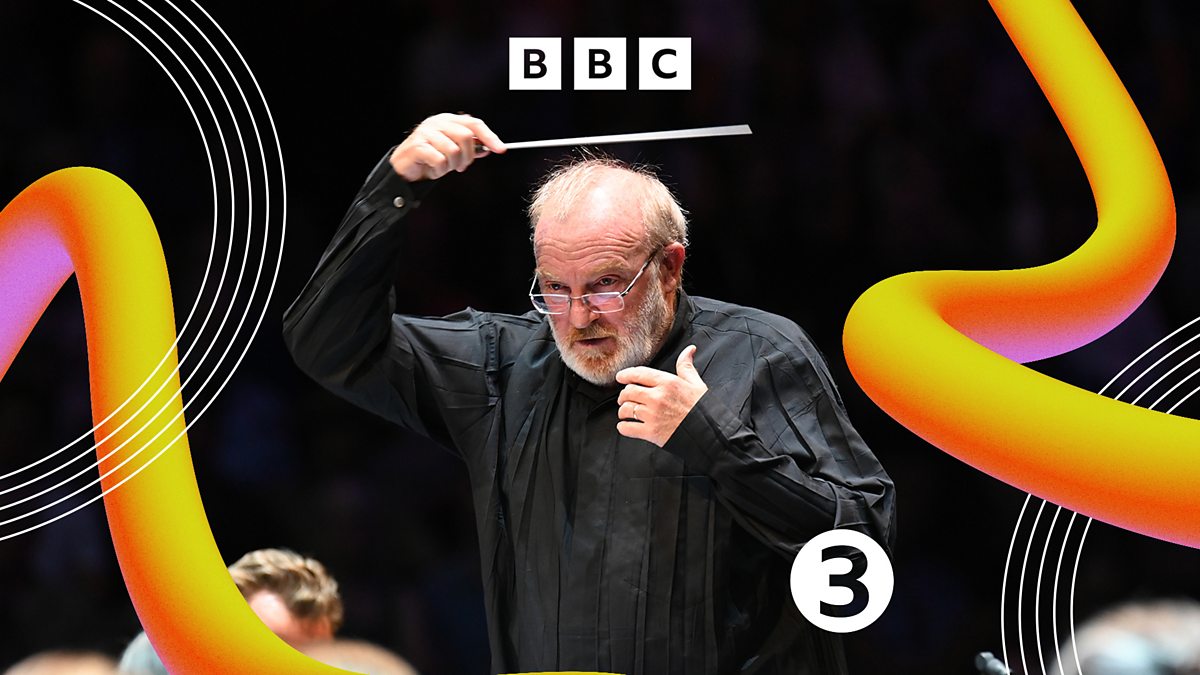
Yesterday we heard the sad news of the death of the British conductor Sir Andrew Davis, at the age of 80.
The warmth of the tributes made on social media to Sir Andrew are an indication of his standing as a highly respected conductor who was for many a friend as well as a fellow musician. As a live performer he excelled at the BBC Proms, becoming the festival’s musical figurehead in the 1990s as chief conductor of the BBC Symphony Orchestra, a post he held from 1989 until 2000. Yet he also made his mark overseas, through posts held with the Toronto Symphony Orchestra (from 1975 until 1988) and the Melbourne Symphony Orchestra (from 2013).
The playlist below attempts to summarise his considerable contribution to recorded music – and in particular his many outstanding discs of British music. The reader is particularly directed towards an extensive and hugely rewarding series of Elgar for Chandos, but the list below includes early Berlioz, Delius, Elgar, a recent highlight of Stravinsky‘s Violin Concerto recorded with James Ehnes and the BBC Philharmonic Orchestra, and an outstanding version of Vaughan Williams‘ Symphony no.6, capturing a side of the composer seldom heard at the time of recording.
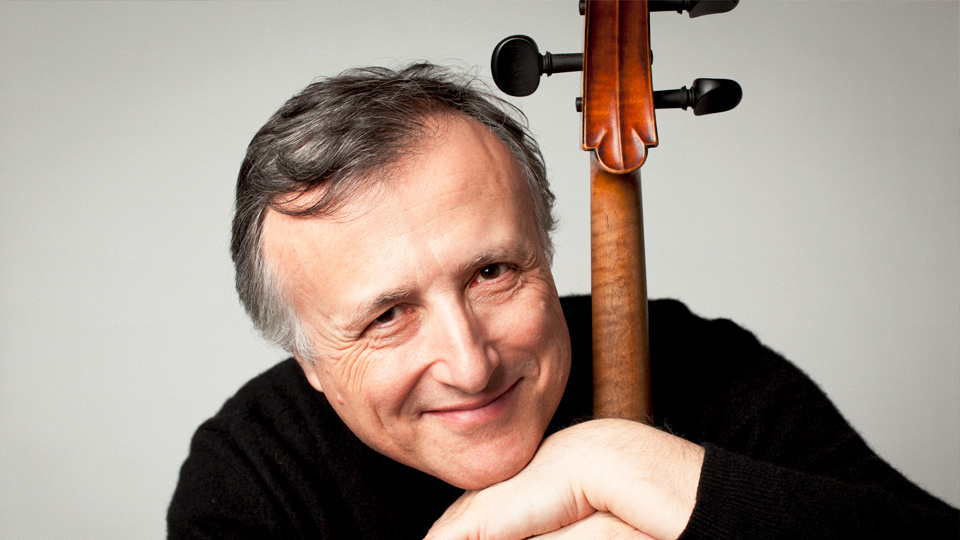
Raphael Wallfisch (cello, below), BBC Concert Orchestra / Martin Yates
Lewis A Celebratory Overture (2023) [EMF commission: World premiere] Lloyd Webber (orch. Yates) Scenes from Childhood (c1950) [World premiere] Moeran Cello Concerto in B minor (1945) Alwyn Serenade for Orchestra (1932) [World premiere] Delius Two Pieces for Small Orchestra (1911-12) Vaughan Williams (arr. Adrian Williams) A Road All Paved with Stars (1929/2016) [Public premiere]
Dorchester Abbey, Dorchester-on-Thames Friday 26 May 2023
Reviewed by Richard Whitehouse
The breezy ebullience of Paul Lewis’s A Celebratory Overture (redolent of Malcolm Arnold without any risk of expressive ambiguity) launched this latest English Music Festival in fine style, with its crisp and precise playing from the BBC Concert Orchestra under Martin Yates.
As so often in these concerts, world premieres were not lacking and the first brought hitherto unknown partsongs by William Lloyd Webber arranged into suite-form then orchestrated by the conductor. If the resultant Scenes from Childhood adds but little to the reputation of this not inconsiderable figure, the Prelude yields appealing poise while Serenade is a waltz of no mean suavity, then the Finale nimbly combines elements of fugue and waltz on its way to a rousing close. Worth hearing, and not least when rendered with such obvious enjoyment.
The emotional weight of this first half inevitably fell upon the Cello Concerto by E.J. Moeran. Completed in the aftermath of the Second World War, it was the composer’s first large-scale piece for his wife Peers Coetmore; her belated and often approximate recording likely having deterred others from taking it up. Not so Raphael Wallfisch (above), his belief evident from the outset of a Moderato whose confiding eloquence is not without undercurrents of unease. These latter are made explicit at the start of the Adagio, otherwise centred on one of the composer’s most affecting melodies and building with due inevitability to a cadenza whose growing animation carries over to the final Allegretto. Here a jig-like main theme denotes an Irish influence that offsets any tendency to introspection as it guides this engaging movement to a decisive close.
Quite a performance, then, which was complemented after the interval by a first hearing for the early(ish) Serenade by William Alwyn. Written while on examination duties in Australia, this undemanding piece moves from a (mostly!) tranquil Prelude, through a stealthy and by no means uninhibited Bacchanale then a serene Air which could yet find favour as a radio staple, to a Finale that, as Andrew Knowles rightly indicated in his programme note, betrays more than a hint of Czech folk-music across its insouciant and ultimately boisterous course.
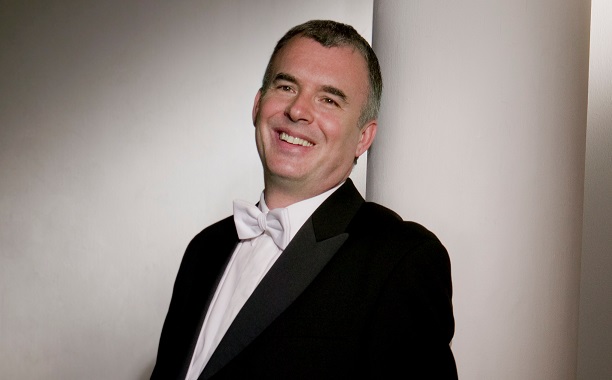
Hardly an interlude, the brace of pieces by Delius fairly encapsulate the inward rapture of his maturity. Yates (above) brought just the right lilt to the dancing gait of On Hearing the First Cuckoo in Spring, while the subtle eddying of Summer Night on the River was effortlessly conveyed.
The final premiere tonight came in the guise of A Road All Paved with Stars – the ‘symphonic fantasy’ as arranged by Adrian Williams (a notable composer in his own right) from Vaughan Williams’ comic opera The Poisoned Kiss. Occasionally revived, its dramatic prolixity rather obscures its musical highpoints – emphasized here in what is both a chronological overview and cumulative paraphrase that also adds a non-symphonic orchestral work to its composer’s output. The surging emotion of those final stages could hardly leave an audience unmoved. This vivid reading concluded a memorable concert in which the Moeran was dedicated to the memory of Michal Kaznowski – who, as cellist of the Maggini Quartet and formerly section-leader at the City of Birmingham Symphony Orchestra, has left a legacy worth remembering.
Vaughan Williams Piano Quintet in C minor (1903, rev. 1905) The Lark Ascending (1914, rev, 1919) Romance (c1914) Fantasia (quasi variazioni) on the ‘Old 104th’ Psalm Tune (1949)
Mark Bebbington (piano), Duncan Riddell (violin, Piano Quintet, Lark), Abigail Fenna (viola, Piano Quintet, Romance), Richard Harwood (cello, Piano Quintet), Benjamin Cunningham (double bass, Piano Quintet), City of London Choir, Royal Philharmonic Orchestra / Hilary Davon Wetton (Fantasia)
Resonus RES10311 [64’53’’]
Producer Adam Binks Engineers Dave Rowell (Piano Quintet, Fantasia), Adam Binks (The Lark Ascending, Romance)
Recorded 8, 9 June, 25 July 2022 at St John’s Smith Square, London
Reviewed by Richard Whitehouse
What’s the story?
Mark Bebbington assumes centre-stage for this diverse collection of pieces by Ralph Vaughan Williams, ranging across almost a half-century of his output as well as providing an effective showcase for his (unjustly criticized) piano writing heard here within three different contexts.
Does it all work?
One from a number of early chamber works as have only been revived and published in recent years, the Piano Quintet finds its composer seeking an accommodation between the Germanic and French models. The opening Allegro drives its fiery and wistful main themes through an intense development and curtailed reprise to an uneasy close, while the Andante contrasts the hymnic eloquence of its outer sections with the agitation at its centre. Most distinctive is the closing Fantasia, whose five variations on a plaintive theme shared between piano and strings evince no mean motivic ingenuity or expressive variety as they build to a fervent conclusion. Bebbington and the RPO players make a persuasive case for this uneven yet absorbing piece.
The two duo works make for a telling contrast in themselves. Although now ubiquitous in its orchestral incarnation, The Lark Ascending as originally conceived with piano is appealing and evocative in its own right – not least given with unforced pathos by Duncan Riddell and accompanied by Bebbington with sensitive understatement. Probably dating from the same time, the Romance seemingly went unheard in the composer’s lifetime (one of several pieces intended for but never played by Lionel Tertis) and received its first public hearing in 1962. Its build-up to an impassioned climax and return to its initial serenity is a familiar trajectory though one which is flawlessly carried through here, as least as rendered by Abigail Fenna.
Forward some 35 years to the Fantasia (quasi variazioni) on the ‘Old 104th’ Psalm Tune – a piece whose infrequent performance is explained by the unlikely scoring for piano, chorus and strings but also the hybrid nature of its conception; the forthright nature of its four choral settings duly offset by the formal and expressive freedom of its alternating piano ‘cadenzas’ on route to a powerfully, even starkly drawn coda. Bebbington acquits himself with aplomb in the latter, while the City of London Choir and Royal Philharmonic Orchestra respond with confidence to Hilary Davon Wetton, though perhaps this might have been the ideal occasion to revive the piece with accompaniment for string quartet as heard at its first private hearing.
Does it all work?
Almost. The follow-through of this selection is unusual to say the least, but its distinctiveness of content is undoubted – as, too, the quality of these performances. This is now the seventh version of the Piano Quintet and arguably the finest yet, the duos can stand comparison with any predecessor while that of the Fantasia has greater cohesion than the benchmark account by Adrian Boult with Peter Katin (EMI/Warner). Those familiar with Bebbington’s previous discs of VW’s piano music or early Fantasy (both Somm) will find comparable insights here.
Is it recommended?
Indeed. The recalcitrant acoustic of St John’s, Smith Square here yields the requisite warmth and no little clarity, while Nigel Simeone’s notes are informative if (purposely?) contentious on occasion. Anyone who is wanting to acquire some or all of these works need not hesitate.
Vaughan Williams Fantasia on a Theme of Thomas Tallis (1910) Pritchard Violin Concerto ‘Wall of Water’ (2014) David Matthews Shiva Dances Op.160 (2021) Elgar Introduction and Allegro Op.47 (1905)
Zoë Beyers (violin), English String Orchestra / Kenneth Woods
Holy Trinity Church, Hereford Thursday 24 November 2022
Reviewed by Richard Whitehouse
Just a day after The Journey Home, the ESO reverted to its ‘String’ guise for this judiciously sequenced programme with two contrasted commissions framed by classics of the repertoire for string orchestra – these latter written not so far away from where this concert took place.
Acclaimed at its premiere in Gloucester Cathedral some 112 years ago, Vaughan Williams’s Fantasia on a Theme of Thomas Tallis has never been so popular as it has become this past decade. This performance did it justice – the placing of the ‘echo’ orchestra, behind the altar-screen in the imposing Victorian confines of Holy Trinity Church, abetting those antiphonal exchanges in the central section. Solo string quartet building steadily toward an impassioned culmination, from where Tallis’s theme is movingly recalled prior to the final evanescence.
Next came the welcome revival of an earlier ESO commission by Deborah Pritchard. Inspired by an eponymous series of paintings by Maggi Hambling, Wall of Water is a violin concerto which makes tangible reference to these 13 canvases as it unfolds. Their projection to the rear of the orchestra underlying a visceral as well as imagistic allure, even though the work itself is fully intelligible on its own terms – not least with a three-movement trajectory coalescing out of continuous 13 sections. Elements of Penderecki and Lutosławski can be discerned over its course, but a distinct and engaging personality is also in evidence along with a technical finesse with regard both to the solo writing and that for the strings. Zoë Beyers gave a superb account of a piece which seems sure to enter the repertoire of 21st-century violin concertos.
As too does Shiva Dances by David Matthews. The combination of string quartet and string orchestra is a potent one (see below), of which the composer has availed himself fully in this continuous sequence likely inspired as much in a description of Hindu god Shiva by Aldous Huxley as by Indian classical music. Proceeding from a slow introduction given piquancy by its modal intonations, the work comprises four dances which between them outline the four elements: an impetuous workout that represents ‘earth’, a quixotic interplay for soloists and ensemble that of ‘water’, the scherzo-like agility of ‘air’, then a lively waltz for ‘fire’ – this latter building to a forceful restatement of the opening theme, before the coda opens-out the overall expression such that what went before is rendered from a more ethereal perspective.
Kenneth Woods secured an engaging account of this appealing work, as he did of Elgar’s Introduction and Allegro that concluded the evening. As he pointed out, its main melody is a rare instance of this composer using an actual folksong, yet that never entails a lessening of formal intricacy in what becomes a latter-day recasting of the concerto grosso – reaching its emotional apex in a developmental fugue that bristles with technical challenges. A tough test for the London Symphony Orchestra, with whom Elgar enjoyed a productive association.
Suffice to add the ESO was equal to this task as in the sustained fervency of the final pages. It rounded off another worthwhile evening from this always enterprising ensemble. December brings the seasonal performance of Handel’s Messiah, with further concerts in the new year.
Vaughan Williams Scott of the Antarctic (1948) Directed by Charles Frend Music by Ralph Vaughan Williams Presented by Big Screen Live
Kate Trethewey (soprano), CBSO Youth Chorus, City of Birmingham Symphony Orchestra / Martyn Brabbins
Symphony Hall, Birmingham Friday 11 November 2022
Reviewed by Richard Whitehouse
The City of Birmingham Symphony Orchestra’s commemoration of the 150th anniversary of Vaughan Williams’s birth concluding this evening in a showing, with live orchestral accompaniment, of Scott of the Antarctic which proved to be the composer’s most ambitious cinema project.
Directed by Charles Frend (who presided over several UK films in the 1940s and ‘50s, before having an equally prominent role in television) and released in November 1948, the film was a commercial success not least owing to the expressive scope and richness of its music. This extended to some 80 minutes, but Vaughan Williams was more than happy for it to be edited as required and was so in accord with Ernest Irving (director of music at Ealing Studios) that he dedicated to him his Sinfonia Antartica, evolved from the original score, four years later.
It was this close synchronization between image and music that Tommy Pearson (director of Big Screen Live) was intent on capturing when he prepared the film for concert presentation (and the background to which was described in entertaining detail in the programme for these concerts). Suffice to add while the overhauled soundtrack, consisting of dialogue and sound-effects, was all too evidently recorded in mono so that it is easily obscured by the music, the visual component has an opulence and immediacy as transcends its more than seven decades.
Occupying a space equivalent to the lower half of the organ in Symphony Hall, the screen was less dominant in a venue of this size than it would have been even in larger cinemas, but any wider or wrap-round treatment would doubtless have raised many technical obstacles and the print had, in any case, a clarity evident from the rear of the stalls. Much the same could also be said of the orchestra’s contribution, even if its seating on a level platform meant certain of those more intricate details and textures seemed less prominent than under concert conditions.
There can be little but praise for Martyn Brabbins’s direction. A Vaughan Williams exponent of stature (the latest instalment in his traversal of the symphonies has recently been issued on Hyperion), he has an instinctive feel for the emotional highs and lows of this music along with its myriad instrumental subtleties. That divide between what was retained for the soundtrack and what became the composer’s Seventh Symphony is greater than is often supposed, yet the degree to which the former effects and enhances one’s experience of the film is considerable.
This is not the place for any detailed overview of the film itself, though it is notable just how restrained and even absent is the music from the latter stages when Robert Scott and his team head towards oblivion the further they seem to be heading on their return journey. This might have been more to do with Frend or even Irving, but the resulting psychological dimension – beholden neither to inter-war expressionism nor wartime realism – was ostensibly new in a cinematic epic of this kind and makes the film historically as well as artistically significant.
The singing of Katie Tretheway and the CBSO Youth Chorus left nothing to be desired, but many attendees having stocked up on liquid refreshment beforehand saw a steady coming and going over much of the two hours: something that would not be tolerated in a concert, so why here?