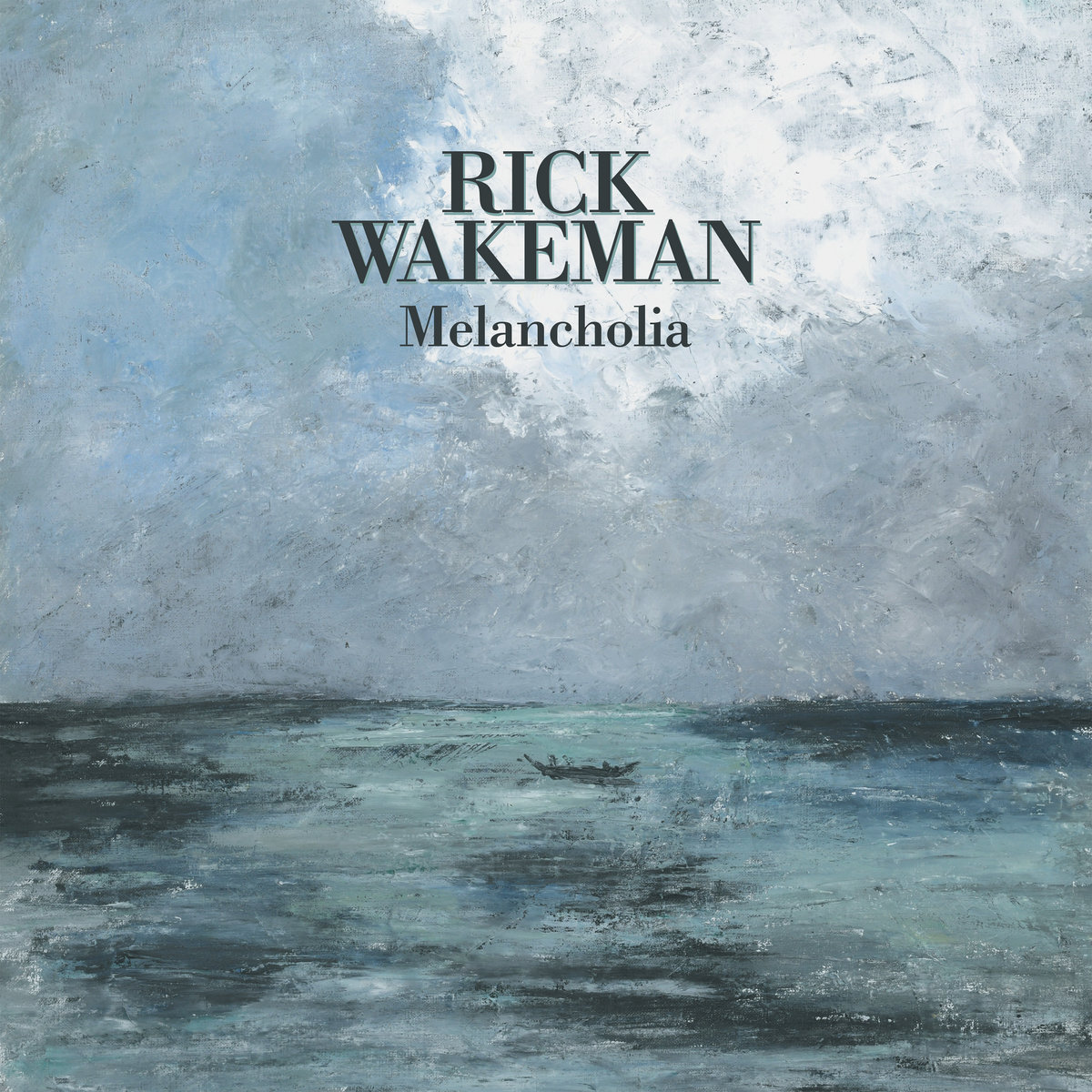
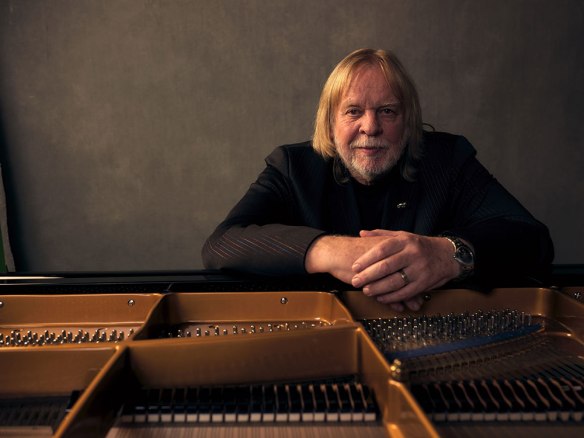
In the last ten years, we have had much more of an insight into Rick Wakeman’s world as a solo musician. These glimpses are afforded us through the albums Piano Portraits and Piano Odyssey, the start of a trilogy now completed by Melancholia.
Yet there is a greater personal edge to this particular set, started by Wakeman’s wife Rachel who was struck by hearing Rick playing privately and encouraged him to share his musical thoughts. The music she heard would become the track Garo, while the other eleven tracks on the album follow a similar, semi-improvised tread.
The music follows Wakeman’s train of thought, a clear thread running through each piece.
What’s the music like?
Melancholia is easy listening – which is of course both a blessing and a curse. If you listen closely, it is possible to tap into Rick’s mostly reflective moods, and admire the way he develops the source material. Clearly this is a master musician at work, the feeling being that we are eavesdropping on an advanced practice session where Wakeman takes us through his intimate thoughts and feelings.
Yet this does also work as a disadvantage, for the music falls effortlessly into the ‘peaceful piano’ section of any digital playlist. This is great for passive listening of course, but it means some of the deeper meanings within the music can be lost, especially given the similarity between the colours on each track.
Wakeman plays with elegance and attention to detail, with some lovely little ornamentations that have become second nature to him, rather like bringing a Bach invention to the table. Pathos is nicely turned, while Alone is led by an attractive melody. Watching Life has a satisfying balance of light and shade, while the title track fades into the distance, leaving room for thought at the end.
Does it all work?
Yes, providing the caveats above are taken into account.
Is it recommended?
It is – though anyone expecting the physical energy Wakeman brings to most of his keyboard playing will find it channelled for inward thoughts only here. Melancholia does, though, reinforce Rick Wakeman’s status as one of the most versatile British keyboard and piano players around.
Listen / Buy
Published post no.2,751 – Wednesday 16 December 2025
Before finishing for Christmas and New Year celebrations, I wanted to offer some thoughts on the musical year that has been 2020. And what a year. I doubt we will experience its like again, that’s for sure – and those of you reading this will no doubt have had some incredible challenges to overcome, or have been instrumental in helping other with their challenges. Everything is firmly in perspective, that is for sure.
In the year of a global pandemic, as in all times of strife, music has been there offering a consoling shoulder to lean on. Much of my listening this year has been of the ambient kind, a place of retreat when all has been too frenetic / inhuman / scary. Music has really shown us its true colours again this year, offering the required escape route along with some real inspiration.
Live music, of course, has suffered greatly, and my thoughts are with all those musicians and people working behind the scenes in the arts, their lives irrevocably affected by COVID. As listeners we thank them for their remarkable resilience and inventiveness, bringing live-streamed concerts of such quality they have been the best possible substitute for the real thing. Wigmore Hall set the scene in June, and many others have followed. The orchestras and choirs should be held in the highest regard for their efforts.
Needless to say I did not attend many concerts in 2020, but two of great note were from soprano Louise Alder (above) and pianist Joseph Middleton, showcasing their exceptional album Lines written during a sleepless night at Wigmore Hall in January, and the Orchestra of the Age of Enlightenment under Iván Fischer performing the last three Mozart symphonies at the Royal Festival Hallin February.
I wanted to share with you my favourite music on record this year. It was of course Beethoven 250, and my aim was to listen to the composer’s entire works. That aim continues, but the deadline has been extended massively! It is proving a thoroughly enjoyable experience but circumstances mean it has taken much longer than expected. To enjoy the listening project to its full potential, I look forward to reconvening with the first Sonatas for cello and piano in 2021, and taking it over the finishing line later in the year.
This year’s new releases have been extremely fine – and I have eight to share with you here, beginning with Steven Osborne’s remarkable disc of three Prokofiev piano sonatas on Hyperion. This appeared at the same time as the Coronavirus and felt like a direct response to it. Prokofiev was writing these works during the Second World War, in part a reaction to intense world and personal strife, and what a performance they get from the Hyperion pianist. You can read about them here
On the orchestral front, John Wilson and his Sinfonia of London came out with a simply outstanding program of French music. Escales did the wonderful job of blending seasoned favourites such as Chabrier’s España with gems that benefited from a dusting off – Duruflé’s Trois Danses and Ibert’s Escales among them. My thoughts on the disc are here
One of the most striking contemporary releases this year capped a fine showing from KennethWoods, both with the English Symphony Orchestra and–ashere–withthe BBCNationalOrchestraofWales. Philip Sawyers’Symphony no.4 and Hommage to Kandinsky are captured by Richard Whitehouse in this review of two exceptional pieces of new music, given great performances under conductor Kenneth Woods.
Of the electronica that I mentioned, there are some rather special examples. First among them is Kaitlyn Aurelia Smith’s The Mosaic Of Transformation, an enchanting journey of vividly coloured musical motifs. I attempted to describe them and their impact here
For something closer to home, Erland Cooper’s Hether Blether signed off his Orcadian trilogy with deeply emotive recollections and portraits of home. Complementing the previous instalments Solan Goose and Sule Skerry, it was a life affirming, communal piece of work uniting thoughts at just the right time. You can read Arcana’s interview with Erland here
Meanwhile Bruce Brubaker & Max Cooper took a minimalist composer as their inspiration for Glassforms, a set of electronic reworkings of the music of Philip Glass. Rather than simply dress up the originals, it is an imaginative and very well thought-out set of recastings, detailed here
Also taking inspiration from similarly minimal sources were New York’s Bing & Ruth, through the excellent Species long player. You can read about ithere – and the background to the album in an emotive interview with leader David Moorehere
On the other end of the scale sit Rick Wakeman and the English Rock Ensemble. After a series of stripped back piano albums this is Wakeman at his progressive best, in the company of some exceptional musicians, creating some dramatic and involving music. You can read Arcana’s review here – and an extensive interview with the keyboard wizard here
For music of great verve and positivity, drummer Tony Allen’s collaboration with trumpeter Hugh Masekela, posthumously published, took some beating. The recordings were made in 2010, but were unfinished at the time of Masekela’s death. The passing of Allen himself this year lent their completion extra poignancy. It was the closest I could find to pure musical joy in 2020, as documented here!
Meanwhile, returning after a long break was Charles Webster, making Decision Time – an album of very fine, futuristic soul and deep house. Much has changed since we last heard from Webster in this way, but his musical values remain the same, as reported here
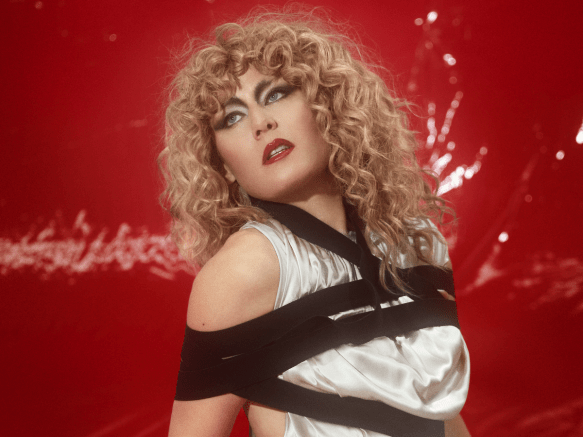
It is not too much of a stylistic shift from Webster to Róisín Murphy, where we find my personal album of the year. Róisín Machine is a brilliant combination of Murphy’s effervescent, spiky personality and some really fine future disco, created with the help of Crooked Man (aka Richard Barratt). As noted here, it has the resilience and strength in the face of adversity we all needed in 2020, but crucially the sense of fun we will still need – and will surely get back – in 2021. Happy Christmas!
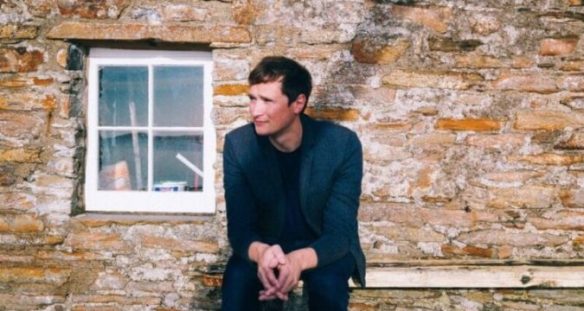
Erland Cooper is very much a ‘glass half-full’ musician. If anything, the glass is often full to overflowing as he has kept busy with creative projects through lockdown, up to and including a chance to finally realise the Barbican show he had planned for June.
Although he resides a long way from his native Orkney, both on a physical and spiritual level, Cooper finds solace and inspiration in his Hoxton studio. “It’s been an absolute safe haven”, he says gratefully. “When lockdown was very acute, I would still come over at 6-7am, before anyone was up, and not meet a soul. It’s obviously a bit different now, but it’s just been great, and I’ve been able to get under the fingernails of a few projects that I would perhaps not have had time for before.”
His third album, Hether Blether – the concluding part of an Orcadian trilogy begun by Solan Goose and continued by Sule Skerry – was released at the end of May. This was just as it was dawning that the UK tour, scheduled for September, was going to become a casualty of the restrictions brought about by the Coronavirus pandemic. He remains philosophical, however. “Live performance isn’t the be all and end all for me, it’s part of the journey, and literally part of the transportation to Orkney, when you’re up and down the country – in the Barbican Hall for instance. At the end of last year it came into realisation that there is a whole new enjoyment to bringing to the audience a room, a space, a ferry that takes you up to the North Sea and back again. That became a real process, but I’ve forgotten about it to a point. We were starting to put that into place, but that tour wasn’t until September anyway. Live music takes a lot out of me, and I tend to put it to the back of my mind until I’m ready to give it everything, so I hadn’t thought about it a great deal.”
In terms of the record, Erland had already let it out into the wider world. “You know a record is truly done when I play it to my close friends”, he says. “That’s when I feel like something’s done, and finished, but it’s taking it that bit further when you actually give it out to the world, and all of a sudden it’s getting reviewed – good or bad, it doesn’t matter – and it’s getting listened to. I got a message from someone who said they were trying to introduce music to my daughters, and trying to get them to sleep, a little bit earlier. Every night, about 15 minutes before they go to bed, they play one of my records back to back, and they said it sets the tone but it also gets them asking questions about classical music and electronic music. I just thought, you couldn’t plan that! There’s nothing you could try and do to plan that. So it really feels finished when it goes out the door.”
As with Solan Goose (air) and Sule Skerry (water), Hether Blether (land) is a deeply personal piece of work. “It finds some of the themes that we’re all feeling here during lockdown – those of community, ‘alone’ spaces, the people we spend our time with. Those are all feelings that are very much in this final record for me, personally. It is certainly a zeitgeist of it feeling like a good time to reflect and think about transportation, real or imagined. In a nutshell it was definitely surreal, but I also felt like it was important to just get it out. That was a good thing. Like a gannet!”
We agree on the importance of new music at this time, a source of positive energy. “I’ve really been enjoying the new records from Ghostpoet and Nadine Shah”, he says, “along with some classical releases, and going back to things I perhaps hadn’t heard before – Peter Gregson’s work, for example – and just going into things. Everyday when I come into the studio I listen to a new record, whether it’s a score by Alex Somers, or Julianna Barwick. It’s a constant, it’s a great thing.”
He was careful to control the noise around Hether Blether’s release in light of the pandemic, and found new positives from the experience. “When I was thinking about promoting the album I thought it was important not to shout about it, and just to have a break for a month or so. I think that was absolutely the right thing to do, and that’s the only thing I probably would have changed about the behind the scenes process. I quite enjoyed looking at it in a different way. It has been a great time for music, hasn’t it?”
We move on to discuss a mutual love, the Wigmore Hall – and its success in streaming live concerts, giving an indication of the live music we all miss. “That hall is very important to me”, he gushes. “I can’t wait to go back. I should take a little hip flask the next time I’m back there. I’ll do it very respectfully!”
Talk turns to a much wider space, and the video accompanying Skreevar, second single from Hether Blether. In it, Cooper dashes along the street in Orkney before jumping, fully clothed, into the North Sea. “I had a lot of e-mails from people saying ‘did you jump?’ and I had to say, ‘Did you watch the video to the end? Do you think a wee record label can afford to fake that?!’ We did one take, and that was it! I don’t know if I told you but when we did it I ran up to the edge three times. The first time was to judge how long it would take, the second time was so that Alex (Kozobolis), who was videoing could test running behind me, bearing in mind he had to do that with a camera and not fall in the sea as well, and then the third time.”
The shoot created quite a stir. “A couple of days before we did it we had to plan the tide, so we had that right. When we were practicing we had to stop traffic several times, and then there was a whole group of local folk who effectively started to egg me on, and then a bunch of tourists who were shouting like this sort of thing happens every day! Then, this really young couple were on the peer to the left, and they were oblivious to what was happening. They sat down where George Mackay Brown and I like to sit and reflect, and they must have sat down to have their supper and a glass of wine or something, after the second take. They got the fright of their lives when this six foot three, gangly bloke in a nice jacket jumps off the peer! They were just like, what? That was a highlight. It was very cold by the way, it didn’t look like it but it was!”
Watching it from the seclusion of a locked down living room is strangely liberating. “It was a great memory. I was saying to the guys at the time, I did it when I was 16-25, I’ll do it again when I’m middle aged, and then again when I’m 70. I’m only doing it once though, to get it right! It was only about a metre deep, so you would have reached the bottom. I’ll tell you what though, I’ll never forget that as long as I live! How often can you say that to yourself, really truly? That was what it was for, to create an adult memory as strong as a childhood one.”
Erland has already performed at the Barbican in a sense this year, taking over the Centre’s Instagram page for a week and projecting films made by Alex Kozobolis to his own albums across the estate. “That was so interesting for me. I don’t know if you ever used to develop film, where you effectively learn the virtue of patience – even just posting it off to the chemist. You don’t know what 35-40 pictures you’re going to get back, and there’s something about projecting digital footage that had come all the way from Orkney onto something as iconic as the Barbican Brutalist architecture. It felt like a slow development of film, and I really enjoyed that. I felt that Margaret Tait, the Orcadian experimental film maker, would be proud of that. Using the technology we have now, a portable projector, we were reframing work done by hand as a reference for true escapism. I know the question has come up for a lot of people, asking themselves where they truly want to live in the future, because of how limiting it is living in the city.” The duo enjoyed their endeavours. “It was really good for Alex as well, he really enjoyed the process, and I got to enjoy the process of curating some of his photos of the Barbican which again was a joy.”
Lockdown has brought with it a deep appreciation of the natural world for many people, and this is a key element of Erland’s music and life. “I think noticing that everyday joy and magic from nature has been so prominent up until now because of less noise pollution. It shouldn’t take a pandemic for people to value the great outdoors, but I’m glad people are taking notice. I think it’s like anything in life, if you take away the liberty, that’s when you truly value it. It’s very sad really. I hope it’s a wake-up call, a consistent driver for people.”
He has remained in close contact with his home island. “It’s been lovely. My folks were down in England, believe it or not, on a very rare potential holiday to Spain. I really feel for them, because they don’t really go away that much, and they’re both now retired so were really looking forward to it. There’s something about that generation when the pandemic first hit which was quite cavalier, which very swiftly changed because they’re very intelligent people! We agreed that going back to Orkney made sense, and so they drove through the night and got to the ferry crossing just before they closed – it was the last one for the night and before they closed for lockdown!”
Now their existence is completely independent from the mainland. “My dad said that lockdown for them isn’t much different from daily life. They have a cup of tea with the sunrise, and go for a walk or two a day. For them it was really good to get home. I’ve become friends with a few other people posting on Instagram, and I’ve been drawn to them. I’ve found it a great joy. I have one friend who is a wonderful artist, she sent me a little Orkney rescue package, some food, pieces of fudge and bits of art. I must admit I ate everything the day it arrived! I feel very connected with it. Also, you know very well that these records that I have been making are ultimately a tool for someone who isn’t there, and would go off with their books and tape recorders, and take snippets back with them, to try and capture an essence of it.”
Cooper has a number of musical irons in the fire. “I am using a different approach for the ambient ‘sister’ to Hether Blether, for as you know there has been an ambient companion to each of the albums so far, Sea Change and Murmuration. The final record that will be a companion to Hether Blether is called Landform. I’ve shared my work with Marta Salogni, the Italian producer. She’s a great lover of analogue production and recording, using tape machines as an instrument, which I enjoy too. Instead of throwing ideas around I thought I might put into three folders, titled, air, sea and land, and just put sounds into them, a whole collection of tones out of Hether Blether, drop them into the three folders and say there you go. It’s a bit like pick a card, any card – pick a few, and then break up the elements of the final record. It is about the community but it pulls together elements from the first two albums as well, so just putting the tones into three folders and asking her to pick what she wants when she wants, at no pace, and no urgency. That’s something I’ve started. I also have something else which is quite ambitious, but I will say no more at this stage!”
It was perhaps inevitable that Cooper would be busy, given his work ethic. “I think when you give something away, I just have this hunger to keep exploring the things that excited me the most during the process of creating and honing in on that. You’ll probably get a sense of what I mean. It’s a culmination of learning, developing and writing wrapped up together, so I’m working on that. “
The calm of the studio is helping creativity. “It is, and I’m very fortunate to have it. The lockdown is the only time I’ve ventured into watching movies there. I tend to just work in the studio but I’ve had a few 18-19 hour days in there. It’s not just a working environment, sometimes it can become like a cinema! I tell myself that I can only watch a film in there if it has an exceptional score.”
Erland Cooper performs with members of the London Contemporary Orchestra at the Barbican on Saturday 10 October, with images and video content from Alex Kozobolis. The concert can be seen either in person or online, with tickets available from the Barbican website.
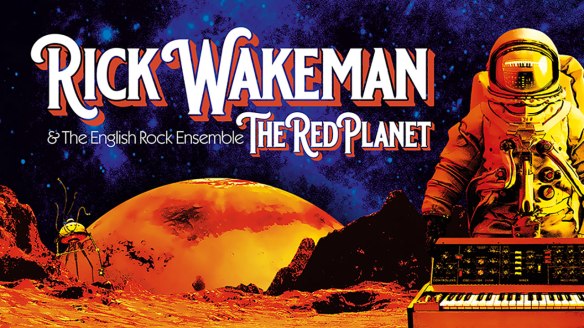
The Red Planet marks a much-heralded return to progressive rock for Rick Wakeman. The prolific keyboard player and composer has been working on the album for a good while, having been captivated by the three missions currently in progress from Earth to Mars, not to mention some of the pictures received by NASA.
Wakeman, who has made three albums previously about the universe beyond Earth’s orbit, has enlisted the talents of three prodigious talents – guitarist Dave Colquhoun, bassist Lee Pomeroy and drummer Ash Soan. The English Rock Ensemble, as they are known, are given equal billing with the keyboard player.
What’s the music like?
Some of Wakeman’s strongest in years. There is a great deal of passion and imagination here, with Wakeman’s characteristically brilliant keyboard work more than matched by his protagonists and friends. It is important to recognise the connection of personalities, because as Rick told Arcana in an extensive interview, their creative spirit and comradeship were big elements of The Red Planet’s success.
The album works really well because of a really good balance between excess and restraint! The familiar strengths of progressive rock are exploited in prodigious drum fills, creative keyboard solos, twisted bass lines and epic guitar work, but each of the four musicians knows when to pull back and concentrate on evocative scene-setting. The latter quality means the likes of Arsia Mons and The North Plain, both portraits of their respective areas on Mars, are more descriptive and have the necessary light and shade.
As Wakeman admits, a lot of fun was had with the making of this album, and it comes through right from the off, and the imposing church organ of Ascraeus Mons. Meanwhile in the final and most extensive picture, Valles Marineris, the spirit of Holst is channeled through the oblique rhythms and stabbing counterpoint.
Between the two imposing outposts there is much good music. The descriptive Tharsis Tholus has attractive flute voicing, while Arsia Mons has one of the album’s most memorable riffs, not to mention superb drumming from Soan. Wakeman himself comes right to the fore on Olympus Mons, with some typically probing keyboard athletics near the end, while he leads with a soaring synthesizer on Pavonis Mons. Meanwhile a wonderfully gritty keyboard sound takes over on The North Plain, shaking off the mysterious, ghostly piano of its opening strains.
Does it all work?
Yes. Anyone with an interest in Wakeman or his on / off band Yes will recognise the keyboard style but will also applaud the attention to detail and relative restraint shown in the course of this hour-long triumph.
Is it recommended?
Yes, as a thoroughly enjoyable album. Anyone with an interest in progressive rock will want to hear it – but happily The Red Planet gives us the notion of getting away from our own habitat for a while, which I’m sure we’ve all fantasized about in the last few months!
Stream
Buy
You can buy The Red Planet from Rick Wakeman’s website here
For part two of Arcana’s extensive interview with keyboard royalty Rick Wakeman we pick up where we left off, by asking the celebrated musician for his plans, virus permitting of course, to tour his new album The Red Planet.
“We’re celebrating the Mars landing in Armenia next year; we’re going to do the whole of the Red Planet live. Brian May’s going to come along and join us. That’s the plan for next year, as long as COVID-19 is behaving itself. In terms of space-themed albums I’ve got No Earthly Connection, Out There, The Red Planet and 2000 AD into the future which are all based on space. There’s enough to do a weekend but then you’ve got to convince a promoter it’s a good idea.”
Other plans are afoot. “There is so much planned for next year!” he gushes. “We’ve got the event at the National Space Centre in Leicester. There are three missions on their way to Mars at the moment, and they’re due to arrive the end of February beginning of March. We’ve gone for Saturday 27 March, because that’s just before a series of five prog rock festival dates. We thought we would have the launch then because the mainstream press will be going Mars potty. We expect by then they will have discovered how much water there was. Another great rock and roll thing that they recently discovered was that when it rains on Mars, it rains dry ice! How rock and roll is that?!” It’s almost as though Rick was meant to do a gig there. “Well that’s it!”, he laughs.
Taking a step back, he considers the implications of what the missions might find. “There are a lot of scientists and astrophysicists who believe there is a true connection between Mars and Earth, and that in the next 100 years we may find out what that is. If there is reincarnation I hope I come back as someone who might know what it was. My grandchildren might even get to know some of this in their lifetime. You can only go so far when you’re talking to them until they ask if Peppa Pig lives there, so I’m well aware it might be a bit down the line before they cotton on to what Grandpa Grumpy, as they call me, is up to!”
Talk turns to Rick’s musical work during lockdown – with several projects affected by his distance from co-writers. “The Red Planet has taken up a lot of time. I have been working on some other projects too, including work on a musical with Sir Tim Rice. We had planned quite a lot of get-togethers over the last few months, but he ended up in lockdown in Cornwall and I was in Suffolk. The counties couldn’t be further apart really. We had a lot of discussions on the phone but there’s not a lot we can do when we’re not in the same room together. That’s on the burner going nicely, another musical that is all funded and ready to go. I’ve been working on a couple of other recording projects, and also planning stuff for next year working on the premise that it will happen. I’m an optimistic person, so I don’t listen to the gloom mongering on the news at the moment. You’ve got to feel sorry for the politicians, because virtually every scientist has a different view on it all, so it’s pick the one that suits your politics the best! It’s a total no-win situation. Then in true British fashion it’s how you can bend the rules – you can open pubs but not clubs, the social distancing doesn’t apply to Bournemouth or Brighton beach. What is going on?! Each of the four nations has got a different view on how it should be done! You don’t know whether to laugh or cry really. I’m just 71 and a grumpy old man.”
I confess to assuming Rick was much younger than the age he has just stated – certainly his demeanour on the phone suggests a youthful spirit that has been retained – but he confirms. “Yes, I am 71 and as grumpy as you like. Grumpy but enthusiastic!”
Happily, he still feels that his keyboard playing has the same technical prowess, but is wary of the ageing process. “I practice every day. I do suffer from minor rheumatism and arthritis in the hand, and I do know that the day will come when I can’t have the dexterity I have now. When I do the piano concerts my hands ache, so it’s hot and cold water in the sink afterwards. I know a good doctor, who said, ‘Look at it this way – most footballers, when they get to the age of 40, they have to have knee replacements or hip replacements. The reason for that is those parts of the body have been battered, used 100 more times than the average person. Think of your hands, they have probably played at least three hours a day, sometimes more. Your hands have probably done 1000 times more exercise than the average person, so they’re going to wear out!’ He said just to keep playing and practicing and doing what you can, and then you’ll know the day when they can’t. I have made provisions a bit for that. When it happens, with some of the bigger pieces I’ve got, if I put a good band around me it will take a lot of the pressure off.”
He is aware of the possible impact on solo piano concerts. “I can still perform the pieces, but I think the piano concerts would suffer first. I don’t ever want to get to the stage – and I discussed this with my good friend Jon Lord when he was still with us – where we go on stage and we are applauded for what we were. You should be applauded for what you are, not what you were. We shall see, I hope there’s a lot more left. We’re just moving into a new house and I’ve got the most stunning music room to work in, overlooking a river estuary. I’m still working on the principle that there’s a lot left in the old boy. I love what I do, I enjoy what I do, I would lie if I said sometimes I don’t get tired, but when I get tired I just stop.”
Staying at home has other symptoms, too. “The lockdown hasn’t helped my exercise, because I like my food and I’ve eaten too much. I’ve always had a yo-yo weight problem, I’m the West Bromwich Albion of weight – up one season, down the next. I’ve got to make a bit of an effort but my wife’s brilliant at that. I’ve got a great family as well, the kids have a go at me. Grandpa Grumpy will do what he’s told I suppose!”
Classical music is part of his daily diet. “I listen to quite a lot, and most of the stuff I’ve got in the car is classical. I’ve got a huge collection of CDs of classical stuff, and I love choral music. At the moment I’ve got a ton of Prokofiev in the car – I’ve got works for cello in there, The Love for Three Oranges too, which I really love. I’ve got various compilations of opera arias, which are great in the car because I can join in and nobody can hear me sing! I use the Del Boy Trotter thing where they won’t let you join in the concert so you might as well join in the car. In the office there were about 4,000 CDs, and about half of those would be classical, but they’re all in boxes and have gone down to the new house. It’s very much what’s floating around at the moment.”
We close by pondering the benefits of music to our daily lives. “It’s incredibly good for our health in every respect”, he says passionately. And with that, our time is up – an hour in the company of one of the most enthusiastic musical minds around. When the Mars missions reach their goal early next year, we can expect to hear a lot more of Rick Wakeman, and once his house move is complete, don’t be surprised if they inspire more music! For now, though, The Red Planet comes with a strong recommendation.
The Red Planet, by Rick Wakeman and the English Rock Ensemble, is available with several packages at his online shop


 Interviewed by
  Cooper has a number of musical irons in the fire. “I am using a different approach for the ambient ‘sister’ to Hether Blether, for as you know there has been an ambient companion to each of the albums so far, Sea Change and Murmuration. The final record that will be a companion to Hether Blether is called Landform. I’ve shared my work with Marta Salogni, the Italian producer. She’s a great lover of analogue production and recording, using tape machines as an instrument, which I enjoy too. Instead of throwing ideas around I thought I might put into three folders, titled, air, sea and land, and just put sounds into them, a whole collection of tones out of Hether Blether, drop them into the three folders and say there you go. It’s a bit like pick a card, any card – pick a few, and then break up the elements of the final record. It is about the community but it pulls together elements from the first two albums as well, so just putting the tones into three folders and asking her to pick what she wants when she wants, at no pace, and no urgency. That’s something I’ve started. I also have something else which is quite ambitious, but I will say no more at this stage!”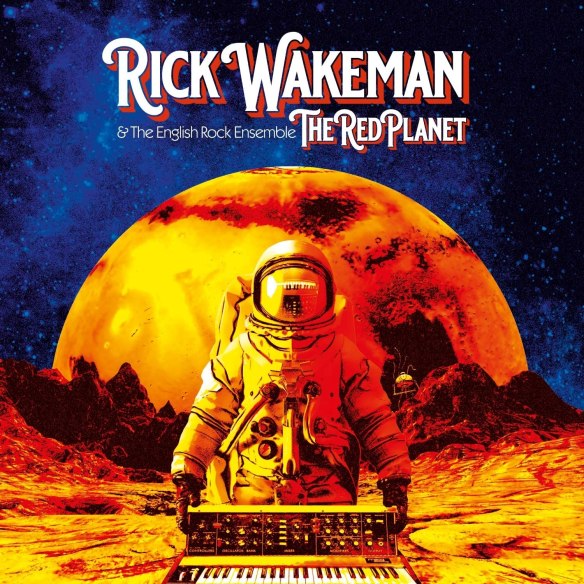
 Arcana.fm