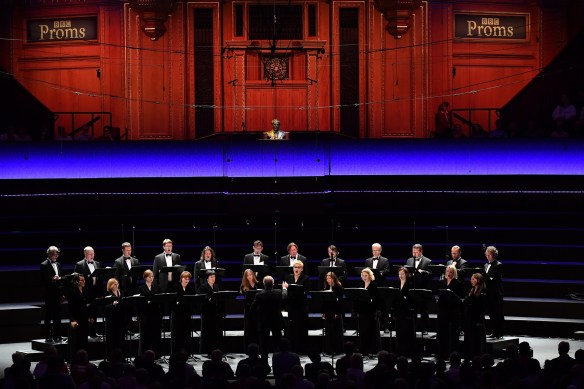
BBC Proms 2017 – Rachmaninov’s All Night Vigil with the Latvian Radio Choir

Latvian Radio Choir / Sigvards Kļava (above)

Rachmaninov All Night Vigil (Vespers), Op.37 (1915)

Royal Albert Hall, Sunday 13 August 2017 (late night)

You can listen to this Prom here

Once in a while it is good to be reminded that some of the most moving music does not have to rely on volume to make its point.

Rachmaninov’s All Night Vigil is a case in point, sung here by the Latvian Radio Choir in a highly atmospheric late night Prom. This notoriously self-critical and doubting of composers believed in it as one of his very best compositions, and even wanted the central Nunc Dimittis sung at his funeral. Though designed to be performed in the course of a Russian orthodox day (beginning and ending at sunset) it lasts for just over an hour if performed in an unbroken span, and here it created a wonderful spell.

The work has been sung at the Proms three times before, in the Late Night slot each time, and its blend of music for the spirit and the soul is ideal for late night contemplation. That state of mind was easily reached here, in a clean and relatively understated way. Recordings of great Russian choirs performing this music show how great depth and volume can be achieved, but with six singers to each part the Latvian Radio Choir were daringly exposed, and their relative lack of heft encouraged the audience to listen more attentively.

That they did so was an indication of just how well observed this performance was. Delicately controlled by Sigvards Kļava, each section merged almost seamlessly into the next, and yet there was room for each hymn or anthem to breathe. The refrains of the third anthem, Blessed Is The Man, were beautifully observed, by now the reduced forces acclimatised to the cavernous Royal Albert Hall acoustic.

The pacing felt ideal too, so that when the bigger numbers – the Glorifying song of the Resurrection and the Great Doxology – arrived, they did not flag, and the high points of each were unfailingly hit. The longer melodic threads were beautifully phrased, unexpectedly drawing the parallels between this music and some of the big tunes elsewhere in Rachmaninov’s output, such as the opening of the Third Piano Concerto, heard earlier in the evening.

The standard of performance was high throughout, with a level of control and ensemble that never dipped below excellent. The sopranos were relatively bright in sound, and the basses controlled their notes down to the depths beautifully, not least the Nunc dimittis, where the audience were visibly straining to hear their descent. Earlier in this number the tenors showed restraint, but there was emotion in their voices nonetheless.

All these elements contributed to a night that frequently stopped the heart with its subtle but lasting beauty. The text, and Rachmaninov’s response, had a timeless feel that transcended this single concert experience, which will last long in the memory.

Ben Hogwood

You can hear the Latvian Radio Choir’s recording of the Rachmaninov All Night Vigil on the Spotify link below:
BBC Proms 2017 – BBC Scottish Symphony Orchestra with Thomas Dausgaard: Mahler & Schubert ‘Unfinished’

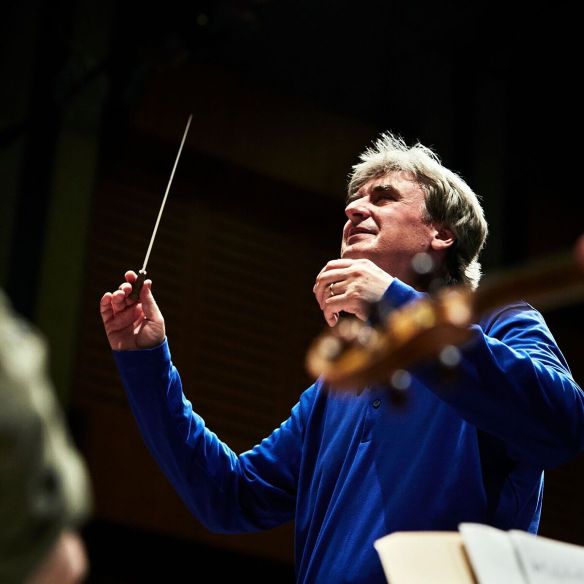
Prom 36: BBC Scottish Symphony Orchestra, Thomas Dausgaard (above)

Schubert Symphony No. 8 in B minor, D759, ‘Unfinished’ (1822)

Mahler Symphony No. 10 in F sharp, realized Deryck Cooke (1910; 1959-76)

Royal Albert Hall, Saturday 12 August, 2017

You can listen to this Prom by clicking here

Having made an auspicious start to his tenure with the BBC Scottish Symphony Orchestra, Thomas Dausgaard tonight brought the orchestra to the BBC Proms for its most ambitious concert this season – Mahler’s I, given in the ‘performing edition’ by Deryck Cooke.

Left unfinished at Mahler’s death in 1911, the work was partially premiered in 1924 though it was not for another four decades that a complete rendering was heard – Berthold Goldschmidt conducting the London Symphony Orchestra at the Proms in Cooke’s realization. Since when his (subsequently revised) edition has become the preferred option for those tackling Mahler’s last symphony in its entirety. Dausgaard recently won praise for his recording with the Seattle Symphony, and his account this evening proved no less successful as an overall interpretation.

Other than the notably deliberate tempo for the violas’ initial theme, such as made it almost an epigraph to the movement overall, the opening Adagio was flexibly paced; the wrenching theme heard on massed strings finding contrast with the sardonic, waltz-like music as passed between solo woodwind. The development’s polyphonic intricacy was eventfully unfolded, then the climactic dissonance – with its piercing trumpet note – was pointedly drawn into the whole so that the lingering coda evinced a serenity whose fulfilment was at best provisional.

The first Scherzo emerged even more impressively. Texturally the least cohesive movement as Mahler left it, its contrapuntal density allied to elliptical harmonic progressions make it the most radical (the earlier music of Hindemith and Weill tangibly within reach) and Dausgaard expertly integrated its increasingly close-knit sections into a stretto of mounting excitement. The brief, fulcrum-like Purgatorio which follows was a little matter-of-fact for its glancing irony wholly to come through, and Dausgaard ought to have made an attacca into the second Scherzo (the three movements of this second part ideally form a continuous whole). Not that there was much to fault in this latter as it pivoted between anguish and appeasement, before vanishing into that ‘tunnel’ of darkness whose nihilistic overtones were palpably to the fore.

Come the Finale and Dausgaard might ideally have deleted the opening drum stroke, while the climax of the central Allegro really needed underpinning from drums for its intensified reprise of the first movement’s dissonance to make its fullest impact. But these were minor flaws in a perceptive rendering overall – sepulchral opening brass making way for the most eloquent flute melody in the symphonic literature (not least as played by Charlotte Ashton), transformed into a radiant string threnody which brings about this work’s cathartic ending.

An impressive reading was fittingly programmed within the context of Schubert’s Unfinished, of which Dausgaard has made a fine account with the Swedish Chamber Orchestra. While his rapid take on the first movement (little ‘moderato’ about this Allegro) did not transfer ideally onto full orchestra (at least in the resonance of the Albert Hall acoustic), the ensuing Andante had no lack of poise: the hushed dynamics of its coda no less arresting than the blissful final cadence in which Mahler’s transcendent leave-taking, 88 years on, was not hard to perceive.

Richard Whitehouse (photo of Thomas Dausgaard (c) Thomas Grøndahl)

You can listen to Dausgaard’s recordings of these pieces on the Spotify playlist below:

Ask the Audience at the BBC Proms – Steve Hodges on the Philharmonia Orchestra playing John Adams

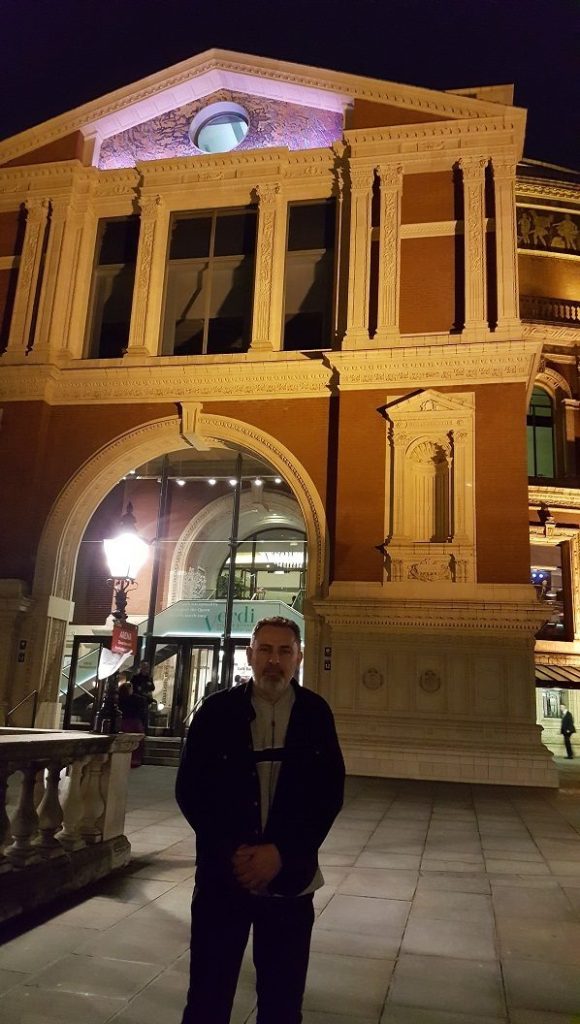
Arcana returns to the BBC Proms in the company of friends – and for our second visit this season we are dipping into one of the festival’s themes, the music of John Adams. Offering his thoughts was Steve Hodges (above)
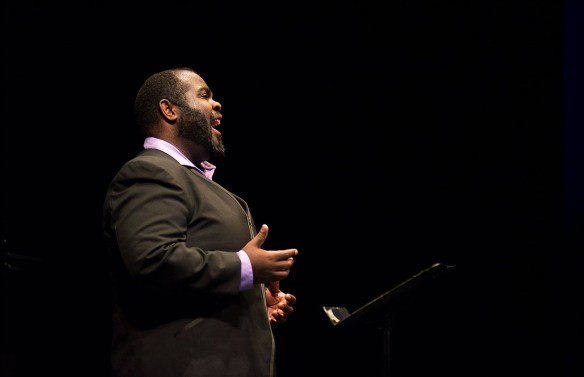
Marianna Crebassa (mezzo-soprano), Philharmonia Orchestra / Esa-Pekka Salonen

J.S. Bach arr. Stravinsky Canonic Variations on Vom Himmel hoch, da komm, ich her (1956)

Ravel Shéhérazade (1904)

Adams Naive and Sentimental Music (1999)

You can listen to this Prom on the BBC iPlayer here

Arcana: Steve, what was your musical upbringing?

Personally, I would say it was broad. It started with The Beatles, The Monkees and The Rolling Stones. I grew up through the 1970s and enjoyed glam, and Sparks, and Elton John. Then after meeting people who had some really broad taste, I lapped up everything through electronica, David Bowie and punk.

I’ve gone on from there really, and gone sideways as much as I possibly could. I like to reflect on music and on what was going on at the time, socially, and what it actually represents. I think that’s an important factor about music. I really enjoyed the punk ideals that said anybody could do it, it made a new wave of music that was enormously important. Just because people could make a record didn’t mean they necessarily should, because some of them were awful, but there was so much choice and so many good things in the 1980s. Since then we’ve been through house and drum ‘n’ bass as well. My classical representation is a bit smaller, but I enjoy what I enjoy!

Could you name three musical acts you love, and why you love them?

Starting with an old one, The Beatles – that was through my father’s record collection, which was a great influence as a young person. I appreciated them as they were. Then The Human League, as a lot of the Sheffield music was important to me, because at the time I was fortunate to be dabbling in music myself. It really crossed over, and Manchester music was a reference as well – so I would put Ultravox! in there as well. Those were the things that mattered really.

Turning to the concert, what did you think of the Bach / Stravinsky?

I thought there were subtler things here, I was surprised at the quiet volume, there were not so many people on stage I suppose. I was fascinated by the people playing, and the movement between the sections. I was watching for the technical side as much as the musical side. It was a nice ‘warmer-upper’ for the rest of it.

What about the Ravel?

I was much more in to this, and felt reflections of 1960s TV in the music, there were flurries that I kind of recognised. I really liked it. For the singer to remember the words was good, and being able to follow along in the book was interesting. I liked the shape of the music.

And the John Adams?

There was much more to think about with that one! I think the first movement built up, and we had the pleasure of seeing the orchestra and the punctuation, the offset rhythms, the bouncing around of the parts. There was a lot more percussive use here and the intricacies of the first piece were astonishing. He was definitely testing the technical abilities of the musicians. The crescendo at the end was almost human madness in my mind, it was almost too much to bear. The build up at the end, it went from the crossrhythms going on that were clear and observed, you could feel the pulses, and then that broke down at the end and it was completely consuming. You almost wanted to put your hands over your head.

The second movement was really nice at the start, I really liked that one. Because I’ve worked with sequencing a lot you could feel the repetition, the softness of the play, again testing the musicians in a different way at the limits of musicality. The lightness of touch stood out, and it was mostly driven by the harps to start with, and that was the bass, the pulse that drove it along to start with. I liked the guitar in there, I hadn’t spotted him and wondered where that was coming from.

What I liked about it most was where he was getting the strings to crescendo, it was like reversing an attack, and it was going round and round in a really interesting way. It was powerful and really interesting to hear that executed. I enjoyed that one most of all for sure. The arpeggios on the strings were really good, it was so delicate and ambient in its way. Even though it was gentle it was really strong.

How did you find the Proms as an experience?

Very nice. The reverence for the music was striking, and full marks for the quality of what you saw. The audience were obviously there to enjoy it, and treated it with the respect it duly deserved. It was a beautiful environment to hear such things. I’m almost a little disappointed it was quieter at the beginning but I guess we should have stood closer at the start. After a while though, you tune your ears into it. Everybody shut up so that we could all hear.

Having said that, the volume at the end of was enormous! The variety of the use of the instruments, like bowing the percussive instruments in the last piece, that was a softer element. It wasn’t orchestral techno by any means but there was a lot of crossover. It really was a testing thing for the musicians, and it really resonated how much was being put on them.

Is there anything you would change about the experience?

I did browse the catalogue and felt it was something I would like to do. I don’t think there is anything I would particularly change about it, and I’d be inclined to come again. I heard a few things on the TV last week, and I think I shall be listening out for more!

Verdict: SUCCESS

BBC Proms 2017 – Sir John Eliot Gardiner conducts Lutheran cantatas by Bach

Monteverdi Choir, English Baroque Soloists / Sir John Eliot Gardiner (above)

Schütz Nun lob, mein Seel, den Herren, SWV 41; Nicht uns, Herr, sondern deinem Namen, SWV 43; Danket dem Herren, denn er ist freundlich, SWV 45 (all c1617)

J.S. Bach Cantata No.79, ‘Gott der Herr ist Sonn und Schild’ (1725); Cantata No.80, ‘Ein feste Burg ist unser Gott’ (1716, revised 1720s-1735)

Royal Albert Hall, Wednesday 2 August 2017 (late night)

After the earlier evening headiness of John AdamsNaïve and Sentimental Music from the Philharmonia, it was quite a stylistic shift to the night’s second Prom, which began with three canzonas / hymns of Heinrich Schütz, written some 400 years ago.

Yet as the ear gradually adjusted and the members of the Monteverdi Choir and English Baroque Soloists quickly found their level, it was clear we were listening to something quite special. Under the fastidious but loving direction of Sir John Eliot Gardiner, an old hand at these scores, Schütz’s own minimalism came to light, helping the transition from first Prom to second. The choir were carefully positioned and instrumental soloists stood where possible for their contributions, an effective technique that spotlit them for the audience but also ensured the Royal Albert Hall acoustic was keenly observed.

Though the Schütz was very good, the two J.S. Bach cantatas took this late night concert to the next level. First was Gott der Herr ist Sonn und Schild, where the vocal soloists Amy Carson (soprano), Reginald Mobley (alto) and Robert Davies (bass) were particularly fine, and the small continuo* (*accompanying) section negotiated their tricky lines with deceptive ease.

The second cantata, Eine feste Burg ist unser Gott, became the focus of the evening, Bach’s Lutheran cantata a cornerstone not just of his sacred compositions but of Baroque music and the Reformation in general. Gardiner took every opportunity to depict the ‘mighty fortress’, whether through the strength of the choral sound or the meaty orchestral textures, capped at the bottom end by the extraordinarily satisfying rasp on Stephen Saunders’ bass sackbut, an ancestor of the trombone. Brought to the front for the Prommers’ benefit, it was a wonderful thing to witness.

This was just the tip of the iceberg though. One of the great assets of the Monteverdi Choir is that its members are all potential soloists, making it a great team of individuals. Soprano Miriam Allan and bass Robert Davies dueted in the Aria and Chorale, and complemented each other very nicely, then tenor Hugo Hymas sang beautifully for the Recitative, while Mobley (above) once again impressed with his passionate and full-bodied tones in a duet with the tenor. The orchestra were once again on top form, though this time oboist Leo Duarte was keenly in focus, moving between the conventional wooden oboe, an oboe d’amore and an oboe di caccia (which looks rather like a banana!) with great dexterity and flair.
The chorus were impeccable with their diction and ensemble, and Bach’s music had that life-giving energy that comes across in successful performances such as this. Eliot Gardiner has written a whole book (Music In The Castle of Heaven) on his love of Bach’s music, and listening to his charges here was akin to standing on the turrets of that building, faces turned skywards. It really was that enlightening.

Ben Hogwood

BBC Proms 2017 – John Adams: Naive and Sentimental Music – Philharmonia / Esa-Pekka Salonen

Marianne Crebassa (mezzo-soprano), Philharmonia Voices and Orchestra / Esa-Pekka Salonen

J.S. Bach arr. Stravinsky Canonic Variations on Vom Himmel hoch, da komm, ich her (1956)

Ravel Shéhérazade (1904)

Adams Naive and Sentimental Music (1999)

Royal Albert Hall, Wednesday 2 August 2017

You can listen to this Prom here for 28 days from the date of the performance

This year’s Proms celebration of John Adams‘ 70th birthday moved on to some Naïve and Sentimental Music. Not my label, but the composer’s own – and a misleading one at that. The title implies a sketchily composed, throwaway fragment, but what we actually get is something very substantial, longer than many symphonies. The construction of the three sections making up the piece illustrate the ease with which the music of Adams expands to fill such dimensions, not something you could always say about the music of like-minded ‘minimalists’, Philip Glass and Steve Reich.

Where others of his ilk tend to work in smaller melodic units, Adams thinks nothing of spinning out a long, intense melody over several minutes, hanging like a long telegraph wire above the sun-drenched plains. Such an image came to my head as we listened to the second movement of three, Mother of the Man, where the guitar of Huw Davies sounded rather like the early music of Pat Metheny in its deceptively lazy traversal. The strings held fast, creating the wide expanses of which Copland would surely have been proud. The treble textures were especially rich, but when the dynamic dropped to a barely audible whisper on the violins, members of the audience were subconsciously leaning forward to follow developments in the music.

It helped that the conductor was also the dedicatee of Adams’ sizeable score, Esa-Pekka Salonen taking delivery on behalf of the Los Angeles Philharmonic in 1999. Here he secured some outstanding playing from the Philharmonia Orchestra, who responded to the virtuoso demands of the music with impressive rhythmic impetus, intense focus and characterful phrasing. When the music gathered itself several times in the first movement, Naïve and Sentimental Music, the pacing and rhythms felt just right, with especially good work from harpists Heidi Krutzen and Stephanie Beck, not to mention percussionists Antoine Siguré, Scott Lumsdaine, Peter Fry, Stephen Burke, Tim Gunnell and Karen Hutt.

Towards the solemn close of Mother of the Man it was the brass bringing deeper shades to the forefront of the picture with exquisitely held chords. As Chain to the Rhythm hurried along the intensity built steadily and inexorably until it became nerve-shredding, the piece thundering along with gongs, bass drum, cymbals and massive timpani strokes giving it a mountainous perspective. We ended through the altitude of the violins, these massive orchestral sounds now a huge echo. It was a moving finish to a piece that is clearly underrated in Adams’ canon. Salonen clearly believes in it, and this audience did too.

A curious (but very interesting) first half began with Stravinsky’s arrangement of J.S. Bach’s Canonic Variations on Vom Himmel hoch, da komm, ich her, a recomposition made to accompany the world premiere of the latter composer’s Canticum Sacrum in St Marks, Venice in 1956. This was an oddity of economical orchestration and sung text from a reduced choir. There was some quite tart colouring in the manner of Stravinsky’s later style, and his additions to the music of Bach added extra spice to the harmonies at unexpected points. An intriguing but puzzling arrangement, and one that threw the softer textures of Ravel’s Shéhérazade into relief.

This was no doubt intentional, for we were privy to a wonderful performance from French mezzo-soprano Marianne Crebassa (above). Shéhérazade is a magical song cycle when performed well, but here it transcended all expectations – in fact I don’t recall ever seeing a singer who gauged the acoustic of the Royal Albert Hall with quite the accuracy of Crebassa. Her direct communication with the audience was reinforced by the elegance and understated strength of her vocal delivery, a truly beautiful tone that caressed Ravel’s lines with clear love and affection.

The first song, Asie, held an exquisite tension as the travelling scene unfolded, while La flûte enchantée, the instrument itself beautifully played by Samuel Coles, thrilled with its orchestral colours and heady textures. L’indifférent was a little more mischievous, and again the exquisite tones and textures were in full accord with the very best Ravel performances.

Crebassa is most definitely an artist for the future, and her blend and rapport with the Philharmonia was something to behold. The reverent string textures and typically pinpoint orchestration were viewed through Salonen’s technicolour lens, but the team brought something very special to Klingor’s text. If you get the chance to hear the broadcast, do so as soon as you can. You will hear one of the best young singers in classical music right now!

Ben Hogwood

Stay tuned for the next in Arcana’s Ask The Audience series, where Steve Hodges will give his verdict on the John Adams Prom. Coming shortly!