In concert – Peter Moore, London Symphony Orchestra / Ryan Bancroft @ BBC Proms: Folk Songs & Dances

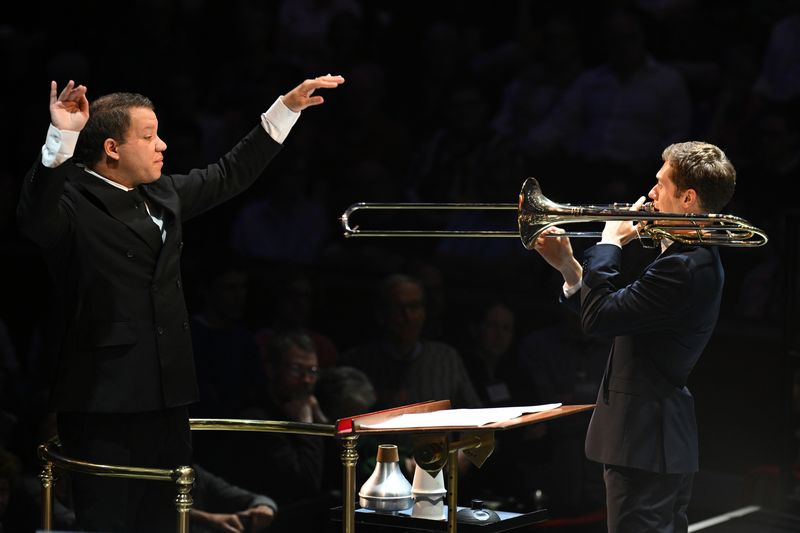
Peter Moore (trombone), London Symphony Orchestra / Ryan Bancroft

Vaughan Williams English Folk Song Suite (1923)
Schuller Eine kleine Posaunenmusik (1980) [Proms premiere]
Tippett Triumph (1992) [Proms premiere]
Arnold arr. Johnstone English Dances Set 1 Op.27 (1950, arr. 1965)
Grainger The Lads of Wamphray (1904), Country Gardens (1918, arr. 1953), Lincolnshire Posy (1937)

Royal Albert Hall, London
Saturday 30 August 2025 11am

Reviewed by Richard Whitehouse Photos (c) BBC / Chris Christodoulou

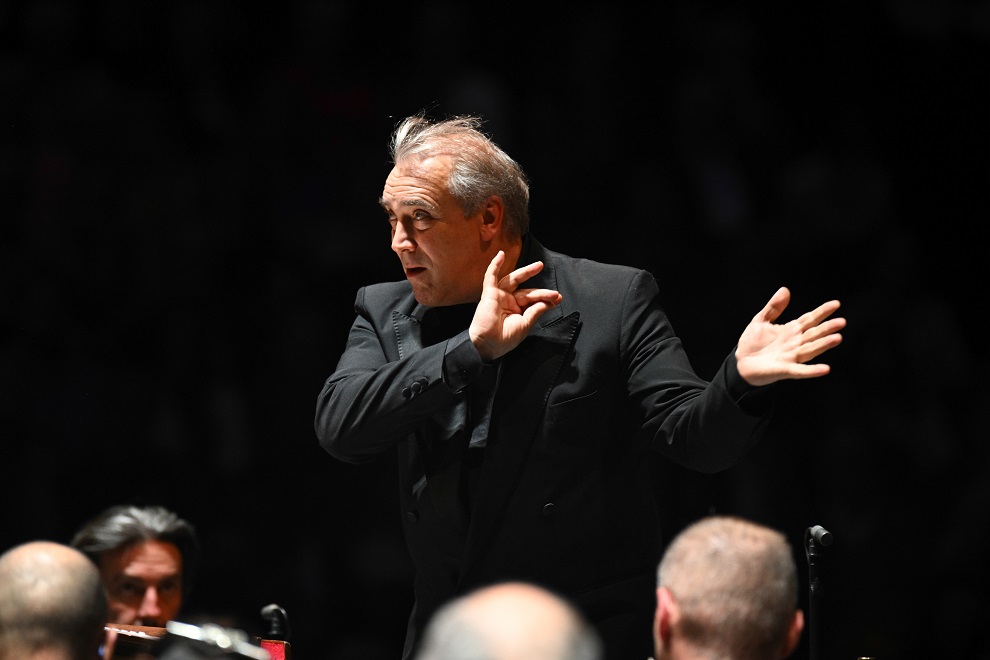
His pained countenance may have adorned its programme cover but Sir Simon Rattle’s ‘routine surgery’ meant this morning’s Prom was directed by Ryan Bancroft, though the works played by woodwind and brass (and basses) of the London Symphony Orchestra remained the same.

The concert duly breezed into life with Vaughan WilliamsEnglish Folksong Suite, heard in its original scoring for concert (i.e. – military) band such as imparts a forthright impetus to its outer marches – the former alternating brusqueness with insouciance, and the latter similarly balancing energy with geniality. In between these, the intermezzo provided welcome respite with its soulful medley. Expert as are the arrangements for orchestra by Gordon Jabob or for brass band by Frank Wright, this remains the ideal medium for an unassuming masterpiece.

It would have been remiss of the Proms not to include a piece by Gunther Schuller in the year of his centenary, with Eine Kleine Posaunenmusik being a fine choice in context. Fastidiously scored for trombone and ensemble, whose wind and brass melded into tuned percussion with notable solos from piano and harpsichord, its five succinct movements outline a succession of vignettes in which Peter Moore sounded as attuned expressively as technically. With music as distinctive as this, Schuller’s fourth appearance at these concerts will hopefully not be his last.

Surprising that Michael Tippett’s Triumph should have remained so obscure within his output. Seemingly made during work on The Rose Lake, this ‘Paraphrase on Music from The Mask of Time’ is for the greater part his arrangement of the oratorio’s sixth movement, though it could be heard as encapsulating his music over the decade from the mid-’70s. The main portion pits fractured lyricism against dissonant outbursts as befits its genesis in a setting of Shelley’s The Triumph of Life and, if the closing affirmation sounds added-on, its finality is hardly in doubt.
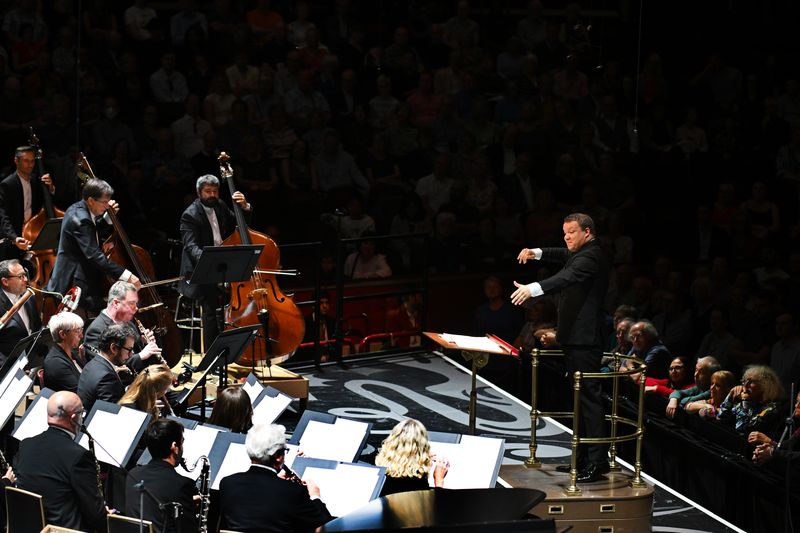
There could hardly have been a more pointed contrast than with Malcolm Arnold’s initial set of English Dances – its sequence of winsome, bracing, elegiac then energetic numbers ideally conveyed in Maurice Johnstone’s arrangement. Their concision was thrown into relief by the relative garrulousness of The Lads of Wamphray, an early example of Percy Grainger’s love for folksong which, in this instance, rather outstays its welcome. Rattle presumably enjoys it and Bancroft gave it its head, but its inclusion here was not warranted by its musical quality.

From the other end of Grainger’s career, his concert-band arrangement of Country Gardens exudes all the wit and irony of his later creativity. It made a canny upbeat into Lincolnshire Posy, one of a select handful of concert band masterpieces and where the LSO gave its all. Thus, the incisive Lisbon (Dublin Bay) was followed by the pathos-drenched Horkstow Grange then intricately imaginative Rufford Park Poachers; the jaunty The Brisk Young Sailor by the darkly rhetorical Lord Melbourne (very different from Britten’s elegiac take).

The surging impetus of The Lost Lady Found brought to a suitably rousing close this suite and what was a fine showcase for the LSO woodwind and brass, an unexpected if welcome appearance by Bancroft and, above all, a demonstration of the potential of the concert band.

Click on the artist names to read more about Peter Moore, the London Symphony Orchestra and conductor Ryan Bancroft. Click also for more on composer Gunter Schuller and the BBC Proms

Published post no.2,644 – Monday 1 September 2025
In concert – Khatia Buniatishvili, Melbourne Symphony Orchestra / Jaime Martin @ BBC Proms: Sutherland, Dvořák & Tchaikovsky

Khatia Buniatishvili (piano), Melbourne Symphony Orchestra / Jaime Martin

Sutherland Haunted Hills (1950) [Proms premiere]
Tchaikovsky Piano Concerto no.1 in B flat minor Op.23 (1874-5)
Dvořák Symphony no.6 in D major Op.60 (1880)

Royal Albert Hall, London
Friday 29 August 2025

Reviewed by Richard Whitehouse Photos (c) BBC / Chris Christodoulou

Eleven years after its well-received debut at these concerts under the late Sir Andrew Davis, the Melbourne Symphony Orchestra made its unintentionally eventful return with current chief conductor Jaime Martin and a programme which, for the most part, played to this orchestra’s strengths.

A significant presence in Australian music throughout the mid-twentieth century, Margaret Sutherland has yet to receive her due in live or recorded terms; making this performance of Haunted Hills the more timely. Inspired by the Dandenong Ranges, just outside Melbourne, her symphonic poem evokes the timelessness of its environment as surely as the fate of the Aboriginals who came there. Its starkly dissonant opening then granitic opening paragraph recall that Vaughan Williams’ Sixth Symphony had been unleashed barely two years earlier, and while much of what follows is notable more for its judicious orchestration than formal cohesion, the musical persona that finally emerges is distinctive enough to warrant further hearings of this piece within the context of Sutherland’s not inconsiderable output overall.

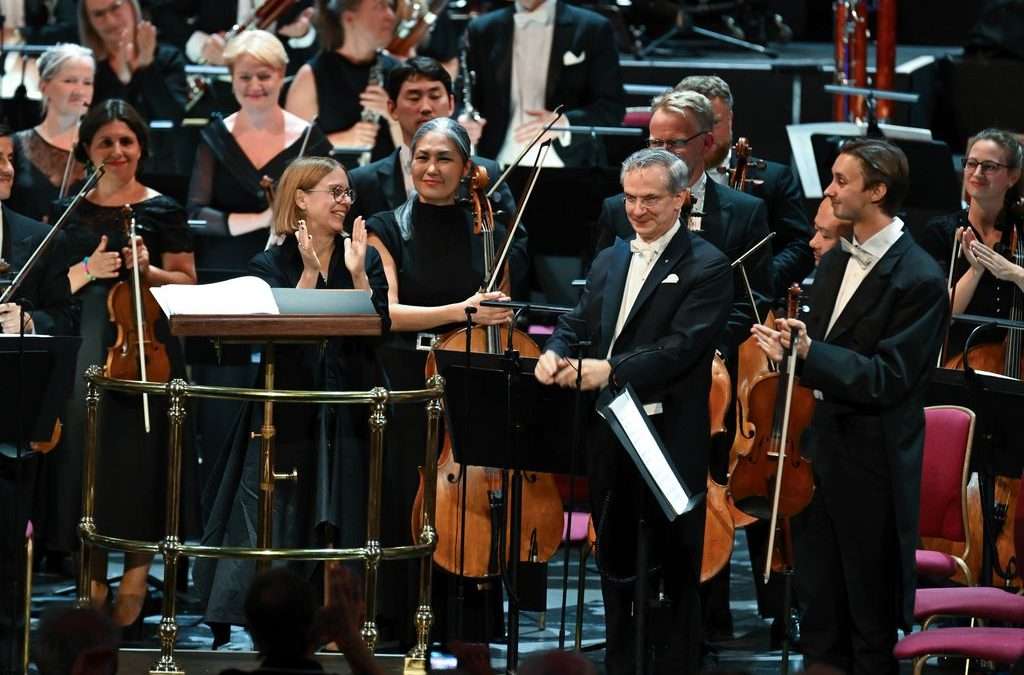
Logistical factors necessitated a reordering such that Dvořák’s Sixth Symphony came before the interval. Not a stranger to these concerts (tonight’s being its ninth hearing in 72 years), it responded well to Martin’s interventionist if rarely intrusive approach – not least an opening Allegro (its non tanto duly observed albeit with no exposition repeat) at its most persuasive in a development whose seeming discursiveness was purposefully reined in, and on to a coda whose heightened sense of arrival was mitigated only by those slightly tentative closing bars.

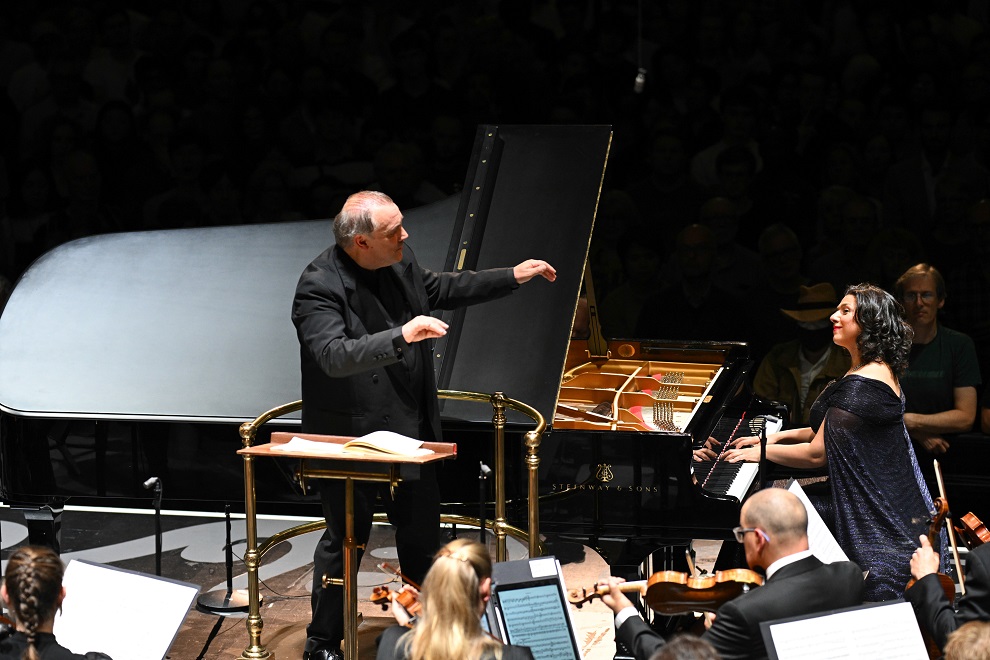
Not the deepest among Dvořák’s symphonic slow movements, the Adagio is surely his most felicitous in its expressive shadings and emotional understatement. Martin made the most of these, as too the contrast between the Scherzo’s impetuous outer sections and its ingratiating trio. The surging acceleration at its close prepared unerringly, moreover, for a Finale as finds Dvořák at his most Brahmsian though, here again, Martin (above), steered a forthright course through its overly rhetorical development before he infused its coda with an exhilarating affirmation.

Tchaikovsky’s First Piano Concerto cannot often have occupied the second half of a concert, though Khatia Buniatishvili made the most of her delayed appearance. Most striking was the amount of hushed playing during a lengthy opening movement whose indelible introduction was kept well within emotional limits. If coordination between soloist and orchestra was not all it might have been, the latter’s entry after a suitably dextrous cadenza was an undoubted highpoint, though not a rather blowsy coda. A melting take on the Andantino was enhanced with poetic contributions from flautist Prudence Davis and cellist David Berlin – while if, in the final Allegro, Buniatishvili’s passagework could seem unnecessarily skittish, she and the Melbourne players came together admirably in a surging but not unduly bathetic peroration.

As to extra-musical occurrences at this concert (for a full BBC account, read here), these artists responded simply by focussing on the music. As an envoi, Buniatishvili’s elegant rendering of the Adagio from Alessandro Marcello’s Oboe Concerto in D minor, arranged by Johann Sebastian Bach, could not have been more fitting.

Click on the artist names to read more about pianist Khatia Buniatishvili, the Melbourne Symphony Orchestra and conductor Jaime Martin. Click also for more on composer Margaret Sutherland, and the BBC Proms

Published post no.2,643 – Sunday 31 August 2025

In concert – Soloists, Danish National Concert Choir & Symphony Orchestra / Fabio Luisi @ BBC Proms: Beethoven 9th Symphony, Bent Sørensen & Anna Clyne

Clara Cecile Thomsen (soprano), Jasmin White (contralto), Issachah Savage (tenor), Adam Palka (bass), Danish National Concert Choir, Danish National Symphony Orchestra / Fabio Luisi

Bent Sørensen Evening Land (2017)
Anna Clyne The Years (2021)
Beethoven Symphony no.9 in D minor Op.125 ‘Choral’ (1811-24)

Royal Albert Hall, London
Thursday 21 August 2025

Reviewed by Ben Hogwood Photos (c) BBC / Chris Christodoulou, Ben Hogwood (soloists)

Celebrating their centenary this year, the Danish National Symphony Orchestra and chief conductor Fabio Luisi led us from the quiet of evening to the blazing light of a sunny morning in the course of this concert.

The challenge facing any concert programmer containing Beethoven’s Choral Symphony is how to lead up to it. This Prom approached from a contemporary angle, beginning in near silence with Bent Sørensen’s contemplative Evening Land. The Danish composer’s imaginative orchestration was key to the success of his picture painting, beautifully rendered by Luisi, as was the threadbare violin solo with which leader Christina Åstrand began. Childhood reminiscences of the Danish island Zealand took place in the half-light, contrasting with visions of nocturnal Manhattan that came through in bursts of technicolour, honouring Leonard Bernstein. Making a lasting impression, however, was the beautiful oboe solo from Kristine Vestergaard that marked the illness and subsequent passing of Sørensen’s father.

Having eavesdropped on this intimate opening piece, the Danish National Concert Choir rose for Anna Clyne’s musical account of the Covid pandemic – already consigned to history, it seems. Few people would like to revisit those days in a concert experience, but Clyne’s message – channelling the text of Stephanie Fleischmann – was one of underlying resilience. The choir began in stasis, occupying an added note chord which somehow drew parallels with the Björk song Possibly Maybe for this correspondent, before the piece flourished. A dreamlike mood was enhanced by a pure, almost complete lack of vibrato from both choir and orchestra, while the harmonic language drew strong parallels with the latter stages of Holst’s suite The PlanetsSaturn and Neptune in particular. An autumnal chill was evident in spite of increasingly frenetic activity in the orchestra, and the piece ended in an uneasy acceptance of events passed, rather like our own emergence from lockdown.

Beethoven’s Ninth Symphony is the ultimate hymn to freedom, though it does of course go through a titanic struggle before that release, in the form of Schiller’s Ode To Joy, can be attained. Luisi led us through the dark, pre-twilight moments in an account notable for its poise and guile. Using relatively fast speeds, the first movement took a little while to light the touch paper, but once ignited the music powered forward with increasing determination. The scherzo was quick, quite matter of fact with its timpani interventions, and balanced by a bucolic trio where the wind kept pace heroically with Luisi’s quick baton. Their attractive textures and warm melodic phrasing were a key feature of both this and the Adagio, again on the quick side, but managing its fanfare interventions impeccably.

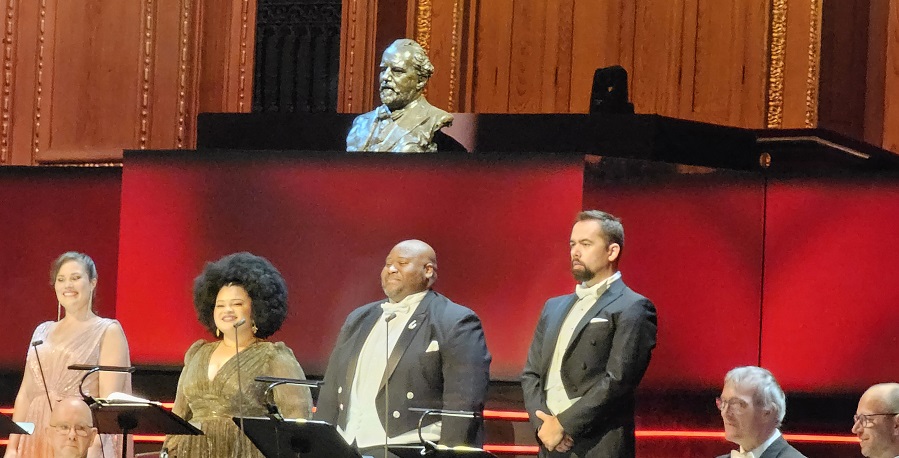
Left to right: Clara Cecile Thomsen (soprano), Jasmin White (contralto), Issachah Savage (tenor), Adam Palka (bass), beneath the bust of Sir Henry Wood @ BBC Proms

And so to the finale, with a memorable exposition for the Ode to Joy theme from sotto voce cellos and basses, the Royal Albert Hall hushed in anticipation. The choral passages were suitably exultant, the 75-strong choir drilled to perfection if cooler in temperature than the orchestra. The four soloists (above) were led by impressive bass Adam Palka, whose authoritative recitative “O Freunde, nicht diese Töne!” was a highlight, and while the quartet’s ensemble pieces wavered a little in tuning the sense of release and elation was keenly felt and clearly relished. The smile on the face of the music spread to the audience in the exhilarating closing bars as the orchestra took flight, completing an impeccably controlled interpretation on the part of Luisi that came to the boil at just the right time.

You can listen back to this Prom concert on BBC Sounds until Sunday 12 October.

Click to read more about the BBC Proms

Published post no.2,634 – Friday 22 August 2025

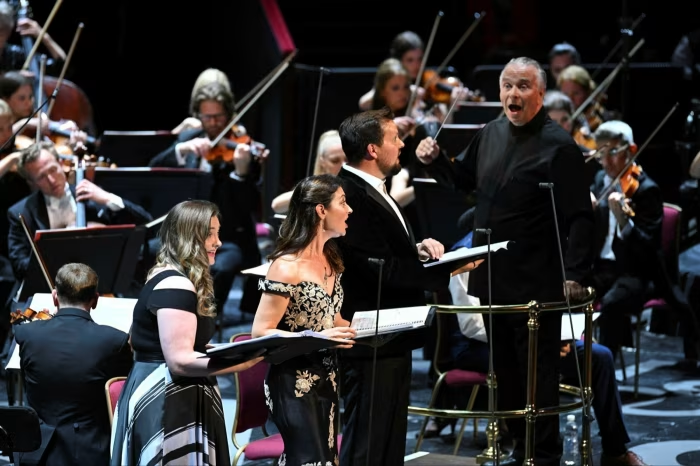
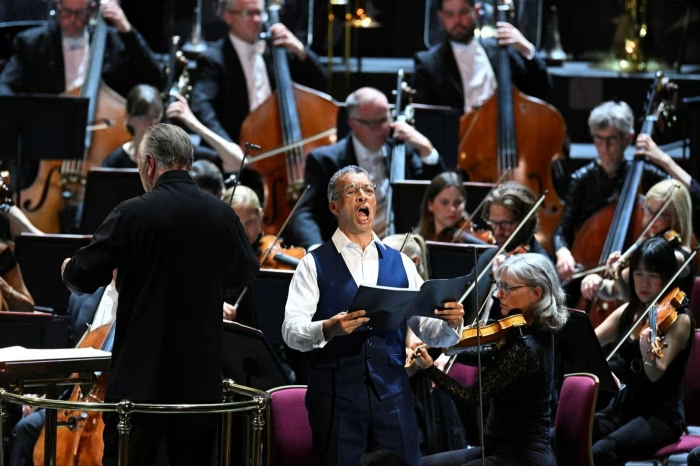
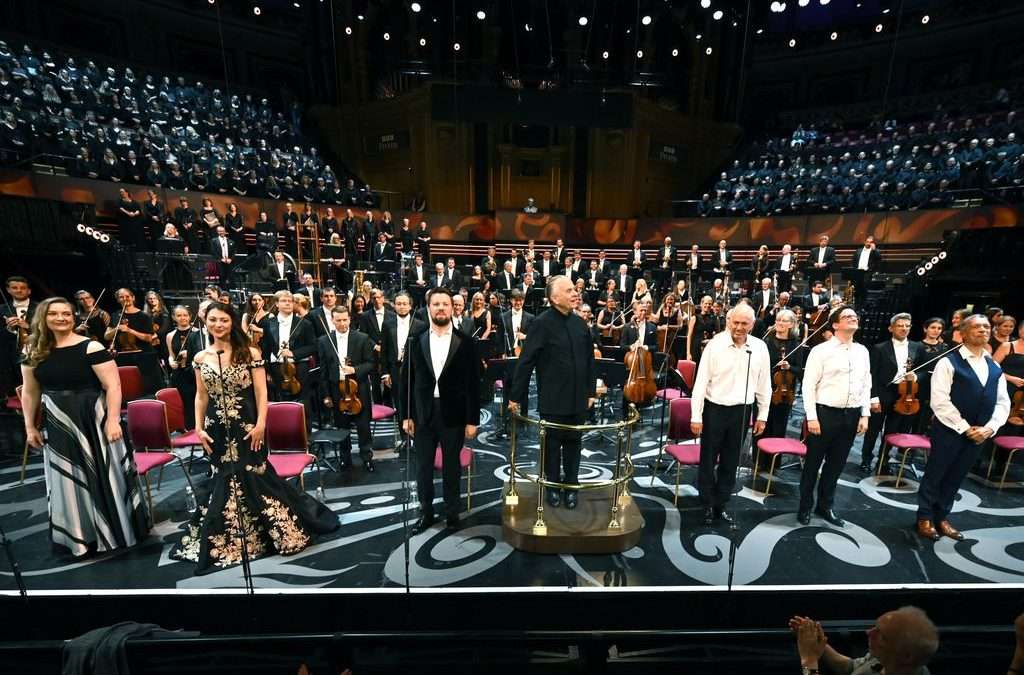
In concert – Soloists, London Philharmonic Choir, BBC Symphony Chorus & Orchestra / Sir Mark Elder @ BBC Proms: Delius: A Mass of Life

Jennifer Davis (soprano), Claudia Huckle (mezzo-soprano), David Butt Philip (tenor), Roderick Williams (baritone), BBC Symphony Chorus, London Philharmonic Choir, BBC Symphony Orchestra / Sir Mark Elder

Delius Eine Messe des Lebens (A Mass of Life) (1898; 1904-05)

Royal Albert Hall, London
Monday 18 August 2025

Reviewed by Richard Whitehouse Photos (c) BBC / Chris Christodoulou

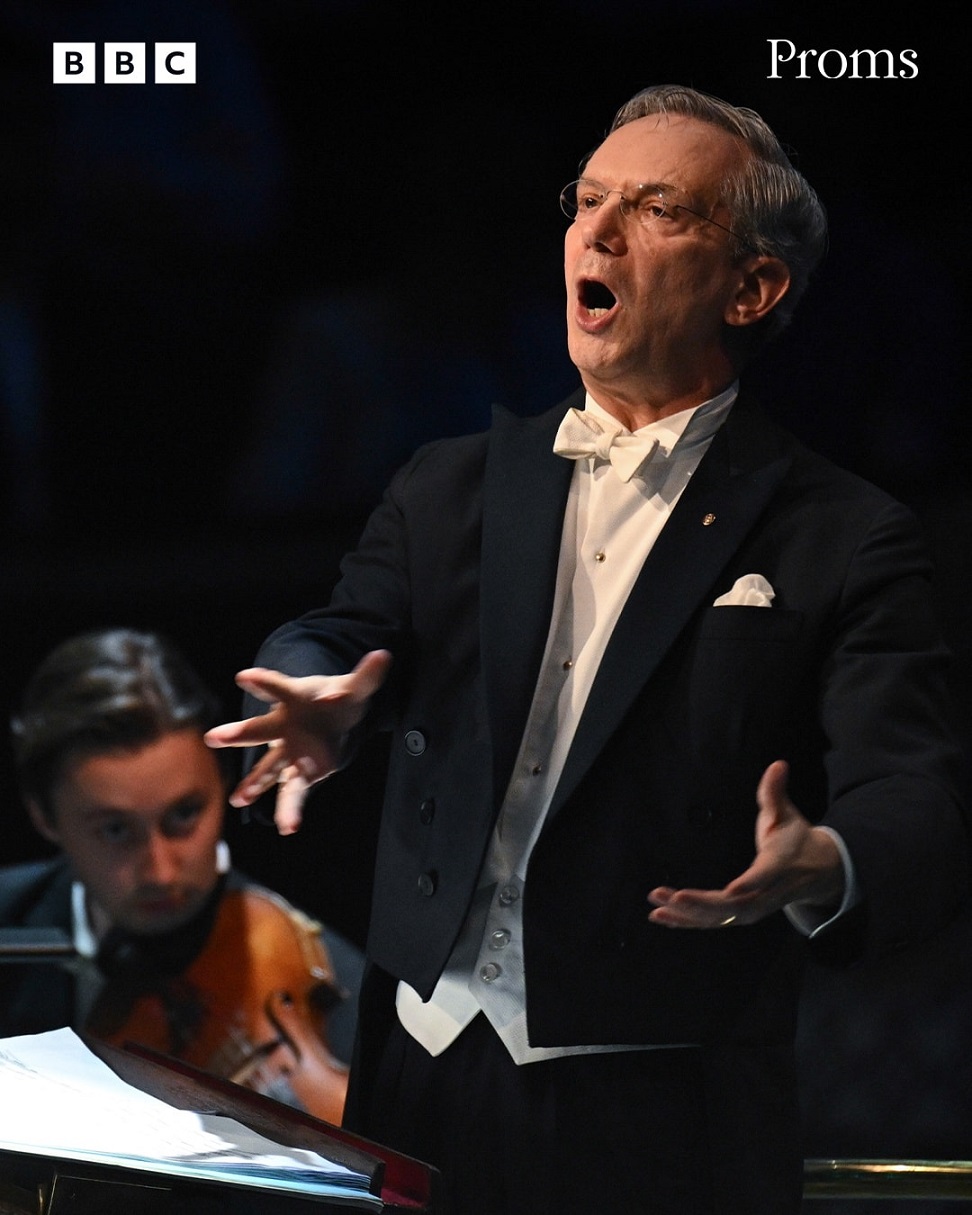
There could be few venues better suited to Delius’s A Mass of Life, in its conceptual ambition and emotional opulence, than the Royal Albert Hall and this evening’s performance, only the third at these concerts and the first in 37 years, undoubtedly made the most of these qualities.

Despite the tragedy of his ultimate breakdown and ensuing incapacitation, Friedrich Nietzsche was considered a liberator in terms of a guiding philosophy with its emphasis on free will and rejection of conventional mores. Such appeal could hardly have been greater than on Frederick Delius, his largest concert work setting substantial extracts from Also sprach Zarathustra in a way that feels never judgemental and is only rarely overreaching. Much of the time its music has a detached and meditative aura whose inward intensity needs to be sustained accordingly.

That this account did so was owing to Sir Mark Elder, his advocacy already manifest in the finest modern recording (LAWO) as came across just as strongly and often more so here. Certainly, the longest sections were effortlessly paced – whether that beguiling interplay of longing and anticipation in In dein Auge which becomes the still (while never static) centre of Part One, or that extended sequence of Part Two taking in the scenic evocation as is Lasst vom Tanzen ab then the pantheist contemplation of Heisser Mittag schläft which is surely the expressive highpoint. Not that the dramatic openings of each part were under-characterized – the driving energy of O du mein Wille! setting the course for one as vividly as did the rousing Herauf! Nun herauf, with its orchestral prelude Auf den Bergen meltingly rendered, for the other.

This may be regarded mainly as a choral work, but the importance of its vocal parts is never to be gainsaid. Above all, that of the baritone who assumes the role of Zarathustra in his gradual incline to enlightenment and in which Roderick Williams (above) was consistently at his best – hence the infectious Erhebt eure Herzen and assertive Wehe mir! then, subsequently, the alluring eloquence of Süsse Leier! and will to action of Gottes Weh ist tiefer. If this is the solo role as brings focus or unity to the whole, the others afford textural and expressive enhancements aplenty – Jennifer Davis as capricious and Claudia Huckle as confiding as David Butt Philip was assertive in their respective contributions. All three singers brought out the youthfulness or naivety which are crucial to this work’s underlying journey from innocence to experience.

Any doubt a relative disparity in numbers of female and male singers would be detrimental to choral balance was groundless – Elder drawing a vividness but also delicacy of response from those combined BBC Symphony and London Philharmonic forces, while the BBC Symphony Orchestra was rarely less than galvanized whether in complex tuttis or the artless writing for solo woodwind that informs the latter stages. Delius’s orchestration rarely ‘plays itself’ but it conveys a lustre and translucency which could not be mistaken for that of another composer.

A near-capacity audience seemed as attentive to this as it was affected by the final Kommt! Lasst uns jetzt wandeln!, with its build-up to an ecstatic apotheosis then swift dispersal into silence: setting the seal on a memorable interpretation of this all-encompassing masterpiece.

You can listen back to this Prom concert on BBC Sounds until Sunday 12 October – or listen to the recent recording from Sir Mark Elder, with soloists, the Collegium Musicum Choir, Edvard Grieg Kor, Bergen Philharmonic Choir and Orchestra on Tidal below:

Click on the artist names to read more about soloists Jennifer Davis, Claude Huckle, David Butt Philip and Roderick Williams, the London Philharmonic Choir, BBC Symphony Chorus and BBC Symphony Orchestra, and conductor Sir Mark Elder. Click also for more on the Delius Society and the BBC Proms

Published post no.2,632 – Wednesday 20 August 2025

Arcana at the Proms – Prom 62: Bavarian Radio Symphony Orchestra / Sir Simon Rattle – Mahler: Symphony no.6

Mahler Symphony no.6 in A minor (1903-04)

Bavarian Radio Symphony Orchestra / Sir Simon Rattle

Royal Albert Hall, London
Friday 6 September 2024

reviewed by Ben Hogwood Photos (c) Chris Christodoulou (taken from the previous night’s Prom)

This was Sir Simon Rattle‘s fifteenth encounter with the music of Gustav Mahler at the BBC Proms – and a third outing under his baton for the Sixth Symphony, which he first conducted in charge of the National Youth Orchestra of Great Britain 40 years ago.

This time he was visiting, having returned to Germany to take charge of the Bavarian Radio Symphony Orchestra, a feeling for the concertgoers akin to welcoming a distant relative and hearing about their latest job. The Munich ensemble have formidable Mahler credentials, no doubt introduced by Eugen Jochum from their founding in 1949 but notably honed by Rafael Kubelík, with whom they recorded all the symphonies for Deutsche Grammophon. This account of the Sixth proved them to be the ideal foil for Rattle, the Liverpudlian welcomed with great cheers around the hall.

Sir Simon knows his Mahler better than arguably any other living conductor, and the breadth and depth he brought to his interpretation was breathtaking. So too was the sheer audible spectrum, for which we have to thank Mahler, for this is one of those works that has simply everything, from the tiniest murmur from bass strings to the thunderous hammer strokes of the finale. Some way between that lies the tender theme he wrote for his wife Alma, a glowing light in the first movement under the tender caress of its beautiful wind choir. Around this and in the last movement were fleeting glimmers of sunshine from the cowbells, an unusual addition to the percussion section that charmed from their offstage position, evoking the open meadows but with shivers of cold wind from the rest of the orchestra, outlines icily drawn by strings and brass.

These moments were welcome respite from the tumult of Mahler’s marching music, obsessively hammered home in the fast movements, the orchestra turning this way and that at quick speed. The marching music, so virulent in the first movement, quickly develops a sour taste, and Rattle was alive to that in the scherzo – placed third. This is a time-honoured practice for him, in accordance with Mahler’s order of performance when conducting but not his initial order of composition. The controversy continues to follow the work around, and although many (this author included) prefer the scherzo placed second – ratcheting up the tension – Rattle’s shaping of the piece overall made his own choice a convincing one.

The orchestra were simply stunning. The strings – rarely given due credit in big symphonic performances such as this – were united beyond criticism, the violins in remarkable unison – and particularly beautiful in the serene opening to a magical slow movement. Brass were also as one in their clarion calls, but turned vulgar when they needed to. The wind section was beautifully shaped and coloured, with an appropriately plaintive oboe solo in the trio section of the scherzo. Underpinning the performance were the rolling timpani, the thunder to the lightning strikes of the percussion, whose power was simply brutal at times, The hammer blows, struck twice in the finale, were terrifying strokes of fate and delivered with appropriately cold theatre.

This was a performance that will stick in the memory for years, one from which my ears are still ringing. Mahler’s ghastly premonitions of later existence were brought to life in shocking technicolour, though Rattle revelled at the same time in its beautiful evocations of nature. These were ultimately swept aside, with red-blooded highs and cold-blooded lows, all blended into the same intoxicating musical cocktail. For sheer emotional power, this symphony – and this performance – had it all.

You can listen to the Bavarian Radio Symphony Orchestra and Sir Simon Rattle in their recent live recording of the Sixth symphony below:

Published post no.2,294 – Saturday 7 September 2024