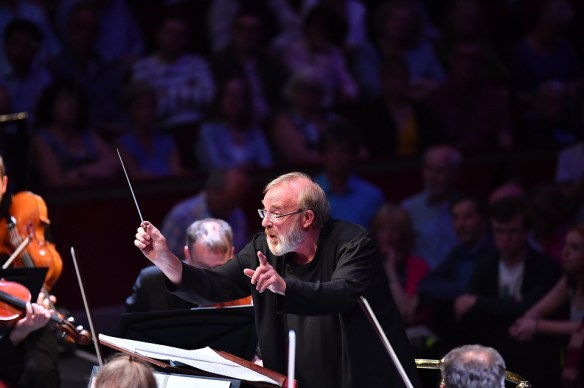
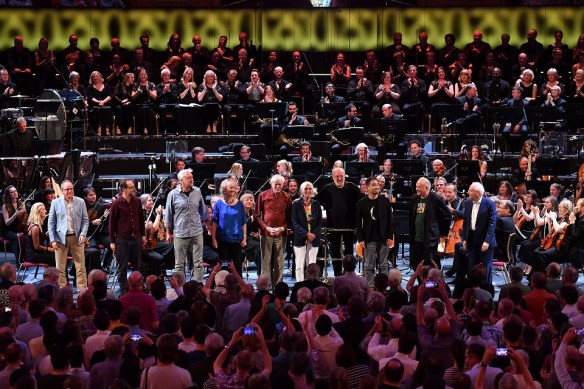
Arcana at the Proms – Prom 71: Bach Night – Dunedin Consort & John Butt perform the four Orchestral Suites and commissioned ‘responses’

Prom 71: Dunedin Consort / John Butt (harpsichord)

J.S. Bach Orchestral Suite no.4 in D major BWV1069 (c1730) (from dfgd on the broadcast)
Nico Muhly Tambourin (2019) (22:14 – 25:28)
J.S. Bach Orchestral Suite no.1 in C major BWV1066 (c1725) (28:12)
Stevie Wishart The Last Dance? A Baroque Tango (2019) (49:28 – 52:37)
Ailie Robertson Chaconne (2019) (1:19:50)
J.S. Bach Orchestral Suite no.2 in B minor BWV1067 (c 1738-9) (1:23:38
Stuart MacRae Courante (2019)
J.S. Bach Orchestral Suite no.3 in D major BWV1068 (c1730)

Royal Albert Hall, Wednesday 11 September 2019

Reviewed by Ben Hogwood

You can listen to this Prom on BBC Sounds here

A joyous Prom.

One of Sir Henry Wood’s many inventions at the Proms was to instigate ‘composer nights’, where the programme revolved around the output of a composer such as Wagner, Beethoven, the Strauss family, or Johann Sebastian Bach.

This particular Bach night came with a neat twist – the four orchestral suites, grouped together, but each complemented with a new commission receiving its world premiere. The idea of composers writing new music for a group that plays on the instruments of Bach’s time is not necessarily new but it is an intriguing one, and led to four very varied responses. What these short asides ultimately did, however, was make the audience even more in thrall to the music of Johann Sebastian.

The four Orchestral Suites do not get as much air or auditorium time as the six Brandenburg Concertos, but there is nothing to mark them out as inferior works. They make a very satisfying whole, especially when programmed as here by John Butt and the Dunedin Consort – the fourth suite placed first, so that we went through a satisfying key cycle and heard the most affirmative music at the end.
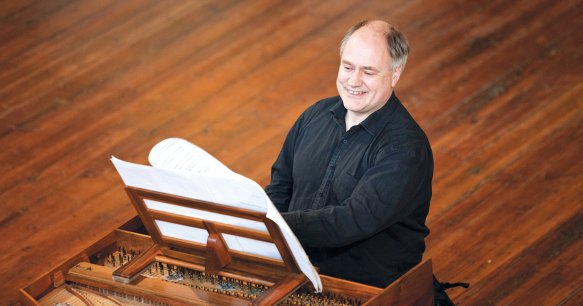
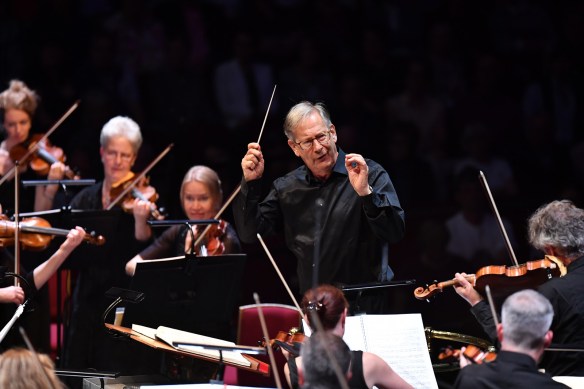
Butt (above) is a Bach specialist, living and breathing the composer’s music. He has scholarly intellect on his side but balances that with enthusiasm in spades. For this concert his energy rubbed off on the audience, and in several faster numbers he literally could not wait to get his hands busy on the harpsichord. Like all bar the cellists and basses he stood to perform, the Dunedin Consort’s freedom of movement translating nicely into their interpretations of Bach’s dance movements, which had a spring in their step.

The last two numbered suites use brass and timpani, so we began with something approaching a fanfare. It took a couple of bars for the Dunedin Consort, numbering nearly 40, to hit their stride, but from then on their playing filled the Royal Albert Hall with the expanse of the fourth suite’s Ouverture, which had a ceremonial air before breaking into a bustling faster tempo. The four dances that followed were fleet of foot, Butt enjoying the humour of the perky Bourrée (10:40), then a stately Gavotte (13:25), Menuet (15:23) and Réjouissance (19:33), at which point brass and drums returned with a flourish.

Nico Muhly’s Tambourin followed without a break, utilising the same grand forces but expanding the harmonic world considerably. As a dance it was syncopated beyond danceable rhythms, starting powerfully but dissolving into D major at the end, dressed by flecks of Stephen Farr’s harpsichord.

The Orchestral Suite no.1 is a rich tapestry of dance movements prefaced by an expansive overture. The most expansive work of the four, its French ‘ouverture’ was elegantly played and dressed with expansive bass notes before moving to a lively fugue, oboes really coming into their own. The dances, again all of French derivation, were light on their feet, propelled by nifty harpsichord accompaniment from Farr and Butt centre stage. They were topped by a bustling Bourrée, its figures flying around the violin section before the complement, a darker, minor key central section for woodwind. With harpsichords silent, this was poignant and beautifully played.

Stevie Wishart complemented the first suite with a striking tribute to the endangered Argentine Hooded Grebe, whose call matched her music and could be heard over the Royal Albert Hall speakers during a witty and rather macabre tango. Once heard the call became ever more poignant, the instruments thrown off course and off pitch. It was effective, haunting and thought provoking.

Ailie Robertson’s Chaconne opened the second half, a reflection on Scottish dance music. A slow and atmospheric piece, it began with eerie held notes in the upper violins which really came into its own when the flutes joined, like Wishart evoking a bird in imagery, though this time a slower, bigger one like an albatross.

For the Orchestral Suite no.2 Butt used reduced string forces and three flutes, headed by the excellent Katy Bircher. The colours of this work are appreciably darker, and the leaner string sound complemented the consoling flutes. After a solemn start to the Ouverture came a lively fast section, then the flutes led us in a sprightly Rondeau, with a quicksilver account of the famous Badinerie to finish. In between there were solemn, more processional numbers – a mournful Sarabande picked up by a quick Bourrée, resolute Polonaise and gallant Menuet.

Stuart MacRae’s Courante was the final commission, an upbeat to the final suite that went off at quite a pace, Stephen Farr’s rattling harpsichord pursued by the orchestra and ultimately caught, before the violins became ‘it’ and took off again, the piece diminishing to a whisper at the end.

The Courante was a cheeky upbeat to a truly joyous performance of Bach’s Orchestral Suite no.3. Trumpets were bright and timpani on point, Stephen Burke tapering his strokes to use angle rather than force to create the sound. The celebrated Air ‘on the G String’ was light on its feet and affectionate without overindulging, while the Gavotte, Bourrée and Gigue had the biggest smile on their faces, Bach’s counterpoint as inevitable and toe tapping as ever. The Gigue was especially upbeat, with rolling timpani and celebratory trumpets.

It is incredible to think that only last year Creative Scotland were proposing to cease funding the Dunedin Consort, a decision that was thankfully overturned. This night at the Royal Albert Hall illustrated beyond doubt the collective, creative bloom the group are experiencing, and it was a privilege to be a part of their Bach night.

Further Listening

John Butt and the Dunedin Consort have not yet recorded the Bach suites, but they did recently release an account of the wonderful violin concertos which you can sample below:

Bach Violin concertos with Cecilia Bernardini from Dunedin Consort on Vimeo.

For a choice recording of the suites, a new disc from the Freiburger Barockorchester is recommended here:

Arcana at the Proms – Prom 70: Daniel Pioro gives the world premiere of Jonny Greenwood’s Horror vacui

Jonny Greenwood (bass guitar/tanpura), Daniel Pioro (violin), Nicolas Mangriel (tanpura), Katherine Tinker (piano), BBC Proms Youth Ensemble, BBC National Orchestra of Wales / Hugh Brunt

Biber Mystery (Rosary) Sonatas No. 16 – Passacaglia in G minor
Penderecki Sinfonietta for strings, second movement Vivace
Greenwood Three Miniatures from Water – No. 3; 88 (No. 1)
Reich Pulse
Greenwood Horror vacui

Royal Albert Hall, Tuesday 10 September 2019 (late night Prom)

Reviewed by Ben Hogwood
Photo credits Mark Allan

You can listen to this Prom on BBC Sounds here

Alongside his role as lead guitarist with Radiohead, Jonny Greenwood has a close relationship with the string orchestra. Detailing his love for the medium in the programme for this late night Prom, he explained his preference for live music over electronic or recorded alternatives, citing the living and breathing aspects of the instruments as his prime reason for using them.

Breathing into the stringed instruments became an aspect of his new piece, Horror vacui, written for violinist Daniel Pioro and an ensemble comprising string players from the BBC Proms Youth Ensemble and the BBC National Orchestra of Wales.
Arranged in a fan shape across the stage, the orchestra had the lowest sounds at the back in the form of eight double basses and twelve cellos, with ten violas just in front of those. That left just the 38 violins in front, each of the 68 instrumentalists having their own specific part.

Greenwood’s directions for conductor Hugh Brunt were unconventional, his arm often sweeping across the ensemble from left to right and back again so that each instrument knew when to come in and fade away. This created a powerful visual and aural effect, the string players’ bows rising and falling like a sound wave.

Greenwood explained how Horror vacui is the fear of empty space, usually in paintings. This was vividly captured not just from the dense orchestration but from Daniel Pioro’s superbly played solo violin part. With incredibly secure intonation he excelled in the pure upper register passages, the notes soaring effortlessly towards the ceiling of the Royal Albert Hall. Beneath him the textures were always changing, sometimes secured by players blowing into their instruments, literally breathing life into them, or from deep-piled chords, some of which were huge blocks of consonant sound. Around 20 minutes in the biggest of these chords drew applause from the audience, most of whom thought the piece had finished there – and indeed it would have been a natural stopping point. There was still a substantial coda to follow, which ended in a pure C major with Pioro back up in the heights. The conventional end felt like a more obvious statement after Greenwood’s innovations earlier in the piece, and though beautiful felt tacked on to the end.

That said, Horror vacui is a very impressive and engaging piece of work – and here, with the orchestra under the leadership of the energetic Lesley Hatfield, it received the best possible performance.

We heard two other Greenwood pieces. The third of Three Miniatures from Water was perfect late night fayre, especially with the drones of two Indian tanpuras to enjoy, but ultimately was not long enough for pure indulgence. The shapes made by the smaller orchestra were pleasing to the ear – while the liquid torrents from solo pianist Katherine Tinker in the premiere of 88 (No.1) were harsher. The title reflects the number of keys on a modern grand piano, and Tinker surely used them all in the course of a virtuoso performance that built on watery influences from Debussy and Ravel.

Steve Reich’s Pulse transported us to the American plains. Written in thrall to Copland’s Appalachian Spring, this very approachable piece has all the Reich qualities of small, oft-repeated melodic cells and development, but also a warmth not lost on the ensemble here. Greenwood himself played bass guitar but it was the higher riff from the violins at the start of the piece that made a lasting impression.

The inclusion of Biber and Penderecki at the start was helpful. The former ensured we could adjust to the sound of a solo violin in the big space of the Royal Albert Hall, as well as the idea of a minimalist approach in the composer’s development of a relatively small chord sequence. That it comes from the early Baroque period, late 17th century, is startling. Penderecki, a friend and close musical ally of Greenwood’s, was present in the second movement of his Sinfonietta. Energetically played here, it is however wholly under the influence of Bartók in its musical language and scoring.

This was a stimulating concert with an attentive audience. A brief note should be made about timekeeping, however, as due to the required stage changes, no matter how efficiently done, this Prom did not finish until 11:55pm. While that is unquestionably value for money, it did inevitably lead to audience members having to leave half way through or even before the main work in order not to miss their last transport options of the evening. The anxiety this can breed is contagious and can affect the whole evening, not just for the leavers but those around them. It would surely have been beneficial for an earlier item in the program to have been omitted to avoid this, or for the concert to start at 10pm as Late Night Proms used to do. I myself had to leave Greenwood’s piece before the finish, as staying on would have landed me with a £70 cab fare and an extremely late night. BBC Sounds was on hand to help with the closing minutes, naturally – but it’s something for the BBC to consider in future.

You can watch this concert in a recording on BBC4 on Friday 13 September. Rehearsal clips for Horror vacui on the BBC website

Arcana at the Proms – Prom 59: Soloists, Monteverdi Choir, Orchestra Révolutionnaire et Romantique & Sir John Eliot Gardiner – Benvenuto Cellini

Benvenuto Cellini (1836-38)

Opera in two acts (four scenes)
Music by Hector Berlioz
Libretto by Léon de Wailly, Auguste Barbier and Alfred de Vigny
Semi-staged performance, sung in French with English surtitles

Benvenuto Cellini – Michael Spyres (tenor)
Teresa – Sophia Burgos (soprano)
Fieramosca – Lionel Lhote (baritone)
Ascanio – Adèle Charvet (mezzo-soprano)
Giacomo Balducci – Maurizio Muraro (bass)
Pope Clement VII – Tareq Nazmi (bass)
Pompeo – Alex Ashworth (bass)
Innkeeper – Peter Davoren (tenor)
Francesco – Vincent Delhoume (tenor)
Bernardino – Ashley Riches (bass-baritone)
Perseus – Duncan Meadows (actor)

Stage director Noa Naamat
Lighting designer Rick Fisher
Costume designer Sarah Denise Cordery

Monteverdi Choir, Orchestra Révolutionnaire et Romantique / Sir John Eliot Gardiner (above)

Royal Albert Hall, Monday 2 September 2019

Reviewed by Richard Whitehouse
Photo credits Chris Christodoulou

You can listen to this Prom on BBC Sounds here

The Proms has witnessed some memorable (and innovative) Berlioz performances – with this evening’s account of Benevento Cellini, itself the culmination of Sir John Eliot Gardiner‘s Berlioz project leading up to the 150th anniversary of the composer’s death, an undoubted highpoint.

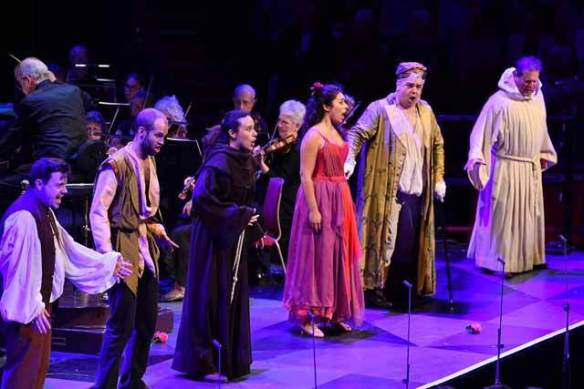
Not a little of its success was the effectiveness of this ‘staged concert performance’ – directed by Noa Naamat so as to make resourceful use of the Royal Albert Hall platform (who would have thought that singers hiding behind – antiphonally divided – second violins made so deft a theatrical conceit?), with unfussy costumes from Sarah Denise Cordery in keeping with the late-Renaissance setting and lighting from Rick Fisher as vividly expanded on the latter-day Proms procedure of illuminating the stage area. A presentation serving the opera admirably.

At least as significant was Gardiner’s pragmatism over just how much of the opera to include. Even at its Paris premiere in 1838, what was heard of Benvenuto Cellini was already distinct from what Berlioz had written; an issue further complicated by versions presented at Weimar during 1852-6. Taking the Urtext published in the New Berlioz Edition, Gardiner has arrived at a compromise which encompasses all the music one would reasonably hope to hear while vindicating this opera as an overall dramatic concept. Recklessly ambitious in its technical demands as it may have been, Cellini was always practicable as a dramatic undertaking and – akin to Prokofiev’s War and Peace a century later – giving a convincing shape to this excess of material is at least half the battle in ensuring its theatrical as well as its musical success.

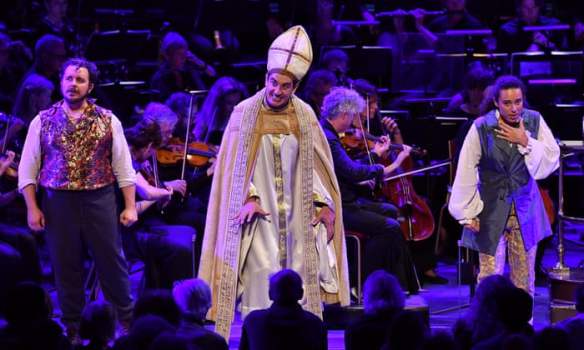
Not the least of those technical demands is on the singers, and this cast did not disappoint. As Cellini, Michael Spyres (above) evinced all the necessary panache without buckling under some stentorian vocal requirements. He was ideally complemented by Sophia Burgos as a pert yet never too coquettish Teresa; her naivety thrown into relief by the machinations of her suitor Fieramosca, given with suitably hollow bravado by Lionel Lhote, and cynicism of her father Balducci – tellingly rendered by Maurizio Muraro. Adele Charvet made for an appealing and sympathetic Ascanio, with Alex Ashworth exuding appropriate pomposity as Pompeo. Peter Davoren’s cameo as the unctuous Innkeeper was matched by that of Tareq Nazmi as the self-aggrandizing Pope. The Monteverdi Choir brought off its crucial contributions with aplomb.

Inevitably it is the orchestra which so often steals the limelight in a work by Berlioz, and the Orchestre Revolutionnaire et Romantique accordingly rose to the challenge. Of course, any performance of this music on ‘authentic’ instruments must contend with his assertions that the development of instrument-making and instrumental practice (notably within Germanic territories) was a necessary one. That said, he may have been reconciled to those limitations had his work been rendered with such timbral brilliance and intonational accuracy as here.
In building an ensemble of such consistency Gardiner takes especial credit, the more so as his performance demonstrably channelled its authentic credentials towards the spontaneous and creative reassessment of a masterpiece now receiving its due – even if many decades too late.

Ask the Audience at the BBC Proms – Roisin Brophy on the BBC SO concert of Elgar, Vaughan Williams & Hugh Wood

For the latest in Arcana’s Ask The Audience series Roisin Brophy (above) gives her thoughts on the BBC Symphony Orchestra and their Prom of English music under Sir Andrew Davis.

Prom 53: Stacey Tappan (soprano) Dame Sarah Connolly (mezzo-soprano), Anthony Gregory (tenor), BBC Symphony Chorus, BBC Symphony Orchestra / Sir Andrew Davis

Vaughan Williams Fantasia on a Theme of Thomas Tallis (1910)
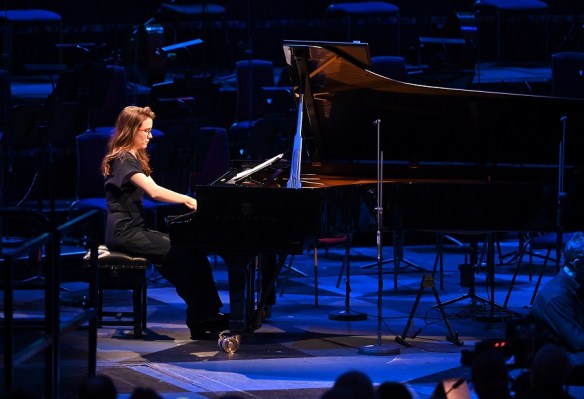
Hugh Wood Scenes from Comus (1965)
Elgar The Music Makers Op.69 (1912)

Royal Albert Hall, Thursday 29 August 2019

You can listen to this Prom on the BBC iPlayer here

ARCANA: Roisin, how would you describe your musical upbringing?

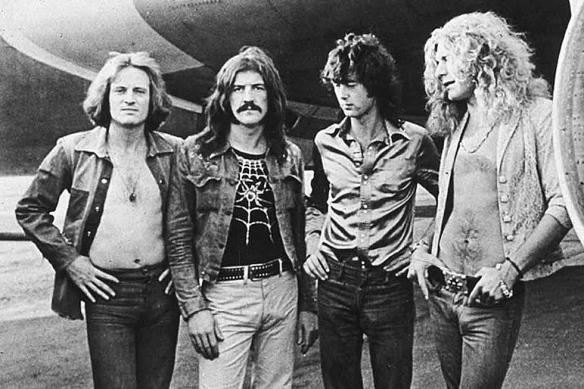
I am from a very heavily Irish catholic family. I grew up on a lot of Irish folk music, and my mum is quite a hippy at heart. My god parents are also hippies at heart, and so I grew up with a lot of Cat Stevens and Joni Mitchell. My mum’s got really good taste in music, so I grew up always loving Led Zeppelin and they continue to be my favourite band.

My dad is quite a musical person, he plays guitar and sings, and therefore I think I was very influenced into doing folk music as a child, and also being a catholic and going to catholic school, and going to church – where I heard choral music. I sang in a choir for our local church, and I stopped when I was about 15 or 16.

I got into drum and bass completely by accident. I don’t even listen to drum and bass! I know a lot of it but because I happen to work in it. I was just picked up by a dubstep producer years ago, and got into drum and bass from that. Folk is my most natural style of music, although I don’t write it professionally.

Could you name three musical acts you love, and why you love them?

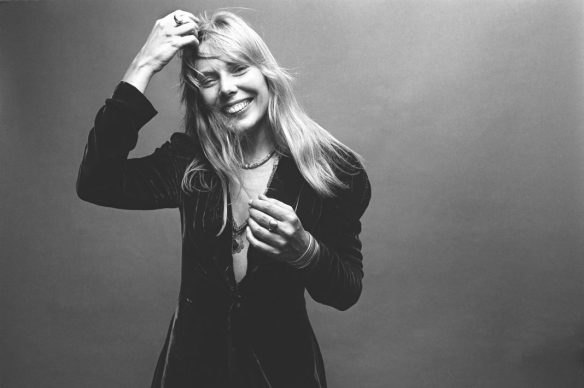
Joni Mitchell (above) – (a) because I grew up on her music, (b) because I think her vocal range and songwriting ability is unreachable by anybody else.

Led Zeppelin (above) Again the vocal range and the guitar and drum skills, for me, and their heavy influence from blues music, which you can really hear going into pop music.

My third would have to be Dolly Parton (above), because she’s a sassy lady, her songs are insanely catchy and again her voice is like no other.

What has been your experience of classical music so far?

I’ve always studied music, and did GCSE and ‘A’ level before studying popular music at university. I’ve always been around people that have been involved in classical music but not been involved personally, as I have always been on the popular or folk side of things. Going to Goldsmiths, which is very renowned for being a classical music education system, I had a lot of friends that were classical musicians and opera singers.

I’ve always loved classical music, and studying it you learn what you like and what you don’t like. I still listen to it most days, it’s more of a morning thing for me. I like piano-based stuff. Vladimir’s Blues by Max Richter is a good example.

How did you rate your first Proms experience?

I absolutely loved it, and I’m actually a bit blown away by how much I did love it. The second half was definitely a lot more emotive than the first, but I think that was because of how the piece (Elgar’s The Music Makers) moved. The crescendos were incredibly moving and the sound in general was such a massive sound with the choir, females on one side and male on the other, a huge orchestra and the percussion in the second piece.

I think it made me appreciate that it was not a piece of classical music I would necessarily listen to on headphones, but now that I’ve seen it live and understand the musicianship behind it, I would very much want to listen to it again as a recording.

What did you think of the Vaughan Williams?

I have a feeling I recognised it. I felt it was light, soft, warming, and dreamy. It was nice to listen to live and I have never seen classical music to that standard live before, so when that piece first opened and the string players were playing it together, how crisp and clear and on point it was! It almost sounded like it was recorded, it was so perfect.

What did you think of the Hugh Wood?

It definitely told the story and was creepy at times. It felt like it was for that purpose, and the emotions that it conveyed was exactly what it was meant to do. It was eerie and scary, and seeing the singers battle against the orchestra with no microphones was pretty amazing. I loved it.

But the Elgar was the one you love the most?

Yes, for sure. It was just a lot more emotive and there was more behind it. The sheer size of it you could tell not only how much went into the writing of it, but I can’t even begin to imagine what it must be like to write for that many musicians and to think about that many parts working together, and for it to come out that perfect. Add to that the hard work and musicianship and understanding the commands of the music itself was amazing.

What did you like about the Proms?

The venue is amazing, a beautiful place to be, and it’s worth a visit on its own regardless of whether there is a concert or not. Going to see classical music you’ve never seen or heard before, for me it opened my ears to listening to classical music I would never necessarily listen to at the moment. Now I’ve seen these pieces live I could now appreciate listening to a recording.

What might you improve about the experience?

I don’t want to change it, because it was as it’s supposed to be. I think because I’m used to going to watch music that requires amplification, seeing music that doesn’t require amplification that is never going to be as loud so you have to wear earplugs as it’s so bloody loud, so maybe I would change the loudness of the sound. But it has a meaning, and that’s the whole point.

Would you go again?

Yes, definitely.

Verdict: SUCCESS

You can listen to the Elgar piece The Music Makers below in this recent release from Dame Sarah Connolly and the BBC Symphony Chorus & Orchestra with Sir Andrew Davis:

Arcana at the Proms – Prom 35: Martyn Brabbins – Enigma Variations

Idunnu Münch (mezzo-soprano), William Morgan (tenor), Nadine Benjamin (soprano), David Ireland (bass-baritone), English National Opera Chorus, BBC Singers, BBC Scottish Symphony Orchestra / Martyn Brabbins (above)

Various composers Pictured Within: Birthday Variations for M. C. B. (2019, BBC commission: world premiere)
Vaughan Williams Serenade to Music (1938)
Brahms Schicksalslied (Song of Destiny) Op.54 (1871)
Elgar Enigma Variations Op.36 (1899)

Royal Albert Hall, Tuesday 13 August 2019

Reviewed by Richard Whitehouse
Photo credits Chris Christodoulou

You can listen to this Prom on BBC Sounds here

It was clearly a great idea that the BBC commission a piece to mark Martyn Brabbins’s 60th birthday, this concert also being his 36th appearance at these concerts, as well as featuring 14 composers with whom this most stylistically wide-ranging of conductors has been associated.

The result was Pictured Within: Birthday Variations for M.C.B, each composer contributing a variation on an anonymous theme in what is an inverse take on Elgar’s procedure in his own Variations on an Original Theme – whose ground-plan also furnished the formal framework. Space precludes more detailed discussion, though it is worth noting the degree to which these composers (the full list is here) were inhibited or liberated by their placing in the overall scheme. And as this theme yielded its potential more from a harmonic then melodic or rhythmic angle, the most successful made a virtue of such constraints – not least Judith Weir in her engaging 10th variation and John Pickard in a finale, The Art of Beginning, whose deft mingling of portentousness with humour might yet become the springboard for an entirely new venture.

Vaughan Williams’s Serenade to Music (premiered in this venue – but not at these concerts – 81 years ago) was conceived for 16 solo singers and the choral alternative inevitably loses some of the original’s intimacy, though not the distinctiveness in its setting of lines drawn from Shakespeare’s The Merchant of Venice. Joining the BBC Singers and members of the ENO Chorus were participants on the Harwood Young Artists programme, of whom Nadine Benjamin brought a wide-eyed wonder to the soprano solos which motivate the latter stages.

Less often heard in the UK, Brahms’s Song of Destiny is among his most ruminative choral works. Its setting of the eponymous poem by Friedrich Hölderlin might be seen as continuing from A German Requiem in its subdued fatalism, albeit with a more animated central section as hints at that starker resignation which overcame the composer in his later years. Brabbins presided over an unforced yet insightful account of a piece that, for its relative unfamiliarity, has garnered numerous distinguished admirers – among them the composer William Walton.

Closing this concert with Elgar’s Enigma Variations made for an effective symmetry as well as bringing the programme full circle. Brabbins is no stranger to the work and duly galvanized the BBC Scottish Symphony Orchestra in a performance which gave full rein to these widely contrasted portraits (never caricatures!) of the composer’s friends while also ensuring an overall unity to the greater design – with the only lengthy pause coming after a luminous account of the ninth Nimrod variation – that carried through to a finale whose elation was shorn of any bombast. There were various delights on the way, not least a winsome take on the fifth variation, with the numerous instrumental solos eloquently taken. Hard to believe Elgar extended that final variation only at the urging of others, so inevitably does this build to its resplendent ending.

Some might have wondered whether building a full Prom around the birthday of its conductor was excessive but, given the regard in which Brabbins is held and the conviction he invested into each of these pieces, that decision was manifestly justified. Many Happy Returns M.C.B!

Martyn Brabbins has recorded Elgar’s Enigma Variations with the BBC Scottish Symphony Orchestra for Hyperion. More details can be found on their website, or on the YouTube clip below: