In concert – Peter Donohoe, RPO / Brabbins: Elgar ‘Enigma’ Variations; Bliss Piano Concerto; Vaughan Williams @ Cadogan Hall

Peter Donohoe (piano, above), Royal Philharmonic Orchestra / Martyn Brabbins (below)

Vaughan Williams Five Variants of Dives and Lazarus (1939)
Bliss Piano Concerto in B flat major Op.58 (1938-9)
Elgar Variations on an Original Theme Op.36 ‘Enigma’ (1898-9)

Cadogan Hall, London
Wednesday 16 April 2025

Reviewed by Richard Whitehouse Pictures (c) Andy Paradise

June 1939 saw one of the more memorable occasions for British music with several premieres at the World’s Fair of New York, this multi-day festival with its theme of ‘Building the World of Tomorrow’ thrown into ironic relief given the outbreak of war in Europe three months later.

The first half of tonight’s concert by the Royal Philharmonic Orchestra duly replicated that on June 10th, beginning with Five Variants of Dives and Lazarus which Vaughan Williams wrote for the event. One of the few non-symphonic orchestral works from his later years, its scoring for divided strings and harp gives a warmly evocative context to this succession of paraphrases whose steadily unforced evolution is rounded off by one of its composer’s most radiant codas. Various solo passages provided the RPO’s section-leaders with their moment in the spotlight.

That concert 85 years ago continued with the Piano Concerto that Arthur Bliss had written for Solomon which enjoyed frequent revival over the next quarter-century. This 50th anniversary of its composer’s death provided an ideal opportunity to reassess a work conceived within the late-Romantic lineage, notably an opening movement whose thunderous initial gestures set in motion this large-scale sonata design whose overt rhetoric is tempered by an expressive poise and more ambivalent asides which make it anything but the epigone of an already bygone era.

Among a few present-day pianists to have this piece in his repertoire, Peter Donohoe tackled its many technical challenges head-on; the RPO and Martyn Brabbins (who had never before conducted it) overcoming some occasional moments of mis-coordination so as to present it to best advantage. He brought a lighter touch and no little emotional poise to bear on the central Adagietto, its inwardness carried over into a finale whose probing introduction was a perfect foil to the bravura that followed. Whatever qualms Bliss may have had regarding the ‘world situation’, there was little sense of doubt as the music surged to its emphatic and affirmative close – thereby setting the seal on this memorable performance and a work which, whatever it lacks in distinctive invention, vindicates Bliss’s overall ambition to an impressive degree.

A pity that logistics (and economics!) made revival of Bax’s Seventh Symphony, which had originally featured in those New York concerts, impracticable but hearing Brabbins direct so perceptive an account of Elgar’s Enigma Variations was no hardship. Perhaps because of the immediacy of the Cadogan Hall acoustic, it was also one in which the relatively brief livelier variations came into their own – hence the unbridled impetus of the fourth (W.M.B), seventh (Troyte) or 11th (G.R.S) variations, though there was no lack of eloquence in the first (C.A.E) and fifth (R.P.A) variations, or suffused fervour in the ninth (Nimrod). The 10th (Dorabella) variation was made into an intermezzo halting if whimsical, and the 13th became a romanza such as opened out this work’s expressive remit onto an altogether more metaphysical plane.

Those having heard Brabbins conduct this work in the Royal Albert Hall quite likely missed that organ-reinforced opulence afforded the 14th (E.D.U) variation yet, as this finale built to its triumphal conclusion, the unfailing conviction of this performance could hardly be denied.

For details on their 2024-25 season, head to the Royal Philharmonic Orchestra website. Click on the artist names to read more about pianist Peter Donohoe and conductor Martyn Brabbins, and also to discover more on The Arthur Bliss Society

Published post no.2,509 – Monday 21 April 2025
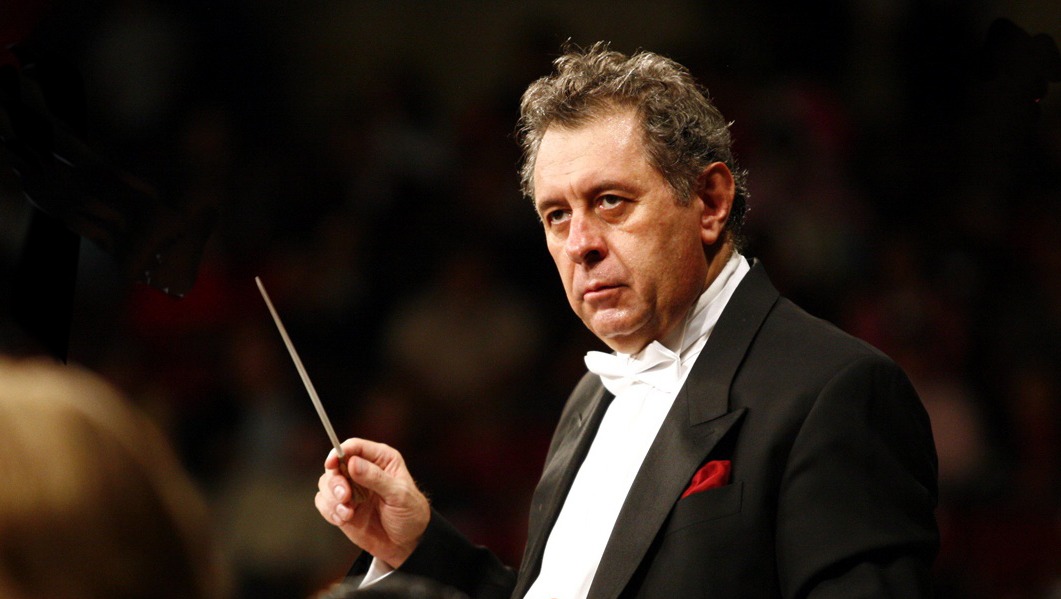
In appreciation – Enrique Bátiz

by Ben Hogwood

Yesterday we learned of the sad news of the death of Mexican conductor Enrique Bátiz. A flourishing pianist, Bátiz soon turned to conducting, and in 1971 was founder of the State of Mexico Symphony Orchestra. where he worked until 1983, at which point he became music director of the Mexico Philharmonic Orchestra. In 1984 he became principal guest conductor of the Royal Philharmonic Orchestra, a post he held for several years.

Below is a link to a Tidal playlist containing a number of his colourful orchestral recordings, including an important series devoted to Mexican classical music on ASV in the 1980s:

https://tidal.com/browse/playlist/0b007840-2fc1-415d-8282-1890abd440b4

Published post no.2,491 – Tuesday 1 April 2025

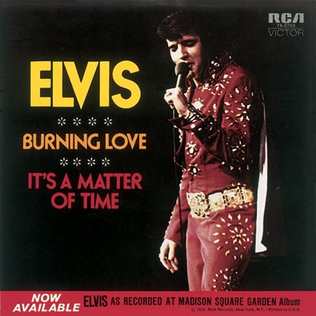
In appreciation – Elvis Presley

by Ben Hogwood Picture by RCA Records Fair use from Wikipedia

If he were still alive, Elvis Presley would have reached the grand age of 90 today.

We can’t possibly do justice to ‘The King’ in one post, but we can enjoy one of his very best songs, viewed through the prism of the Royal Philharmonic Orchestra in 2015. I’m not normally a fan of re-orchestrations, but this one is a beauty – and BBC Radio 2 must agree, for as I type this post they are playing the very same recording! Of course it’s Elvis who wins the day through sheer charisma, in a song that won’t fail to make you smile. That voice! Enjoy…

Published post no.2,405 – Wednesday 8 January 2025

In concert – Sheku Kanneh-Mason, Soloists, Philharmonia Chorus, Royal Philharmonic Orchestra / Vasily Petrenko: Elgar, Weinberg & Rachmaninoff

Sheku Kanneh-Mason (cello), Mirjam Mesak (soprano), Pavel Petrov (tenor), Andrii Kymach (baritone), Philharmonia Chorus, Royal Philharmonic Orchestra / Vasily Petrenko

Elgar In The South (Alassio) Op.50 (1904)
Weinberg Cello Concerto Op.43 (1948/1956)
Rachmaninoff The Bells Op.35 (1913)

Royal Festival Hall, London
Thursday 11 April 2024

Reviewed by Ben Hogwood Pictures (c) Chris Christodoulou

The Royal Philharmonic Orchestra and Vasily Petrenko continued their dual focus on Rachmaninoff and Elgar this season with a deeply satisfying programme. They began with Elgar on holiday, music to match the Mediterranean climate of a rather humid Royal Festival Hall. This was In The South, Elgar’s extended postcard from Alassio, Italy, a sudden burst of inspiration that the composer finished in double quick time. Petrenko and his charges caught the instinctive writing, launching the overture in high spirits that brought the spring sunshine in from outside. Their interpretation grew in stature as it progressed, the central statements from brass given impressive heft. Yet it was the quieter asides that proved most telling, notably a fine viola solo from Abigail Fenna, whose depiction of the ‘canto popolare’ was appropriately reserved and beautifully phrased.

Sheku Kanneh-Mason joined for Weinberg’s Cello Concerto, a fine work sharing the same key (C minor) and elegiac mood of its now neglected equivalent by Nikolai Myaskovsky, completed three years earlier. Sheku’s credentials in Shostakovich (he won the BBC Young Musician prize with a standout account of the Cello Concerto no.1) served him well here, and he was an eloquent guide in the thoughtful first movement. Again this was an interpretation growing in stature, from a silvery first movement to the persuasive habanera of a Moderato that grew increasingly sour in tone, aided by standout solos from trumpeter Matthew Williams. By the third movement Allegro the gloves were well and truly off, incisive solo playing carrying through to an assertive and deeply felt cadenza, before the finale responded with doleful phrases turning us back to the material of the first movement, emotions not fully resolved. The main theme carried more weight second time around, while Kanneh-Mason’s choice of the same composer’s Prelude no.18 for solo cello was ideal as an encore, setting the seal on a fine interpretation. Hopefully his thoughts on the concerto will be set down in the studio by Decca before long.

Rachmaninoff’s four-part choral symphony The Bells formed a dramatic second half, led by an extremely well-drilled Philharmonia Chorus (prepared by Gavin Carr), whose diction and ensemble were most impressive. On first glance the men appeared outnumbered, but when the telling moments came in the third and fourth movements they rose to the occasion with great conviction.

In tenor Pavel Petrov, soprano Mirjam Mesak and baritone Andrii Kymach, Petrenko could call on three excellent soloists, Mesak in particular impressing with her sensitive phrasing and vibrato, passionately singing The Mellow Wedding Bells. Her glittering dress was an ideal match for Poe’s verse, too. Petrov’s ringing delivery set the ideal tone in The Silver Sleigh Bells, while Kymach’s declamation was pitched just right for The Mournful Iron Bells, right after the frenzied scherzo, The Loud Alarm Bells.

The Royal Philharmonic Orchestra gave memorable contributions, with incisive woodwind, plangent brass, strings united as one, and percussion that added punctuation to the choral thunderclaps of The Loud Alarm Bells, Rachmaninoff effectively slamming the door shut on his deepest fears. Following this dramatic high point, the cor anglais solo of Patrick Flanaghan was all the more poignant – and Petrenko made sense of the major key ending, a chink of light in the darkness.

You can find more information on further concerts at the Royal Philharmonic Orchestra website

Published post no.2,146 – Friday 12 April 2024

In concert – Hanna Hipp, Tiffin Boys Choir, Philharmonia Chorus, RPO / Vasily Petrenko – Mahler: Symphony no.3 @ Royal Albert Hall

Hanna Hipp (mezzo-soprano), Tiffin Boys Choir, Philharmonia Chorus, Royal Philharmonic Orchestra / Vasily Petrenko

Mahler Symphony no.3 in D minor (1895-6)

Royal Albert Hall, London
Thursday 27 April 2023

Reviewed by Richard Whitehouse Photo of Vasily Petrenko (c) Ben Wright

The Royal Philharmonic Orchestra series of those Mahler symphonies featuring voices came to its conclusion this evening with the Third Symphony, the longest and most encompassing of his cycle with its trajectory ranging from the awakening of life to its divine transcendence.

The first part, comprising Mahler lengthiest purely orchestral movement, presents a stern test in terms of its overall pacing and characterization. Vasily Petrenko had its measure right from the opening fanfare, as powerfully intoned by eight horns in unison, via graphic depictions of inanimate nature (its trombone recitative balefully rendered by Matthew Gee) and its march-like reawakening, to the forceful expressive contrast Mahler invests into this extended sonata design as it advances to a joyous peroration that was superbly controlled and projected here.

Although the published score makes no mention, Mahler evidently favoured a lengthy pause before going into the second part. By allowing barely a minute to elapse, Petrenko arguably left insufficient breathing-space (for the audience if not the musicians) and so undersold the effect of what ensues. Not that this Tempo di Menuetto lacked for poise or insouciance – its chamber-like orchestration exuded a confiding intimacy, with the lingering regret at its close deftly implied. No less persuasive was the third movement, a scherzo whose capricious outer sections found purposeful accord with episodes where the offstage post-horn solos (elegantly delivered by Toby Street) unfolded without hint of indulgence; Petrenko mindful to inject a degree of danger into the final return of the opening music as this heads to its fractious close.

Once again, a slightly longer pause than Petrenko allowed might have given listeners time to settle before the closing three movements – (rightly) played without a break. Not that Hanna Hipp, in situ at stage-left, was other than assured in her contribution to the setting of (part of) Friedrich Nietzsche’s Mitternachts-Lied with its presentiment of eternal life; such unforced eloquence abetted by the hushed intensity of the RPO’s playing. The brief if pertinent setting of Es sungen drei Engel offered the necessary contrast, Hipp sounding a note of uncertainty or even doubt in the context of animated singing from the combined children’s and women’s voices. Here, too, Petrenko’s decision to use actual rather than tubular bells added greatly to the aura of child-like though never merely coy innocence with which this music is infused.

On to the finale – an adagio drawing on precedents from Beethoven and Bruckner, and which crowned this performance in all respects. If the flowing tempo that Petrenko adopted initially seemed a little passive, the seamlessness with which conflicting elements were drawn into the discourse, together with the preparation for and the shaping of each climax, on the way to its apotheosis left no doubt as to his identity with this movement. Neither was there any hint of bathos as striding timpani underpinned those closing bars with their intimations of sublimity.

A memorable performance, then, which brought out the sheer scale and ambition of Mahler’s conception while underlining the all-round excellence of the RPO near the end of its second season with Petrenko. Hopefully there will be further Mahler to come from this partnership.

You can read all about the 2022/23 season and book tickets at the Royal Philharmonic Orchestra website. Click on the artist names for more on Hanna Hipp, Tiffin Boys Choir, Philharmonia Chorus and conductor Vasily Petrenko