In concert – Lukas Sternath, BBC Singers, Symphony Chorus & Orchestra / Sakari Oramo @ BBC Proms: Bliss ‘The Beatitudes’, Grieg & Gipps

Lukas Sternath (piano), Elizabeth Watts (soprano), Laurence Kilsby (tenor), BBC Singers, BBC Symphony Chorus, BBC Symphony Orchestra / Sakari Oramo

Gipps Death on the Pale Horse Op.25 (1943) [Proms premiere]
Grieg Piano Concerto in A minor Op.16 (1868 rev.1907)
Bliss The Beatitudes F28 (1961)

Royal Albert Hall, London
Sunday 7 September 2025

Reviewed by Richard Whitehouse Photos (c) BBC / Chris Christodoulou

This evening’s Prom – launching the final week of the present season – was billed as ‘Grieg’s Piano Concerto’, no doubt the reason why many in the audience were attending while hardly being the most interesting aspect of a typically adventurous programme from Sakari Oramo.

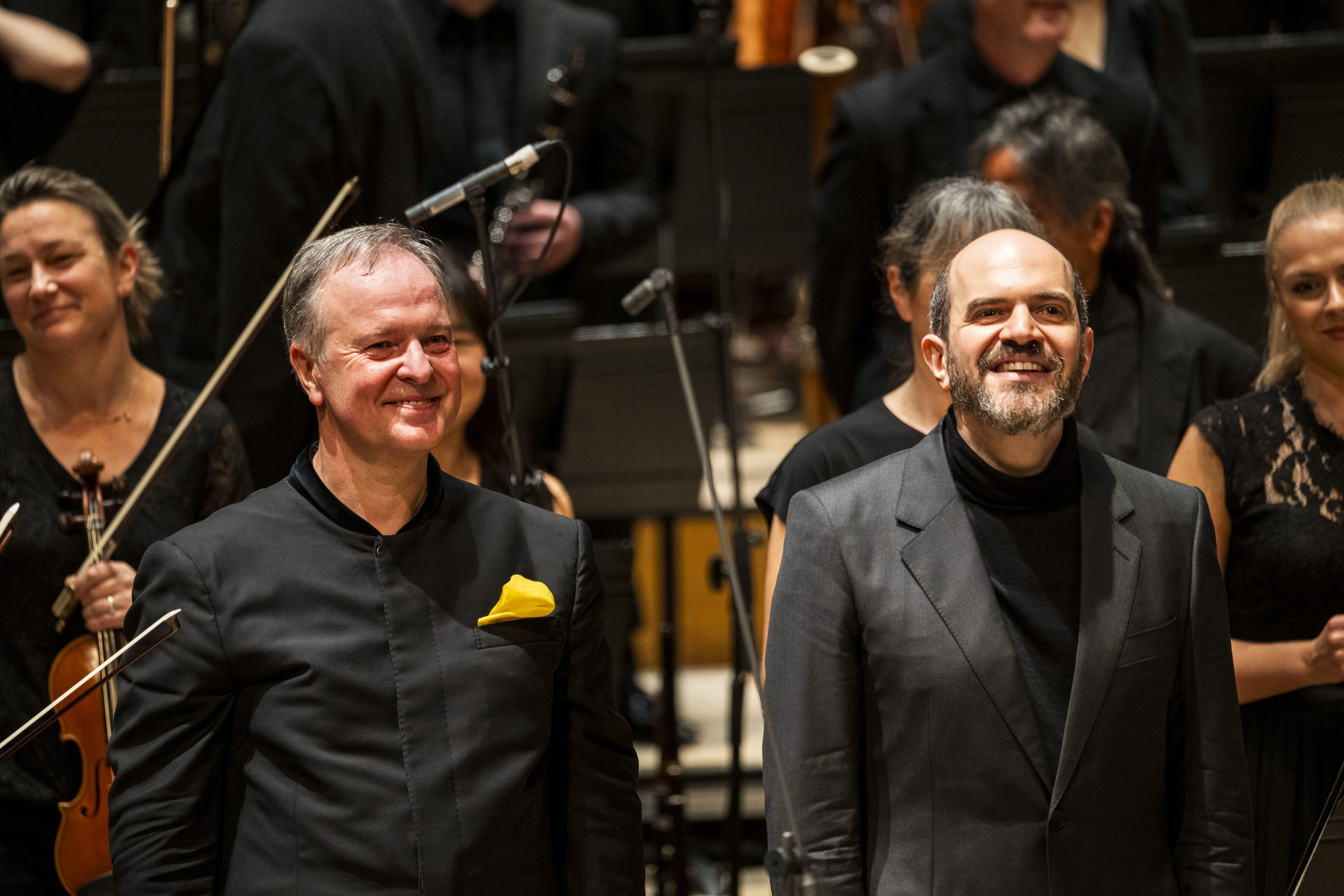
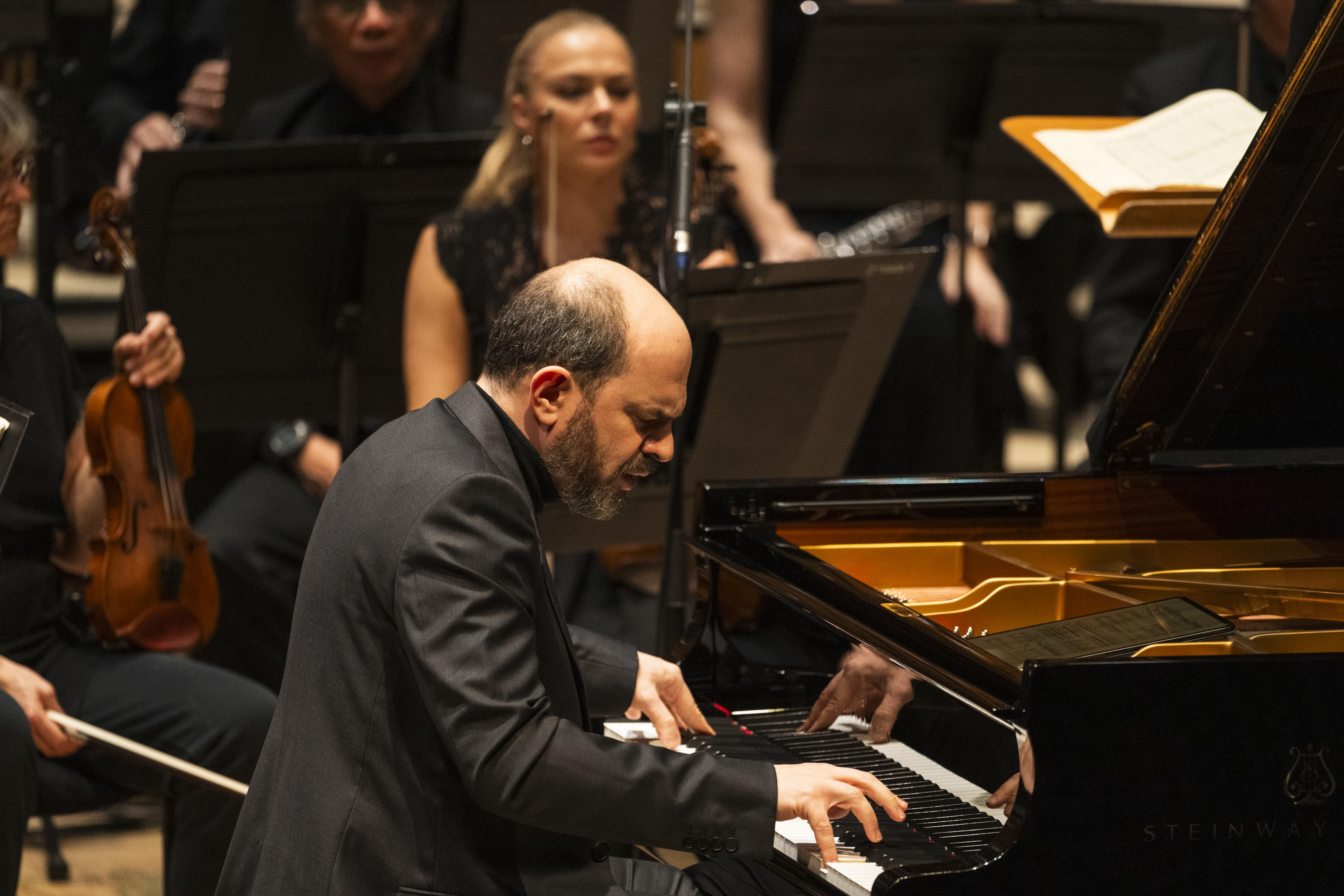
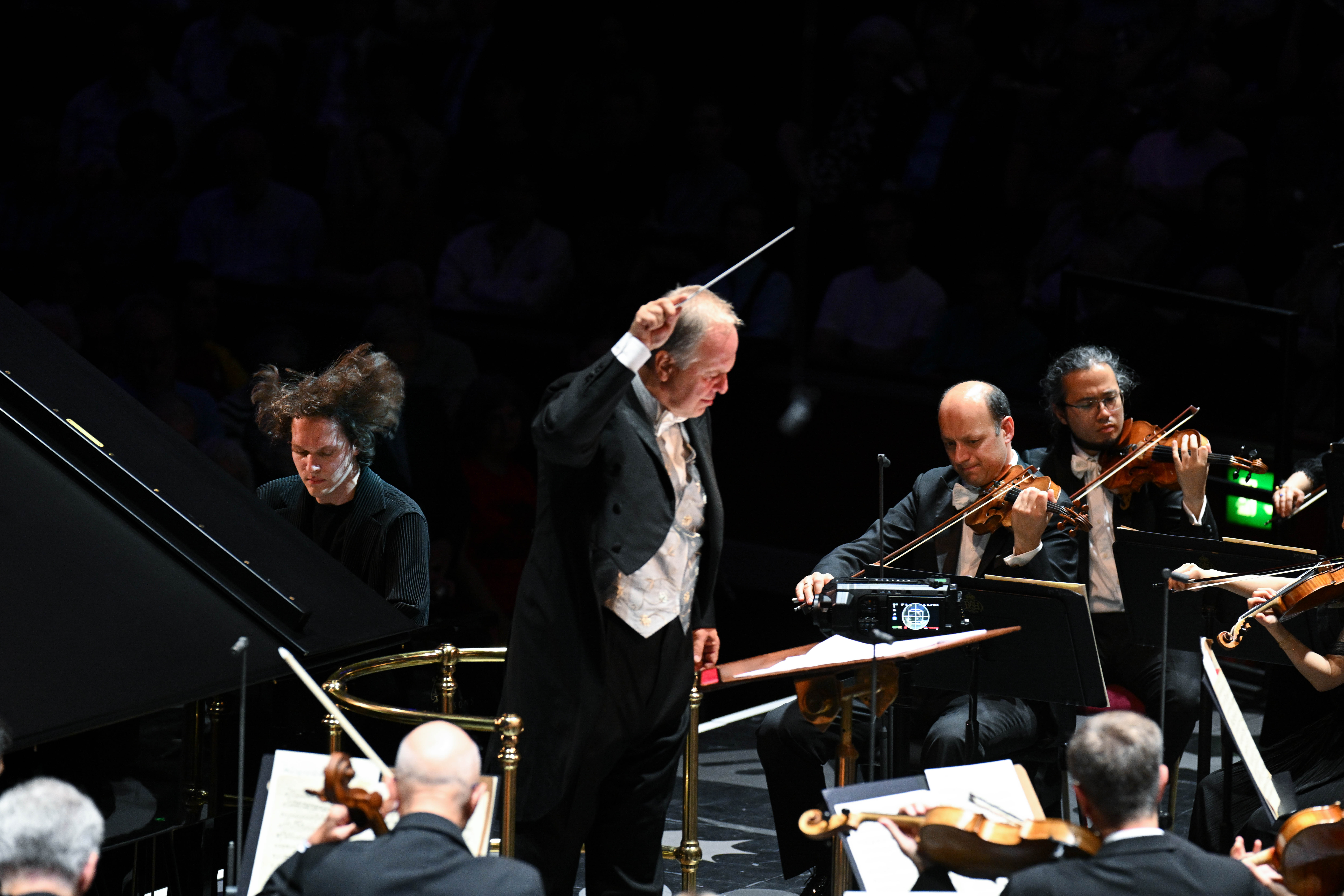
In the event the Grieg received a responsive reading from Lukas Sternath (below, with Oramo), the Viennese pianist who, still in his mid-20s, was most at home in more inward passages. The second theme of the initial Allegro was enticingly taken up after a heartfelt rendering by cellos, as was the Adagio’s eloquent melody and that first emerging in the finale on flute, where it was soulfully rendered by Daniel Pailthorpe. Nor were the more demonstrative aspects underplayed – Sternath having the measure of a cadenza whose mounting rhetoric was pointedly reined-in, while the finale’s outer sections were incisively inflected prior to an apotheosis which felt the more exhilarating through its absence of bathos. A melting take on Richard Strauss’ early song Morgen!, transcribed with enviable poise by Max Reger, served to reinforce Sternath’s formidable pianistic credentials.
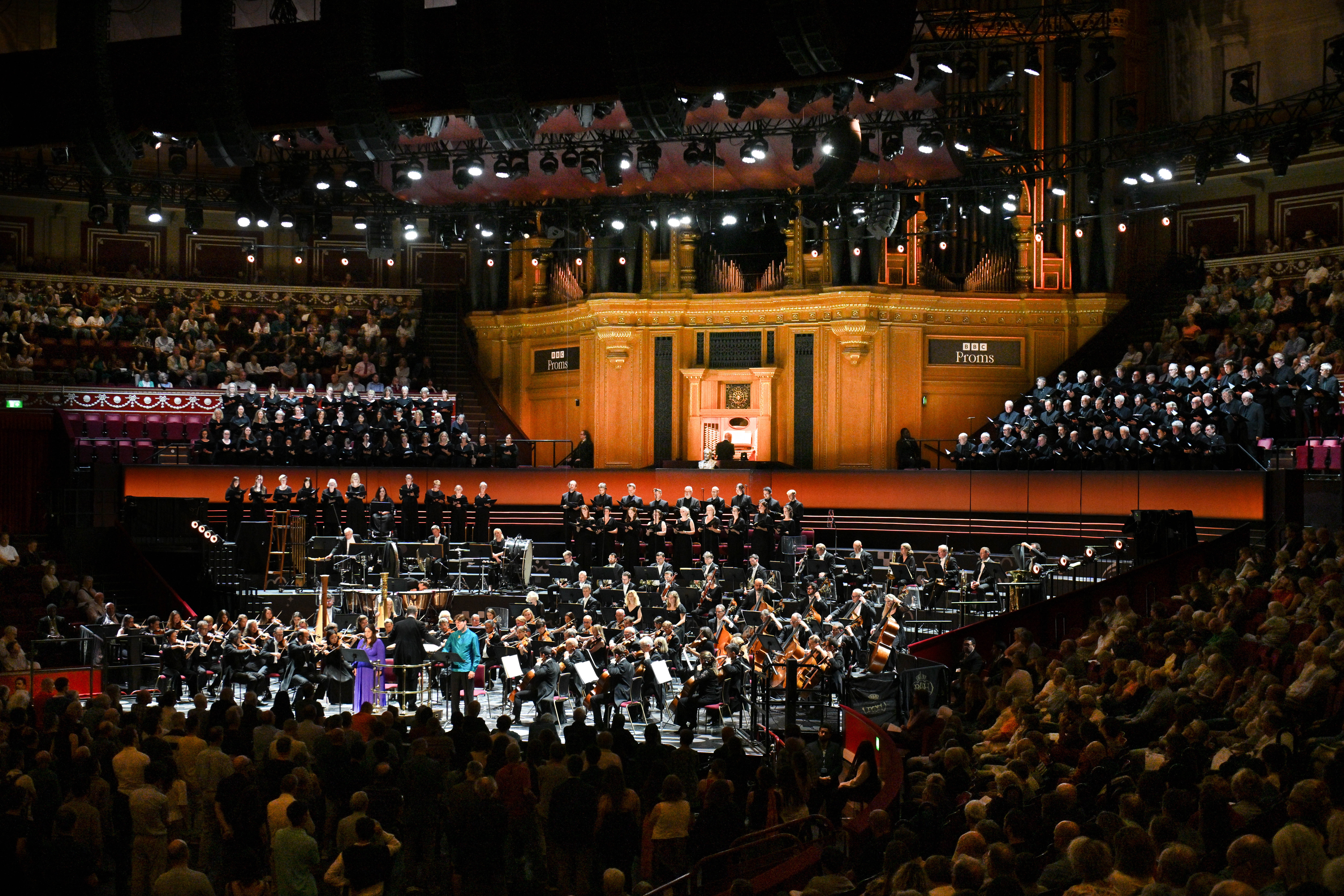
The 50th anniversary year of Sir Arthur Bliss’s death has seen a gratifying number of revivals, few more significant than that of The Beatitudes. The misfortune of its premiere having been moved from Coventry’s new Cathedral to its Belgrade Theatre, thus freeing up rehearsal time for Britten’s War Requiem, rather condemned it as an also-ran from the outset. Yet Bliss had created a piece unerringly suited for the consecration in what, in itself, remains an impressive conception. Unfolding as 14 short sections which can be grouped into six larger movements, this is less a cantata than a choral symphony. Setting all nine Beatitudes, Bliss none the less merged several of these and interspersed them with settings from three 17th-century and one 20th-century ‘metaphysical’ poets to commemorate the past from the vantage of the present.

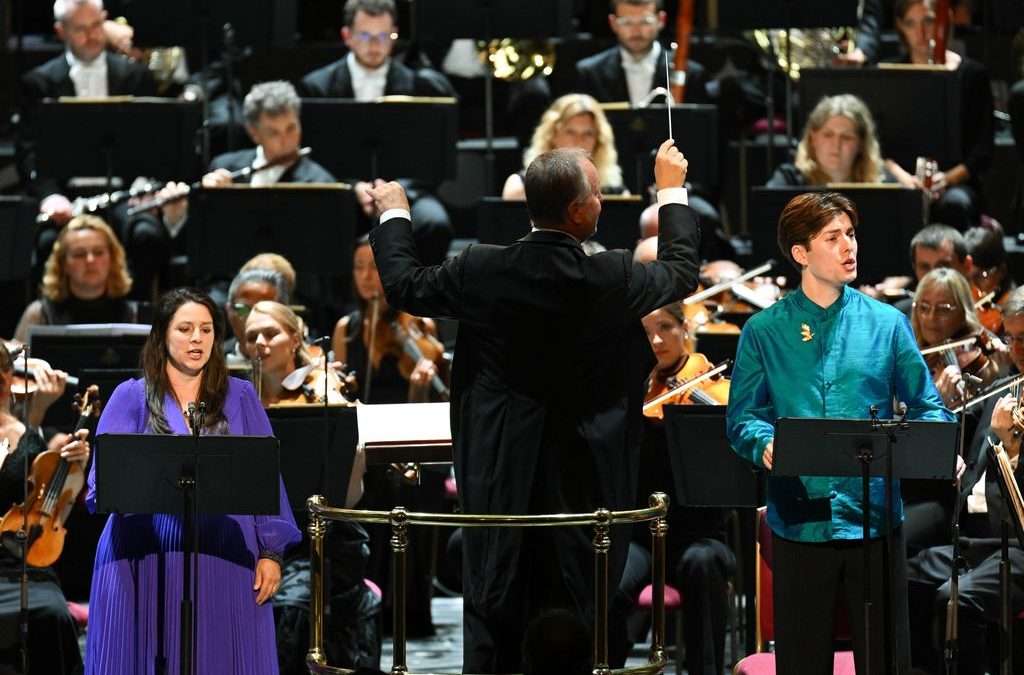
The texts, drawn from Henry Vaughan, George Herbert and Jeremy Taylor, anticipate a future redemption – as, more ambivalently, does Dylan Thomas in And death shall have dominion which builds implacably to the climactic Ninth Beatitude and Voices of the Mob prior to the hard-won serenity of the Epilogue. That The Beatitudes has enjoyed relatively few revivals is less to do with its intrinsic quality than the demands of its choral writing, to which the BBC Symphony Chorus and BBC Singers did notable justice. Elizabeth Watts responded with real sensitivity and perception to some radiant soprano writing and while Laurence Kilsby was a little effortful in the more demonstrative passages, he brought conviction to a tenor role both fervent and compassionate. Nor did Richard Pearce disappoint with his extensive organ part.
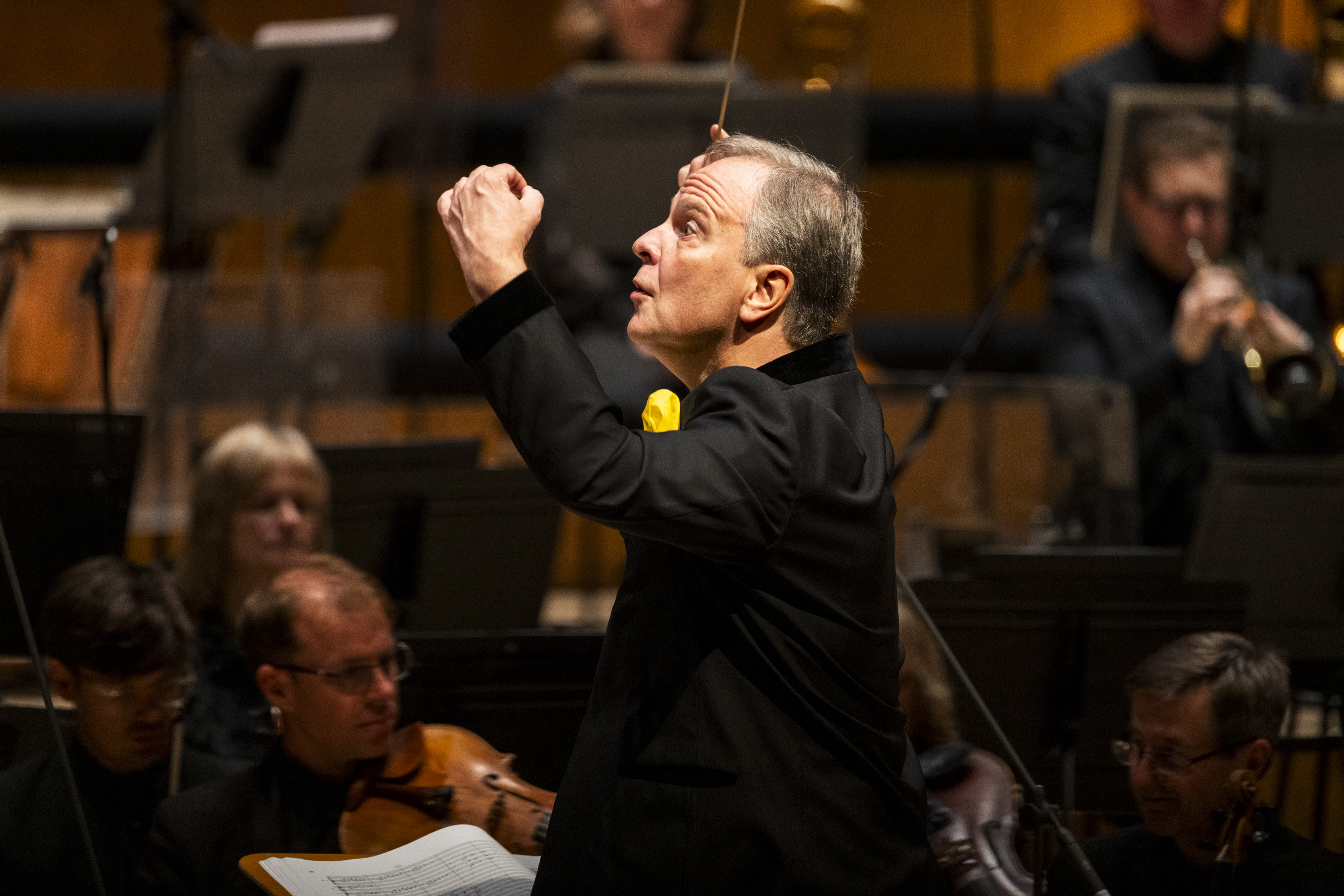
Oramo paced the 50-minute entity superbly as to make one hope he will tackle more works by Bliss – not least the masterly Meditations on a Theme by John Blow, which has inexplicably fallen through the net this year. He had started tonight’s concert with a most welcome revival for Death on the Pale Horse – the succinctly eventful tone poem by Ruth Gipps which, while it might not capture the visceral drama of Blake’s eponymous engraving, distils an evocative atmosphere from pithy initial ideas that audibly reflects the circumstances of its composition.

Click on the artist names to read more about soloists Elizabeth Watts, Laurence Kilsby and Lukas Sternath, the BBC Singers, BBC Symphony Chorus and BBC Symphony Orchestra, and their conductor Sakari Oramo. You can also click to read more about composers Arthur Bliss, Ruth Gipps and the BBC Proms

Published post no.2,652 – Tuesday 9 September 2025
In concert – Augustin Hadelich, BBC SO / Sakari Oramo @ BBC Proms: Stravinsky, Mendelssohn, Anthony Davis & Richard Strauss

Augustin Hadelich (violin), BBC Symphony Orchestra / Sakari Oramo

Stravinsky Le chant du rossignol (1914/17)
Mendelssohn Violin Concerto in E minor, Op. 64 (1838-44)
Anthony Davis Tales (Tails) of the Signifying Monkey (1997) [European premiere]
Richard Strauss Till Eulenspiegels lustige Streiche, Op. 28 (1894-5)

Royal Albert Hall, London
Thursday 24 July 2025

Reviewed by Richard Whitehouse Photos (c) BBC / Mark Allan

Now in his second decade as chief conductor of the BBC Symphony Orchestra, Sakari Oramo can be relied on for innovative Proms programmes; tonight’s framing a staple of the concerto repertoire and an unfamiliar orchestral work with influential symphonic poems. In the case of The Song of the Nightingale, Stravinsky recycled sections from the latter two acts of his opera Le Rossignol into an illustrative sequence no less successful when heard in abstract terms. As exhilarating as are those earlier stages with their depiction of the bustling Chinese court, it is what follows – arrival of the mechanical nightingale, illness of the emperor then return of the real nightingale to restore his health – that proves most memorable. Above all, that plaintive song of the fisherman – heard on solo trumpet and rendered with due pathos by Niall Keatley.

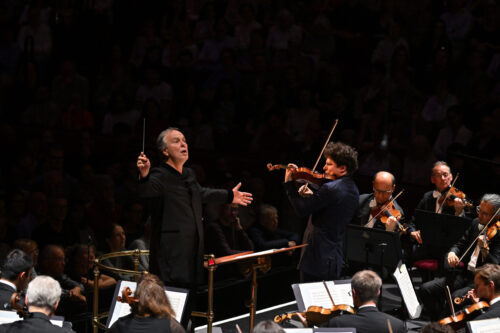
Oramo has worked with Augustin Hadelich on numerous occasions and this evening’s account of Mendelssohn’s Violin Concerto confirmed their rapport right from the outset. Not its least attraction was the deftness of orchestral response in music as wears its Romanticism with the lightest of touches, with Hadelich’s handling of the first movement’s central cadenza no less assured than Oramo’s ushering in of its reprise. The slow movement had no lack of eloquence, nor the finale of that genial humour wholly typical of its era as it headed toward its engaging close. Hadelich responded to the (rightly) enthusiastic applause with his own arrangement of Por una Cabeza – originally a song penned by Carlos Gardel and Alfredo Le Pera, and which has latterly become a favourite addition to film-scores whenever a tango element is called for.

Although he is best known for his operas, notably X: The Life and Times of Malcolm X which has enjoyed several revivals since its Philadelphia premiere four decades ago, Anthony Davis has written numerous concertos and orchestral works with Tales of the Signifying Monkey the final part of a triptych that can be played together or separately. Inspired by an African fable about how the monkey uses its innate guile to keep lions and other predatory animals at bay, this proceeds as a stealthily cumulative entity in which elements of jazz and even swing, are prominent within the stylistic mix. An aura of anticipation, frequently with an ominous tinge, is always apparent and if the outcome is at all anti-climactic, it could well another take on the maxim of travelling in hope. Certainly, the BBCSO seemed to enjoy making its acquaintance.

Usually encountered at the beginning of a concert, Richard Strauss’s Till Eulenspiegel’s Merry Pranks is no less effective (and perhaps even more so) when heard at the close. So it proved tonight with a performance which, while eschewing the uproarious humour often instilled into these increasingly scatological events, was always adept in its conveying of the music’s capricious demeanour. Composed in the wake of his ill-received first opera Guntram, the present work was a ready incentive for that orchestral virtuosity which was Strauss’s metier – above all, its climactic confrontation between its protagonist and the judiciary that results in the former’s execution. The real Till likely survived to old age, only to expire during the Black Death, but his fictional self is doubtless more appealing when characterized so judiciously as it was here.

You can listen back to this Prom concert on BBC Sounds until Sunday 12 October.

Click on the artist names to read more about Augustin Hadelich, the BBC Symphony Orchestra and their chief conductor Sakari Oramo – as well as composer Anthony Davis. Click also for more on the BBC Proms

Published post no.2,609 – Monday 28 July 2025

In concert – Kirill Gerstein, BBCSO / Sakari Oramo: Bacewicz & Busoni @ Barbican Hall

Kirill Gerstein (piano), BBC Symphony Chorus (lower voices), BBC Symphony Orchestra / Sakari Oramo

Bacewicz Symphony no.2 (1951)
Busoni Piano Concerto in C major Op. 39 (1901-04)

Barbican Hall, London
Friday 1 November 2024

Reviewed by Richard Whitehouse Pictures (c) BBC / Sarah-Louise Bennett

Wait years for a performance of Busoni’s Piano Concerto then (at least) two come (almost) at once. As 2024 sees the centenary of the composer’s death and it is much his largest work for the concert hall, this was doubtless to be expected though a welcome occurrence all the same.

Having first played it in Boston seven years ago (later released on Myrios), Kirill Gerstein (below) and Sakari Oramo were intent on utilizing an experience unusual in the context of this work. This was evident at the outset of its Prologo e introito – the long orchestral introduction having a cumulative impetus that carried into the soloist’s imposing entry, with this physicality finding contrast in the delicacy of passagework and the sensitivity of dialogue later in this movement. Nor was there any lack of capriciousness in a Pezzo giocoso whose more ambivalent asides pointedly underlined, and its more populist elements always integrated into the ongoing flow.

Centrepiece in every respect, Pezzo serioso made a memorable impression. The sombreness of its introduction complemented by the undulating poise of Gerstein’s playing in the ensuing barcarolle section, before a remorseless build up of intensity towards its central climax found piano and orchestra in true accord; the re-emergence of earlier themes of a pathos abetted by a conclusion whose gently insistent rhythmic undertow led to an ending of exquisite finesse.

Rarely can the All’italiana have conveyed such scintillating appeal at this headlong a tempo, making for a tarantella of infectious wit but one whose ever more daring flights of fancy never threatened to lose focus – the BBC Symphony Orchestra responded with unfailing conviction, while the climactic cadenza made for a seamless link into the Cantico. Here male voices, placed at the rear of the platform instead of offstage, assumed the musical foreground as this finale built in a rising arc of tension to an apotheosis of a triumph the more cathartic for its sense of release.

How Busoni’s epic work comes over in performance is in part determined by what has been heard earlier in the programme. Tonight’s concert got it just right with a rare hearing (at least in the UK) for the Second Symphony from Polish composer and violinist Grażyna Bacewicz.

Oramo (above) had previously given notice of his sympathy for her music via recordings of the Third and Fourth Symphonies (Chandos), and this performance did not disappoint. Playing for just over 20 minutes, the Second has a variety of incident and overall impact out of all proportion to its length – whether in the opening movement as this alternates between equivocation and resolve, the eloquence of a Lento in which Bacewicz’s orchestration is at its most resourceful, a Scherzo whose poetic asides never threatened to offset its prevailing vivacity, then a Finale that (as with Roussel’s Fourth Symphony which may have provided the model) ended almost too soon yet whose incisiveness always felt apposite to the whole. Throughout, Bacewicz was conscious of the implications of Socialist Realism while steering clear decisively of its values.

Hopefully this and Bacewicz’s First Symphony will be appearing in due course as a follow-up volume. For now, it gave ready enhancement to a concert whose enterprise and conviction are further proof, is such were needed, of that continued rapport between Oramo and the BBCSO.

For details on their 2024-25 season, head to the BBC Symphony Orchestra website. Click on the names to read more about pianist Kirill Gerstein, conductor Sakari Oramo and composer Grażyna Bacewicz

Published post no.2,351 – Sunday 3 November 2024

In concert – BBC Symphony Orchestra / Sakari Oramo: Mahler Symphony no.6

BBC Symphony Orchestra / Sakari Oramo (above)

Mahler Symphony no.6 in A minor (1903-04)

Barbican Hall, London
Thursday 26 September 2024

Having just extended his contract with the BBC Symphony Orchestra until 2030, which at 17 years will make him its longest serving chief conductor after Sir Adrian Boult, Sakari Oramo began the new season with this frequently impressive account of Mahler’s Sixth Symphony.

Impressive but equally unpredictable – not least in an opening movement whose tensility and even terseness was emphasized by mostly swift tempos and the nowadays rare omission of its exposition repeat, which predicated martial aggressiveness over any more yielding expression. There was no lack of deftness in the central interlude, for all that the off-stage cowbells were distinctly unevocative in their tinkling, yet the developmental passages either side exuded an unwavering purposefulness so that the arrival of the reprise more than usually made its mark. Stealthily launched, the coda duly emerged rather than burst forth though this was audibly in accord with the ambivalence of its affirmation as Oramo perceived it. Those closing bars had no lack of finality, for all that there was more of ruthlessness than joyousness in their arrival.

Speaking recently, Oramo stated his conviction in the revised order of the central movements with the Scherzo placed second. He might profitably have headed into this without pause, as to underline the consistency of rhythmic profile with what went before, but there was no hint of inflexibility here or in the trio sections which effortlessly elided between the winsome and sardonic. Equally in evidence was that fatalistic sense pervading the music as it unfolds, and so made possible a coda whose evanescent poise could not conceal more ominous portents.

From this vantage, the Andante provided if not balm to the soul, then a measure of unforced pathos. Enticingly rendered with some notably felicitous playing by the BBCSO woodwind, it was shaped by Oramo with unerring rightness through to a climax whose emotional force was the greater for its being held in check. Surprising that this movement has never attained the popularity of the Adagietto from the Fifth Symphony: then again, its salient qualities are conveyed even more completely when experienced within the context of the work as a whole.

By a similar token, it arguably matters less in what order the middle movements are played if the finale proves a culmination in all respects. That it certainly was here – Oramo imbuing its lengthy introduction with acute expectancy balanced by the visceral impact of what followed. Nor did tension fall off in those quiet but eventful interludes, strategically placed between the larger formal sections, and in which cowbells are overlaid by tubular bells for what became a haze of resonance as affecting as any more demonstrative expression elsewhere. Oramo also restored that third hammer-blow which does not so much alter the course of this movement, as confirm its resignation before fate in even more graphic terms. Nothing could have sounded more matter of fact than the baleful rumination of brass prior to that explosive closing gesture. While not the most inclusive performance, this was undoubtedly one to renew admiration in the audacity of Mahler’s conception or his conviction in bringing it off. It also gave notice of continued rapport between Oramo and the BBCSO as they begin their 12th season together.

For more on their 2024/25 season head to the BBC Symphony Orchestra website – and click here to read more on their chief conductor Sakari Oramo

Published post no.2,315 – Saturday 28 September 2024

Arcana at the Proms – Prom 33: Christopher Maltman, BBC Symphony Orchestra / Martyn Brabbins – Elgar, Holst, Stanford & Vaughan Williams London Symphony

Elgar Overture ‘Cockaigne’ (In London Town) Op.40 (1901)
Holst Hammersmith (Prelude and Scherzo) Op.52 (1930)
Stanford Songs of Faith Op. 97 (1906): no.4 (To the Soul), no.5 (Tears), no.6 (Joy, ship-mate, joy); An Irish Idyll in Six Miniatures Op.72 (1901): no.2 (The Fairy Lough)
Vaughan Williams A London Symphony (Symphony no.2) (1912-13, rev. 1918-20)

Christopher Maltman (baritone), BBC Symphony Orchestra / Martyn Brabbins

Royal Albert Hall, London
Friday 9 August 2024, 6pm

reviewed by Richard Whitehouse

Concerts devoted to British music are by no means an unknown quantity at the Proms, but to have one as judiciously planned as that featuring Martyn Brabbins with the BBC Symphony Orchestra, on the conductor’s 65th birthday, was as unexpected as its realization ‘on the night’ proved consistently impressive.

Whether or not this account of Elgar’s Cockaigne ranked among the best of the previous 70 or so hearings at these concerts, it assuredly did the piece justice. Not its least attraction was Brabbins integrating this evocation of London on the cusp of Victorian and Edwardian eras with due perception of its ingenious sonata design, resulting in a reading as characterful as it was cohesive. Such as the emergence of the marching band at its centre and final peroration (Richard Pearce making his presence felt at the organ console) were the highpoints intended.

Whereas Elgar conveys London in its midst, Holst renders Hammersmith at a remove – his Prelude and Scherzo evoking those sights and sounds where the latter long made his home with a poise and precision no less involving for its objectivity. The orchestral version might be less often revived than its wind-band original but it yields little, if anything, in terms of expressive immediacy; not least with Brabbins mindful to underline how its two sections do not just succeed each other but are juxtaposed, even superimposed, prior to the rapt ending.

In the centenary of Stanford’s death, this selection of songs provided a welcome reminder of its composer’s prowess in the genre. The final three Songs of Faith denote an appreciation of Walt Whitman comparable to that of the next generation – whether in the eloquent musing of To the Soul, surging anguish of Tears or effervescence of Joy, shipmate, joy. Christopher Maltman then brought his burnished tone and clarity of diction to an affecting take on Moira O’Neill’s The Fairy Lough – proof Stanford could do ‘lightness of touch’ where necessary.

Whereas Stanford’s songs have barely featured here for almost a century, Vaughan Williams’s A London Symphony has accrued 36 performances, but what might be thought its ‘intermediate version’ had not been heard in nine decades. Actually, this is much closer formally to the final version of 1933 than the original – its main differences centring on those more extensive codas in the Lento and finale which, by aligning them more audibly with the introduction to the first movement, arguably ensures a more thematically close-knit trajectory across the work overall.

The performance was very much in accord with Brabbins’ recording (Hyperion). An unforced traversal of the opening Allegro, impetuous in its outer sections and affecting in that rapturous passage for solo strings at its centre, then a slow movement whose brooding introspection did not omit a sustained fervency at its climax. Nor did the Scherzo lack those ambivalent asides that find focus in its sombre close, while the nominally discursive finale built purposefully to a seismic culmination then an epilogue which drew solace from the aftermath of catastrophe.

‘‘The river passes – London passes – England passes’’. Whether the closing words from H.G. Wells’ Tono-Bungay determined or even influenced it, a sense of renewal was palpable as the music faded towards silence at the end of this persuasive performance and memorable concert.

For more on this year’s festival, visit the BBC Proms website – and to read more on the artists involved, click on the names: baritone Christopher Maltman, conductor Martyn Brabbins and the BBC Symphony Orchestra. Click on the name for more on The Stanford Society

Published post no.2,270 – Wednesday 14 August 2024