Arcana at the Proms – Prom 27: Silja Aalto, Anssi Kartunen, Seong-Jin Cho, BBC Symphony Orchestra / Sakari Oramo – Saariaho, Mozart & Richard Strauss ‘Alpine’ Symphony

Saariaho Mirage (2007) [Proms premiere]
Mozart Piano Concerto no.9 in E flat major K271 ‘Jeunehomme’ (1777)
Richard Strauss Eine Alpensinfonie Op.64 (1911-15)

Silja Aalto (soprano), Anssi Karttunen (cello), Seong-Jin Cho (piano), BBC Symphony Orchestra / Sakari Oramo

Royal Albert Hall, London
Friday 9 August 2024, 6pm

reviewed by Richard Whitehouse Photos (c) Mark Allan

Soon to begin his 12th season as chief conductor of the BBC Symphony Orchestra, Sakari Oramo made his second Proms appearance this season for what proved a typically diverse and resourceful programme whose stretching over 230 years of Western music was the least of its fascinations.
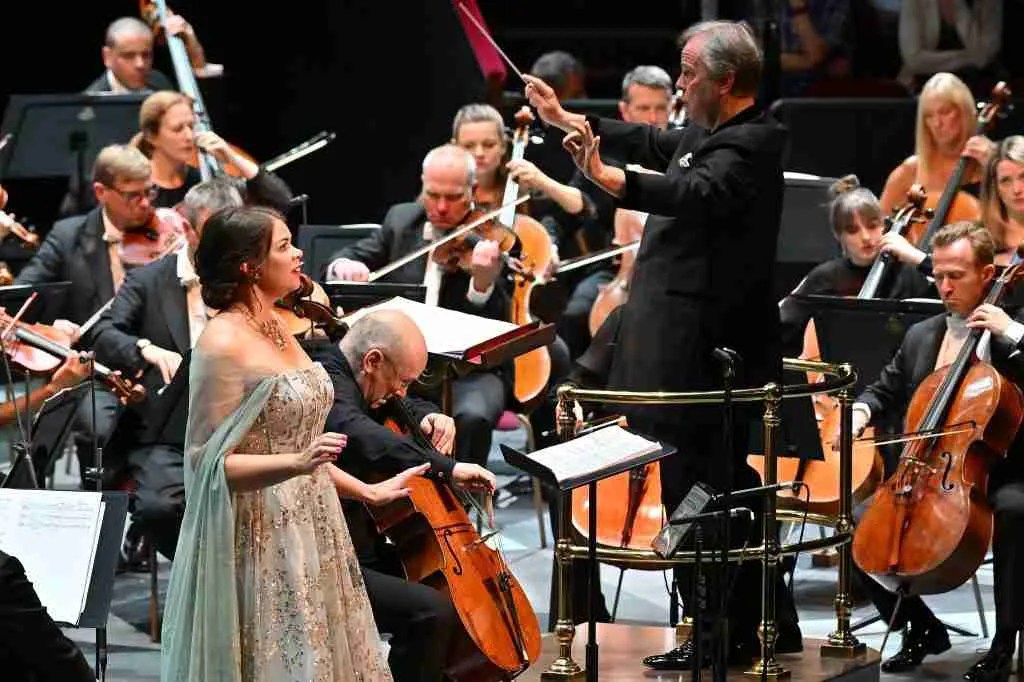
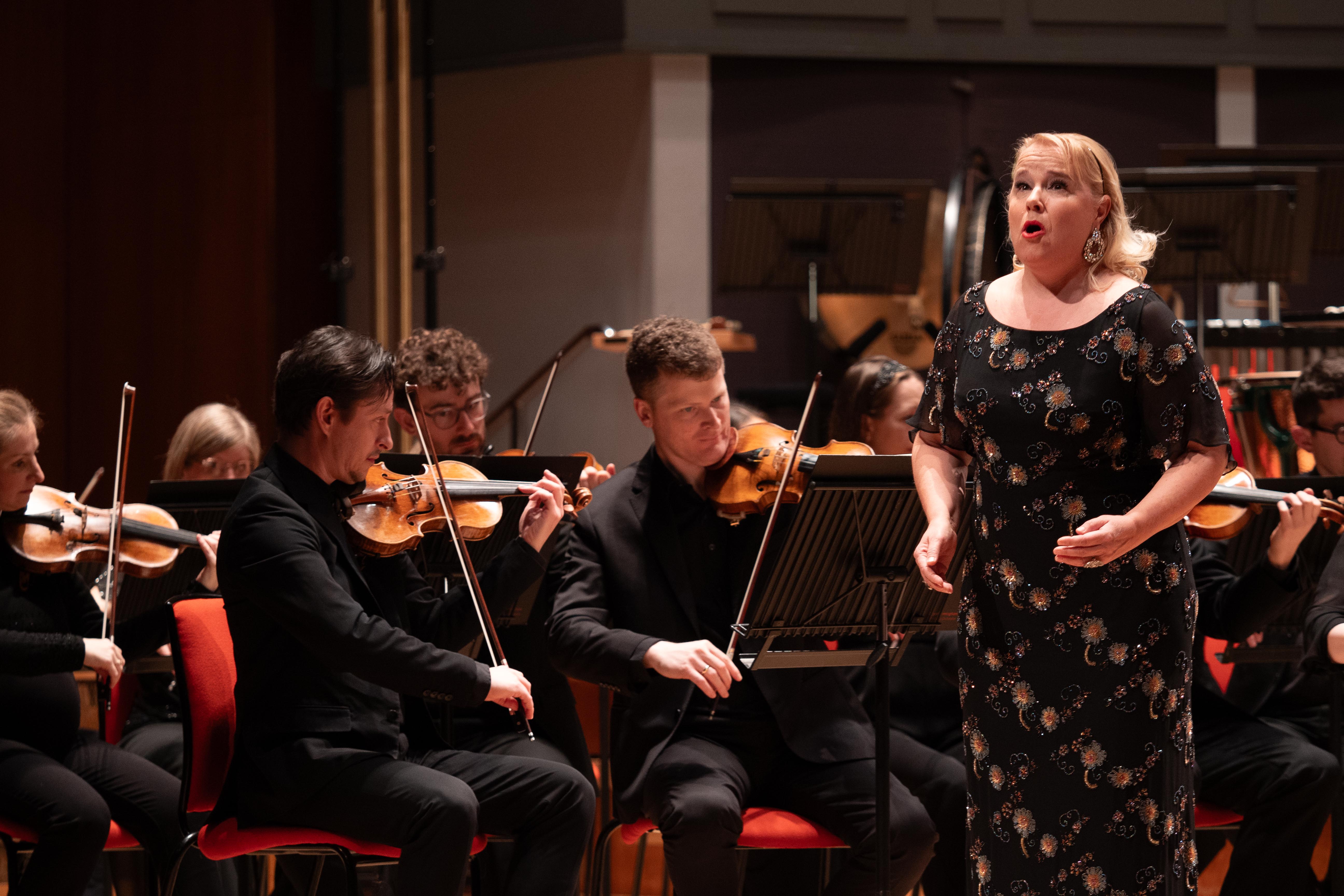
Her untimely death last year made a memorial to Kaija Saariaho more necessary and Mirage was a judicious choice, its setting lines by Mexican shaman María Sabina drawing a suitably theatrical response from Silja Aalto (above) – alongside who, Anssi Karttunen (long-time collaborator with this composer) weaved between the vocal and orchestral writing almost as an ‘alter-ego’ of subdued if beneficent presence. Musically the piece is typical of Saariaho from this period in aligning intricate texture with a mounting fervour at times ecstatic and ultimately fulfilled.

It may have been a ‘jeunefemme’ for whom Mozart actually wrote his Ninth Piano Concerto, but this remains its composer’s earliest unequivocal masterpiece and one with which Seong-Jin Cho (below) evidently feels real affinity. Not least in an opening Allegro whose arresting repartee at the start set the tone for an incisive traversal whose pianistic agility, not least in the first of Mozart’s cadenzas, was never without its inward asides. Such introspection came to the fore in the Andantino, its interplay of archaic and ‘modern’ harmonies yielding a plangency which found soloist and conductor as one. Nor was the finale’s central Menuetto without ruminative poise, set in relief by the buoyant Presto sections either side. Impressive music-making, then, that Cho continued with his deftly eloquent take on the second movement of Ravel’s Sonatine.

The last and most inclusive of Richard Strauss’s tone poems, An Alpine Symphony has received more than its share of tendentious reviews (and perfunctory programme notes), so credit to Oramo for emphasizing those purely musical qualities which, much more than its being a ‘bourgeois travelogue’ or even existential statement, duly determine this most formally and expressively integrated of its composer’s such works. As was evident at the outset: Alpine vistas emerged via a preludial crescendo that headed seamlessly into the ascent with its assembly of offstage horns, placed to advantage on the right of the gallery, then frequently arduous traversal above the treeline and on to the glacier prior to the summit. Its attendant ‘Vision’ drew an affecting soliloquy from oboist Tom Blomfield, then resplendent response from a 125-strong BBCSO.

What goes up tending to come down makes the following portion most difficult to sustain in terms of its ongoing momentum. The present account marginally lost focus here, but not in a mesmeric evocation of that eerie calm before the thunderstorm; organ and percussion adding to the overall mayhem before the relative calm of encroaching sunset. Ausklang is no mere epilogue – here, it afforded transcendence in the amalgam between those human and natural domains, while ensuring an overall fulfilment in the face of night with its inevitable closure.

The piece has come into its own since first appearing at these concerts 42 years ago and, if tonight’s reading did not quite touch all relevant bases, it conveyed the work’s measure like few others in tribute to the continuing creative partnership of this conductor and orchestra.

For more on this year’s festival, visit the BBC Proms website – and to read more on the artists involved, click on the names: Seong-Jin Cho, Silja Aalto, Anssi Karttunen, the BBC Symphony Orchestra and their chief conductor Sakari Oramo, and the official website of Kaija Saariaho and her works

Published post no.2,268 – Monday 9 August 2024
In concert – Anu Komsi, CBSO / Sakari Oramo: Sibelius Tempest Suite & Sypmhony no.7; Richard Strauss & Merikanto

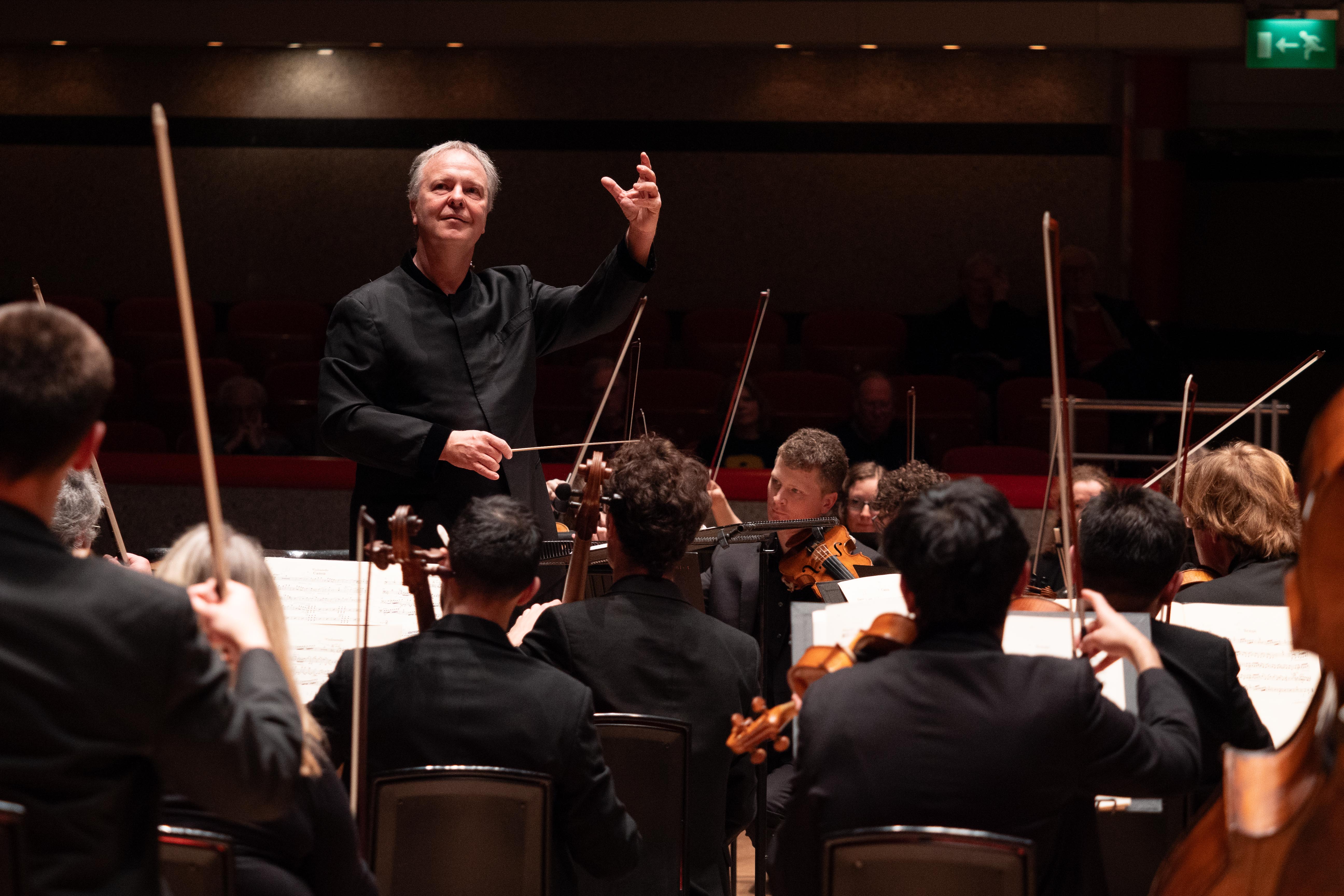
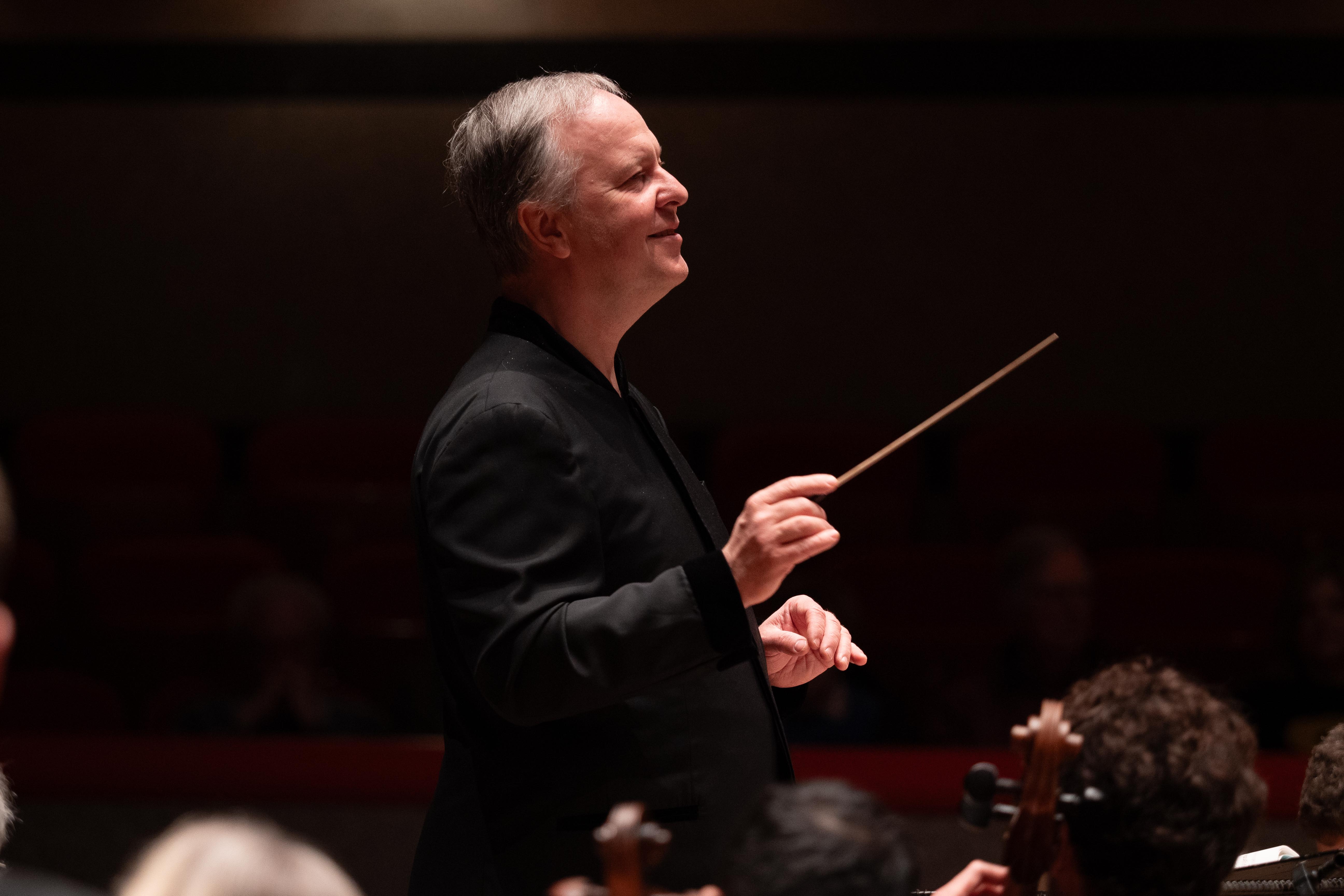
Anu Komsi (soprano), City of Birmingham Symphony Orchestra / Sakari Oramo (above)

Sibelius The Tempest (1925-6) – Suite no.1 Op.109/ 2
Richard Strauss Vier letzte Lieder, AV150 (1948)
Merikanto Ekho (1922)
Sibelius Symphony no.7 in C major Op. 105 (1923-4)

Symphony Hall, Birmingham
Wednesday 28 February 2024

Reviewed by Richard Whitehouse Pictures (c) Hannah Blake-Fathers

Could it really be 15 years since Sakari Oramo last conducted the orchestra of which he was music director for a decade? Time has passed, but his rapport with the City of Birmingham Symphony Orchestra was evident throughout what proved a well-planned and finely executed concert.

Sibelius featured prominently during Oramo’s tenure, with recorded and live cycles of the symphonies, so it was natural his music frame this programme. His music for The Tempest is the most diverse of his theatre works – the First Suite drawn from this lavish score opening with a searing evocation of The Oak Tree, before heading into a characterful Humoreske then Caliban’s Song with its telling bizarrerie. The Harvesters reminded of Sibelius’s gift for ‘light music’, as too the animated Canon and insinuating Scene, to which the plangent Berceuse then ominous Interlude made for startling contrast. A truncated version of The Tempest music that provided the prelude followed on with due seamlessness – its teetering on the metaphorical edge brought up abruptly if convincingly in this gripping performance.

Anu Komsi (above) then joined the orchestra for Richard Strauss’s Four Last Songs – a sequence which often gains emotional gravitas as it proceeds, though a slight edginess in Frühling gave it greater expressive ambivalence prior to the fatalism of September – the most perfectly realized of these songs. The growing rapture of Beim Schlafengehen featured a poised violin solo from Eugene Tzikindelean, then Komsi gave of her eloquent best in Im Abendrot – its euphonious postlude accorded suitably spacious treatment by Oramo as this evanesces towards eternity.

Komsi returned after the interval with what must have been a first hearing in Birmingham for Ekho, a short but arresting scena by Finnish composer Aarre Merikanto. Written just after his opera Juha, at the start of his most innovative period, this draws on the example of Sibelius’s Luonnotar along with the post-Impressionism of Koechlin and Roussel. Its intricately detailed textures complement a vocal line as virtuosic technically as it is audacious expressively, one with which Komsi was in her element as this music heads almost intuitively to a furtive close.

Fascinating to recall while Merikanto was pursuing so fractured a musical discourse, Sibelius was working towards his most integrated statement. Oramo has given many performances of the Seventh Symphony, but the present one felt exceptional in the ease and inevitability of its formal follow-through. The eliding from one section to the next was realized with a rightness which, as with the motivic constituents from which this work emerges, never drew attention to itself other than during moments of greatest expressive focus – notably those appearances of the trombone theme which ensure unity, even when the music retreats from its emotional apex into a coda not so much final as immovable. Nor was this achieved through conscious interpretation, Oramo setting a course that allowed the musicians simply to play the music.

This impressive performance rounded off a no less impressive evening. Before the last work, Oramo spoke about the significance his CBSO tenure had for his conducting and his regret this ‘reunion’ had taken so long. Hopefully his next appearance will not be so long in coming.

Click on the link to read more on the current CBSO concert season, and on the names for more on soprano Anu Komsi and conductor Sakari Oramo.

Published post no.2,106 – Sunday 3 March 2024

BBC Proms 2023 – Christian Tetzlaff, BBC Symphony Orchestra / Sakari Oramo – Weir, Schumann & Elgar

Prom 51 – Christian Tetzlaff (violin), BBC Symphony Orchestra / Sakari Oramo

Weir Begin Afresh (BBC commission, world premiere) (2022-3)
Schumann Symphony no.1 in B flat major Op.38 ‘Spring’ (1841)
Elgar Violin Concerto in B minor Op.61 (1907-10)

Royal Albert Hall, London
Thursday 24 August 2023

by Ben Hogwood photos by Andy Paradise / BBC

The BBC Symphony Orchestra and their chief conductor Sakari Oramo have been on fine form this Proms season, and for their fourth outing together chose a concert whose first half celebrated the vibrancy of spring.

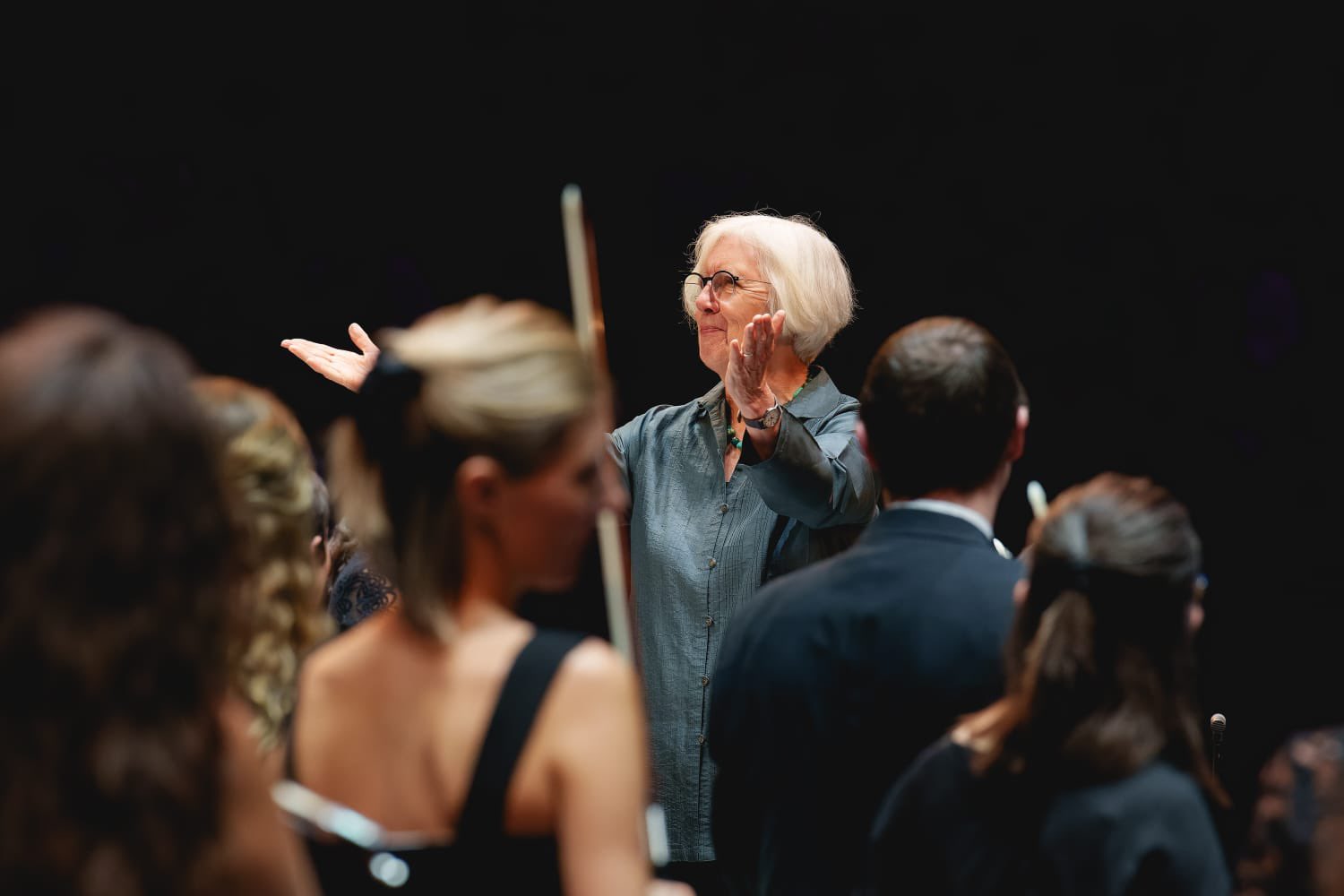
Judith Weir (below) has already written about green matter for orchestra, with her tone poem Forest premiered in 1995 and appearing at the Proms in 2019. Begin Afresh, its title inspired by Philip Larkin verse, takes a more forensic approach, looking at the wonder of trees in an urban setting. Effectively a musical diary, it begins in April, where we found orchestra leader Igor Yuzefovich teaming up with the woodwind section to lead an awakening from months of darkness. Fresh textures and opulent harmonies promised much, but October assumed a heavier tread, trees struggling to produce leaves with the onset of colder weather. Darker colours, including the sharper tone of the piano, came to the fore, but there was strong resolve reminiscent of Sibelius in the colours and phrasing, tonal but restless. True darkness set in among the lean lines of February, where roots fought against the frost, their sinewy profiles etched by the lower strings. Begin Afresh found its victory to be hard-won, but proved to be an attractive and pictorial piece deserving of more outings in the future.

Schumann’s Spring symphony, written in 1841 in the heady aftermath of his marriage to Clara, occupied an odd place in the program but benefited from a freshly minted performance. The initial fanfare set the tone for an interpretation of clarity and poise, the burbling woodwind on fine form. The ensuing Allegro molto vivace was bracing, and was complemented by a softly voiced second movement Larghetto. Here the softer shades were ideally weighted, the strings’ intimate thoughts conveyed with deep feeling. The Scherzo found the violins applying extra force, the theme balanced by two light-footed trio sections that danced happily. Oramo’s fluent reading of this wonderful symphony ended with a convincing last movement affirmation.

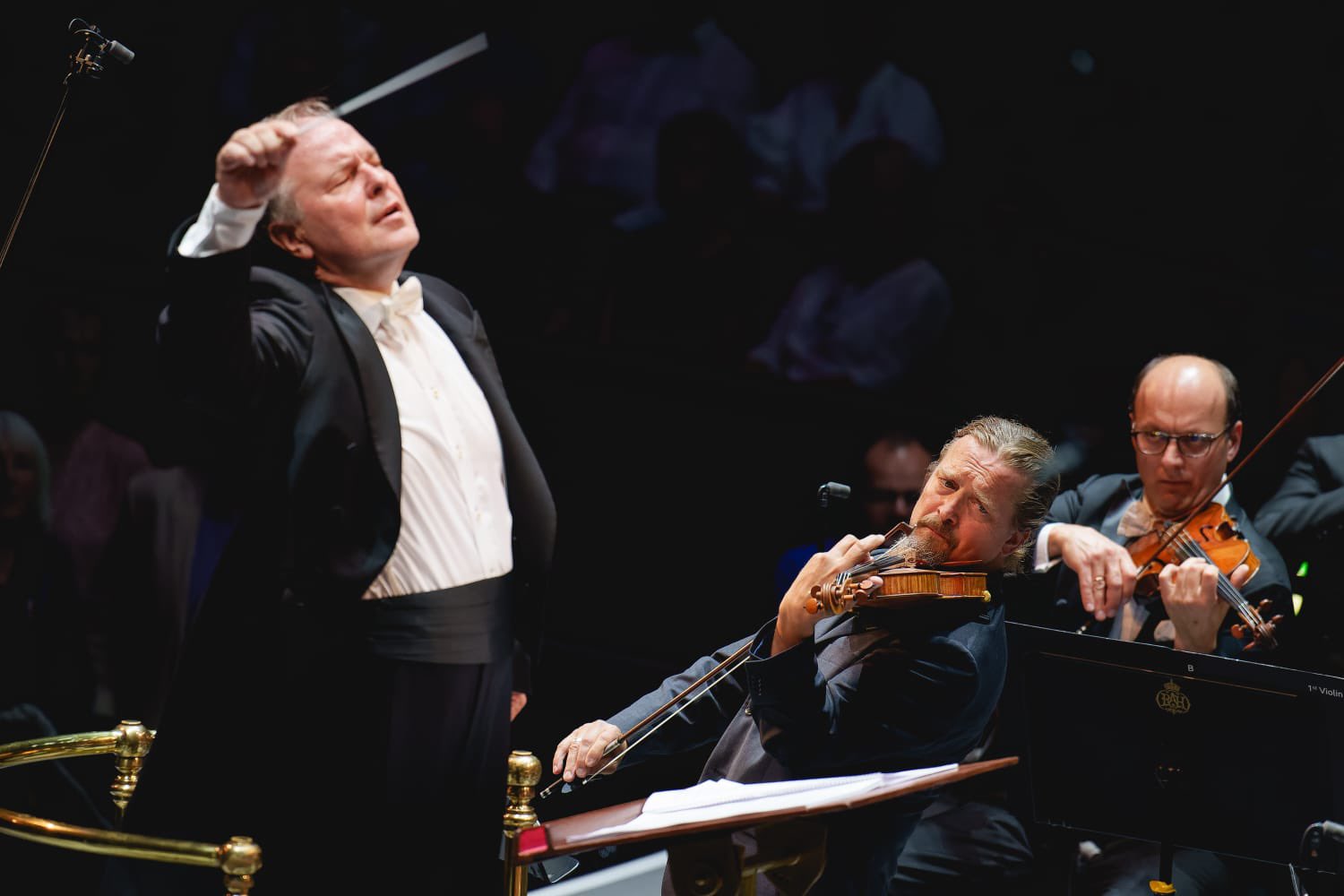
If spring was the main focus of the first half, Elgar’s Violin Concerto was ideally suited to late summer. There are many violin concertos in this year’s season – 13 at last count – and although this is the longest work by some distance, it did not tarry here. This was thanks in part to relatively quick tempo choices but mostly due to wholehearted investment from Oramo and soloist Christian Tetzlaff, who clearly loves the piece. From his first statement the violinist was in full, assertive control yet his most meaningful contributions were also the quietest, beckoning the audience in to Elgar’s most intimate thoughts and emotions.

The orchestral counterpoint was clearly and carefully managed by Oramo, himself a dignified Elgarian, with opportunity given for the strings to release ardent feelings in the climax points. The main themes were lovingly delivered, especially in the rapt slow movement Andante, the audience largely silent as the compelling dialogue took hold. While Tetzlaff took every opportunity for virtuoso display, reminding us that no less a violinist than Fritz Kreisler commissioned this work in 1904, none of the acrobatics were for personal gain. Instead they were at the service of Elgar’s expression, which made the final pages all the more telling. As the quiet music took hold a chill spread through the music, a sombre realisation that love – in this case – might not prevail. This realisation unwittingly found a parallel, a musical realisation of the temperatures dropping and the nights drawing in as they do in late August.

The concerto may have had an affirmative finish but these thoughts remained, reinforced by a tastefully restrained encore of the Andante from Bach’s Solo Violin Sonata no.2 in A minor BWV1003. As with the performance before, it was beautifully judged.

For more on the 2023 BBC Proms, visit the festival’s website at the BBC. Meanwhile click on the artist names for more on Christian Tetzlaff, Sakari Oramo and the BBC Symphony Orchestra.

BBC Proms 2023 – Leila Josefowicz, BBC Symphony Orchestra / Sakari Oramo – Berg & Mahler

Prom 35 – Leila Josefowicz (violin), BBC Symphony Orchestra / Sakari Oramo

Berg Violin Concerto (1935)
Mahler Symphony no.7 (1904-5)

Royal Albert Hall, London
Thursday 10 August 2023

by Richard Whitehouse photos by Chris Christodoulou / BBC

The late indisposition of Sir Andrew Davis saw Sakari Oramo at the helm for this programme of Berg and Mahler, an effective coupling even allowing for the replacement of the latter’s Tenth Symphony with his Seventh. Hopefully it will be ‘third time lucky’ for Davis and Mahler 10.

It might have received almost 20 hearings at these concerts, but Berg’s Violin Concerto is not easy to bring off in so resonant an acoustic as the Albert Hall’s. As elegantly as she delineated the initial Andante’s arch-like trajectory, Leila Josefowicz did struggle to make herself heard against a restrained though dense orchestral backdrop. Balance righted itself with the ensuing Allegretto – the soloist’s ingratiating response ideal for its alluring, even coy expression with a bittersweet folksong inflections then its ominous foreshadowing of the work’s second part.

It was in that latter half’s Allegro the performance really took flight, Josefowicz as attuned to its fractious opening pages as to the plangent searching of its cadenza-like central span. Both the seismic start of the movement’s culmination and its convulsive wind-down were assuredly handled – the emergence of Bach’s Es ist genug chorale setting the course for a final Adagio where pensive inwardness and heartfelt supplication were palpably conveyed through to the fervent climax, then a close bringing matters full circle with its mood of beatific resignation.

Unheard at the Proms until 1969, Mahler’s Seventh was also the last of his symphonies to win wider acceptance and is still a tough challenge to make cohere. Oramo (above) had its measure though not consistently in an opening movement, the effortfulness of whose introduction pervades its main Allegro yet without impeding its onward and increasingly cumulative course. For all the wonderment of its central interlude then emotional heft of the lead-in to the reprise, there was yet a sense of this music being coerced into shape rather than unfolding with due inevitability. Not so the ‘First Night Music’, its intertwining of the speculative and crepuscular rendered to bewitching effect – Oramo balancing those intricate yet translucent textures with a sure sense of where this movement was headed, namely a resolution not so much tentative as intangible.

Equally elusive, the central Scherzo can seem an exercise in flitting gestures as fail to add up to anything more substantial but here exuded darkly ironic humour as it wended its unsettling way. The ‘shadowy’ duly found its ideal complement in the ‘amorous’ manner of the ‘Second Night Music’ – its underlying affability all too easy to make bland or faceless, yet which here unfolded with a precise feel for its function within Mahler’s teasingly oblique formal scheme. As was almost equally true of the Rondo-Finale – its ordinario marking easy to misinterpret, but in which Oramo’s sure and steadfast if never turgid course made the most of its engaging progress. Hardly alone in not quite making the reappearance of first-movement material feel other than contrived, he nevertheless headed through those final pages with irresistible verve.

This performance would not have been as successful overall without its sterling contribution by the BBC Symphony Orchestra, both in soloistic passages or those tuttis as give the outer movements their impact. Ten years on, the rapport between orchestra and conductor remains undimmed.

For more on the 2023 BBC Proms, visit the festival’s website at the BBC. Meanwhile click on the names for more information on artists Leila Josefowicz, the BBC Symphony Orchestra and their chief conductor Sakari Oramo

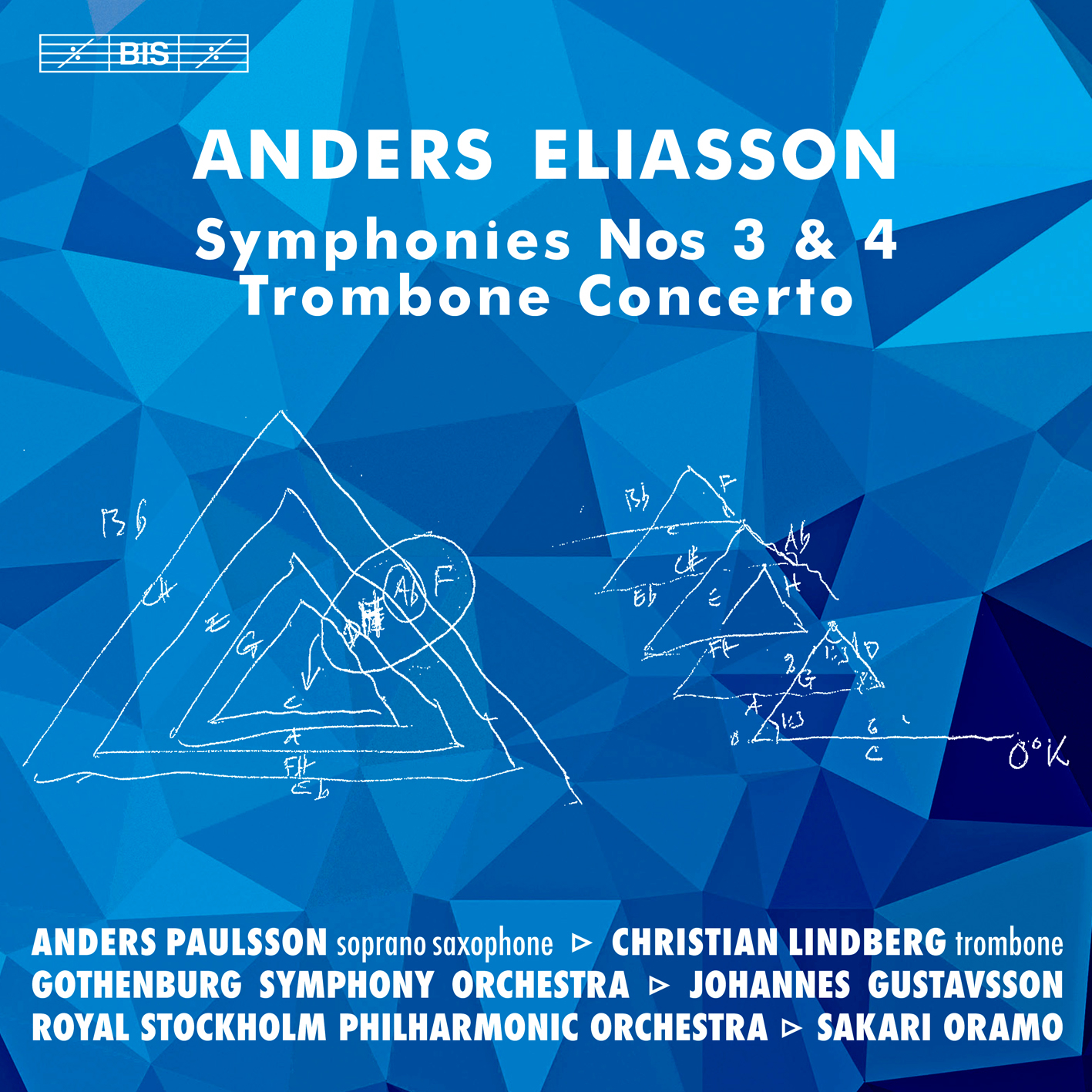
On Record – Anders Paulsson, Christian Lindberg – Anders Eliasson: Symphonies 3 & 4, Trombone Concerto (BIS)

Anders Eliasson
Symphony no.3 (1989/2010) (a)
Symphony no.4 (2005) (b)
Trombone Concerto (2000) (c)

Anders Paulsson (soprano saxophone) (a), Christian Lindberg (trombone) (c), Gothenburg Symphony Orchestra / Johannes Gustavsson (a), Royal Stockholm Philharmonic Orchestra / Sakari Oramo (b) and (c)

BIS 2368SACD [77’03”]

Producers Thore Brinkmann (a) Hans Kipfer and Mats Engström (b) and (c) Engineers Andreas Ruge (a), Fabian Frank (b), Mathias Spitzbarth (c)
Dates: (a) – 8-10 November 2017, Concert Hall, Gothenburg; (b) 23 September 2011, (c) 11 January 2020, Konserthuset, Stockholm

Reviewed by Richard Whitehouse

What’s the story?

BIS issues a follow-up to its ‘4 X Anders Eliasson’ (BIS2270) in this no less fine collection of his Third and Fourth Symphonies – together with a first recorded outing for the Trombone Concerto and featuring musicians who have long been associated with the Swedish composer.

What’s the music like?

Anders Eliasson (1947-2013) enjoyed an ambivalent relationship with the symphony. Among the most notable debuts in the genre of the post-war era, his First Symphony (1986, recorded on Caprice under CAP 21381) prompted a successor as failed to progress beyond sketches, with the Fourth intended as initial part of a trilogy that never materialized due to his untimely death, though the Fifth was commissioned with a date set for its premiere. There are also two chamber symphonies, with the violin concerto Solitary Journey (2010) arguably a symphony in all but designation.

Written for and frequently performed by American-born saxophonist John-Edward Kelly, the Third Symphony was written for alto (Neos NEOS11301) but later revised for soprano sax. Despite Kelly’s objections, this latter instrument undeniably merges even more effectively within its orchestral context. Anders Paulson has its measure as he traverses its five continuous sections – from an agitatedly expectant Quest, via the guardedly expressive Solitude and assaultive Shudders, to a plaintively affecting Sad before dissolving into the postlude that is Mists.

A decade on and the Trombone Concerto continues this integrative and inherently symphonic approach. As with Eliasson’s earlier concertos there are three continuous movements, though here a slow-fast-slow sequence opens with a ruminative Adagio that acts as ‘prologue’ to an extensive Allegro moderato whose frequent restraint yet requires a dexterity and incisiveness such as dedicatee Christian Lindberg typically meets head-on. A keen momentum is no less evident across its eventful course, prior to the ruminative Lento that duly serves as ‘epilogue’.

One of Eliasson’s most often heard works since its Munich premiere, the Fourth Symphony is among his most characteristic in its formal and expressive aims. Here a powerfully wrought Allegro summons up some of this composer’s most uninhibited music; evolving with no little motivic ingenuity to an Adagio whose concertante role for flugelhorn, eloquently rendered by Joakim Agnas, exudes a wistfully evocative tone. A scherzo-like section marked ‘threatening’ then builds to a climax, from where a brief Adagio returns the flugelhorn for a subdued envoi.

Does it all work?

Yes. Although his music could never be mistaken for that of his predecessor Allan Pettersson, Eliasson was similarly unequivocal in a musical language whose seriousness of purpose does not preclude lightness of touch or barbed humour. The latter two pieces here find his idiom at its most refined, unfolding with a cumulative inevitability that could be thought Nordic in its ethos. Performances are uniformly committed, and hopefully Sakari Oramo might yet take the Fourth Symphony to London in his ongoing association with the BBC Symphony Orchestra.

Is it recommended?

Indeed. The sound is on a par with BIS’s numerous other recordings from its Gothenburg and Stockholm venues, with Peter Kislinger’s annotations as informed and insightful as expected given his long-time advocacy of Eliasson’s music. Further such releases would be welcome.

For further information and purchasing options, visit the BIS website For more information on Anders Eliasson, click here, while you can click on the artist names for the websites of Anders Paulsson, Christian Lindberg, Johannes Gustavsson and Sakari Oramo, the Gothenburg Symphony Orchestra and the Royal Stockholm Philharmonic Orchestra