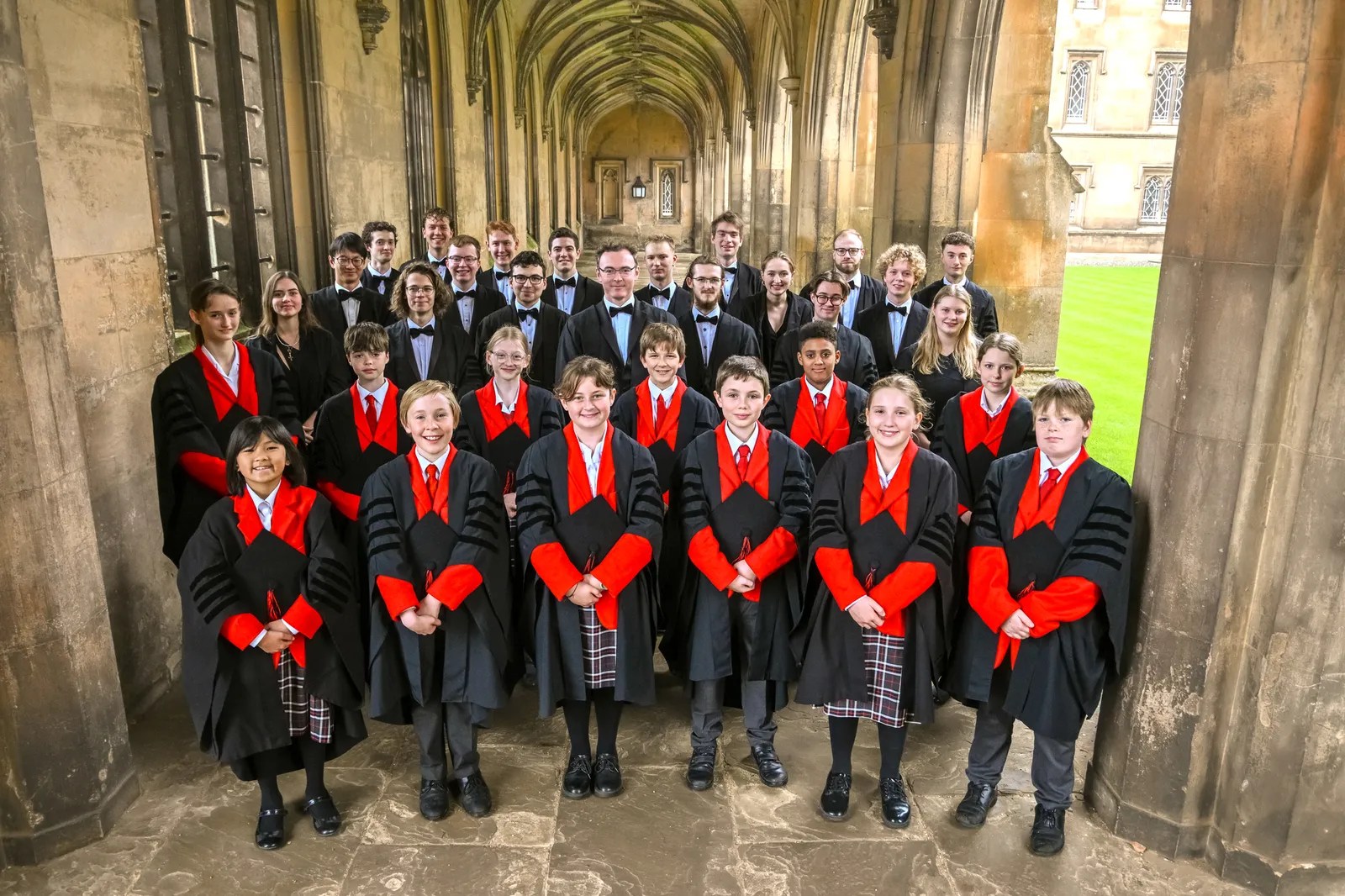
In concert – St. John’s College Choir Cambridge / Christopher Gray – Christmas Carols @ Wigmore Hall

Choir of St. John’s College Cambridge / Christopher Gray

Beamish In the stillness (2007)
Rutter There is a flower (1986)
Parsons Ave Maria (c1560)
Hassler Verbum caro factum est (1591)
Britten A Hymn to the Virgin (1930, rev. 1934)
Walton All this time (1970)
Trad/German arr. Pearsall In dulci jubilo
Hieronymus Praetorius Magnificat quinti toni (pub. 1622)
Daley Love came down at Christmas (2004)
Poston Jesus Christ the Apple Tree (1967)
Kirbye Vox in Rama (c.1620)
Anon Coventry Carol
Dove The Three Kings (2000)

Wigmore Hall, London
Monday 15 December 2025

Reviewed by Ben Hogwood

What a lovely idea to bring a concert of Christmas Carols to the last of the BBC Radio 3 Lunchtime Concerts held in the Wigmore Hall in 2025. The Choir of St. John’s College Cambridge, suitably attired, were led in a stirring yet thought-provoking programme by their conductor Christopher Gray, who have just released O Holy Night, an album of Christmas carols, on Signum Classics.

Yet much of the selection here went beyond the album’s component parts, exploring responses old and new to specific parts of the Christmas story. In a curious twist, the oldest music heard proved to be the most adventurous and emotive.

The concert began with an account of Sally Beamish’s In the stillness which was notable for its crystal clear intonation and enunciation, features the choir would display throughout the concert. John Rutter’s There is a flower fared equally well, the anthem he wrote for the choir leading with a touching treble solo, before the complexities of Robert Parsons’ masterful Ave maria were aligned in commendable phrasing. Similar qualities befell the lively exchanges of counterpoint in Hans Leo Hassler’s Verbum caro factum est, before the remarkable invention of the teenage Britten was found in A Hymn to the Virgin, music that looks simultaneously forward and backward.

The choir performed these carols in carefully arranged sequences, ideally programmed for tonality and emotive impact. Walton’s exuberant All this time began the second sequence, the choir enjoying the push-pull rhythms, after which In dulci jubilo switched on its ever-beautiful light in the darkness, casting a spell in spite of a slightly ragged second verse. The clever text setting of Hieronymus Praetorius – not the normally performed Michael! – was especially enjoyable in his Magnificat setting, before the clarity of carols from Canadian composer Eleanor Daley and Brit Elizabeth Poston was beautifully achieved. The latter’s Jesus Christ The Apple Tree was particularly moving in the simplicity with which its paragraphs end.

The mood darkened appreciably for George Kirbye’s lament Vox in Rama, the inconsolable Rachel weeping for the loss of her children in the massacre ordered by King Herod, while the Coventry Carol too sounded sombre in this company. All the more reason to end with a characterful account of Jonathan Dove’s The Three Kings, brilliantly characterised by the trebles especially.

Two encores followed – a breathless and exciting arrangement of Adam lay ybounden by Laura Sheils, then a close-harmony version of We Wish You A Merry Christmas, channelling Cole Porter to show-stopping effect. It was the musical equivalent of a mince pie with extra brandy, the ideal way to send the Wigmore Hall audience humming into the afternoon!

You can listen to the concert on BBC Sounds here, and explore the choir’s recent discography at the Signum Classics website.

Published post no.2,750 – Tuesday 16 December 2025
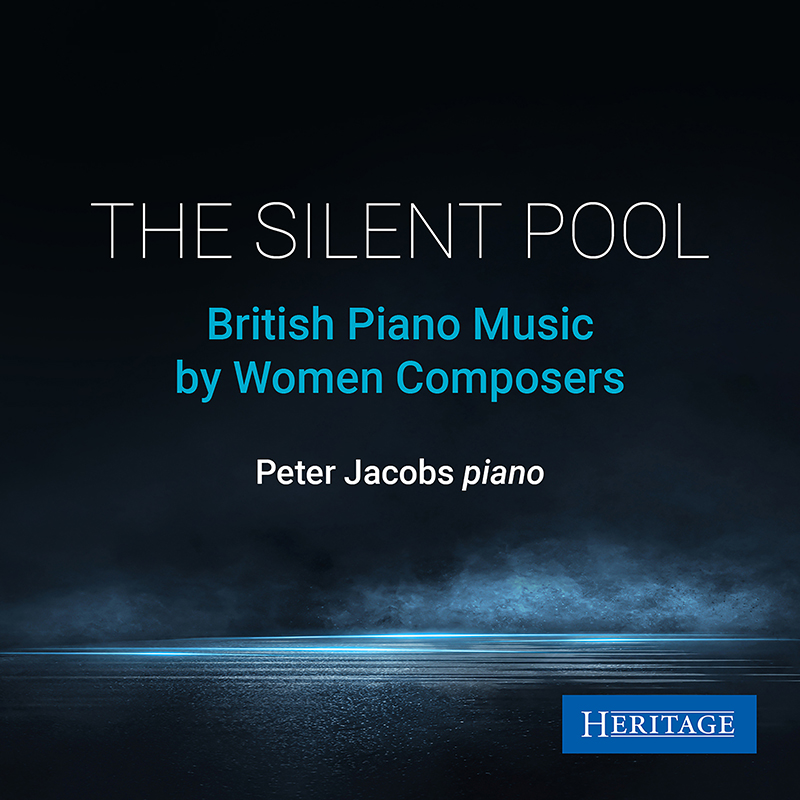
On Record – Peter Jacobs: The Silent Pool: British Piano Music by Women Composers (Heritage Records)

Peter Jacobs (piano)

Smyth Piano Sonata no.3 (1877); Piano Sonata no.2 (Andante) (1877)
Maconchy A Country Town (nos. 1, 3, 4, 5 & 7) (1945)
Williams The Silent Pool (1932)
Grime The Silver Moon (2025)
Dring Colour Suite (1963)
Bingham The Moon Over Westminster Cathedral (2003)
Woodforde-Finden Indian Love Lyrics (nos.2 & 1) (1903)
McDowall Vespers in Venice (2002)
Bingham Christmas Past, Christmas Present (1991)
Roe A Mystery of Cats (nos. 1, 4 & 5) (1994)
Beamish Lullaby for Owain (2016)
Da Costa Gigue; Moods (both 1930)
Lehmann Cobweb Castle (nos. 2 & 5) (1908)

Heritage Records HTGCD126 [75’40”]
Producer / Engineer Paul Arden-Taylor

Recorded 16 September 2024 & 26 January 2025 at Wyastone Concert Hall, Wyastone Leys, Monmouth

Reviewed by Richard Whitehouse

What’s the story?

Peter Jacobs continues his productive association with the Heritage label with this anthology that takes in a well-planned overview of piano music by female British composers, ranging across over more than 130 years of creativity in an impressive variety of idioms and genres.

What’s the music like?

Although female composers had been active in the UK from the outset of the English Musical Renaissance and before, relatively few came to prominence during their lifetime, with many others destined to be rediscovered only years and sometimes decades after their death. While hardly the first of its kind, the present collection is among the most representative in terms of its stylistic coverage which, in turn, underlines they should not be pigeon-holed any more than their male counterparts. Moreover, what was the loss to earlier generations is our gain today.

This recital opens with the redoubtable Ethel Smyth – her Third Piano Sonata contrasting the equable motion of its initial Allegro with the impetuous manner of its closing Allegro vivace. From its larger scale predecessor, the central Song Without Words affords ruminative space between the dynamism and tensions of those movements either side. Of the five (out of nine) pieces in Elizabeth Maconchy’s suite, the eloquent Lament and limpid Bells are especially appealing. Grace Williams is at her most haunting in the piece as gives this collection its title, and Helen Grime pens a miniature stark yet pellucid. Among the most versatile composers of her generation, Madeleine Dring is represented here by a five-movement themed suite which includes such delights as the quizzical Pink Mirror or the appropriately sensuous Blue Air. Judith Bingham may be best known for her choral and brass band music, but there is nothing unpianistic about so translucently textured a nocturne.

Two of Amy Woodforde-Finden’s four-piece suite include the elegant poise of Less than the Dust, while Cecilia McDowall sounds a note of spatial immensity in her Venetian evocation. The four pieces of her Christmas suite find Bingham pursuing an altogether more winsome vein of expression – duly complemented by three out of five whimsical feline homages by Betty Roe, happily still going strong in her 96th year. Sally Beamish contributes a (surprisingly?) capricious lullaby, with two pieces by the short-lived Raie da Costa typifying her witty and sassy manner. The wistful charm of Liza Lehmann, two of six pieces from her only piano suite, affords an elegant then touching envoi.

Does it all work?

As an overall sequence, absolutely. At around 75 minutes, this concert-length recital can be enjoyed as a continuous sequence or in any number of selections. It helps when Jacobs is so persuasive an exponent of this music, much of it remaining little known other than to pianists with his breadth of sympathies but which ought to find an audience given exposure in a live context. As he himself notes, this “random selection [is] united by being rewarding to play, beautifully written for the instrument, varied in style and intellectual depth”. Enough said.

Is it recommended?

It is. Piano sound is as full and spacious as expected given its Wyastone source, while Jacobs contributes laconically insightful notes on the recital overall. Most enjoyable, with hopefully enough material in this pianist’s “library of over 60 years collecting” to warrant a follow-up.

Listen / Buy

You can read more about this release and explore purchase options at the Heritage Records website

Published post no.2,682 – Thursday 9 October 2025

In concert – Martin Fröst, Janine Jansen, LSO / Gianandrea Noseda: Lost and Found @ Barbican Hall

Martin Fröst (clarinet), Janine Jansen (violin), London Symphony Orchestra / Gianandrea Noseda

Beethoven Leonore Overture no.3 Op.72b (1806)
Beamish Distans: Concerto for violin and clarinet (UK premiere) (2023)
Prokofiev Symphony no.7 in C# minor Op.131 (1952)

Barbican Hall, London
Thursday 20 June 2024

Reviewed by Ben Hogwood Pictures (c) Mark Allan

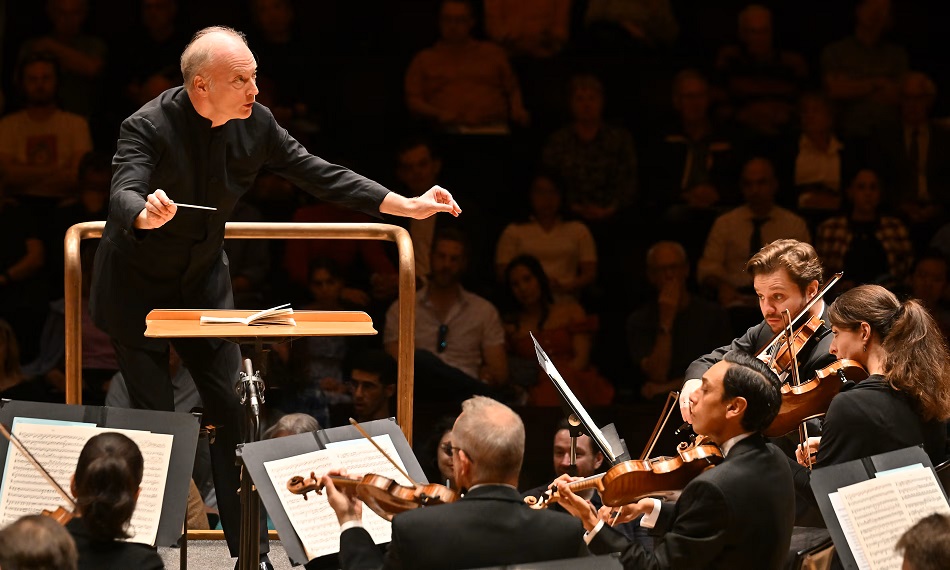
The London Symphony Orchestra and their principal guest conductor Gianandrea Noseda continued their Prokofiev symphony cycle with the elusive Seventh, prefaced by one of Beethoven’s four operatic overtures and a finally realised UK premiere.

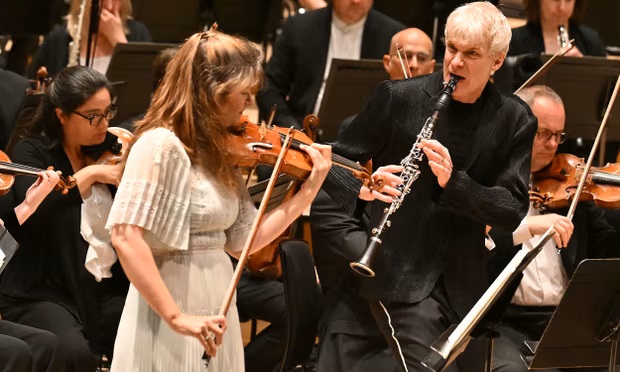
This was Distans, a co-commission between four orchestras for Sally Beamish to write a concerto for the unusual combination of clarinet and violin. Its first performance was delayed due to the pandemic, which became the inspiration for the content of the work. Themes of separation run through the three movements, drawing on the composer’s Swedish and Scottish connections. Separated from her children during lockdown, Beamish also used the forceful musical personalities of soloists Martin Fröst and Janine Jansen (both above) for inspiration.

The two began offstage, however, beckoning to each other across the Barbican Hall as Calling, the first movement, took shape. This was named in the concert notes as ‘kulning’, “the high-pitched singing of women calling the calls on remote pastures”. Beamish’s wide-angle musical lens produced an effective and touching first paragraph, the soloists eventually united on stage in music of the dance, evoking a Swedish fiddle with the full weight and energy of the orchestra in support.

Echoing, the slow second movement, explored more intense feelings of isolation through beautiful scoring, earthy cellos and metallic percussion casting a rarefied light suggesting a Swedish winter. The third movement, Journeying, was powered by an ancient march, the soloists together in spirit and melody, out in the elements with the orchestra. Although the music of beckoning reappeared, the mood was one of reunification, the soloists now at peace and content to remain on stage.

Distans made a strong impact in the hall, and Beamish’s writing for clarinet in her first major piece for the instrument made the most of Martin Fröst’s extraordinary breath control and agility. Jansen also fully inhabited the spirit of the piece, though her part often felt within that of the clarinet, and rarely used the high register. This was definitely a work to hear again, for Beamish’s sound world is a very attractive one in concert.

After the interval, Prokofiev’s Seventh Symphony was given an affectionate performance, yet one that also found the darkness lurking within. One of Prokofiev’s final works, the Seventh was written for the Soviet Children’s Radio Division, and as a result adopts a youthful stance, with commendably little room for nostalgia. Instead the composer gets up to his characteristically witty tricks, with inventive scoring enjoyed by the orchestra as woodwind doubled in octaves, and the piano and harp supplemented lower strings.

The music danced, a reminder of Prokofiev’s balletic qualities. The second movement Allegretto had poise in its first tune but a heavier swagger in the second, suggesting the unpredictable movements of older age – though an impressively powerful and assured close was reached. The following Andante enjoyed rich string colours, together with brilliant individual characterisations from oboe (Juliana Koch) and cor anglais (Clément Noël).

Yet the abiding memories came from two themes used in the outer movements. The first, a sweeping unison for orchestra, lovingly recreates the key and spirit of the composer’s first piano concerto, one of his greatest early successes – and was delivered with great charm here. The second, a cautionary motif from flute and glockenspiel resembling a ticking clock, returned like a regretful memory at the end – reminding this listener of an equivalent moment in Shostakovich’s last symphony, completed nearly 20 years later. It ended this performance on a thoughtful note, in spite of the exuberance that had gone before. The LSO were excellent throughout, presenting a convincing case for the Seventh as a bittersweet triumph, and reminding us in the process of Prokofiev’s abundance as a melodic composer.

Meanwhile Beethoven’s Leonore Overture no.3 began in a more desperate mood of resignation, the opera’s main character Florestan losing all hope in prison. Noseda – fresh from recording a symphony cycle with the National Symphony Orchestra in Washington – has very strong Beethovenian instincts, and paced this just right, with an appropriate hush falling over the hall. As the drama heightened, and an evocative offstage trumpet beckoned, the release from prison led to an outpouring of joy, sweeping us up in its forward momentum. The players were off the leash, enjoying every second.

You can find more information on further 2023/24 concerts at the London Symphony Orchestra website

Published post no.2,216 – Friday 21 June 2024

Wigmore Mondays: Elias + Navarra = Mendelssohn Octet

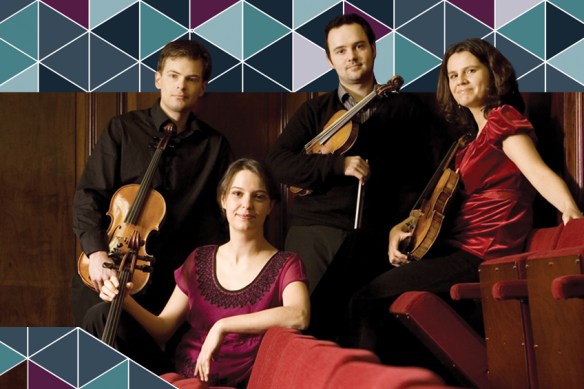
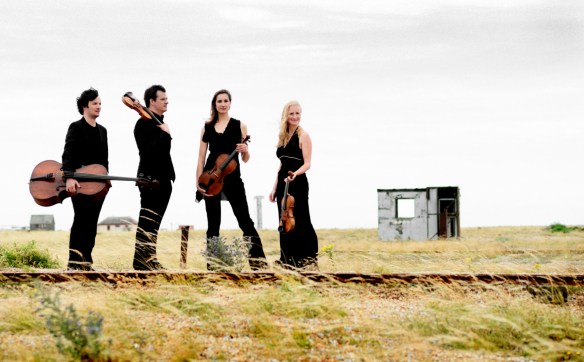
Elias String Quartet (above – Sara Bitlloch, Donald Grant (violins), Robin Ireland (viola), Marie Bitlloch (cello)); Navarra String Quartet (below – Magnus Johnston, Marije Johnston (violins), Rebecca Jones (viola), Brian O’Kane (cello)

Beamish String Quartet no.3, ‘Reed Stanzas’ (2011) (5:25-20:49) (Elias Quartet only)
Mendelssohn Octet in E flat major Op.20 (1825) (27:02-58:58)

Wigmore Hall, London; Monday 25 June 2018

You can listen to the BBC Radio 3 broadcast by clicking here

Written by Ben Hogwood

You would do well to find a really quiet spot before listening to this concert. That is because Sally Beamish’s String Quartet no.3, written for a first performance at the BBC Proms in 2011, begins with a distant offstage violin solo.

In her work Beamish is tapping heavily into the folksongs of the Hebrides, and the Elias Quartet second violinist Donald Grant, well versed in that literature, is an ideal player to begin the work (from 5:25), with all the inflections the style of writing brings. As the ensemble join nearly two minutes later Beamish’s harmonic workings become clearer, but the distinctive folk melody continues to pull the ear.

A set of ‘stanzas’ provide development and variations on the theme, with the one from 8:15 changing the mood considerably from wide open to closed in. From 11:25 violin and cello join in a duet, before the music breaks into a quicker and much more assertive section. Then after some pretty frenetic dialogue, the mood cuts once again towards that of the opening, moving back towards the original folk melody, which subsides to silence once again.

The performance here was an intense one, its colours and harmonies showing a clear debt to Britten, whose quartets Beamish was listening to at the time. Yet there is no fully blown pastiche here, with a distinctive style of quartet writing that stays very open and direct in its communication. It was great to see Sally Beamish in the audience.

The Elias Quartet were then doubled in number by the Navarra Quartet to play one of Mendelssohn’s many early chamber music masterpieces. The Octet is a real one-off, mastering a form few composers since have managed to achieve. It is all the more remarkable when you consider Mendelssohn completed the work at the age of just 16!

The piece begins with typically youthful Mendelssohn qualities of enthusiasm and vigour, but with a melody that immediately sticks in the head (from 27:02-41:02). The second theme (29:07) is a nice complement, serene and thoughtful. What really stands out is the fullness of texture when compared to the string quartet before, Mendelssohn beefing up the sound with the two cellos and violas at the lower end in particular. Yet he thinks nothing of changing the mood quite considerably in the course of the first movement, with a sudden vulnerability introduced around 35:50 that checks the positive thoughts around it – until a rush back to the original theme.

The second movement (from 41:30-48:18)) is a slow Andante, and it exploits the uncertainty briefly aired in the first with a darker outlook but also a romantic sense of longing. It too thinks nothing of moving to a faster section, quite a fraught exchange of ideas.

The third movement scherzo (48:39) is the most celebrated of the four movements, containing strong pointers towards Mendelssohn’s Shakespearian music, and especially the Scherzo from A Midsummer Night’s Dream. This one too is fleet of foot, with silvery shadows darting around the texture all the way through to the end at 53:03. At this point we surged into the finale, a thrilling dialogue between the four different sections of instruments (two lots of violins, violas and cellos) before a sweep to the finish at 58:58.

This was an excellent, joyous performance from the two ensembles, even if just occasionally it had too firm a foot on the accelerator pedal, with some of the tuning in the first movement going slightly awry as the ensembles pushed further forwards.

Further listening

There are no recordings currently available of Reed Stanzas, though a natural progression for further listening is a disc containing Beamish’s first two string quartets:

If the Mendelssohn appeals, this version from the Academy of St. Martin-in-the-Fields Chamber Ensemble combines the Octet with a much later work, the wonderful and underrated String Quintet no.2:

For more early Mendelssohn, you simply have to try the amazing Piano Quartets, written when the composer was just 14, and showing an uncommon mastery of writing dramatic music for the piano:

The Gould Trio play Schubert at the Wigmore Hall

The Gould Piano Trio play Schubert at the Wigmore Hall

gould-piano-trio

The Gould Piano Trio (Lucy Gould (violin), Alice Neary (cello), Benjamin Frith (piano) – Wigmore Hall, London, live on BBC Radio 3, 15 June 2015

Listening link (opens in a new window):

http://www.bbc.co.uk/programmes/b05y61y9

on the iPlayer until 15 July

Spotify

In case you cannot hear the broadcast, I have put together a Spotify playlist of most of the music in this concert, including recordings the artists have made where possible. The playlist can be found here:

Meanwhile clips of the Gould Piano Trio playing the music of York Bowen on a recent release for Chandos can be found here

What’s the music?

York Bowen: Rhapsody Trio (1926) (13 minutes)

Schubert: Piano Trio no.1 (1827) (40 minutes)

What about the music?

A nicely balanced hour of chamber music, with one classic of the piano trio repertoire complemented by a very little-known work.

That said, the music of York Bowen has received a lot of exposure of late – too much, some would say! At its best though Bowen’s writing shows that his high regard from composers such as Camille Saint-Saëns was not misplaced. It is chamber music that seems to be the most consistent part of his output. This Rhapsody Trio – written in a single movement format popular with English composers in the early decades of the twentieth century – was premiered at the Savoy Hotel early in 1926 at the annual dinner of the Federation of British Music Industries.

Schubert’s two big works for piano trio are justly celebrated, being two of the best and most substantial pieces for the form. The first was written a year before the composer’s death, for the same trio that gave the first performance of Beethoven’s Archduke piano trio. Incidentally that work is set in the same key, B flat major, leading to the drawing of similarities between the two. The works are similar length, but Schubert imposes his own distinctive style here, writing music that seems on the face of it to be very optimistic – but which can on closer inspection have a few worrisome moments. There is no shortage of tunes, though, and in the slow movement especially Schubert brings his song-writing prowess to bear in some beautifully written duet work for violin and cello above the piano.

Performance verdict

Watching this performance from The Gould Trio it was immediately clear just how much enjoyment they took from the music. The Schubert was full of sleights of humour but was also very detailed, and pianist Benjamin Frith demonstrated an uncanny instinct for knowing when to hold back slightly in a phrase, or when to push on.

The first movement emphasised how gracefully Schubert writes for strings, even in the midst of a lot of bluster, while the song-based second movement lived up to its billing. The ‘Scherzo’ was witty and took time over the longer notes of his contrasting ‘trio’ section, while as the curious last movement wended its way through all sorts of different keys the trio always had a firm hand on the tiller.

Meanwhile the Bowen was given the conviction and passion his music needs, emerging as a really fine piece of music. The end in particular was extremely well done, thoughtful but holding the audience in the palm of its hand.

What should I listen out for?

Bowen

2:23 – the music begins as though emerging from a dream into the morning light. Held notes from the strings and some lazy thoughts from the piano are initially quite unfocused, but gradually the trio find their footing and a bold, louder passage ensues. At 4:34 a fetching melody can be heard on violin and cello in unison.

The music gradually picks up speed, the instruments now a lot more independent and the piano part more demanding. Although the comparisons are often between Bowen and Rachmaninov, I find the appealing unison passage from 9:30 to be like Fauré.

After another passionate section the music seems to be spent, but Bowen brings out a really atmospheric and rather affecting ending from around 14:00 onwards, all three instruments seemingly lost in thought.

Schubert

17:55 – Few chamber works begin with this much positivity! Here the Gould Piano Trio are at pains to stress this music can also be graceful – a lot of trios give the opening of the first movement too much oomph. Here though the tune shines through, and is nicely articulated by pianist Benjamin Frith at 18:49.

19:49 – Schubert’s light and songful second main tune appears on the cello. The trio repeat the first section of this movement at 21:49.

25:35 – Schubert now takes the music further from home, moving through a number of different keys as the main tune gets distorted and more worked up. Eventually this leads back to ‘home’, and the main tune in its original state, at 29:01, from the piano with soft accompaniment. Then at around 31:40 the music pulls back, leading through to an emphatic finish at 32:46.

33:12 – the second movement – marked Andante (at a walking pace) – begins with a cello solo and soft piano accompaniment. The cello is soon joined by the violin with the same melody. The atmosphere is relaxed and nocturnal. However there are shadows that occasionally fall over the music. A good example is at 36:11, where a minor chord introduces a much colder edge. Everything is suddenly less certain, and Schubert alternates between these moods – mostly touching on the positive, and especially so as the movement subsides to a gentle close (from 42:20)

42:55 – the third movement begins. This is a ‘Scherzo’ (normally a jokey kind of movement) and it begins here with an innocent sounding melody. Then Schubert develops a kind of melodic cell that gets passed between the three instruments. The humour – exploited by The Gould Trio – comes mostly in the stop-start nature of the music. The trio section – usually a contrast – begins at 46:14 and is graceful, with long notes in the strings. The scherzo section returns at 48:05.

50:09 – the last movement begins with a sweet tune from the violin, then moves onto a more obviously dance-based second tune (50:49) Schubert then takes the music on a tour of some pretty distant tonal centres, setting his tunes in increasingly playful formats but keeping in the spirit of the dance. Then as the end approaches Schubert keeps pretending to finish before moving off in contrary directions…until he finally does at 59:02, setting off on a quick coda.

Further listening

Two bits of further listening for you this week – if you particularly enjoyed the Schubert, then The Gould Trio have a recording of the second piano trio made at the Wigmore Hall. It can be heard on Spotify below, occupying the last four tracks:

Meanwhile the Gould Piano Trio’s most recent recording, to be reviewed shortly on Arcana, is a fascinating collection of works for piano trio by three British composers – Sir Peter Maxwell Davies, the recently knighted Sir James MacMillan and Sally Beamish. That disc can be heard on the Spotify link below:

For more concerts click here