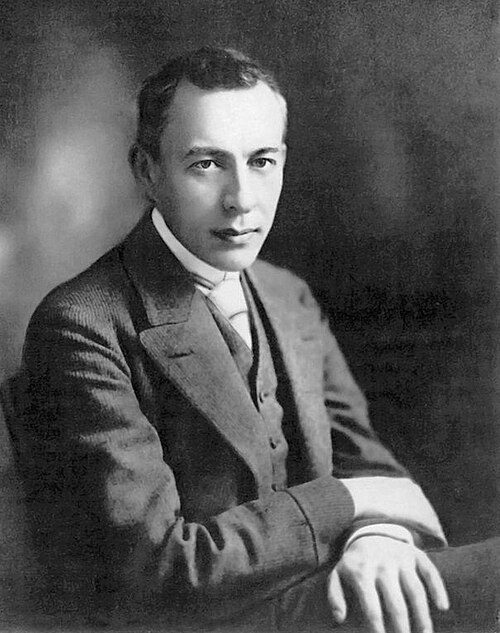
by Ben Hogwood Photo of Rachmaninoff, c1900, courtesy of Wikipedia
March 28 was a significant date in the life of Sergei Rachmaninoff. Sadly it was on this day that he died, in 1943 – but the event I have chosen to highlight is the infamous premiere performance of the Symphony no.1 in 1897.
The concert was an unmitigated disaster, due to under-rehearsal and the supposedly intoxicated state of its conductor, Alexander Glazunov. The negative reaction afforded the work caused Rachmaninoff great psychological harm, severely denting his confidence and casting a shadow over many future compositions. This was a great shame, for it is a powerful piece, with original development of its melodic material and an instinctive and fluid compositional style. The finale is lean, its raw power making a strong impact both in concert and on record.
The symphony was not revived until 1945, when a second performance took place under Alexander Gauk, since when the work has steadily gained in popularity. It has been helped by a number of excellent recordings, of which one is chosen here – the Concertgebouw Orchestra conducted by Rachmaninoff specialist Vladimir Ashkenazy:
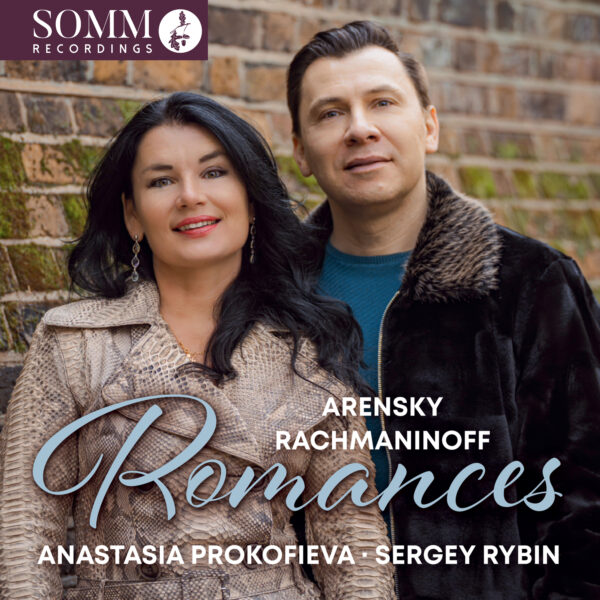
One of the most intriguing classical albums to be released in 2026 so far is an album of songs by Sergey Rachmaninoff. Nothing particularly unusual in that, you might think, but on this occasion he shares top billing with his teacher at the Moscow Conservatory, Anton Arensky. A composer often overlooked, Arensky played a critical part in Russian musical history, forming a tangible link between the Romantic composers Glinka and Tchaikovsky, the ‘Mighty Handful’ Russian group of composers Balakirev, Cui, Mussorgsky, Rimsky-Korsakov and Borodin, and the 20th century giants, of whom Rachmaninoff is certainly one.
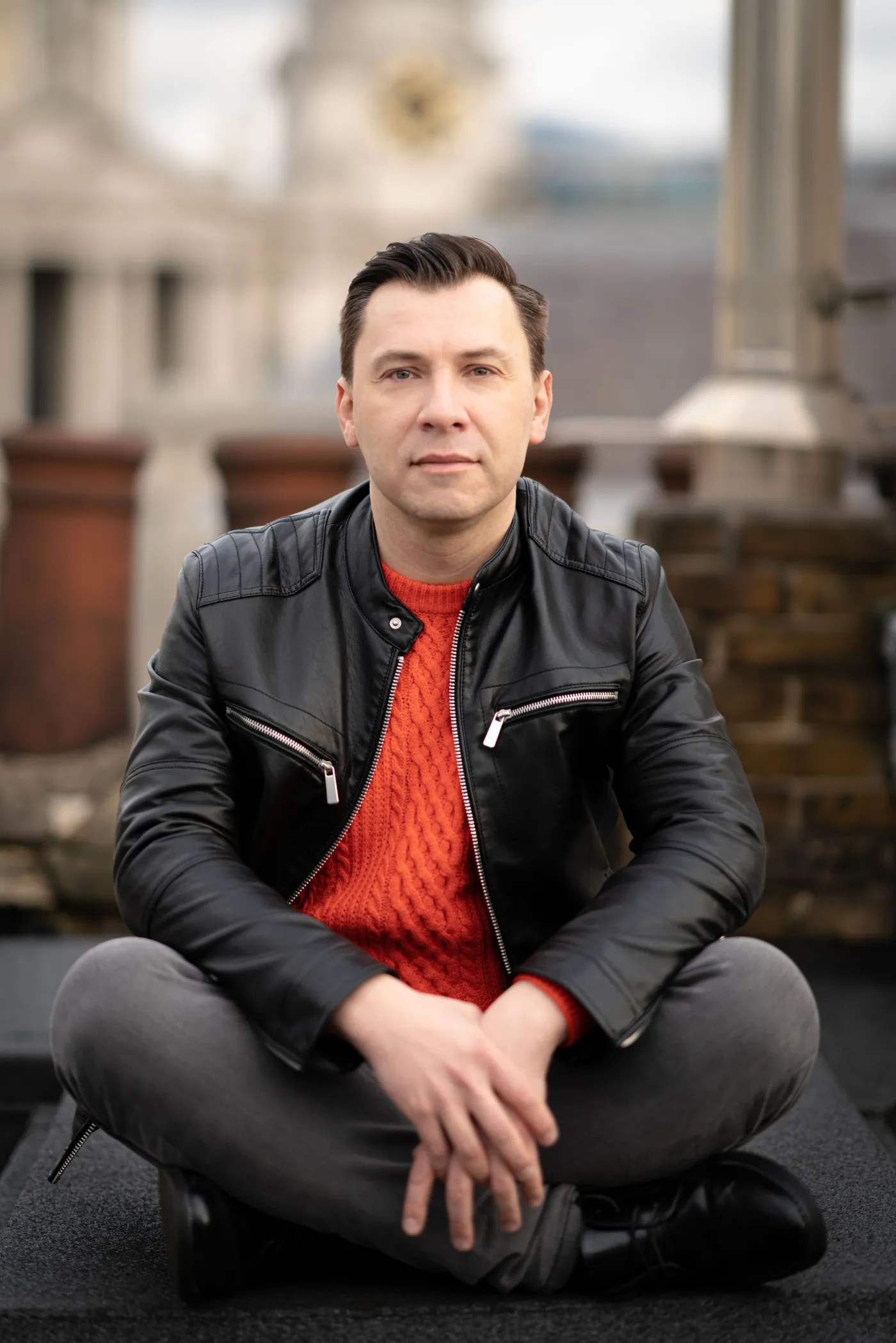
The artists on this album for Somm Recordings, soprano Anastasia Prokofieva and pianist Sergey Rybin, have joined Arcana on a call to discuss their album, and in particular the central character Arensky. People who know the composer are likely to have heard his Piano Trio no.1, one of his finest chamber music works, but the songs are not familiar at all. “The songs are lovely, but they are absolutely unique and rare – even in Russia”, says Anastasia (below). “It came to our attention that this music should be elevated and performed. The idea came that when you hear and sing this music it is something very fresh and very new. It should be more present for people, otherwise it will vanish.” “I knew some Arensky before”, says Rybin, “particularly the songs, through being curious about the facets of Russian music and not just Tchaikovsky or Rachmaninoff, though we did want to do some Rachmaninoff to begin with. Then this idea came to us that there is a connection between the two composers, because one is a pupil and one is a teacher. The idea grew from there, and we thought this slant, this side view would be an interesting way to put it across. So what is the chicken, and what is the egg?! Suddenly you realise that Rachmaninoff wasn’t born in a vacuum, and there are things so closely connected to his style, and you can literally hear how his style was influenced by Arensky, particularly in the piano writing. From my point of view can absolutely see and touch it.”
The selection process was next. “We looked through 57 romances, we surveyed it all and selected what we liked.” The album is linked logically, rewarding continuous listening as the spotlight shifts between the composers so that it proves difficult to tell where one begins and the other ends. “They are so similar, and yet there is a difference”, says Rybin. “It is like listening to Debussy and Ravel, you can feel it is of the same nature, but there is a notion which is just imperceptibly different. I personally enjoy that as an audiophile, feeling that slight personal intonation, particularly with Arensky, It’s hard to describe what it is. With Rachmaninoff you hear the Orient, you hear that sort of Russian romantic Orientalism in play. With Arensky it is something else, and it is hard to put your finger on it.”
Was Arensky writing his songs with a particular singer in mind? “I don’t think he was”, says Sergei. “Rachmaninoff did, and his Op.38 songs were written for Nina Koshetz, and he went on tour in 1916 playing those songs with her. Subsequently her descendants emigrated to America, and there were two more songs discovered in their archives, Prayer and Glory to God. Somebody held it in a private archive for decades and then suddenly they appeared.”
“There is a funny story about this particular singer, which my professor in Moscow told me, that Koshetz did not like high notes at the end of the song, so she threw the score at Rachmaninoff and told him to sing them!”, says Anastasia. “It is emotionally so strong if you get to that point with this pianissimo, and you need to be on a very good day with your technique and with your state of mind. Our collaboration helps me to sometimes hold on and do the words first, with the music. That’s why it’s fantastic to work, with such a musician and such a pianist as Sergey. So it’s not only me as a singer, getting to the point of high notes, I always try to see it through our ‘duet’ point of view, so it should be tender and fragile, not necessarily loud and big.”
“I would add that in general Russian music is so vocally based”, says Rybin (above), because it is first of all coming from folk tradition, which is mostly singing. And then, as I often say to students, Russian music did not know a Baroque period – almost nothing. It’s only Bortniansky and Berezovsky, at the turn of the 18th to 19th century, and they studied in Europe. The Russian national school arrived straight in to ‘bel canto’, and St. Petersburg used to run a full time Italian opera company. When went to the opera, that meant Italian opera, and so the Russian school of writing for the voice is profoundly based on that, the bel canto nature. That points to your question – yes, they did know what to ask for the voice, and they asked hard things, because they heard all the Verdi, and Wagner came to Russia.”
“This connection between Italian bel canto and Russian styles is amazing, and in addition we are so blessed to have these amazing musicians who were not only singers but pianists or violinists too”, says Anastasia. “I was a violinist, so this kind of intonation and presentation helps when you play the instrument first. That helped me a lot. “I would add”, says Rybin, “that in Rachmaninoff and Rimsky-Korsakov, the separation of the female voice into soprano and mezzo-soprano is very, very pronounced. With Rachmaninoff the soprano is very high and the mezzo very low. Arensky is more on Tchaikovsky’s side, writing very centrally for the soprano voice, with maybe one top note. Rachmaninoff creates more of a diversion with his range.”
“Speaking of Tchaikovsky”, says Anastacia, “I think he and Arensky were quite close friends, because he complemented Arensky’s opera Dream on the Volga a great deal, and wrote letters to the Bolshoi Theatre asking them to invest more money for the staging.” The opera is based on the Ostrovsky melodrama Voyevoda, which Tchaikovsky himself set and ultimately destroyed. “It was actually presented at the Bolshoi Theatre”, she says, “and had a good deal of success, and Tchaikovsky was greatly touched by the music and the style. So they were quite close in terms of musical language and understanding. It touched me a lot, because Tchaikovsky is such a fantastic composer, a base of the whole Russian music culture, and knowing that there is another composer who was close in the thinking or musical language is fantastic, how close their musical worlds were, and that we can come back and elevate one of those voices. My first operatic aria was by Arensky, and some of his arias are particularly famous in Russia, but the rest of the world doesn’t know him so well, and we are really happy to lift his profile.”
She is helped by Rybin, who she praises for his informative booklet notes and presentational style at concerts, giving audiences an insight into the music they perform. “He is a unique musician who has an ability to explain this music, a talent for presenting it. I’m in good hands!”
Together the pair have recorded albums devoted to the music of Hahn and Dargomyzhsky. “His music is absolutely brilliant”, says Anastacia of the early Russian Romantic, “he wrote in French and in Italian, and elevated that with some hidden gems, and the album game together beautifully. Reynaldo Hahn wrote some fantastic music, too.”
It may seem an obvious point, but listening to a composer’s song output is to hear a whole new element of their output, which makes this album all the more important for highlighting this area of Arensky’s output – and Rachmaninoff’s, too. “By volume, you realise the songs are a significant part of the output”, says Sergey, “for Rachmaninoff too, who wrote 86 songs. It is a big output, and we all think of this grandiose composer with big hands and a crushing sound, but when you go into the songs – the majority of them, apart from Spring Waters, maybe – you realise those two or three pages are absolutely perfect, with not a note out of place. They are really works of absolutely refined precision, perfect vocal miniatures, and there are some bars in those songs when you can count the notes on one hand! This minimal restraint and nuance, the light and shade, are in a perfect miniature form, which is a refreshing thought for me. Of course I hear the finale of the Piano Concerto no.3, but then you look into the songs, and you realise that’s not all Rachmaninoff is. He is a perfect vocal miniaturist.”
“That emotional exquisite moment”, says Anastasia, “has roots in Arensky, because some of his songs are so touching and so beautifully done. Someone from the audience said to me yesterday, it’s like the ‘Letter Scene’ from Eugene Onegin, but shorter, a mini letter scene in three pages. That was the connection between the teacher who was already showing Rachmaninoff that emotional presence is possible in a couple of minutes, showing what is going on but also how the person is feeling.”
The two talk as they perform, in rather fetching harmony. “Rachmaninoff studied harmony with Arensky”, points out Sergey, “and Arensky was the first ‘harmonist’, with no study books to use since conservatories had just been established in Russia. He was the author of the first study book of harmony in Russian, and I find this very important. Rachmaninoff was just below 20 when he studied harmony, and then of course we realised that harmony for Rachmaninoff is a particularly important tool and dimension. We hear that it is his, but I also hear those dextrous shifts in Arensky, he is really mobile on his feet in terms of harmony, writing adventurous modulations. There is a line there, where Rachmaninoff was influenced in this harmonic sense, which carried through his life.”
With Rachmaninoff’s continually strong emphasis on melody, are there any challenges that are particular to phrasing in the songs? “Absolutely”, says Anastasia. “The Op.38 songs are particularly concentrated, and you have to never sharpen your intonation. Sometimes it takes you years to perfect! It has always amazed me that the compose were so young to compose these songs, especially Arensky, who had a short life, colourful and interesting. He was very young to be a professor writing this book. We need to present these people not only as composers, with the beautiful music, but also as human beings. They were blessed with so many talents, and have given us these amazing scores, books and knowledge – how to feel, to be happy and sad, this emotional flourishing that we miss sometimes these days when watching Netflix and things! This deep knowledge needs to be brought to the new world and presented to young people.”
The pair have recent experience in this field. “In our concert yesterday we had children around eight years old listening, and they could understand the music because it’s so emotionally easy and clear – not easy as in simple, but it appeals to them and has resonance. It is poetic, and the heart and imagination immediately start working, which we all want. I’m happy to have been a bit closer to them and bringing this music to the new generation.”
With regards to vocal technique, she considers. “Because he was such a brilliant pianist, Rachmaninoff didn’t really have limits, so you somehow need to make it happen, to make it work, and it’s quite an achievement to do. It’s beautiful when it happens!” Does it help that both composers were pianists, being able to set scenes with such economy? “I’m really pleased that it is such brilliant music for Sergey to play, because sometimes the piano part is limited. Here it is like an orchestra, and I was so happy that we could both flourish, with some beautiful pieces both to sing and to play. Our audience yesterday reacted very well to this musical language, which is so colourful and rich. They are great pieces to present!”
You can listen to clips and explore purchase options for the new album of songs by Arensky and Rachmaninoff at the Somm Recordings website
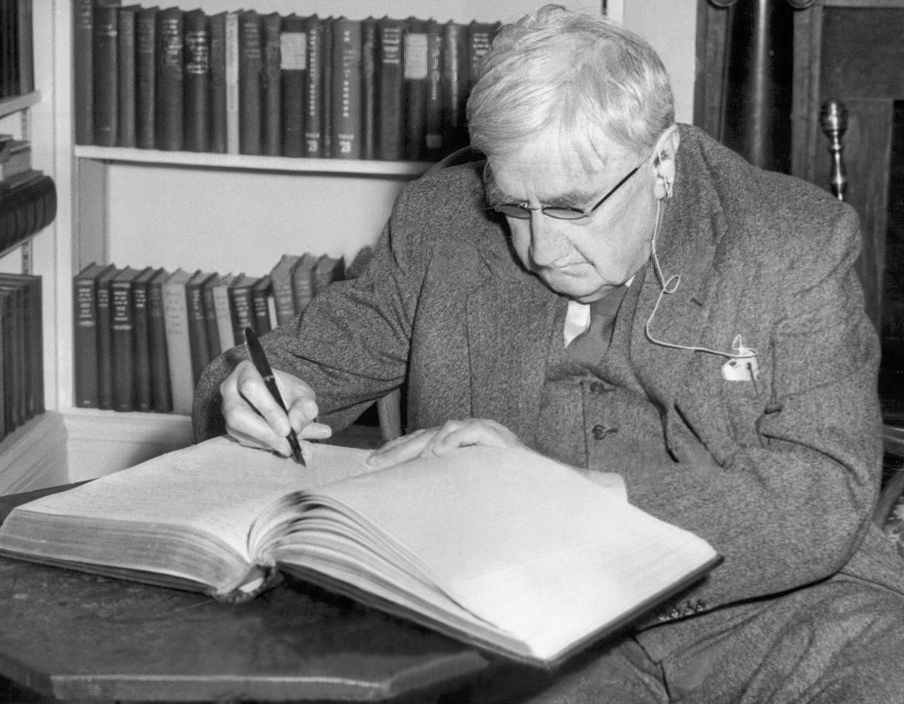
Picture: By uncredited press photographer, public domain
by Ben Hogwood
On this day in 1938, the premiere of Serenade to Music, one of Vaughan Williams‘ best-loved pieces, took place at the Royal Albert Hall. Conducted by Sir Henry Wood, the orchestra was a blend of players from the London Symphony Orchestra, BBC Symphony Orchestra and London Philharmonic Orchestra.
In the audience was a certain Sergei Rachmaninoff, who had performed his own Piano Concerto no.2 in the first half of the concert, and who was moved to tears by Vaughan Williams’ new work.
Serenade To Music is led by a group of 16 solo singers, a starry line-up including the likes of Isobel Baillie, Elsie Suddaby, Heddle Nash and Walter Widdop. The account below is conducted by John Wilson, from the Concordia Foundation 15th Anniversary Gala at the Queen Elizabeth Hall. 22nd November 2010:
Annika Lõhmus, Yena Choi (sopranos), Toomas Tohert (tenor), Geir Luht (bass), Estonian Philharmonic Chamber Choir, Kadri Toomoja (organ) / Tõnu Kaljuste
Arvo Pärt Da pacem Domine (2004/6); Veni creator (2006); Magnificat (1989); The Deer’s Cry (2007); Für Jan van Eyck (2020) (UK premiere) Galina Grigorjeva Svyatki – ‘Spring is Coming’ (2004) Rachmaninov All Night Vigil (Vespers) Op.37 (1915): Slava v vyshnikh Bogu; Bogoroditse Devo J.S. Bach Motet: Ich lasse dich nicht, BWV Anh.159 (1713) Arvo Pärt Peace upon you, Jerusalem (2002); De profundis (1980) Tormis Curse upon Iron (1972, rev. 1991) Arvo Pärt Vater unser (2005/11); encore: Estonian Lullaby (2002)
Royal Albert Hall, London Thursday 31 July 2025 (late night)
Reviewed by Ben Hogwood Photos (c) BBC / Chris Christodoulou
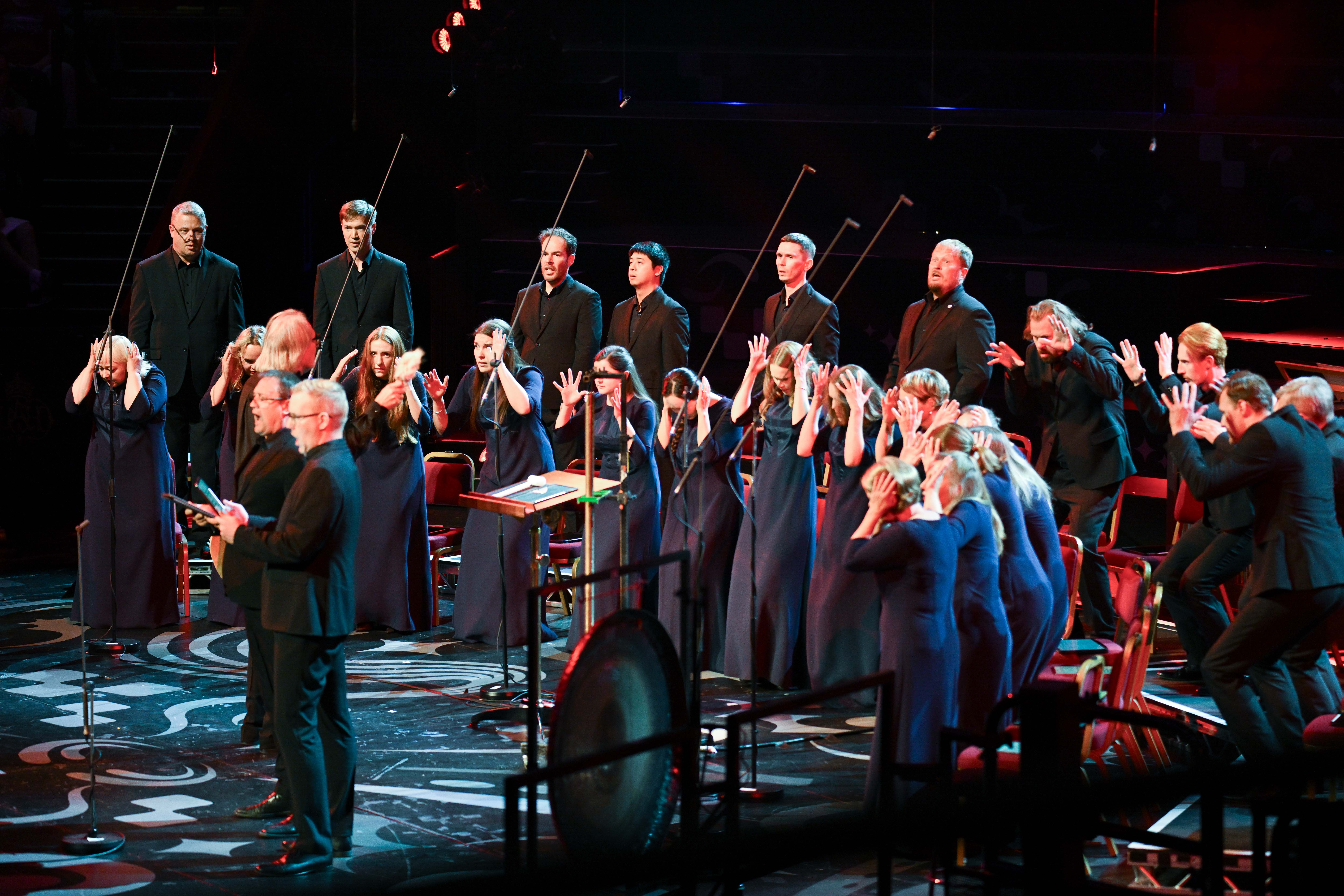
The music of Arvo Pärt is ideal for the special atmosphere of a late-night Prom. Yet this was no ordinary concert, being a celebration of the Estonian composer’s forthcoming 90th birthday in September, given by his close friend and collaborator Tõnu Kaljuste, conducting the Estonian Philharmonic Chamber Choir.
This combination of performers have been mainstays of the Pärt discography, forming a celebrated partnership with the ECM label that began with the landmark Tabula Rasa album of 1984, a cornerstone for Pärt’s critical and commercial success.
Pärt is often referred to as a ‘holy minimalist’, to which the response should be that his music is not ‘wholly minimal’. The substantial orchestral works attest to that, though here we heard much slighter but equally meaningful pieces for choir, most given unaccompanied by the 25-strong Estonian ensemble. The Proms audience were commendably quiet, leaning in to appreciate both the delicacy and crystal purity of the voices. The program was well-thought, realising the expressive potential of Pärt’s music alongside that of Bach, Rachmaninov and fellow Estonians, Veljo Tormis and Galina Grigorjeva.
The solemn Da pacem Domine and open-air Veni creator made an ideal opening couplet, the choir projecting with striking clarity rather than volume. For silence, too, plays a critical role in Pärt’s music, and Kaljuste ensured the spaces between the notes were every bit as expressive.
The Magnificat revealed its hidden power, while The Deer’s Cry was perfectly phrased, Pärt’s lilting cadences casting a spell. Für Jan Van Eyck, setting the text of the Agnus Dei, found the ideal balance between the reduced choir and Royal Albert Hall organ, where Kadri Toomoja had the ideal registration. Peace Upon You, Jerusalem, for female voices, contrasted silence with brightly voiced choral statements, while the solemn De profundis, for male voices, began from a small cell, maintaining rapt concentration while punctuated by organ and percussion.
Galina Grigorjeva’s Svyatki was a beautiful meditation, led by the heavenly voice of soprano Yena Choi, her voice with a remarkable bell-like clarity. Bach’s motet, previously attributed to his son Johann Christian, was impeccably voiced and phrased, but while the two excerpts from Rachmaninov’s All-Night Vigil were arguably less successful, they reflected a familiarity with listening to big choirs perform this music, rather than the subtleties of a chamber choir. Purity proved ample compensation for volume here.
This was emphatically not the case in Curse upon Iron, a remarkable setting from Veljo Tormis, of words from the Finnish national epic, the Kalevala, translated into Estonian. Describing the horrors of war, it sends a chill down the spine right from the primal call to arms of the shaman drum, struck by Kaljuste himself, then from the restrained urgency of the choir, like a coiled spring. While listening it was impossible not to think of the current plight of Ukraine and by extension in fear for the Baltic states, especially as Tormis’ writing was brought to a horrific climax. This was realised through the elemental power of tenor Toomas Tohert, bass Geir Luht and the choir, turning from side to side with watchful dread but then erupting in barely concealed anger. It was a remarkable performance, which will live long in the memory.
After this emotionally shattering encounter, the balm of Vater unser, Pärt’s German setting of The Lord’s Prayer for Pope Benedict, was just what was needed, its simplicity all the more affecting for what went before. As an encore, Kaljuste found just the right complement in the choir and piano version of Estonian Lullaby, its pauses near the end the musical equivalent of drooping eyelids. It was a most effective end to a special concert, Arvo Pärt’s musical essence distilled for a most appreciative audience.
You can listen back to this Prom concert on BBC Sounds until Sunday 12 October.
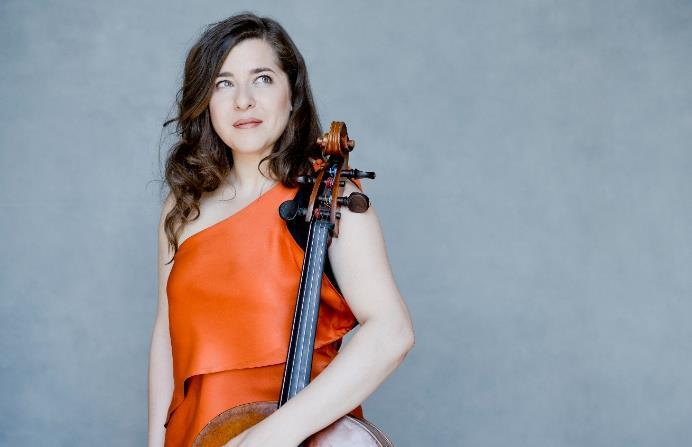
Alisa Weilerstein (cello, below), City of Birmingham Symphony Orchestra / Joshua Weilerstein (above)
Still Poem for Orchestra (1944) Dvořák Cello Concerto in B minor, B191 (1894) Rachmaninoff Symphonic Dances, Op. 45 (1940)
Symphony Hall, Birmingham Wednesday 12 March 2025 (2:15pm)
Reviewed by Richard Whitehouse Picture of Joshua Weilerstein (c) Beki Smith
Joshua Weilerstein is always a welcome returning artist to the City of Birmingham Symphony Orchestra, invariably with artful programmes such as this afternoon’s interplay of American music with that by European composers finding themselves in temporary or permanent exile.
The music of William Grant Still has made a tentative re-emergence over recent years, Poem for Orchestra being typical of that from his maturity in its galvanizing a late-Romantic idiom with an emotional range of almost cinematic immediacy. Weilerstein steered a secure course through a piece whose darkness-to-light trajectory mirrors that of an accompanying poem by the composer’s wife Verna Avery, in which the foreseeable end of world war might yet bring a new unity and compassion as is reflected through the enfolding euphony of its final pages.
Joshua and his sister Alisa (above) have both appeared often with the CBSO, though Dvořák’s Cello Concerto seems to have been their first Symphony Hall collaboration. Hopefully not the last, their rapport manifest as soon as the opening Allegro’s orchestral tutti has run its purposeful course. Any marginal falling-off of momentum over the latter stages of the development was more than offset by the soloist’s thrilling ascent into the reprise of the easeful second theme, with the coda’s treacherous passagework assuredly negotiated prior to an affirmative ending.
The ensuing Adagio is the work’s emotional heard in all respects, but these siblings rightly refrained from milking the pathos of its ruminative main theme at all times, so throwing the drama of the central episodes then especially the confiding intimacy at its close into greater relief. Lunched directly, the Finale exuded an impetus as sustained this movement through to its extended coda which, more than usually, seemed to warrant a raptly inward outcome – though there was nothing contrived about the heady arrival of those exhilarating final bars.
Rachmaninoff’s Symphonic Dances is hardly a stranger to concert programmes these days, the CBSO having given several memorable accounts in recent seasons. That by Weilerstein was certainly among them, above all with an opening dance whose trenchant outer sections elided perfectly into then out of the central span characterized by Kyle Horch’s soulful alto saxophone. Nor did the Tempo di valse disappoint in its mingled stealth and malevolence, even if the closing pages perhaps dispersed their ominous aura just a little too temperately.
Much the most difficult movement to hold together, the final dance left a potent impression. Its outer sections never rushed and superbly articulated, Weilerstein made the most of that spellbinding transition into a central section where (uniquely with this composer) harmony or texture predominate over melody in defining this music’s expressive persona. From here he ratcheted up tension heading to a seismic confrontation of competing plainchants, then a denouement almost choreographed in its stillness as that final tam-tam echoed into silence.
Directing without a score, this is definitely a work with which Weilerstein feels an especial identity, and the CBSO was unstinting in its collective response. One can only look forward to further concerts between this orchestra and conductor, and hopefully in the coming season.



 Arcana.fm