In concert – James McVinnie, BBC Symphony Orchestra / Thomas Adès @ BBC Proms: Sibelius, Gabriella Smith & Adès

James McVinnie (organ), BBC Symphony Orchestra / Thomas Adès

Sibelius The Swan of Tuonela Op.22/2 (1893, rev. 1897 & 1900)
Gabriella Smith Breathing Forests (2021) [UK Premiere]
Adès Five Spells from The Tempest (2022) [Proms premiere]
Sibelius The Tempest – Suite No. 1, Op. 109 No. 2 (1925-6, arr. 1929)

Royal Albert Hall, London
Tuesday 2 September 2025

Reviewed by Richard Whitehouse Photos (c) BBC / Andy Paradise

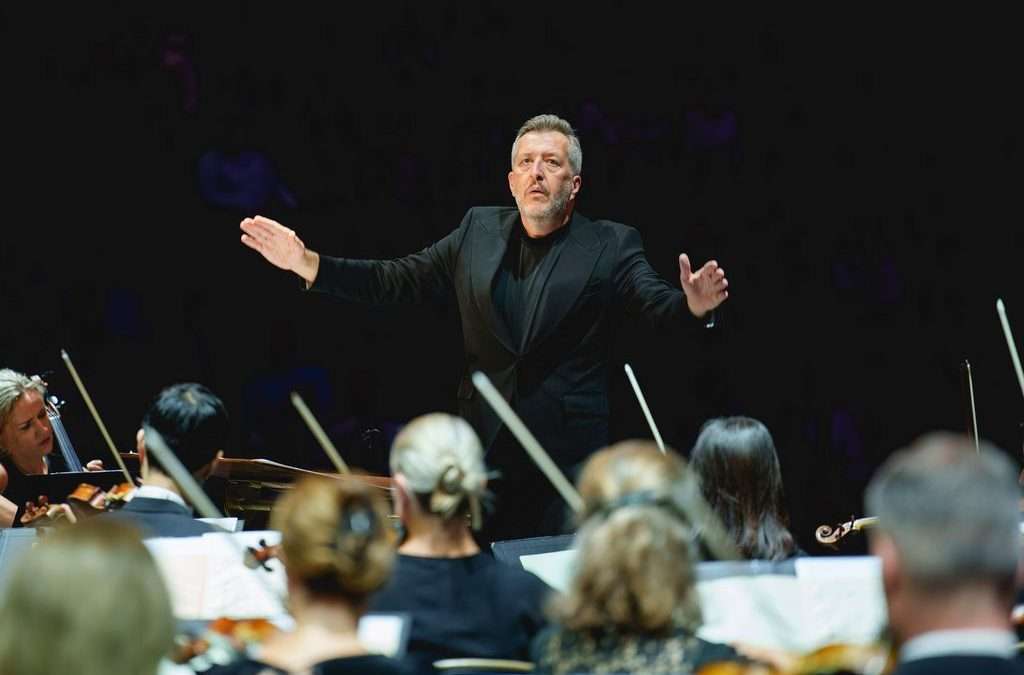
Having worked across the board with orchestras in London (and elsewhere), Thomas Adès tonight conducted the BBC Symphony Orchestra in what, for his ninth Prom as a conductor, was a typically imaginative programme that centred on concepts of nature and the elements.

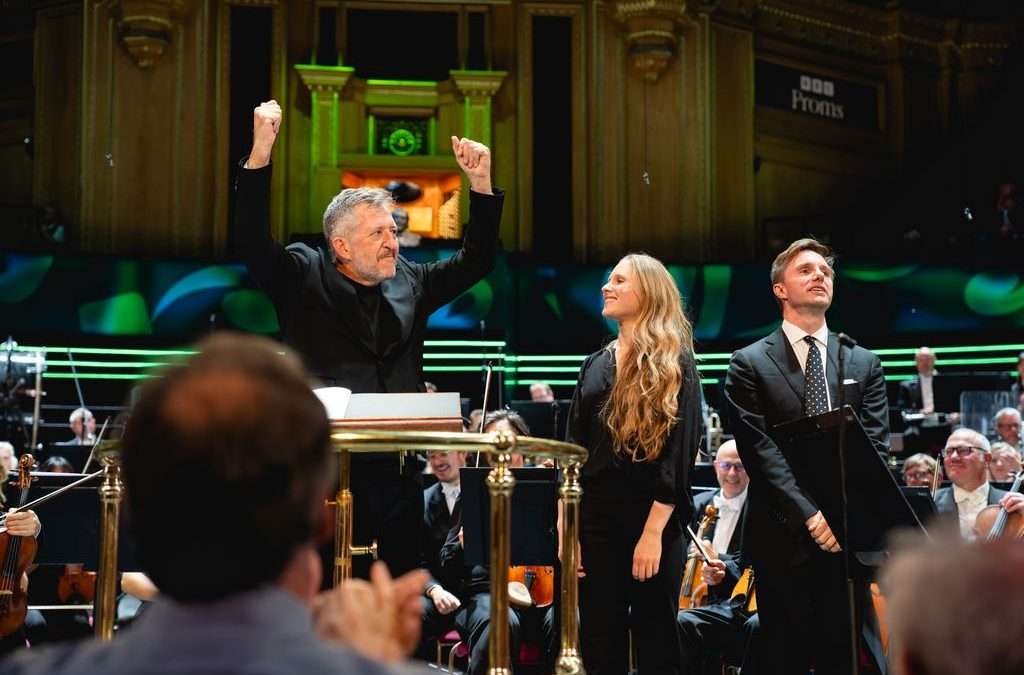
A concept, moreover, whose primary focus was Breathing Forests – an organ concerto by the American composer Gabriella Smith (below). She herself has described this work as ‘‘a reflection on the complex relationship between humans, forests, climate change and fire’’; one that unfolds across three interconnected movements and whose evoking the fast-slow-fast archetype belies its overall ingenuity. The opening Grow picks up on Ligeti’s ‘op-art’ pieces of the late 1960s as it pulsates gently if insistently into life, then the central Breathe draws from the interplay of soloist and orchestra a variety of methodically evolving textures; given emotional impetus in the final Burn as it builds to a climax which spatially engulfs the whole ambience, though its continuation towards a clinching apotheosis sounded just a little gratuitous in this context.

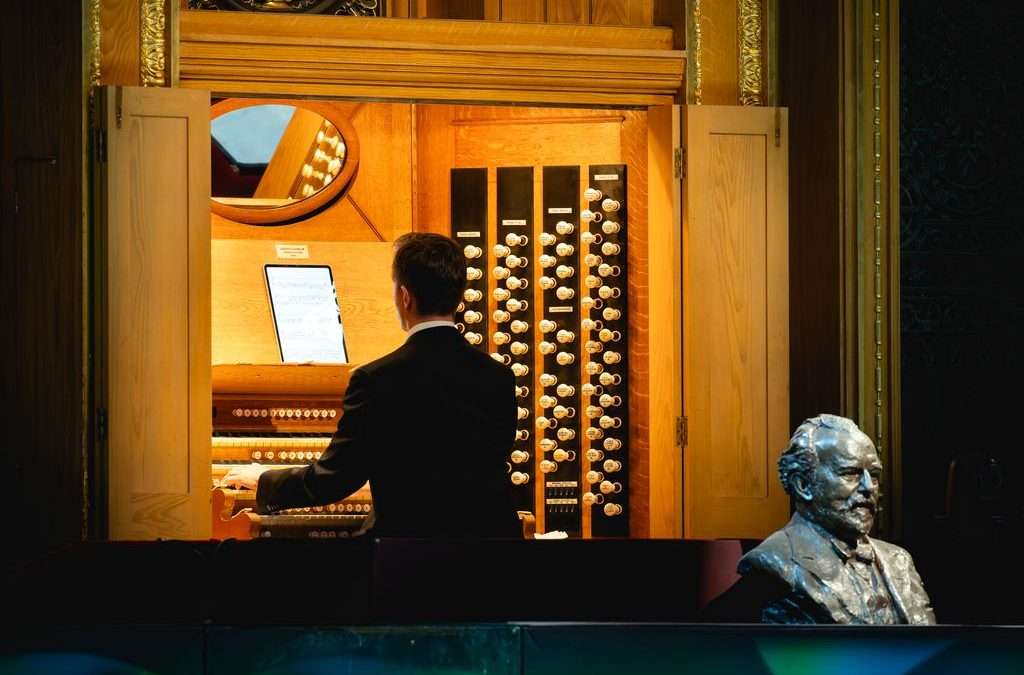
What was never in doubt was the sheer dexterity of James McVinnie (below) in conveying the power and poetry of the solo part, to which the BBCSO’s contribution was scarcely less visceral. As musical representation of the natural world in time of crisis, this piece more than left its mark.

Adès as composer was featured after the interval with Five Spells from ‘The Tempest’, a suite drawn retrospectively from his eponymous opera. This ranges widely over the parent work – beginning, not unreasonably, with its Overture such as depicts the play’s opening storm in guardedly elemental terms. From there it heads into Ariel and Prospero, akin to a scherzo where the contrasting characters of the two protagonists are vividly played off against each other. A more nuanced juxtaposition is evident from Ferdinand and Miranda, its inherently amorous nature conveyed with due reticence, then The Feast affords a culmination of sorts with its stealthy interplay of character-imbued motifs. The end comes, naturally enough, in Prospero’s Farewell – Caliban with the music evanescing in the most equivocal of terms.

The programme was framed with music by Sibelius – opening with The Sawn of Tuonela as emphasized the music’s hieratic poise and fatalistic aura, as did those eloquent contributions from cor anglais and cello. Maybe Adès will one day tackle the whole Lemminkäinen Suite?

The First Suite from Sibelius’s compendious score for The Tempest opens with the searing evocation The Oak Tree which was a little underwhelming here, though there was nothing amiss in the characterful Humoreske or in Caliban’s Song with its telling bizarrerie. The Harvesters is a reminder of Sibelius’s innate gift for light music at all stages in his career, as also the animated Canon and insinuating Scene; to which the plangent Intrada/Berceuse then the ominous Interlude/Ariel’s Song provide startling contrasts. The truncated Prelude follows on seamlessly through to its decidedly abrupt end. Right through this sequence, the BBCSO was always attuned expressively and, while a sense of the music as teetering on the edge of some greater catastrophe was minimal, there was no denying Adès’s insight overall.

Click on the artist names to read more about organist James McVinnie, the BBC Symphony Orchestra and conductor Thomas Adès. Click also for more on Thomas Adès as a composer and Gabriella Smith, and the BBC Proms

Published post no.2,648 – Friday 5 September 2025

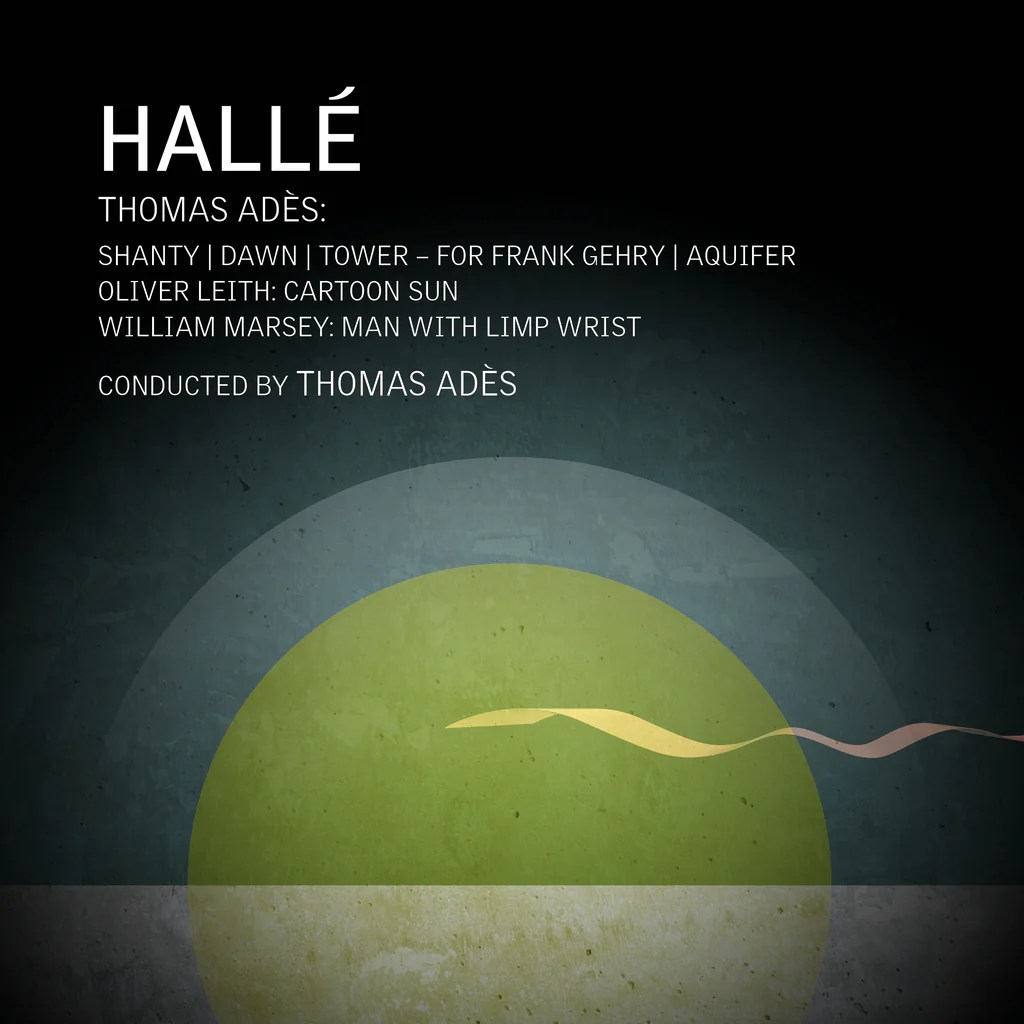
On Record – Hallé / Thomas Adès: Adès, Leith, Marsey

Thomas Adès Shanty (2020); Dawn (2020); Tower (2021); Aquifer (2024)
Oliver Leith Cartoon Sun (2024)
William Marsey Man with Limp Wrist (2023)

Hallé / Thomas Adès

Hallé CDHLL7567 68’20”
Producer Jeremy Hayes Engineers Steve Portnoi, Niall Gault, Edward Cittanova

Live performances at Bridgewater Hall, Manchester, 21-24 November 2024

Reviewed by Richard Whitehouse

What’s the story?

This latest release on the Hallé’s label focusses on music by or conducted by Thomas Adès during his 2023-25 residency with this orchestra, with works by two younger composers he has championed heard alongside several of his own pieces – including a major UK premiere.

What’s the music like?

Of the three shorter pieces by Adès, Shanty – Over the Sea unfolds as cumulative variants on an archetypal-sounding sea-shanty, with all this may imply in terms of transcending captivity and longing for freedom. Subtitled ‘Chacony for Orchestra at Any Distance’, Dawn conveys in spatial terms a concentric evolution toward a likely epiphany that yet remains out of reach. By contrast, Tower – For Frank Geary envisages a building near Arles by the Canadian-born American architect in terms of a bracing and increasingly effervescent fanfare for 14 trumpets.

Of those works by younger composers, Man with Limp Wrist finds William Marsey drawing on paintings by Salman Toor for a sequence of eight ‘scenes’; the first seven of which are as succinctly descriptive as the titles that inspired them. The eighth piece, which takes its name from the titular canvas, brings culmination of sorts through its collision of old tunes (mainly hymns) in music as feels arresting if curiously uninvolving. Much the same could be said of Cartoon Sun by Oliver Leith, a detailed evocation of which is provided by the composer and whose premise that ‘‘Everything looks different under the sun’’ is related over three sections – the first two relatively brief and primarily gestural, the lengthier third building cumulative intensity which dissipates towards the end as if to confirm that nothing is ever what it seems.

Premiered in Munich by the Bavarian Radio Symphony Orchestra, Aquifer is Simon Rattle’s third major commission from Adès (after Asyla for the City of Birmingham Symphony then Tevot for the Berlin Philharmonic). Its title referring to ‘‘a geological structure which can transmit water’’, the piece unfolds across seven continuous sections, though the outline of a sonata design can be sensed not as the dynamic means of change but rather (and more appropriately) as a fluid construct from which ideas emerge and mutate – as might water as it passes between different vessels. In terms of content, it ranges widely over styles and allusions before culminating in a vivid while hardly epiphanic coda, yet its overall cohesion along with its assured handling of sizable orchestral forces ensures an impact which audibly commended it to all those present.

Does it all work?

Whether or not it does so is much of the fascination. The works by Marsey and Leith offer no mean indication in terms of where these composers (in their mid-30s) are headed, while those by Adès afford intrigues aplenty. Neither is there any doubt as to the commitment of the Hallé in presenting these pieces to best advantage, nor of Adès’s ability to get the most out of these players. If a sense persists of his music having an essence that beguiles more than it conceals in intrinsic substance, no living composer has reinvented the wheel quite so skilfully as Adès.

Is it recommended?

Yes, not least as the programme makes for a cohesive and engaging listen throughout. Sound makes the most of Bridgewater Hall’s evident clarity and spaciousness, with annotations as informative as usual from this source. Adès is undeniably a defining presence in new music.

Listen / Buy

You can explore purchase options at the Hallé online shop

For more on the artists featured, click on the names to read more about The Hallé and album conductor Thomas Adès – and click on the names for Thomas Adès as a composer, Oliver Leith and William Marsey

Published post no.2,629 – Sunday 17 August 2025

Playlist – Sir Simon Rattle @ 70

by Ben Hogwood

Last week the British conductor Sir Simon Rattle celebrated his 70th birthday. Since the 1980s Rattle has played a hugely important part in classical music in the UK, with important conducting posts at the City of Birmingham Symphony Orchestra, Berliner Philharmoniker and London Symphony Orchestra. In 2023 he returned once more to Germany, as principal conductor for the Bavarian Radio Symphony Orchestra.

In that time, Rattle has made a huge range of recordings, from Haydn to Adès via Beethoven, Grainger and Schoenberg. Resisting temptation to compile a playlist of snippets, I have opted for a small number of heavyweight recordings, including AdèsAsyla, Schoenberg‘s Chamber Symphony no.1 and Stravinsky‘s Le Sacre du Printemps, his first recording on starting with the LSO in 2017. Topping the bill, however, is his CBSO recording of Mahler‘s Second Symphony, the Resurrection, the piece with which he opened Birmingham’s Symphony Hall in 1991. You can listen to the playlist on Tidal below:

Published post no.2,424 – Monday 27 January 2025

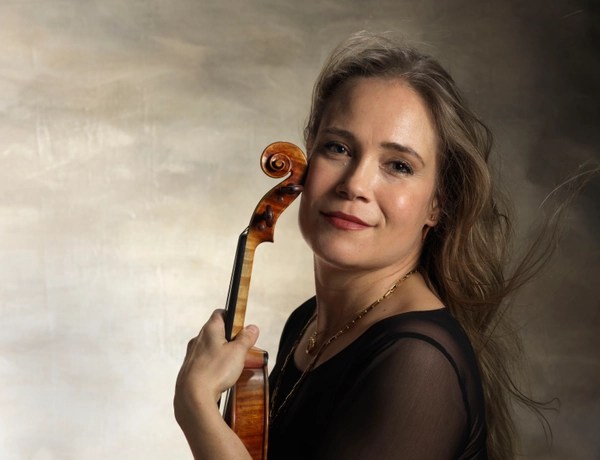
In concert – Leila Josefowicz, CBSO / Thomas Søndergård: Richard Strauss, Adès & Brahms

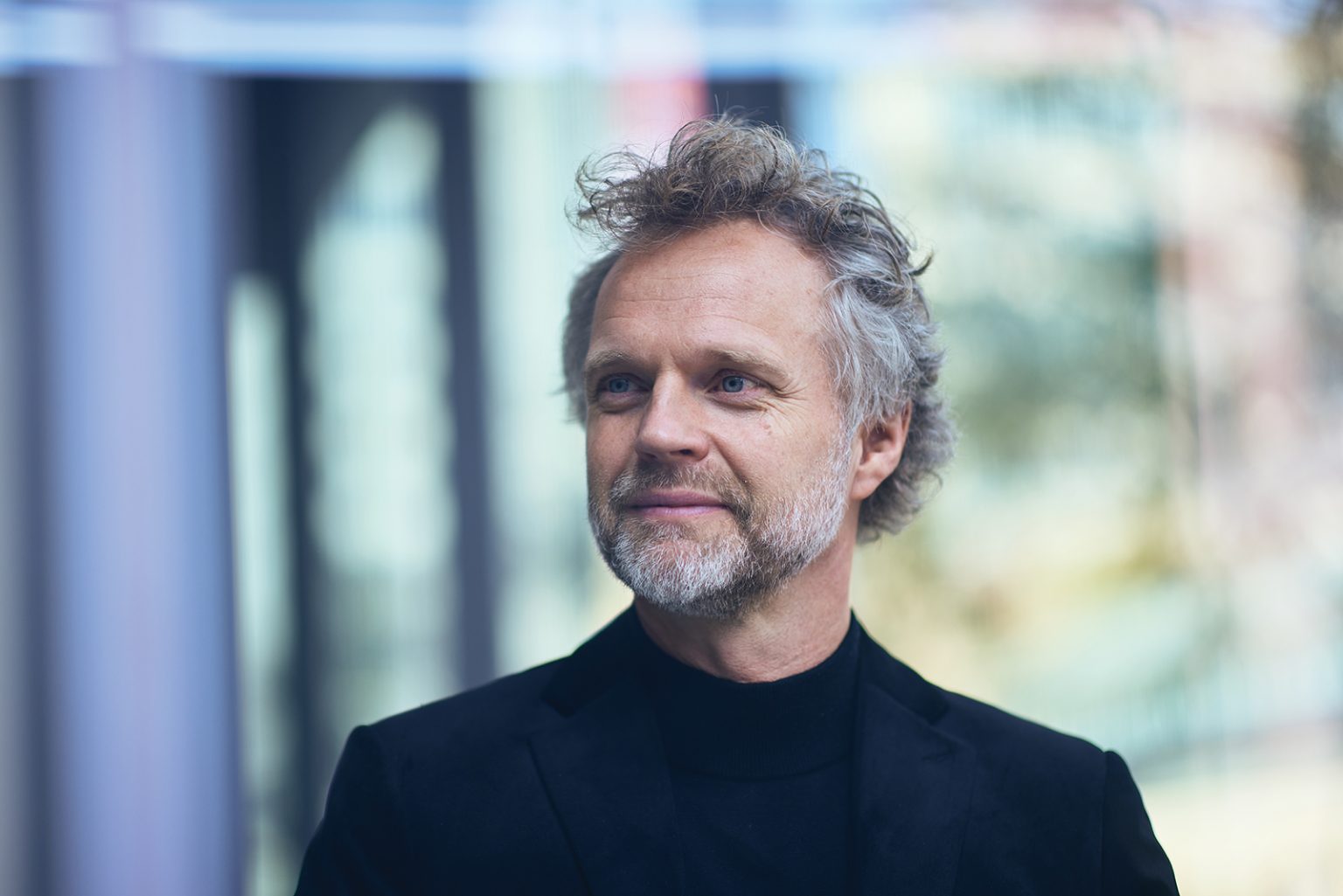
Leila Josefowicz (violin, above), City of Birmingham Symphony Orchestra / Thomas Søndergård (below)

Richard Strauss Don Juan Op.20 (1888)
Adès Violin Concerto, Op.24 ‘Concentric Paths’ (2004)
Brahms Symphony no.2 in D major Op.73 (1877)

Symphony Hall, Birmingham
Thursday 10 October 2024

Reviewed by Richard Whitehouse Pictures (c) Tom Zimberoff (Leila Josefowicz), Chris McDuffie (Thomas Søndergård)

He may be spending more time in the US than in the UK these days, but Thomas Søndergård tonight made a timely reappearance with the City of Birmingham Symphony Orchestra in a programme such as placed a highpoint among recent concertos between two established German classics.

Richard Strauss‘s Don Juan poses few technical issues for an orchestra these days – the only proviso about this performance being its almost too easy unfolding, the initial stages seeming suave rather than impetuous and emotional contrasts following on almost too seamlessly. Yet the central ‘love’ episode featured a melting contribution from oboist Lucie Sprague, with horns duly firing on all cylinders in a unison theme ultimately capped by a silence of tangible anticipation then a postlude of hushed resignation – heroic aspiration submerged in an aura of starkest fatalism.

If much of Thomas Adès’ music the past two decades has been of a conceptual brilliance that outweighs its intrinsic content, the Violin Concerto is destined to endure and rightly so given these Concentric Paths complement each other in a finely balanced totality. One, moreover, with which Leila Josefowicz identifies wholeheartedly: despatching its brief outer movements with an energy and a panache so that Rings conveyed a volatility channelled towards greater affirmation in Rounds; between them, the relatively expansive Paths proved a chaconne as methodical in evolution as it was affecting in its suffused intensity. Assured in her handling of the solo part, Josefowicz dovetailed it unerringly into orchestral writing as resourceful as any the composer has written. Those in the audience unfamiliar with it were most likely won over.

Many of those present were no doubt looking forward to BrahmsSecond Symphony after the interval, where Søndergård (above) and the CBSO did not disappoint. Outwardly its composer’s most equable such piece, this yields more than its share of ambiguities and equivocations that were rarely absent here. Not least in the opening movement, its unforced progress duly taking in an eventful development whose granitic culmination set its easeful themes at a notably uncertain remove, then with a coda whose restive horn solo was eloquently rendered by Elspeth Dutch. Søndergård was no less probing in the Adagio, flexibly paced so its autumnal main theme did not override the more whimsical and anxious elements which inform its longer-term progress. Certainly, the closing reflection on that theme cast a potent shadow on what had gone before.

The other two movements are usually thought to present few if any interpretative problems, so credit to Søndergård for finding no mean pathos in those reiterations of the Intermezzo’s main theme – not least when it returns as a winsome coda. Nor was the final Allegro lacking in incident, such as that spellbinding transition into the reprise whose epiphanic aspect was not lost on Mahler. Given its head without sounding at all rushed, the coda then emerged as the ebullient though never grandstanding peroration which Brahms himself surely intended.

A resounding close to an impressive performance, and there should be more music-making on this level next week when the CBSO is joined for the first time in many years by former chief guest conductor Mark Elder for an enticing programme of Brahms, Janáček and Shostakovich.

For details on the 2024-25 season A Season of Joy, head to the City of Birmingham Symphony Orchestra website. Click on the names to read more about violinist Leila Josefowicz, conductor Thomas Søndergård and composer Thomas Adès.

Published post no.2,331 – Monday 14 October 2024

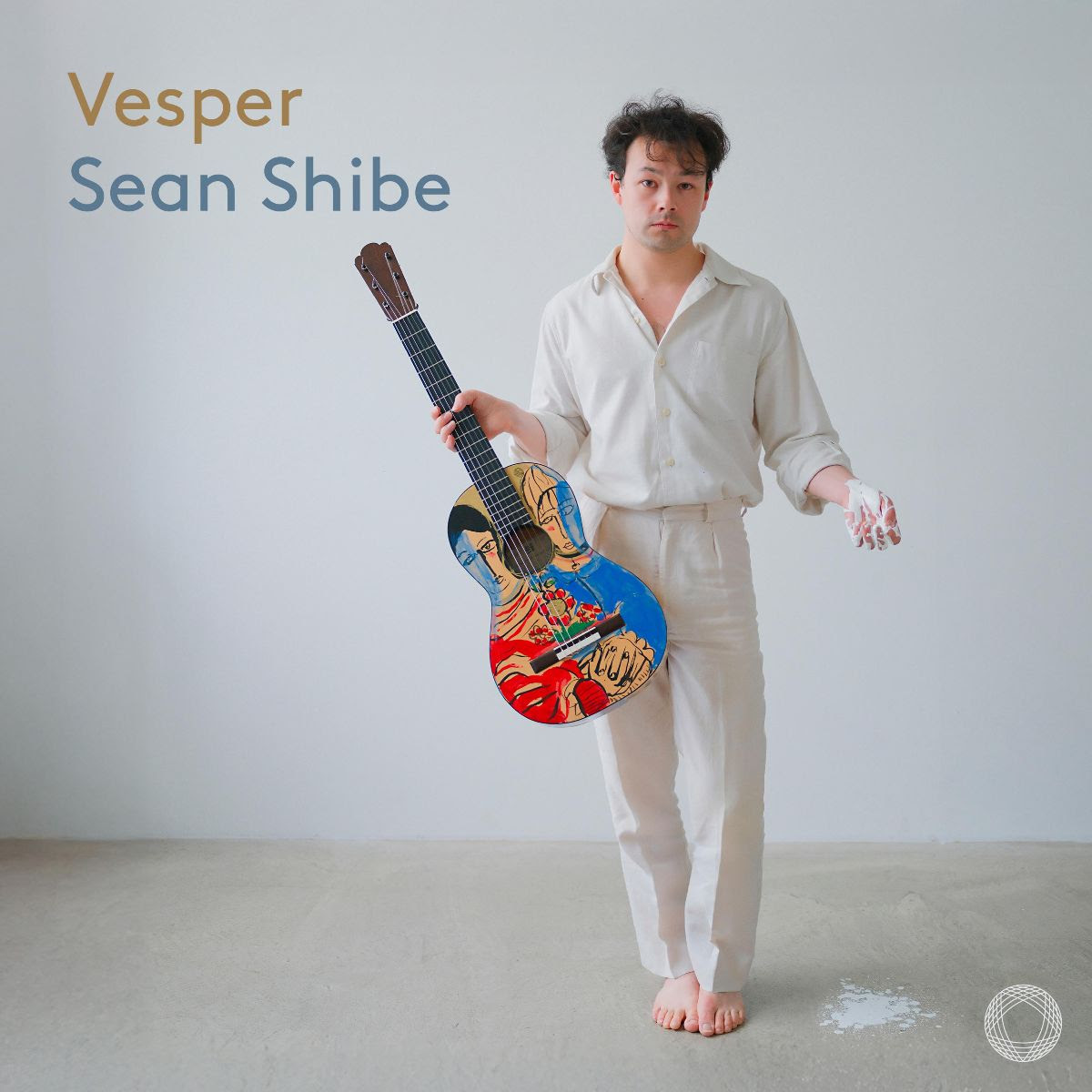
In Concert – Sean Shibe @ Wigmore Hall: A Celebration of the Guitar

Sean Shibe (guitar)

J.S. Bach Prelude in C minor, BWV999 (c1727)
Barrios Mangoré La Catedral (1921, rev. 1939)
Villa-Lobos Prelude no. 3 in A minor (1940); Études (1929) – no.1 in E minor, no.5 in C major, no.8 in C sharp minor, no.10 in B minor
Barrios Mangoré Barcarola in D major, ‘Julia Florida’ (1938)
Mompou Suite compostelana (1962) – nos. 1, 2, 5 and 6
Martin Quatre pieces brèves (1933)
Adès Forgotten Dances (2023)

Wigmore Hall, London
Thursday 19 September 2023

Reviewed by Richard Whitehouse

Expecting the unexpected has become synonymous with Sean Shibe, who tonight began his season-long residency at Wigmore Hall with this recital which deftly blurred any perceived demarcation between improvised or notated music in a compulsively absorbing programme.

One of a surviving handful of pieces probably written for lute, Bach’s C minor Prelude began proceedings – its elegantly methodical unfolding here rendered with real liquidity by Shibe. It segued seamlessly into La Catedral as is among a relative few of Agustín Barrios Mangoré’s extended compositions: the subdued fervour of (belatedly added) Preludio saudade heading into the hieratic processional of Andante religioso, before the lively yet disquieting motion of Allegro solenne brought this vividly yet understatedly illustrative sequence to its close.

Here, as across this recital, Segovia was a pervasive presence – not least on the guitar output of Heitor Villa-Lobos. From his Five Preludes, Schiebe opted for the Third – a Homage to Bach whose echoing open strings summon an opulence, even majesty, out of all proportion to its length. Then came four of his 12 Études – the intensive arpeggio workout of the First, the stark contrasts between melody and accompaniment of the Fifth, the playful alternation of registers in the Eighth, then rounded off with the exacting rhythmic fluidity of the 10th.

The first half closed with more Barrios – his Júlia Florida a barcarolle of melting tenderness whose allure carried over a second half that commenced with four of the six movements from Federico Mompou’s Suite compostelana. One of the Catalan’s handful of works for other than piano, the distanced evocation of Preludio complemented the austere spirituality of Coral as surely as did the folk-tinged pathos of Canción the ingratiating allure of Muñeira – this latter bringing the Galician environs which had inspired this music into greatest prominence.

Shibe’s including music by Frank Martin was more than welcome in the 50th anniversary of the Swiss composer’s death as has passed largely unnoticed in the UK. His only work for solo guitar, Quatre pieces brèves has been championed by many guitarists in Segovia’s wake and Shibe duly left his mark with his quizzical take on its Prélude, the chaste witfulness of Air then the barely contained emotional impetus of Plainte, before Comme une gigue provided a pointedly ‘contemporary’ vantage on the Baroque dance by turns quixotic and invigorating.

That both Martin and Thomas Adès have written operas on Shakespeare’s The Tempest seems as good a link as any into Forgotten Dances, the latter composer’s first work for guitar. Its six vignettes traverse the restless Overture and Buñuel-influenced speculation of Berceuse, via the Ligetian propulsion of Courante and tenuous repose of Barcarolle, to the cumulatively effusive homage to Berlioz of Carillon de Ville then rather more equable homage to Purcell of Vesper – its allusions emerging, Dowland-like, over what becomes an affecting farewell.

An intriguingly varied recital duly afforded focus not least by the calmly assured presence of Shibe – his appearance this evening redolent of the long-gone, much-missed Billy Mackenzie. A limpid rendering of an as yet unidentified encore provided a brief if wholly appropriate envoi.

To read more about Sean Shibe’s residency at the hall, visit the Wigmore Hall website – and click here to visit the guitarist’s own website