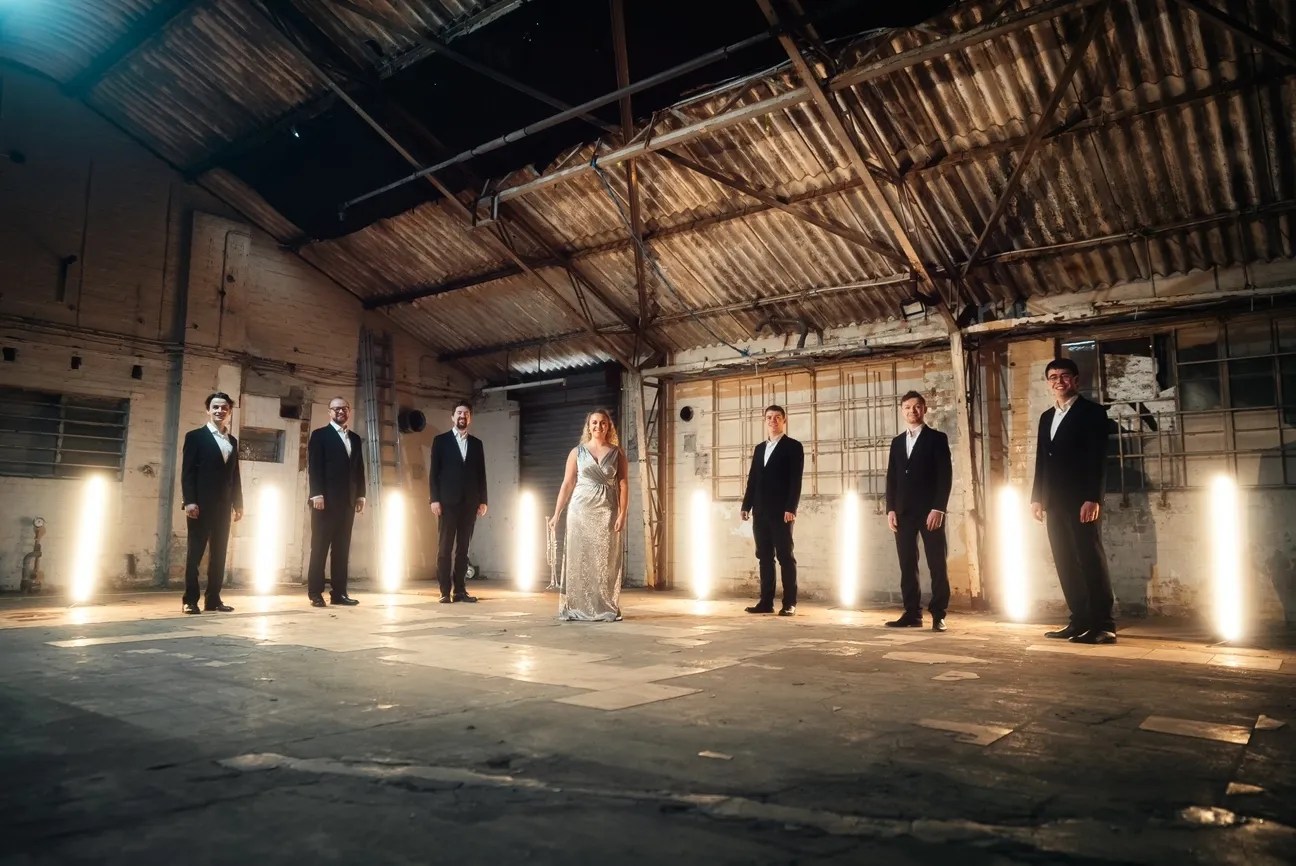
The Gesualdo Six [Guy James (countertenor), Alasdair Austin (countertenor), Joseph Wicks (tenor), Josh Cooter (tenor), Simon Grant (baritone) and director Owain Park (bass)]
Roth Night Prayer (2017) Tallis O nata lux de lumine (pub. 1575) Pritchard The Light Thereof (2020) MacMillan O Radiant Dawn from The Strathclyde Motets (2005) Tallis Dum transisset Sabbatum (1575) Hildegard of Bingen O gloriosissimi (с.1163-1175) Bingham Enter Ghost (2002) Owain Park Sommernacht (2022) Rheinberger Abendlied from 3 Geistliche Gesänge Op. 69 (pub.1873) Barnard Aura (2020) Roxanna Panufnik O Hearken (2015) Burgon Nunc dimittis (1979)
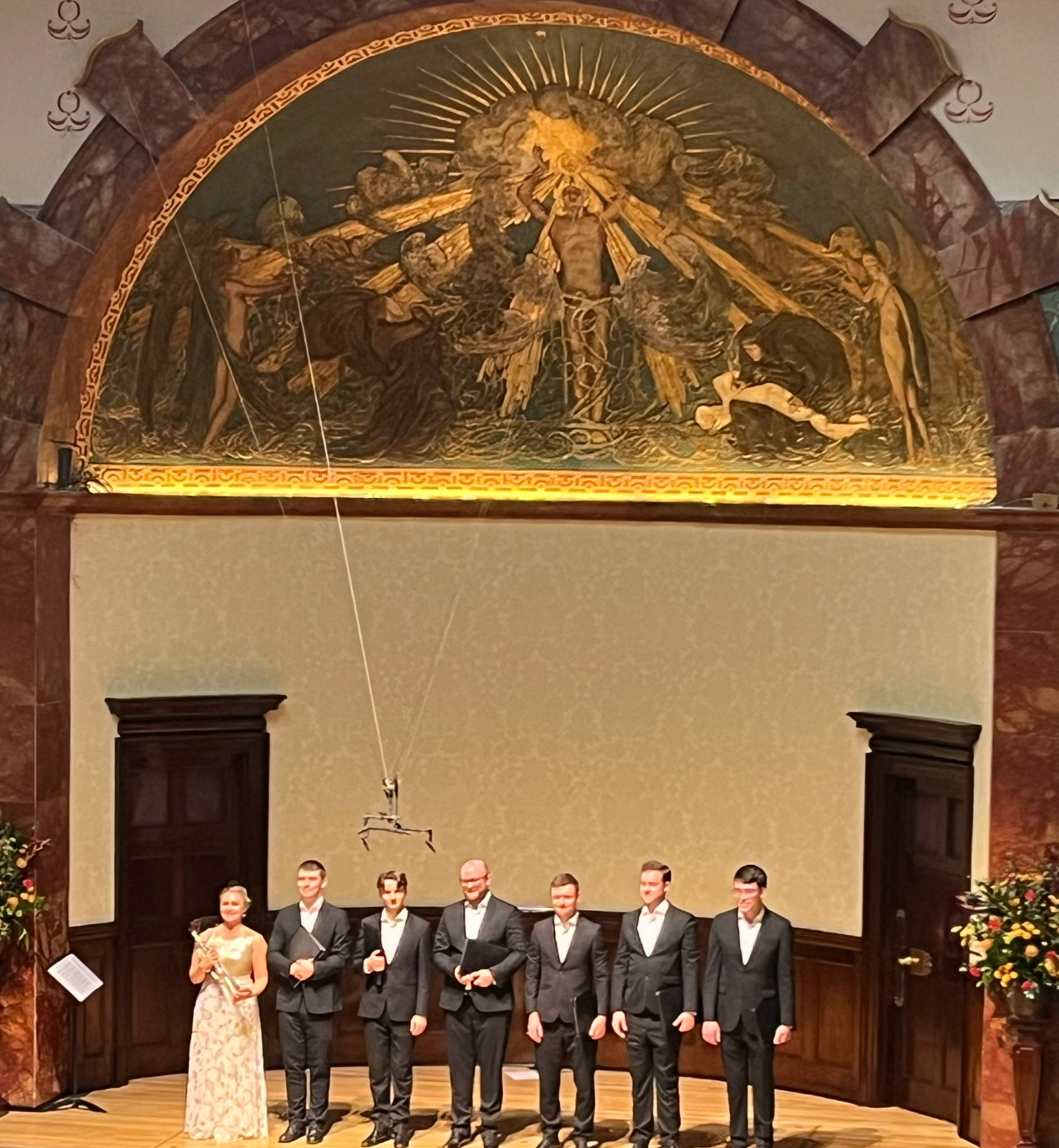
Wigmore Hall, London, 2 October 2025
by John Earls. Photo credits unknown (above), John Earls (below)
The Gesualdo Six have recently released their tenth album (for Hyperion) Radiant Dawn. It finds them combining consistently high standards of choral music with imaginative programming featuring classic and contemporary compositions spanning over 800 years of music. It also sees them introducing a new element to the mix, namely the inclusion of the trumpet for a number of pieces superbly played by Matilda Lloyd.
The new album was the focus for this hour-long lunchtime concert at a packed Wigmore Hall with all pieces performed coming from it (and a few omitted). The theme of the album, as explained by The Gesualdo Six’s director and bass (and recently named new chief conductor of the BBC Singers) Owain Park, is “musical responses to light” in a whole variety of contexts.
First up in the set (and on the album) was Alec Roth’s Night Prayer, an almost dreamy reflection of the Compline hymn Te lucis ante terminum that introduces Lloyd’s trumpet and the remarkable effect it has when married with these magnificent voices.
Next was Thomas Tallis’s O nata lux de lumine, one of two shorter pieces (both just over 2 minutes) along with Roxanna Panufnik’s O Hearken, but their duration made them no less impactful. Both featured just voices, and I loved finding out from the programme that O Hearken started life as a raffle ticket prize. Another Tallis piece Dum transisset Sabbatum saw Matilda Lloyd’s trumpet taking the soprano voice to powerful effect.
There are two of James MacMillan’s Strathclyde Motets on the album. Only one of them, O Radiant Dawn, from which the album gets its title, gets performed here. It’s harmonically inspired by Tallis’s O nata lux de lumine and has a yearning to it befitting of the Advent season it relates to.
Richard Barnard’s Aura (commissioned for the album) sets music to the text of Emily Barry’s poem about the loss of her mother. Credit to the programme editors for faithfully reproducing the poem’s arresting layout – two parallel columns reflecting the emotional fracture involved (Owain Park’s programme notes were also excellent). This fracturing dissipates musically as the piece progresses with the trumpet acting as a bridge between two groups of singers. It was one of the most affecting pieces of the concert with the composer in the audience to hear it.
Another composer in the audience was Deborah Pritchard whose The Light Thereof (also commissioned for the album) sets words from the Book of Revelation and demonstrated deftly the ability of the trumpet (muted at times) to evoke different shades of light.
Matilda Lloyd’s virtuosity on the trumpet was to the fore in Judith Bingham’s Enter Ghost, an interpretation of a passage from Shakespeare’s Hamlet mixing music with spoken word, the drama enhanced by her walking off stage (and returning) whilst playing.
Other pieces sung a cappella included Hildegard of Bingen’s O gloriosissimi (from the back of the hall) and beautiful performances of Owain Park’s own Sommernacht and Joseph Rheinberger’s Abendlied.
The programme ended (as does the album) with Geoffrey Burgon’s Nunc dimittis which some may remember as the closing music from the BBC’s television adaptation of John le Carré’s Tinker Tailor Soldier Spy. It was yet another example of how effective this glorious combination of voices and trumpet is and proved a fitting conclusion to a most illuminating concert.
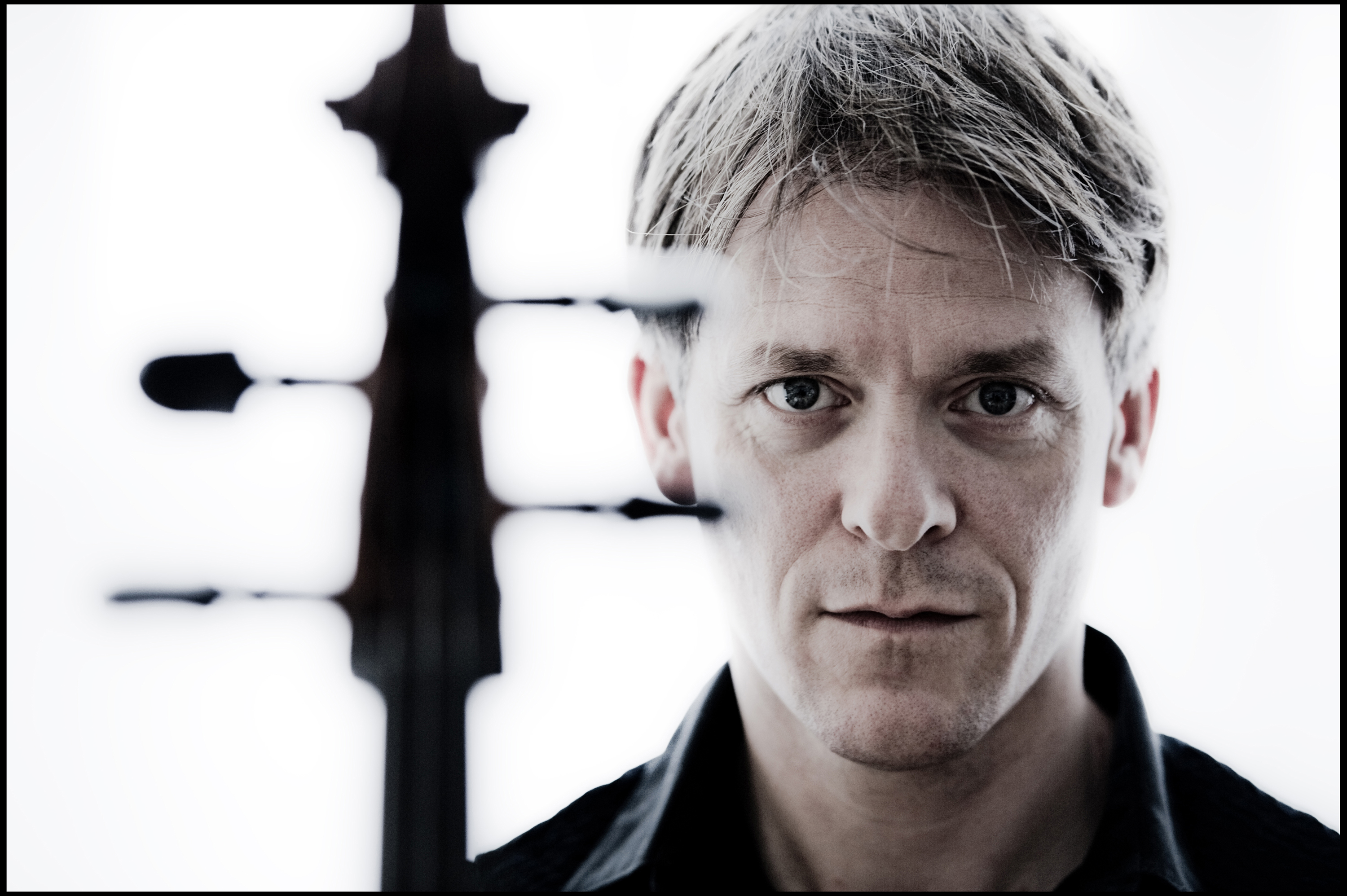
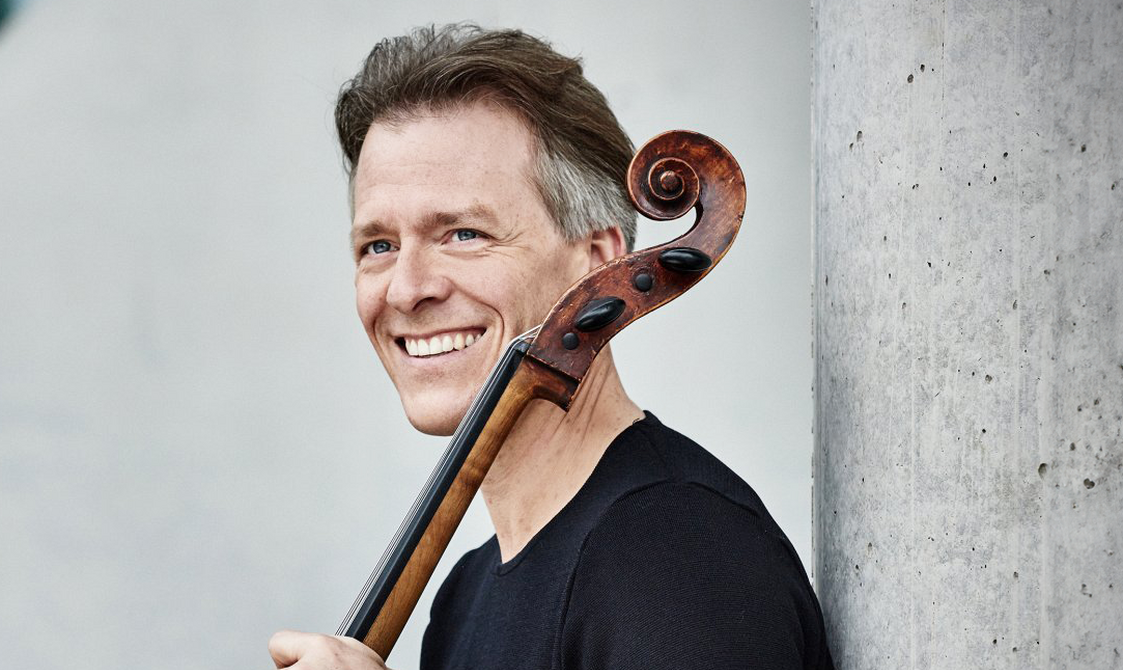
Composer Unsuk Chin and cellist Alban Gerhardt are featured musicians at the 75th Aldeburgh Festival this year. They have been linked in music since 2009, when Alban was the soloist in the premiere of Unsuk’s Cello Concerto at the BBC Proms in 2009. They talk to Arcana about how the piece has evolved and their hopes for this year’s festival.
by Ben Hogwood
The 75th Aldeburgh Festival of Music and the Arts is upon us – and Arcana is in the very fortunate position of talking simultaneously with two of its Featured Musicians, Korean composer Unsuk Chin and German cellist Alban Gerhardt. Unsuk is checking in from her Berlin residence, where she is deeply ensconced in composition work – of which more later. Gerhardt, as is often the case, is touring – and is about to join us from his hotel lobby in Spain, where he played the Lalo concerto the previous night.
The two have a strong musical bond, cemented by the Cello Concerto Unsuk composed for Gerhardt, first performed at the Proms in 2009 with the BBC Scottish Symphony Orchestra. Gerhardt will bring it to Aldeburgh in 2024 with the same orchestra, under Ryan Wigglesworth, on 20 June.
Firstly, however, we welcome Unsuk to the chat. Her youthful countenance is complemented by an intense focus on her music – which comes to the fore as soon as we begin to discuss Alaraph, a quarter-hour piece for orchestra receiving its first UK performance at Aldeburgh this season. Subtitled Ritus des Herzschlags (Rite of Heartbeat), it is a powerful and dramatic piece, in which Unsuk is drawn to the concept of so called ‘heartbeat stars’, that have a regular pulsation.
“I’m very interested in science”, she says, “and I was very interested in the different types of stars. These heartbeat stars have a certain rhythm of changing the brightness, and immediately I imagined a certain type of rhythm where I could compose a piece with this idea. The second idea in Alaraph came from Korean traditional music. We have very vivid, dynamic folk music, and I was always very impressed by its rhythms and melodies, and I wanted to bring them all into one piece. Lots of percussion instruments will be needed there!”
In spite of the large percussion section, the piece ends quietly, which if anything heightens the drama. “The piece is a kind of ritual,” she explains, “and the six percussionists play a very big role. The sound is moving from left to right and right to left, and at the end of the piece they repeat the cymbal sound. Then they should stand and show the cymbals, as a kind of ritual.”
On a much smaller scale, we will hear a group of Chin’s Piano Etudes, in concerts from Joseph Havlat and Rolf Hind. Talking about the Etudes almost inevitably draws parallels with Unsuk’s teacher György Ligeti, whose own Etudes for piano have proved revelatory in the course of the instrument’s recent development. Were they intimidating when she started to write in the form? “When I studied with Ligeti he had just finished the first cycle of six etudes, and I was at the premiere of those pieces”, she says. “On the other hand, I have played the piano since I was four, so it was for me the main instrument. I certainly got some influence from him in writing piano pieces, but even if he had not written piano etudes, I would have written my etudes for sure!”
At this point Alban joins the call, and Unsuk greets him enthusiastically. “Your hairstyle is new!”, she exclaims, but he shakes his head. “No, just less hair!”, he says, smiling. Gerhardt is being modest, for he too looks bright-eyed and in good spirits. Talk inevitably turns to the Cello Concerto Unsuk wrote for him, and they recall their first meeting. “We met first in 1999 in Helsinki”, she says. “It took a couple of years, but then I had some idea of how it would be very nice to write a cello concerto for him. That was the beginning, but then he had to wait almost seven years while I got the piece ready!”
Gerhardt was not impatient for the piece, however. “I am glad you mentioned that, because it proved to me that you are not slow or lazy, but very respectful for the genre of the cello concerto. I remember at first that you were very hesitant, and that’s a wonderful quality, because these days it’s like everybody should be writing a cello concerto. One of the most difficult tasks nowadays, with a big orchestra, is that you want to use it as a composer. But if you use it, then you lose the cello. You were aware of that huge challenge, and you took your time. It got postponed a few times, and at the Proms too, but I’m so happy – because this piece works! The truth is that it was performed in Berlin by another cellist, Alisa Weilerstein, which is fantastic. Which other modern cello concerto can you say that about, that it was performed in the same city at 10 years difference by a top-class cellist? I’m very happy about that!”
Chin smiles in gratitude. “You are always supporting me!” she laughs. “The first time we met was through Lisa Batiashvili”, recalls Gerhardt, “and she is a close friend but also grew up together with Unsuk’s husband, Maris Gothóni. I knew about Maris first, and then I met Unsuk and was shocked by her charisma and aura, and then when I heard the Violin Concerto I thought, “she needs to write a cello concerto!”
The concerto makes some fearsome technical demands, wasting no time in pitching the soloist right to the core of the action – an aspect that Gerhardt applauds. “Actually, the beginning is among the easiest bits of the whole piece! It’s not easy at all, but compared to what comes later, I’m not afraid of the beginning. I’m happy to start right away because if you sit there forever, you start thinking and getting nervous, which is not a good thing.”
“For me the working process was very interesting”, Chin interjects, “because often the artist and composer will have conversations and contacts, but with us it was not like that. I just wrote the piece to the end, and I delivered, and he delivered his playing. It was extremely professional, and there was not a need to change anything because of his technique. I wrote what I wanted, and he played it at the premiere by memory. I couldn’t believe that a human being could do that!”
At this point, Gerhardt has a confession to make. “This is the biggest shame of my life, because I was big headed, and I got lost three times – I was not happy. The most beautiful and difficult part in the last movement, which is like 80 seconds, is very wittily written and difficult to play. It is probably the 80 seconds I have practised most in my life, and I completely missed them in the world premiere. I’m so grateful that I have had 30, 40 more times now to play it. For me that is the biggest thing. I have not played so many world premieres, but each one is the worst performance – it always gets better. You need to give it a chance to grow – not with the memory slips, but the piece settles. With this piece the more I play it the more beauty and intensity I discover, and the more I understand it. There is so much to understand that you cannot grasp it all at first sight.”
He is relishing bringing the piece to the Aldeburgh Festival. “I am very happy to play it there, after 15 years and having premiered it with the same orchestra. It will be a completely different performance, and I would bet my life it will be a much better one!”
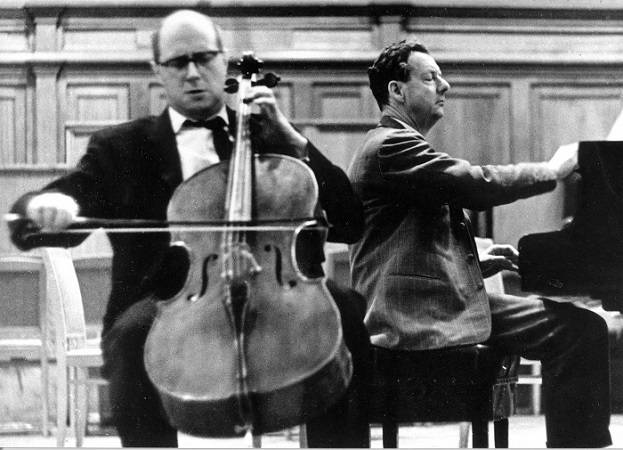
As well as the concerto Alban will be teaming up with regular recital partner, pianist Steven Osborne, in a recreation of a legendary recital given by Mstislav Rostropovich and festival founder Benjamin Britten (both above) in July 1961, where the world premiere of Britten’s Cello Sonata took place. Gerhardt considers the rapport both performers have in that recital. “Britten was a fantastic pianist and a wonderful musician, besides being a great composer. I wouldn’t say Steven and I have the same rapport because none of us is as creative as these two guys. Rostropovich was a composer himself, not a great composer, but he wrote some quite witty pieces, and conducted and played the piano. He was really a complete musician, although I don’t agree with everything he did interpretation-wise – which is perhaps bad taste on my part – but they were two giants of music! I think Steven and I understand each other well because we are closer in age and Western, whereas the Russian and the Brit – that’s quite a mix!”
He considers the concert further. “You have no idea how brave I actually am because two nights before I am playing Dvořák in Chicago, and I arrive in the middle of the night at 1am the day of the recital. I’m already very scared of that day!” We agree that Rostropovich would probably be in favour. “Yes, he would approve of doing something stupid like that!”
Both Unsuk and Alban are intensely honoured by their roles this year. “I heard lots of things about Aldeburgh and Benjamin Britten, who I really admire as a composer”, says Chin, “and it’s a really great honour to be played at the festival”. Sadly she won’t be attending in person, due to the composition of her opera Die dunkle Seite des Mondes (The Dark Side of the Moon) getting to the stage where it can’t be left. “It should be finished by the end of this year!” she confirms. “I’m not coming to Aldeburgh, then!” jokes Alban on hearing the news. “For me it’s an honour, but it is also an honour for the festival to have Unsuk, because she is one of the two or three best living composers. Anybody should be honoured to play her music.”
He recalls his first visit to the Suffolk town. “I think I was first there 20 years ago. A few months ago I went to the Red House for the first time, and saw the manuscript of Britten’s Cello Suite no.1, and it was beautiful to see the handwriting. It had a lot of the fingerings and bowings of Rostropovich on it, and I didn’t like that because I wanted to know what Britten actually said.”
He applies the same argument to the newer commission. “That’s why when we made an edition of Unsuk’s concerto I was very hesitant of putting too much of me in there, because I want the next performer to come up with their own ideas. For example, some of the metronome markings of Unsuk I cannot play, but I like that! The question is – should we change them to what I could do? I said no, because it’s good to know that she had that in mind, and the next player should try to get to it. Metronome markings are not the rule of law, but it gives us an idea of what the composer had at some point in their mind. I would hate if people came and took my interpretation as the one to do. The one to do is in the score, and what was in Unsuk’s head. I don’t think it helps much to ask her how to play it!”
Unsuk nods in agreement. “I think you said once it’s like a child you give birth to”, says Gerhardt, “but then it grows, maybe in a direction you’re not happy with!” The only few things you told me”, he recalls, “were about some slides in the first movement, which happened by accident. The great thing is that we have these scores, which are like a protocol, which give us an idea of what to do and then we do it. Every interpretation should by definition be different, if each one is the same then something went wrong. We become in a way an assistant to the composer ourselves, and if the interpretation is always presented the same then that is a job badly done. We have to be different!”
Playing solo Britten at Aldeburgh, as Gerhardt will do with the Cello Suite no.1, presents a special challenge. “It was scary when I did it the first time”, he admits. “but now the scary part is out I’m just going to enjoy it. András Schiff told me once that the older he gets the more nervous he gets. I find the older I get, the less I care about other people and what they think. I want to transmit what I feel about the music, and the older I get the more I dare to really do what I want, and not follow rules or guidelines. I take Gustav Mahler as an example, and where he reduced the Adagietto of his Fifth Symphony from nine minutes to seven minutes when conducting. Less is more!” As a listener, it is good to hear of artistic development in this way. “As a listener, I don’t want to be bored”, says Gerhardt. I hate it when people celebrate something where there is nothing to celebrate, like a dog stopping at every tree!”
Unsuk, meanwhile, will be totally immersed in competing her new opera. “I am writing the libretto myself as well”, she says, “because I created the story. It is based on the relationship between an Austrian physician Wolfgang Pauli and Karl Gustav Jung. It is a very complex story, and I can’t digest it in pure texts. It is about a man who is a genius but who has a very complicated private life and very interesting, wonderful dream every night. He is suffering, and therefore wants to be helped – so goes to Karl Gustav Jung and they start analysing Pauli’s dream. I took this biography as the base and put some fiction in there to write a story like a new version of Faust. I’m writing the music and the libretto myself, in German.”
The opera is due to be premiered in May 2025, at Hamburg State Opera, conducted by Kent Nagano, and staged by the English / Irish team Dead Centre. In the meantime a much smaller piece, Nulla est finis, will act as a companion to Thomas Tallis’ great 40-part motet Spem in alium, in a festival performance from Tenebrae at Ely Cathedral. “It is very small”, she says modestly. “It is not a piece, more a small prelude to the Tallis piece.” Has she listened to much of his music previously? “Not much, but I knew this piece. The commission came from Sweden, and they wanted a small prelude to Spem in alium, so I thought it would be nice to compose a kind of entrance where the choir are whispering, and slowly the tones come in and it goes to Spem in alium.”
Beyond the festival, Gerhardt has a typically busy year – but first a holiday. “I only think up to June”, he says, “and then I think I have three weeks free!” There are recording plans afoot with Hyperion, which remain under wraps for now. The Dvořák concerto, which he is performing in Chicago, would be a wonderful contender. “My view of it has changed, because I had a look at the facsimile of the piece and a lot of new ideas popped out, so it will be quite different. I think it’s more like what Dvořák had in mind, and I have to tell conductors off sometimes now! I find the same with Brahms symphonies, where people do these same, silly rubatos, and they are lacking in inspiration, because they cannot come up with their own!”
Finally, the question has to be asked – might there be a Cello Concerto no.2 from Unsuk Chin? She laughs, a little nervously! “At the moment there is no plan, but you never say never!” she says. “I would never push for a second one,” says Alban, “because the first one is so great, and I’ve never played it that I’m 100% happy with myself. If any other cellist was to ask for a second one, I would urge them to play the first one five or ten times, and then we can talk! For me that is one of the reasons why there are so few concertos added to the repertoire since Dutilleux. There is so much one can do with this piece, so much fine tuning one can do. We as performers should strive for higher, not for perfection necessarily but for musical expression. I don’t think the world needs number two, we should be very happy and blessed that there is a number one!”
In an interview for Arcana, Tansy Davies detailed how Re-greening, written for all 164 players of the National Youth Orchestra without a conductor, is essentially an introduction to Mahler’s Symphony no.9, the piece they performed without a break afterwards.
In the interview, which can be read in full here , Davies explains how “the way the music is layered to me suggests a forest like quality; interweaving arpeggio-type figures bubbling or erupting up from the cold earth in winter, and scales or lines reaching up to the light”.
Did you know?
Before making her way as a composer, Davies sang and played guitar in a band. That was probably until she won the BBC Young Composers’ Competition in 1996!
Initial verdict
Re-greening begins with bright sounds like a forest coming to life – the opening percussion stroke, a bright, metallic sound, feels like the first sun of the day.
Then we hear the rustling of the orchestra, with harmonics from the stringed instruments and shrill woodwind that sound like the birds, sonorous brass. A song is sung by the orchestra, the popular and ancient song Sumer is icumen in, essentially a hymn that glorifies in the arrival of a new season or a new day. The chant continues, surrounded by a large orchestral sound that is used economically. The brass are prominent, Davies making great use of a big space with percussion and a huge string section.
Davies layers the sounds, so that it feels like several chords are piled up on top of each other in a full bodied texture. Then towards the end the orchestra sing again, this time a canon from English Renaissance composer Thomas Tallis, set like the earlier song in C major,. This proves an unusual and moving experience when set among the excited cacophony from the rest of the instruments.
Second hearing
tbc!
Where can I hear more?
There are a couple of excellent Tansy Davies discs in circulation, partly because her music seems to be very aware of its surroundings, i.e. it is aware of the culture – both popular and classical – in which it is written. So far she has tended towards chamber pieces that are of manageable length but considerable intensity. That much is very clear from her Troubairitz disc for Gabriel Prokofiev’s Nonclassical label, which includes the excellent Neon for chamber ensemble – and from the Spine disc for NMC, which includes the Saxophone Concerto with Simon Haram:
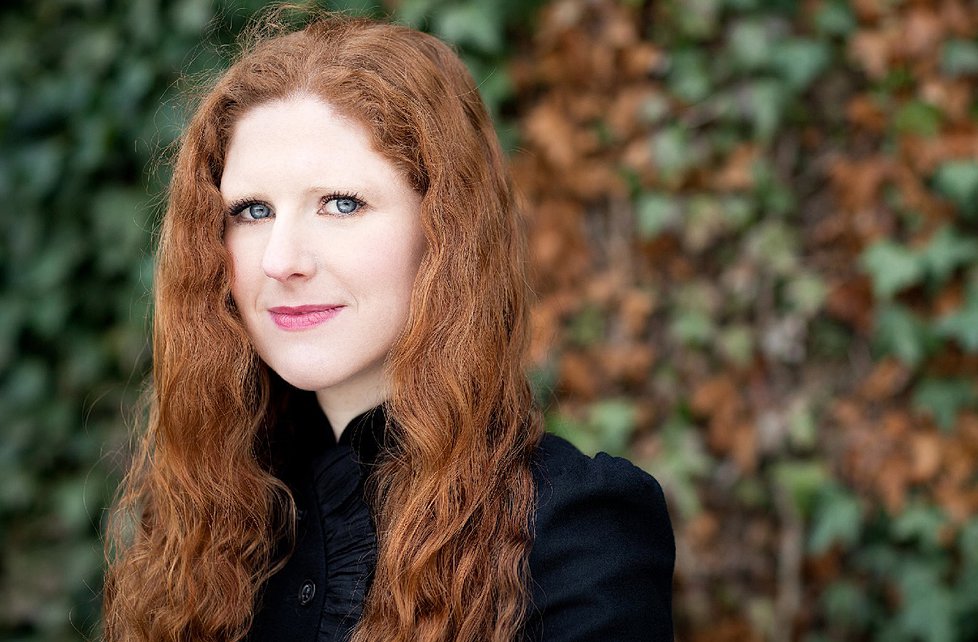
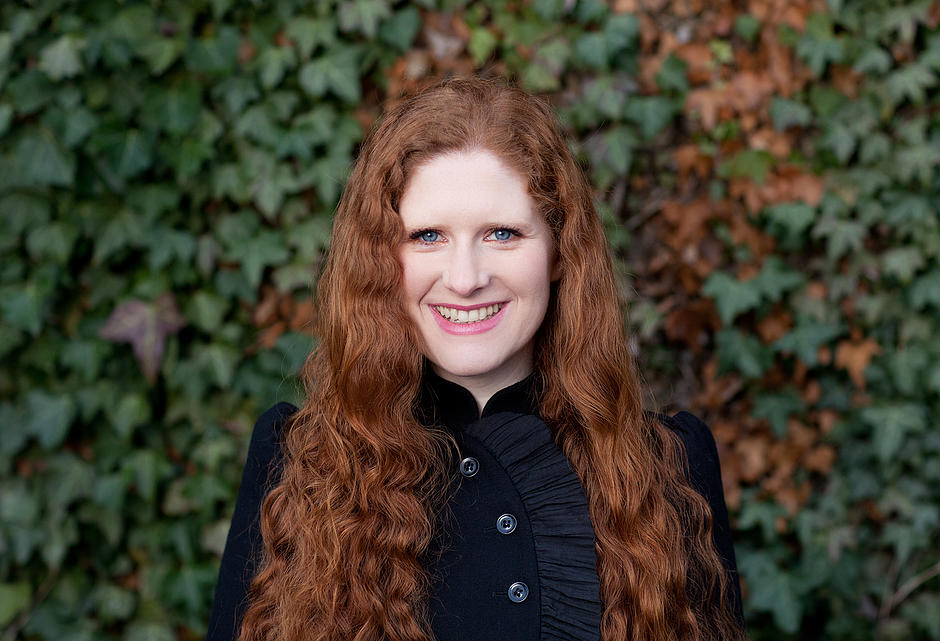
Talking in an interview for this site, Cheryl Frances-Hoad explains:
“The Cardinall’s Musick wanted a piece for eight voices (double SATB choir) (soprano-alto-tenor-bass) that was a homage to Tallis, and about 7 minutes long (I ended up writing a piece that’s closer to 9 minutes). They suggested some words (I eventually selected my own) but were otherwise completely free about how I should approach the commission.
Tallis lived in Greenwich towards the end of his life, which lead me on to reading about the refinements of timekeeping and the calendar during his lifetime, which then lead on to discovering that there was a major astrological event that happened whilst he was alive…which came to symbolize (to me) the massive changes that occurred during Tallis’s lifetime (including for instance the Reformation)…which lead to discovering Tycho Brahe’s (A Danish astronomer) ‘Treatise on the Great Comet of 1577’….
Cheryl was chosen as a featured composer on BBC Radio 3’s Composer of the Week (‘Five under 35, March 2015)
Initial verdict
The first and immediately striking thing aboutFrom the Beginning of the World was the relevance of the words to today’s climate. In a week where NASA received ground breaking pictures of Pluto and Charon this tale of an earlier astronomical event – the ‘comet with a very long tail’ resonated strongly, especially with its talk of ‘Mighty and destructive wind storms’, ‘Poisonings of the air’ and ‘Terrible earthquakes’.
Cheryl Frances-Hoad’s music only enhanced the dramatic impact. Written as a homage to Tallis its acappella setting carried the same freedom through the air – but here the harmonies were daring, rich with added notes, the most distinctive melodies tending to use wide leaps and drops. This heightened the feeling of unease – especially when the tritone was used to highlight the ‘great wars and bloodsheddings’.
The end of the text is curious, the author questioning suddenly that the comet might not destroy the earth after all – but the damage has been done in all the worrying beforehand, and it was on this that Frances-Hoad’s music really made its mark.
The performance, subtly directed by Andrew Carwood, was one of clarity and pure intensity.
Second hearing
tbc!
Where can I hear more?
Cheryl has a Soundcloud site, where you can hear another of her works for choir, This is A Blessing:
Ahead of an appraisal of her new piece on this site, here is an interview with composer Cheryl Frances-Hoad about The Beginning of the World, a commission for the BBC Proms – to be performed in the company of the music of Thomas Tallis. Cheryl talked with Arcana about rubbing shoulders with one of the greats of English music – and the thrill of writing for the BBC Proms:
When did the BBC approach you with this commission?
Actually it was the Cardinall’s Musick who approached me, in March of last year (my piece isn’t an official BBC commission, although it is a Prom Premiere. Originally my new work was supposed to be premiered in Leeds, but the timings didn’t work out, so, it was decided that it would be premiered at the Proms instead. Leeds is a wonderful city, but in this case I’m glad the original premiere date didn’t work out! 🙂
Was there a particular brief?
Yes, the Cardinall’s Musick wanted a piece for eight voices (double SATB choir) (soprano-alto-tenor-bass) that was a homage to Tallis, and about 7 minutes long (I ended up writing a piece that’s closer to 9 minutes). They suggested some words (I eventually selected my own) but were otherwise completely free about how I should approach the commission.
In the Proms guide the working title for your new work was ‘Homage to Tallis’. At what point did it become ‘From the Beginning of the World’?
At the time we had to list the piece in the Proms brochure, I still had absolutely no idea what the piece was going to be called (or, I think, what text I was going to use – I only finished the piece on the 20th June!)
I got a bit stuck when I began to think about this piece – Tallis is such a wonderful composer but I found a lots of the texts he set, well, a bit boring (mostly because a large amount were in Latin). I wanted to find an exciting text that was somehow relevant to Tallis and contemporary times, but for about a month I was utterly stuck.
I plodded through a two foot high pile of books about Tallis but got nowhere. But, little by little (and at this stage with quite a lot of help from Google) I started connecting things – Tallis lived in Greenwich towards the end of his life, which lead me on to reading about the refinements of timekeeping and the calender during his lifetime, which then lead on to discovering that there was a major astrological event that happened whilst he was alive…which came to symbolize (to me) the massive changes that occurred during Tallis’s lifetime (including for instance the Reformation)…which lead to discovering Tycho Brahe’s (A Danish astronomer) ‘Treatise on the Great Comet of 1577’….
Where does the text come from?
Tycho Brahe‘s German Treatise on the Great Comet of 1577. I spent several weeks in libraries attempting to find a suitable text. Whether Tallis knew about the comet is unknown of course, but this seismic event, to me, seemed emblematic of all the great changes that occurred during his lifetime, in areas such as religion, the calendar, and time-keeping (finding out that Tallis lived out his last days in Greenwich was an extra bonus).
The text also seems to speak to contemporary times: whilst Brahe may have thought the comet’s birth would cause the sun to ‘bring unnatural heat’, nowadays we know that its ‘venom [will be] spewed over the lands’ due to mankind’s continued pillaging of the earth’s natural resources, a fact which our political ‘pseudo-prophets’ seem to deem less important than saving us from a false austerity.
The full text of From the Beginning of the World
Then it comes to pass that something new is born in the heavens
Contrary to the custom of nature
And all mankind holds it to be a great wonder.
Videte Miraculum (Behold the miracle)
A miracle of the heavens.
From the beginning of the world
From the uppermost sphere of the fixed stars
This new birth reveals itself
A comet with a very long tail.
Something new can be generated in the heavens.
Gloria Patri et Filio et Spiritui Sancto (Glory to the Father, and to the Son, and to the HolyGhost)
But what do such unnatural births mean?
Creator caeli et terrae! (Creator of Heaven and Earth), Respice humilitatem nostram (Be mindful of our lowliness) Peccavi (Have mercy)
Great mortality among mankind.
Mighty and destructive wind storms Peccavi
Poisonings of the air Peccavi
Terrible earthquakes
Great harm by fire.
Great mortality among mankind.
The sun will bring unnatural heat
The sun will bring harmful, unnatural heat
It will spew its venom over the lands
Great mortality among mankind
Gruesome pestilence
Incurable pains
(Pestilential)
Those who deal with political regimes
Will be much stifled (Creator caeli et terrae)
Those who seek their own honour as pseudo prophets (Respice humilitatem nostram)
Will be punished, punished.
Great wars and bloodsheddings. Peccavi Miserere Nostri (Have mercy on us)
However, there are actually no reliable grounds
For predicting the end of the world from this comet.
It thus behooves us to use well our short life here on earth,
So that we may praise him for all eternity.
Our short life here on earth…
Amen.
The music itself is very influenced by Tallis, and canons and imitation abound. During my time as a ‘cellist at the Yehudi Menuhin School, I performed Ralph Vaughan Williams’s Fantasia on a Theme of Thomas Tallis many times, and so From the Beginning of the World, which also uses Tallis’s Third Mode Melody from the English Hymnal, is really a homage to both composers.
How would you describe the piece?
At this point of interview I haven’t heard the piece yet (I have to wait until Saturday 18th to hear it for the first time!) But, I hope it is a tremendously dramatic piece, perhaps a bit melodramatic! (also see paragraph above this question…)
Is it daunting knowing the work will be performed around such a well-loved work as Spem in alium, or does that become an inspiration as it is a homage to Tallis himself?
It was inspiring when I was composing, but now it’s daunting. It’s silly, I’ve written far bigger pieces than the one that’s to be premiered on the 20th, but I have to say I’m getting incredibly nervous for this premiere! I really hope I haven’t gone and written a dud! However! I’ve consciously both based this piece closely on Tallis, AND tried to do some things that are very different in style – so, at the very least, my piece will stand out hopefully!
How does it feel to be writing a piece for the Proms?
Really exciting!
Does it help that the concert is available on the iPlayer afterwards, for people to get a chance to properly get to know the piece?
Absolutely! And this year, all the Proms are also downloadable which is wonderful! Particularly as my piece is being performed at lunchtime, I imagine many people won’t be able to listen live, so it’s so wonderful to be able to nag people to listen to it on iPlayer for 30 days after the premiere!
The BBC are actively encouraging new music with programs like ‘Five Under 35’ – do you feel the corporation is stronger than ever in its support for current composers at the Proms?
I’m not really sure to be honest – I’ve been exceptionally lucky to have been chosen as one of the Five under 35 (as part of the International Women’s Day celebrations) and feature in the Proms – but I’m not sure how connected the two are.
You can listen to the world premiere of Cheryl Frances-Hoad’s FromThe Beginning of the World as part of the first Proms Chamber Music concert of the season, given by the Cardinall’s Musick and Andrew Carwood, by clicking here
You will shortly be able to hear Cheryl’s thoughts on how it went – and an Arcana appraisal – on the site in the next few days.
For more information on Cheryl you can visit her website – and as a taster here is a recent YouTube post of her Mazurka for violin and piano:



 Arcana.fm