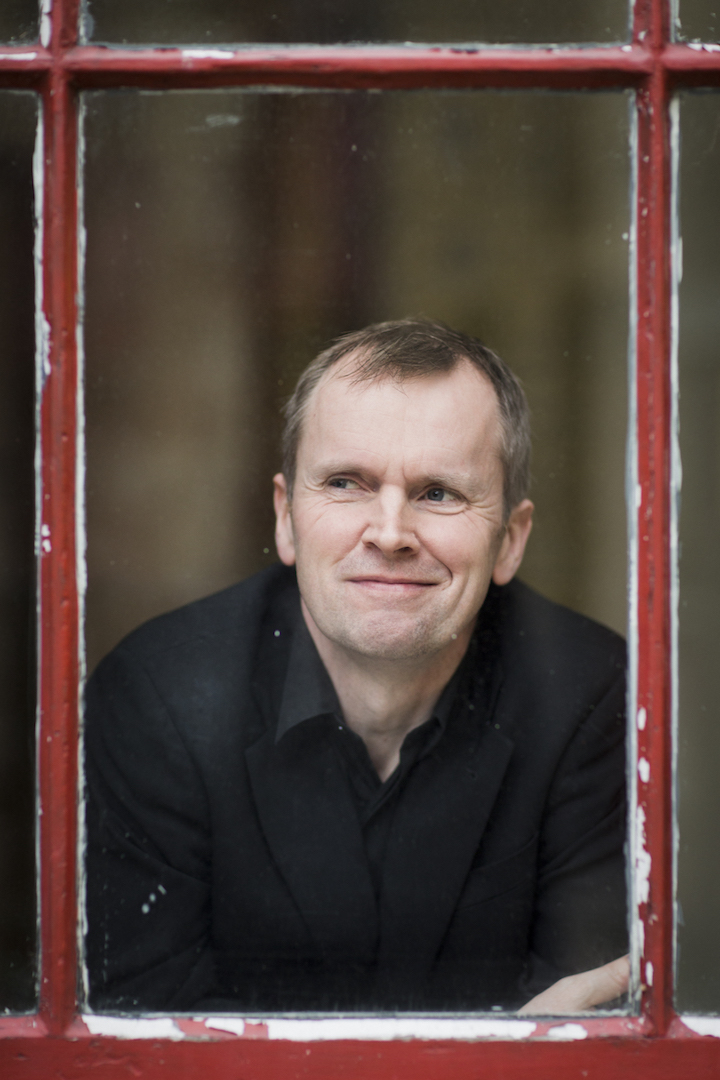
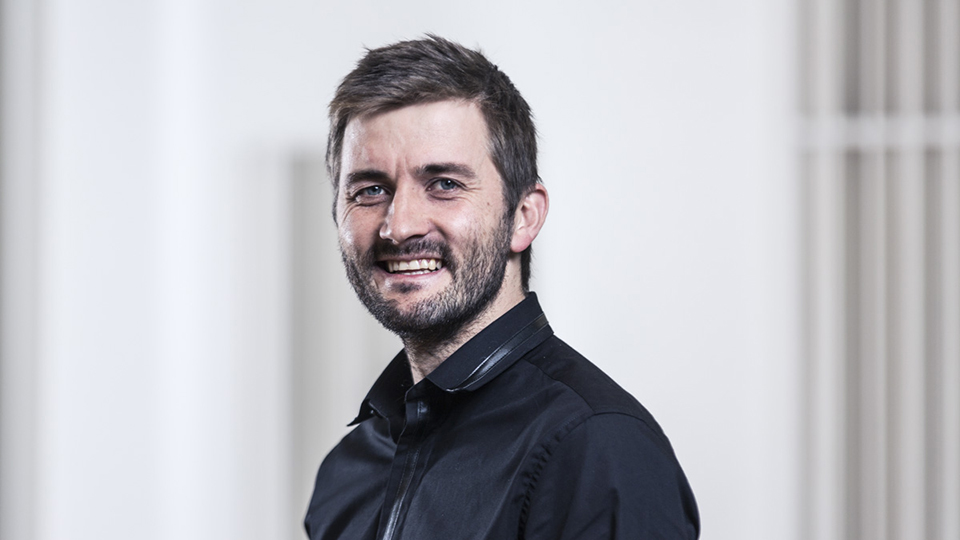
Online Concert: Jean-Efflam Bavouzet plays Haydn @ Wigmore Hall

Jean-Efflam Bavouzet (piano)

Haydn
Piano Sonata in D major Hob.XVI:24 (c1773)
Piano Sonata in A flat major Hob.XVI:46 (c1767-8)
Piano Sonata in E flat major Hob.XVI:49 (1789-90)

Wigmore Hall, Monday 20 February 1pm

by Ben Hogwood

Haydn’s piano sonatas remain an underappreciated corner of his output as a composer. This is understandable on one hand, given the sheer volume and consistency of his output in other forms. The symphonies, string quartets and piano trios all enjoy higher billing, but gradually the sonatas are coming up on the rails.

This is in part due to recent recordings from pianists such as Jean-Efflam Bavouzet, Marc-André Hamelin and Peter Donohoe. Bavouzet, however, has gone further, completing a cycle of the sonatas in eleven instalments for Chandos. If they are all as stylishly played as this BBC Radio 3 Lunchtime Concert, then many treats await.

First of three works in this recital was a D major sonata full of vim and vigour. Bavouzet enjoyed its brightly voiced start, securing a lovely articulation to the right hand while bringing the historical connections through. The energy of Domenico Scarlatti was in evidence, while in the aria-like slow movement there was an operatic air. With an expressive right hand and softly alternating left, Bavouzet found Haydn’s soft centre, before enjoying the florid right hand and the playful nature of in the finale.

In the second work we enjoyed classic, ‘exploratory’ Haydn, the composer experimenting with different forms and far flung keys – such as the D flat major chosen for the slow movement. Here the influence is more C.P.E. Bach, heard in a captivating Allegro, adorned with ornaments in the right hand. Bavouzet once again showed off a bright, clear sound and lightness of touch, with sleights of humour visible at every turn. The slow movement did indeed travel further afield, creating an air of mystery, with exceptional playing in the upper reaches of the right hand. The finale was crisp and clear.

Proof that Haydn sonatas are starting to make themselves better known came with the third work. This was not the E flat sonata placed 52 in Haydn’s output – often chosen as an example sonata in a concert programme. Instead we had a winsome and deeply personal work, written for the composer’s personal friend and confidant, Maria Anna von Genzinger at the turn of 1789 and 1790. As the musicologist Daniel Heartz notes, we know more about the composition of this piece than any other in Haydn’s output, due to the correspondence between the pair, where the composer gives uncharacteristic outpourings of feeling and loneliness.

Bavouzet’s performance immediately took on a conversational air, wit and underlying tenderness lying just beneath the relatively grand gesture of the opening. The intimate, thoroughly enjoyable dialogue between the hands spoke of two people enjoying a one-on-one rapport, before the first movement ended with a flourish and an exclamation mark. The second movement had a lovely disposition to its main theme but then a darker tint to the central section, moving to such ‘un-classical’ keys as B flat minor. The finale also stressed the importance of the silences between the notes, Bavouzet observing these just as closely in the overall phrasing.

This was a wonderful recital, a reminder that Haydn’s importance and influence within the piano sonata medium should not be overlooked. The music had an endearing freshness throughout, communicated with persuasion by a pianist on top of his game.

As an encore, Bavouzet switched styles to Massenet, dedicating his performance of the French composer’s whirlwind Toccata to his dear friend Paul Westcott, a much-missed presence with whom he worked in the beginnings of his career with Chandos, and through to the Haydn itself. Paul would have loved the pizzazz of this version, and Bavouzet’s virtuosity and brilliance would have been appreciated from afar – of that there is no doubt!.

For more livestreamed concerts from the Wigmore Hall, click here. Meanwhile the Spotify playlist below contains recordings made by Jean-Efflam Bavouzet of all the repertoire in this concert:

Online Concert: Christian Poltéra & Kathryn Stott @ Wigmore Hall – Prokofiev & Chopin

Christian Poltéra (cello, above), Kathryn Stott (piano, below)

Prokofiev Cello Sonata in C major Op.119 (1949)
Chopin Cello Sonata in G minor Op.65 (1845-6)

Wigmore Hall, Monday 13 February 1pm

by Ben Hogwood

Christian Poltéra and Kathryn Stott are a long-established duo who have provided us with a richly rewarding discography including works by Fauré, Saint-Saëns, Barber and Schumann. Their encounters with Russian music appear to have been less frequent to date, and it was good to hear their poised account of one of the form’s most popular works. Ukrainian-born Prokofiev wrote his sonata, a late work, for Mstislav Rostropovich, who had impressed him with his larger than life playing. It is the first of a late burst of works for the instrument, including the Sinfonia Concertante, Solo Cello Sonata and Concertino.

Poltéra began the sonata with a solemn intonation on the lowest register of the cello, emphasising the ‘grave’ aspect of Prokofiev’s tempo marking rather than going for an epic sound. This thoughtful approach bore fruit in the slower sections, and with Stott an attentive partner there was plenty to enjoy in Prokofiev’s baleful writing, and impressive clarity in the more expansive passages.

The second movement danced attractively, tapping into Prokofiev’s ballet credentials, with some enjoyable exchanges between the two, if not always making the most of the composer’s frequently humourous asides. The third movement sang out more, Poltéra projecting further without losing any of his admirable control or intonation, and Stott getting to the heart of Prokofiev’s combination of percussive cut and thrust and soft-centred lyricism.

Chopin’s Cello Sonata came as something of a surprise to his fellow composers in the mid-1840s. Written for the French cellist Auguste Franchomme, it is a substantial work, which unsurprisingly asks a great deal of the pianist in a full-bodied, almost orchestral role.

Poltéra it was who led the first movement most impressively, with a consistently attractive sound singing subtly but meaningfully. Technically he is a superb cellist, with tone unflinching, but praise should be levelled at Stott’s ability to bring beautiful phrasing to even the most congested piano writing. The searching legato theme in the second movement was a case in point for the cellist, beautifully played with flowing piano figures. The lovelorn third movement was tinged with sadness, finishing lost in thought. The last movement showed determination to break from this soul searching, looking outward as it powered through to a major key finish.

This was an excellent performance, ideally balanced and capturing the right balance of regret and resolve – and was balanced by the encore, Saint-SaënsRomance in F major Op.42. A Monday lunchtime treat.

For more livestreamed concerts from the Wigmore Hall, click here

In Concert – Martin Fröst, Roland Pöntinen & Sébastien Dubé @ Wigmore Hall: Night Passages – A Musical Mosaic

Martin Fröst (clarinet), Roland Pöntinen (piano), Sébastien Dubé (double bass)

Debussy Première rhapsodie (1909-10)
Chausson Andante and Allegro (1881)
Poulenc Sonata for clarinet and piano (1962)
Night Passages – A musical mosaic (with arrangements by the performers)
Domenico Scarlatti Sonata in D minor Kk32
Chick Corea Children’s Song no.15 (1978)
Rameau Les Indes galantes: Air pour les Sauvages (1735-6)
Purcell Incidental music for Oedipus, King of Thebes Z583: Music for a while (1692)
J.S. Bach Sinfonia no15 in B minor BWV801 (c1720)
Chick Corea Armando’s Rumba (1976)
Purcell Hornpipe in E minor Z685
Handel Menuet in G minor (1733)
Traditional Polska från Dorotea
Göran Fröst Klezmer Dance no.2 (2011)

Wigmore Hall, London
Wednesday 21 December 2022

Reviewed by Ben Hogwood

In 2019, Arcana was at the Wigmore Hall to see Martin Fröst and Roland Pöntinen give a concert of largely French music for clarinet and piano. Their encore hinted at an intriguing sequence of arrangements exploring connections between classical music and jazz. Three years on, that sequence has grown in stature, realised in recorded form as the Sony Classical album Night Passages, and given meaningful content by personal and world events.

Through lockdown, Fröst experienced intense bouts of Ménière’s disease, whose symptoms include unexpectedly severe bouts of vertigo and tinnitus. The clarinettist experienced one such bout while driving his car, which he thankfully negotiated without injury, but which bred a number of accompanying fever dreams. Expressed in the program notes, they lent a vivid written complement to the music.

Since 2019 the double bass of Sébastien Dubé has been added to the instrumental thinking, an essential musical component taking the arrangement style towards Jacques Loussier without ever resorting to parody. Unexpectedly, the group’s colourful arrangements did not always include the piano, allowing Fröst and Dubé the chance to explore the rewarding combination of clarinet and double bass through imaginative techniques and compelling improvisation.

The course of Night Passages led from a solemn sonata by Domenico Scarlatti to a Klezmer dance from Fröst’s brother Göran, by way of arrangements exploring the versatility of Baroque music. These were matched by jazz-inflected work from Chick Corea, with Armando’s Rumba presenting some vibrant syncopations, along with a celebration of the Swedish polska.

Frost’s artistry was almost beyond criticism, the clarinettist able to make even the most demanding technical passages appear nothing more than a walk in the park, airily improvising or running through sharply edged cadenzas. Dubé was no less impressive, and a remarkably wide range of colours issued from the double bass, whether bowed or plucked. His chemistry with Fröst was compelling, and the occasional use of vocals added to the mix. Roland Pöntinen also made the most of his chances to shine, providing the rhythmic verve to the dances but also a welcome, cleansing clarity which ran through the Baroque arrangements, tastefully and affectionately realised.

Prior to the interval we heard three short pieces by French composers for clarinet and piano. Debussy’s Première rhapsodie tells its story through a set of contrasting thoughts, initially set out in a humid atmosphere but becoming more outward facing as it gains in confidence. Fröst and Pöntinen had its many twists and turns instinctively under their fingers, finishing each other’s sentences as they did in the romantic, lyrical writing of Chausson’s Andante and Allegro, played with evident affection.

Yet it was Poulenc’s Sonata for clarinet and piano, completed in the year before his death, that made the most lasting impression. What a profound work this is, paying tribute to his friend and fellow composer Arthur Honegger. The slow movement holds the emotional centre of the work, with melancholy on occasion spilling over into outright sadness. Fröst’s quieter asides encouraged the audience to lean closer to the music, but these intimate thoughts were swept away by the exuberant finale, throwing caution to the winds. Fröst and Pöntinen played with great feeling throughout, typifying the approach of a concert that may not have been generous in length but which amply compensated through musical quality.

In Concert – Steven Osborne plays Debussy Études @ Wigmore Hall

Steven Osborne (piano)

Debussy
Études Book 1 (1915)
Berceuse héroïque (1914)
Étude retrouvée (1915)
Études Book 2 (1915)

Wigmore Hall, London
Monday 6 December 2022 (BBC Radio 3 Lunchtime Concert)

Reviewed by Ben Hogwood Photo (c) Ben Ealovega

Steven Osborne is in a ‘Debussy phase’. The renowned pianist has recently released an album of Early and late piano pieces for Hyperion, and commendably this concert added a further string to his bow with a collection of late works, principally the two books of Études. These substantial collections represented the end of a year of compositional famine for Debussy, his creativity reignited for the piano and as he began his late trio of published sonatas. Blighted by illness, he nonetheless found the focus to write increasingly economical but outwardly expressive music.

Typically Debussy did not write these pieces as downtrodden exercises for the classroom. Instead, as a recent biography by Stephen Walsh point out, he wrote ‘tests of the pianist’s ability to climb technical mountains while engaging with the musical scenery’. Osborne certainly achieved both objectives in this BBC Radio 3 lunchtime concert. His technical control was well-nigh flawless but at times daring, pushing these pieces to the limit while remaining sensitive to the natural phrasing of the cells of melody with which Debussy works.

He executed each piece with a compelling characterisation, allowing us to admire Debussy’s craft and texture but also creating remarkable images in spite of the discipline required within each study. Each of the two books of Études contains six pieces, and Osborne began with Book 1 in its entirety. The restless Pour les ‘cinq doigts’ (d’après Monsieur Czerny) began, immediately showing off the pianist’s control and natural affinity with Debussy’s melodic writing. Ending with a flourish, he moved to a picturesque Pour les tierces, portraying in aural terms the equivalent of focussing in on a particular part of a fast flowing stream. Pour les quartes moves the musical language in an Eastern direction, moving between evocative scenes, while Osborne enjoyed linking the character episodes of Pour les sixtes with fearsome playing. Pour les octaves was notable for its clarity and power, while the final Pour les huit doigts hurried forward, changing shape continuously like the centre of a lava lamp.

Book 2 was similarly impressive. The right hand in Pour les degrés chromatiques was like a strong wind, with room retained for its recurring melody, while the open textures of Pour les agréments reminded us just how forward looking these pieces are, Osborne giving the music plenty of room for expression. The circus was memorably evoked in the chase sequences of Pour les notes répétées, before Pour les sonorités opposes became a compelling study in musical perspective, its happenings near and far giving an exquisite sense of distance. The rippling figures of Pour les arpèges composes contrasted with trippy, playful syncopations, before finally we heard contrasts between the assertive and the deeply mysterious in a fully voiced account of Pour les accords.

Between Books 1 and 2 of the Études, Osborne found time for two more late pieces, beginning with the curious Berceuse héroïque, where a solemn left-hand figure grew into an imposing presence, then following with the Étude retrouvée from a year later. Here the suggestive chromatic intervals were persuasive, complemented by a ticklish figure in the right hand.

Completing this memorable concert was an encore of the early Rêverie, written in 1890. By showing us how far the composer had advanced in his musical style, Osborne also illustrated the seeds that were there at the beginning, in a piece whose sustaining calm cast a spell on audience and pianist alike.

In Concert – Pavel Haas Quartet @ Wigmore Hall: Haydn, Prokofiev & Haas

Pavel Haas Quartet [Veronika Jarůšková, Marek Zwiebel (violins), Karel Untermüller (viola), Peter Jarůšek (cello)

Haydn String Quartet in G major Op.76/1 (1979)
Prokofiev String Quartet no.2 in F major Op.92 (1941)
Haas String Quartet no.2 Op.7 ‘From The Monkey Mountains’ (1925)

Wigmore Hall, London
Thursday 24 November 2022

Reviewed by Ben Hogwood

The Pavel Haas Quartet often cause a stir on their visits to the Wigmore Hall, and this concert was no exception for the Czech ensemble.

Many of Haydn’s mature string quartets begin with a trio of chords effectively designed to hush the audience and guide their ears towards the performance getting underway. The first in his crowning set of six quartets published as Op.76 is no exception, though in this red blooded account the Pavel Haas Quartet pinned the audience back in their seats, such was the vigour with which this performance began.

There were some ragged edges to their interpretation, and less evidence of the genial Haydn that makes himself known with the conversational melody of the first movement. We did however get more exposure to his experimental side, through an interpretation pointing the music forward towards middle period Beethoven. The quickstep third movement, very much a scherzo rather than a minuet, pointed up Haydn’s daring harmonic excursions and dalliances, as did the finale, based mostly in the minor key and featuring a number of brisk about-turns. Stemming the tide was the second movement Adagio, a reverent account with a solemn air to its central section in particular.

There followed a superbly played account of Prokofiev’s String Quartet no.2. This attractive work is not often heard in concert, which is a shame for it has a good deal of spice and charm through its investment in folk tunes from the Northern Caucausian region, where the composer was evacuated in 1941. Encouraged by his new neighbours, Prokofiev achieved a very satisfying blend of the original tunes with spiky good humour and scrunched up harmonic dissonances, always in thrall to the highly melodic content.

The first movement revelled in the abundance of good tunes, bringing the Pavel Haas Quartet’s Slavonic instincts into play. The mood softened for a heartfelt cello solo from Peter Jarůšek, setting a thoughtful and delicately nostalgic tone for the Adagio. Here more time was taken for reflection, with a noticeable chill running through Prokofiev’s writing.

Within the folk references it is possible to discern the worrisome mood of the time, with World War Two underway. The third movement however felt like a show of resolution in the face of this threat, laced with humour that in this performance could have been exploited to greater effect. It was however a fine performance, with terrific ensemble playing.

The main event of the concert was undoubtedly a performance of music from the quartet’s namesake. Pavel Haas, born in Moravia, studied with Janáček between 1920 and 1922, completing his String Quartet no.2 three years later. Tragically in 1941 he was deported to the Theresienstadt concentration camp, and died in Auschwitz three years later. Much of his work lay in neglect but has in the last thirty years enjoyed an extremely welcome renaissance, led by a number of enterprising recordings made in the 1990s, not least that of this work for Decca’s Entartete Musik imprint in the 1990s by the Hawthorne String Quartet. Since then the second quartet has gone on to gain a welcome foothold in the concert hall.

It would be difficult to contemplate a better performance than this one from the Pavel Haas Quartet. Led assertively by Veronika Jarůšková, they showed what an assured and imaginative piece it is, a travelogue giving the listener a tour of the sights and sounds of the famous Monkey Mountain range in Moravia.

The musical language is a curious but highly engaging hybrid of influences, drawing on the music of Dvořák and Smetana but in compressed melodic pockets of heightened intensity. Janáček, too, is an influential voice, but Haas’s unusual phrasing and distinctive rhythms make for a unique and enjoyable style.

The Pavel Haas Quartet enjoyed it greatly, the first two movements (Landscape and Coach, Coachman and Horse) enjoying the rarefied outdoor air and some crisply secured dance rhythms. The third movement, subtitled The Moon and I, was much colder to the touch, the muted strings taking time for introspection and creating some striking colours along the way. Their beautifully poised playing set up a riotous Wild Night finale where they were joined by percussionist Owen Gunnell (above), whose battery of instruments were expertly marshalled to bring the sounds of 1920s jazz into the fray.

The riotous closing pages brought the swaying Moravian dances and jazz rhythms to the foundations of the Wigmore Hall, brilliantly played and ideally balanced. So good was this section that the five performers gave us a quick reprisal as an encore, reminding us in the process of the fiercely original writing from a composer whose resurgence is to be greatly welcomed.