Wigmore Mondays – Quatuor Arod & Timothy Ridout play Mozart

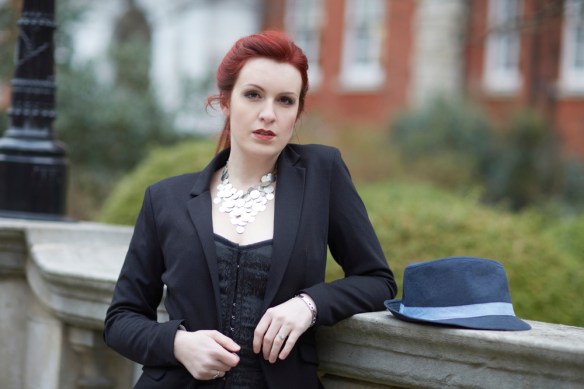
Quatuor Arod (above) [Jordan Victoria, Alexandre Vu (violins), Tanguy Parisot (viola), Samy Rachid (cello)], Timothy Ridout (viola)

Mozart
Divertimento in D major K136 (1772) (1:46-14:37 on the broadcast link below)
String Quintet in G minor K516 (1787) (17:02-50:49)

Wigmore Hall, London
Monday 25 February 2019

To hear the BBC broadcast through BBC Sounds, please follow this link

Commentary and Review by Ben Hogwood

This BBC Radio 3 Lunchtime Concert showed us Mozart young and ‘old’ – that is, a work each from his teenage years and from his fourth decade. It was given by the Quatuor Arod, a French-based quartet on the BBC New Generation Artists scheme, and their ranks were boosted by viola player Timothy Ridout, himself on the YCAT scheme.

The Arod Quartet’s performance of the Divertimento in D major K136 (from 1:46 on the broadcast) shows what a sunny piece of music this is – although it could be argued they take the first movement a bit too fast, perhaps displaying a bit too much nervous energy. Either way they play it very well and with affection, the simple theme carrying a long way.

The second movement, marked Andante (5:57), feels just right, the four parts integrating in a way that brings home the simple pleasures to be taken from playing this music together. The third movement (12:16) scurries out of the blocks with a hint of mischief, the interplay between the four taking on a more competitive edge but with the first violin of Jordan Victoria ultimately triumphant, and technically excellent.

The String Quintet in G minor K516 operates at the other end of the emotional scale, being the dark to the Divertimento’s light for much of its half hour duration. It is a magnificent piece, profound from the very first theme, where first violinist Victoria mastered the longer phrasing and the increased stretch of the melody when the second main theme of the first movement came around. The sound is very different with two violas, and the greater prominence for Mozart’s own instrument seems to have inspired him to write with especially great feeling. This is the second of four mature string quintets (there are two younger works of smaller form), and these are pieces that are substantial in their dimensions, their feeling and also their melodic invention.

While the piece does start in questioning mood (from 17:02), the five players here portrayed its nervousness while bringing shafts of light into the writing. Vibrato was sparingly used if at all, but was a stronger expressive tool as a result. The first movement’s two main themes are strikingly played, its structure clearly mastered, and the overall sound with Ridout’s viola added is very attractive.

The Minuet is normally a light hearted affair in Mozart chamber music, but here was anything but (from 27:31). Any attempts to come up with a lasting tune are broken by the sliced chords of the quintet playing together, so that what aspires to be a charming dance never has a chance to get fully into its rhythm. Some respite comes from the Trio section, where the composer will usually contrast what has gone in the Minuet. Here, from 29:22, Mozart slips from the minor key to the major for the first time, and the tension eases notably – especially in this performance where sunnier thoughts make themselves known for the first time. This, however, is short lived, for the Minuet returns in even sterner form (31:22)

The slow movement Adagio (32:43) is even more alarming than the Minuet. This is an unexpected move, for the music is in E flat major, which normally finds composers writing stronger music, and it requires the players to use their mutes the whole way through. With no vibrato from the Arod the textures are stark and the sounds lean, especially when the quintet breaks into smaller sections as it frequently does. In the middle the clouds darken further as Mozart moves into the distant keys of B flat minor (34:28) and E flat minor (38:07), where the extra viola (Timothy Ridout) makes a personal outcry of pain. There is hope however, the first violin taking us to sunnier climbs before we return to what feels like a stronger repeat of the music from the start of the movement.

The final movement (41:15) keeps the prevailing mood, slow and solemn from the outset – but then moves towards the major key, and finally shifts up a gear at 44:00 with music of much greater optimism. Let off the leash, Jordan Victoria enjoys the effervescent music he now has, and the tunes flow beautifully, the stern music of the first three movements now receding into the memory.

Further Listening

Mozart’s late chamber works contain some of the most rewarding music in all of his output. The four mature String Quintets stand at the peak of his achievements, with the work performed at this concert complemented by three other masterpieces. In their key make-up they match Mozart’s last four symphonies, and these versions by the Grumiaux Trio and guests (on CDs 2 and 3) make for a wholly satisfying listening experience:

The Quatuor Arod are relative newcomers to the recording scene – but their first disc of string quartets by Mendelssohn is a nice departure point from the Mozart played here:

Finally Mozart’s 3 Divertimenti for strings – best heard in their quartet form – give some of the most carefree classical listening you could wish to enjoy. This collection from the Hagen Quartett brings them together with the perennial favourite, Eine Kleine Nachtmusik:

Wigmore Mondays – Kitty Whately & Simon Lepper: From the Pens of Women

Kitty Whately (mezzo-soprano, above), Simon Lepper (piano, below)

Jonathan Dove All the Future Days (Autobiography; Penelope; The Siren) (2004) (2:11-13:27 on the broadcast link below)
Vaughan Williams 4 Last Songs (1954-8) (13:58-23:27)
Judith Cloud Night Dreams (Variations on the Word Sleep) (2006) (24:58-28:12)
Lori Laitman Orange Afternoon Lover (I Was Reading a Scientific Article) (2006) (28:15-32:24)
Argento From the Diary of Virginia Woolf (Anxiety) (1974) (32:27-34:25)
Rebecca Clarke Lethe (1941) (35:58-39:00)
Juliana Hall Letters from Edna (To Harriet Monroe; To Mother) (1993) (39:05-43:15)
Jonathan Dove Nights Not Spent Alone (2015) (43:34-52:42)

Wigmore Hall, London
Monday 18 February 2019

To hear the BBC broadcast through BBC Sounds, please follow this link

Commentary and Review by Ben Hogwood

What a refreshing hour of music.

With no criticism intended, Mondays at the Wigmore Hall, where BBC Radio 3 hold a lunchtime concert every week, are a reliable way in which to start the week with quality music. They show off some of the very best in chamber, piano and vocal music, often in imaginative programs, but understandably catering for the audience with relatively well-thumbed pieces of music often included.

Not so on this occasion. Mezzo-soprano Kitty Whately always ensures she has an equal balance of male and female composers in her programs, and likes to sing about the stories of both sexes. From the Pens of Women, then, presented an opportunity to sing songs written by women – which in classical music is still not much as a proportion of the whole. She was joined by her regular recital partner Simon Lepper.

Autobiography (2:11 on the broadcast link) was a brave start, Whately straight into the high notes as she flew like the eagle in the text above the rapidly circling figurations of Lepper’s piano. Jonathan Dove’s sound world is fascinating here, clearly on the wing – and then coming down to earth a little for Penelope (4:46), which has a right hand piano figure not dissimilar to Britten, calling out in the right hand before the vocalist brings softer thoughts, then rising to soar with great feeling.

Then, from 8:04, another striking setting – this time The Siren, where Lepper worked overtime to bring a distinctive, treble-rich piano part that dives from the heights as though into a pool of water before cutting off quite suddenly at 13:27 on the broadcast.

Ursula Vaughan Williams‘ text, as set by her husband Ralph, is a very different story. One of her husband’s last works, the Four Last Songs would inevitably invite comparisons with the more famous works of the same name by Richard Strauss, but they are totally different. Vaughan Williams was less obviously heart-on-sleeve with his feelings, but look deeper and they are still there.

The first, Procris (13:58) is a little restless and decides against following the black humour of the story, while Tired (16:32) is a wonderful song, softly rocking its listener as a lullaby. Whately gave an appropriately understated reading here. Hands, Eyes and Heart (18:32) is a short song but then Menelaus (19:42), the most substantial of the four, finishes the brief cycle in a poignant mood.

Three settings of Margaret Attwood follow, with Judith Cloud’s Night Dreams (24:58) a beautifully observed setting of how the author ‘would like to watch you sleeping’. The song is dappled in half light and is shot through with the intimacy of the sleeping hours, while Lori Laitman’s Orange Afternoon Lover (I Was Reading A Scientific Article) (28:15) is similarly personal, set to a flowing accompaniment. Dominick Argento’s setting of Anxiety from From the Diary of Virginia Woolf (32:27) is propelled by the urgent piano part and keeps a high level of agitation throughout.

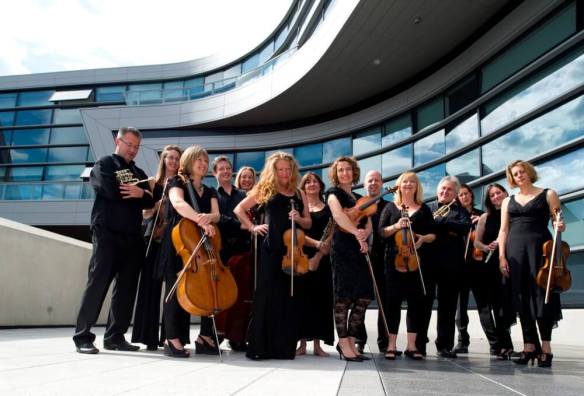
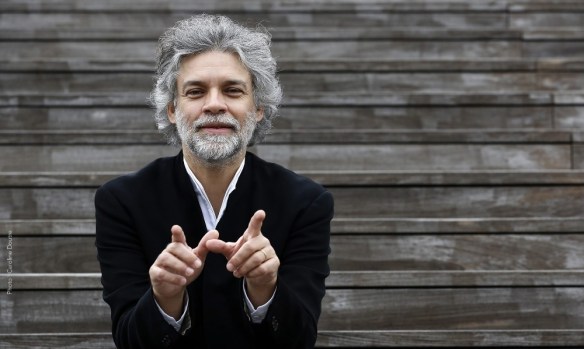
The text of Edna St Vincent Millay (above) provided the inspiration for the last third of the concert, a remarkable group of song settings. Rebecca Clarke’s Lethe is the very definition of bleakness, the underworld river supplying no comfort but only sorrow and menace (35:58), particularly in its ominous piano part at the end.
Juliana Hall’s settings of Letters from Edna provide some much-needed light relief, Millay asking humorously for payment from her publisher (39:05-40:22), declaring herself ‘awfully broke’, before passionately declaring her love and admiration To Mother (40:25).

Three settings make up Jonathan Dove’s mini-cycle Nights Not Spent Alone – the down to earth text of Recuerdo (43:34), with a quasi-orchestral piano part brilliantly managed by Lepper, the heady What lips my lips have kissed (47:41) and the passionate I too beneath your moon (50:18).

As an encore Whately and Lepper gave another Dove song, All These Dismal Looks (54:13-56:00), the fourth of five songs making up his Five Am’rous Sighs. The humourous song put the seal on an outstanding hour of music making, full of new discoveries and surprises and passionately delivered. The music and verse will I’m sure provide a springboard for listeners to the broadcast to look further afield. Talking of which…

Further listening

Kitty Whately has recorded the Jonathan Dove songs as part of a disc devoted to the composer’s music, including All The Future Days in its entirety, as well as Nights Not Spent Alone:

The below playlist contains all the music heard in this concert in available versions:

https://open.spotify.com/user/arcana.fm/playlist/6ctQO8z0d77IAARv24UoCR?si=JMBLzE4GQ9S7_Ay03k3iTg

Meanwhile you can hear all the songs of Rebecca Clarke on this disc from Patricia Wright, Jonathan Rees and Kathron Sturrock:

Britten Sinfonia at Lunch – Bach, Janáček, Messiaen, Martinů & Edmund Finnis @ Wigmore Hall

Britten Sinfonia soloists [Thomas Gould (violin), Caroline Dearnley (cello), Emer McDonough (flute), Huw Watkins (piano)]

J.S. Bach Violin Sonata no.1 in B minor BWV1014 (1720)
Janáček Pohádka (1910)
Messiaen Le merle noir (1952)
Finnis Five Trios (world premiere tour) (2019)
Martinů Trio for flute, violin and piano (1936)

Wigmore Hall, London
Wednesday 13 February 2019

Photo credit Harry Rankin (Britten Sinfonia)

Review by Ben Hogwood

For years now Britten Sinfonia’s At Lunch series has been a steady delight, a way to discover the new and rediscover the old in chamber music. Using interesting combinations of instruments and building consistently innovative programs around them, the group offer a very accessible way in to discovering classical music’s treasures of the small scale.

This latest series, given in Norwich, Cambridge and London, is no exception, exploring 300 years of chamber music for flute, violin, cello and piano. Pianist Huw Watkins was the one constant for the whole concert, which at London’s Wigmore Hall gave off the unmistakeable aroma of spring.

Watkins and Thomas Gould began proceedings with a very tasteful account of Bach’s Violin Sonata. It is always good to hear Bach with piano accompaniment, for the music is so versatile that it suits the colours available. In a work like this particular sonata, where the piano plays much more than the role of a traditional accompanist, the textures were ideal. The violin, too, had more notes than normal thanks to Bach’s ‘double stopping’ writing, and Gould played these passages beautifully.

Janáček’s Pohádka represented quite a step forward stylistically but the transition was natural, and the fierce lyricism so often associated with the Czech composer was brought to the fore. Caroline Dearnley enjoyed the song-like passages and Watkins gave great clarity to the busy accompaniments, neither musician stinting on the intensity of Janacek’s writing as the plot of the fairy tale took hold.

The same could be said of Le merle noir, Messiaen’s only published work for flute and piano. An important work that signals his intent to accurately reproduce birdsong on traditional instruments, it is a remarkable piece – and Emer McDonough brought to it a wide range of colour. Most importantly she made it sound natural, for while the notes are all written out the intention of the piece is to sound as instinctive as possible. Again Watkins was the catalyst with some carefully voiced and wholly complementary thoughts.

Each ‘At Lunch’ concert features a new work on its world premiere tour, and the springlike atmosphere was ideal for Edmund Finnis and his Five Trios, for the conventional piano trio grouping of violin, cello and piano. Finnis finds an unusual amount of space in his music, and here his blend of quick movement over slow, drone-like figures opened out the textures very attractively.

There was very little bass in the five trios, notable for their translucence and bright textures. The first introduced softly oscillating figures, while the second spread shafts of light from spread piano chords and string harmonics. The dappled sunlight streaming through the Wigmore Hall roof was the ideal companion for the rippling textures of the third piece, but then in the fourth we enjoyed a bolder statement from the cello, its fuller sound ringing through a haze of sustained piano and glassy violin. To finish, the prayerful fifth piece completed a meditative ten minutes from a composer whose rarefied textures are well worth further investigation.

The Britten Sinfonia members closed their generous concert with Martinů’s Trio for flute, violin and piano. So prolific was the Czech composer that it is easy to overlook his achievements, particularly in the chamber music field. While it can on occasion be tricky to recall some of his melodies after the first hearing of a piece, the overall feel of his writing is uniformly positive and, in this case, capable of making the audience smile and clap spontaneously.

The third of four movements was responsible for the clapping outburst, a wonderful piece of effervescent writing betraying his Parisian location when writing it. The outer movements were a little grittier but still charmed with their syncopation, colour combinations and piquant melodies. The tender second movement was heartfelt too.

The standard of musicianship in this concert was extremely high. Particularly memorable moments include Emer McDonough’s final movement cadenza in the Martinů, where Watkins held the performance together admirably despite the tricky rhythms, the graceful playing of Thomas Gould in the Bach and Caroline Dearnley’s rich cello tone in the fourth of Edmund Dinnis’s trios, not to mention the expressive Janáček.

Once more from this source, an enlightening hour of music in an imaginative context. If you live in London or the East of England you really should catch them live soon!

Further listening

You can listen below to an interview with Edmund Finnis, talking with Dr Kate Kennedy about Five Trios ahead of the Wigmore Hall concert://embeds.audioboom.com/posts/7174837-edmund-finnis-talks-about-his-new-work-five-trios/embed/v4?eid=AQAAACp5ZVy1em0A

You can also hear a new release of Finnis’s music for orchestra here:

Meanwhile the remainder of the program is grouped together on this Spotify playlist:

Wigmore Mondays – François-Frédéric Guy plays Debussy, Tristan Murail & Brahms

François-Frédéric Guy (piano)

Debussy Préludes, Book 2 (1912-13): Brouillards (1:27-4:25 on the broadcast link below); La puerta del vino (4:31-7:41); Les fées sont d’exquises danseuses (7:46-10:37); La terrasse des audiences du clair de lune (10:42-15:00; Feux d’artifice (15:03-19:07)
Debussy Images, Set 1 (1901-05): Reflets dans l’eau (20:47-25:37)
Tristan Murail Cailloux dans l’eau (2018, UK premiere) (25:40-32:30)
Brahms 4 Piano Pieces, Op.119 (1893) (34:35-48:23)

Wigmore Hall, London
Monday 11 February 2019

To hear the BBC broadcast through BBC Sounds, please follow this link

Commentary and Review by Ben Hogwood

If last year saw a surfeit of Debussy’s music in the composer’s centenary year, it was for a good reason. The composer is rightly revered as one of the leading lights of early 20th century music, and brought with him new approaches to melody and harmony, not to mention sound worlds and textures unlike anything that had been heard before.

His writing for the piano is indispensable and of a consistently high and original quality, whether taking inspiration from older forms or creating new ones. In his Préludes for the piano he builds on an approach perfected by Chopin, who used each key to create 24 such works. Debussy, however, made 24 character pieces, painting portraits either of specific or deliberately vague imagery.

In this lunchtime recital François-Frédéric Guy fully immersed himself in this revolutionary writing, showing a clear affinity with five of the Préludes from the later Book 2. The swirling mists of Brouillards (Mists) (from 1:27 on the broadcast link) are vividly portrayed, with a notable attention to detail on the weighting of the notes. The swagger of the Habanera inhabits La puerta del vino (The wine door) (4:31), with its exotic harmonies matched to a free rhythmic approach.

The parallel chords of Les fées sont d’exquises danseuses (Fairies are exquisite dancers) (7:46) are also beautifully weighted, while La terrasse des audiences du clair de lune (The terrace of moonlit audiences) (10:42) grows from its introduction with a masterful crescendo. Finally Feux d’artifice (Fireworks), 15:03) is captivating, and during it you can practically see sparklers being waved around, thanks to the twinkling figurations in Guy’s right hand.

Reflets dans l’eau, taken from Debussy’s Images Set 1, is another watery wonder (from 20:47), played here with exquisite control from both fingers and feet – the use of the sustain pedal being of great importance in Debussy’s music. The rippling sounds act as the inspiration for Tristan Murail’s tribute to the composer, Cailloux dans l’eau (25:40)

His response begins at a more measured tempo than Debussy’s, savouring the colours for longer and effectively making his water slower moving. Soon, however, the ripplies become much more pronounced and twist upwards to the higher pitches on the piano (c30:00), with frothy trills that gradually subside towards silence. Guy played this with absolute control, fully immersed in Murail’s writing.

To finish, the final works for piano by Brahms. These four pieces were written as the composer reached his 60s, and mark the end of a late creative flowering including a number of chamber works for clarinet and intimate pieces for the piano. Three of Op.119 are classed as Intermezzos, a title essentially giving the composer free rein.

No.1 feels the most free of all, with a soaring right hand line beautifully floated by Guy in this performance. A real song without words, it carries deep emotional impact here. Guy moves straight on to the second piece (38:20), a flowing piece with greater urgency and a sunnier theme in the centre.

Then at 42:27, the short third piece, with repeated notes using the ‘classic’ Brahms triplet rhythms. Guy missed a couple of notes here but gauged the piece just right leading to the heroic Rhapsody (43:51) This piece is a triumphant way to end any concert, but does finish on a darker note. Until then, Brahms develops the theme, moving by 46:30 to a mood that recalls the previous Intermezzo. Then the main tune returns with great force (47:37), and just as it looks like a sunny ending Brahms plunges us into the minor key, signing off with great fire and brimstone.

To calm the waters after this, Guy returned to Debussy, and the first book of Préludes – with the most famous excerpt of all, Clair de lune (49:52-53:55).

Further listening

François-Frédéric Guy has not yet recorded any of the music heard in this concert – however the below Spotify playlist includes some leading versions of the repertoire heard:

Unfortunately the Tristan Murail is not available anywhere yet; however his complete piano music up until 2013 can be heard here in recordings made by Marilyn Nonken:

For more Debussy, Mitsuko Uchida’s album of the Études, another extension of a form pioneered by Chopin, can be heard here in an award-laden disc:

Late Brahms is one of the pinnacles of the Romantic piano repertoire, and few recorded it with the authority of Steven Kovacevich, heard here in a wonderful album for Philips:

Timothy Ridout & Frank Dupree – Bridge, Britten & Bowen @ Wigmore Hall

Timothy Ridout (viola, above), Jack Dupree (piano, below)

Bridge Pensiero; Allegro appassionato (1908)
Britten Lachrymae: Reflections on a Song of John Dowland Op. 48a (1950)
Bowen Viola Sonata No. 1 in C minor Op. 18 (1907)

Wigmore Hall, London
Tuesday 5 February 2019

Photo credit Kaupo Kikkas (Timothy Ridout)

Review by Ben Hogwood

The first Tuesday in the month usually brings with it a lunchtime recital at the Wigmore Hall from an artist on the YCAT roster. YCAT (Young Classical Artists Trust) is a charitable organisation looking after the development of emerging classical artists. A snapshot of its alumni (Alison Balsom, Simon Haram, the Belcea Quartet and Sean Shibe) bears testament to the success of their program and the longevity of the careers they boost.

On this evidence, viola player Timothy Ridout is another who looks set for great things – as does German pianist Frank Dupree, with whom he gave this recital. Dupree was demonstrating his versatility with a second appearance at the hall in nine days (previously appearing with BBC New Generation artist, trumpeter Simon Höfele)

The pair began with two compositions by Frank Bridge, himself a viola player – but one who seemed reluctant to write anything substantial for his own instrument. The Pensiero and Allegro appassionato are the only works that survive. Written in 1908, they fall into Bridge’s late Romantic period and make a very satisfying double. Ridout played the Pensiero affectionately and with a beautiful tone, which opened out for the surge of the Allegro appassionato that followed.

Bridge and Benjamin Britten enjoyed an inspirational creative partnership, the elder man a lasting influence on his pupil. Britten’s Lachrymae is his major work for viola and piano, though is more commonly heard in its orchestral arrangement. It is a masterful set of variations on a song by John Dowland, If my complaints could passions move, and reverses the variation format so that we hear all the variations first and the tune right at the end. He also refers to a second Dowland song, Flow my tears, in the course of the piece.

Ridout and Dupree gave a superb performance, atmospheric right from the start with a commendable attention to detail and a brooding passion which was unleashed in the fifth and sixth variations. The dynamic shadings were exquisitely realised, Ridout’s tone was beautifully judged, and Dupree’s punctuation marks were ideally clipped in the seventh variation.

Finally a very different form of Englishness was heard in the form of York Bowen’s Viola Sonata no.1. Bowen wrote this at the age of 20, and it shows an early command of the required form, as well as melodic invention, which both players clearly enjoyed. There was humour, too, in the coda parts of the first movement, and in the closing pages, which felt like a race to the finish between the two.

The sonata’s dimensions are considerable – 29 minutes in this performance – but the work did not outstay its welcome, thanks to the energy of the outer movements. These drove forward with great enthusiasm and lyrical input. Ridout’s tone was consistently strong and rich in the low register, his phrasing ideal – while Dupree matched him note for note in the tricky accompaniment. The slow movement found the emotional heart of the piece, but the sweeping optimism of the last movement stayed with the audience the longest.

As a nicely chosen encore Ridout introduced Bowen’s Melody for the G string (1917), its title a lightly humourous take on Bach’s Air but also rooting the viola player to the same string for the whole five minutes. With a charming tune, it provided a winsome finish to a very fine concert.

More music

You can watch Timothy and Jack in York Bowen’s Romance below, also at the Wigmore Hall:

Meanwhile to hear the music in this concert, the Spotify playlist below includes all the works performed, in versions currently available:

Timothy has not yet recorded any of the works featured, but his debut disc for Champs Hill is well worth hearing – the complete works for viola and piano by Belgian composer Henri Vieuxtemps:

Links

You can find out more about the work of YCAT and their artists on their website