In concert – Raphael Wallfisch, BBC Concert Orchestra / Martin Yates: English Music Festival opening concert – A Night of Bliss

Raphael Wallfisch (cello), BBC Concert Orchestra / Martin Yates

Alwyn The Innumerable Dance – An English Overture (1933)
Delius ed. Beecham A Village Romeo and Juliet – The Walk to the Paradise Garden (1907)
Bliss Cello Concerto F107 (1969-70)
Vaughan Williams Heroic Elegy and Triumphal Epilogue (1901 rev. 1902)
Bate Symphony no.2, Op.20 (1937-39) [World Premiere]

Dorchester Abbey, Dorchester-on- Thames
Friday 24 May 2025

Reviewed by Richard Whitehouse Photos (c) John Francis

The Walk to the Paradise Garden’s filling the expanse of Dorchester Abbey can only mean the English Music festival was again underway, Martin Yates drawing a response from the BBC Concert Orchestra that exquisitely conveyed the acute pathos of Delius’s operatic interlude.

This opening concert had begun with another reclamation from William Alwyn’s early output. Offshoot of his early fascination with William Blake, The Innumerable Dance is more a tone poem than overture – ‘English’ or otherwise. Its initial phase crescendos in a potent evocation of sunrise, and if the livelier music that follows sounds comparatively anodyne, its finesse of instrumentation (with harp and celesta much in evidence) and its formal deftness made for a welcome revival. How about including Alwyn’s Second or Fifth Symphonies at a future EMF?
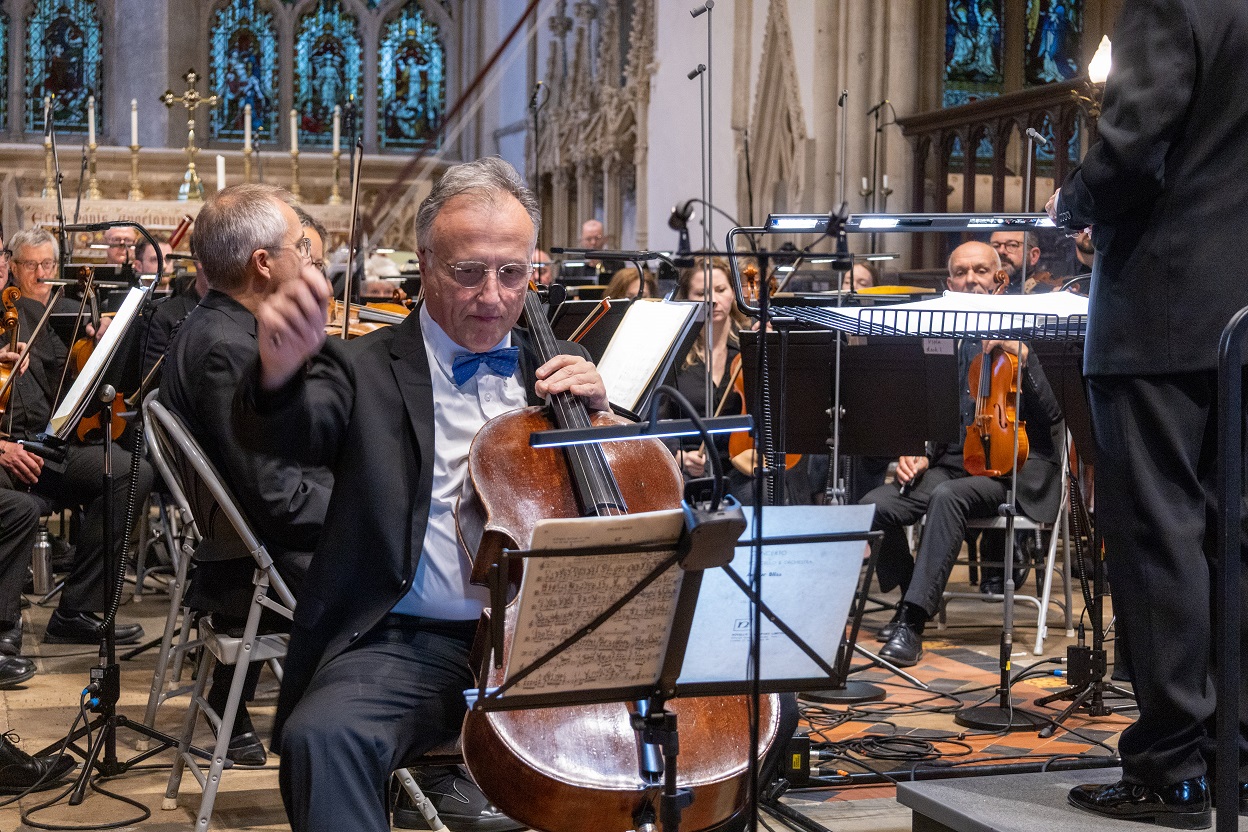
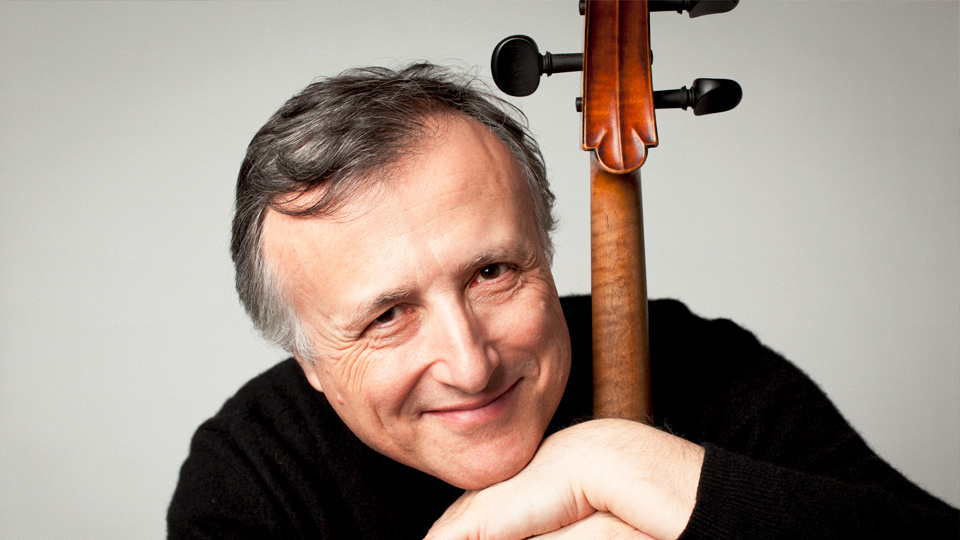
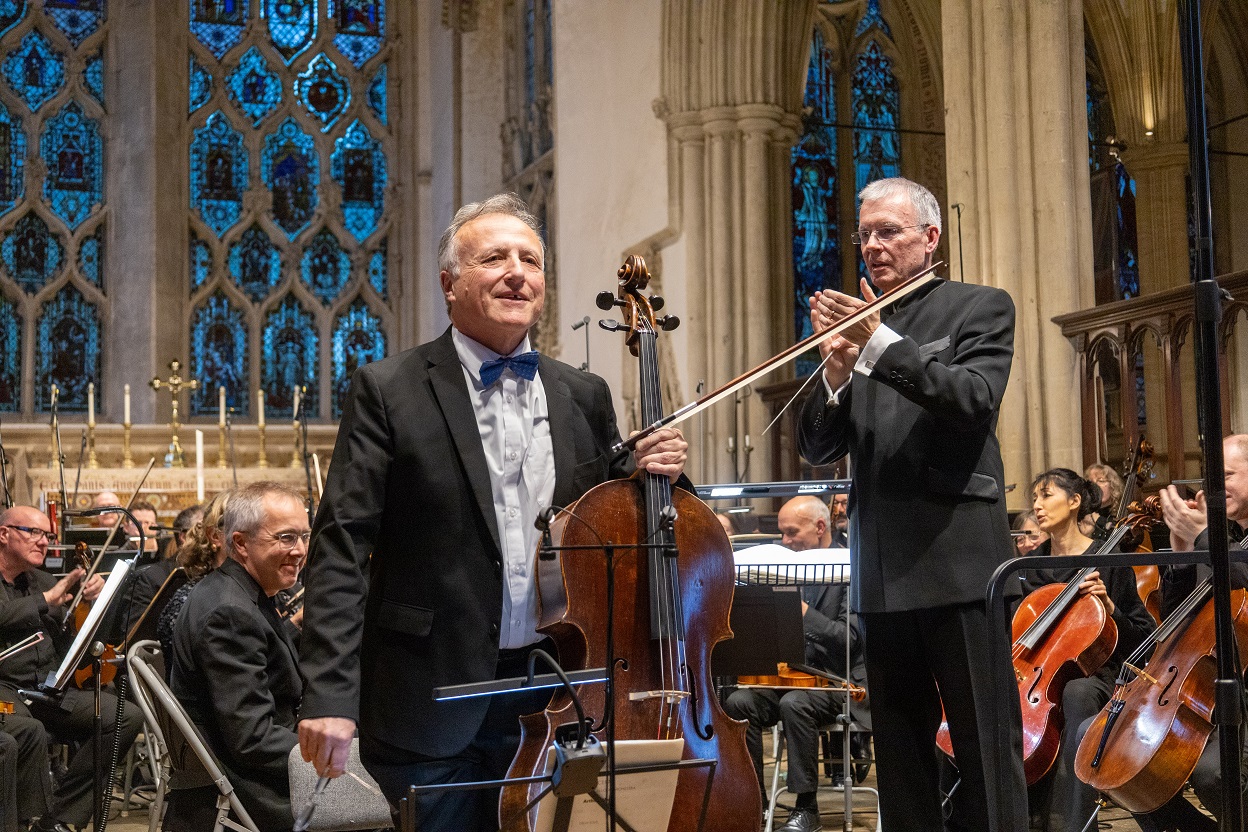
Arthur Bliss has enjoyed a veritable upsurge of performances in this 50th anniversary of his death, with his Cello Concerto among the finest works from that creative Indian Summer of his last decade. Compared with those for piano and violin before it, it eschews Romantic-era trappings in favour of Classical lucidity and proportion; its initial Allegro as much impulsive as decisive in its unfolding, with a semi-accompanied cadenza for its development in which Raphael Wallfisch (above) dovetailed effortlessly with orchestra. Subdued and poignant, the central Larghetto doubtless draws on the distant past in its heartfelt rumination, and while the final Allegro seems to dispel such memories, its progress is shot through with an ambivalence as makes the closing exchanges less than conclusive. Not least in this persuasive performance.

After the interval, another worthwhile revival in Heroic Elegy and Triumphal Epilogue with which Vaughan Williams, then in his late twenties, sought eminence among his peers. Only the first part, its fatalistic tread underpinning an eloquent theme on horns, was played at the time – the composer likely unsure if those episodic build-ups and rhetorical overkill of what follows were justified. Thanks to Yates’s assured direction, this music sustained itself up to a fervent apotheosis presaging the first movement from Sinfonia Antarctica half a century on.
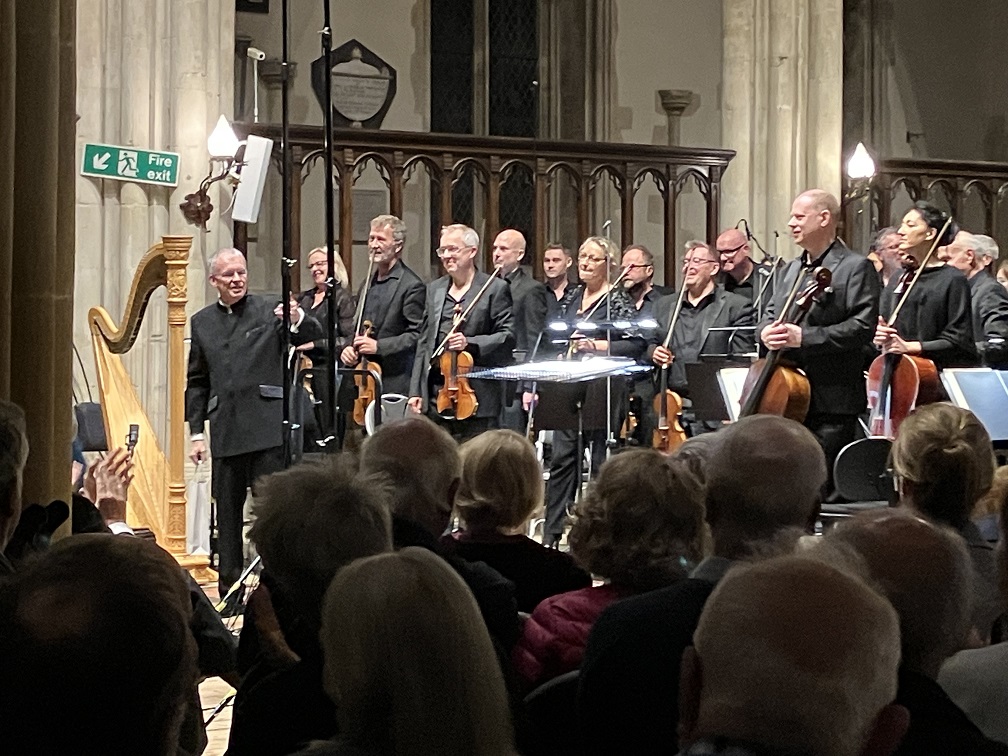
Yates has always sought to include a world premiere in his EMF concerts and tonight saw that of Stanley Bate’s Second Symphony. A composer who rather snatched defeat from the jaws of victory, he doubtless had high hopes for a piece written in Paris and London but not accepted (if indeed it was ever put forward) for performance. Shostakovich’s Fifth has been suggested as precursor but a more likely precedent is VW’s Fourth, not least with the fractious progress of an Allegro whose starkly contrasted themes build towards a combative development then resigned coda. Sombre and fatalistic with a powerfully wrought culmination, the Andante is its highlight and the ensuing Scherzo puts the rhythmic syncopation of that in Walton’s First to very different if hardly less effective ends (which have been even more so placed second).

If it fails to clinch the whole, the finale’s alternately baleful expression and propulsive motion secures a rousing peroration then a coda which, if its serenity is borne out of exhaustion rather than affirmation, fittingly ends a work whose motto might well be that of ‘travelling in hope’.

Published post no.2,544 – Sunday 25 May 2025
In concert – Raphael Wallfisch, BBC Concert Orchestra / Martin Yates: English Music Festival opening concert

Raphael Wallfisch (cello, below), BBC Concert Orchestra / Martin Yates

Lewis A Celebratory Overture (2023) [EMF commission: World premiere]
Lloyd Webber (orch. Yates) Scenes from Childhood (c1950) [World premiere]
Moeran Cello Concerto in B minor (1945)
Alwyn Serenade for Orchestra (1932) [World premiere]
Delius Two Pieces for Small Orchestra (1911-12)
Vaughan Williams (arr. Adrian Williams) A Road All Paved with Stars (1929/2016) [Public premiere]

Dorchester Abbey, Dorchester-on-Thames
Friday 26 May 2023

Reviewed by Richard Whitehouse

The breezy ebullience of Paul Lewis’s A Celebratory Overture (redolent of Malcolm Arnold without any risk of expressive ambiguity) launched this latest English Music Festival in fine style, with its crisp and precise playing from the BBC Concert Orchestra under Martin Yates.

As so often in these concerts, world premieres were not lacking and the first brought hitherto unknown partsongs by William Lloyd Webber arranged into suite-form then orchestrated by the conductor. If the resultant Scenes from Childhood adds but little to the reputation of this not inconsiderable figure, the Prelude yields appealing poise while Serenade is a waltz of no mean suavity, then the Finale nimbly combines elements of fugue and waltz on its way to a rousing close. Worth hearing, and not least when rendered with such obvious enjoyment.

The emotional weight of this first half inevitably fell upon the Cello Concerto by E.J. Moeran. Completed in the aftermath of the Second World War, it was the composer’s first large-scale piece for his wife Peers Coetmore; her belated and often approximate recording likely having deterred others from taking it up. Not so Raphael Wallfisch (above), his belief evident from the outset of a Moderato whose confiding eloquence is not without undercurrents of unease. These latter are made explicit at the start of the Adagio, otherwise centred on one of the composer’s most affecting melodies and building with due inevitability to a cadenza whose growing animation carries over to the final Allegretto. Here a jig-like main theme denotes an Irish influence that offsets any tendency to introspection as it guides this engaging movement to a decisive close.

Quite a performance, then, which was complemented after the interval by a first hearing for the early(ish) Serenade by William Alwyn. Written while on examination duties in Australia, this undemanding piece moves from a (mostly!) tranquil Prelude, through a stealthy and by no means uninhibited Bacchanale then a serene Air which could yet find favour as a radio staple, to a Finale that, as Andrew Knowles rightly indicated in his programme note, betrays more than a hint of Czech folk-music across its insouciant and ultimately boisterous course.

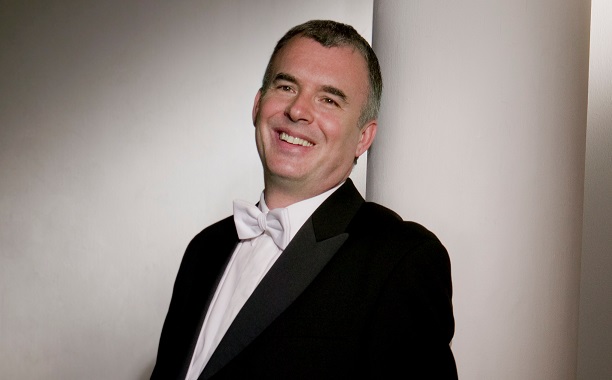
Hardly an interlude, the brace of pieces by Delius fairly encapsulate the inward rapture of his maturity. Yates (above) brought just the right lilt to the dancing gait of On Hearing the First Cuckoo in Spring, while the subtle eddying of Summer Night on the River was effortlessly conveyed.

The final premiere tonight came in the guise of A Road All Paved with Stars – the ‘symphonic fantasy’ as arranged by Adrian Williams (a notable composer in his own right) from Vaughan Williams’ comic opera The Poisoned Kiss. Occasionally revived, its dramatic prolixity rather obscures its musical highpoints – emphasized here in what is both a chronological overview and cumulative paraphrase that also adds a non-symphonic orchestral work to its composer’s output. The surging emotion of those final stages could hardly leave an audience unmoved. This vivid reading concluded a memorable concert in which the Moeran was dedicated to the memory of Michal Kaznowski – who, as cellist of the Maggini Quartet and formerly section-leader at the City of Birmingham Symphony Orchestra, has left a legacy worth remembering.

To read more about the festival, visit the English Music Festival website. For information on the performers, click on the links to read more about cellist Raphael Wallfisch, conductor Martin Yates and the BBC Concert Orchestra, and for more information on composer and arranger Adrian Williams and composer Paul Lewis

In Appreciation – David Lloyd-Jones

by Ben Hogwood

This week we have learned the sad news of the death of conductor David Lloyd-Jones, at the age of 87. David was instrumental in founding Opera North in 1978, and there is a heartfelt tribute on their website in his honour.

While Lloyd-Jones was a highly respected opera conductor, I have chosen to focus on his many and pioneering recordings of English music by way of a tribute. These include extensive surveys of the orchestral music of Stanford (including a symphony cycle), Alwyn, Bliss, Rawsthorne and Arnold Bax, including another survey of his symphonies, and Holst – with an important disc of his orchestral music released in 1998. Here is just a hint of his discography for Naxos, with highlights from some very impressive recordings:

On record – Aurora Trio: Crépuscule (EM Records)

crepuscule

Alwyn Two Folk Tunes (1936). Crépuscule (1955). Naïades (1971)
Bax Elegiac Trio (1916)
Lewis Divertimento (1982)
Lipkin Trio (1982)
Patterson Canonic Lullaby (2016)
Rawsthorne Suite (1968)

Aurora Trio [Emma Halnan (flute), Jordan Sian (viola), Heather Wrighton (harp)]

EM Records EMRCD069 [76’52”]

Producer Tom Hammond
Engineer John Croft

Recorded 15-16 February, 13 August 2020 at St John the Evangelist, Oxford

Written by Richard Whitehouse

What’s the story?

The Aurora Trio makes its debut for EM Records in a collection of British music featuring flute, viola and harp that spans exactly 100 years and encompasses a variety of approaches with regards to the combining of these distinct yet undeniably complementary instruments.

What’s the music like?

If not the most elaborate of his numerous works for ensemble, Arnold Bax’s Elegiac Trio is among his most affecting as an in-memoriam for those friends who died in the course of the Easter Uprising in Ireland. Although the overall mood rarely moves far from that implied by the title, the undulating emotion filtering through the textural ‘weave’ proves as subtle as it is elusive. Scored for just flute and harp, William Alwyn’s Naïades unfolds on a larger scale and inhabits a wider range of expression as it evokes both the eponymous spirits of antiquity and the environs of the Suffolk village of Blythburgh where it was written, while also being    a ‘fantasy sonata’ whose instruments interact with more than a little improvisatory freedom.

By contrast, the Suite that Alan Rawsthorne wrote for the Robles Trio is typical of his later music in its harmonic astringency and oblique while never abstruse tonal follow-through. A highly personal use of serial elements underpins the elegant opening Andantino as surely as it does a graceful, intermezzo-like Allegretto then the more demonstrative Allegro vigoroso. All these other works are here receiving their first recordings. Alwyn’s Crépuscule for harp offers a foretaste of that masterly concerto Lyra Angelica in its ethereal poise, whereas his Two Folk Tunes emerges as an appealingly contrasted duo – viola and harp as ruminatively combined in Meditation as they are animatedly juxtaposed in Who’ll buy my besoms?

The highlight is undoubtedly the Trio by Malcolm Lipkin, a composer yet to receive his due and who, as the present work affirms, was unafraid to elide between tradition and innovation with strikingly personal results – whether in the terse emotional contrasts of its Variations, tense and increasingly soulful inwardness of its Intermezzo or purposeful onward progress of a Finale whose impetus subsides towards the pensively fatalistic coda. Canonic Lullaby has Paul Patterson bring flute and harp into limpid accord, while Paul Lewis’s Divertimento puts all three instruments through their paces in a lively March, before embracing them in the lyrical Love Song then cordially sending them on their way in the nonchalant Waltz.

Does it all work?

Yes, given the relative stylistic range of the music featured and, moreover the quality of these performances. Care has evidently been taken to assemble the eight works into a cohesive and satisfying sequence such as this ensemble might tackle at one of its recitals, and which flows well as an overall programme. The playing leaves nothing to be desired in terms of accuracy, while the relative personality of each composer cannot be gainsaid. Ideally the release would encourage composers from the middle and younger generations to write for this combination.

Is it recommended?

Indeed. The recording is excellent, with the frequently awkward balance between instruments expertly judged, and there are detailed annotations on both the works and their composers. It all adds up to a worthwhile release which deserves to be followed up, hopefully on this label.

Listen & Buy

You can discover more about this release and listen to clips at the EM Records website, where you can also purchase the recording. For more on the Aurora trio, you can visit their website

In concert – Werther Ensemble: British Piano Quartets at St John’s, Smith Square

werther-ensemble

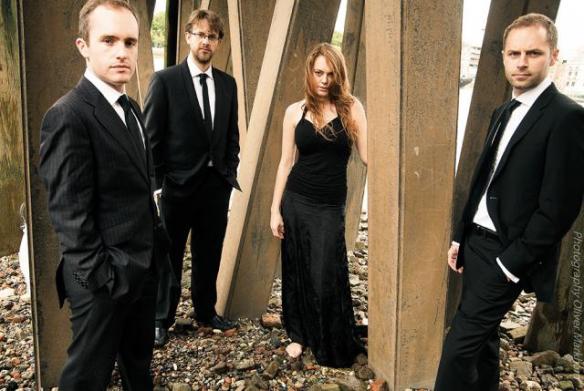
Werther Ensemble (Jamie Campbell (violin), Nicholas Bootiman (viola), James Barralet (cello), Simon Callaghan (piano); St John’s Smith Square, London, 21 February 2016

Bliss Piano Quartet in A minor, Op. 5 (1915)

Howells Piano Quartet in A minor, Op. 21 (1916)

Alwyn Rhapsody (1938)

Walton Piano Quartet in D minor (1919)

Written by Richard Whitehouse

The Werther Ensemble has proved itself adept across the broad spectrum of nineteenth- and twentieth-century chamber music, and this enterprising programme demonstrated the range of response by British composers to that most often overlooked of media – the piano quartet.

Admittedly it got off to a lukewarm start with the Piano Quartet by Sir Arthur Bliss. True the first movement began impressively, but its ensuing contrast of romantic ardour with a gauche folksiness the composer was soon to jettison never quite worked, then the central Intermezzo was simply too short and lightweight to hold a balance between its predecessor and the lively finale with its dutiful recall of the work’s opening theme towards the close. Understandable if Bliss should have left this piece to its fate as he headed off in a radically different direction.

A year younger, Howells completed his own Piano Quartet at much the same time, yet here there could be no doubt as to its consistency of musical idiom with those other chamber works from this composer’s early maturity. The opening movement unfolded with no mean deliberation, its main ideas emerging gradually and only rarely asserting themselves against a constantly shifting harmonic context.

For all that it conveyed a purposeful momentum as the Werther was mindful to contrast with the lingering eloquence of the central Lento – building in stages towards a soulful climax tinged with regret. After this, the finale may have surprised with its rhythmic incisiveness and often headlong progress, yet the affirmative outcome was audibly in keeping with the underlying trajectory of this ‘dark horse’ among works of its kind.

After the interval, a welcome revival for the Rhapsody as was the first of Alwyn’s two contributions to the medium. This packed a wealth of incident into its modest timespan of a little more than nine minutes. The tensile initial idea proved dominant while being flexible enough to accommodate understated material in a loosely palindromic structure that brought a satisfying completion. The Werther was more than equal to the technical challenges of a piece as reminded one some of Alwyn’s most distinctive music is to be found in his chamber output.

The programme concluded with the Piano Quartet by which the teenage Walton gave notice of his protean talent. Although revised in the 1920s and again in the 1950s, this is very much a young composer’s music – one steeped in recent scores by Ravel and Stravinsky that are put to productive use over its thematically interrelated four movements.

The Werther duly sustained its half-hour span with conviction to spare – whether in its trenchant response to the bracing scherzo, the ambivalent shadows that inform the Andante’s fitful progress, or the ingenuity by which the opening movement links hands with the finale in an impressive show of technical resource and cumulative energy – especially during the latter’s heady central passage, a sure pointer towards the composer’s musical preoccupations a decade and more hence.

An impressive conclusion, then, to a well-conceived and finely executed recital, in spite of the occasional intonational flaw. Apparently this had to be postponed from last year because of illness among the ensemble – in which case, its rescheduling was justified in every respect.