
Online Concerts – The Cardinall’s Musick / Andrew Carwood: Byrd 400th anniversary

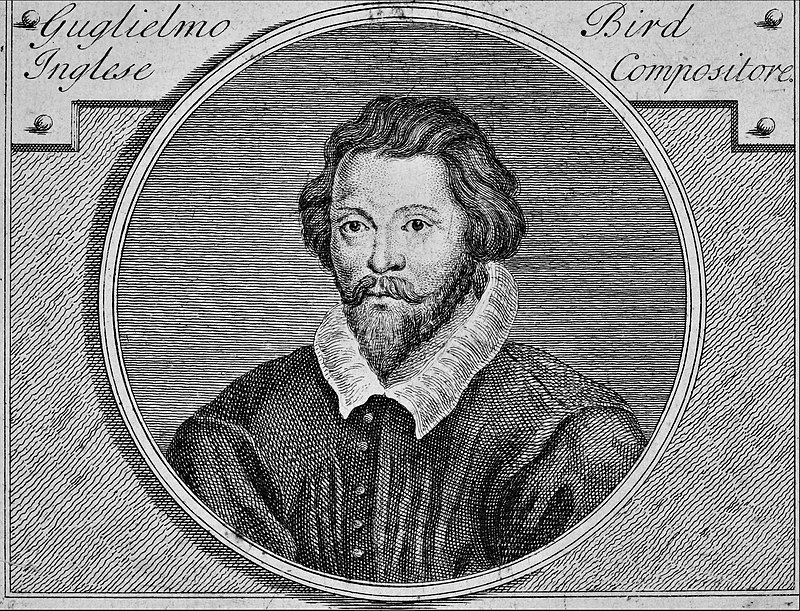
William Byrd
Masses for 4, 3 and 5 voices

The Cardinall’s Musick / Andrew Carwood

Wigmore Hall, London
Tuesday 4 July 2023

Reviewed by Ben Hogwood Photos (c) Benjamin Ealovega

This week we have been marking the 400th anniversary of the death of William Byrd, one of the founding fathers of English classical music as we know it today.

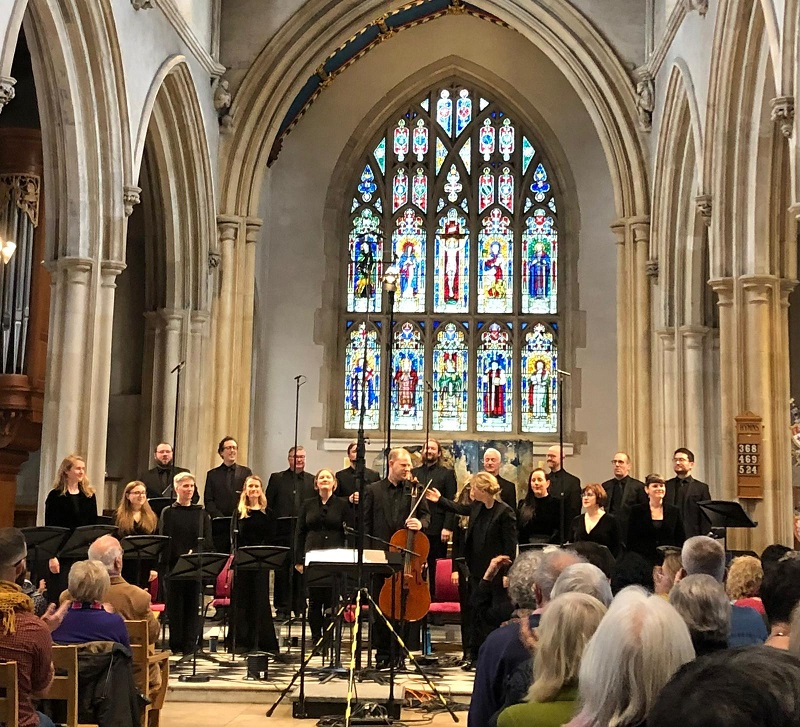
One of the key events on Tuesday, the day itself, was a trio of concerts at the Wigmore Hall from the Cardinall’s Musick choir and their conductor Andrew Carwood. Together they have recorded all of Byrd’s choral music for the Gaudeamus and Hyperion labels, but on this occasion the focus was the composer’s three Mass settings.

Context for these unique works is vital, and it was given by an extremely helpful and thorough note from Katherine Butler, bolstered by musical insight, and also from Carwood himself in well-chosen asides to the audience. Both illustrated vividly how perilous Byrd’s own position as a composer was, for as a Catholic he was compelled to write settings of the mass, despite knowing public airings of the music would be against the demands of his monarch, Elizabeth I, for whom he was royal composer. If discovered, these performances could bring about imprisonment and even death. Because of this, the works lay undiscovered in their largely anonymous packaging, used for very private occasions presided over by a priest who would even have his own bolthole, should the ceremony be discovered.

Byrd
Mass for 4 voices (c1592-3), with the Propers for the Feast of Easter Day

The Cardinall’s Musick [Patrick Craig, Matthew Venner (altos), William Balkwill, Mark Dobell (tenors), Richard Bannan, Robert Rice (baritones), Edward Grint, Nathan Harrison (basses)] / Andrew Carwood

The three Cardinall’s Musick concerts began with a lunchtime account of the Mass for Four Voices, dating from around 1592-3, and given context by in performance by Byrd’s settings of the Propers for Easter, completed in 1607. These began with a celebratory Introit, with its busy acclamation of the resurrection, with the mood changing for a solemn, weighty Kyrie from the Mass. This was given plenty of room by Carwood, with superb control from the singers in their sustaining of the notes. A fulsome Gloria followed, notable for its clarity of line and rhythm. Carwood was judicious in harnessing the ten voices available to him, reducing the forces to five for the Gradual & Alleluia. Here, the portrayal of ‘Mors et vita duello conflixere mirando’ (death and life have fought a huge battle)’ was vividly conveyed, before ‘et gloriam vidi resurgentis’ (‘and I saw the glory of the rising’) reached impressive heights.

The substantial Credo was paced just right, with a holding back from the ‘descendit’, with controlled lower notes to complement. A busy Offertory and graceful Sanctus were beautifully sung, the music gradually unfolding. The Communion (Pascha nostrum) was slow, appropriately reverent and pure, before the moving Agnus Dei had as its end a final chant and response telling us the Mass had finished.

Byrd
Mass for 3 voices (c1593-4), with the Propers for the Feast of Corpus Christi

The Cardinall’s Musick [Julie Cooper, Laura Oldfield (sopranos), Patrick Craig, Matthew Venner (altos), William Balkwill, Mark Dobell (tenors), Nathan Harrison (bass)] / Andrew Carwood

As Andrew Carwood explained, we heard some of the richest music in the first concert, then some of the most intimate in the second. This was music of the recusant house rather than the big church or cathedral, and Carwood invited us to imagine we were in a building no bigger than a sitting room. With Catholics shrouded in secrecy, he gave an idea of just how risky this music making was.

We heard the Mass For Three Voices, with a noticeable reduction in texture from the lunchtime concert, as well as less movement within the parts. That said, there was an air of restrained celebration all the same. A quick Kyrie & more florid Gloria was sung with two to a part, and while the single parts could be left exposed they were very secure in these hands, notably the tricky entries from on high. The Propers on this occasion were for the feast of Corpus Christi and were published in 1605. They featured a ‘risky’ Gradual, before a six-piece Credo found a lovely peak on the words ‘Et ascendit in caelum (and ascended into heaven)’ and a beautiful confluence at the end. There was a suitably thoughtful start to the Sanctus, which became more florid in its ‘Hosanna’ exultations. The Communion was outwardly expressive, retreating to a sombre Agnus Dei and a solemn final chant.

Byrd
Mass for 5 voices (c1594-5), with the Propers for the Feast of All Saints

The Cardinall’s Musick [Julie Cooper, Laura Oldfield (sopranos), Patrick Craig, Matthew Venner (altos), Ben Alden, William Balkwill, Mark Dobell (tenors), Edward Grint, Robert Rice (bass)] / Andrew Carwood

Finally the evening concert gave the Mass for Five voices with the Propers for the Feast of All Saints of 1605 – an effervescent celebration but becoming more meditative as the music proceeded. Carwood, revelling in the occasion, conducted with great sensitivity once again, presiding over a busy Introit with the rejoicing angels. The layered Kyrie of the Mass itself was ideally weighted, making the most of the chromatic possibilities, before a relatively restrained Gloria. The five voices, with increasingly complex writing, were nonetheless easy to follow, their rhythmic lightness suggesting a dance at the end of the Gradual – Carwood referring to the repartee between the voices.

He then referenced the intensity of Byrd’s writing, the declamation in the Credo and its extraordinary harmony, fusing of madrigal techniques into the mass. It was helpful to have these insights on top of the booklet notes, for Carwood setting Byrd apart as a composer even from the likes of Palestrina. The full ten-voice Credo explored deeply felt power and resonance, an incredibly expressive movement, while the purity of the sopranos shone through in the Offertory. A slow Sanctus gradually gathered pace with more complex writing, before the Communion – making explicit reference to the persecution Byrd felt, gave an appropriate stress to the words ‘propter iustitiam (for righteousness’ sake)’ and showed some well-handled dissonances. Finally an Agnus Dei of solemn, minor key angst found peace at last, capped by the closing sentence.

The choir and their conductor received a deservedly rapturous reception, for their beautiful and controlled singing had given Byrd the best possible remembrance, marking the death of this musical martyr in appropriate style. The Cardinall’s Musick and the Wigmore Hall should be applauded for such a well-conceived and executed trio of concerts, which are highly recommended for online viewing!

You can listen to the Cardinall’s Musick recordings of the Byrd Masses, dating from 2000, on the Spotify link below:
On this day – William Byrd (c1543 – 4 July 1623)

On this day, 400 years ago, the composer William Byrd died. He is regarded as one of the most important composers of the Renaissance, and certainly deserves the reputation as one of the founding composers of English music as we know it today.

There are a number of celebrations taking place to mark this anniversary, notably BBC Radio 3 including Byrd as its Composer of the Week, and The Cardinall’s Musick under Andrew Carwood performing the three Masses at the Wigmore Hall. For now, though, here is The Bells, a remarkable piece for harpsichord:

In Concert – BBC Singers @ St Giles’ Cripplegate & St Paul’s Knightsbridge

by John Earls

It has been quite a time for the BBC Singers recently. As this world-renowned choir approaches its 100th anniversary, the past few weeks have seen the BBC announce their closure, and magnificent campaign against it in response (including more than 700 composers writing to the BBC director general in condemnation) Here on Arcana you can get a glimpse of their recorded worth, with an appreciation and a BBC Singers playlist.

Thankfully a temporary reprieve has since been issued, with the BBC issuing a statement on an “alternative funding solution”.

All of this was book-ended by two concerts of sacred music broadcast on BBC Radio 3 for Holy Week, both demonstrating what a unique and valuable choir they are.

On 17th March they gave their first concert following the BBC’s shameful axing announcement at St Giles’ Cripplegate in London. It was inevitably a special and emotional occasion. The programme of choral and cello music went under the bitterly ironic title of All Will Be Well (after Roxanna Panufnik’s piece of the same name which concluded the programme). “I’m still the producer of the BBC Singers” said Jonathan Manners in his introduction to much applause.

The concert was a fitting example of the range and depth of the choir’s repertoire in terms of time (it opened with Hildegard von Bingen’s O cruor sanguinis from the 12th Century) and style. It displayed impressively their ability to convey a sense of comfort and balm such as in Lesia Dychko’s short piece Blessed be the name (Emma Tring a beautiful solo soprano) as well something more unsettling like Fac me tecum pie flere by Sven-David Sandström.

But this was a programme of choral and cello music and cellist Benjamin Hughes was individually expressive as well as combining powerfully with the choir, both in evidence in Knut Nystedt’s Stabat Mater.

A magnificent encore of Maurice Duruflé’s motet Ubi Caritas was followed by a rapturous and moving ovation (below)

The concert was broadcast on BBC Radio 3 on Palm Sunday and is available online for a limited period.

Less than three weeks later, and following the BBC statement announcing a suspension of the closure, the group performed a Music for Maundy Thursday concert of sacred pieces on the theme of ‘contemplation, sorrow and reflection’ for live broadcast on BBC Radio 3 at St Paul’s Church, Knightsbridge, London (above).

Yet again the programme highlighted the sweep of their repertoire opening with a meditative motet from the 1590s, Vittoria Aleotti’s Miserere mei, Deus (from the first published book of sacred music by a woman) and also featuring sacred pieces from the 21st Century (Karin Rehnqvist’s I raise my hands and Judith Bingham’s Watch with Me), as well as William Byrd’s 14th Century The Lamentations of Jeremiah.

But there were two pieces where the group really shone to spectacular effect. Domenico Scarlatti’s Stabat Mater à 10, with Richard Pearce on chamber organ, was stunning and utterly compelling in its detailed delivery. Francis Poulenc’s Quatre motets pour un temps de penitence made a glorious finale.

One must also acknowledge the key role of Chief Conductor, Sofi Jeannin, always assured yet empathetic. To watch her conduct is a mesmerising experience in itself.

The extent to which the BBC Singers and Jeannin develop and promote a diverse repertoire (they have a 50:50 gender policy for composers whose music they perform), engage in learning and community work, regularly perform commissions and broadcast on Radio 3 (making their phenomenal output available to such a wide audience) is all part of what makes them so unique.

I have seen them many times over many years and they never fail to move me. These two concerts only served to prove just why they are irreplaceable.

John Earls is Director of Research at Unite the Union and tweets at @john_earls

Click on this text to find out more about the Musicians’ Union campaign to protect the BBC Singers after September and action to stop job cuts at BBC Orchestras

On Record – Francesco Tristano: On Early Music (Sony Classical)

francesco-tristano

by Ben Hogwood

What’s the story?

On Early Music is a blend of past, present and future. On the face of it the appearance is a deep dive into nostalgia, exploring Francesco Tristano’s love of very early keyboard music in new recordings of Gibbons, Bull, Philips and the pioneering Frescobaldi, who holds a particularly special place in the Luxembourg pianist’s heart.

Yet this is only a small part of the story, for Tristano’s own compositions are included, complementing the older pieces while functioning as more than mere pastiche. In addition to that, some gentle manipulations of studio technology ensure the ‘cover versions’ of the especially early material are given a subtly different sonic clothing.

What’s the music like?

A rather winsome blend of peace and energy. Tristano plays with energy and enthusiasm in the faster music, while his melodic phrasing has a winning instinct when the music gets slower. He also displays a keen air for instinct, bringing an improvisatory feel to some of this music that makes it feel fresh off the page.

On early music is especially good when the keyboard tones are softened, or when extra rhythm is added as on Ground. Toccata is brisk, plenty of positive energy, the first part of a trilogy spending its time in the tonality of D. The second is a winsome set of thoughts on a Galliard in D by John Bull, while the third, a Fantasy in D minor by Peter Philips, allows for more florid musical thoughts.

Bull’s Let ons met herten reijne has a stately opening paragraph before moving into faster material, with the spirit of the dance invoked. Tristano has a nice lift to his playing when the dance rhythms are more obvious in this collection, and he brings this into his own writing too. His compositions have an enjoyable freedom, allowed to wander through different musical byways in a fantasia style. Serpentina meanders in the form of a free flowing stream, while On Girolamo Frescobaldi’s Quattro correnti works in the percussive sound of the hammers on the keyboard. Frescobaldi himself appears as a complement, Aria la folia. The final Aria for RS, is a beauty, slow but very meaningful.

Does it all work?

Yes. Headphones reveal extra layers to Tristano’s sonic thinking, with some really nice touches of detail in the meticulously mixed final cut. The playing is affectionate, beautifully phrased, and the warmest compliment you can give to Tristano’s own material is that it is not always obvious which of the recordings are early and which are late.

Some piano recordings of early music end up being rather dry to the touch, but not this one.

Is it recommended?

Yes. Initially it looked as though this album might be a step backwards in its musical slant, but it actually continues Francesco Tristano’s onward journey through some fascinating musical pastures

Stream

Buy

You can hear more clips and read more information about the release, as well as purchasing options, on the Sony Classical website.

Wigmore Mondays – Joanna MacGregor: Birds, Grounds, Chaconnes

Joanna MacGregor (above)

Wigmore Hall, Monday 11 November 2019 (lunchtime)

You can listen to this concert on the BBC Sounds app here (opens in a new window)

Review and guide by Ben Hogwood

Joanna MacGregor is a remarkably versatile pianist – and from this evidence at the Wigmore Hall, she is an artist who enjoys her music making as much as ever.

It would seem she was given free rein for this hour of music – and was certainly free as a bird in the opening selection of wing-themed pieces. Returning to earth for ‘Grounds’ – pieces of music with set, short structures in the bass – she was equally effusive, as well as ‘Chaconnes’, which are similar to ‘Grounds’ but based more on chord sequences than explicit basslines.

The 400 years or so of music started with a flourish. Rameau had a great ability to portray nature in music, and his Le rappel des oiseaux (The call of the birds) was a delight in its interaction between the hands. His contemporary, François Couperin, was represented by a strongly characterised Les fauvétes plaintives (The plaintive warblers), where MacGregor enjoyed the ornamentation of the right hand. That led to an arrangement of fellow countryman Messiaen’s Le merle noir (The black robin), originally for flute and piano but responding well here to its reduction, with quick fire block chords. Rameau’s portrait of La poule (The Hen) was brilliant, the clucking and strutting of the bird all too enjoyably evident.

Janáček’s piano music has an otherworldly quality of stark intimacy, and it does not get anywhere near the amount of recognition it deserves in the concert hall these days. Joanna MacGregor started her next segment of bird-themed pieces with the evocative piece The barn owl has not flown away. Taken from the first book of the Czech composer’s collection On an Overgrown Path, its haunting motifs fixed the listener in a gaze rather like the owl itself.

Birtwistle’s brief Oockooing Bird was next, a slightly mysterious creature in this performance, before a piano arrangement of Hossein Alizadeh’s Call of the Birds, normally heard in its original version for the duduk (an Armenian woodwind instrument) and the shurangiz (an Iranian member of the lute family). MacGregor is so good at inhabiting the authentic language of these pieces, and she did so here in concentrated fasion.

For the ‘Grounds’ section, who better to start with than Purcell? He was a natural with supposedly constricted forms like this, and the Ground in C minor teemed with activity in MacGregor’s hands, the right hand figures dancing attractively, The piece prepared the way nicely for Philip Glass’s repetitive but meditative Prophecies, arranged from his music to Koyaanisqatsi. This film soundtrack contains some of the composer’s finest music, and MacGregor showed how well it transcribes for piano, building to a bold and emphatic finish.

For the final section we moved onto ‘Chaconnes’, and looked back to the 16th century for the earliest piece in the program. Yet Byrd’s First Pavane still sounds modern in piano guise – Glenn Gould certainly thought so – and Joanna MacGregor gave an extremely spirited and buoyant account. Glass appeared once more – this time the interlude Knee Play no.4 from his opera Einstein on the Beach – before the substantial Chaconne in F minor from Pachelbel, heard here on the piano instead of its ‘home’ instrument, the organ.

How refreshing not to hear the composer’s Canon, much-loved as it is – for Pachelbel is much more than merely a composer of that particular piece. MacGregor found the profound emotional centre, darkly coloured in the minor key – and with that came an impressive inner resolve.

For an encore we were introduced to the eleventh composer of the day through a spirited account of the Passacaglia from Handel’s Harpsichord Suite no.7 in G minor. It contained all the enthusiasm and melodic definition that made this hour in the company of Joanna MacGregor such a joy.

Repertoire

This concert contained the following music (with timings on the BBC Sounds broadcast in brackets):

Rameau Le rappel des osieaux (pub. 1724) (2:21)
François Couperin Les fauvétes plaintives (pub. 1722) (5:27)
Messiaen Le merle noir (1951/1985) (9:05)
Rameau La poule (pub. 1729) (11:02)
Janáček The barn owl has not flown away (from On an Overgrown Path, Book 1) (1900-11) (15:36)
Birtwistle Oockooing Bird (2000) (19:39)
Hossein Alizadeh Call of the Birds (2003) (22:08)
Purcell (1659-1695) Ground in C minor Z221 (unknown) (27:31)
Glass Prophecies (from Koyaanisqatsi) (1982) (30:34)
Byrd First Pavane (from My Ladye Nevells Booke) (pub. 1591) (36:25)
Glass arr. Paul Barnes Knee Play No 4 (from Einstein on the Beach, from Trilogy Sonata) (1976) (40:44)
Pachelbel (1653-1706) Chaconne in F minor (unknown) (44:19)
Encore
Handel Passacaglia from Harpsichord Suite no.7 in G minor (52:33)

Further listening

Joanna MacGregor has yet to record most of the music in this concert, but the following playlist contains most of the music listed above:

Portrayals of birds in classical music are far reaching, but few managed them better than Haydn in the 18th century. His Symphony no.83 in G minor, La Poule (The Hen) begins this playlist containing 100 minutes of bird-themed music. It includes Respighi’s exotic suite The Birds, Stravinsky’s The Nightingale and – perhaps inevitably – Vaughan Williams’ timeless The Lark Ascending:

For the most recommendable version of Janáček’s complete piano music, here is Rudolf Firkušný in both books of the evocative pieces On An Overgrown Path, ideal listening for this time of year:

For a good onward example of Joanna MacGregor’s art on the solo piano, her 2003 album Play is highly recommended, taking an open approach similar to this concert: