Elninodiablo is the pseudonym of Berlin-based Stephanos Pantelas, who is releasing what he describes as ‘his most personal and unrestrained release to date’.
The Downey Groove took shape during a long stay in the mountains of Cyprus, Pantelas with only a laptop, headphones, and a field recorder for company. His sketches gradually evolved into an album proper, enjoying the differing styles of dub, synth-based electronica and freeform beats with good feeling. Live percussion rubs shoulders with boomy bass, Pantelas operating without a concept.
“For me, music is spirit in sound, truth expressed through frequency”, says the producer. “It moves through you. It transforms.” He goes on to describe the album as “a womb-like slap in the face and a warm, gentle cuddle.”
What’s the music like?
All of the above – but operating in a wide-open space, reflecting the place where The Downey Groove began.
This is freeform, feelgood music, themed loosely on dub-based rhythms operating at the speed of slower house or breakbeat. It is atmospheric and often drenched in heat; a definite boon this time of year. Highlights include the brooding, slightly glitchy Misteriosa Noche, while The Soul Monad is an effective fusion of electro and dub, with numerous soundbites.
Rodeotheque is a lot of fun, going continental with a big beat, but the best two are saved for late in the album, with The Downey Groove and especially Rise In Dub hitting the sweet spot.
Does it all work?
It does. The freeform music is easy to enjoy and kick back to, but the stealthy bass grooves don’t take long to work their magic if movement is what you’re after.
Is it recommended?
It is indeed – readily recommended to lovers of dub or easy-paced electronica. Good vibes abound, with plenty of bass!
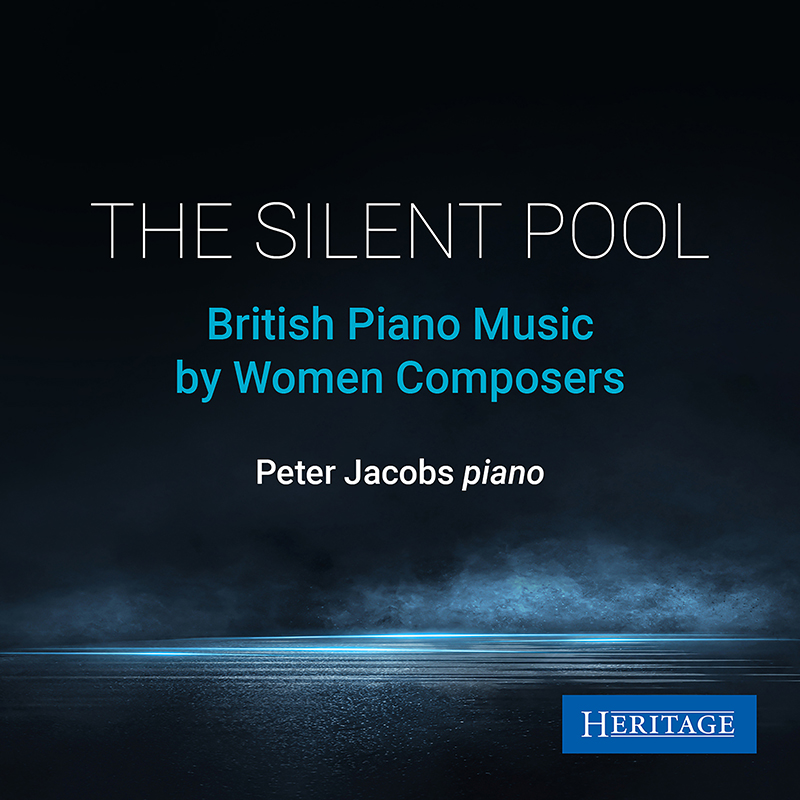
Smyth Piano Sonata no.3 (1877); Piano Sonata no.2 (Andante) (1877) Maconchy A Country Town (nos. 1, 3, 4, 5 & 7) (1945) Williams The Silent Pool (1932) Grime The Silver Moon (2025) Dring Colour Suite (1963) Bingham The Moon Over Westminster Cathedral (2003) Woodforde-Finden Indian Love Lyrics (nos.2 & 1) (1903) McDowall Vespers in Venice (2002) Bingham Christmas Past, Christmas Present (1991) Roe A Mystery of Cats (nos. 1, 4 & 5) (1994) Beamish Lullaby for Owain (2016) Da Costa Gigue; Moods (both 1930) Lehmann Cobweb Castle (nos. 2 & 5) (1908)
Heritage Records HTGCD126 [75’40”] Producer / Engineer Paul Arden-Taylor
Recorded 16 September 2024 & 26 January 2025 at Wyastone Concert Hall, Wyastone Leys, Monmouth
Reviewed by Richard Whitehouse
What’s the story?
Peter Jacobs continues his productive association with the Heritage label with this anthology that takes in a well-planned overview of piano music by female British composers, ranging across over more than 130 years of creativity in an impressive variety of idioms and genres.
What’s the music like?
Although female composers had been active in the UK from the outset of the English Musical Renaissance and before, relatively few came to prominence during their lifetime, with many others destined to be rediscovered only years and sometimes decades after their death. While hardly the first of its kind, the present collection is among the most representative in terms of its stylistic coverage which, in turn, underlines they should not be pigeon-holed any more than their male counterparts. Moreover, what was the loss to earlier generations is our gain today.
This recital opens with the redoubtable Ethel Smyth – her Third Piano Sonata contrasting the equable motion of its initial Allegro with the impetuous manner of its closing Allegro vivace. From its larger scale predecessor, the central Song Without Words affords ruminative space between the dynamism and tensions of those movements either side. Of the five (out of nine) pieces in Elizabeth Maconchy’s suite, the eloquent Lament and limpid Bells are especially appealing. Grace Williams is at her most haunting in the piece as gives this collection its title, and Helen Grime pens a miniature stark yet pellucid. Among the most versatile composers of her generation, Madeleine Dring is represented here by a five-movement themed suite which includes such delights as the quizzical Pink Mirror or the appropriately sensuous Blue Air. Judith Bingham may be best known for her choral and brass band music, but there is nothing unpianistic about so translucently textured a nocturne.
Two of Amy Woodforde-Finden’s four-piece suite include the elegant poise of Less than the Dust, while Cecilia McDowall sounds a note of spatial immensity in her Venetian evocation. The four pieces of her Christmas suite find Bingham pursuing an altogether more winsome vein of expression – duly complemented by three out of five whimsical feline homages by Betty Roe, happily still going strong in her 96th year. Sally Beamish contributes a (surprisingly?) capricious lullaby, with two pieces by the short-lived Raie da Costa typifying her witty and sassy manner. The wistful charm of Liza Lehmann, two of six pieces from her only piano suite, affords an elegant then touching envoi.
Does it all work?
As an overall sequence, absolutely. At around 75 minutes, this concert-length recital can be enjoyed as a continuous sequence or in any number of selections. It helps when Jacobs is so persuasive an exponent of this music, much of it remaining little known other than to pianists with his breadth of sympathies but which ought to find an audience given exposure in a live context. As he himself notes, this “random selection [is] united by being rewarding to play, beautifully written for the instrument, varied in style and intellectual depth”. Enough said.
Is it recommended?
It is. Piano sound is as full and spacious as expected given its Wyastone source, while Jacobs contributes laconically insightful notes on the recital overall. Most enjoyable, with hopefully enough material in this pianist’s “library of over 60 years collecting” to warrant a follow-up.
Listen / Buy
You can read more about this release and explore purchase options at the Heritage Records website
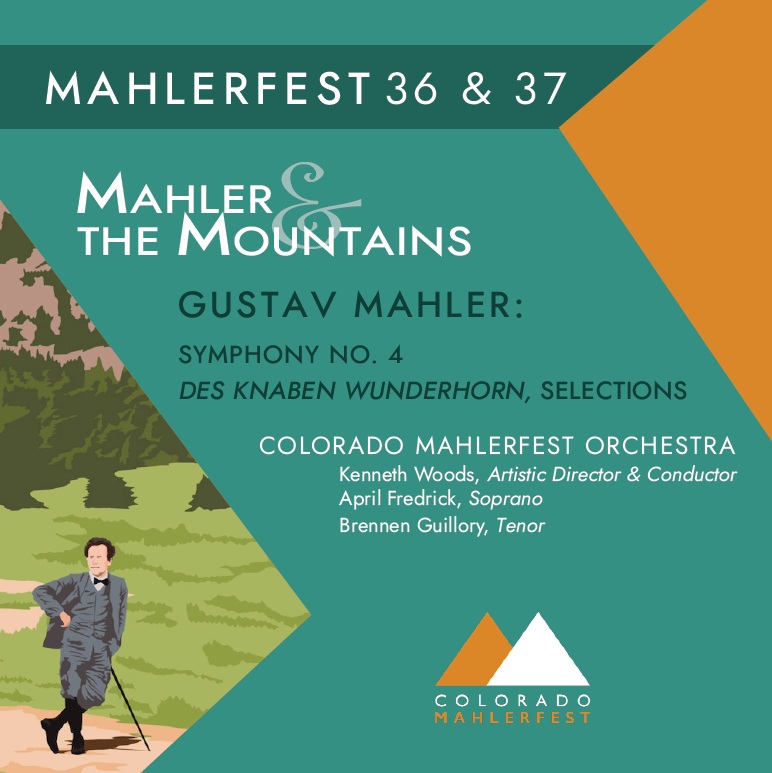
April Fredrick (soprano), Brennen Guillory (tenor – Trost im Unglück, Der Tambourg’ sell; Revelge), Colorado MahlerFest Orchestra / Kenneth Woods
Mahler Symphony no.4 in G major (1892; 1899-1900) Des Knaben Wunderhorn: Lied des Verfolgten im Turm; Des Antonius von Padua; Fischpredigt; Trost im Unglück; Rheinlegendchen; Der Schildwache Nachtlied; Der Tambourg’sell; Revelge
Colorado MahlerFest 195269364564 [two discs, 89’22”] Producer Jonathan Galle Engineer Tim Burton Live performances at Macky Auditorium, Boulder, Colorado, 20 May 2023 (Des Knaben Wunderhorn), 19 May 2024 (symphony no.4)
Reviewed by Richard Whitehouse
What’s the story?
Recorded coverage of Colorado’s MahlerFest continues with these performances taken from the past two editions, duly confirming the significance of this event in the annals of Mahler interpretation and the increasing excellence of the orchestral playing under Kenneth Woods.
What are the performances like?
It may be the shortest of his cycle and the one which initially gained his music acceptance in the UK and US, but Mahler’s Fourth Symphony received as rough a reception as any of his premieres and it remains a difficult work fully to make cohere. While he undoubtedly has its measure, Woods might have pointed up those expressive contrasts in its opening movement a little more directly; the music only finding focus with a development where the emotional perspective opens out to reveal an unforeseen ambiguity. The remainder is unfailingly well judged, while the scherzo impresses through a seamless transition between the sardonic and the elegance of its trio sections. Alan Snow sounds just a little tentative with his ‘mistuned’ violin, but the unexpected panorama of enchantment prior to its coda is meltingly realized.
At just over 20 minutes, the Adagio feels relatively swift (surprisingly so), even if Woods is mindful never to rush its unfolding double variations and what becomes a contrast between intensifying expressive states whose Beethovenian antecedent is not hard to discern. If the climactic ‘portal to heaven’ lacks little in resplendence, it is that hushed inwardness either side such as sets the seal on a reading of this movement to rank among the finest in recent years. Nor is its segue into the finale other than seamless – Mahler having realized that an earlier vocal setting was the natural culmination to where his symphony had been headed. Suffice to add that April Fredrick’s contribution is of a piece with Woods’s conception in its canny mingling of innocence and experience prior to an ending of deep-seated repose.
The second disc features seven songs taken from Mahler’s settings of folk-inspired anthology Des Knaben Wunderhorn. April Fredrick is truly in her element with a Rheinlegendchen of winning insouciance and a Des Antonius von Padua Fischpredigt of deftest irony. Brennen Guillory comes into his own with the final two numbers, Der Tamboursg’sell distilling the darkest humour as surely as Revelge conveys that innate fatalism behind the resolve with which the soldier meets his destiny. Woods provides an astute and sensitive accompaniment.
Does it all work?
Yes, insofar as the collection of folk-inspired poetry proved central to Mahler’s evolution as both a song and symphonic composer. It might have been worthwhile to include the original version of Das himmlische Leben, not least as its appreciably different orchestration shows just how far the composer’s thinking had come during eight years, but the present selection is nothing if not representative. Hopefully those Wunderhorn songs not featured will appear on a future issue from this source, maybe in tandem with the Rückert songs of the next decade.
Is it recommended?
Yes it is. The symphonic cycle emerging from MahlerFest is shaping up to be a significant addition to the Mahler discography, with the latest instalment no exception. Hopefully this year’s account of the Sixth Symphony will find its way to commercial release before long.
Elgar String Quartet in E minor Op.83 (1918) Webern 5 Movements for String Quartet Op.5 (1909) Haydn String Quartet in D major Op.50/6 ‘Frog’ (1787)
Wigmore Hall, London Monday 6 October 2025 (1pm)
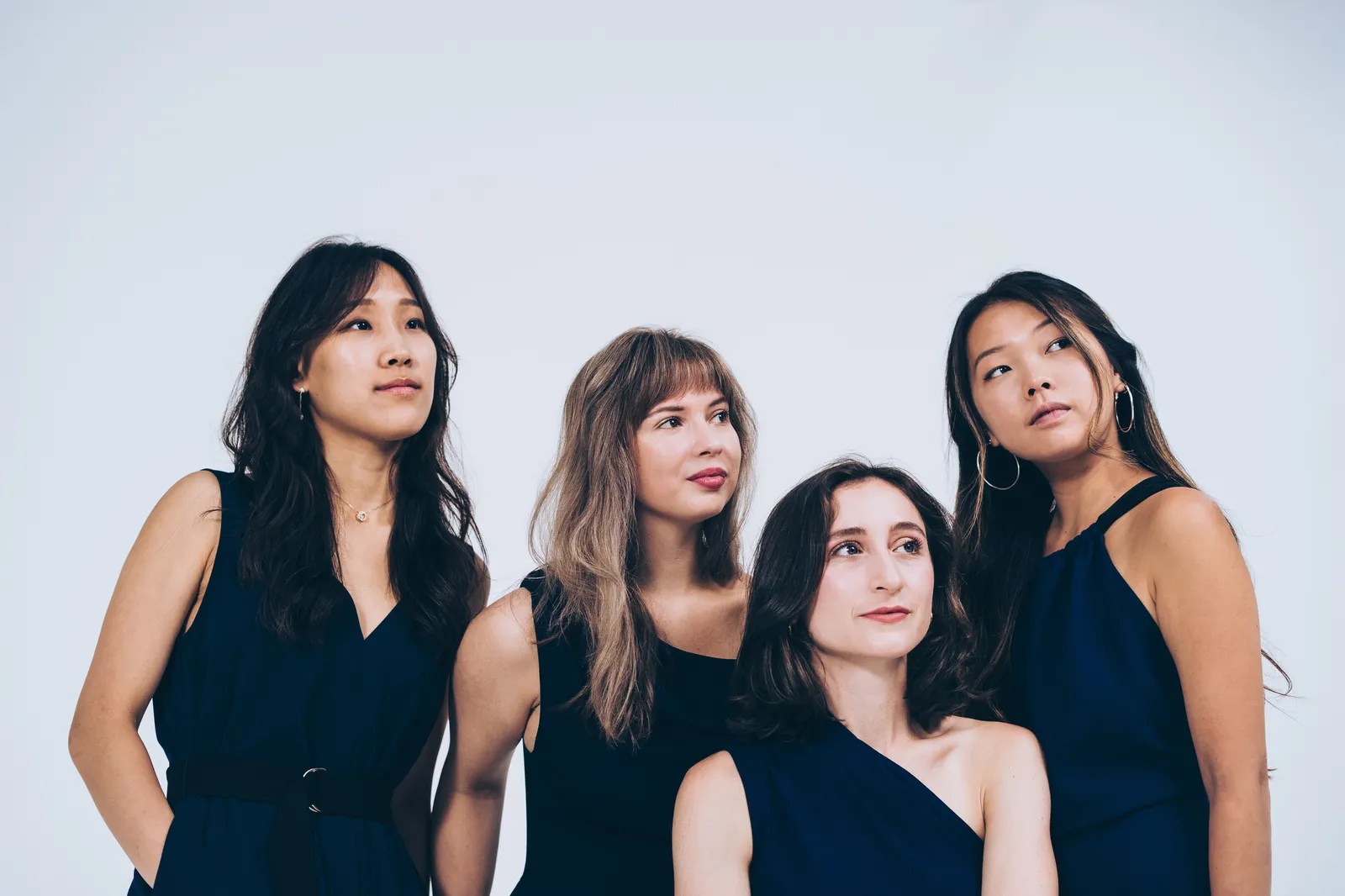
On the evidence of this BBC Radio 3 Lunchtime Concert, the Kleio Quartet – members of the station’s New Generation Artists scheme – are ones to watch. Not least for their programming, for it was refreshing to see a Haydn string quartet given top billing at a concert rather than making up the numbers.
The concert began with an account of Sir Edward Elgar’s sole String Quartet notable for its poise, elegance and understated emotion. Elgar’s ‘late’ works are best experienced in concert at this autumnal time of year, though the dappled sunlight evoked here was compromised by a subtle yet lasting foreboding. For the youthful Kleio Quartet to capture the thoughts of a man in his early 60s with such clarity was impressive indeed. They did so through a first movement taking the ‘moderato’ of Elgar’s tempo marking to hand – deliberate but never plodding. The dense, Brahmsian counterpoint was deftly unpicked, while the nostalgic elements of the second movement gave the feeling of an ensemble performing in an adjacent room, the listener asked to imagine an elegant salon setting. The purposeful finale snapped us out of this reverie with vigorous exchanges, though there was time for affection in its second theme. Ultimately the music revelled in the Sussex outdoors enjoyed by Elgar and wife Alice, though the Autumnal chill remained present.
Memories of a very different kind coursed through Webern’s 5 Movements for String Quartet, written in the wake of his mother’s death. These remarkable compositions illustrate an unparalleled gift for intense, compressed expression. None of the movements last longer than two minutes, yet so much concentrated feeling is loaded into their short phrases, pushing against tonality with oblique melodies and rich yet desolate harmonies.
The Kleio Quartet found those qualities and more in a deeply impressive account, with the alternate moods of the first movement, argumentative and then delicate, and the forthright third. Countering these moods were the soul searching second and the sparse, eerie fourth, where the ticking motif of Yume Fujise’s viola suggested a period of insomnia. The bare bones of Webern’s anguish were made clear in the final movement, in the high, inconsolable violin of Juliette Roos and the empty closing chords.
Following this with one of Haydn’s most amiable quartets was an inspired move, the Wigmore Hall audience smiling feely as the composer’s humour was repeatedly revealed. The so-called ‘Frog’ quartet, named for the croaking repeated notes of the finale’s main theme, shows Haydn completing his Op.50 set of six quartets with a panache that would surely have delighted their beneficiary, Frederick William II of Prussia.
The Kleio had fun with the unpredictable first movement, spirited yet restless, and the harmonic twists and turns of the Poco adagio, led by expressive flourishes from Roos. The quirky Menuetto revelled in melodic inflections and cheeky asides, with the pregnant pauses of the trio section adding to the irregular rhythms within the triple time meter. All of which set up the fun and frolics of the finale, where the occasional slip of ensemble tuning could be easily forgiven in the spirit of the Kleio’s performance, Haydn charming his audience to the very end.
Listen
You can listen to this concert as the first hour of BBC Radio 3’s Classical Live, which can be found on BBC Sounds until Tuesday 4 November.
Jennifer France (soprano), London Philharmonic Orchestra / Edward Gardner
Abrahamsen let me tell you (2012-3) Mahler Symphony no.4 in G major (1892, 1899-1900)
Royal Festival Hall, London Friday 3 October 2025
Reviewed by Richard Whitehouse
Tonight’s London Philharmonic Orchestra concert featured the welcome revival of a 21st-century classic. Hans Abrahamsen’s recent output may be relatively sparing, but the works that have emerged represent a triumph of quality over quantity and not least let me tell you.
Set to fragmentary lines drawn by Paul Griffiths from his eponymous novel, this centres on the character of Ophelia – its seven songs falling into three larger parts whose outlining of a ‘before, now and after’ trajectory gives focus to the arching intensity of its 30-minute span. The first, fourth and sixth of these anticipate what comes to fruition during the second, fifth and seventh – the exception being the third whose speculative vocal line is underpinned by a stealthy progress in the lower registers evoking the motion, if not the form, of a passacaglia. Elsewhere the voice evinces an intricacy and translucency that effortlessly carries the word-setting as it pivots between thought of oblivion and transcendence, before eventually being subsumed into the orchestra for a conclusion among the most affecting in recent memory.
The LPO acquitted itself ably in music which is texturally complex for all its harmonic clarity, though it was Jennifer France (above) who (not unreasonably) most impressed with a rendering of the solo part as did ample justice to its high-lying melisma and airborne flights of fancy. Edward Gardner directed with an innate sense of where this music was headed, not least in those final bars with their tapering off into silence. Relatively few pieces are recognized as seminal from the outset, but let me tell you is one such and seems destined to remain so well into the future.
France then returned (or rather stole in) for the finale of Mahler’s Fourth Symphony after the interval. His setting of ‘Das himmlische Leben’ from the folk-inspired anthology Das Knaben Wunderhorn had actually been written almost a decade earlier and was once envisaged as the finale to the Third Symphony, but it makes a natural conclusion to a successor whose relative understatement is sustained right through to this movement’s intangible end: a ‘child’s vision of heaven’ whose intended innocence becomes informed with no little experience by the close.
Gardner had steered a convincing trajectory through the preceding movements – not least the opening one whose mingled whimsy and wistfulness took on a more ominous demeanour in its eventful development, before conveying unalloyed resolve in a warm-hearted reprise and beatific coda. What is among the most striking of Mahler’s scherzo’s proceeded with audible appreciation of its pivoting between the sardonic and sublime, Pieter Schoeman’s ‘mistuned’ violin being first among equals in music whose soloistic textures were thrown into relief by the homogenous stability of the Adagio. Its double variations unfolded with a fluid intensity capped by a coda whose ‘portal to heaven’ yielded thrilling resplendence as subsided into a transcendent raptness that, in other circumstances, could have made a satisfying conclusion.
That this lead so seamlessly into the vocal finale says a great deal for Mahler’s foresight, but also Gardner’s ability to fashion so cohesive a symphonic entity. As the music subsided into subterranean chords on harp, the audience was (necessarily) held spellbound a while longer.





 Arcana.fm