
Unknown's avatar

About Arcana

My name is Ben Hogwood, editor of the Arcana music site (arcana.fm)

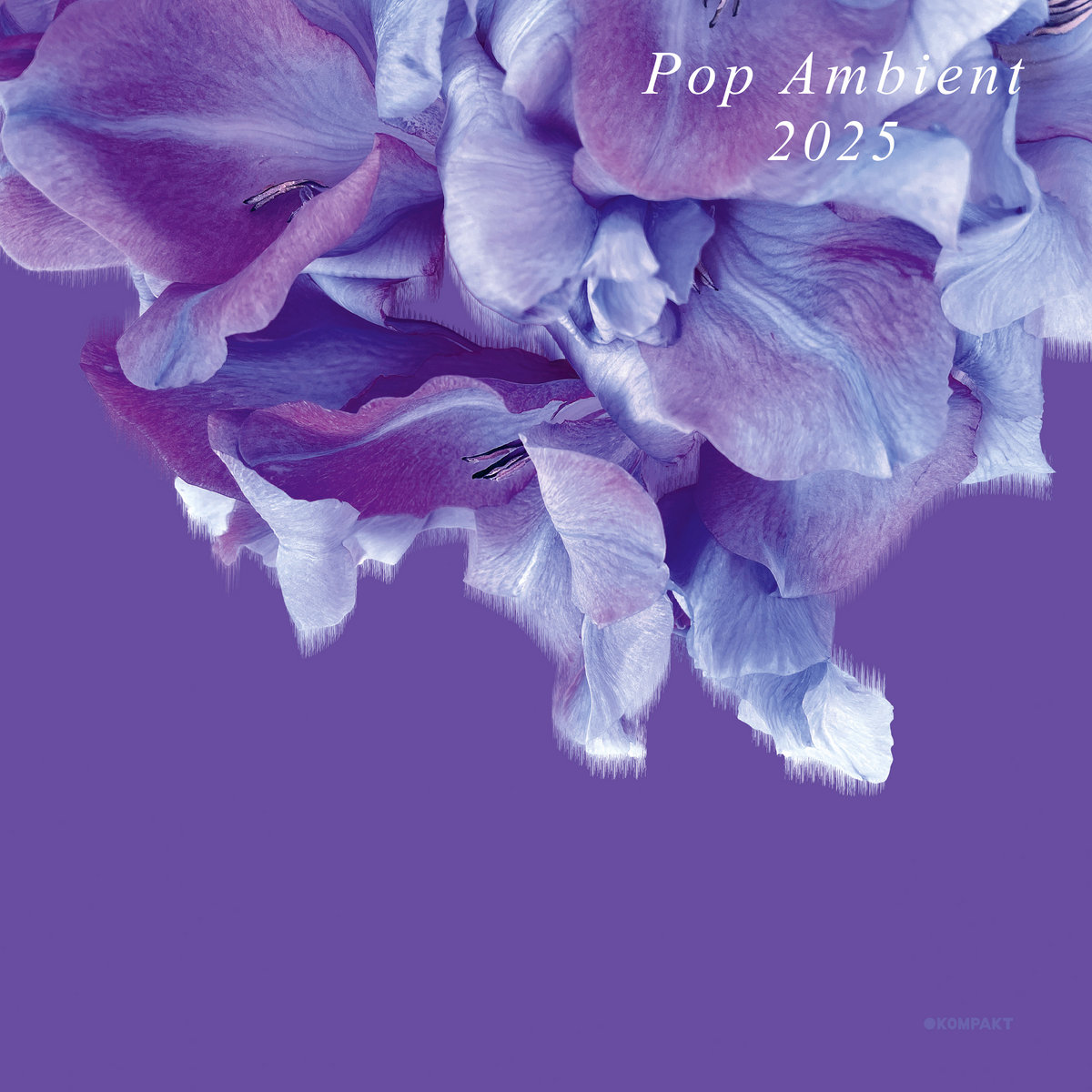
Switched On – Various Artists: Pop Ambient 2025 (Kompakt)

Reviewed by Ben Hogwood

What’s the story?

If it’s getting towards Christmas then it is most certainly time for the latest in Kompakt’s Pop Ambient series. The Cologne label have been delivering a compilation of soothing selections for a quarter of a century now – and co-founder Wolfgang Voigt has this to say:

“25 years in increasingly fast-moving times in the even faster-moving music business is an eternity that doesn’t just feel like it. It is all the more remarkable how I, as someone who is always restless and often driven by this fast pace himself, pleasantly almost haven’t realised how – in pop-ambient contexts – time does not pass (or passes differently) in the best sense.

When compiling the 25th edition I was asked, among other things, what it was like that I was still doing this and whether I had a favourite track. In the spirit of bringing all the tracks together I don’t have a favourite track, or all of them. But I have a favourite moment that I played. In this case it was a broad chord in a change of key at minute 2:55 in the piece Circles by Max Würden. A moment of majesty and familiarity that, at that moment, contains the entire Pop Ambient cosmos, that just works and doesn’t explain anything – and I said: “…that’s the reason why I’m still doing this…”

Pop Ambient is a statement without demands. Is promise without expectation. Is a path without a destination. Every year again.”

What’s the music like?

As soothing as you could wish…and with it being Kompakt, they rarely if ever resort to cliché. That means the chosen selections are purely mindful pieces of ambience. The moment Voigt refers to, in Max Würden’s Circles, is indeed lovely – adding an extra dimension to music that was already a horizontal beauty. Meanwhile Würden’s collaboration with Lukas Schäfer, Analysis Of Variance ii, is easy to dive into, with fuzzy noise and displaced sounds appearing at irregular but pleasing intervals, like being in the middle of a musical forest.

Similarly Segensklang’s Artifacts of Synthese is a lovely slab of ambience, a thick blanket enveloping the listener. By contrast Ümit Han’s Im Delirium is quite restless, a freeform bit of synthesized improvisation.

Blank Gloss bring their characteristically open sound to the party, Jennifer’s Convertible a widely-spaced panorama, while other soft-centred moments from Leandro Fresco / Thore Pfeiffer and Tamarma & Sebastian Mullaert are immediately appealing.

Does it all work?

It does. Pop Ambient is a tried and tested formula, but there is no sign of Voigt and co resting on their laurels just yet.

Is it recommended?

Most definitely. If you’re a seasoned collector in the series then you will need no further encouragement, but Pop Ambient really does take the edge off the day with music of serene beauty.

Listen & Buy

Published post no.2,400 – Saturday 21 December 2024

On Record – Saint Etienne: The Night (Heavenly Recordings)

by Ben Hogwood

What’s the story?

Saint Etienne’s twelfth album, their first in three years, is written as an antidote to the chaos of daily life, an ambient complement to the sheer speed and noise of 21st century life.

Pete Wiggs captures its essence: “We wanted to continue the mellow and spacey mood of the last album, perhaps even double down on it, but it’s a very different album, not based on samples; Songs, moods and spoken pieces drift in and out whilst rain pours down outside. It’s the kind of record I like to listen to in the dark or with my eyes closed. Half Light is about the edge of night, the last rays of the sun flickering through the branches of trees, communing with nature and seeing things that might not be there.”

Bob Stanley also expressed an interest the band had in finding the state between wakefulness and sleep, a kind of dream space with broken-up thoughts and random memories.

What’s the music like?

Soothing, sonorous and often beautiful. Sarah Cracknell’s voice proves ideal for such an ambient sojourn, whether in spoken word or in the soft vocal tracks that are dotted through the album.

The field recordings create an easy ambience, dressing the music with thoughts that drift in and out of focus. The music, too, finds sharp points of reference among its foggier reminiscences. The clarinet is put to fetching use on the wistful When You Were Young, which has a beautiful chorus – as does Nightingale.

No Rush brings a mottled beauty to its slowly shifting chords, not a million miles from the Romanza of Vaughan Williams’ Symphony no.5 in its ability to stop the senses. Gold is more obviously song-based, while Preflyte opens out into wider textures, bells tolling before Cracknell’s heartfelt vocal. Hear My Heart is a beauty, the voice against a windswept canvas.

Does it all work?

It does. Saint Etienne are masters of pop music dressed with a forlorn beauty, but this clever use of field recordings and textures shows them to be equally adept at making music that supports relaxation of the mind.

Is it recommended?

Enthusiastically. The Night achieves just what it set out to do, which is to provide an antidote to the over stimulation we receive in our daily lives. It is an understated beauty.

For fans of… Broadcast, Stereolab, Yo La Tengo, Bibio, Cocteau Twins

Listen and Buy

Published post no.2,399 – Friday 20 December 2024

In concert – David Cohen, London Symphony Orchestra / Sir Antonio Pappano: Vaughan Williams 9th Symphony, Elgar & Bax

David Cohen (cello), London Symphony Orchestra / Sir Antonio Pappano

Vaughan Willams Symphony no.9 in E minor (1956-57)
Elgar Cello Concerto in E minor Op.85 (1919)
Bax Tintagel (1917-19)

Barbican Hall, London
Sunday 15th December 2024

Reviewed by Richard Whitehouse Picture (c) Mark Allan

Sir Antonio Pappano‘s conducting of Vaughan Williams’s Sixth Symphony in March 2020 will be recalled as almost the final live event before the descent of lockdown. Forward to the present found him tackling the composer’s Ninth Symphony under outwardly different circumstances.

Such context is significant given this work picks up where its predecessor left off, the Sixth’s fade into nothingness making possible that ominous and otherworldly beginning of the Ninth. Few conductors opt for its rapid metronome markings, but Pappano’s was an unusually broad conception of a first movement whose Moderato maestoso marking was evident throughout. Any lack of cumulative fervency was more than countered by a luminosity which permeates the music’s textures, and nowhere more so than with that lambent aura conveyed by its coda.

More an intermezzo than slow movement, the ensuing Andante sostenuto may have taken its cue from Hardy’s Tess of the D’Urbervilles but its interplay of bleakness, violence and ardour satisfies on its own terms and Pappano’s take was audibly cohesive. Nor did he misjudge the Allegro pesante of a scherzo which veers between the martial, sardonic and the ethereal with as much formal freedom as VW allows his ‘reeds’ in pointing up its expressive recalcitrance. Despite being marked Andante tranquillo, the finale is no peaceful comedown and Pappano was mindful to balance the expansively unfurling arcs of its opening half with the mounting intensity of what follows. Moreover, those three seismic ‘gestures of farewell’ summoned an emotional frisson that felt comparable to anything Vaughan Williams had previously written.

If it no longer elicits the lukewarm response as at its premiere, the Ninth Symphony remains elusive and often disquieting. Securing an impressive response from the London Symphony Orchestra, flugel horn and saxes evocatively in evidence, Pappano certainly had its measure.

A pity it was thought necessary to place this work in the first half, as following it with Elgar’s Cello Concerto felt a little anti-climactic. Not that David Cohen, securely established as LSO section-leader, was other than committed – his reading, gaining conviction as it unfolded, at its best in an Adagio of suffused eloquence then a finale that built purposefully to a soulful if not unduly emotive culmination and brusque payoff. Neither the unfocussed first movement nor a brittle scherzo hit the mark but, overall, this account was more then the sum of its parts.

Following Vaughan Williams’s and Elgar’s last major works with a middle-period one by Bax might be thought sleight-of-hand as regards programming, but the latter’s March for the 1953 Coronation would hardly have seemed apposite and Tintagel provided an undeniably rousing send-off. For all its indebtedness to Debussy, its surging Romanticism is its own justification and Pappano ensured that every aspect of this alluring (and on occasion lurid) seascape could be savoured to the fullest – not least its apotheosis then a conclusion of resplendent opulence.

Hopefully Pappano will schedule further British music in addition to continuing his Vaughan Williams cycle. Whatever else, Bax seems tailor-made for the LSO’s virtuosity such that his Second or Sixth symphonies, or another of his tone poems, would assuredly leave their mark.

For more on the 2024/25 season, visit the London Symphony Orchestra website – and for more on the artists click on the names David Cohen and Sir Antonio Pappano. Resources dedicated to the composers can be found by accessing the Vaughan Williams Society, The Elgar Society and the recently formed Sir Arnold Bax Society

Published post no.2,397 – Thursday 19 December 2024

On Record – Wolf Hall: The Mirror and the Light – Original Television Soundtrack (Silva Screen)

Reviewed by Ben Hogwood

What’s the story?

Debbie Wiseman reprises her role as composer for the eagerly awaited second instalment of the BBC dramatisation of Hilary Mantel’s Wolf Hall.

Her approach is similarly economical, looking to work with a small band of musicians, while the style of music she seeks is once again free of pastiche.

What’s the music like?

Immediately memorable. If you’ve watched the drama unfold, you will know that the music is an integral part of proceedings – as indeed is silence. The director’s judicious use of silence means the tension builds to unexpected heights, momentarily relieved – or even enhanced – by the music.

This is because Wiseman catches Cromwell’s many predicaments with uncanny accuracy. From the haunting, pure sound of Grace Davidson‘s soprano in the refrains, there is an eerie and almost otherworldly countenance given to the music.

Using the titles assigned to the episodes, Salvage has an especially profound cello solo. Serious in tone, almost oppressive at times. The ominous drum strokes on The Image Of The King are striking and fateful, the cor anglais with an ominous tone as Cromwell’s thoughts are aired in musical form. Man of Sorrows is dramatically essayed by the viola, while Forgiveness and The Leper’s Spit end on high drama, in a frenzy of strings.

Does it all work?

Yes. Wiseman has an uncanny ability for scene setting and character profiling, and Wolf Hall as a drama is all the more effective for her contributions.

Is it recommended?

Very much so. This is dramatic music but written with remarkable restraint and clarity. Debbie Wiseman has built on the success of the first Wolf Hall with music of poise and no little power.

Listen & Buy

Published post no.2,396 – Wednesday 18 December 2024

On Record – Orchestra New England, Orquesta Sinfónica de Navarra / James Sinclair – Ives: Orchestral Works (Naxos)

Ives
Four Ragtime Dances (1902-04, rev. 1916)
Fugue in Four Keys on ‘The Shining Shore’ (c1903)
The Pond (c1906, rev, c1912-13)
The Rainbow (first version, 1914)
An Old Song Deranged (c1903)
Skit for Danbury Fair (c1909, real. Sinclair)
The Gong on the Hook and Ladder or Fireman’s Parade on Main Street (c1911, rev. 1934)
Chromâtimelôdtune (c1923, real. Singleton)
Tone Roads – no.1 (c1913-14); no.3 (c1911/13-14)
Set of Incomplete Works and Fragments (ed. Singleton/Sinclair, 1974)
March no.2, with ‘Son of a Gambolier’ (c1892)
March no.3, with ‘My Old Kentucky Home’ (c1893)
March ‘The Circus Band’ (c1898-99, rev. 1932-33)
Arrangements (1896-97) – Schubert: Marche militaire in D, D733 No. 1 (1818). Schumann: Valse noble, Op. 9 No. 4 (1834-35). Schubert: Impromptu in C minor, D899 No. 1 (1827)

Orchestra New England, Orquesta Sinfónica de Navarra (arrangements) / James Sinclair

Naxos American Classics 8.559954 [75’43”]
Editions John Kirkpatrick, Jacques-Louis Monod, James Sinclair, Kenneth Singleton and Richard Swift
Producers Neely Bruce, Jan Swafford Engineers Benjamin Schwarz with Jonathan Galle and Gonzalo Noqué

Recorded 24/25 October 2023 at Auditorio Barañaín, Pamplona-Navarra, Spain (arrangements), 12-14 March 2024 at Colony Hall/Choate Rosemary Hall, Wallingford CT, USA

Reviewed by Richard Whitehouse

What’s the story?

Naxos continues its long-term series devoted to the orchestral music of Charles Ives with this volume of shorter pieces and arrangements, several of them recorded for the first time and conducted by James Sinclair, whose involvement with the composer now stretches back across 50 years.

What’s the music like?

Miniatures for a variety of forces are found right across the four decades of Ives’s composing and range from unformed experiments to perfectly realized exemplars of his idiom. Many of these were collated in the dozen or so Sets that Ives assembled at various stages in his career (recorded on Naxos 8.559917) while there are various others which resist any such compiling, and these can mostly be found here – often in critical editions prepared by a formidable team of Ives scholars, hence rounding out the picture of his creativity in the most immediate terms.

Written at the outset of the genre’s golden age, the Four Ragtime Dances neatly complement each other as regards form and content; elements from each finding their way into the second movement (The Rockstrewn Hills) from the Second Orchestral Set, which builds upon their anarchic humour accordingly. Following the shimmering polytonal ambivalence of the Fugue on ‘The Shining Shore’, the unworldly evocations The Pond and The Rainbow find Ives at his most intimate and confessional – as does the admittedly more genial An Old Song Deranged. Not so Skit for Danbury Fair, its inherent iconoclasm finding greater focus in the graphically descriptive The Gong on the Hook and Ladder or contrasting Tone Roads Nos. 1 and 3 which embody Ives’s thinking on indivisibility of life and music in the most uncompromising terms.

It was once thought Chromâtimelôdtune might be the missing Tone Road No. 2, yet this late and possibly incomplete piece is likely an acerbic response to the Modernism emerging from post-war Europe which seemingly preoccupied Ives in those twilight years of his composing. The three song-based Marches date from an earlier and ostensibly more carefree phase, their debunking couched in humorous terms, while the Set of Incomplete Works and Fragments is a judiciously conceived entity that should not have had to wait 50 years for its first recording. The orchestrations are from Ives’s study with Horatio Parker at Yale: that of Schubert’s First Marche Militaire and Schumann’s Valse noble (from Carnaval) are expert but anonymous, that of Schubert’s First Impromptu results in a ‘theme and variations’ of striking prescience.

Does it all work?

Yes, inasmuch that the effectiveness of these pieces largely depends on the conviction of their performers and, with Sinclair at the helm, this can be taken for granted. As can the excellence of Orchestra New England in repertoire it has often been playing for decades, and if Orquesta Sinfónica de Navarra might appear an unlikely choice for Ives’s undergraduate arrangements, it acquits itself admirably. The sound throughout is unexceptionally fine, and Sinclair’s own annotations are succinctly informative as to the genesis and context of some intriguing music.

Is it recommended?

Indeed, this is a necessary addition to a valuable series – hopefully to be continued before too long with recordings of the Fourth Symphony and Universe Symphony as partially realized by David Porter, of which Sinclair gave a memorable account at the Aldeburgh Festival in 2012.

Listen & Buy

For buying options, you can visit the Naxos website – or listen to the recording on Tidal below:

Click on the names for more information on conductor James Sinclair, Orchestra New England, Orquesta Sinfónica de Navarra and the Charles Ives Society.

Published post no.2,382 – Wednesday 4 December 2024