Prom 31 – Inon Barnatan, Minnesota Orchestra / Osmo Vänskä – Homage to Leonard Bernstein


Prom 31: Inon Barnatan (piano), Minnesota Orchestra / Osmo Vänskä

Bernstein Candide Overture (1989)
Gershwin Piano Concerto in F major (1925)
Ives Symphony no.2 (1897-1902, 1950)

Royal Albert Hall, Monday 6 August 2018

Reviewed by Ben Hogwood Photos (c) BBC/Chris Christodoulou

One of music’s greatest properties is making its listeners happy – and judging by the audience for the Minnesota Orchestra prom, wreathed in smiles as they left the Royal Albert Hall, this was an objective handsomely achieved by the orchestra and its music director Osmo Vänskä.

Making their first BBC Proms appearance since 2010, they had programmed a concert in honour of Leonard Bernstein the conductor, rather than the composer – but that still meant we got a chance to hear one of his most popular concert showstoppers, the Candide Overture. As a collection of catchy tunes and toe-tapping dance rhythms it is difficult to beat, and Vänskä conducted a performance light on its feet, affectionate and warm – if lacking a little of its composer’s highest spirits.

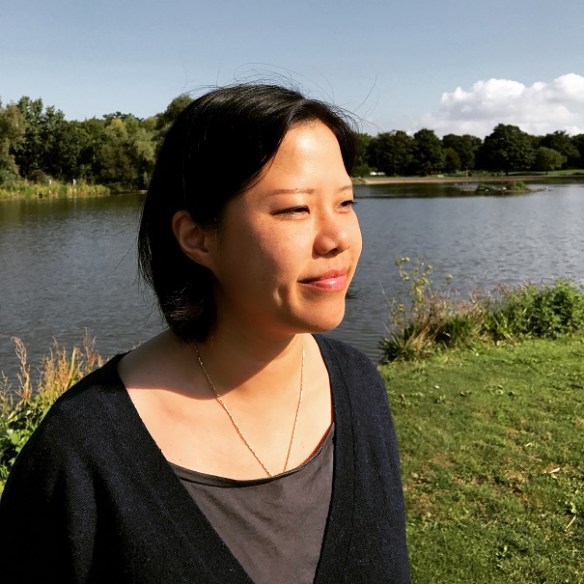
The performance of Gershwin’s Piano Concerto set that to rights. Taking the solo part was Inon Barnatan (above), whose command of the composer’s bluesy melodic style was well-nigh perfect. Gershwin is not thought of as key Vänskä repertoire but he brought to the orchestral passages a level of clarity that brought the streets of 1925 Manhattan into sharp, nocturnal focus. The string sound was exquisite, while the trumpet solo of Manny Laureano in the slow movement was brilliantly affected and played, fully deserving of its cheer at the end.

Barnatan was a box of tricks, at one moment thundering octaves down from on high, while in the other hanging onto the slow notes with great affection, as though unwilling to let them leave. The transparency of Vänskä’s conducting told of the influence Ravel has on some of Gershwin’s writing, but the swagger of the orchestra, leader Erin Keefe practically sitting next to Barnatan in a visual show of unity, was irrepressible. Barnatan gave us a perfectly positioned encore too, Earl Wild’s virtuoso study on I Got Rhythm.
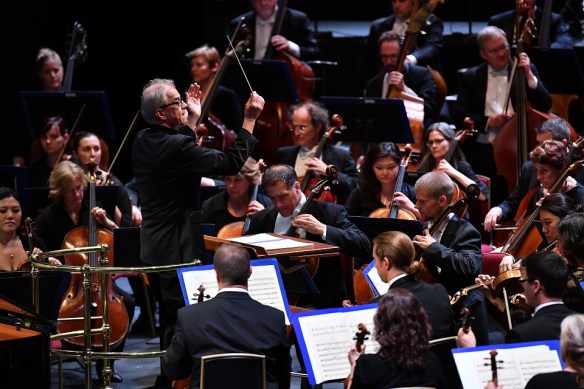
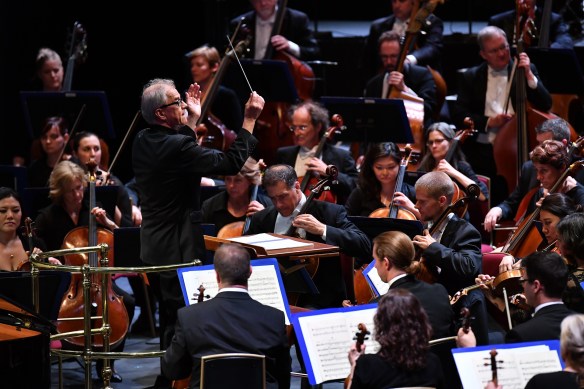
The music of Charles Ives has barely popped its head above the parapet at the Proms, but here was a chance to enjoy a work premiered by Bernstein himself, conducting the New York Philharmonic Orchestra in 1951. It’s fair to say that Vänskä (above) secured a reading with a good deal more sobriety and control than the master might have done, but that’s not to say it was without flair and pure enjoyment.

The Minnesota Orchestra, once again playing with a smile, enjoyed the dense packing together of tunes in the symphony, while the strings dug into the serious first movement, setting out the case of a symphonic argument with impressive gravity. Once again Vänskä ensured they made a beautiful sound, the brass chorales ringing out with great surety, but as the symphony progressed so did the sense of convention edging nearer to the window.

This reaches its height at the climax of the fifth and final movement of course, and like the fast second this was taken at quite a lick, the music careering along as though about to lose its footing. And so it did, the last chord sounding its sharp clashes and some in the audience taken aback by Ives’ unexpected but wholly typical daring. Was it a mistake? Were we heading there all along? Yes and yes – and in that second, as booklet writer Paul Griffiths so aptly put it, ‘’Reveille’ was sounded’.

Yet there was one more surprise. As I write this the Minnesota Orchestra are on their way to South Africa to mark Nelson Mandela’s 100th birthday in a series of high profile concerts. They gave a wonderful send-off, an arrangement of the traditional South Africa song Shosholoza, with the players joined in song as well as with their instruments. It was a joyful revelation, upping the spirits still further – and ensuring we will track their movements in South Africa with great interest.

BBC Proms: Dame Sarah Connolly & Joseph Middleton – English Songs

Proms at the Cadogan Hall: Dame Sarah Connolly (mezzo-soprano, above), Joseph Middleton (piano, below)

Stanford A Soft Day Op.140/3 (from A Sheaf of Songs from Leinster) (1913) (from 7:15 on the broadcast)
Parry Weep you no more, sad fountains (from English Lyrics Set 4) (1896) (9:58)
Vaughan Williams Love-Sight (from The House of Life) (1903) (12:18)
Gurney Thou didst delight my eyes (1921) (16:53)
Somervell A Shropshire Lad – ‘Into my heart an air that kills’ (1904) (20:19)
Bridge Come to me in my dreams (1906) (22:45)
Howells Goddess of Night (1920)
Bridge Journey’s End (1925) (28:19)
Britten A Sweet Lullaby (36:34); Somnus (40:31) (both 1947, world premieres)
Holst Journey’s End (1929) (42:50)
Britten A Charm of Lullabies Op.41 (1947) (45:09, 47:22, 49:08, 51:06, 52:48)
Lisa Illean Sleeplessness … Sails (2018, world premiere) (57:31)
Mark-Anthony Turnage Farewell (2016, world premiere)

Cadogan Hall, Monday 6 August 2018

You can listen this Prom by clicking here The times given on this page refer to the starting times on the broadcast itself

Reviewed by Ben Hogwood. Photo of Sarah Connolly (c) Jan Capinski

11 composers and four world premieres in an hour. Not a recipe for sleep and respite, you might think, but Dame Sarah Connolly and Joseph Middleton constructed between them an enchanting tour of English song, ending up at some far-flung outposts.

For anyone new to the form this would have been the ideal introduction, especially as Dame Sarah was singing with wonderful clarity and diction. I hardly needed to glance at the texts, for her words and expressions, added to those of Middleton’s carefully and beautifully crafted piano parts, did the job perfectly. The structure of the recital was very satisfying too, with natural pauses at the end of a short group of songs for applause and the intake of breath – and, as the subject matter was sleep and dreams, it ensured nobody had fallen foul of the listening criteria in the hot conditions!

The two began in Ireland, presenting the beatific calm of Winifred LettsA Soft Day, as set by Stanford, with the ‘wind from the south’ that some of us in the hot Cadogan Hall would have been longing for! So too for the subject of Parry’s Weep you no more, sad fountains, with its flowing piano lines. This pair from the fathers of English song led to one of the ‘sons’ – Vaughan Williams, and a deeply felt Love-Sight from his song-cycle The House of Life – and Ivor Gurney, his moving Thou didst delight my eyes.

We moved on to Arthur Somervell, the brief but tenderly devastating Into my heart an air that kills (from A Shropshire Lad) and then Come to me in my dreams, an expressive, earlier example of Frank Bridge’s chromatic credentials. Bridge appeared later with the lovelorn Journey’s End, following Herbert Howells’ magical Goddess Of Night – where Connolly allowed the text plenty of room.

Britten’s interpretations of sleep and dreams range from the calm to the nightmarish, aspects that surfaced throughout his song-cycle A Charm of Lullabies, which was given with two extra songs intended for the cycle but left unused. Recently ‘repaired’ by Colin Matthews, A Sweet Lullaby and Somnus were receiving their world premieres and were interesting finds if not quite reaching the level of intensity in the cycle itself.

Britten starts his night with A Cradle Song, before Connolly’s Scots accent (she was born relatively close by in County Durham!) brought an extremely authentic voice to The Highland Balou. The fifth number, The Nurse’s Song, is structured like the Dirge from Britten’s earlier Serenade for tenor, horn and strings. It focused everyone in the hall on the vivid storytelling of Connolly’s voice, from which she moved through humour, intense scolding (scary, too!) and soft slumber. The music ranged wildly, Britten’s wandering piano writing recalling Shostakovich in A Cradle Song, while the clustered chords of the refrain in Sephestia’s Lullaby spoke vividly in a language Janáček would understand. Connolly’s characterisations were brilliant, the audience impatient to clap between numbers initially but held in rapt concentration at the end.

In between the Britten discoveries, Gustav Holst contributed a sparse but telling interpretation of Journey’s End, which Connolly again sang with deep expression, while Australian composer Lisa Illean gave us another world premiere, a farewell of her own in Sleeplessness … Sails. This was a very slow-moving piece where Connolly held admirable control, despite the music’s seeming reluctance to move on. Arguably more effective was Turnage’s Farewell, a profound statement which ended with the composer bounding on the platform, delighted at the interpretation. It would be lovely to hear more from him in song – and from this pair, too, who delivered a wonderful hour’s escapism to the land of nod!

You can hear Dame Sarah Connolly and Joseph Middleton’s new recital disc Come To Me In My Dreams, which features much of the music heard in this concert, on the Spotify link below:

Ask the Audience at the BBC Proms – Tony Winter on the BBC National Orchestra of Wales playing Vaughan Williams, Parry & Holst

For the latest in Arcana’s Ask The Audience series Tony Winter gives his verdict on the BBC National Orchestra of Wales and their Prom of English music.

Prom 17: Tai Murray  (violin), Francesca Chiejina (soprano), Ashley Riches (bass-baritone),  BBC National Chorus and Orchestra of Wales / Martyn Brabbins

Parry Symphony no.5 in B minor (Symphonic Fantasia ‘1912’) (1912)
Vaughan Williams The Lark Ascending (1914, rev 1920)
Parry Hear my words, ye people (1895)
Holst Ode to Death, Op.38 (1919)
Vaughan Williams A Pastoral Symphony (Symphony no.3) (1921)

Royal Albert Hall, Friday 27 July 2017

You can watch this Prom on the BBC iPlayer here

ARCANA: Tony, how would you describe your musical upbringing?

I had a brief encounter with the violin which I never really got on with – I didn’t get on with the teacher – and then when I was about 13 the guitar, but that was rock music. I played the guitar for years. When I retire it’s going to come out again! I played in a band called The Committee, but to be fair by the time they’d risen to fame they’d chucked me out!

Name three musical acts you love and why:

I love Bach, just because of the melodies. I think you can look at other people and say the orchestration is great but for me the genius is the melody. James Rhodes says ‘the immortal Bach’, which sums it up.

I’ve been playing a lot of David Bowie recently with his demise, I was a big fan of Bowie up to about the Let’s Dance era, and now suddenly I’ve been playing some of the later albums as I’ve been guilty of overlooking some of them. I don’t like it when it gets too commercial! But I think later on he was saying that he didn’t give a shit, which is an approach I’ve always liked. The Outside album was described as ‘difficult and industrial’ but I think it’s great. I wonder in 200 years if people will be playing Bowie? He died at the same age as Shostakovich but who knows? Only time will tell. How many people were on stage tonight, over 100? I’m sure everyone would be using that if there weren’t cost implications to it!

I don’t know whether to say the Rolling Stones or Mozart for the third!

Have you been to classical music concerts before, and if so what has been your experience?

I’ve been to a few over the years – I’ve even started going to a few operas! Living close to the Watford Coliseum I’ve been going to concerts there as I’m a bit of a lazy bugger. I tend to go to any classical concerts they put on there. I’ve seen Beethoven’s 9th, that was a bit echoey. James Rhodes sticks in the mind for his more modern presentation which particularly appealed to my kids. They’re learning the piano so that helped but it helped that he stood up and made a few jokes. I’m not saying everyone has to turn into a variety act but he judged it right. I like sitting at the front in an intimate gig, but coming here tonight though I think I should drag my sorry arse into London more as I don’t think you could fit that orchestra on the stage in Watford!

Can you give a snapshot of the music you’ve been listening to in the past week?

Yesterday I was going through making a playlist for stuff we’re going to play on holiday when we’re driving in the car. I found something on Tidal called ‘Music Your Kids Like That Won’t Drive You Crazy’ but we were doing one of our own. We had a couple of Michael Jackson tracks – Thriller, Pretty Young Thing (there’s some good grunting on that!) My daughter jumps up and down on the sofa to it.

I stuck on some David Bowie because my wife wanted Adam Ant – Stand And Deliver – and the video put me in mind of Ashes To Ashes – which then made me think of Life Is Lost, which refers back to that song. Bowie was brilliant at referring back to things from years before. We had A-ha, Earth, Wind and Fire – an ever-growing playlist!

Apart from that I’ve been playing Daniel Barenboim’s recording of the Bach Well-Tempered Clavier at work. It’s my fallback and I put it on when it all gets a bit too much for me!

What did you think of tonight’s Prom?

I thought it was excellent! Parry I know absolutely nothing about. With Holst I know the proverbial Planets but nothing at all about the piece we heard tonight, and Vaughan Williams I’m very familiar with. I’m a huge fan anyway, and think his music is absolutely sublime, but it also comes from being a massive fan of The Fast Show – with Ralph and Ted! A friend of mine used to say ‘rural cowpat music’, which is not my take on it but there you go. I do think it is reminiscent of a lost England – not even John Major’s Middle England, an England before that – and certainly not Theresa May’s Brexit idiot England that we have now. We’re getting a bit political here!

What did you think of the Parry’s Fifth Symphony?

I thought it was a bit short – that’s not a symphony! I was quite impressed with it, and some of it was reminiscent of Carnival of the Animals for me, some of the slow bits in the score. I’m not at all familiar with it but I did enjoy it.

Which of the pieces left the most impression tonight?

It’s the one I am most familiar with – which is The Lark Ascending. The soloist (Tai Murray) was fabulous and it is one of my favourite pieces anyway, I just love it. It’s like the pop concert where the Rolling Stones do Satisfaction I think!

How would you describe your experience in the Arena tonight?

It was great. I love standing up in there, I think it’s more rock ‘n’ roll, you can move to the front. Someone came and stood in front of us in the first half but there you are! I really enjoyed it.

Verdict: SUCCESS

Ask the Audience at the BBC Proms – Leanne Mison on the Royal Stockholm Philharmonic Orchestra with Renée Fleming

The final Ask The Audience from the 2017 BBC Proms is with Leanne Mison, who promotes and endorses an impressive roster of electronic music artists for Bang On PR. Leanne talks to Arcana about a Prom given by the Royal Stockholm Philharmonic Orchestra and their chief conductor Sakari Oramo, – with two solo vocal turns from the superstar New York soprano Renée Fleming.
Prom 61: Renée Fleming (soprano), Royal Stockholm Philharmonic Orchestra / Sakari Oramo

Andrea Tarrodi Liguria

Barber Knoxville: Summer of 1915 Op.24

Richard Strauss Daphne – Transformation Scene, ‘Ich komme – ich komme’

Nielsen Symphony No 2 ‘The Four Temperaments’

Royal Albert Hall, Wednesday 30 August 2017

You can listen to this Prom on the BBC iPlayer here

ARCANA: Leanne, how would you describe your musical upbringing?

My parents attempted to introduce me to classical music from quite an early age, but I didn’t show too much interest in it at the time. My mum joined a classical music vinyl club and would be sent a record every month, but we rarely ever played them. I’d love to dig them out now and see what she had! My proper introduction to music was via piano which I learnt to play from the age of seven, so pieces by BeethovenChopinMozart and Mendelssohn. I did get really into it at one point as I had an inspiring teacher who was about 80 years old and I’d get to practise on her baby Steinway. I reached Grade 7 but as the expectations grew for me to practise for an hour and more a day, my interest waned. At that age, it doesn’t earn you very much kudos with other kids so I gave in to peer pressure. My parents said I would regret it and they was right of course!

My parents listened to things like The Carpenters and The Cars.  Around the age of 9, I started listening to things like Salt ‘n’ Pepa, En Vogue and Bobby Brown. I still like that music now, it’s super fun. When I about 15, I tried to fit in and listen to the same kind of music my friends were into like Bon Jovi, Oasis and The Verve but it didn’t really stay with me to be honest. When I was 12, I randomly picked up a Telstar tape of rave music for 99p at Woolworths and I heard things like The KLF and 808 State for the firs time. I was like ‘Wow, what was that?!’ – there were no reference points, I had no idea about rave culture. I didn’t hear music like that again for quite a long time but that was the start of me getting into electronic music.

Could you name three musical acts that you love and say why you love them?

I really love what Factory Floor do. Their music can get so madly intense and mesmerising, and live – you can’t help but dance but you can also have a very cerebral experience with it too.

I’ve been really enjoying listening to Nick Hakim of late. His album Green Twins has this irresistible, other worldliness to it – all hazy psychedelic R & B.

And then there is the master entertainer Chilly Gonzales. He puts classical music and pop music in the same space, weaving them together and presenting their common thread. Then he throws in a heavy dose of comedy, a bit of history and a piano tutorial and we just lap it all up! I wish he’d been around when I was growing up, I probably would have been inspired to carry on and do my Grade 8!

Are you ever tempted to go back to the piano?

Obviously I’d love to be able to play now, who knows I might get back into it at some point (probably when I’m retired!)
One of the great benefits of having instant access to music on Youtube and Spotify is that you can actually hear what the piece is supposed to sound like and what you should be aiming for. It’s more inspiring than back in the old days!

What did you think of the Andrea Tarrodi piece tonight?

It was really pretty, delicate and playful. Lots of shimmers of light but then it went on a dramatic roller coaster later.

I really enjoyed it, so much so I wanted to go to the front to get the full experience!  I was quite surprised when you said the composer was younger than both of us.

If you didn’t know that piece was about anything, did it conjure up any images?

That’s a good question, I wasn’t really thinking along the line of images  – but now you mention it maybe rolling fields and mountain tops?

What about the Barber, with Renée Fleming?

This was very enjoyable too, and took me a bit more out of my comfort zone as I’m not used to listening to an operatic voice accompanied by that many musicians.  Sadly I’m more used to listening to things on laptop speakers so it’s a real treat to experience that breadth of sound and visually it’s very impressive too.

What did you think about the Strauss?

There was a lot going on here, I found the soaring operatic voice quite dramatic and emotional, I think I was more taken by what was happening with the strings. I should listen to more music like this and try and understand it. I found my mind wandering a bit more with this one, I started looking at the audience and observing their facial expressions and they seemed pretty serious on the whole. Perhaps they were intensely into it! The musicians facial expressions themselves were a lot more expressive, especially the conductor’s.

Working in music PR, I spend a lot of time reading reviews and people’s thoughts on music. Tonight it was a clean slate, I was listening to music I’m very rarely exposed to and with no idea what critics have said about it and that was very refreshing.

What did you think about the Proms, and what did you enjoy about it?

The music was actually quite accessible and experiencing that range and depth of sound in a space as beautiful as the Royal Albert Hall brings out all sorts of different feelings in you. It’s quite unique and I can see why people enjoy it so much.

Would you change anything about your Proms experience?

Not at all, I only wish I’d come to more. I went once about 10 years ago but my recollections of it are vague.
I’d read some of your Ask the Audience pieces before and was really intrigued by it and really glad you invited me!

My experience of seeing classical music is quite limited, I’ve seen some experimental music with orchestras such as Varèse performed at the Royal Festival Hall which was really dark. Also Helmut Lachenmann and Lou Reed’s Metal Machine Music, all quite challenging and let’s face it, not nearly as fun as tonight!

Would you go again?

Yes, definitely. Here’s to next year and thanks very much for inviting me.

Verdict: SUCCESS

Ask the Audience at the BBC Proms – Tom Morley on Ravi Shankar & Philip Glass: Passages

For the latest in Arcana’s Ask The Audience series Tom Morley gives his thoughts on the Britten Sinfonia’s rare performance of the Philip Glass / Ravi Shankar collaboration Passages, with the composer’s daughter Anoushka Shankar playing the sitar.

Prom 41: Alexa Mason (soprano), Anoushka Shankar (sitar), Ravichandra Kulur (bansuri), Gaurav Mazumdar (sitar), Britten Sinfonia / Karen Kamensek (above)

Philip Glass & Ravi Shankar Passages (1989-90)

Royal Albert Hall, Tuesday 15 August 2017 (late night)

You can watch this Prom on the BBC iPlayer here

ARCANA: Tom, how would you describe your musical upbringing?

There were two main influences in my musical upbringing. The first came from the local church choir which I sang with three times a week. Most of what we sang was very traditional although there was a piece by Messiaen which got wheeled out every now and then which was pretty out there.

Secondly, my parents were musical so I remember them playing and singing around the house. I’ve also got memories of sitting down with my Dad to listen to a recording, his taste is pretty eclectic so I remember listening to Phantom of the Opera, Donald Where’s Your Troosers, Return to Innocence by Enigma and Night Boat To Cairo by Madness!

What experiences have you had up until now with classical music, and have they been good or bad, or both? (Examples are great if you’re able!)

Aside from the choir, I played trumpet in an orchestra for a short while but decided it wasn’t really my thing. At university I had a few lectures on classical music but once again, struggled to find anything that really spoke to me apart from the odd piece here and there. I wouldn’t say my experiences with classical music have been either good or bad, probably somewhere in the middle.

What if any have been your previous experiences of the Proms?

I’ve never been to a Prom. I sometimes look through the schedule and think about going but have got round to going to see one.

Could you name three musical acts you love, and why you love them?

Radiohead – They always seem to keep their music interesting and challenging and I like the cinematic quality to some of what they write as well as the artwork and concepts that go along with the music.

Snarky Puppy – These guys are brilliant musicians, they’re really supportive of music education and they look like they’re having a great time on stage. Definitely more of a live band than a studio band.

The Beatles – An obvious choice, but they did so much to push the boundaries of popular music and created so many memorable tracks in a such a short while as well as having a massive influence on music and culture.

What did you think of the concert?

I loved it. I can honestly say I’ve never heard anything like that before. I think I was particularly fortunate to be at this one which was a real meeting of styles and ideas and the first live performance of the piece with great musicianship all round.

What did you think of the environment in the Arena?

Not what I was expecting at all. When we walked up the steps the atmosphere changed completely. Some people were standing, some were sitting or lying down and there was a buzz of excitement but when the music started everyone was listening intently. I think this was helped by the fact that this was a late night performance and in some ways, it felt more like a gig than a concert and even though we were close to the back, we still had a good view of the stage.

Is there anything you would change about the Proms?

More of the same please. If they’re all as varied and unique as this one then there’s nothing I’d change, stick to the same formula. If I had to change one thing, it’d be an outsiders perception of the proms. I thought that it was a strictly ‘classical’ music event but there seems to be a real range of different styles and types of music being performed. It’d be great if more people realised how accessible the proms are, even if you don’t typically listen to classical music.

Verdict: SUCCESS