In concert – Soloists, Danish National Concert Choir & Symphony Orchestra / Fabio Luisi @ BBC Proms: Beethoven 9th Symphony, Bent Sørensen & Anna Clyne

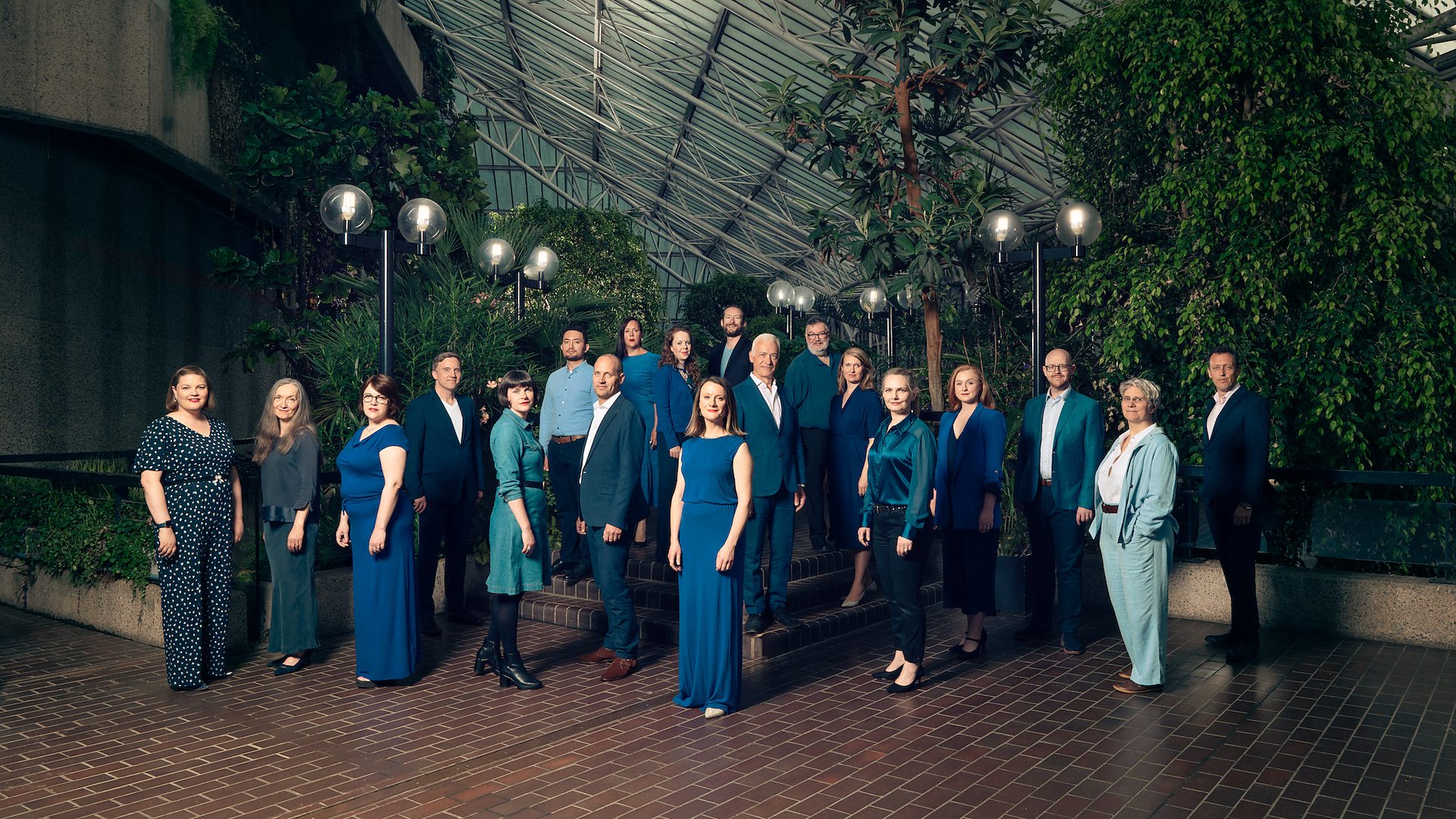
Clara Cecile Thomsen (soprano), Jasmin White (contralto), Issachah Savage (tenor), Adam Palka (bass), Danish National Concert Choir, Danish National Symphony Orchestra / Fabio Luisi

Bent Sørensen Evening Land (2017)
Anna Clyne The Years (2021)
Beethoven Symphony no.9 in D minor Op.125 ‘Choral’ (1811-24)

Royal Albert Hall, London
Thursday 21 August 2025

Reviewed by Ben Hogwood Photos (c) BBC / Chris Christodoulou, Ben Hogwood (soloists)

Celebrating their centenary this year, the Danish National Symphony Orchestra and chief conductor Fabio Luisi led us from the quiet of evening to the blazing light of a sunny morning in the course of this concert.

The challenge facing any concert programmer containing Beethoven’s Choral Symphony is how to lead up to it. This Prom approached from a contemporary angle, beginning in near silence with Bent Sørensen’s contemplative Evening Land. The Danish composer’s imaginative orchestration was key to the success of his picture painting, beautifully rendered by Luisi, as was the threadbare violin solo with which leader Christina Åstrand began. Childhood reminiscences of the Danish island Zealand took place in the half-light, contrasting with visions of nocturnal Manhattan that came through in bursts of technicolour, honouring Leonard Bernstein. Making a lasting impression, however, was the beautiful oboe solo from Kristine Vestergaard that marked the illness and subsequent passing of Sørensen’s father.

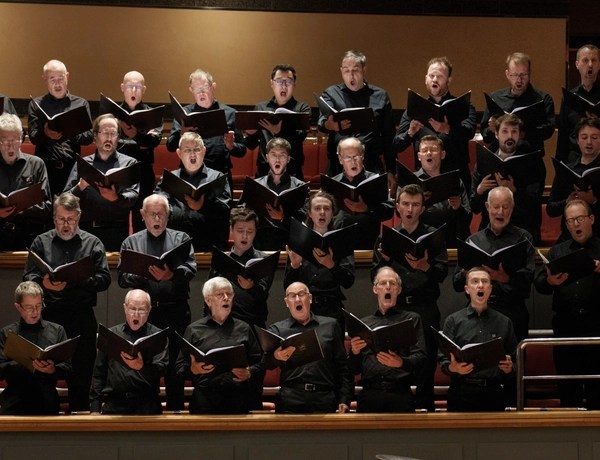
Having eavesdropped on this intimate opening piece, the Danish National Concert Choir rose for Anna Clyne’s musical account of the Covid pandemic – already consigned to history, it seems. Few people would like to revisit those days in a concert experience, but Clyne’s message – channelling the text of Stephanie Fleischmann – was one of underlying resilience. The choir began in stasis, occupying an added note chord which somehow drew parallels with the Björk song Possibly Maybe for this correspondent, before the piece flourished. A dreamlike mood was enhanced by a pure, almost complete lack of vibrato from both choir and orchestra, while the harmonic language drew strong parallels with the latter stages of Holst’s suite The PlanetsSaturn and Neptune in particular. An autumnal chill was evident in spite of increasingly frenetic activity in the orchestra, and the piece ended in an uneasy acceptance of events passed, rather like our own emergence from lockdown.

Beethoven’s Ninth Symphony is the ultimate hymn to freedom, though it does of course go through a titanic struggle before that release, in the form of Schiller’s Ode To Joy, can be attained. Luisi led us through the dark, pre-twilight moments in an account notable for its poise and guile. Using relatively fast speeds, the first movement took a little while to light the touch paper, but once ignited the music powered forward with increasing determination. The scherzo was quick, quite matter of fact with its timpani interventions, and balanced by a bucolic trio where the wind kept pace heroically with Luisi’s quick baton. Their attractive textures and warm melodic phrasing were a key feature of both this and the Adagio, again on the quick side, but managing its fanfare interventions impeccably.

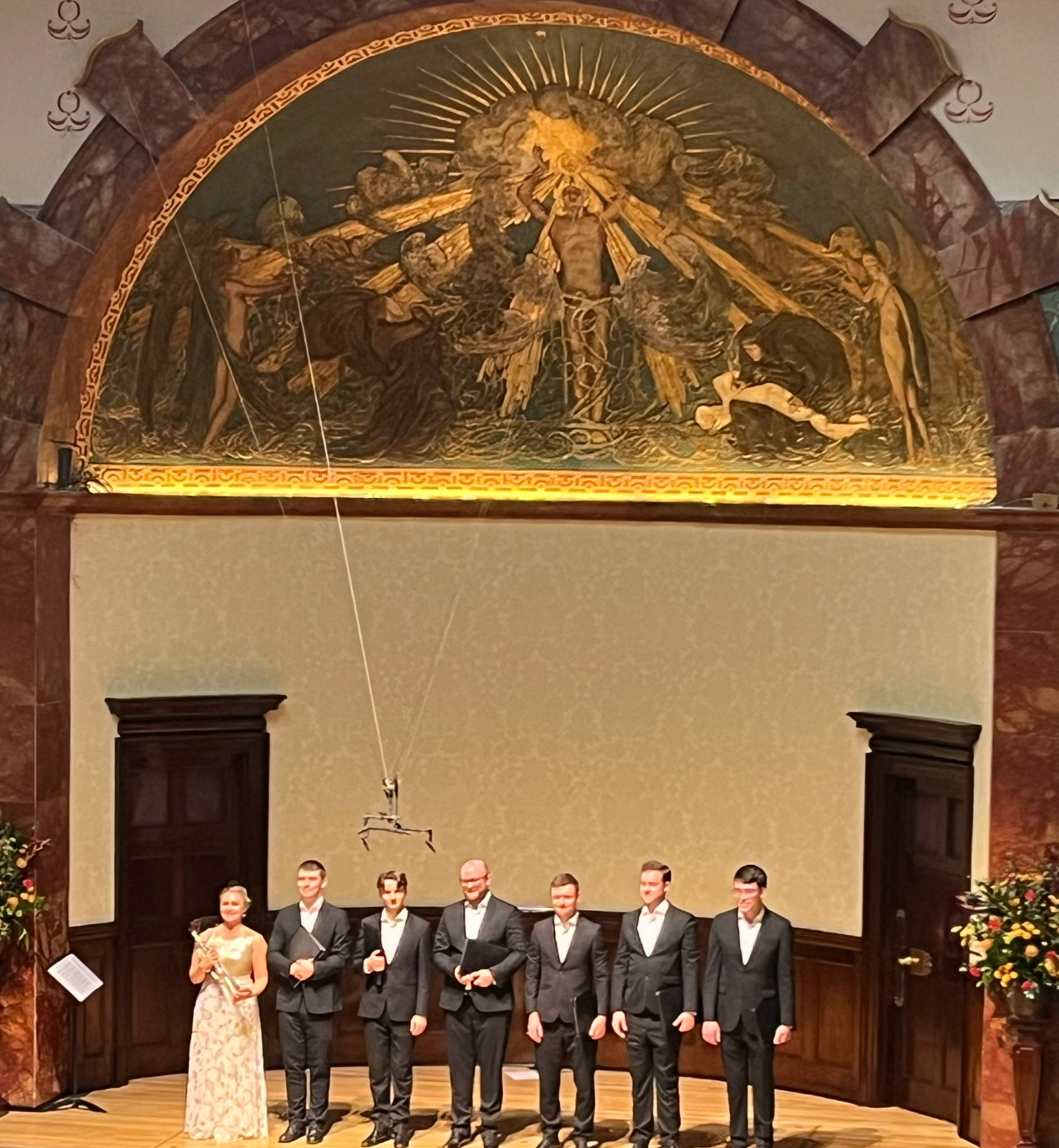
Left to right: Clara Cecile Thomsen (soprano), Jasmin White (contralto), Issachah Savage (tenor), Adam Palka (bass), beneath the bust of Sir Henry Wood @ BBC Proms

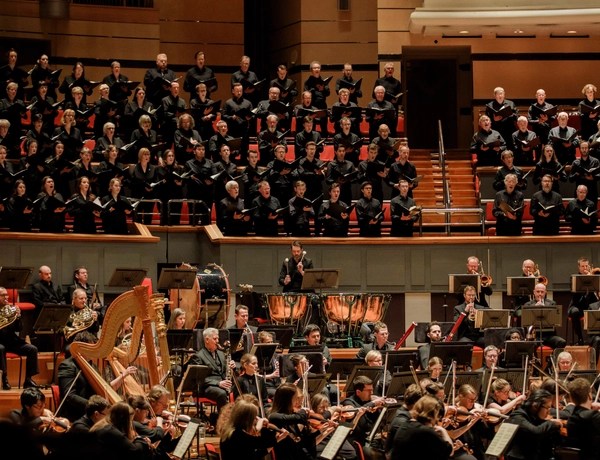
And so to the finale, with a memorable exposition for the Ode to Joy theme from sotto voce cellos and basses, the Royal Albert Hall hushed in anticipation. The choral passages were suitably exultant, the 75-strong choir drilled to perfection if cooler in temperature than the orchestra. The four soloists (above) were led by impressive bass Adam Palka, whose authoritative recitative “O Freunde, nicht diese Töne!” was a highlight, and while the quartet’s ensemble pieces wavered a little in tuning the sense of release and elation was keenly felt and clearly relished. The smile on the face of the music spread to the audience in the exhilarating closing bars as the orchestra took flight, completing an impeccably controlled interpretation on the part of Luisi that came to the boil at just the right time.

You can listen back to this Prom concert on BBC Sounds until Sunday 12 October.

Click to read more about the BBC Proms

Published post no.2,634 – Friday 22 August 2025

In concert – Soloists, London Philharmonic Choir, BBC Symphony Chorus & Orchestra / Sir Mark Elder @ BBC Proms: Delius: A Mass of Life

Jennifer Davis (soprano), Claudia Huckle (mezzo-soprano), David Butt Philip (tenor), Roderick Williams (baritone), BBC Symphony Chorus, London Philharmonic Choir, BBC Symphony Orchestra / Sir Mark Elder

Delius Eine Messe des Lebens (A Mass of Life) (1898; 1904-05)

Royal Albert Hall, London
Monday 18 August 2025

Reviewed by Richard Whitehouse Photos (c) BBC / Chris Christodoulou

There could be few venues better suited to Delius’s A Mass of Life, in its conceptual ambition and emotional opulence, than the Royal Albert Hall and this evening’s performance, only the third at these concerts and the first in 37 years, undoubtedly made the most of these qualities.

Despite the tragedy of his ultimate breakdown and ensuing incapacitation, Friedrich Nietzsche was considered a liberator in terms of a guiding philosophy with its emphasis on free will and rejection of conventional mores. Such appeal could hardly have been greater than on Frederick Delius, his largest concert work setting substantial extracts from Also sprach Zarathustra in a way that feels never judgemental and is only rarely overreaching. Much of the time its music has a detached and meditative aura whose inward intensity needs to be sustained accordingly.

That this account did so was owing to Sir Mark Elder, his advocacy already manifest in the finest modern recording (LAWO) as came across just as strongly and often more so here. Certainly, the longest sections were effortlessly paced – whether that beguiling interplay of longing and anticipation in In dein Auge which becomes the still (while never static) centre of Part One, or that extended sequence of Part Two taking in the scenic evocation as is Lasst vom Tanzen ab then the pantheist contemplation of Heisser Mittag schläft which is surely the expressive highpoint. Not that the dramatic openings of each part were under-characterized – the driving energy of O du mein Wille! setting the course for one as vividly as did the rousing Herauf! Nun herauf, with its orchestral prelude Auf den Bergen meltingly rendered, for the other.

This may be regarded mainly as a choral work, but the importance of its vocal parts is never to be gainsaid. Above all, that of the baritone who assumes the role of Zarathustra in his gradual incline to enlightenment and in which Roderick Williams (above) was consistently at his best – hence the infectious Erhebt eure Herzen and assertive Wehe mir! then, subsequently, the alluring eloquence of Süsse Leier! and will to action of Gottes Weh ist tiefer. If this is the solo role as brings focus or unity to the whole, the others afford textural and expressive enhancements aplenty – Jennifer Davis as capricious and Claudia Huckle as confiding as David Butt Philip was assertive in their respective contributions. All three singers brought out the youthfulness or naivety which are crucial to this work’s underlying journey from innocence to experience.

Any doubt a relative disparity in numbers of female and male singers would be detrimental to choral balance was groundless – Elder drawing a vividness but also delicacy of response from those combined BBC Symphony and London Philharmonic forces, while the BBC Symphony Orchestra was rarely less than galvanized whether in complex tuttis or the artless writing for solo woodwind that informs the latter stages. Delius’s orchestration rarely ‘plays itself’ but it conveys a lustre and translucency which could not be mistaken for that of another composer.

A near-capacity audience seemed as attentive to this as it was affected by the final Kommt! Lasst uns jetzt wandeln!, with its build-up to an ecstatic apotheosis then swift dispersal into silence: setting the seal on a memorable interpretation of this all-encompassing masterpiece.

You can listen back to this Prom concert on BBC Sounds until Sunday 12 October – or listen to the recent recording from Sir Mark Elder, with soloists, the Collegium Musicum Choir, Edvard Grieg Kor, Bergen Philharmonic Choir and Orchestra on Tidal below:

Click on the artist names to read more about soloists Jennifer Davis, Claude Huckle, David Butt Philip and Roderick Williams, the London Philharmonic Choir, BBC Symphony Chorus and BBC Symphony Orchestra, and conductor Sir Mark Elder. Click also for more on the Delius Society and the BBC Proms

Published post no.2,632 – Wednesday 20 August 2025

In concert – Soloists, BBC Symphony Chorus & Orchestra / Hannu Lintu @ BBC Proms: Mahler Das klagende Lied & Boulez Rituel in memoriam Bruno Maderna

Natalya Romaniw (soprano), Jennifer Johnston (mezzo-soprano), Russell Thomas (tenor), James Newby (baritone) Carlos González Nápoles (treble), Malakai Bayoh (alto), Constanza Chorus, BBC Symphony Chorus, BBC Symphony Orchestra / Hannu Lintu

Boulez Rituel in memoriam Bruno Maderna (1974-75)
Mahler Das klagende Lied (1878-80)

Royal Albert Hall, London
Tuesday 4 August 2025

Reviewed by Richard Whitehouse Photos (c) BBC Proms (from the festival’s uncredited Facebook upload)

Boulez and Mahler may not seem an obvious coupling, until one recalls the would have-been centenarian regularly conducted all the latter’s major works including that heard tonight – as well having made the first recording of its original three-part version more than 55 years ago.

When it appeared in 1975, Rituel in memoriam Bruno Maderna was thought something of an anomaly in Boulez’s output – its hieratic aura and structural (if never literal) use of repetition a homage more to his teacher Messiaen than his late colleague who, revealingly perhaps, had grown disenchanted in the avant-garde project of the post-war era. To which this work might seem an envoi – one eschewing any trace of nostalgia as it pursues its inevitable course from the response of the individual to that of the collective then (almost) returning to the singular.

Outwardly Rituel unfolds a series of litanies from one to seven players and refrains for a 14-piece brass ensemble, but such distinctions increasingly merge towards its mid-point so that its latter half is an intricate mesh of overlaid textures, moving around those groups arrayed on stage. Maintaining audible balance is crucial – in which respect, Hannu Lintu succeeded admirably, as in pacing the overall sequence (memory recalls Boulez as opting for a discreet acceleration across the later stages) so its ending conveyed arrival though hardly fulfilment.

What marked a crucial juncture for Boulez was no less evident, almost a century before, for Mahler. The virtual absence of any previous music only makes Das klagende Lied the more remarkable for conveying the essence of what its composer, barely out of his teens, went on to achieve. At this time, he aspired to opera and though this cantata was never envisaged for staging, its scenic evocation and its dramatic immediacy suggest that, had he been awarded the 1881 Beethoven Prize for his entry, his creative priorities could have been very different.

The work has fared well at the Proms, this being its seventh hearing and the third to use the edition of the original version that restores the first of its three parts and enables the latter to be heard as conceived, thereby making musical as well as dramatic sense. A leisurely course through Waldmärchen enabled Lintu to highlight the motivic richness of its prelude, and if the alternation of solo verses with choral refrains felt a little stolid, the latter stages with the discovery of the flower, the fratricide and a desolate postlude were consummately rendered.

With its anticipations of later Mahler (via Wagner and Bruckner), Der Spielmann is the most characteristic part as it pivots deftly yet pointedly between genial whimsy and ominous dread. That this latter gains the upper hand with discovery of the ‘singing bone’ is offset by the blaze of glory with which Hochzeitstück begins; the offstage orchestra – head to advantage in the gallery – underpinning an increasingly desperate course of events as the fratricide is revealed and the wedding descends into mayhem, with deathly stillness pervading those final minutes.

There was some persuasive solo singing, notably Jennifer Johnston who carries the primary narrative thread; Russell Thomas was fervent if slightly strained and James Newby warmly eloquent, with Natalya Romaniw conveying real dramatic acuity. Treble and alto roles were poignantly taken, while Lintu drew an assured response from sizable choral and orchestral forces – the latter’s quartet of harps assuming a concertante role in an orchestration whose encompassing of dramatic impetus and intimate reflection is already that of Mahler alone.

Playing for around 70 minutes, Das klagende Lied seems as rich in incident as any Mahler symphony; not all of which, whatever their greater stylistic assurance or maturity, feature a conclusion as spine-tingling as this – and one which certainly drove its point across tonight.

You can listen back to this Prom concert on BBC Sounds until Sunday 12 October – or listen to recordings of the two works conducted by Pierre Boulez on Tidal here

Click on the artist names to read more about the Constanza Chorus, BBC Symphony Chorus and BBC Symphony Orchestra, conductor Hannu Lintu and soloists Natalya Romaniw, Jennifer Johnston, Russell Thomas and James Newby. Click also for more on the BBC Proms

Published post no.2,617 – Tuesday 5 August 2025

In concert – Three Choirs Festival: Three Choirs Festival Chorus, Philharmonia Orchestra / Adrian Partington – Howells Hymnus Paradisi & Bliss Mary of Magdala

Rebecca Hardwick (soprano), Dame Sarah Connolly (mezzo-soprano), Michael Bell (tenor), Malachy Frame (baritone), Three Choirs Festival Chorus, Philharmonia Orchestra / Adrian Partington

Howells Paradise Rondel (1925)
Bliss Mary of Magdala (1962)
Howells Hymnus Paradisi (1936-38)

Hereford Cathedral
Wednesday 30 July 2025

Reviewed by Richard Whitehouse Photos (c) Dale Hodgetts (Dame Sarah Connolly, Festival Chorus), James O’Driscoll (Hereford Cathedral, Rebecca Hardwick, Adrian Partington)

Interesting that all three works comprising this concert were premiered at the Three Choirs in Gloucester or Worcester but they were, for the most part, admirably suited to the less opulent while always spacious ambience of Hereford Cathedral in what was a welcome retrospective.

Upsurge of Arthur Bliss performances in this fiftieth anniversary of his death continued with Mary of Magdala, essentially a cantata albeit with an element of operatic scena in the intense characterization of its title-role. Compiled by Christopher Hassall (the last collaboration with Bliss before his untimely death), its text finds Mary approaching the sepulchre where Christ’s body has been placed after crucifixion only to find it gone – Christ having assumed the guise of a gardener who bestows his blessing upon this most maligned yet most loyal of his circle.

The main part was given by Dame Sarah Connolly (above) with her customary fervour and insight, not least in the final stages after recognition when the music exudes a radiant gentleness rarely, if ever, encountered in Bliss hitherto. Malachy Frame drew an understated strength from the brief yet crucial role of Christus, but excessively large choral numbers rather compromised the relative intimacy of the music. Not that it seriously undermined the conviction of a timely revival for what is one of the least known though inherently personal among the composer’s later works.

It stayed under-wraps for over a decade after completion, but Hymnus Paradisi has long been the best known of Herbert Howells’s larger pieces and something like a ‘sacred text’ in Three Choirs culture. Written after the death of the composer’s son, it is avowedly music within the English choral tradition; not least that Gerontius-like aura of a Preludio (actually written last) whose yearning theme pervades what follows. The Requiem aeternam further intensifies such introspection, and if a setting of Psalm 23 tends towards the discursive, even generalized, that of Psalm 121 has a rapture that builds on an effervescent Sanctus in what is the most arresting section. A ruminative setting from The Burial Service precedes the impulsiveness of that from Salisbury Diurnal, with the return of the Requiem aeternam bringing about a fatalistic repose.

Something of a staple at these festivals it might be, Hymnus Paradisi is never an easy work to sustain in performance and tonight’s was a notable though not unqualified success. The vocal parts were well taken, Rebecca Hardwick’s occasional shrillness ostensibly a price to be paid for surmounting those often dense choral textures and Michael Bell making up for in accuracy what he lacked in personality. The sizable orchestral forces of the Philharmonia proved more than equal to the task, not just of balancing but in opening-out the expressive power of choral writing where the Three Choirs Festival Chorus was wholly in its element. Adrian Partington secured an interpretive focus that gained in conviction as the performance unfolded, making for an account which underlined the strengths yet also the weaknesses of this singular work.

It was the earlier and uninhibited Howells which ushered in proceedings. With its translucent orchestration and, at times, almost concertante-like piano part, Paradise Rondel makes for as irresistible a curtain-raiser as it no doubt was evoking that Cotswold hamlet of a century ago.

Published post no.2,615 – Sunday 3 August 2025

In concert – Estonian Philharmonic Chamber Choir / Tõnu Kaljuste @ BBC Proms: Arvo Pärt at 90

Annika Lõhmus, Yena Choi (sopranos), Toomas Tohert (tenor), Geir Luht (bass), Estonian Philharmonic Chamber Choir, Kadri Toomoja (organ) / Tõnu Kaljuste

Arvo Pärt Da pacem Domine (2004/6); Veni creator (2006); Magnificat (1989); The Deer’s Cry (2007); Für Jan van Eyck (2020) (UK premiere)
Galina Grigorjeva Svyatki – ‘Spring is Coming’ (2004)
Rachmaninov All Night Vigil (Vespers) Op.37 (1915): Slava v vyshnikh Bogu; Bogoroditse Devo
J.S. Bach Motet: Ich lasse dich nicht, BWV Anh.159 (1713)
Arvo Pärt Peace upon you, Jerusalem (2002); De profundis (1980)
Tormis Curse upon Iron (1972, rev. 1991)
Arvo Pärt Vater unser (2005/11); encore: Estonian Lullaby (2002)

Royal Albert Hall, London
Thursday 31 July 2025 (late night)

Reviewed by Ben Hogwood Photos (c) BBC / Chris Christodoulou

The music of Arvo Pärt is ideal for the special atmosphere of a late-night Prom. Yet this was no ordinary concert, being a celebration of the Estonian composer’s forthcoming 90th birthday in September, given by his close friend and collaborator Tõnu Kaljuste, conducting the Estonian Philharmonic Chamber Choir.

This combination of performers have been mainstays of the Pärt discography, forming a celebrated partnership with the ECM label that began with the landmark Tabula Rasa album of 1984, a cornerstone for Pärt’s critical and commercial success.

Pärt is often referred to as a ‘holy minimalist’, to which the response should be that his music is not ‘wholly minimal’. The substantial orchestral works attest to that, though here we heard much slighter but equally meaningful pieces for choir, most given unaccompanied by the 25-strong Estonian ensemble. The Proms audience were commendably quiet, leaning in to appreciate both the delicacy and crystal purity of the voices. The program was well-thought, realising the expressive potential of Pärt’s music alongside that of Bach, Rachmaninov and fellow Estonians, Veljo Tormis and Galina Grigorjeva.

The solemn Da pacem Domine and open-air Veni creator made an ideal opening couplet, the choir projecting with striking clarity rather than volume. For silence, too, plays a critical role in Pärt’s music, and Kaljuste ensured the spaces between the notes were every bit as expressive.

The Magnificat revealed its hidden power, while The Deer’s Cry was perfectly phrased, Pärt’s lilting cadences casting a spell. Für Jan Van Eyck, setting the text of the Agnus Dei, found the ideal balance between the reduced choir and Royal Albert Hall organ, where Kadri Toomoja had the ideal registration. Peace Upon You, Jerusalem, for female voices, contrasted silence with brightly voiced choral statements, while the solemn De profundis, for male voices, began from a small cell, maintaining rapt concentration while punctuated by organ and percussion.

Galina Grigorjeva’s Svyatki was a beautiful meditation, led by the heavenly voice of soprano Yena Choi, her voice with a remarkable bell-like clarity. Bach’s motet, previously attributed to his son Johann Christian, was impeccably voiced and phrased, but while the two excerpts from Rachmaninov’s All-Night Vigil were arguably less successful, they reflected a familiarity with listening to big choirs perform this music, rather than the subtleties of a chamber choir. Purity proved ample compensation for volume here.

This was emphatically not the case in Curse upon Iron, a remarkable setting from Veljo Tormis, of words from the Finnish national epic, the Kalevala, translated into Estonian. Describing the horrors of war, it sends a chill down the spine right from the primal call to arms of the shaman drum, struck by Kaljuste himself, then from the restrained urgency of the choir, like a coiled spring. While listening it was impossible not to think of the current plight of Ukraine and by extension in fear for the Baltic states, especially as Tormis’ writing was brought to a horrific climax. This was realised through the elemental power of tenor Toomas Tohert, bass Geir Luht and the choir, turning from side to side with watchful dread but then erupting in barely concealed anger. It was a remarkable performance, which will live long in the memory.

After this emotionally shattering encounter, the balm of Vater unser, Pärt’s German setting of The Lord’s Prayer for Pope Benedict, was just what was needed, its simplicity all the more affecting for what went before. As an encore, Kaljuste found just the right complement in the choir and piano version of Estonian Lullaby, its pauses near the end the musical equivalent of drooping eyelids. It was a most effective end to a special concert, Arvo Pärt’s musical essence distilled for a most appreciative audience.

You can listen back to this Prom concert on BBC Sounds until Sunday 12 October.

Click to read more about the BBC Proms

Published post no.2,608 – Sunday 27 July 2025