Arcana at the Proms – Prom 50: Mao Fujita, Prague Philharmonic Choir, Czech Philharmonic Orchestra / Jakub Hrůša – Dvořák Piano Concerto, Kaprálová & Janáček Glagolitic Mass

Kaprálová Military Sinfonietta Op.11 (1937) [Proms Premiere]
Dvořák (ed. Kurz) Piano Concerto in G minor Op.33 (1876)
Janáček Glagolitic Mass (1926-8)

Mao Fujita (piano); Corinne Winters (soprano), Vella Adamova (mezzo-soprano), David Butt Philip (tenor), Brindley Sharratt (bass), Christian Schmitt (organ), Prague Philharmonic Choir (choir-master Lukáš Vasilek), Czech Philharmonic Orchestra / Jakub Hrůša

Royal Albert Hall, London
Wednesday 28 August 2024

reviewed by Richard Whitehouse Photos (c) Andy Paradise

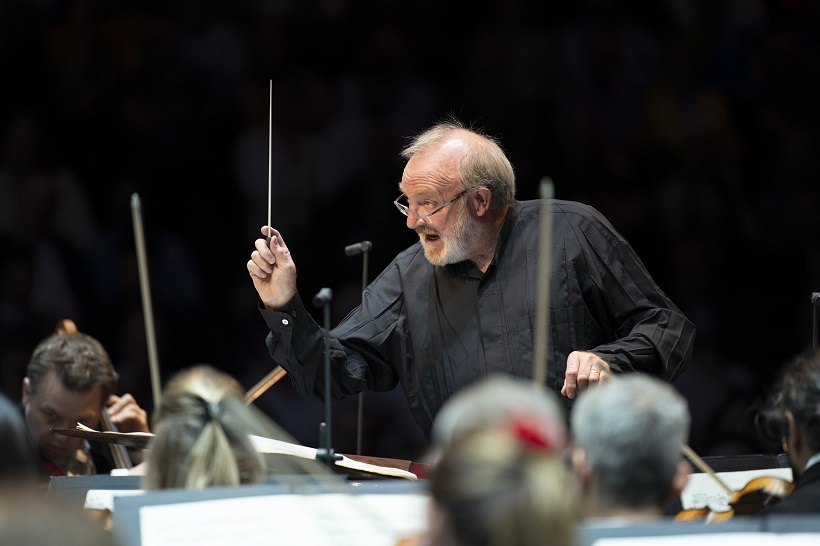
Their previous Prom having set the bar high as regards playing or interpretation, Jakub Hrůša and the Czech Philharmonic Orchestra equalled and maybe even exceeded it with a programme which once more ranged widely over what might be thought the ‘golden age’ of Czech music.

The career of Vítězslava Kaprálová (1915-40) represents one of those great ‘what ifs’ in 20th century music and works such as Military Sinfonietta confirm her already distinctive idiom. Despite involvement with Martinů, this is redolent more of interwar French music – notably Roussel – in its alternating between the extrovert and the ruminative; relative extremes held in check by ingenious adaptation of the four-movements-in-one design that draws maximum variety from its material while sustaining a cumulative momentum through to a return of the main theme for a powerful but never bombastic apotheosis. The CPO certainly relished these strongly drawn expressive contrasts, and Hrůša kept it on a tight though never inflexible rein with the sizable groups of woodwind and brass duly given their collective head at the close.

Although it has come in from cold over recent decades, Dvořák’s Piano Concerto remains an anomaly – akin to one Mendelssohn or Chopin might have written had they lived into the mid -Romantic era. Numerous pianists have returned to the demanding if unidiomatic solo part as its composer left it, but Mao Fujita (above) opted for that edited by pianist Vilém Kurz which enjoyed favour across much of the last century. Musically the piece remains much the same – opening with an extensive Allegro trenchant and yielding, but with surprisingly little of a Czech tinge to its melodic or rhythmic content. Fujita delivered a confident traversal, then brought limpid poetry to the Andante with Hrůša’s accompaniment of the subtlest. They duly made the most of the final Allegro’s driving impetus and soulful poise, prior to its lively and decisive close.

Despite early advocacy from Henry Wood, Janáček’s Glagolitic Mass only established itself at the Proms half a century after the composer’s death. Recent seasons have brought varying versions of what Janáček (might have) intended, but Hrůša chose the standard edition with a reading of blazing conviction right from the stentorian brass of its ‘Introduction’. Compact in size but forthright in tone, the Prague Philharmonic Choir brought pathos to the ‘Kyrie’ then fervency to the ‘Gloria’ with Corinne Winters and David Butt Philip fearless in their response.

More than usually a fulcrum around which this work revolves, the ‘Credo’ evinced an almost narrative dimension in its journey via speculation and ambiguity to a conclusion – typified by Brindley Sherratt’s eloquence – of radiant certainty. This carried over into the ‘Sanctus’ both sensuous and capricious, Bella Adamova making the most of her ensemble contribution here then in the ‘Agnus Dei’ whose intimation of doubt is brusquely denied by the ‘Postludium’ – a vigorous workout for solo organ in which Christian Schmitt (above) decisively assumed the limelight.

It remained for the ‘Intrada’ to round off proceedings with its pounding timpani and exultant trumpets – so setting the seal on a memorable concert which, as with its predecessor, is likely to prove a highlight of this Proms season: music-making as it can and should be experienced.

You can get details about this year’s season at the BBC Proms website – and you can click on the names to read more about pianist Mao Fujita, the Czech Philharmonic Orchestra and conductor Jakub Hrůša

Published post no.2,285 – Friday 30 August 2024

Arcana at the Proms – Prom 49: Anastasia Kobekina, Czech Philharmonic Orchestra / Jakub Hrůša – Dvořák Cello Concerto & Suk ‘Asrael’ Symphony

Dvořák Cello Concerto in B minor Op.104 (1894-95)
Suk Symphony no.2 in C minor Op.27 ‘Asrael’ (1905-06)

Anastasia Kobekina (cello), Czech Philharmonic Orchestra / Jakub Hrůša

Royal Albert Hall, London
Tuesday 27 August 2024

reviewed by Richard Whitehouse Photos (c) Andy Paradise

First heard at the Proms in those testing times of 1969, the Czech Philharmonic Orchestra has since appeared at these concerts with some frequency during the past quarter-century, and this evening brought the first in a pair of concerts with its principal guest conductor Jakub Hrůša.

Each of these Proms features a Dvořák concerto, with that for cello undertaken by the highly regarded Anastasia Kobekina. The opening Allegro evinced an elegance and understatement abetted by the chamber-like interaction, Kobekina’s line faltering only marginally in its more intensive passagework, though the thrilling ascent up to the reprise of the second theme went for relatively little and its coda rather lacked decisiveness. Much the highlight was an Adagio of ruminative warmth and, after its restless central section, an exquisite poise when the main melody is entrusted to the soloist prior to a melting close. The final Allegro too went well for much of its length, but a tendency to drift came to the fore in its extended coda – Kobekina’s response rather selling short its pathos and, in turn, the inevitability of the orchestral pay-off.

A fine if not overly memorable account, but Kobekina (below) is an artist of style and personality – as she demonstrated in the rendition of Gallardo (Variations on an Ancient Theme) by her father Vladimir Kobekin, Pavel Polívka providing tambourine accompaniment for this lively encore.

Having already made two recordings and given a memorable account with the Philharmonia a decade ago, Hrůša is evidently on a mission to establish Suk’s ‘Asrael’ Symphony in the wider repertoire and tonight’s reading did not disappoint. Especially impressive was his maintaining emotional intensity across those three movements that make up its first part – the introduction to the opening of them starkly drawn so what followed needed only an incremental impetus to sustain itself over a complex yet cohesive sonata design then on to a peroration whose despair was unremitting. The intermezzo found ideal an accord between its ‘otherness’ and that ironic ambiguity where Mahler’s influence is apparent, its teetering on silence a foil for the scherzo whose anxiety was soulfully waylaid by the trio before it exploded in fury towards the close.

What had begun as the commemoration of Dvořák (Suk’s teacher) became a memorial to his daughter Otilie (Suk’s wife) in its second part. Compassionate but never cloying, the opening Adagio was enhanced by some alluring woodwind and an eloquent contribution from leader Jan Mráček as underlined the significance of solo violin for Suk’s output overall. Its subdued close was brusquely denied by timpani at the outset of the finale – a relatively loose but never diffuse structure, the headlong clamour of whose central build-up carried over into a dramatic climax before this subsided unerringly into the lengthy coda. The composer was explicit as to the nature of the latter – its barely fulfilled serenity perfectly captured by Hrůša as this music reaches, if not benediction, at least that repose from where further creativity became possible.

Acknowledging considerable applause, Hrůša explained that no encore would be played given how apposite were the final bars in their countering the ‘‘crazy world’’ around us. Something which could overall be said of what was a highly perceptive and often profound performance.

You can get details about this year’s season at the BBC Proms website – and you can click on the names to read more about cellist Anastasia Kobekina, the Czech Philharmonic Orchestra and conductor Jakub Hrůša

Published post no.2,287 – Wednesday 28 August 2024

In concert – Fenella Humphreys, ESO Youth Symphony Orchestra / James Topp: Walton, Heathfield & Korngold

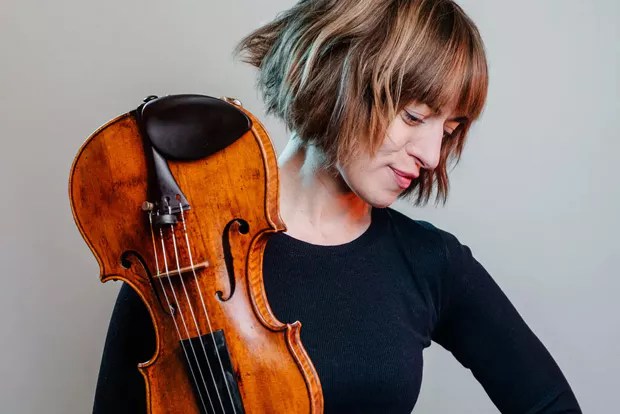
Fenella Humphreys (violin, below), ESO Youth Symphony Orchestra / James Topp

Walton Prelude and Fugue ‘The Spitfire’ (1942)
Korngold Violin Concerto in D, Op. 35 (1945)
Heathfield JAZZ HORSE (2024) [World Premiere]
Korngold arr. Russ The Sea Hawk – Suite (1940)
Walton arr. Matheson/ed. Lloyd-Jones Henry V – Suite (1944, arr. 1963)

The Bradshaw Hall, Royal Birmingham Conservatoire, Birmingham
Friday 23 August 2024

Reviewed by Richard Whitehouse

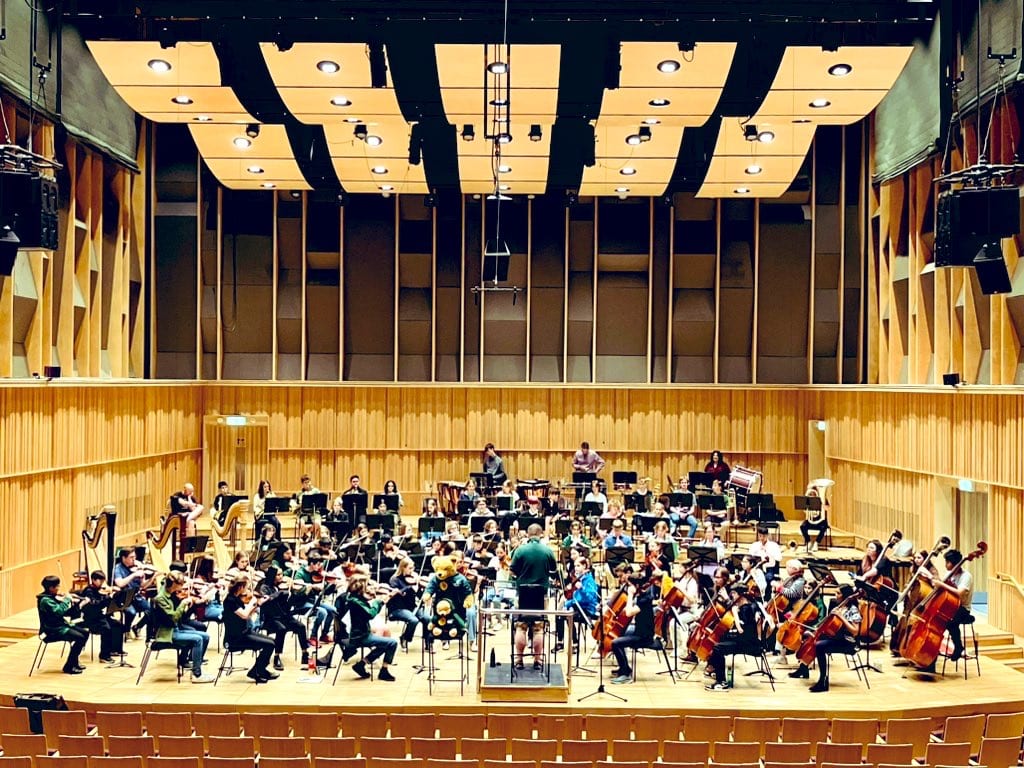
The English Symphony Orchestra’s annual Summer Course reached its climax this evening with a concert by its Youth Symphony Orchestra as ranged across film music from the mid-20th century, and in various guises from straightforward adaptation to wholesale reworking.

Whether or not those films for which he provided music have stood the test of time, Walton’s is a significant contribution to the cinema. As adapted from The First of the Few, his ‘Spitfire’ Prelude and Fugue remains one of his most characteristic such pieces and this performance did full justice to the prelude’s martial tread as to the fugue’s driving impetus, though James Topp was mindful to ensure the pastoral interlude (just before the return of the main theme) yielded an intimacy as underlined the essentially personal nature of this now underrated film.

Whereas Walton’s metier was in wartime or theatrical subjects, that of Korngold centred on Hollywood ‘blockbusters’ which required scores of suitably emotional opulence. Several of these found an equally appropriate home in the Violin Concerto completed at the end of the Second World War, whose formal cohesion prevents any risk of its expressive power losing focus. This was certainly the impression as conveyed by Fenella Humphreys – notably the ardency of her take on the opening Moderato, with a central Romance as ingenious in its trajectory as it was eloquent in content. Nor was there any lack of energy in a final Allegro with repartee between soloist and orchestra at its most engaging and not least in its closing stages, when a resplendent version of the main theme is outflanked by the uproarious coda.

After the interval, a sinisterly attired Finn Heathfield put members of the orchestra through their collective paces with JAZZ HORSE, described as ‘‘a collection of improvisations and performance exercise rooted by the rhythm section’s bass motif (thus F-Ab-Bb-Eb). It duly provided a telling foil to the suite (here arranged by Patrick Russ) from Korngold’s score to The Sea Hawk; a sequence capturing this film’s overall panache as surely as its resourceful writing for percussion and a reminder of a composer who should never be underestimated.

The programme concluded with more Walton and the suite from his score to Henry V – now remembered as a star-vehicle for Laurence Olivier, but which at the time played a necessary role in the British war-effort. Muir Matheson’s adaptation features most of the highlights and, as edited by the late David Lloyd-Jones, takes in more from the Overture in its evoking The Globe Playhouse via Elizabethan stylizations these players audibly relished. The sombreness of The Death of Falstaff and calm ecstasy of Touch Her Soft Lips and Part were rendered with no less insight, while the Charge and Battle placed between them brought a frisson of excitement set in relief by a poetic evocation of the Baïlerò at the close. Building intently to its joyous close, the Agincourt Song provided a rousing end to the suite and to this concert.

Another Summer Course Concert completed – its success not, as Topp indicated, to be taken for granted given the logistical and financial obstacles in bringing 91 musicians to this level of attainment. Hopefully such considerations will not become insurmountable in the future.

For details on the artists, click on the names to read more about Fenella Humphreys, James Topp, the ESO Youth Orchestra and the English Symphony Orchestra – and for more on composer Finn Heathfield

Published post no.2,282 – Monday 26 August 2024

Arcana at the Proms – Prom 43: Paul Lewis, CBSO / Kazuki Yamada – Ravel, Mozart, Holmès & Mussorgsky / Wood

Ravel Ma mère l’Oye – suite (1910-11)
Mozart Piano Concerto No. 27 in B flat, K595 (1790-91)
Holmès La Nuit et de l’Amour (1888)
Mussorgsky arr. Wood Pictures at an Exhibition (1874, orch. 1915)

Paul Lewis (piano, above), City of Birmingham Symphony Orchestra / Kazuki Yamada

Royal Albert Hall, London
Thursday 22 August 2024

reviewed by Ben Hogwood Photos (c) Sisi Burn

A colourful Prom from the CBSO this year, reaching a deafening climax with Proms founder Sir Henry Wood’s arrangement of Mussorgsky’s Pictures At An Exhibition. More of that anon, but the orchestra, under principal conductor Kazuki Yamada, began with music by Ravel – whose orchestration of the Mussorgsky we tend to hear.

Mother Goose was cool to the touch but given a winning performance, Ravel’s colours spread across the orchestra as the music came to life. The CBSO strings were elegant and refined, leaving the starry moments to the woodwind, who excelled – particularly the gruff contrabassoon in Conversation of Beauty and the Beast, winningly played by Margaret Cookhorn. The hues of the closing The fairy garden were ideal, too – though Yamada’s decision to bring the music to a near standstill before the final, wondrous tune won’t have been to all tastes, no matter how skilfully it was achieved.

Elegance was the watchword for Paul Lewis’s Mozart, too – a thoughtful and graceful account of the composer’s last piano concerto, published in his final year but thought to have begun three years prior. This is Mozart in relatively subdued form, but still cracking a smile in the attractive first movement. Soloist and orchestra took a little while to align within the Royal Albert Hall acoustic, but once they did the first movement dialogue, complete with Mozart’s own cadenza, was fluent and balletic. The slow movement lullaby was a treat, Lewis with stylish phrasing of the melodies, while the finale enjoyed its lightfooted dance, a theme so simple and yet so memorable; classic Mozart.

Following the interval we heard the brief but romantic La Nuit et de l’Amour by Augusta Holmès, a pupil of César Franck whose music was appearing at the Proms for the first time. It was a charming miniature with a memorable tune, whose presence shone through. It acted as an upbeat to Sir Henry Wood’s arrangement of Mussorgsky’s tour through the gallery, a version predating the celebrated Ravel by seven years.

Unlike the Frenchman, Wood goes for broke on several occasions during Pictures At An Exhibition. His decision to include only the first Promenade, where Mussorgsky describes his observer walking around the exhibition, means the pictures are a little squashed together, but in this performance the dramatic impact was heightened. Gnomus was frankly terrifying, while The Old Castle was headed by a sensitive and touching euphonium solo; Becky Smith projecting beautifully from the gallery.

Wood’s version is brassy on occasion, and the CBSO players excelled – as did the wind and percussion, whose unpredictable interventions had the audience jumping on several occasions! They were a feature of Bydlo, the old carriage rumbling into action with all its bells rattling, the lower strings and brass in deep toil. Nothing quite prepared the throng for the final Great Gate of Kiev, however – not even the sinister outlines of the preceding Baba Yaga. The gate itself came slowly into view, the toll of the nine bells of the Liverpool Philharmonic bells up in the gallery both solemn and unexpectedly chilling. Soon all notions of reserve were brushed aside, however, Wood’s orchestration demanding the nine bells at full volume – delivered in a brilliant peal from the gallery by Graham Johns. However – from the arena at least – they did rather swamp the combined forces of the orchestra and organ, who were barely audible at times.

Excesses like these no doubt helped Emerson Lake and Palmer in their decision to arrange Pictures for rock group in 1971 – and certainly had a positive impact on the Proms audience, who were thrilled by the drama and the sheer volume. So too was Yamada, who had already been dancing on the podium, but as the Gate reached its tremendous conclusion he pivoted to urge the audience into applause, long before the final chord had rung out. How refreshing to see a conductor living in the moment, reading the occasion and the audience, and crowning a memorable Prom with shattering, exhilarating noise.

The playlist below collects the music from this concert, including the only available recording of the arrangement of Pictures At An Exhibition by Sir Henry Wood:

Published post no.2,283 – Saturday 24 August 2024

In concert – Paul Lewis, CBSO / Kazuki Yamada: Ravel, Mozart, Holmès & Mussorgsky / Wood

Paul Lewis (piano, above), City of Birmingham Symphony Orchestra / Kazuki Yamada

Ravel Ma mère l’Oye – suite (1910-11)
Mozart Piano Concerto No. 27 in B flat, K595 (1790-91)
Holmès La Nuit et de l’Amour (1888)
Mussorgsky arr. Wood Pictures at an Exhibition (1874, orch. 1915)

Symphony Hall, Birmingham
Wednesday 21 August 2024

Reviewed by Richard Whitehouse

Although the CBSO has not put on its own Proms season for many years, a concert featuring the programme for its annual Proms appearance has been a regular fixture and this evening’s event proved to be much more than merely a ‘dry run’ for tomorrow’s Royal Albert Hall date.

Despite the timing, this was indeed the suite as orchestrated by Ravel from his Mother Goose piano duets before being expanded into a ballet. It took a while to get going – Pavane of the Sleeping Beauty feeling impassive and Little Tom Thumb enervated, yet Laideronette had the requisite playfulness. Conversations of Beauty and the Beast was ideally poised between whimsy and pathos, before The Enchanted Garden concluded this sequence with an inward rapture made more so thanks to its exquisite contribution from leader EugeneTzikindelean.

Paul Lewis must have played Mozart’s 27th Piano Concerto on innumerable occasions (and several times with the CBSO) but his perspective constantly varies. The opening movement had a spaciousness resulting in an unusually moderate Allegro, albeit never at the expense of a subtly incremental intensity unerringly sustained through to a cadenza of limpid eloquence. Even finer was the Larghetto – dependent, as with much of Mozart’s late music, on what the performer brings to it; here yielding a serenity informed by not a little fatalism. After which the finale provided an ideal complement in its buoyancy and unforced humour, leading into a cadenza (how fortunate Mozart’s own have survived) of pensive understatement, then a coda launched with a guileless interplay of soloist and string that set the seal on this performance.

Opening the second half was Augusta Holmès’s La Nuit et l’Amour – actually, an interlude from Ludus pro Patria, her ‘Ode-Symphonie’ which, even if it might not sustain the present piece’s enfolding passion, should certainly be worth at least a one-off hearing in its entirety.

In Henry Wood’s orchestration, Mussorgsky’s Pictures at an Exhibition proved a highlight of last season. Wood retains only the first appearance of the Promenade but is not unfaithful to the original’s essence. Hence the shock-horror of Gnomus, sombre aura of The Old Castle with its baleful euphonium, playful insistence of The Tuileries or fatalistic tread of Bydlo with its evocative percussion. The whimsical Ballet of the Unhatched Chicks contrasts with the grim realism of Samuel Goldberg and Schmuÿle or the frantic bustle of The Market at Limoges.

Respighi surely took note of this glowering Catacombs with its plangent recollection of the promenade refrain hardly less effective than in Ravel, and while Baba Yaga is unnecessarily curtailed here, its sudden dispersal more than prepares for the crescendo of offstage bells that launches The Great Gate[s] of Kiev. This set the tone for a realization which, if its opulence borders on overkill, could not prevent the CBSO from projecting Wood’s cinematic sonics to the maximum. Those present once again erupted during that echoing resonance at its close.

Quite a way, then, to end an impressive performance and memorable concert. Kazuki Yamada and the orchestra will be doing it all over again tomorrow evening at their Prom, at which this orchestration of the Mussorgsky will be heard in the environs as envisaged by its orchestrator.

The playlist below collects the music from this concert, including the only available recording of the arrangement of Pictures At An Exhibition by Sir Henry Wood:

For details on the 2024-25 season A Season of Joy, head to the City of Birmingham Symphony Orchestra website. Click on the names to read more about pianist Paul Lewis and chief conductor Kazuki Yamada

Published post no.2,279 – Friday 23 August 2024