Maurizio Pollini plays Schumann and Chopin

maurizio-pollini
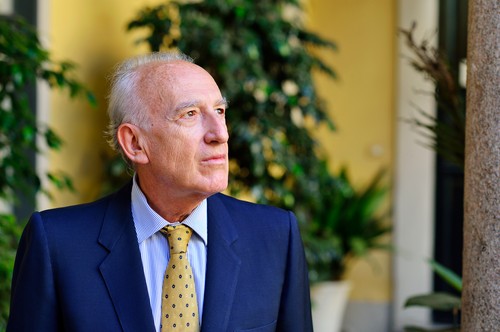
© Cosimo Filippini / DG

Maurizio Pollini at Royal Festival Hall, 18 March 2015.

A solo piano recital at the Royal Festival Hall is always a special event, and if you haven’t tried it yet I thoroughly recommend the experience.

The sense of occasion such an event brings is enhanced as the soloist is hemmed in on all sides by the audience, with some on the stage and in the choir stalls behind – which is where I found myself for my first ever encounter with Maurizio Pollini.

The Italian, now in his seventies, has an illustrious recording and concert-playing career behind him. Two of the composers central to his repertoire are Schumann and Chopin, who formed one half each of this recital.

We heard Schumann first, with the brief but poetic Arabesque. This is a wonderfully romantic piece with a wistful main theme. Pollini was a bit stern with it, leaning more on the two short contrasting sections rather than indulging the main tune.

We moved on to the substantial Kreisleriana, a group of eight fantasy pieces dedicated to Chopin and inspired by the character Kreisler, in the creations of E.T.A. Hoffmann. Here Schumann alternates turbulent minor-key creations with softer, poetic major key ones. In Pollini’s hands the faster numbers threatened to disappear in a whirl of notes, the rhythms occasionally blurred, but there were moments of pure insight in the slower second and fourth pieces especially. The final piece, which to me sounds like a bird flying around in an increasingly irregular circle, was perfectly poised, leaving the audience with a sense of mystery.

For the second half Pollini brought out one of his concert staples, Chopin’s 24 Preludes – written around the same time as Kreisleriana. In just under forty minutes Chopin navigates a piece in each key, cleverly structured so that he effectively follows a ‘circle of fifths’. (In technical terms this means he moves from C major, and its relative key A minor, through G major (and its relative E minor) and so on, until travelling full circle.

This performance felt like one whole piece of 24 sections, brilliantly delivered and suitably dramatic. The centrepiece of the collection, the Raindrop prelude (no.15), epitomised Pollini’s approach by being relatively quick – while the faster preludes became thunderbolts from the blue.

Ending to a hero’s reception, Pollini generously fed us three encores, beginning with the waterfall of notes that is the Etude in C minor, Op.10/12, then moving to the relative calm of the D flat major Nocturne, Op.27/2. Then, as a handsome bonus, we had the Scherzo no.3 in C# minor, with its triumphant, Brahmsian chorale theme. After some nasty words were written about Pollini in the Spectator lately, this was the perfect riposte!

You can hear the music Maurizio Pollini played on a Spotify podcast, available here

Bach and the viola da gamba – Paolo Pandolfo and Markus Hunninger

Bach and the viola da gamba – Paolo Pandolfo and Markus Hunninger explore two of the sonatas Bach wrote for the instrument, along with music by gamba maestro Carl Friedrich Abel

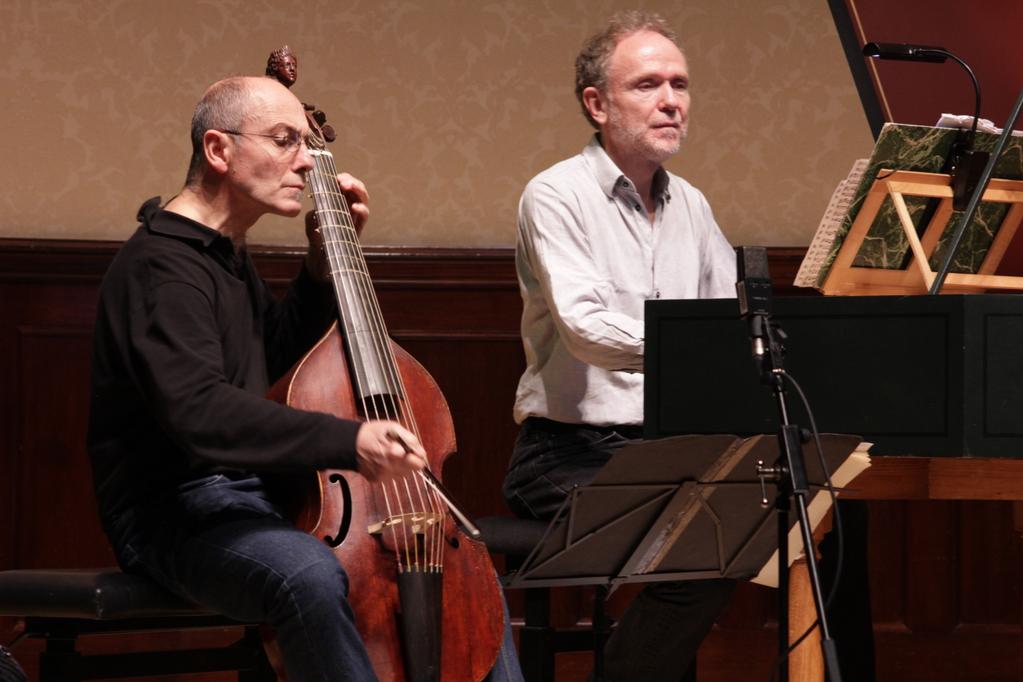
paolo-pandolfoPaolo Pandolfo (viola da gamba) and Markus Hunninger (harpsichord) – Wigmore Hall, live on BBC Radio 3, 16 March 2015. Photo © Ben Collingwood

Listening link (opens in a new window):

http://www.bbc.co.uk/programmes/b052047t

on the iPlayer until 15 April

For non-UK listeners, this Spotify playlist is available:

For those unable to hear the broadcast I have put together a Spotify playlist, containing the Bach sonatas – but not the Abel, which I could not find on the service. Pandolfo and Hunninger have recorded the Bach recently, but their versions are not available – so I have chosen suitable substitutions here

What’s the music?

J.S. Bach – Viola da gamba Sonata no.2 in D major BWV1028 (not later than 1741) (16 minutes) (the ‘BWV’ number gives an indication of the work’s position in the Bach-Werke-Verzeichnis (Bach Works Catalogue)

Abel – 6 Pieces from the Drexel Manuscript for solo viola da gamba (date not known) (20 minutes)

J.S. Bach – Viola da gamba Sonata no.3 in G minor BWV1029 (not later than 1741) (16 minutes)

What about the music?

The first question to answer here is ‘what is a viola da gamba’? It is an ancestor of the cello, gripped between the players knees and played with the bow. Although it was used mostly as an ensemble instrument to begin with, Bach, Abel and other composers began to write for it in more of a solo capacity.

The instrument used by Paolo Pandolfo in this concert has seven strings, and dates from around 1700. There is no ‘spike’ on the instrument, so the player has to grip it with their knees.

Bach wrote three accompanied sonatas for the instrument, though exactly when he wrote them is not clear. Abel is described in the BBC Radio 3 introduction as ‘the link between baroque and classical music’, and headed for London with nothing more than ‘six symphonies in his pocket’. He was a virtuoso viola da gamba player, and while in London wrote a lot of music for the instrument. This surfaced in the 19th century through manuscripts belonging to Joseph Drexel. Paolo Pandolfo stated in the introduction that Abel ‘respected the viol as a true lover respects his beloved’

Pandolfo himself came to this music initially from jazz, bringing with it his own talent for improvisation.

Performance verdict

These are engaging and often stylish performances. Paolo Pandolfo and Markus Hunninger have a long-established chemistry in this repertoire, and their experience allows them to tastefully improvise within the confines of the written music – as the composers would wish them to do.

Pandolfo’s quiet playing in particular is sublime, and I found myself instinctively leaning forward on occasion to catch his insights. The freedom he lent the Abel pieces made them sound like brand new improvisations.

On some occasions I did feel this improvising was a little overdone, and that in the Bach especially the slow movements would have benefited from a ‘less is more’ approach, as the pulse was almost lost at times. In the faster movements however the dialogue between the instruments was a constant joy, their enjoyment of the music clear to see.

What should I listen out for?

Bach Sonata no.2

3:45 – the Bach begins with a thoughtful Adagio. Pandolfo is a model of restraint here, and with Hunninger there are some pronounced variations of the tempo

7:29 – the bright, vivacious second movement begins, using the upper register of the viola da gamba’s range. The crisp harpsichord right hand often trades melodic ideas with the gamba.

11:17 – a thoughtful slow movement, now in a ‘lower’ key (B minor) that brings out the resonance of the instrument’s lower strings. Pandolfo plays with great poise here.

16:14 – a burst of sunshine in the form of a move to D major. The gamba and harpsichord play cat and mouse, all the time shadowing each other’s moves. From 17’30” some tasteful trills added by harpsichordist Hunninger, before the instrument plumbs the depths just over a minute later. Some of Bach’s harmonic daring can be heard here, the music veering off to distant areas. Pandolfo occasionally plays two strings rather than one (‘double stopping’)

Abel

23:29 – the first of Abel’s six pieces has a free, improvisatory feel – which I assume to be Pandolfo’s license with the piece rather than an absence of bar lines. The bow flits between strings and the quiet moments are exquisitely found.

25:36 – Pandolfo secures an extraordinary bit of ‘skating’ here (not a technical term!), the bow rushing across the strings but somehow making all the notes coherent.

27:39 – this piece starts with pizzicato (plucking), which sounds unusual on the gamba, before short pieces of double stopping, culminating in the lovely passage at 31’15”. The performance here feels quite mannered, but on saying that Pandolfo does bring the composer’s thoughts off the page, making them feel fresh.

32:18 – again we hear the higher register of the viola da gamba, and Abel writes for it in such a way that it provides the accompaniment as well as the melody, thanks to lots of double stopping. There is an extraordinary passage of music from 34:12, the music rushing almost out of control, but at no point does Pandolfo lose control.

34:40 – this movement reminds me of Bach’s Sixth Suite for Solo Cello, a really lovely and rather moving slow dance.

39:04 – staying in the same key as the previous five – D major – this has a more improvisatory feel as the piece gradually grows in height of pitch. After this introduction there is a spikier stretch of music, with a distinctive theme, before Pandolfo brings the music to a very soft close at 43:40

An extended tuning episode (almost an improvisation!) before…

Bach Sonata no.3

46:51 – the start of this sonata introduces a melody very similar to the one Bach used in his Brandenburg Concerto no.3 – with a subtle difference as this piece is in a minor rather than a major key, and sounds more serious as a result. Pandolfo and Hunninger energetically navigate the contours of a lively first movement.

52:15 – as slow as the second movement was fast, this Adagio is stretched out almost to its limits by the two performers. This is not an overly indulgent performance though, as they are both trying to extract maximum emotion from the music, often by way of ornaments improvised in both parts. This does lose the rhythmic pulse on occasion.

58:54 – the harpsichord picks out the notes of the main theme, a kind of stuttering melody that the viola da gamba takes up. This is the inspiration for the debate of the rest of the movement. There is a false ending at 1:02:08 where the pair deliberately pause on a ‘wrong’ chord – before finishing more emphatically.

Want to hear more?

The ideal complement to this music can be found in Bach’s Sixth Suite for solo cello – which was written for a form of cello with five strings. Anner Bylsma plays it on Spotify here

For more concerts click here

The Schubert Ensemble – French piano quartets

schubert-ensemble

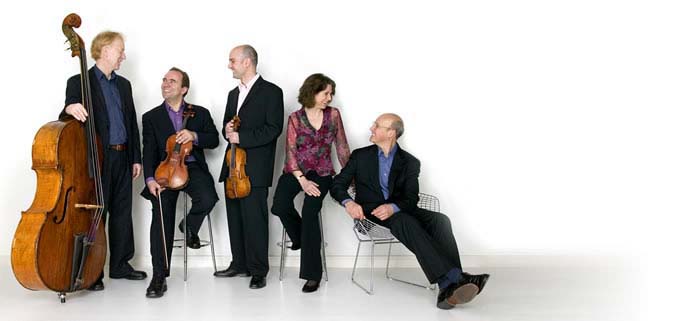
The Schubert Ensemble Milton Court, 11 March 2015.

An evening chamber music concert has the potential to take the sting and stress out of a busy day – as was the case here, with the Schubert Ensemble giving their first recital at the still relatively new Milton Court venue.

As an annex to the Barbican Centre in the City of London the hall is a desirable alternative to its larger cousin – which remains difficult to navigate even after two decades! Milton Court feels fresh and exciting, though it can get a bit claustrophobic around the bar area when the main hall is turning out.
Thankfully the Schubert Ensemble’s music making was airy enough to completely dispel any discomfort, though they had a few problems of their own to contend with in the shape of violinist Simon Blendis, who had fractured his arm.

Blendis, allocated the role of compère, praised his more than able stand-in, Krysia Osostowicz, one of the finest chamber musicians around – and she fitted seamlessly into the group’s music making here. Though unfortunately not credited in the program, William Howard (piano), Osostowicz, Douglas Paterson (viola) and Jane Salmon (cello) were all at the top of their game.

Unfortunately because of the injury we lost the Saint-Saëns Piano Quartet from the program, which was a shame as this not often performed, and the Schubert Ensemble doubtless have the energy and grace from which this work would benefit. Instead of that, however, we had the First Piano Quartet of Fauré – which was not exactly a hardship, for this is a lovely, tuneful work where emotion simmers just below the surface, breaking through in a passionate finale. Led by their superb pianist Howard, the group played with poise and control but clearly felt the music, and the resultant half-hour passed quickly!

After the interval a close musical relation of Fauré, Ernest Chausson, took his chance to shine in the form of a substantial Piano Quartet, a work he completed in 1897. There is an unexpected Eastern flavour to the opening of this piece – of Chinese origin, arguably – and Howard held back a bit on the tempo to give this plenty of air. Douglas Paterson found real depths of emotion in his viola solo from the slow movement, while the third movement waltz swung dolefully.

To begin with we had heard music from the composer after which the Schubert Ensemble are named – a movement for String Trio (violin, viola and cello) from 1816. This musical palette cleanser proved a suitable introduction to the two meatier works on the program.

A Spotify playlist containing the works heard can be accessed below. The Fauré is as recorded by the Schubert Ensemble themselves:

Wigmore Hall Portrait Gallery – Christiane Karg and Gerold Huber

Wigmore Hall Portrait Gallery – Christiane Karg and Gerold Huber perform an intricate sequence of portraits of literary figures by Wolf, Brahms, Richard Strauss, Hahn and Duparc

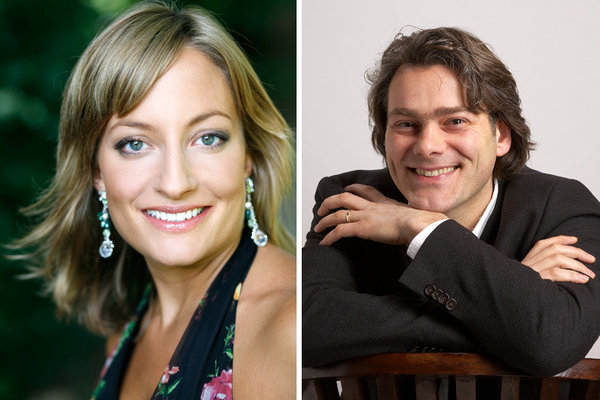
christiane-karg-gerold-huberChristiane Karg and Gerold Huber – Wigmore Hall, live on BBC Radio 3, 9 February 2015. Photos © Steven Haberland / Albert Lindmeier

Listening link (opens in a new window):

http://www.bbc.co.uk/programmes/b051zyhb

on the iPlayer until 8 April

For non-UK listeners, this Spotify playlist is available:

For those unable to hear the broadcast I have put together a Spotify playlist. Christiane has recorded the Strauss songs but nothing else from the program, so I have chosen suitable available versions:

What’s the music?

Wolf – 4 Mignon Lieder (1888) (15 minutes)

Brahms and Richard Strauss – Ophelia Lieder (interspersed – the music is Brahms’ 5 Ophelia-Lieder (1873) and Strauss’s 3 Ophelia Lieder Op.67 (1918) followed by Saint-Saëns – La mort d’Ophélie (1857) (14 minutes in total)

Hahn – 3 songs (Lydé (1900), A Chloris (1916) and Séraphine (1896) (8 minutes)

Duparc – 2 songs (Phidylé (1882), Romance de Mignon (1869) (9 minutes)

What about the music?

wigmore-portraits
Ophelia by John Everett Millais (1852) is part of the Tate Gallery collection. His painting influenced the image in Kenneth Branagh’s Hamlet.

This is a really well chosen program from Karg and Huber, justifying the singer’s burning of the midnight oil (in the announcer’s anecdote!) to come up with some vivid character portraits that draw the casual listener in through the links between the songs. This is surely how a song recital should be structured.

Thanks to their enterprise we get an interesting blend of Romantic Lieder – that is, nineteenth century song writing that is much more obviously expressive. German composers are strongly represented, beginning with Wolf’s four settings of Goethe, and his poems on the tragic figure of Mignon.

Then our gaze turns to Ophelia, by way of five early Brahms Lieder and three late, eccentric interpretations by Richard Strauss – before a French alternative from Saint-Saëns.

Finally the heady fragrance of three sublime songs from Hahn and two more substantial, meaty efforts from Duparc clinch a consistently engaging recital.

Performance verdict

On this evidence – listening on the radio rather than in the hall – Karg and Huber are ideally matched. Their delivery is especially emotive during the Wolf, where the soprano inhabits a lot of the distress and strife handed out to Mignon.

It is a great idea to fuse the portraits of Ophelia in this way, and anyone approaching Brahms songs for the first time would be surprised at the brevity and simplicity of them. They contrast nicely with the Richard Strauss examples, where Karg shows a lot of vocal agility without ever losing control.

The French songs are sumptuous, especially the Hahn, throwing open the doors to let in some Spring light.

What should I listen out for?

Wolf

The words for these songs can be found here

1:55 – Heiss mich nicht reden (Bid me not speak) – the first Mignon setting moves in unexpected harmonic directions, never really sure of itself as Mignon seeks peace ‘in the arms of a friend’. Judging by the piano postlude this is not found.

5:04 – Nur wer die Sehnsucht kennt (Only those who know yearning) – a sombre minor-key opening from the piano.

7:25 – So lasst mich scheinen (Let me seem to be an angel) – a cold piano sound and a distracted vocal. Again the harmonies move restlessly, as does the melody, the song in a dream state but not at rest either.

10:47 – Kennst du das Land (Do you know the land)– a rather more positive outlook in this relatively relaxed song until a sudden outburst from the piano, which on its second appearance follows a particularly fraught passage from the soprano.

Brahms / Richard Strauss

The words for the Brahms can be found here, and for the Richard Strauss here

18:57 – the first of five very brief Brahms songs – this one a thoughtful melody with singer and piano together.

19:42 – the second Brahms song, a mere 20 seconds!

20:06 – the first Strauss song inhabits a weird world of a piano part seemingly cut loose from its moorings, and a melody that doesn’t have an obvious resting point. Mysterious but intriguingly so.

22:37 – the third Brahms song, a much brighter affair.

23:12 – the second Strauss song trips along in a state of high agitation but is perhaps too short to make a sustained impact.

24:44 – the fourth Brahms song, another incredibly brief number – but beautifully delivered here.

25:32 – the fifth Brahms song – even though it is a minute long there is still a distinctive melody here.

26:49 – the third Strauss song, and a deeply mysterious one that casts its spell immediately through the piano line, broken momentarily by outbursts in the middle and at the end.

Saint-Saëns

29:58 – an urgent song from the French composer, with the high soprano voice doubled by the left hand of the piano.

Hahn

The words for the Hahn songs are to be found here

35:04 – Lydé – a much more positive outlook is immediately evident in this song, with an open air texture and bright vocal. There is a grand piano postlude, and what sounds like a wrong note.

37:50 – A Chloris – a twinkling piano introduction has a melodic ornamentation that takes its lead from Bach’s AIr on the G string before the soprano arrives in a lower register. A contemplative song, one of Hahn’s very best, this is beautifully sung by Karg. The interaction with the piano is ideal.

40:33 – Séraphine – a calm and radiant atmosphere runs through the third Hahn song.

Duparc

The words for the Duparc songs can be found here

43:28 – Phidylé – Karg sounds imperious in her control of the fuller melody that makes the second part of this song. The exotic musical language is very much in thrall to Wagner, and reaches its peak with high notes and turbulent, stormy piano writing.

48:15 – Romance de Mignon – another perfumed song, but this is an early song suppressed by the composer. Duparc writes so well for the voice.

Encore

54:00 – Schubert’s Gretchen am Spinnrade – going back to the first composer to write about the ‘mad woman’ Mignon, as Karg describes her. Huber shapes the piano part superbly under Karg’s urgent vocal.

Want to hear more?

It is difficult to suggest another step after such an intriguing and well-thought program, but underneath the songs of on the Spotify link above are further possibilities – including Wolf’s remarkable Prometheus, Brahms’s Four Serious Songs, in a legendary recording from Jessye Norman, and to finish some more Duparc.

For more concerts click here

Britten Sinfonia at Lunch – Reinventing the piano trio

britten-sinfonia

Britten Sinfonia at Lunch – Wigmore Hall, 4 March 2015.

If chamber music is not your forte, then I cannot imagine a better way into it than by the Britten Sinfonia’s ‘At Lunch’ concert series, held in London, Cambridge and Norwich.

Each program explores works written for a particular instrumental combination, but always includes a world premiere from a living composer. The informal atmosphere is both performer and audience friendly, and as a diversion from work or a pause in the middle of the day, the experience is ideal.

This second concert of the 2015 season chose to look at the piano trio, a misleading label since the standard combination of instruments for the trio is piano, violin and cello. Yet, as the program observed, the form is less often used by contemporary composers, and has a heritage of works running from Haydn in the mid-18th century through to 20th century composers such as Shostakovich, who featured here.

What the Britten Sinfonia did really well was to present possible solutions to the form, which here included adding percussion. To begin we heard Lou Harrison’s Varied Trio, for violin, piano and percussion. Harrison, an American composer who lived from 1917-2003, took as his inspiration the music of a number of different countries including China and Indonesia, and his original approach here included a set of rice bowls played with chopsticks. The resultant sounds were often soothing and rather wonderful, drifting as though on the breeze from percussionist Owen Gunnell, but with pianist Huw Watkins also reaching around inside the instrument to produce some unusual sounds. Completing the trio was violinist Thomas Gould, whose sweetly toned Elegy formed the third of the Varied Trio’s five movements and made it the emotional centre.

The new piece was from 22-year old composer Joey Roukens, who described his Lost in a surreal trip as ‘a psychedelic, kaleidoscopic 12-minute piece’. It was vividly coloured and brilliantly realised by the players, adding cellist Caroline Dearnley to their number. Early on the music cast spells of dappled light through harmonics on the strings and intriguing percussion sounds, but then a more mechanical energy took hold as though we were being transported by train to a place without a firm surface. With bags of reverberation and some enchanting sounds from the marimbas, this piece was consistently inventive and will be well worth hearing.

From the conventional piano trio legacy came one of its finest works in the 20th century, the Piano Trio no.2 by Shostakovich. This concentrated wartime work from 1944 is packed full of anguish, marking the death of the composer’s close friend Ivan Sollertinsky but also expressing outright anger at conflict and war. Gould, Dearnley and Watkins had no need for percussion here, not with the rhythmic profile Shostakovich establishes, but theirs was a keenly felt performance that left the listener in no doubt of the composer’s feelings and concerns.

A Spotify playlist containing the Varied trio and the Shostakovich Piano Trio no.2 can be accessed here: