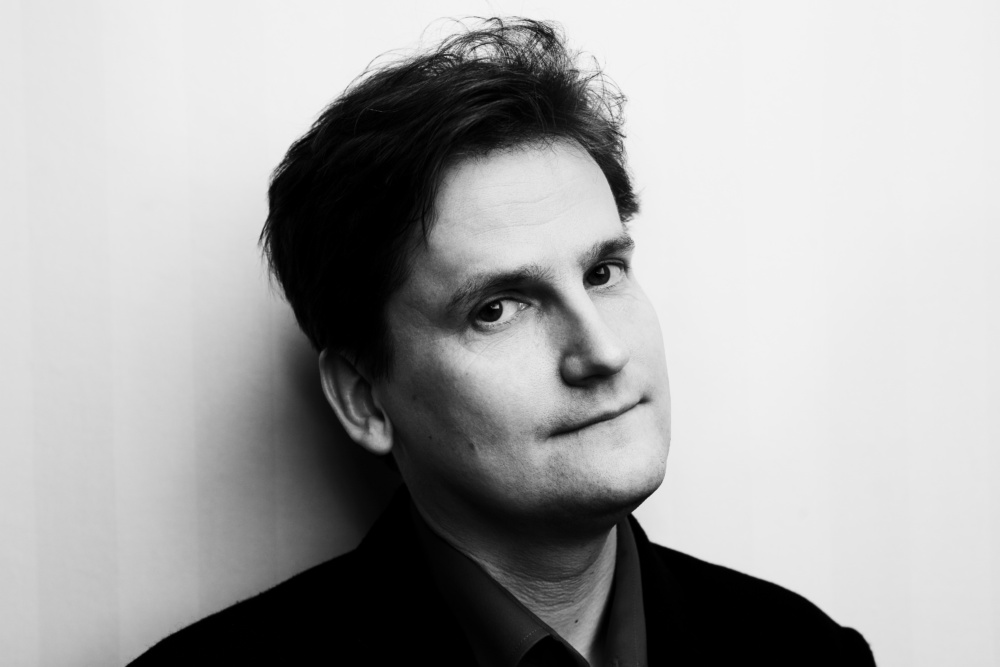
In concert – Oliver Janes, CBSO / Ryan Bancroft: Adams, Mozart & Rachmaninoff

Adams The Chairman Dances (1985)
Mozart Clarinet Concerto in A major K622 (1791)
Rachmaninoff Symphonic Dances Op.45 (1940)

Oliver Janes (clarinet), City of Birmingham Symphony Orchestra / Ryan Bancroft

Symphony Hall, Birmingham
Wednesday 2 November 2022 [2.15pm]

Reviewed by Richard Whitehouse

Back from its successful US tour (the first such in almost a quarter of a century), the City of Birmingham Symphony Orchestra this afternoon returned to Symphony Hall for what was a programme of contrasts in which an element of dance seldom lurked far beneath the surface.

Although it is often considered emblematic of his opera Nixon in China, John Adams wrote The Chairman Dances well before completing the larger work – this ‘Foxtrot for Orchestra’ encapsulating much of its atmosphere without being intrinsic to its content. Capricious while shot through with a tellingly distanced nostalgia, this remains among Adams’s most effective concert pieces and Ryan Bancroft secured a fine account whose meticulous attention to detail was not without corresponding panache – down to its percussive ‘winding down’ at the close.

It is (nearly) always welcome when an orchestra’s section leader takes the platform as soloist, as was proven with Oliver Janes in Mozart’s Clarinet Concerto – easily the most popular such piece in its repertoire yet one that can easily seem bland or even characterless in performance. There was little chance of that here – not least with a swift and purposeful take on the opening Allegro that left relatively little room for lingering over incidental detail, even if something of its underlying elegance was sacrificed with Janes’s powers of articulation pressed to the limit.

This approach paid dividends in the remaining movements, not least an Adagio whose limpid eloquence was conveyed without trace of indulgence or wanton sentiment. The final Allegro, too, had a winning buoyancy – Janes evincing a deftness and spontaneity to which the CBSO responded in kind, and with a surge of energy towards the closing chords. It set the seal on an appealing rendition which, perhaps surprisingly, Janes will not repeat at tomorrow evening’s concert from Warwick Arts Centre – when that by Gerald Finzi will be the concerto on offer.

Soon to take the reins at the Royal Stockholm Philharmonic, Bancroft is evidently a conductor on a roll as was confirmed by his take on Rachmaninoff’s Symphonic Dances. A triptych that abounds in felicitous detail (as is often belied, if not actually concealed, by the score’s lack of expression markings), it needs flexible direction for each movement to cohere, and Bancroft had their measure. The first exuded a suspenseful energy that, in its central section, took on a winsome pathos embodied by its alto saxophone melody (affectingly played by Kyle Horch).

Even more persuasive was the sardonic central dance, its waltz motion underpinning some of the composer’s most astringent harmonies as were pointedly emphasized here. If the charged outer sections of the final dance lacked the ultimate in exhilaration, the quality of the CBSO’s response was never in doubt. In the slower middle episode, moreover, Bancroft’s deliberation ideally clarified those frequently dense textures whose expressive poise is achieved, uniquely for Rachmaninoff, without recourse to an actual melody. A sign of things to come, perhaps?

Bancroft will hopefully be returning next season, but the present one continues with events to mark the 150th anniversary of Vaughan Williams’s birth – including two of his symphonies and the film Scott of the Antarctic, for which the CBSO is contributing live accompaniment.

You can read all about the 2022/23 season and book tickets at the CBSO website. For more information on the artists, click on the names of Ryan Bancroft and Oliver Janes
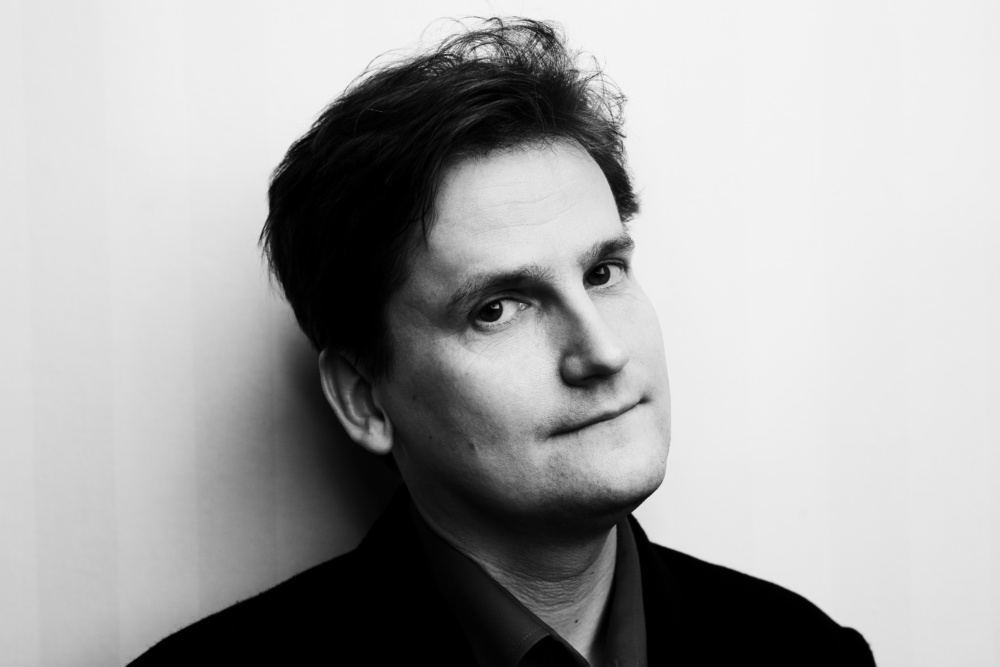
In Concert – Olli Mustonen plays Prokofiev Piano Sonatas Part 2 @ Wigmore Hall

Olli Mustonen (piano)

Prokofiev
Piano Sonata no.5 in C major Op.28 (original version) (1923)
Piano Sonata no.8 in B flat major Op.84 (1939-44)
Piano Sonata no.1 in F minor Op.1 (1909)
Piano Sonata no.3 in A minor Op.28 (1917)
Piano Sonata no.7 in B flat major Op.83 (1939-42)

Wigmore Hall, London
Tuesday 1 November 2022

Reviewed by Ben Hogwood

The second part of Olli Mustonen’s journey through Prokofiev’s nine completed piano sonatas featured crucial roles for piano tuner and page turner. On the first night Mustonen had experienced problems with the upper register of his Steinway, which fell out of tune under duress as the Piano Sonata no.6 progressed. Tonight one was at hand to ensure temperament was consistent throughout, while the page turner deserves a special mention for his busy supporting role in the whirlwind passages of the Piano Sonata no.7.

The real star, though, was the music – as Mustonen has always been at pains to point out. He is a humble artist whose preparation was clearly meticulous, but one with an extraordinary range of dynamics and the ability to think quickly on his feet / fingers. Here the composer in him comes to the surface, his thoughts on stage often highly instinctive while offering unique insights into Prokofiev’s music.

The order of the sonatas on the second night was as logical as the first – with two more substantial works before the interval and three short sonatas after, two of those presnting their arguments in single-movement form. The Piano Sonata no.5 in C major was first, a work whose initial tempo marking Allegro tranquillo was at odds with the music itself. Certainly Mustonen set about his task with a uniquely probing intensity for the right hand line, becoming increasingly agitated as the music progressed. The Fifth, the only sonata to be written outside Russia, has an unmistakeably French flavour, its Parisian origins found in languorous bass lines and harmonies aligning themselves with the Les Six school. The third movement presented an enchanted sound world, presenting impish qualities but evading any attempt to pin down a definite mood.

The Piano Sonata no.8 is the largest of the nine sonatas, capping the wartime trilogy completed in the early 1940s. Mustonen started in a dreamy mood, but soon the thoughts meandered and the music became increasingly distracted. The powerful middle section was capped by a remarkably strong outburst of feeling, passions near to the surface. The slow movement had warm lyricism and cold sorrow in almost equal measure, while the finale’s capricious theme gave way to music of raw power, with fiendishly quick passagework in the right hand and some incredibly intricate workings under the bonnet. The spectre of war lies close to the surface of this work, and its percussive clout in the faster music gives it impressive power, yet the more measured melodies made the lasting impressions.

It was fascinating to hear Prokofiev’s Piano Sonata no.1, his Op.1, after the interval. While not his first work in order of composition, this is a piece looking back to peaks of ardent Russian romanticism as well as Chopin and Liszt. The rich harmonies were however topped by signs of the mature Prokofiev to come in the occasionally jagged rhythmic profile and some spicy dissonances, all of which Mustonen conveyed in an incident-packed 7 minutes.

The Piano Sonata no.3 in A minor, also a single-movement work, looks sideways at the sonatas of Scriabin. An awful lot happens in the course of its eight minutes, from the profile of a virtuoso tarantella to an emphatic signing off. Along the way there are distinctive melodic snippets, crisply developed, with harmonic barbs and clipped comments. Later in the sequence some bell-like sequences ring out, projecting easily to the back of the hall. Mustonen’s affection for this music was clear, the sharp-witted themes and peppery harmonies brilliantly realised.

The Piano Sonata no.7 in B flat major was the logical next step, Mustonen delivering the three works with barely a pause in between. The shortest of the wartime trilogy, the Seventh is the most explicitly virtuosic, its driving rhythms making it something of a crowd pleaser. Mustonen took its outer movements at a blistering pace, the right hand somehow phrasing the quirky opening melody of the first so that it still made sense, before rolling out the barrel as the music tripped along. The real heart of the performance lay in the Andante caloroso, this curious marking of the second movement asking for warmth from the performer in what was by far the slowest music of the night. There is a deeply yearning centre to this movement, and Mustonen’s soulful interpretation felt just right. The finale could not have been more different, a hair-raising drive to the finish where the insistent three-note motif in bass octaves threatened to go right through the floor. The right hand had a breathtaking speed of transition, somehow coping with the aggressively fast tempo to drive the music kicking and screaming over the line.

Mustonen received a well-deserved standing ovation for his Herculean efforts, his incredible stamina powered by Prokofiev’s unique and instantly recognisable writing for the piano, and his commitment obvious from first note to last. As if to remind us of Prokofiev’s innocent and simple lyricism, he then gave an excerpt from the Music for Children Op.65 as an encore, capping a remarkable two days of music.

In Concert – Olli Mustonen plays Prokofiev Piano Sonatas @ Wigmore Hall

Prokofiev

Piano Sonata no.4 in C minor Op.29 (1917)
Piano Sonata no.2 in D minor Op.14 (1912)
Piano Sonata no.9 in C major Op.103 (1947)
Piano Sonata no.6 in A major Op.82 (1939-40)

Olli Mustonen (piano)

Wigmore Hall, London
Monday 31 October 2022

Reviewed by Ben Hogwood; Photo of Olli Mustonen (c) Heikki Tuuli

Sergei Prokofiev is a composer whose music responds well to a ‘completist’ treatment. In the last decade London has seen cycles of his seven symphonies (from Valery Gergiev and the Mariinsky Orchestra) and his five piano concertos, given in a memorable Prom in 2015 with the London Symphony Orchestra supporting five different soloists. Now came the chance to look more closely at the composer’s writing for piano in a two-night performance of the nine solo sonatas, given by a specialist of the composer’s music.

Olli Mustonen has recorded the Prokofiev concertos but not yet committed his thoughts on the sonatas to disc. Should he do so the results will be fascinating, for he has a highly individual and uniquely compelling take on this composer’s music. His is an energetic approach, and even by the end of the first movement of the Piano Sonata no.4 he was mopping a fevered brow. Fourteen movements later he had delivered a revealing look at music whose power to reflect its time and place of composition is remarkably strong, carrying profound messages forward to the present day.

Born in what is now Ukraine, Prokofiev experienced great trials and separations throughout his life. Those tensions are felt in his music, where they are offset by a ready sense of humour, expressed through piano writing that emphasises athleticism but makes room for tender lyricism, backed by an instinct for concise yet developed frameworks in which the music can sit. As a result, pieces and movements rarely overstate their welcome.

Piano Sonata no.4 was a good choice with which to start, a collection of old jottings sometimes subtitled D’après des vieux cahiers (After Old Notebooks). Using material dating back to 1908, Prokofiev assembles a selection of inner thoughts and bittersweet memories. Mustonen expressed these first hand, taking liberties with the rhythm and note emphasis on occasion but wholly in the spirit of the music. The language, initially gruff, melted to an emotive and balletic slow movement with an expressive tune using the white notes on the keyboard. The bustling finale exhibiting a common language with the contemporaneous Piano Concerto no.3.

Like the fourth sonata, the Piano Sonata no.2 bears a dedication to Prokofiev’s friend from the St Petersburg Conservatory Maximilian Schmidthof, tragically lost to suicide in 1913. The language here is more obviously Romantic, with elements of Chopin and Scriabin, but the tart lyricism in the right hand could only be from Prokofiev, and Mustonen brought it out with often startling clarity. There was a whirlwind scherzo, like a devilish skaters’ dance, before a cold melancholy encased the slow movement, which sounded like a distant relative of The Old Castle from Mussorgsky’s Pictures At An Exhibition. The helter-skelter finale, brilliantly played, took the audience on a fairground ride.

After the interval Mustonen gave a rare performance of the Piano Sonata no.9, an elusive work whose dedicatee, Sviatoslav Richter, confessed to finding it a difficult work to understand. Its music hints at a new simplicity, emphasised by the choice of C major as the ‘home’ key, but the awkward complexion of the music tells of a troubled mind, Prokofiev seemingly thrown by the end of the Second World War and yet another set of restrictions on musical style from the Russian authorities.

The faster figures in the first movement soon tired of their attempts to run away from this, but the macabre second movement suggested a restless toy shop after dark. Throughout the work, bursts of brittle melody threatened to extinguish the more songful elements of Prokofiev’s writing, though the forceful finale was typical of the composer in its power and obduracy. Mustonen did well to communicate what seemed to be a dip in the composer’s energy towards the close.

Finally we heard the Piano Sonata no.6, a work speaking directly to the wartime climate today. Written as the Second World War was raging, it is closely linked with the seventh and eighth sonatas, works that also tell of conflict, anger and desolation. The opening salvo of the Sixth was chilling indeed, but in Mustonen’s hands it became an outright assault, the treble notes biting through with such power that the ‘A’ on the piano lost its tuning as the sonata progressed. If anything this made the impact of Prokofiev’s writing even stronger, the scrunched-up harmonies raw and dissonant.

The Sixth is not a depressing work, however – as its stuttering Scherzo told, wrenched this way and that by a left-hand melody. The lyrical power of the third movement, initially subtle but then more overtly passionate, looked ahead towards the composer’s colourful ballet scores. Mustonen felt that connection, conducting himself whenever a hand was free, and sensing the orchestral connections for the voices in front of him. The finale had a curiously phrased but highly effective main theme, and when the artillery from the first movement returned it brought with it an even greater chill than before. The sonata ended in a cacophony of noise, powerfully wrought and given without quarter.

Taking the white heat out of the sonatas a little, Mustonen proceeded to charm with an encore of the Prelude Op.12/7, published in 1913 and often used as an encore by the great Russian pianist Emil Gilels. It was an unexpected treat, capping an evening of exceptional pianism.

You can hear Olli Mustonen’s recording of the Prelude, part of a Prokofiev miscellany recorded for Ondine, below:

Olli Mustonen plays Prokofiev

This week, Arcana will be visiting the Wigmore Hall to hear the complete piano sonatas of Prokofiev, played over two nights by Olli Mustonen.

The Finnish pianist is a specialist in the Ukrainian-born composer’s music, and it looks set to be a fascinating pair of concerts, offering a rare chance to appraise the complete works in this area of Prokofiev’s output. As a taster to illustrate his natural rapport with Prokofiev’s writing for the keyboard, here is Mustonen performing the Piano Concerto no.2 in G minor with the Singapore Symphony Orchestra and Hannu Lintu:

Olli Mustonen plays the complete sonatas at the Wigmore Hall, over two nights – for information click on the links for Monday 31 October and Tuesday 1 November:

Mustonen has also recorded the five piano concertos for Ondine, with Lintu and the Finnish Radio Symphony Orchestra. You can hear these dynamic accounts below:

From closed doors to a heavenly host: The completion of a Mahler symphony cycle

by John Earls pictures (c) Andy Paradise

Two years ago, in the midst of the pandemic, I wrote a piece for Arcana FM on ‘Mahler’s Eighth and coming out of COVID-19’. I concluded by saying that I wouldn’t get to see a performance of this epic ‘Symphony of a Thousand’ – and complete my personal Mahler live symphony cycle – any time soon, but that when I did it would have a very particular significance.

I certainly didn’t know that the performance would be by the Royal Philharmonic Orchestra conducted by Vasily Petrenko at the Royal Albert Hall on a Sunday afternoon in late October 2022, a concert that was itself rescheduled due to the pandemic.

And what a performance it was. The Royal Albert Hall could be said to be purpose built for this work, accommodating not just an expanded orchestra (including seven off-stage brass players in the gods) but three choirs, two boys’ choirs, eight soloists and a huge concert organ (the Royal Albert Hall’s was once the largest instrument in the world).

You get the full blast of the organ from the off with the tumultuous opening of Part 1’s Veni Creator Spiritus. It’s quite a ride from there on in, and Petrenko and the RPO handled it superbly all the way through to the powerful finale of Part 2’s setting of the end of Goethe’s Faust. This was not just about the big sections, the delicate moments were deftly done too.

But this work is really all about the singing, and the assembled choirs of the Philharmonia and Bournemouth Symphony Choruses and City of London Choir, as well as the Tiffin Boys’ Choir and Schola Cantorum of the Cardinal Vaughan Memorial School were magnificent.

And it wasn’t just the massed voices, as glorious as they were. The soloists – and let’s name them (above): Sarah Wegener (Magna Peccatrix), Jacquelyn Wagner (Gretchen), Regula Mühlemann (Mater Gloriosa), Jennifer Johnston (Mulier Samaritana), Claudia Huckle (Mary of Egypt), Vincent Wolfsteiner (Doctor Marianus), Benedict Nelson (Pater Ecstaticus) and James Platt (Pater Profundus) – were excellent too.

I made the point in my earlier piece that there is something about the combination of the mass assembled forces performing together and being joined by an audience in an even bigger collective. I think the standing ovation from the near sell-out crowd at the end was testimony to this.

Mahler’s Eighth is definitely one of those pieces that you need to see performed live. I’m so glad that I finally did.

John Earls is Director of Research at Unite the Union and tweets at @john_earls