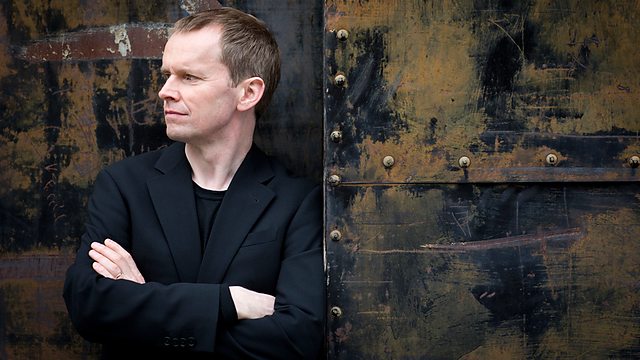
Britten Sinfonia at Lunch – Reinventing the piano trio

britten-sinfonia

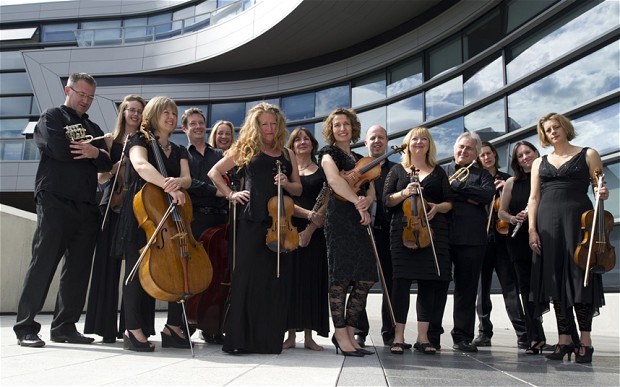
Britten Sinfonia at Lunch – Wigmore Hall, 4 March 2015.

If chamber music is not your forte, then I cannot imagine a better way into it than by the Britten Sinfonia’s ‘At Lunch’ concert series, held in London, Cambridge and Norwich.

Each program explores works written for a particular instrumental combination, but always includes a world premiere from a living composer. The informal atmosphere is both performer and audience friendly, and as a diversion from work or a pause in the middle of the day, the experience is ideal.

This second concert of the 2015 season chose to look at the piano trio, a misleading label since the standard combination of instruments for the trio is piano, violin and cello. Yet, as the program observed, the form is less often used by contemporary composers, and has a heritage of works running from Haydn in the mid-18th century through to 20th century composers such as Shostakovich, who featured here.

What the Britten Sinfonia did really well was to present possible solutions to the form, which here included adding percussion. To begin we heard Lou Harrison’s Varied Trio, for violin, piano and percussion. Harrison, an American composer who lived from 1917-2003, took as his inspiration the music of a number of different countries including China and Indonesia, and his original approach here included a set of rice bowls played with chopsticks. The resultant sounds were often soothing and rather wonderful, drifting as though on the breeze from percussionist Owen Gunnell, but with pianist Huw Watkins also reaching around inside the instrument to produce some unusual sounds. Completing the trio was violinist Thomas Gould, whose sweetly toned Elegy formed the third of the Varied Trio’s five movements and made it the emotional centre.

The new piece was from 22-year old composer Joey Roukens, who described his Lost in a surreal trip as ‘a psychedelic, kaleidoscopic 12-minute piece’. It was vividly coloured and brilliantly realised by the players, adding cellist Caroline Dearnley to their number. Early on the music cast spells of dappled light through harmonics on the strings and intriguing percussion sounds, but then a more mechanical energy took hold as though we were being transported by train to a place without a firm surface. With bags of reverberation and some enchanting sounds from the marimbas, this piece was consistently inventive and will be well worth hearing.

From the conventional piano trio legacy came one of its finest works in the 20th century, the Piano Trio no.2 by Shostakovich. This concentrated wartime work from 1944 is packed full of anguish, marking the death of the composer’s close friend Ivan Sollertinsky but also expressing outright anger at conflict and war. Gould, Dearnley and Watkins had no need for percussion here, not with the rhythmic profile Shostakovich establishes, but theirs was a keenly felt performance that left the listener in no doubt of the composer’s feelings and concerns.

A Spotify playlist containing the Varied trio and the Shostakovich Piano Trio no.2 can be accessed here:

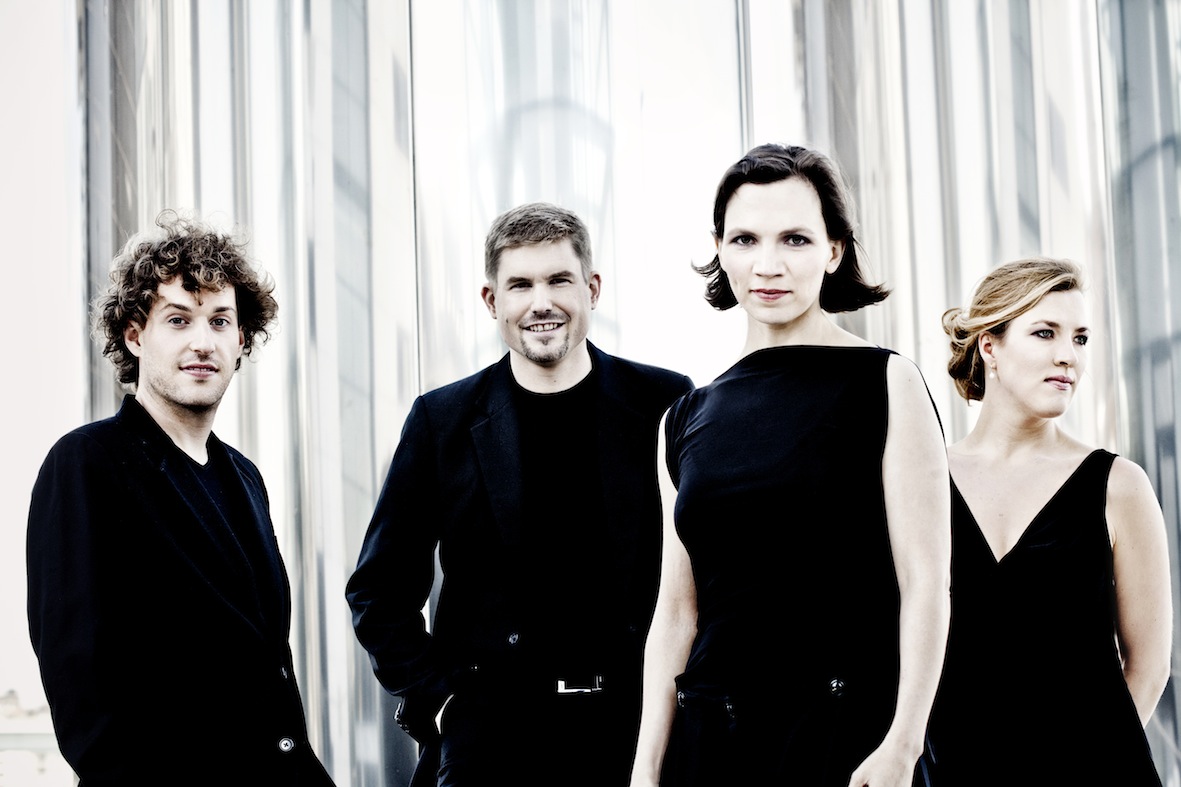
Signum Quartet – Late Beethoven

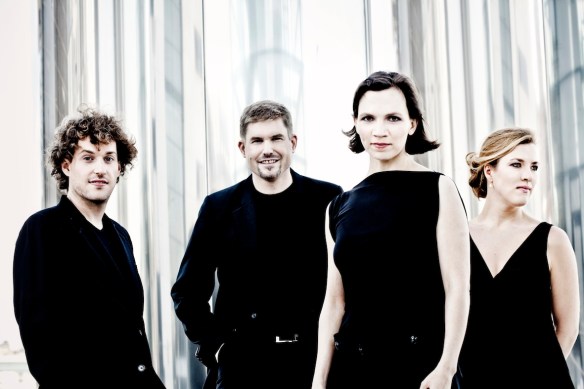
The Signum Quartet take on Beethoven’s massive B flat major string quartet Op.130, complete with Grosse Fuge
signum-quartet

Louis Schwizgebel – Wigmore Hall, live on BBC Radio 3, 23 February 2015

Listening link (opens in a new window):

http://www.bbc.co.uk/programmes/b053zy7y

on the iPlayer until 31 March

Spotify:

For those unable to hear the broadcast I have put together a Spotify playlist. The Signum Quartet have not recorded this repertoire, so I have chosen an alternative version by the Artemis Quartet:

What’s the music?
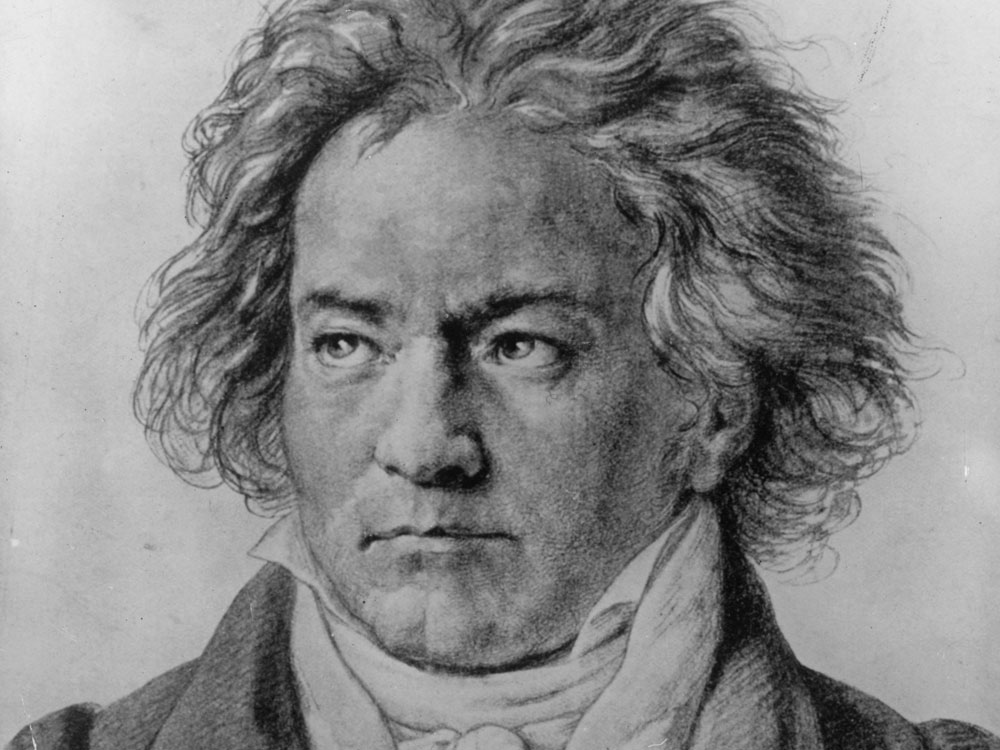
beethoven
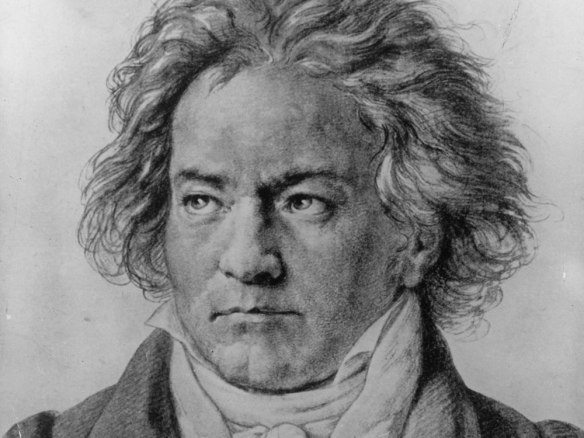
Beethoven – String Quartet in B flat major, Op.130 – including Grosse Fuge (1825) (47 minutes)

What about the music?

If this is your first venture into listening to a Beethoven string quartet, then prepare to be overwhelmed! I mean that in the best possible way, because this is one of Beethoven’s very biggest works, especially when performed with the massive final movement Grosse Fuge at the end.

Even now, nearly 200 years on from when he wrote them, Beethoven’s late string quartets are forward-looking works of wonder. This B flat quartet, one of five such works published towards the end of the composer’s life, is a remarkable work that still gets musicologists hot under the collar with debate, especially when the Grosse Fuge is taken into account.

Beethoven wrote the quartet in 1825 for Prince Nikolai Galitzin of Russia, an amateur cellist. His publisher suggested a slighter finish than the Grosse Fuge, and Beethoven obliged with a shorter and more amicable substitute. This was because the great finale was so substantial and so unusual in its musical language that it inflated the work to a daunting 50 minutes, out of the range of audiences and players alike, and presented them with an incredibly challenging finish. Today’s audiences are different, of course (not necessarily better!) and often warm to the thrill of a work that has not just this at the end, but also the tiny second movement Presto, a helter-skelter piece of music that is done in just over two minutes, and the heart-melting Cavatina, the fifth movement.

This part of string quartet has been sent into space, a recording from the Budapest String Quartet part of a record loaded onto both Voyager space probes. So any alien that happens to possess a record player will be able to hear the Cavatina, presumably as their first experience of Beethoven!

Performance verdict

The Signum Quartet give a keenly thought performance here, though I did wonder on occasion if they could have played a little closer to the edge, sacrificing a little control for out-and-out roughness, so as to catch Beethoven’s invention and daring.

That said there are many fine things here – the Cavatina especially, lovingly played as though it is the slow movement of an early 20th century symphony. The third movement is lovely too, given an affectionate reading. The Grosse Fuge is very clearly played, but arguably needs more rough-hewn passion. That said, nobody attending the Wigmore Hall on this occasion would have been disappointed with the standard of performance!

What should I listen out for?

First movement (marked Adagio, ma non troppo – Allegro (Slow but not too much – fast))

3:24 – a softly voiced slow introduction leads to a stop-start fast movement from 4:24, with some excitable faster passages contrasted by pauses for thought. The music is often busy, Beethoven passing ideas between instruments. The first section is repeated at 7:16.

9:40 – the music alights in the remote key of D flat major, led by the chromatic line of the cello. This is not what is supposed to happen, but Beethoven was never one to follow rules. It sounds so inevitable here!

Second movement (marked Presto (very quick))

16:41 – this is one of Beethoven’s ultra-quick, no-nonsense pieces. A bit too much ‘forward and back’ in this performance, the movement doesn’t quite feel fully formed. There is a remarkable series of motifs from the first violin (beginning at 17:54) which could easily have been written by a composer one hundred years later, so striking is its musical language.

Third movement (Andante con moto, ma non troppo. Poco scherzoso) (At a walking pace, not too fast, with humour)

18:58 – a calmer atmosphere for this movement, with a steadier foundation.

Fourth movement (Alla danza tedesca. Allegro assai)(German dance. Faster)

25:56 – music of grace and poise for the fourth movement, its triple time used by Beethoven as a stately Minuet.

Fifth movement (Cavatina)(a short and simple song)

29:28 – the Cavatina, Beethoven said, moved him more than any other single piece of his own music. It is played here with a reverential hush, and as the concert note from Paul Griffiths says, the music approaches the Romanticism of Mahler in the depth and richness of its harmonic workings. It is beautifully and tenderly played here.

33:04 – the Cavatina moves into a more thoughtful section, the first violin seemingly talking to itself while the other three chug sympathetically in accompaniment. Beethoven quickly moves back from this to the home key, however.

Sixth movement (Grosse Fuge)(Grand fugue)

35:58 – music of remarkable tension and bite to begin the massive Grosse fuge, which starts with an angular introduction from the whole quartet before we hear the music for the fugue itself (36:47). After the serenity of the Cavatina the sheer drama of this music is remarkable.

What is also remarkable is that Beethoven is executing all manner of clever musical tricks, all relating to the main theme and different variants / transcriptions of it – but as a listener you don’t necessarily need to note that, and can appreciate the unfolding drama with the string players pushed to the limit, both technically and emotionally. Towards the end it really feels as though the music is breaking up under its own weight and strain, before Beethoven brings it together to force an ending of togetherness and ultimately conviction.

Want to hear more?

How about some more Beethoven…that isn’t quite so much of an intense experience for the brain?

It can be possible…so here are the Artemis Quartet again in three more Beethoven String Quartets – two early and one very late. The early ones, two of the set of six that were published as the composer’s Op.18, are full of good natured humour and energy, while Beethoven’s last published quartet, Op.135, is also a lighter piece of work. Here they are:

For more concerts click here

BBT – Wednesdays at Wilton’s

bbt-wednesdays-at-wiltons

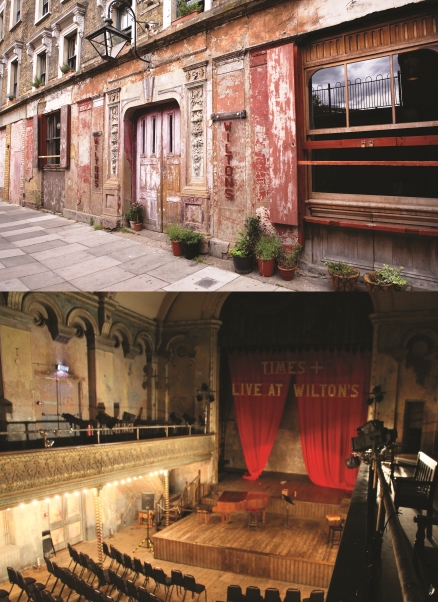
(Wilton’s front door photo James Perry; Wilton’s interior photo Mike Twigg)

The Borletti-Buitoni Trust and a new residency at one of London’s buried treasures

A week ago, Wilton’s Music Hall was home to an intimate Duran Duran charity gig. This week the grand old venue, one of East London’s little-known charms, looked down on young classical musicians starting out, recipients of a fellowship from the Borletti-Buitoni Trust given their chance to shine.

The hall is a wonderful performing space, a former 18th century ale house converted to a music room and concert hall, and now in the throes of a renovation that looks set to preserve its character while offering new, vibrant performance opportunities. The hall itself, with a high roof and balcony supported by what looks like parts from an old pile-driver, has acoustic properties ideal for piano or guitar – which was illustrated in an hour-long concert to launch the BBT‘s Wednesday’s at Wilton’s series.

Composer-pianist Kate Whitley made a strong impression – and as co-founder and artistic director of Multi-Story, which gave a performance of Stravinsky’s The Rite of Spring in a disused car park in Peckham, she is clearly an imaginative force. Whitley writes direct, unflinching music that can hit you between the eyes (two of her 5 Piano Pieces, for instance) or expose a melting heart (the song This is my love poem for you, from the poetry of Sabrina Mahfouz).

Her Three pieces for violin and piano, meanwhile, stood next to an equivalent set by the György Kurtág – a brave move that, it not entirely successful, illustrated the grand old Hungarian composer and his extraordinary musical compression, writing in one note what others could hardly manage with one hundred!

Performers and audience are treated as equals on these nights, and it was helpful that Whitley gave good context and musical examples to her pieces beforehand. We also had a sneak preview of the second concert in the series from guitarist Sean Shibe, who took on the tragic tale of Spanish composer Antonio José, executed by firing squad in his early thirties. Shibe played two movements, a winsome Pavane Triste and vigorous Finale from his Sonata for Guitar.

With concertgoers, performers and building ideally matched, this looks like the start of a meaningful friendship in East London – and you would be firmly advised to take the chance to see the musicians of the future in such a friendly and inspiring environment.

Louis Schwizgebel

BBC Radio 3’s New Generation artist Louis Schwizgebel gives a live recital of piano works by Haydn, Chopin and Liszt

Louis SchwitzgebelPhoto © Caroline Doutre

Louis Schwizgebel – Wigmore Hall, live on BBC Radio 3, 23 February 2015

Listening link (opens in a new window):

http://www.bbc.co.uk/programmes/b05302mn

on the iPlayer until 24 March

For non-UK listeners, this Spotify playlist is available:

For those unable to hear the broadcast I have put together a Spotify playlist. Louis has not recorded this repertoire, so I have chosen suitable available versions:

What’s the music?

HaydnPiano Sonata in E flat major (1789-90) (19 minutes)

ChopinBallade no.3 in A flat major (1841) (7 minutes)

ChopinÉtude in C# minor (1836) (5 minutes)

ChopinWaltz in C# minor (1847) (4 minutes)

ChopinFantaisie-impromptu in C# minor (c1834) (4 minutes)

LisztConsolation no.3 in D flat major (1849-50) (4 minutes)

LisztHungarian Rhapsody No. 6 in D flat major (c1863) (6 minutes)

What about the music?

This is a cleverly structured recital taking in three giants of the piano.

Schwizgebel begins with Haydn, godfather of so many musical forms – and one of the first composers to start writing what became known as the mature piano sonata, in three movements. His examples in the form – many written like this one for the palace of Esterházy in Hungary – show good humour and a delicate touch. This work, not often heard in concert, fits the bill nicely as an opening piece.

Schwizgebel’s Chopin selection is carefully structured so that the keys fit – moving from A flat major for the Ballade into C# minor for the three other works. The Ballade is a form in which Chopin made very personal expressions but which also allowed him the chance to experiment formally. The three works following are an unusually profound Etude (Study) – which sounds technical but is far from dry, shot through with characteristic Chopin melancholy. The Waltz is more playful, coming back to the same theme again and again, while the freeform Fantaisie-Impromptu makes the most of its freedom.

Liszt was a barnstorming virtuoso – the piano equivalent of Jimi Hendrix, you could say! – but he had his sensitive side too, as the Consolations show – and this one selected is a tribute to Chopin himself. It is a thoughtful example, leading to the fire and brimstone of the Hungarian Rhapsody no.6, given the natural inflections of the music of Liszt’s own country before a helter-skelter coda.

Performance verdict

Schwizgebel is a thoughtful Haydn pianist, and gives a rather touching performance of the slow movement in particular. He is commendably modest in performance, preferring not to go for the demonstrative approach, but instead letting his playing do the talking. The Chopin selection is excellent, very well played, losing a little rhythmic definition in the climax of the Étude but trumping that with a dazzling Fantaisie-impromptu.

The Liszt could perhaps have done with more of the reckless bravura you get in the Hungarian Rhapsodies, a sense of living right on the edge. That said, the closing pages are brilliantly played, the octaves written for the right hand immaculately delivered.

What should I listen out for?

Haydn

4:19 – a matter-of-fact start to the first movement, with a slightly gruff accompaniment to the tune. Yet Haydn’s easy charm is soon in evidence, despite the left hand having to work pretty hard in accompaniment!

11:14 – the second movement begins, headed by a graceful melody, as if assigned to a singer. Then, later on, it nearly stops as the right hand melody gets lost in thought before ambling to an easy close.

19:46 – a typically perky Haydn finale, nicely proportioned and sensitively played here.

Chopin

24:36 – the Ballade no.3 – beginning with an attractive introductory theme before the music assumes the profile of a waltz (from 26:27). Schwizgebel takes this slower than a lot of pianists, with a delicate approach – allowing greater contrast for then the music appears again, much more forcefully, at 27:20. At 29:35 a shadow falls over the music and it becomes more fraught as it moves into a minor key – C sharp minor, which is the key for the next three works in the recital. The Ballade’s main theme comes back at 30:57 before the closing passage.

31:52 – the Étude in C# minor, numbered 7 in the second book of studies Chopin published as his Op.25. The left hand takes the lead with a rising theme, and sets the melody throughout in what is a deeply intense piece, the longest of Chopin’s Études.

37:25 – the more playful Waltz in C# minor, published as Op.64/2, characterised by a sparkling theme high up in the piano’s register. This returns frequently to trump the underlying melancholy in the music, and the player has the chance to play around with the speed to give the music more ebb and flow. A contrasting section (38:28) brings a ray of light in the middle.

40:35 – the Fantaisie-Impromptu, a freeform piece where the floodgates just open! A torrent of notes form the main theme, wheeling up and down the keyboard, before taking the foot off the gas for a sweetly toned second theme (41:31)…which segues neatly back to the river of notes again (43:24)

Liszt

46:02 – the Consolation in D flat major, one of a set of six. Intimate and romantic, especially in this performance.

50:07 – the Hungarian Rhapsody no.6 begins with a drone and a rustic tune, very controlled in this performance, which takes some nice liberties with the tempo, holding back where necessary. There is some dazzling virtuosity as the piano then unfurls a variation on that melody before a solemn second theme (51:50) makes itself known. At 54:01 the final section starts with a melody played in octaves, which soon works to a thunderous climax (55:33).

Encore

57:36 – Moszkowski’s Étincelles (1886) – a showpiece from the Polish composer, with some brilliant runs up and down the keyboard as well as some sharply pointed notes. Schwizgebel dispatches it very impressively, with a wonderful throw-away finish!

Want to hear more?

Haydn’s humour makes for lovely music to work to – and a personal favourite is his C major sonata.
Chopin’s Ballades reward repeated listening – so after the intimate Third I would recommend the stormier Fourth – with the calm of an A minor Waltz and the famous Raindrop prelude completing a very attractive selection.

For Liszt with real depth the Vallée d’Obermann can be strongly recommended as a powerful utterance.

All these are collected on a Spotify playlist, below the repertoire played by Schwizgebel:

For more concerts click here

Pictures at an Exhibition – Steven Osborne

Pictures at an Exhibition – Musorgsky’s much loved collection for piano played by Steven Osborne

steven-osborneSteven Osborne (piano) – Wigmore Hall, live on BBC Radio 3, 2 February 2015

Listening link (opens in a new window):

http://www.bbc.co.uk/programmes/b04wmjx6

on the iPlayer until 3 March

For non-UK listeners, this Spotify playlist is available:

Please note that recordings of these works by Steven Osborne are not available on Spotify – the Musorgsky however is available to hear on the Hyperion website. I have therefore chosen suitable alternatives and will change the time references below when the BBC iPlayer link expires.

What’s the music?

Rachmaninov – a selection of 4 Etudes-Tableaux (1916-17) (13 minutes)

Musorgsky – Pictures at an Exhibition (1874) (36 minutes)

What about the music?

Musorgsky‘s Pictures at an Exhibition is a much-loved group of pieces, capturing the imagination of performers and arrangers alike. Although written originally for piano it has enjoyed life in several guises, most famously in a tremendous orchestration by Ravel but also through arrangements for all sorts of instrumental combinations, including brass band and even pop group – which Emerson, Lake and Palmer released as a live album in 1971.

The composer wrote it so the listener takes the part of the viewer at an art exhibition – in this case a series of paintings by the Russian artist Viktor Hartmann. Some of the pictures are separated by Promenades, where Musorgsky takes a breather to portray the viewer moving between paintings, reacting to what they have just seen. The pictures often refer to Russian legend, and some of them are grotesque – Gnomus, for instance, a gnome with crooked legs, or The Hut on Fowl’s Legs, a depiction of the terrifying Russian witch Baba-Yagá. There are social interactions – children playing (Tuileries), a rich man meeting a poor man (Samuel Goldberg and Schmüyle) and a violent quarrel (The Market at Limoges) – as well as two striking depictions of buildings in The Old Castle and an imposing Great Gate of Kiev, with which the exhibition ends.

Complementing Pictures are four of Rachmaninov’s Etudes-Tableaux, part of a set of pictorial studies published in 1917. In this case the objects of Rachmaninov’s characterisation were hardly if ever revealed, but the four chosen invite the listener to create an image. They are a brisk march, a contemplation, a scene at a fair (as described by the composer) and a restless mood.

Performance verdict

Steven Osborne won a Gramophone Award for his Hyperion recording of Pictures in 2013, and it was easy to see why here – there was the odd wrong note but this was generally because he was striving for maximum expression, which he found in a compelling performance. His pacing was ideal, so that some of the really loud moments – the old cart Bydlo grinding into action, or The Great Gate of Kiev in all its splendour – built inexorably from start to climax point.

The Rachmaninov was terrific, an indication that Osborne is spending a lot of time at the moment discovering his piano music. The Etudes-Tableaux do not really feature regularly in concert, partly because they are hard to bring off, but Osborne managed it handsomely here.

After the Musorgsky we had the considerable bonus of a serene Rachmaninov Prelude in D major, which tugged at the heart strings in all the right places.

What should I listen out for?

Because they are so well-loved, I have opted to describe each of the Pictures below:

Rachmaninov

6:31 – the second Étude-tableau, a spacious reverie with a particularly beautiful floated central section, where the key changes from C minor to C major (8:44).

11:41 – the third Étude-tableau, brightly voiced with crisp rhythms.

Musorgsky

18:36 – the first Promenade. Musorgsky’s viewer has a quick stride!

19:51 – Gnomus. Dark, grotesque and unpredictable, with a heavy line for the piano’s left hand and some ominous trills (22:11). After this the viewer ambles on to….

23:40 – The Old Castle. The melody is a depiction of a troubadour singing – but the mood is grey and heavy of heart, the harmony almost completely static. A weighty Promenade moves the viewer on to…

28:43 – Tuileries. A delicate description of children’s play, over in a flash!

29:40 – Bydlo. A depiction of a Polish cart grinding into action. The heavy weight of the machinery is supplied by the piano’s left hand, and the cart recedes into the distance at the end. Osborne applies as much weight to this as possible while the vehicle lumbers past! The viewer pauses briefly to take stock, before…

34:10 – The Ballet of Unhatched Chicks in their Shells. An amazingly vivid depiction of the little birds in clipped figures for the piano right hand, played very delicately here.

35:21 – Samuel Goldenberg and Schmuÿle. An imposing dialogue with the grandeur of the rich man (Goldenberg) and the quavering speech of the poor man (Schmüyle). After this the viewer moves on with another Promenade.

38:59 – The Market at Limoges. An excitable cackle of voices from the piano here, tripping over themselves and becoming increasingly out of control as they career into…

catacombs
Catacombs

40:22. Darkness descends as we move underground, Musorgsky conveying the stillness of space. The melodic figure of the Promenade appears (from 43:16), though here it appears shrouded in mist

45:26 – The Hut on Fowl’s Legs. I often think this piece on its own inspired a lot of rock music – it has the sort of figure you would not find out of place on a King Crimson album. The hammering figure on the left hand feels like drums and bass guitar combined while the right hand is almost completely unhinged. This leads straight into…

great-gate-of-kiev

The Great Gate of Kiev

48:40. The massive outlines of the gate are clear in the big block chords Musorgsky writes for the piano, which become ever more imposing as the piece progresses. Towards the end (50:22) a huge peal of bells rings out, then there is another reference to the Promenade (52:01) ahead of an emphatic final set of chords, by which time the pianist is playing as loud as he possibly can!

Encore

56:06 – Rachmaninov – Prelude in D major. A graceful and rather moving complement to Pictures!

Want to hear more?

Excerpts from Steven Osborne’s recording for Hyperion can be heard here

For more Musorgsky, I would suggest the Songs and Dances of Death, for low male voice and orchestra – which is ironically on BBC Radio 3 this Thursday 5 February , with a listener’s guide to come here! For more Rachmaninov I would suggest an earlier work, the Five Morceaux Op.3. This group of five pieces contains the famous Prelude in C sharp minor.

For more concerts click here