Wigmore Mondays – Behzod Abduraimov: Chopin Ballades and Brahms Variations

behzod-abduraimov

Behzod Abduraimov (piano)

Wigmore Hall, London

Monday, 15 February 2016

Audio (open in a new window)

http://www.bbc.co.uk/programmes/b07032zw

Available until 17 March

What’s the music?

Chopin (1810-1849) – Ballades:

No.1 in G minor Op.23 (c1835) (9 minutes)

No.2 in F major Op.38 (1839) (7 minutes)

No.3 in A flat major Op.47 (1841) (7 minutes)

No.4 in F minor Op.52 (1842-43) (10 minutes)

Brahms – Variations on a theme of Paganini, Book 1 Op.35 (1862-63) (12 minutes)

Spotify

Behzod Abduraimov has not recorded this repertoire as yet, so in case you are unable to hear the radio broadcast the below playlist contains recordings of the Ballades by the legendary Artur Rubinstein – and an equally thrilling recording of the Brahms from pianist Julius Katchen:

About the music

As the name implies, the Ballade is a form that has a literary origin. Chopin seemingly opted to use this name in response to the writings of Adam Mickiewicz – and using such a name gave him freedom of expression and form. So it is that the four ballades for piano each tell their own story, sometimes deciding to apply rigorous structure but on other occasions letting their ideas run free.

More recently it has become a popular concert trend for the four to be performed together, as they span a good range of Chopin’s composing career (12 years) and because their key centres and emotional impressions are complementary. The first and fourth are the most substantial pieces and arguably the most difficult to bring off, while the second is rigorously structured and the third described as more of a ‘salon’ piece – which should not demean it in any way.

Brahms wrote two books of Paganini Variations, taking as his inspiration the composer’s very last Caprice for solo violin, which you can view below:

It was the composer’s last large scale work for solo piano, and was perhaps a surprise to those who had gotten to know him as a serious composer. Here he lets himself off the leash, writing music that seems to be for display purposes as it becomes ever more difficult – despite him referring to his writing as modest ‘finger exercises’. Brahms being Brahms, though, there is still that customary attention to detail throughout the fourteen variations.

Performance verdict

An ambitious program for a lunchtime concert, but one the Uzbek pianist Behzod Abduraimov pulled off with aplomb. He clearly knows the Chopin Ballades very well, for the melodic phrases were invested with a natural instinct that gave him a deceptive amount of room. There were some passages of play that took the breath away, such as the end of the fourth ballade, while in contrast the quieter moments, such as the very private beginning to the third ballade, were equally involving.

The first ballade flowed beautifully, a stream of consciousness that felt instinctive and gained a lot of momentum in its tempestuous central pages.

On occasion the Paganini Variations were too loud, the really fast and firm bits given out with just a bit too much force. Yet that is perhaps the best criticism, for it shows the extent to which Abduraimov was really going for his shots, as it were – nailing most of the really tricky runs and dazzling especially in the right hand of the thirteenth variation.

What should I listen out for?

Chopin

2:54 – the first Ballade begins with a call to arms that soon dims down – where we hear the main theme at 3:25. For much of the first section the pianist appears deep in thought, but soon these thoughts come to the surface, and from 5:00 onwards we hear music of great feeling, rising to a tempestuous climax and a thoroughly convincing finish.

11:45 – the second Ballade has none of the brooding expression of its predecessor, and could almost be mistaken for a Christmas piece at the start, with its blend of grace and nostalgia. Things change dramatically at 13:41 with an outburst from the right hand, a sudden whirlwind of notes that will almost certainly make you jump on headphones! The two contrasting moods alternate through to the end.

18:46 – the third Ballade starts with a beautiful theme and then turns into a graceful, almost balletic triple time dance. A second section at 20:27 is also in the mood for a dance, turning gracefully but then becoming deeper and much firmer. This starts to dominate the ballade as Chopin moves it through increasingly distant key centres, before the main theme returns joyously at 24:40.

25:47 – the fourth and final Ballade does not begin in its ‘home’ key, approaching it by way of an introduction – before arriving at 26:19 with a new theme. The final flurry to the end begins at 34:49 and is brilliantly played.

Brahms

38:16 – Paganini’s theme is heard in some distinctive voicing – and it is not long until the first variation at 38:43, with what sounds like an incredibly difficult piece of writing to play! Other notable variations are the flighty third (39:37), a much quieter and sombre fifth (40:58), and a sixth (41:48) where Brahms’ characteristic rhythms of two against three take hold. There are then some inward looking, quieter moments where the music takes time for thought.

Then at 47:58 we hear the thirteenth variation, and there are some frankly outrageous showboating with glissandi (very fast runs) in the right hand. Who said Brahms isn’t fun?! The end is pretty explosive stuff, and if you listen closely you might be able to hear Abduraimov stamping towards the finish.

Encore

51:49 – very much the calm after the storm, the encore is the pianist Alfred Cortot’s arrangement of the Sicilienne – originally composed by Vivaldi and arranged by Bach (3 minutes)

Further listening

The last Paganini caprice has sparked the imagination of a number of composers, each of whom have written variations on its melody – so at the bottom of the concert playlist you will find the Rhapsody on a theme of Paganini from Rachmaninov, along with Variations from Lutoslawski and Andrew Lloyd Webber. Which one is best?

Meanwhile you can compare Chopin’s approach to the Ballade with that of Brahms, who published his set of four in 1854. The items are on the bottom of the playlist containing the music used in the concert:

Wigmore Mondays – Escher Quartet play Schubert’s ‘Death and the Maiden’

escher-quartet

Escher Quartet: Adam Barnett-Hart, Aaron Boyd (violins), Pierre Lapointe (viola), Brook Speltz (cello)

Photo by Sophie Zhai

Wigmore Hall, London

Monday, 8 February 2016

Audio (open in a new window)

http://www.bbc.co.uk/programmes/b06zjbv2

Available until 10 March

What’s the music?

Mendelssohn (1809-1847): Andante and Scherzo for String Quartet, Op.81/1 & 2 (1847) (10 minutes)

Schubert (1797-1827): String Quartet in D minor D810, ‘Death and the Maiden’ (1824) (40 minutes)

Spotify

The Escher Quartet have made recordings of the music of Mendelssohn, but these are not currently available on Spotify. Instead you can hear the music played by the quartet’s unofficial mentors, the Emerson String Quartet, on the playlist below – including the off-broadcast encore of Haydn:

About the music

Schubert’s Death and the Maiden quartet is arguably the most famous in the string quartet repertoire. It is certainly one of the composer’s finest works in the form, and brings with it a steely tone and darkness that had only really been heard before in the works of Beethoven.

The reason for its nickname lies in the second movement, a set of variations on a theme from a song of the same name written by Schubert in 1817. It is the emotional heart of the work, but there is plenty elsewhere that leaves a lasting and deeply felt impression. The way the quartet leaps out of the blocks at the start is striking, as is the quick chase of the last movement.

Schubert wrote the quartet in 1824, after a serious illness – and when he realised, at the age of 27, that he was not going to recover. It carries a lot of resentment and anger, but also a deeper resolve.

Mendelssohn also wrote his Andante and Scherzo in the final year of his life. They were the start of a projected seventh string quartet, but in the event were the only two movements written. Two earlier movements were added to make a set of four that were published as his Op.81, but the four pieces are rarely heard together.

Mendelssohn was suffering at the time of composition from a series of strokes, heavily aggravated by the death of his sister Fanny. He, like Schubert, died at such a young age – 38 – but you would never know from the size and maturity of his compositional output.

Performance verdict

The Escher Quartet gave a superb account of Death and the Maiden, achieving remarkable clarity and unity of ensemble in the striking unison moments, but also reaching great emotional depths in the Theme & Variations second movement. This was the heart of their performance, but technically their fast playing in the third movement Scherzo, with its driving syncopations, and the fourth movement, with its quick fire string writing, were hugely impressive.

Despite the prevailing darkness this was a performance that offered hope in the lighter moments that come along – the sunny disposition of the third movement Trio and the brief major key excursions of the finale being two examples. The end was utterly convincing.

The Mendelssohn made an ideal contrast, the lightness of the Andante enhanced by the velvety tone of Pierre Lapointe’s viola in the first variation on the theme. In the Scherzo the quartet’s unity was again in evidence, but so was the furtive nature of much of Mendelssohn’s arguments, fading to the end with unsettling speed.

As an encore – unfortunately not heard on the radio broadcast – we heard the slow movement from Haydn’s String Quartet in F minor Op.20/5. First violinist Adam Barnett-Hart dedicated this to Haydn himself, ‘the father of the string quartet’ – without whom the form would not even exist! It was an appropriate and affectionate finish to a very fine recital.

What should I listen out for?

Mendelssohn

1:30 – an airy Andante theme, light of touch. The variations on it begin at 2:18 where the viola takes the lead, after which there is a sweet violin solo. Despite the sunny air there is a note of nervousness too, realised at 4:39 when the music switches to the minor key. The theme returns at 6:03 – and all is now well as the music finishes quietly.

7:32 – the Scherzo is also light of touch, though much quicker – and here the nervousness is right to the fore. There are moments of subtle humour, and the music is in the form of a quick dance, but it is a shadowy outline too. There is a hint of a more fluid waltz at 10:55, but the music becomes detached again, petering out at the end.

Schubert

13:39 – the start of this quartet is one of the most instantly recognisable tunes in all string quartet writing, hurled out as a unison by all four instruments. The mood is immediately fraught, and Schubert makes frequent references to two themes – the one punched out at the beginning and a second, quicker one at 14:11. These compete for space throughout the first movement.

At 16:55 the music sweetens for the first time, but by 20:18 the main theme returns. The movement ends in brooding fashion.

25:58 – this is the centrepiece of the quartet, a movement of theme and variations. The theme, a solemn and very sad tune heard from the outset, seems almost inconsolable, but as Schubert begins to work his magic it becomes more flexible in musical content and mood. The violin is sweeter, while from 30:33 the cello takes over expressively. From 32:31 the quartet are united in driving forward. The music spends some time briefly in the sunny major key, but from 36:47 is ploughed back into a mood of sombre uncertainty, and the emotional climax of the movement from 37:30.

The final minutes are plaintive but ultimately positive, falling into silence at 39:44.

40:27 – the third movement is a Scherzo – and finds us resolutely back in the quartet’s ‘home’ key of D minor. The music drives forward with grim determination, but the clouds part at 42:05 for the ‘trio’ section, where the textures are lighter and the tune much sweeter. The respite is all too brief, though, and we head back to the scherzo music at 43:31.

44:35 – the last movement is a quick dash, the four instruments chasing as a pack with a distinctive tune that seems destined never to stop. Because this is a ‘rondo’ it is written in a certain form that means the main tune recurs several times, interspersed by a grand ‘B’ section (46:16) and a ‘C’ (47:02)

Encore (not heard on the broadcast)

The slow movement from Haydn‘s String Quartet in F minor Op.20/5 – one of the composer’s ‘Sun’ quartets.

Further listening

You can watch the Escher Quartet in the slightly earlier Quartet movement (Quartettsatz) by Schubert in the clip below:

There are some very fine late works from Mendelssohn to explore, darker though they have become because of the death of the composer’s sister. The F minor string quartet, published as Op.80, is especially good, as is the late String Quintet no.2 in B flat major, Op.87. Both can be found on the Spotify playlist below:

Britten Sinfonia At Lunch Two: Anna Clyne’s This Lunar Beauty

britten-sinfonia

Julia Doyle (soprano), Marios Argiros (oboe), Maggie Cole (harpsichord), Jacqueline Shave, Miranda Dale (violins), Clare Finnimore (cello), Caroline Dearnley (cello)

Wigmore Hall, 20 January 2016

Written by Ben Hogwood

If you live in London or the South East of England, and fancy a bit of musical exploration, then the Britten Sinfonia’s At Lunch series comes highly recommended.

Celebrating its tenth anniversary, the enterprise promises a brand new work in every concert – and proceeds to build the whole hour of music around it, often with the shared theme of a particular instrumental or vocal combination. With programme notes for adults or schoolchildren, it is one of the most accessible lunchtime concerts you could wish to enjoy – and as well as having the obvious bonus of professional quality performances, it is completely judgement-free!

This particular concert illustrated just why the formula works so well. Taking as its theme the combination of voice, oboe and strings, the Britten Sinfonia built an intricately weaved concert taking in arias from Bach and Scarlatti cantatas as well as two very different approaches to minimalism from Arvo Pärt and Ligeti. It was fitting, then, that the final piece – the new commission from Anna Clyne, This Lunar Beauty, should bring all these strands together.

anna-clyne

Anna Clyne photo by Javier Oddo

Setting the W.H. Auden poem of the same name, Clyne has written a piece of outstanding beauty. Its calling card is a distinctive melody that seems to be sourced from medieval England, but works it in a way of which the late 1960s British folk pioneers such as Fairport Convention, Steeleye Span or Pentangle would be entirely proud.

The repetitions of the tune, given in soprano Julia Doyle’s clear tones, were subtly varied by additions and subtractions to the instrumental texture, filling up with strings or paring back so the glitter of the harpsichord could be sensed on top. This Lunar Beauty left a strong emotional impression, using its forces sensitively in new music of rare quality and depth.

Before this, Doyle leant her clear tones to three varied arias from Bach Cantatas, with oboist Marios Argiros excelling in the obbligato to the aria Tief gebückt und voller Reue. We also heard Salvatore Sciarrino’s arrangement of two arias by Alessandro Scarlatti, the first of which had a striking accompaniment of muted strings without vibrato.

The two very different approaches to minimalism were fascinating. In Arvo Pärt’s Fratres time stood suspended as the string quartet’s theme, first heard in ghostly harmonics, gradually found body and soul before ebbing away into the distance. Ligeti’s Continuum froze time in a wholly different way, the solo harpsichord – brilliantly played by Maggie Cole – seemingly trapped in rapidly flashing strobes. Somehow, despite the hyperactive energy, this too found its own stillness.

A very fine concert, hopefully to be broadcast on the BBC in the future. In the meantime, have a listen to the audio below – and get yourselves over to listen to vocal works on Anna Clyne’s website, because this is a composer we want to hear a lot more of!

You can also hear her new Violin Concerto The Seamstress on the BBC iPlayer, performed by Jennifer Koh and the BBC Symphony Orchestra conducted by Sakari Oramo. The concert is available until 14 February 2016

Wigmore Mondays – Pavel Kolesnikov plays Debussy

pavel-kolesnikov

Pavel Kolesnikov (piano) plays Debussy’s first book of Préludes

Wigmore Hall, London

Monday, 11 January 2016

written by Ben Hogwood

Audio (open in a new window)

http://www.bbc.co.uk/programmes/b06tx85v

Available until 10 February

What’s the music?

Debussy (1862-1918): Préludes, Book 1 (1909-1910); L’isle joyeuse (1904)

Spotify

Pavel Kolesnikov has not yet recorded any of this repertoire, but a reproduction of his program using available versions can be accessed below, for listeners who cannot hear the BBC broadcast:

About the music

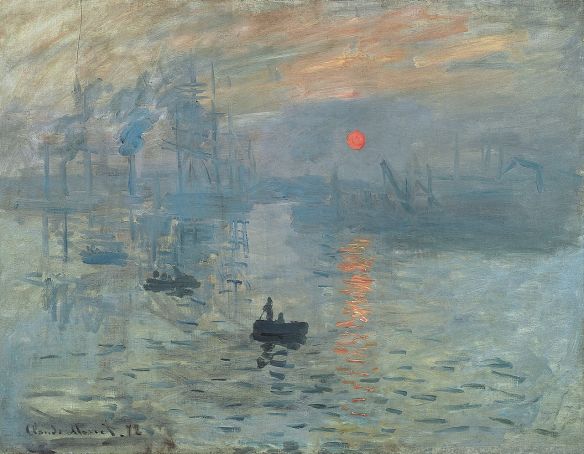
Debussy wrote 24 Préludes for piano, collected in two books but did not approach them in the same way as Chopin, who wrote one in each key. Instead he looked for character pieces, and the first book of Préludes are a fine example of what is often called the composer’s ‘impressionist’ style. By that we mean Debussy would often shade his music in a form that matches the paintings of artists such as Monet and Renoir, leaving them less defined.

impression-sunrise

Impression: Sunrise by Claude Monet (1872)

Perhaps because he wanted the listener to form their own pictures in their mind’s eye, Debussy left the title of each Prélude until the end of the piece – and even then was not at all conclusive in his naming. La cathédrale engloutie (The submerged cathedral), Ce qu’a vu le vent d’ouest (What the West Wind has seen), Danseuses de Delphes (Dancers of Delphi) – all are subject matters that need an active imagination to complete the picture.

L’isle joyeuse is a little more defined but not much, being a homage to Jersey, where Debussy holidayed with his new love in the summer of 1904.

These pieces make great technical demands on the pianist but also allow freedom of interpretation, both for player and listener.

Performance verdict

Having already established a reputation as a Debussy interpreter in his Wigmore Hall debut in 2014, BBC New Generation artist Pavel Kolesnikov returned to dazzle with more of the composer’s music.

Yet his approach was not obviously virtuosic, and he often took sensitive liberties with his tempo choices in the Préludes, drawing out the slow pieces especially effectively. These approaches were shown to be completely valid, setting an atmosphere of quiet intensity where I found myself subconsciously leaning forward on several occasions, literally hanging on Kolesnikov’s next note.

Les collines d’Anacapri (The Hills of Anacapri) was especially convincing, as was a totally unhurried Des pas sur la neige (Footsteps in the Snow). La danze de Puck was brilliantly done, an irresistible glint in the jester’s eye, while the stumbling rhythm of Minstrels was expertly controlled. Kolesnikov opened up the detail of Debussy’s inner part writing but never at the expense of his overall impression of each piece, and in L’isle joyeuse this led to painstakingly produced trills, part of an incredibly secure performance that still created a vivid picture of the island.

Full marks to the pianist, too, for overcoming the considerable distraction of latecomers arriving directly in his eye line after a poised account of Danseuses de Delphes. All that was required was a pertinent pause, and he was back in the zone.

What should I listen out for?

1:35 – Danseuses de Delphes (Dancers of Delphi) – immediately a sultry atmosphere is cast, the slow moving music rather mysterious but at the same time oddly enchanting. The block chords create an essence of calm.

There is then a pause while the latecomers are admitted…before…

5:41 – Voiles (Veils) – if anything the heady atmosphere is heightened by this deeply intimate impression, with suggestively chromatic lines in the right hand over a sustained held note in the left. The boundaries are blurred here, the ‘impressionism’ all too evident.

9:31 – Le vent dans la plaine (The Wind in the Plain) – a blustery outlook is set by the left hand oscillations, though this piece proves just as elusive as the wind. Debussy once again uses melodies in a ‘pentatonic’ form (if you played C-Eb-F-G-Bb ascending on the piano those are the notes of the pentatonic scale). Sudden gusts of wind threaten to knock the music off course but it stays true to form, just.

11:47 – Les sons et les parfums tournent dans l’air du soir (The sounds and fragrances swirl through the evening air) This is an enchanted piece, and indeed is heavily perfumed, as though at the end of a very hot summer’s day. The sustain on the piano means notes can blur together in the listeners’ mind, but there is still a distinct four note theme heard at the start. Kolesnikov really draws out the tension at the end of this piece.

16:20 – Les collines d’Anacapri (The Hills of Anacapri) After a short, nervy start this piece bursts from its cover, with melodies exchanged between the top and bottom of the piano, with sustained but energetic chords in the middle. Then the music gradually ascends to a thrilling end which seems to be in mid-air, with a massive set of five notes high up on the piano at 19:09.

19:21 – Des pas sur la neige (Footsteps in the Snow) Debussy paints some incredibly vivid images on the piano, and the depiction of snow here is cold in the extreme! The quiet dynamic aids this, and the very slow tempo, though the melody does have a forlorn nature, as though in memorial or loss.

24:36 – Ce qu’a vu le vent d’ouest (What the West Wind has seen) – again Debussy mobilises the piano to portray the unpredictable gusts of the West Wind, through suddenly loud figures in the right hand and rumblings in the bass. Soon we hear crashing octaves high in the right hand, then a rush of notes, leading to a snappy end at 28:21.

28:23 – La fille aux cheveux de lin (The Girl with the Flaxen Hair) – one of Debussy’s best-loved pieces, this charming portrait uses the pentatonic scale as a basis for its melody (see above) – which sounds rather folk-like in nature. It is an affectionate picture.

30:38 – La sérénade interrompue (Interrupted Serenade) – from simplicity it’s back to a stop-start affair, as though Debussy were portraying the wind again. The whole piece seems to have a short attention span, moving through its thoughts very quickly as though on edge, but ends quietly.

33:13 – La cathédrale engloutie (The Submerged Cathedral) – one of the most famous Préludes, and certainly one of the most mysterious, with blurred imagery in the sustained left hand notes of the piano and a clear melody in the right hand. It is based on an ancient Breton myth in which a cathedral, submerged underwater off the coast of the Island of Ys, rises up from the sea on clear mornings when the water is transparent. Debussy catches the shimmering water as well as the ghostly outlines of the building – and there are suggestions of plainchant too. Eventually a massive toll of bells is reached (35:38) There is some magical quiet playing when this music reappears at 38:26.

39:49 – La danse de Puck (Puck’s Dance) – pure impudence in this piece of music, darting about elusively and never sitting still anywhere. There are some cheeky melodies but also some brief and profound asides.

42:31 – Minstrels – another stop start piece, but one where the melody is very clearly defined. It is as though the performers are slightly drunk and moving from side to side! After several runs at getting a long-lasting theme, the piece ends crisply and emphatically at 44:52.

45:34 – L’isle joyeuse – this character piece starts with extended trills in the right hand, creating a watery atmosphere but also one with latent energy. By 47:26 the open-air mood has been set and we hear another distinctive melody at 47:32. From 49:44 the music takes on the character of a march, becoming faster and louder until a final joyous theme at 50:15. The piece ends on the lowest end of the piano at 50:56.

Encore

52:08 For an encore Pavel Kolesnikov goes back two centuries to give Debussy’s compatriot – and one of his greatest influences – Jean-Philippe Rameau. The piece in question is L’Egyptienne, from the Nouvelles suites de pièces de clavecin (New Suites of Harpsichord Pieces) Suite in G major.

Further listening

A natural next port of call for listening is the second book of the Préludes, for they follow on naturally from the first. On this album the French pianist Pierre-Laurent Aimard plays both books:

Wigmore Mondays – Benjamin Appl & Graham Johnson

benjamin-appl-graham-johnson

Benjamin Appl (baritone) and Graham Johnson (piano) perform settings of the poetry of Joseph von Eichendorff

Wigmore Hall, London

Monday, 4 January 2016

Audio (open in a new window)

http://www.bbc.co.uk/programmes/b06tkp3w

Available until 3 February

What’s the music?

Schumann (1810-1856): Frühlingsfahrt Op.45/2 (1840); Der Einsiedler Op.83/3 (1850; Der frohe Wandersmann Op.77/1 (1840)

Mendelssohn (1809-1847): Pagenlied (1832); Nachtlied Op.71/6 (1847); Wanderlied Op.57/6 (1841)

Brahms (1833-1897): In der Fremde Op.3/5; Mondnacht; Parole Op.7/2; Anklänge Op.7/3 (all 1852-1853)

Pfitzner (1869-1949): In Danzig Op.22/1 (1907); Der Gärtner Op.9/1 (1888-9); Zum Abschied meiner Tochter Op.10/3 (1901)

Wolf (1860-1903): Nachruf (1880); Das Ständchen; Der Musikant; Der Scholar; Der Freund (all 1888)

Spotify

Benjamin Appl has not yet recorded any of this repertoire, but a reproduction of his program using available versions can be accessed below, for listeners who cannot hear the BBC broadcast. Where possible I have used recordings made by Appl’s mentor, Dietrich Fischer-Dieskau:

About the music

Joseph_Eichendorff

Joseph von Eichendorff (picture used courtesy of Wikipedia)

With around 5,000 song settings of Joseph von Eichendorff’s poetry from the 19th century alone – with thanks to BBC Radio 3 announcer Sara Mohr-Pietsch for the info! – Benjamin Appl and Graham Johnson had no trouble making up a concert of 18 ‘lieder’ for the first Wigmore Hall lunchtime concert of the year.

Their choice gives an intriguing insight into different approaches to the poet. Broadly speaking, Schumann ranges from love-laden to thoughtful and a little morose (though his selection comprises three prayers), Mendelssohn is either forthright or reflective in his three songs; the youthful Brahms is surprisingly relaxed, while Pfitzner emerges as an inventive painter. Perhaps the most striking examples here come from Hugo Wolf, who wanted to focus on the ‘comparatively unknown humourously and robustly sensual side’ of von Eichendorff’s poetry.

Performance verdict

A slightly downbeat return for the WIgmore Hall in 2016, but a concert that was beautifully performed. The pairing of an incredibly experienced pair of hands in Graham Johnson and a singer starting out on his artistic voyage in Benjamin Appl was a good match and yielded many rewards.

Several songs left lasting impressions from the program, among them two from Brahms, with Appl’s control throughout Mondnacht and the picture painting from Johnson in Parole especially notable.

It was good to hear some rarely-sung lieder of Hans Pfitzner, whose use of the piano’s lowest end brought a wholly new texture to In Danzig, while the Wolf selection reminded us how original he could be in his song settings, the piano cast in a prominent role of scene setting, one that Johnson relished and used to his great advantage.

What should I listen out for?

Schumann

2:06 – Frühlingsfahrt (A spring journey) – the initial optimism of this march is quite bracing, but it soon subsides as the poet thinks of old age.

5:31 – Der Einsiedler (The hermit) – quite a sad song, solemn and lost in thought. Again old age is a preoccupation, the piano supporting the vocal melody as a walking stick might support the physical frame.

9:02 – Der frohe Wandersmann (The happy wanderer) – a much more positive, open-air march that talks of streams ‘rushing down the mountains’ and larks that ‘soar heavenwards’. More spring than winter!

Mendelssohn

11:03 – Pagenlied (Page’s song) – a tentative detached figure in the piano part adds to the tension of this song, which is relatively subdued and distracted.

13:11 – Nachtlied (Night song) – there is a withdrawn feel to this song also, until the Nightingale is encouraged to sing out at 14:39.

16:12 – Wanderlied (Song of travel) – a typically busy piano part from Mendelssohn gives the impression of rapid movement, the traveller set on his way with the minimum of fuss – and happily so!

Brahms

20:49 – In der Fremde (In a foreign land) – a rather downcast setting in a minor key, the poet in reflective mood. The piano hints at a major key near the end but such thoughts are quickly forgotten.

22:12 – Mondnacht (Moonlight) – dappled piano lines suggest moonlight in the branches, and there is a more romantic mood, with yearning vocal lines.

25:03 – Parole (Password) – again Brahms thinks privately, using vivid picture painting from the piano that depicts the huntsman through distant calls but also the ‘one last shot’ (26:44), where Johnson adds extra emphasis.

28:02 – Anklänge (Echoes) – a short but evocative song of two halves, the first depicting a lonely house in a forest, the second greeting the maiden inside.

Pfitzner

30:07 – In Danzig – the mood changes dramatically in this darkly coloured song exploiting the lower range of both piano and singer. The mysterious and faintly menacing mood is aided by elusive harmonic movements.

34:38 – Der Gärtner (The Gardener)­ – this song is more conventional in its language, looking back to Schumann and Brahms. The mood is positive and quite dreamy, but reaches a very impressive climax at the end with the words ‘Viel schöne, hohe Fraue, Grüss ich dich tausendmal’ (‘I, lovely gracious lady, greet you a thousand times’)

38:08 – Zum Abschied meiner Tochter (Farewell to my daughter) – a positive farewell, and an expansive setting that reaches another impressive climax at 40:07.

Wolf

42:58 – Nachruf (In memoriam) – the piano imitates the lute in this song as Appl sings a gentle lament

47:06 Das Ständchen (The serenade) – a watery piano introduces an adventurous setting that contains the tune of a serenade but some unconventional dissonances between voice and piano. There is a great deal of sadness in this song.

50:27 – Der Musikant (The minstrel) – the choice of music over marriage is made here by the singer! As if to emphasise his decision there is a rather lovely piano introduction that proves to be the bedrock of the song.

52:14 – Der Scholar (The scholar) – there are a number of examples of picture painting in the piano part for this song, depicting the ‘little birds’ and the rain that ‘rattles on the leaves’. Again the singer extols the virtues of making music but occasionally with a few too many wines! (53:40)

54:55 – Der Freund (The friend) – The joy of friendship is celebrated here, though not without travelling through a storm or two (55:30) where the crushing piano and loud voice descend into brief turmoil before emerging triumphant.

Encore (not heard on the broadcast)

Verschwiegene Liebe (Silent Love) The twinkling piano introduction was followed here by a sensitive and grateful rendition from Appl.

Further listening

As a complement to the concert, how about a recital based on poems by Heinrich Heine? Anothre great influence on 19th century vocal music, Heine’s music was set by a number of composers – and here the great tenor Christoph Prégardien and fortepianist Andreas Staier look at songs by Schubert, Schumann and Mendelssohn: